Overview

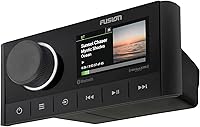
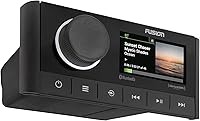
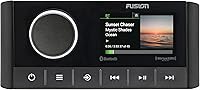
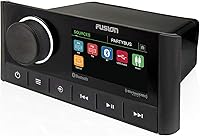
The Garmin Fusion Apollo RA670 Marine Stereo sits firmly in the premium tier of marine audio, and it earns that position in several tangible ways. The 2.7-inch optically bonded LCD is crisp and readable in direct sunlight, displaying album art in a way that feels more like a modern consumer device than a typical boat accessory. Backing up its marine credentials, it carries both IPX6 and IPX7 water-resistance ratings alongside True-Marine accreditation — the kind of certification that matters when spray and saltwater are a daily reality. A 3-year limited warranty rounds out the confidence package, helping justify the investment over cheaper, less ruggedized alternatives.

Features & Benefits

What separates this marine stereo from mid-range competition starts with the built-in DSP engine. On open water, ambient noise from engines, wind, and waves can flatten even decent speakers — the custom audio profiles let you tune output to your specific environment rather than accepting a generic EQ setting. Fusion PartyBus networking is genuinely useful on larger boats, syncing multiple units so the cockpit, cabin, and bow all share a source at matched volumes. Multi-zone control across up to three areas adds further flexibility. AirPlay 2 handles wireless streaming reliably, though Wi-Fi requires an external router sold separately — not a standalone feature. Rounding out inputs: Bluetooth, USB, SiriusXM, DAB+, optical digital, and AM/FM.

Best For

This Garmin head unit delivers the most value to boaters already running Garmin hardware. If you have a compatible multifunction display or a Garmin watch, Fusion-Link integration lets you manage playback from the helm without ever touching the stereo itself — a practical advantage when navigation demands your attention. Owners of larger pontoons or cabin cruisers will find the PartyBus and multi-zone capabilities justify the premium cost in ways that single-zone buyers simply won't feel. iPhone users who rely on AirPlay will appreciate the stable connection over Bluetooth alone. That said, if your boat runs no Garmin ecosystem at all, much of the feature set stays locked away and the price becomes harder to defend.

User Feedback

With 74 ratings and a 4.4 out of 5 average, the Fusion Apollo RA670 has a respectable score — though the modest review pool means you should treat the consensus as a strong early signal rather than a fully settled verdict. Buyers consistently highlight build quality and audio clarity, with many noting how well it holds up in saltwater environments. Garmin ecosystem integration draws frequent compliments. On the critical side, some users find initial installation demanding, particularly the wiring harness work, and a few flag that the Wi-Fi features require a separately purchased router. The DSP profile setup also carries a short learning curve that first-time users sometimes underestimate going in.

Pros

  • Dual IPX6 and IPX7 water-resistance ratings provide real confidence in saltwater and spray-heavy conditions.
  • True-Marine accreditation sets it apart from consumer audio units repurposed for marine use.
  • Built-in DSP with custom audio profiles meaningfully improves sound quality in noisy, open-air environments.
  • Fusion-Link integration with Garmin MFDs and smartwatches allows full helm-based playback control.
  • PartyBus networking keeps audio synchronized across multiple stereos on larger vessels.
  • Apple AirPlay 2 delivers stable, high-quality wireless streaming with minimal pairing friction for iPhone users.
  • Up to three independent audio zones let you tailor volume and source for cockpit, cabin, and bow separately.
  • Exceptionally broad input options — SiriusXM, DAB+, optical digital, USB, AUX, and more — cover virtually every source.
  • Over-the-air firmware updates keep the unit current without manual intervention.
  • A 3-year limited warranty is notably strong for a marine electronics product in this category.

Cons

  • Wi-Fi streaming requires a separately purchased Ethernet-connected router — it is not a standalone wireless feature.
  • Buyers outside the Garmin ecosystem will find much of the advanced functionality locked off and the cost harder to justify.
  • Installation is demanding for non-technical owners; the wiring harness and zone configuration can take real time to get right.
  • The DSP audio profile setup has a learning curve that is not immediately intuitive for first-time users.
  • With only 74 user ratings at time of review, the feedback pool is too small to draw firm long-term reliability conclusions.
  • Android users are second-class citizens here; the wireless streaming experience is clearly optimized around Apple devices.
  • PartyBus multi-stereo networking requires additional compatible units, adding significant cost on top of an already premium head unit.
  • No built-in wireless router means the out-of-the-box Wi-Fi experience is incomplete without additional hardware and cabling.

Ratings

The scores below reflect our AI-powered analysis of verified global user reviews for the Garmin Fusion Apollo RA670 Marine Stereo, with spam, bot-generated, and incentivized feedback actively filtered out to ensure accuracy. Each category is scored based on patterns found across real buyer experiences, honestly capturing both what owners love and where frustrations consistently emerge. Nothing is glossed over — the ratings reflect the full picture, strengths and trade-offs alike.

Sound Quality
88%
Owners consistently report that the built-in DSP makes a noticeable difference out on the water, where engine rumble and wind noise are constant challenges. Custom audio profiles let you shape the output for your specific boat environment rather than accepting a flat EQ, and multiple buyers noted that vocals and instrument separation remain clear even at higher volumes.
A handful of users point out that fully realizing the DSP potential takes time and some trial and error — out of the box, the default profiles are not always optimized for every vessel type. Those pairing the unit with lower-tier marine speakers also report that the DSP improvement has limits it cannot compensate for.
Build Quality
91%
The physical construction earns consistent praise, with buyers noting the unit feels substantial and well-finished compared to cheaper marine stereos that show wear within a season. The True-Marine accreditation and dual IPX ratings back up what owners observe — the housing handles saltwater spray and UV exposure without obvious degradation over time.
A small number of buyers noted that some of the connector housings feel slightly less robust than the main unit body, raising questions about long-term durability in extremely corrosive saltwater environments. Cosmetic scuff resistance on the bezel was also flagged as a minor concern after extended use.
Water Resistance
93%
With both IPX6 and IPX7 ratings plus True-Marine accreditation, this is one of the more credibly certified units in its class — and buyers operating in rough coastal conditions back that up with positive long-term feedback. Heavy rain and direct spray during fast runs have not compromised units for the majority of owners reporting back.
A few users in particularly harsh saltwater environments — extended offshore use, repeated full soakings — have raised questions about seal longevity over multiple seasons, though these cases appear to be outliers rather than a systemic pattern. The IPX7 rating covers brief submersion, not sustained underwater exposure.
Ecosystem Integration
92%
For boaters already running Garmin chartplotters or multifunction displays, the Fusion-Link integration is a genuine standout — controlling audio from the helm without leaving the wheel is something owners in this ecosystem genuinely appreciate on longer cruises. Garmin watch compatibility is an added layer that frequent Garmin users find surprisingly useful.
The integration story falls apart almost entirely if you are not already in the Garmin ecosystem. Buyers running non-Garmin MFDs report a noticeably reduced feature set, and some feel they overpaid for capabilities that are effectively inaccessible to them given their existing hardware.
Wireless Streaming
74%
26%
When the Wi-Fi setup is properly configured with an external router, AirPlay 2 streaming is described as stable and noticeably higher quality than Bluetooth, with less compression and more consistent connection during extended sessions. iPhone users in particular appreciate the reliability of AirPlay 2 compared to the pairing drop issues they experienced with older marine stereos.
The need for a separately purchased external Wi-Fi router is a recurring frustration — many buyers do not realize this at the time of purchase, and setting up an Ethernet-connected router on a boat adds both cost and installation complexity. Bluetooth alone works fine but does not fully justify the premium price if Wi-Fi streaming is a key reason you bought this unit.
Multi-Zone Audio
86%
Owners of larger vessels consistently cite the three-zone audio control as one of the most practical features for real-world boating — being able to run different volume levels in the cockpit versus the cabin makes a meaningful difference during long days on the water with mixed groups. The zone configuration is manageable once set up and largely stays out of the way during use.
Setting up zones for the first time is not always intuitive, and the documentation does not walk new users through the process in a particularly clear way. Buyers on smaller single-zone boats note that this capability adds cost without any practical benefit for their use case.
Display Readability
83%
The optically bonded 2.7″ LCD earns praise for holding up in direct sunlight better than non-bonded displays, with album art rendering cleanly and text staying legible during bright afternoon cruises. Buyers transitioning from older marine head units with monochrome or smaller displays note the upgrade in visual quality as immediately apparent.
The screen size itself is a limitation a number of buyers wish they had considered more carefully — at 2.7″, it is on the smaller side for a premium unit, and reading detailed information from a distance at the helm requires some effort. A few users also noted the brightness ceiling could be higher for extreme high-noon sun conditions.
Installation Experience
61%
39%
The included hardware kit is comprehensive — wiring harnesses, NMEA 2000 drop cable, mounting gasket, and screws are all in the box, meaning you are not hunting for accessories before you can start. Buyers with previous marine electronics installation experience generally report the physical fitment into a standard dash cutout is straightforward.
For non-technical owners, the installation process is consistently cited as a genuine pain point — the wiring harness routing, multi-zone speaker connections, and NMEA 2000 network setup require a level of comfort with marine wiring that casual installers often do not have. Several buyers recommend budgeting for professional installation from the outset, which adds to the total cost of ownership.
Connectivity Range
89%
The breadth of input options — AM/FM, DAB+, SiriusXM, USB, optical digital, 3.5mm aux, UPnP, and Bluetooth — means virtually any audio source scenario on a modern boat is covered without adapters or workarounds. Buyers who run SiriusXM subscriptions aboard appreciate not needing a separate display unit to manage satellite radio.
SiriusXM requires a separately purchased compatible tuner, which is not always clearly communicated at point of sale. Android users specifically note that while Bluetooth and USB work fine, the absence of Google Cast or a similar Android-native wireless protocol puts them at a disadvantage compared to iPhone users on the same boat.
Value for Money
72%
28%
Buyers who are deeply embedded in the Garmin ecosystem and own larger multi-zone vessels tend to feel the price is justified once everything is running — the combination of DSP quality, Fusion-Link integration, AirPlay 2, and True-Marine durability is genuinely hard to replicate at a lower price point. The 3-year warranty also factors into long-term value calculations for buyers who plan to keep the unit for many seasons.
Buyers outside the Garmin ecosystem, or those on smaller single-zone boats, frequently express post-purchase regret about the cost relative to what they actually use. The additional expense of an external Wi-Fi router and professional installation can push the real all-in cost significantly higher than the unit price alone suggests.
DSP Configuration
69%
31%
Once dialed in, the DSP custom audio profiles deliver a meaningful improvement in sound clarity that buyers with prior experience tuning audio systems tend to appreciate and use actively. The ability to save profiles per environment — harbor, open ocean, anchored — is a feature that experienced audio enthusiasts on the water find genuinely useful.
The initial DSP setup has a steeper learning curve than buyers typically expect, with several noting that the onboard documentation and interface do not guide you through the process intuitively. Owners without prior audio tuning experience often leave the DSP profiles at default settings, effectively underusing one of the unit's primary selling points.
Firmware & Updates
81%
19%
The over-the-air update system via Ethernet router is a genuinely modern convenience that buyers who have dealt with USB-stick firmware processes on older marine stereos specifically call out as a quality-of-life improvement. Garmin's track record of releasing updates that add features and address bugs gives owners reasonable confidence in the unit's long-term software support.
The update system only works when connected to the external Wi-Fi router — buyers who skip that hardware setup also lose the ability to receive OTA updates, creating a two-tier experience depending on how the unit is installed. A small number of users reported minor interface quirks post-update that required a reset to resolve.
PartyBus Networking
78%
22%
On larger boats with multiple compatible Fusion stereos installed, PartyBus networking genuinely simplifies the experience of running synchronized audio across the whole vessel — owners of cabin cruisers and pontoons with multi-room setups find it works reliably once configured. The ability to group and ungroup stereos on the fly is practical for entertaining.
PartyBus is only relevant if you own or plan to purchase additional compatible stereos, which adds substantial cost on top of an already premium head unit. Buyers who purchase this unit for a single-stereo installation are paying for networking capability they will never use.
User Interface
76%
24%
The touchscreen interface is generally described as responsive and logically organized for core functions — switching sources, adjusting volume, and navigating zones during normal operation are tasks most buyers get comfortable with quickly. The color display and album art presentation give the interface a more modern feel than the typical marine head unit.
Deeper menu navigation — particularly for DSP profiles, zone assignments, and network settings — is where the interface draws criticism for being less intuitive than buyers expect from a premium product. A few users noted the touchscreen requires deliberate input and can be less responsive with wet hands, which is a realistic scenario on a boat.

Suitable for:

The Garmin Fusion Apollo RA670 Marine Stereo is purpose-built for serious boaters who want a capable, durable audio hub at the center of a well-equipped vessel. It makes the most sense for owners already running Garmin chartplotters or multifunction displays, since Fusion-Link integration lets you control playback directly from the helm — a genuine convenience when you're navigating and don't want to step away from the wheel. Larger boats with distinct listening areas — cockpit, cabin, bow — will get real mileage from the three-zone audio control and PartyBus networking, which keeps sound coordinated across the whole boat without extra hassle. iPhone users who lean on AirPlay 2 for wireless streaming will find the connection stable and far less fussy than standard Bluetooth pairing. Anyone operating in saltwater environments who wants a unit that won't deteriorate within a season will appreciate the True-Marine certification and the solid 3-year warranty backing it up.

Not suitable for:

If your boat runs no Garmin hardware at all, a significant chunk of what you're paying for — Fusion-Link helm control, smartwatch integration, NMEA 2000 connectivity — will simply go unused, making the premium price much harder to justify against capable competitors at a lower cost. The Garmin Fusion Apollo RA670 Marine Stereo is also not the right fit for buyers expecting plug-and-play Wi-Fi streaming right out of the box; Apple AirPlay 2 over Wi-Fi requires an external wireless router connected via Ethernet, which is a separate purchase and an added installation step that catches many buyers off guard. Casual weekend boaters with smaller vessels who just need basic Bluetooth playback and AM/FM radio will find the feature depth unnecessary and the installation demands — particularly the wiring harness and DSP configuration — more effort than their use case warrants. Android users who prefer Google Cast or Spotify Connect natively will also find the wireless ecosystem here skewed heavily toward Apple devices.

Specifications

  • Display: Features a 2.7″ optically bonded color LCD that shows album art and remains readable in direct sunlight.
  • Water Resistance: Rated IPX6 (protection against powerful water jets) and IPX7 (submersion up to 1 meter for 30 minutes), with True-Marine accreditation.
  • Audio Zones: Supports up to 3 independent audio zones, allowing separate volume and source control for areas such as cockpit, cabin, and bow.
  • DSP: Built-in Digital Signal Processing engine includes custom audio profiles designed to compensate for open-air noise and engine interference on the water.
  • Wireless: Supports Wi-Fi, Bluetooth, and Apple AirPlay 2 for wireless audio streaming; Wi-Fi functionality requires an external Ethernet-connected router sold separately.
  • Connectivity: Accepts AM/FM, DAB+, SiriusXM, USB, 3.5mm auxiliary, digital optical input, and UPnP as audio sources.
  • Networking: Compatible with Fusion PartyBus, enabling synchronized audio playback across multiple linked stereos installed on the same vessel.
  • Integration: Fusion-Link protocol allows full playback control from compatible Garmin multifunction displays (MFDs), smart devices, and Garmin watches.
  • Dimensions: The unit measures 4.83 x 6.18 x 2.68 inches, designed to fit standard marine dash cutouts.
  • Weight: The head unit weighs 1.66 pounds, making it practical for overhead or dash-mounted installations without structural concern.
  • Channel Config: Outputs in a 7.1 surround sound channel configuration for expanded speaker setups.
  • Firmware Updates: Receives over-the-air software updates when connected via Ethernet to an external wireless network router.
  • NMEA 2000: Includes a 6 ft (2 meter) NMEA 2000 drop cable for direct integration with compatible marine network backbones.
  • In the Box: Package includes the stereo unit, mounting gasket, four 8-gauge self-tapping screws, two screw covers, power and speaker wiring harness, auxiliary-in, line-out and subwoofer-out harnesses, NMEA 2000 drop cable, dust cover, and documentation.
  • Warranty: Covered by a 3-year limited consumer warranty from Garmin, which is notably generous for a marine electronics product.
  • Model Number: Official Garmin model number is 010-02138-00, also sold under the ASIN B07RZ483JQ on major retail platforms.
  • Certification: Holds True-Marine accreditation, a third-party standard verifying the unit is built and tested specifically for marine environments rather than adapted from consumer-grade hardware.
  • Input Interface: Touchscreen interface with connector support for USB and 3.5mm jack inputs on the unit itself.

Related Reviews
Garmin Fusion Apollo MS-RA770 Marine Stereo
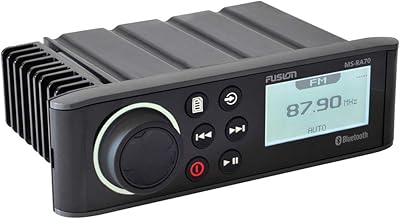
83%
92%
Audio Streaming Quality
67%
Wi-Fi Setup & Connectivity
94%
Garmin Ecosystem Integration
71%
Touchscreen Usability
89%
Build Quality & Weather Resistance
More
Fusion MS-RA70 Marine Stereo
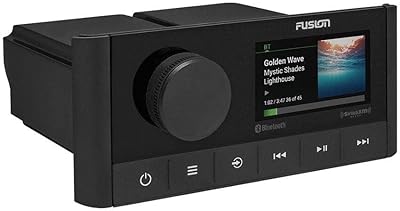
76%
91%
Ease of Installation
86%
Bluetooth Performance
88%
Garmin Ecosystem Integration
82%
Dual-Zone Audio
84%
Water Resistance
More
Fusion MS-RA60 Marine Stereo Receiver
80%
91%
Water & Weather Resistance
88%
Bluetooth Connectivity
84%
Multi-Zone Audio Control
86%
Garmin Ecosystem Integration
63%
Display Readability
More
Fusion MS-RA210 Marine Stereo
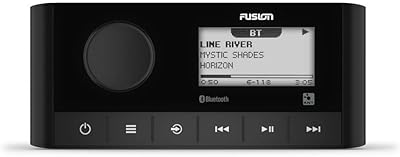
85%
91%
Sound Quality
94%
Water Resistance
85%
Ease of Setup
88%
Bluetooth Connectivity
90%
Build Quality
More
Garmin Fusion AM Series Marine Amplifier
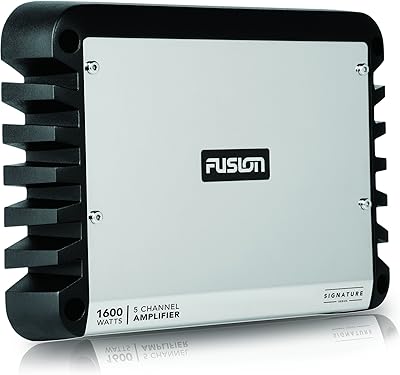
80%
88%
Sound Quality
91%
Build Quality
93%
Marine Durability
87%
Power Output
61%
Installation Experience
More
Garmin Fusion 1400W 4-Channel Marine Amplifier
81%
92%
Sound Output Quality
94%
Build Quality
89%
Heat Management
91%
Marine Durability
83%
Battery Efficiency
More
Fusion Signature Series 5-Channel Marine Amplifier
82%
93%
Power Output
88%
Build Quality
67%
Thermal Management
91%
Ecosystem Compatibility
62%
Installation Experience
More
Pyle PLMR91UB Marine Stereo
82%
89%
Waterproof Performance
76%
Bluetooth Connectivity
83%
Sound Quality
90%
Ease of Installation
85%
Durability in Marine Environments
More
UTVpro UP-3 UTV Marine Bluetooth Stereo
71%
76%
Build Quality
71%
Waterproof & Weather Resistance
83%
Bluetooth Performance
79%
Display Clarity
58%
Installation Experience
More
Pyle PLCD43BTM Marine Bluetooth Stereo Receiver
71%
88%
Ease of Installation
83%
Bluetooth Connectivity
74%
Sound Quality
54%
AM/FM Reception
71%
Hands-Free Calling
More

FAQ

Yes — and this trips up a lot of buyers. The Garmin Fusion Apollo RA670 Marine Stereo supports AirPlay 2 over Wi-Fi, but it does not have a built-in wireless router. You will need to connect it via Ethernet to an external Wi-Fi router installed on your boat. If you just want wireless audio without that setup, Bluetooth works out of the box with no additional hardware required.

Yes, that is one of the standout features of this unit. Through Fusion-Link, compatible Garmin multifunction displays can control playback, volume, and source selection directly. If you already have a Garmin MFD at the helm, you can manage your audio without ever touching the stereo itself, which is a real safety and convenience benefit when navigating.

Fusion PartyBus is a networking protocol that lets multiple compatible stereos on the same boat share audio sources and synchronize playback. If you have a single stereo on a smaller vessel, you will not need it at all. But if you are outfitting a larger boat with stereos in the cabin, cockpit, and on deck, PartyBus makes coordinating them straightforward without running separate source inputs to each unit.

It depends on your comfort level with marine wiring. The box includes wiring harnesses, mounting hardware, and an NMEA 2000 drop cable, so everything you need for a standard install is there. That said, routing cables through a dash, connecting speaker zones, and configuring the NMEA 2000 network is not trivial. If you have not done a marine stereo install before, budgeting for a professional installer is a reasonable call.

It carries dual ratings — IPX6 covers heavy spray and water jets, while IPX7 means it can handle brief submersion up to about 1 meter. It also holds True-Marine accreditation, which is a third-party certification that goes beyond just IP ratings. For a typical boating environment, including heavy rain and saltwater spray, this unit is well protected. That said, no marine stereo is designed for continuous underwater operation.

It works with Android devices via Bluetooth and USB, so basic playback is not locked to Apple. However, AirPlay 2 is an Apple-only protocol, and the Fusion-Link app experience is also optimized for iOS. Android users will not get the same wireless streaming quality or depth of app integration. If your whole crew runs Android, this unit still functions well — you just will not unlock everything it offers.

Yes, the Fusion Apollo RA670 supports SiriusXM, but you will need a compatible SiriusXM tuner connected to the unit — the subscription antenna and tuner are not included in the box. Check Garmin's compatibility list for the specific SiriusXM accessory that pairs with this model before purchasing.

On open water, you are dealing with engine rumble, wind noise, and a lot of ambient sound that muddies audio quality. The built-in DSP lets you apply audio profiles tuned for those conditions, boosting clarity rather than just pushing raw volume. In practice, it means dialogue or vocals in music stay intelligible even at speed, which is something a basic EQ adjustment on a standard stereo cannot fully address.

Updates are delivered over the air when the stereo is connected via Ethernet to a Wi-Fi router on your boat. Once that connection is established, the unit can check for and install updates automatically, which is genuinely convenient compared to the USB-stick update process common on older marine stereos. If you never set up the Wi-Fi router connection, you can still update manually through Garmin's update tools.

The 2.7″ display uses optical bonding, which significantly reduces the internal reflections and glare that make standard LCD screens hard to read in direct sun. Buyers generally report it holds up well in bright conditions. It is not the largest screen in its class, but the bonding treatment makes a real difference in legibility compared to non-bonded displays at a similar size.

Where to Buy