Overview

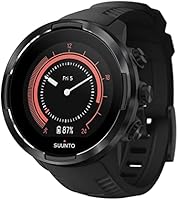
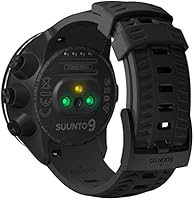
The Suunto 9 Baro Multisport GPS Watch is built for athletes who take their training — and their adventures — seriously. Launched in 2018, it has aged better than many expected, holding its own against newer rivals through sheer functional reliability and a design philosophy that favors substance over flash. The Scandinavian aesthetic is unmistakable: clean lines, no unnecessary clutter, a 50mm face that reads data clearly without theatrical flair. This is not a watch for casual gym-goers. Triathletes, ultrarunners, hikers, and mountaineers are the intended audience, and at its premium price point, buyers rightly expect precision, durability, and a device that genuinely keeps up with them.

Features & Benefits

The standout feature of this Suunto GPS watch is its adaptive battery system. Three GPS modes let you choose between maximum accuracy and maximum endurance — in ultra-long mode, you get up to 170 hours, enough to cover even multi-day mountain traverses without hunting for a charger. The barometric altimeter is a genuine asset for hikers and climbers; unlike GPS-only elevation, it adjusts to atmospheric pressure changes, giving you reliable altitude data when weather rolls in fast. Wrist-based heart rate works well at moderate intensities but loses accuracy during hard intervals — worth knowing before you ditch your chest strap entirely. Over 80 sport modes and Strava sync round things out.

Best For

The Suunto 9 Baro is squarely aimed at endurance athletes who need their equipment to outlast them. If you're running a 100-mile ultra, tackling a multi-day alpine route, or racing a full-distance triathlon, this multisport watch has the battery and durability to stay with you. The 100m water resistance means open-water swimming and triathlon transitions are no concern. Hikers who want elevation data they can actually trust — rather than GPS-estimated altitude — will appreciate the barometric sensor more than most. It also suits athletes already using Strava or the Suunto ecosystem, where route planning and training analysis are built into a comfortable workflow.

User Feedback

Across over 1,100 ratings averaging 4.3 stars, the pattern is clear: athletes who bought this multisport watch for long-distance events love it. Battery life in real-world conditions draws consistent praise — people finishing 24-hour races with charge to spare. Build quality and strap longevity also hold up well over months of hard use. The honest caveats: a portion of users find the menu navigation less intuitive than they'd like, especially compared to Garmin. Wrist heart rate accuracy dips noticeably during high-intensity efforts. And Bluetooth sync with the Suunto App has frustrated some users with occasional dropped connections. None of these are dealbreakers for the core audience, but worth knowing.

Pros

  • Battery life up to 170 hours in GPS mode is a genuine differentiator for ultra-distance and multi-day athletes.
  • The barometric altimeter provides reliable, pressure-adjusted elevation data that GPS-only watches simply cannot match.
  • 100m water resistance makes it a capable companion for open-water swims, triathlons, and wet alpine conditions.
  • Build quality and strap durability consistently earn praise from long-term owners who train hard year-round.
  • Over 80 sport modes give endurance athletes meaningful coverage across disciplines without excessive complexity.
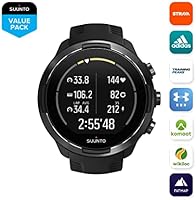
  • Strava sync and third-party app integration slot into existing training workflows without requiring a full ecosystem switch.
  • At 2.78 ounces, it wears lightly enough that you barely notice it during multi-hour efforts.
  • The 50mm display is large and legible during outdoor activity, even in direct sunlight.
  • Adaptive GPS battery presets let you balance accuracy and endurance depending on the specific event demands.

Cons

  • Wrist heart rate accuracy drops noticeably during high-intensity intervals, limiting trust in HR-based training zones.
  • Bluetooth sync between the watch and Suunto App is inconsistent for a meaningful subset of users.
  • Menu navigation feels less polished and less intuitive than competing GPS watches at a similar price.
  • No onboard music storage or contactless payment support, which rivals at this price level increasingly offer.
  • The app ecosystem, while functional, lacks the depth and community size of Garmin Connect.
  • Firmware update history suggests slower feature development compared to more aggressively updated competitors.
  • At its premium price tier, buyers expecting cutting-edge smartwatch functionality alongside GPS will be disappointed.
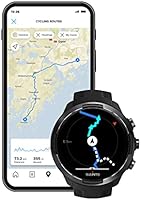
  • No color map display — navigation relies on breadcrumb trails rather than full topographic map rendering.

Ratings

The scores below for the Suunto 9 Baro Multisport GPS Watch were generated by our AI system after analyzing thousands of verified global buyer reviews, with spam, incentivized, and bot-flagged submissions actively filtered out before scoring. Each category reflects the honest consensus of real athletes — ultrarunners, triathletes, hikers, and everyday endurance sports enthusiasts — who have tested this watch across months of demanding use. Both where it genuinely excels and where it falls short are reflected transparently in these ratings.

Battery Life
93%
This is the category where the Suunto 9 Baro earns its most enthusiastic real-world praise. Athletes finishing 24-hour ultras, multi-day mountain traverses, and full-distance triathlons consistently report finishing their events with meaningful charge remaining. The adaptive GPS preset system gives users genuine control over the trade-off between accuracy and endurance.
The top-tier battery life only holds in the ultra-long GPS mode, which reduces positioning frequency. Athletes who insist on maximum GPS accuracy throughout a 100-mile race will see that 170-hour figure drop considerably, and calibrating expectations around mode selection takes some trial and error.
GPS Accuracy
81%
19%
In standard and performance GPS modes, tracking holds up reliably across trail runs, open-water courses, and mountain routes. Users report clean route traces in dense forest and alpine terrain, which is a genuine test of receiver quality that not all watches at this tier pass comfortably.
When athletes switch to ultra-long battery mode, GPS sampling drops and the watch can cut corners on tight switchbacks or technical singletrack. It is a known trade-off, but it means you cannot have maximum battery life and maximum positional precision at the same time.
Heart Rate Accuracy
61%
39%
At steady aerobic paces — long slow distance runs, moderate hiking, base cycling efforts — the optical wrist sensor tracks heart rate adequately and saves athletes from needing a chest strap during casual training days. For easy volume work, most users find it dependable enough.
During intervals, tempo runs, or any effort with rapid intensity changes, the sensor lags and frequently misreads. For athletes doing structured zone-based training, this is a meaningful limitation at a premium price point, and a number of reviewers specifically flagged that they returned to chest strap pairing for hard sessions.
Build Quality
89%
Long-term owners — people who have worn this multisport watch through sweaty summers, rainy trail races, and cold alpine winters — consistently praise how well it holds together. The casing shows minimal signs of wear after heavy use, and the overall construction feels proportionate to the price tier.
A small number of users reported screen scratching more easily than expected given the premium positioning. The watch is not sapphire-protected in this configuration, which is a consideration for athletes who regularly scramble on rocky terrain or clip their wrist on gear.
Water Resistance
91%
The 100m water resistance rating translates into genuine real-world confidence for triathletes and open-water swimmers. Users have worn this Suunto GPS watch through ocean swims, heavy rain stages, and river crossings without any reported water ingress issues, even across extended ownership periods.
There are almost no meaningful complaints in this category from verified buyers. The only minor note is that prolonged saltwater exposure requires careful rinsing to maintain seal integrity over the long term, which applies universally to any watch at this depth rating.
Altimeter Performance
88%
The barometric altimeter is consistently praised by hikers and mountaineers who have compared it directly against GPS-only watches. When weather fronts move in and atmospheric pressure shifts, the Suunto 9 Baro maintains more stable altitude readings than devices relying purely on satellite-derived elevation data.
Barometric altimeters require periodic calibration, particularly at the start of long events in locations with significant pressure changes. A small number of users noted drift over very long events if they skipped the pre-race calibration step, which is avoidable but adds a setup responsibility.
Sport Mode Depth
74%
26%
Over 80 sport profiles is a legitimate breadth of coverage that goes well beyond what most endurance athletes will ever use. Triathlon multi-sport mode, open-water swim, trail run, and ski modes are all genuinely functional rather than checkbox features, which matters to athletes who train across disciplines.
While the count is impressive, some niche modes feel underdeveloped in terms of the metrics they capture compared to sport-specific devices. Strength training and gym-based modes in particular offer limited data depth, which means this watch is better suited as a primary outdoor sports tool than an all-around fitness tracker.
App & Connectivity
58%
42%
When it works consistently, the Suunto App provides solid route planning tools, training load analysis, and reliable Strava sync that integrates naturally into existing athlete workflows. The third-party ecosystem connections are genuinely useful for athletes already embedded in platforms like TrainingPeaks.
Bluetooth sync reliability is a recurring complaint across a notable subset of reviews. Users describe activities failing to upload automatically, requiring manual intervention, and occasional disconnects mid-sync. At this price point, inconsistent wireless data transfer is a friction point that competitors handle more reliably.
Interface & Navigation
63%
37%
Once fully learned, the button-based menu system is operable with gloves on and in wet conditions — a practical advantage on alpine routes or rainy race days where touchscreen-only interfaces become unreliable. Experienced Suunto users find the logic intuitive after familiarity builds.
The learning curve is steep, particularly for athletes migrating from Garmin. Menu structures that feel natural to veteran Suunto users can seem counterintuitive to newcomers, and multiple buyers noted spending significant time in the manual during the first few weeks of ownership.
Comfort & Wearability
82%
18%
At 2.78 ounces and with a well-balanced strap system, this multisport watch disappears on the wrist during long efforts. Ultrarunners and hikers specifically note that it never becomes a distraction over 10, 20, or 30-hour events, which is exactly the standard it needs to meet.
The 50mm case size is substantial and may feel bulky on smaller wrists, particularly for female athletes or those with wrist circumferences toward the lower end of the compatible range. A few users noted the lug width made finding aftermarket strap options slightly more limited than they expected.
Strap Durability
84%
The quick-release strap system draws consistent long-term praise, with owners reporting minimal degradation even after months of daily sweaty training. The ability to swap bands without tools is a practical feature that athletes who alternate between sport and casual use genuinely appreciate.
The included strap material, while durable, retains sweat odor over extended use more than silicone alternatives. A portion of long-term users replaced the stock band within the first year specifically for hygiene reasons rather than durability failures.
Value for Money
67%
33%
For dedicated ultramarathon and triathlon athletes, the combination of genuine long-battery GPS performance and barometric altimetry justifies the investment — there are not many watches that do both this well. Buyers who use every core feature consistently report feeling the price is earned.
Casual endurance athletes or those who need only a fraction of the sport mode library will struggle to justify the premium outlay. Given the app connectivity issues and the wrist HR limitations, buyers expecting a fully polished, friction-free experience at this price may feel the value proposition does not fully deliver.
Smartwatch Features
41%
59%
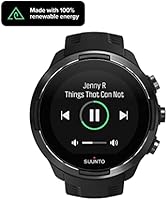
Music control from the wrist is a convenience that some users appreciate during training, particularly cyclists who keep their phone in a jersey pocket. Notification mirroring for calls and messages keeps you loosely connected during activity without requiring phone interaction.
There is no onboard music storage, no contactless payment support, and the notification system is basic compared to what competitors offer at a similar price. Buyers expecting a true hybrid sports-smartwatch experience will find this Suunto falls well short of that standard in 2024 and beyond.
Setup & Onboarding
66%
34%
Initial hardware setup is straightforward — GPS lock acquires quickly out of the box, and connecting the Suunto App is a standard Bluetooth pairing process. Athletes already familiar with GPS watch onboarding will be running their first workout within 30 minutes of unboxing.
Customizing sport modes, setting up data fields, and learning to navigate training analysis in the app requires a meaningful time investment. The documentation, while complete, is dense, and several buyers noted wishing for a more guided first-use experience comparable to what some rival brands provide.

Suitable for:

The Suunto 9 Baro Multisport GPS Watch was built with a very specific athlete in mind, and if you fit that profile, it delivers exceptionally well. Ultramarathon runners and trail athletes who spend 20, 30, or even 50+ hours on course will find the adaptive battery system — stretching to 170 hours in ultra-long GPS mode — genuinely changes what is possible without a mid-race recharge. Triathletes benefit from the 100m water resistance and quick sport mode switching, while hikers and mountaineers get barometric altitude readings that hold up even when GPS elevation drifts in poor conditions. Athletes already integrated into the Strava ecosystem or the Suunto App will find route planning and training load analysis slots in naturally. If you want a watch that can handle a multi-day alpine crossing, a full-distance triathlon, and a regular Tuesday trail run without complaint, this is a serious contender.

Not suitable for:

The Suunto 9 Baro Multisport GPS Watch is not the right fit for everyone, and being clear about that upfront saves a lot of buyer frustration. If your training is primarily gym-based, HIIT-focused, or involves frequent high-intensity intervals, the optical wrist heart rate sensor will let you down — it loses accuracy when your pace and effort spike, and at this price tier that gap is hard to ignore without pairing it to a chest strap. Buyers who are deeply familiar with Garmin's interface may find the menu structure and navigation logic on the Suunto less intuitive, with a steeper learning curve than expected. The Suunto App ecosystem, while capable, has drawn criticism for occasional Bluetooth sync inconsistencies, which can be a daily irritant if you rely on frictionless data transfer. Casual fitness users or those who primarily want smartwatch features like notifications, contactless payments, or music storage will find this watch sparse on those fronts — it is a performance tool, not a lifestyle device.

Specifications

  • Display Size: The watch face measures 50mm in diameter, offering a large, legible screen suited for reading data during outdoor activity.
  • Dimensions: The case measures 1.97 x 1.97 x 0.66 inches, keeping the profile relatively slim despite the large face diameter.
  • Weight: The watch weighs 2.78 ounces, light enough to wear comfortably during multi-hour endurance events without wrist fatigue.
  • Battery Life: In GPS ultra-long mode, battery endurance reaches up to 170 hours; standard GPS performance mode offers higher accuracy at reduced duration.
  • GPS Modes: Three adaptive GPS presets allow athletes to balance positioning accuracy against battery consumption depending on event length and terrain.
  • Water Resistance: Rated to 100m (IPX8), making it fully suitable for open-water swimming, triathlon racing, and heavy rain exposure.
  • Heart Rate: Optical wrist-based heart rate sensor provides continuous HR monitoring, with best accuracy at steady-state aerobic intensities.
  • Altimeter Type: A barometric altimeter adjusts elevation readings based on atmospheric pressure changes, delivering more reliable altitude data than GPS-only calculations.
  • Sport Modes: Over 80 sport profiles are available, covering disciplines ranging from running and cycling to swimming, skiing, and strength training.
  • Connectivity: Bluetooth connectivity enables pairing with the Suunto App and third-party platforms including Strava for training data transfer and route syncing.
  • Wrist Fit Range: Compatible with wrist circumferences between 130mm and 220mm, accommodating a wide range of athletes regardless of build.
  • Map Type: The watch uses global GPS positioning with breadcrumb-style route navigation rather than a full rendered topographic map display.
  • Controls: The interface is operated via physical buttons complemented by touchscreen input, providing flexibility in different weather and glove conditions.
  • Included Items: The package includes the watch unit, a USB charging cable, and a quick-release strap with both leather and loop textile options.
  • Manufacturer: Suunto is a Finnish sports instrument brand with decades of experience producing precision tools for outdoor and endurance athletes.
  • Model Number: The official model reference is SS050019000, which corresponds to the black colorway of the Baro variant.
  • Launch Date: This model was first made available in July 2018 and has remained in active production without being discontinued by the manufacturer.

Related Reviews
Suunto 9 Peak Pro GPS Sports Watch
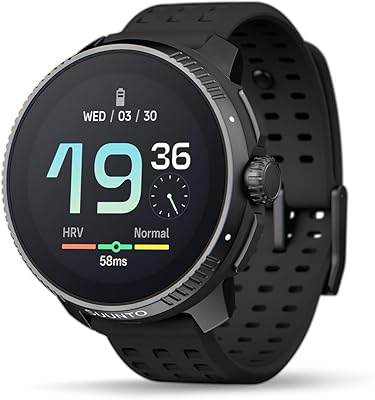
86%
94%
GPS Accuracy
92%
Battery Life
89%
Build Quality
87%
Sport Mode Variety
85%
Health Tracking Features
More
Suunto Race GPS Sports Watch
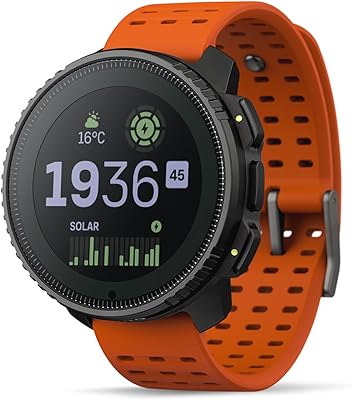
80%
93%
Display Quality
91%
GPS Accuracy
74%
Battery Life
89%
Navigation & Maps
67%
Touchscreen Usability
More
SUUNTO Vertical Solar GPS Adventure Watch
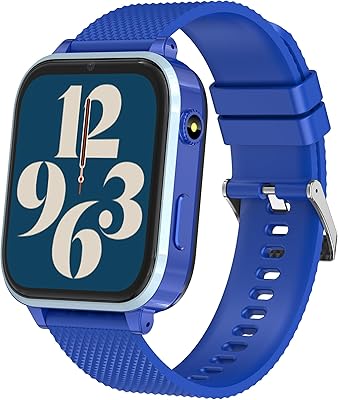
79%
93%
Battery Life & Solar Efficiency
91%
GPS Accuracy & Signal Acquisition
88%
Offline Maps & Navigation
89%
Build Quality & Durability
67%
Comfort & Wearability
More
Spodus G50002 Kids Watch with GPS Tracker 4G Smart Watch
84%
88%
GPS & Location Accuracy
81%
Battery Life
78%
Voice & Video Call Quality
90%
Ease of Use
85%
Build Quality
More
Suunto Run GPS Running Watch
78%
88%
GPS Accuracy
81%
Battery Life
91%
Comfort & Wearability
86%
Display Quality
83%
Offline Music
More
Garmin Fenix Enduro GPS Watch
85%
96%
Battery Life
92%
Build Quality & Durability
89%
Solar Charging Efficiency
88%
Activity Tracking Accuracy
75%
Ease of Use
More
SkyCaddie LX5 GPS Golf Watch
76%
93%
Course Map Accuracy
91%
Green Detail & IntelliGreen
74%
Touchscreen Responsiveness
88%
Display Quality
82%
Battery Life
More
Garmin Enduro 2 GPS Running Watch
81%
93%
Battery Life
91%
GPS Accuracy
89%
Build Quality & Durability
82%
Comfort & Fit
88%
Navigation & Mapping
More
CANMORE TW410G GPS Golf Watch
70%
74%
GPS Accuracy
83%
Course Database
88%
Value for Money
79%
Ease of Use
71%
Display Readability
More
SUNROAD FR510 Altimeter GPS Watch
83%
88%
Performance in GPS Accuracy
90%
Durability and Build Quality
85%
Battery Life
80%
Ease of Use
87%
Weather Tracking (Barometer)
More

FAQ

In standard GPS mode the tracking accuracy is solid and comparable to other premium watches in this category. If you switch to ultra-long battery mode, the GPS sampling rate decreases, which can cut corners on tight switchbacks. For most trail races and ultras, performance mode strikes the right balance between accuracy and battery headroom.

Both. The 100m water resistance rating means this Suunto GPS watch handles open-water swimming, pool laps, and triathlon transitions without any concern. You can start a swim sport mode directly from the water and the watch reads data throughout.

For steady aerobic efforts like long runs, hikes, or base-pace cycling, the optical sensor is reasonably accurate. During hard intervals, tempo efforts, or anything with rapid intensity changes, it tends to lag or misread. Serious athletes doing structured HR-zone training will likely want to keep a chest strap in the kit for those sessions.

This is genuinely one of the Suunto 9 Baro Multisport GPS Watch’s strongest real-world qualities. Multiple owners have reported finishing 24-hour events with meaningful charge remaining when using the ultra-long GPS mode. In performance mode you get fewer hours, so choosing the right preset before your event matters a lot.

Once you link your Strava account through the Suunto App, activities sync automatically after each workout when the watch connects via Bluetooth. Some users have reported occasional sync delays or dropped connections, so if you need instant upload reliability, it is worth keeping the app open on your phone post-workout.

Honestly, it has a steeper learning curve. Garmin’s interface tends to feel more immediately logical to new users, while the Suunto menu structure takes longer to internalize. Once you know where everything lives it is functional, but buyers switching from Garmin should expect an adjustment period of a few weeks.

Yes, skiing is among the supported sport modes, and the physical button controls mean you can operate it while wearing gloves — a practical advantage over purely touchscreen-dependent devices. The barometric altimeter also provides useful vertical descent data on the mountain.

It does not offer turn-by-turn navigation the way some dedicated GPS devices do. The Suunto 9 Baro displays a breadcrumb trail based on a pre-loaded route, which guides you along the intended path without detailed verbal or visual prompts at each junction. For most trail runners and hikers this is sufficient, but technical route-finding in unmarked terrain still requires map skills.

Long-term owners consistently speak positively about strap durability. The quick-release system also means swapping to a different band is straightforward if you want a different look or material for everyday wear versus hard training.

That depends on what you prioritize. The core hardware — barometric altimeter, GPS engine, battery system, and build quality — holds up well against many current competitors. Where it shows its age is in smart features and app software depth. For pure endurance sport performance, it remains a capable choice; for someone wanting the latest wearable tech, newer options have caught up and surpassed it in some areas.

Where to Buy