Overview

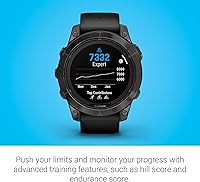
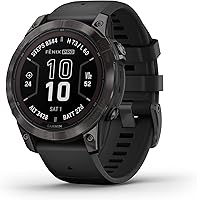
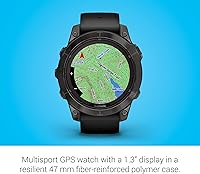
The Garmin fēnix 7 Pro Sapphire Solar Smartwatch sits at the top of Garmin's multisport lineup, and the Pro Sapphire Solar designation is more than just branding. Compared to the standard fenix 7, you get a titanium bezel and rear cover, a scratch-resistant Power Sapphire solar lens, a built-in LED flashlight, and two new performance metrics — Hill Score and Endurance Score. The 47mm fiber-reinforced polymer case weighs 73 grams, which is noticeable on smaller wrists. This is a watch built for serious endurance athletes and outdoor adventurers, not casual fitness trackers. If you train hard, log long miles outdoors, and want deep data, the investment makes sense. If you don't, it probably won't.
Features & Benefits

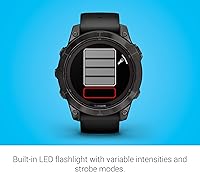
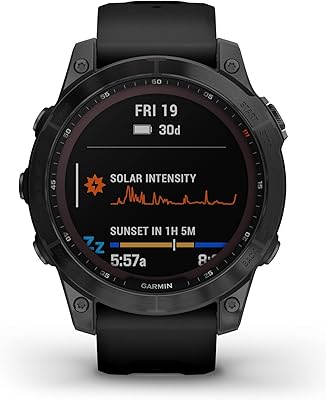
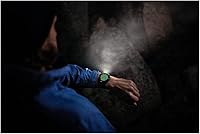
The solar charging capability is the headline feature, but its real-world impact depends heavily on how and where you train. Runners and cyclists logging hours under open skies — especially in sunny climates — will see meaningful battery extension. Indoor gym users or those in overcast regions? Not so much. The built-in flashlight, available in multiple intensities and a strobe mode, is genuinely practical for pre-dawn trail runs or navigating a dark campsite. Hill Score and Endurance Score analyze your athletic output across all activities to give you a clearer picture of fitness progression. The health suite adds HRV status, Pulse Ox, sleep tracking, and a morning readiness report — useful estimates, though not clinical measurements.

Best For

This solar multisport watch was built for people who spend serious time outdoors under load. Trail runners logging big weekly mileage, triathletes bouncing between swim, bike, and run, and cyclists grinding long routes will get the most from it. Hikers and mountaineers benefit from offline topographic maps, Pulse Ox for altitude acclimation, and a flashlight that is actually useful in the backcountry. Frequent travelers heading into remote areas will appreciate having a capable navigation tool on their wrist. That said, if your training mostly happens indoors or you want an Apple Watch-style app experience, this Garmin fenix 7 Pro will likely feel overbuilt and unnecessarily complex for your needs.

User Feedback

Owners of the fenix 7 Pro Sapphire Solar tend to agree on a few things: GPS accuracy is excellent, the build feels genuinely rugged, and the battery life — especially with regular outdoor exposure — outlasts most competing watches. Where opinions split is on the learning curve. New Garmin users often describe the interface as dense and time-consuming to configure properly. The 47mm case also draws consistent comments about wrist fit — it is large, and not everyone adjusts. The flashlight gets mixed reactions; some owners use it constantly, others call it a novelty. Pulse Ox and sleep tracking consistency draw occasional complaints, with some users noting unreliable overnight readings.

Pros

  • Multi-band GPS delivers consistently accurate tracking even in dense forests, deep canyons, and urban environments.
  • Solar charging meaningfully extends battery life for athletes who regularly train outdoors in sunny conditions.
  • The titanium bezel and rear cover feel premium and hold up well to daily abuse and rough outdoor use.
  • Hill Score and Endurance Score give endurance athletes genuinely useful, long-term fitness progression data.
  • The built-in flashlight is a practical tool for pre-dawn runs and backcountry navigation, not just a gimmick.
  • Offline topographic maps make this solar multisport watch a credible navigation device without a phone signal.
  • The health monitoring suite — HRV, sleep tracking, morning report — creates a useful daily picture of recovery status.
  • USB-C charging is a welcome upgrade over older proprietary Garmin cables.
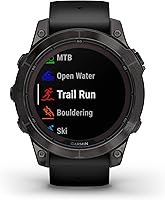
  • Multisport profiles cover an impressive range of activities, from open-water swimming to alpine skiing.
  • Build quality and materials feel proportionate to the premium price tier.

Cons

  • The learning curve for new Garmin users is steep; navigating menus and configuring the watch takes real time and patience.
  • At 47mm and 73 grams, the fenix 7 Pro Sapphire Solar sits large and heavy on smaller wrists throughout the day.
  • Solar gains are highly dependent on climate and activity type — cloudy regions and indoor training negate the benefit almost entirely.
  • Pulse Ox and HRV readings are estimates, and some users report inconsistent overnight measurements that undermine trust in the data.
  • GarminOS lacks the third-party app depth and polish that users switching from Apple Watch or Wear OS will expect.
  • The watch face display resolution, while functional, looks dated compared to AMOLED screens on competing smartwatches.
  • Battery charging from low to full still takes a dedicated USB-C session — solar alone cannot rescue a depleted battery quickly.
  • Flashlight utility is niche; buyers who rarely train in low-light conditions are paying for a feature they may never use.
  • The upfront cost is difficult to justify for athletes who train primarily indoors or do not push into endurance territory.

Ratings

The Garmin fēnix 7 Pro Sapphire Solar Smartwatch scores below reflect AI-synthesized analysis of thousands of verified global buyer reviews, with spam, bot activity, and incentivized feedback actively filtered out. Ratings are assigned across categories that real athletes and outdoor enthusiasts consistently cite as decision-making factors, capturing both the genuine strengths and the honest frustrations that surface after extended daily use.
GPS Accuracy
94%
Trail runners and triathletes consistently praise the multi-band GPS for holding lock in dense tree cover, steep canyon terrain, and urban canyons where lesser watches drift badly. On long-distance events, cumulative distance errors are minimal, which matters when every kilometer counts in race planning.
A small number of users report occasional initial satellite acquisition delays in cold weather or when switching quickly between indoor and outdoor modes. Multi-band mode also draws more battery, so some athletes disable it on shorter efforts to preserve charge.
Battery Life
88%
In smartwatch mode with regular outdoor exposure, this solar multisport watch comfortably outlasts most competitors, with many users in sunny climates reporting weeks between charges. Ultramarathon runners and multi-day hikers particularly value not having to pack a charger for weekend trips.
Solar contributions are inconsistent — buyers in the Pacific Northwest, UK, or Scandinavia report little measurable benefit from the solar lens, effectively paying a premium for a feature that rarely activates. Running with multi-band GPS and music enabled can cut the advertised battery life considerably.
Build Quality
92%
The titanium bezel and rear cover hold up exceptionally well to daily punishment — rock scrambling, pool sessions, and accidental knocks leave minimal marks. The fiber-reinforced polymer case keeps weight manageable while the Power Sapphire lens resists scratches far better than standard mineral glass alternatives.
The silicone band that ships in the box can feel stiff and traps sweat during high-intensity sessions, leading many buyers to replace it quickly with an aftermarket option. A few users also note that the side buttons can feel slightly stiff in very cold conditions.
Health Monitoring
76%
24%
The morning readiness report and continuous HRV tracking give athletes a practical daily signal for how hard to push training, and many users describe it as a genuinely useful habit-forming tool over weeks of use. Sleep stage data and overnight Pulse Ox readings add meaningful context to recovery decisions.
Pulse Ox readings at altitude are inconsistent enough that mountaineers report second-guessing the numbers rather than trusting them. HRV and sleep data are estimates — not clinical measurements — and occasional overnight tracking gaps frustrate users who rely heavily on the recovery scores.
Sport & Training Metrics
91%
Hill Score and Endurance Score stand out as genuinely differentiated tools that evolve meaningfully over months of training, giving endurance athletes a long-term fitness lens that most rivals cannot match. The breadth of sport profiles — from open-water swimming to alpine skiing — makes the fenix 7 Pro Sapphire Solar a true single-device solution for multisport athletes.
The sheer volume of available metrics can overwhelm users who are new to Garmin, and it takes time to understand which data fields to prioritize per activity. Some sport-specific profiles, particularly indoor rowing and strength training, feel less refined than the running and cycling equivalents.
Ease of Use
61%
39%
Once configured, the combination of touchscreen and five physical buttons gives experienced Garmin users fast, glove-friendly access to key functions mid-activity. The dual-input system is especially practical during winter trail runs or rainy cycling sessions where touchscreens on competing watches fail.
New Garmin users consistently describe the initial setup and menu navigation as genuinely frustrating — finding and adjusting data fields, activity profiles, and alert settings involves navigating multiple layers of menus with limited guidance. Users switching from Apple Watch or Wear OS frequently report a weeks-long adjustment period before the watch feels intuitive.
Solar Charging Value
67%
33%
For athletes who spend several hours daily training under direct sunlight — think open-road cyclists, desert trail runners, or ski mountaineers — the solar lens delivers a real, measurable reduction in charging frequency. In ideal conditions, the technology does what it promises.
The solar value proposition falls apart for buyers in cloudy climates or those who train mostly indoors, making it a hard sell as a premium differentiator. Several users specifically mention feeling the solar feature was marketed more broadly than its real-world applicability warrants.
Wrist Comfort & Fit
63%
37%
Athletes with medium to large wrists generally find the 47mm case settles in during activity, and the relatively lightweight titanium construction prevents the fatigue associated with heavier steel-cased watches of similar size. The lug design sits relatively flat, reducing the risk of snagging during technical activities.
Buyers with wrists under roughly 6.5 inches in circumference frequently comment that the case extends past the wrist edge and creates pressure points during extended wear. Wearing the watch all day in an office or formal setting draws frequent comments about its imposing size compared to dress-friendly alternatives.
App Ecosystem
54%
46%
The Connect IQ store covers the essentials well for fitness-first users — training apps, navigation tools, and useful watch face customizations are available and functional. For buyers who primarily use the watch as a sports computer, the ecosystem gaps rarely surface as day-to-day frustrations.
Users who switch from Apple Watch or Wear OS consistently cite the limited third-party app selection as a real downgrade in everyday convenience, particularly for productivity, music service integration, and payment options. GarminOS simply was not built to compete as a general-purpose smartwatch platform.
Display Quality
71%
29%
Outdoor visibility is excellent — the transflective MIP display is genuinely easy to read in direct sunlight, which is exactly what trail runners and cyclists need at a glance. The always-on nature of the display means no wrist-flicking to check metrics mid-effort.
Indoors or in low ambient light, the display looks noticeably muted and dated compared to AMOLED panels on rival smartwatches from Samsung or Apple. Buyers who use their watch primarily in the evening or indoors will find the screen underwhelming for casual reading or notification viewing.
Flashlight Utility
74%
26%
For athletes who regularly start before dawn or finish after dark, the variable-intensity flashlight becomes a genuinely relied-upon feature rather than a curiosity — particularly for lighting a path on singletrack trails or making yourself visible to drivers on road runs. The strobe mode adds a practical safety layer for cyclists.
Buyers who train exclusively during daylight hours report rarely if ever using the flashlight, which contributes to a sense that the feature adds cost without personal benefit. Accessing the flashlight also requires navigating the menu during activity, which some users find disruptive compared to a dedicated physical button.
Navigation & Maps
89%
Offline topographic maps loaded directly to the watch give hikers and mountain bikers reliable navigation without any phone signal dependency — a critical advantage in remote backcountry terrain. Breadcrumb navigation, turn-by-turn routing, and back-to-start features work reliably and are fast to access mid-activity.
The 1.3-inch display limits how much map detail is comfortably readable at a glance, requiring users to zoom and pan more than they would on a larger device. Initial map downloading and management through Garmin Explore or Basecamp has a learning curve that frustrates less technically inclined buyers.
Connectivity & Syncing
82%
18%
Wi-Fi syncing means activity data uploads to Garmin Connect automatically without needing to open an app or keep a phone nearby, which is a small but genuinely appreciated convenience for athletes who review data after every session. USB-C charging is a welcome standardization over older proprietary Garmin connectors.
Bluetooth connectivity can be inconsistent during music streaming or when syncing large data sets, with occasional dropouts reported on both Android and iOS. A handful of users also note that Garmin Connect app stability has room for improvement, with occasional sync failures requiring a watch restart.
Value for Money
69%
31%
For serious endurance athletes who will use the GPS, training metrics, navigation, and health monitoring daily, the feature density justifies the premium positioning — the watch genuinely replaces several standalone devices. Buyers with an existing Garmin ecosystem also benefit from accessory and sensor compatibility that extends the platform's utility.
Casual fitness users and anyone primarily interested in smartwatch features will find the price difficult to justify when more affordable alternatives cover everyday health tracking adequately. The solar premium in particular feels hard to defend for buyers who cannot reliably benefit from it based on their climate or training environment.

Suitable for:

The Garmin fēnix 7 Pro Sapphire Solar Smartwatch is built for athletes who treat their training seriously and spend significant time outdoors. Trail runners logging 50-plus miles per week will appreciate the multi-band GPS accuracy and the solar-assisted battery that keeps the watch alive through multi-day efforts without hunting for a charger. Triathletes benefit from the seamless multisport profiles that transition between swimming, cycling, and running without fuss, while the depth of recovery data — HRV status, training load, readiness scores — gives data-driven athletes something genuinely actionable to work with. Mountaineers and backcountry hikers get offline topographic maps, Pulse Ox for altitude awareness, and a flashlight that is actually useful when you are miles from the nearest trailhead at dusk. Frequent travelers who need one rugged, capable device for navigation, fitness tracking, and everyday wear will also find this solar multisport watch earns its place on the wrist every single day.
Not suitable for:

The Garmin fēnix 7 Pro Sapphire Solar Smartwatch is a poor fit for anyone who wants a smartwatch first and a fitness tracker second. If your priority is a rich app ecosystem, smooth third-party integrations, or a watch that handles notifications, calendar management, and digital wallet use as its core identity, GarminOS will feel limiting compared to Apple Watch or Wear OS devices. The 47mm case and 73-gram weight are substantial — people with smaller wrists or those who prefer lightweight everyday wear often find it uncomfortable over long periods outside of training. Solar charging sounds compelling, but buyers in consistently overcast climates or those who train primarily indoors should not factor it into their decision, as the gains can be negligible in those conditions. The price point is also hard to justify for casual gym-goers or anyone whose fitness routine does not regularly take them outdoors for extended efforts.
Specifications

  • Case Size: The watch features a 47mm case diameter suited to medium and large wrists.
  • Case Material: The case body is constructed from fiber-reinforced polymer, balancing durability with reduced overall weight.
  • Bezel & Back: Both the bezel and rear cover are machined from titanium, adding scratch resistance and a premium feel without excessive bulk.
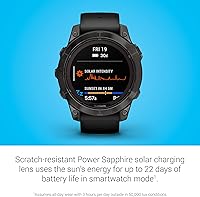
  • Lens: The Power Sapphire solar charging lens is scratch-resistant and continuously harvests sunlight to extend battery life.
  • Display: A 1.3-inch round screen runs at 480x272 resolution, offering clear readability in direct sunlight.
  • Weight: The watch weighs 73 grams (2.57 oz), which is noticeable compared to lightweight sport watches but reasonable for the feature set.
  • Battery: A lithium polymer cell powers the watch, supplemented by solar input; battery life varies significantly based on GPS mode, solar exposure, and screen usage.
  • Storage: 32GB of onboard storage accommodates music files, downloaded maps, and activity data without relying on a paired phone.
  • Connectivity: The watch connects via Bluetooth and Wi-Fi for syncing and notifications, with USB-C used for wired charging and data transfer.
  • GPS System: Built-in multi-GNSS support covers GPS, GLONASS, and Galileo, with multi-band mode available for improved accuracy in challenging environments.
  • Operating System: GarminOS powers the device, offering deep sport and health functionality with a curated third-party app library through the Connect IQ store.
  • Input Methods: The watch supports both touchscreen gestures and five physical buttons, allowing full control even with wet hands or gloves.
  • Flashlight: A built-in LED flashlight offers multiple brightness intensities and a strobe mode for visibility and safety during low-light activities.
  • Health Sensors: Onboard sensors track heart rate variability (HRV), blood oxygen saturation (Pulse Ox), respiration rate, and continuous heart rate.
  • Sport Metrics: The watch introduces Hill Score and Endurance Score, two proprietary metrics that track running strength on ascents and overall athletic endurance over time.
  • Sleep Tracking: Advanced sleep monitoring records sleep stages, HRV during rest, and contributes data to the morning readiness report each day.
  • Garmin Pay: Contactless payments are supported through Garmin Pay where compatible financial institutions and regions allow.
  • In the Box: The package includes the watch, a USB-C charging and data cable, and standard documentation; no additional bands or adapters are included.

Related Reviews

Garmin fēnix 7 Sapphire Solar
88%
94%
Battery Life
91%
Build Quality & Durability
89%
Fitness & Health Tracking
90%
GPS & Navigation Accuracy
87%
Display Quality
More
Garmin Fenix 6 Pro Solar GPS Watch
75%
93%
GPS Accuracy
89%
Battery Life
67%
Solar Charging Effectiveness
91%
Build Quality & Durability
54%
Ease of Use & Interface
More
Garmin Fenix 6 Sapphire Multisport GPS Watch
79%
93%
GPS Accuracy
88%
Battery Life
94%
Build Quality
91%
Navigation & Mapping
89%
Training Features
More
Garmin Instinct Solar Rugged Smartwatch
78%
88%
Battery Life
93%
Build Quality
91%
GPS Accuracy
89%
Navigation Features
74%
Solar Charging
More
Garmin Fenix 7S Adventure Smartwatch
88%
94%
Battery Life in GPS Mode
92%
Build Quality & Durability
88%
Sports and Fitness Tracking
89%
Solar Charging Efficiency
85%
Ease of Use & Setup
More
Garmin Fenix 8 Sapphire 43mm
88%
96%
Build Quality & Durability
94%
Battery Life
91%
GPS Accuracy
93%
Sports & Activity Tracking
88%
Display Clarity
More
Garmin quatix 7 Marine GPS Smartwatch
79%
93%
Marine Integration
89%
Battery Life
91%
Build Quality & Durability
87%
Display Readability
67%
Touchscreen Performance
More
Garmin Enduro 3 GPS Smartwatch
83%
96%
Battery Life
91%
GPS Accuracy
93%
Build Quality
88%
Comfort & Wearability
89%
Navigation & Mapping
More
Garmin D2 Mach 1 Pro Aviator Smartwatch
85%
91%
Display Quality
94%
Aviation Features
90%
Durability and Build Quality
88%
Health and Fitness Tracking
76%
Battery Life
More
Garmin fēnix 8 51mm AMOLED GPS Smartwatch
86%
94%
Battery Life
92%
GPS Accuracy
88%
Display Quality
90%
Durability
85%
Fitness Tracking
More

FAQ

It depends heavily on how much direct sunlight your wrist sees during the day. Garmin estimates that in smartwatch mode with around three hours of daily sun exposure, solar can add days or even weeks to the charge cycle. In GPS mode with full sun, the gains are smaller but still meaningful on long outdoor efforts. If you train indoors or live somewhere overcast, the solar benefit will be minimal — plan to charge it like a regular watch.

That really comes down to your wrist size and personal preference. On wrists under about 6.5 inches in circumference, the case can feel oversized and the lug-to-lug distance may extend past the wrist. Many athletes find they adapt to the bulk during workouts but find it intrusive in formal or office settings. It is worth trying one on in person if wrist comfort is a concern for you.

The Pro variant adds three things over the standard fenix 7: the Power Sapphire solar lens, the built-in LED flashlight, and the titanium bezel and rear cover. It also includes the newer Hill Score and Endurance Score metrics. Whether that is worth the price difference depends on how much you value those additions — particularly the flashlight and solar charging — as the core GPS and health features are largely shared across the fenix 7 family.

Yes. The Garmin fēnix 7 Pro Sapphire Solar Smartwatch is rated to 10 ATM, making it suitable for swimming pools and open water. It has dedicated swim profiles that track distance, pace, stroke rate, and SWOLF score. The touchscreen is disabled in water automatically, so you navigate via the physical buttons during swim sessions.
They are useful estimates, not clinical measurements. Pulse Ox readings can be affected by wrist placement, skin tone, movement, and cold temperatures — at altitude, accuracy can vary. HRV status is tracked overnight and gives you a general trend over time rather than a precise snapshot. Use them as directional indicators for recovery and wellness, not as medical data.

This solar multisport watch is highly capable as a standalone device. GPS, onboard maps, music playback, health tracking, and activity logging all work without a paired phone. You do need a phone connection for syncing data to Garmin Connect, receiving smart notifications, and downloading new maps or music. For most outdoor activities, leaving your phone behind is perfectly practical.

Using the USB-C cable, a full charge typically takes around two hours. Solar charging alone cannot meaningfully rescue a low battery — it extends endurance rather than replacing a proper charge session. It is a good habit to top the watch off via cable every few days depending on your usage, then let solar do the rest.

For athletes who regularly train before sunrise or after sunset, the flashlight gets used constantly — it is bright enough to illuminate a trail or path at close range and the strobe mode adds visibility to oncoming traffic or other trail users. For people who train exclusively during daylight hours, it will rarely if ever come out of the menu. Your training schedule is the best guide to how much value you will get from it.

GarminOS is purpose-built around fitness and outdoor navigation, so it excels at those tasks while trailing behind in everyday smartwatch convenience. The Connect IQ app store has a fraction of the app selection available on Apple Watch or Wear OS, and the interface takes time to learn. If you want a watch that handles fitness and smart features equally well, you may find GarminOS limiting. If sport and GPS performance is the priority, the trade-off is usually worth it for serious athletes.

It works with both Android and iOS via the Garmin Connect app. Full functionality — including notifications, syncing, and music transfer — is available on both platforms. Some features, like certain Garmin Pay integrations, may vary depending on your bank and region, but the core watch experience is consistent across Android and iPhone.

Where to Buy