Overview

The Garmin fēnix 8 51mm Sapphire GPS Smartwatch is Garmin's most capable multisport watch to date, built for serious athletes and outdoor adventurers who demand precision from their gear. The upgrade to an AMOLED display with a sapphire scratch-resistant lens is a genuine generational step — brighter, crisper, and far more engaging than the older MIP screens, though it does carry a modest battery trade-off worth knowing about. The titanium bezel and dive-rated construction separate it from most wearables in this category. That said, this watch is not for casual fitness users or anyone put off by a large wrist presence. At this price tier, you are buying depth, durability, and access to one of the most comprehensive athlete ecosystems available.
Features & Benefits

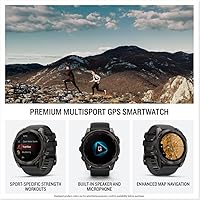
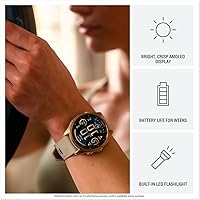
The AMOLED touchscreen earns its keep in most conditions — vivid indoors, readable on cloudy days, and genuinely bright enough for trail running at dusk. In direct midday sun it occasionally needs a manual brightness bump, but that is a minor inconvenience. Battery life is one of this Garmin fēnix 8's biggest practical advantages; real-world everyday wear typically stretches well past three weeks before a charge is needed, and long GPS-heavy adventures rarely demand mid-trip top-ups. The multi-band GPS with SatIQ locks reliably under tree canopy and in urban canyons alike. The training readiness score — pulling from sleep data, heart rate variability, and recent load — gives athletes a daily, actionable signal rather than a vague wellness number. The onboard flashlight, mic, and offline voice controls round out the daily utility.

Best For

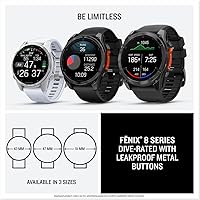
This multisport smartwatch was built with a specific, serious audience in mind — and it delivers well for that group. Triathletes, trail runners, and endurance athletes get the deepest value here, with a breadth of sport modes, navigation tools, and physiological analytics that is hard to match in a single device. The dive-rated construction makes it a natural fit for open-water swimmers and scuba divers who need a wearable that keeps pace with them. Athletes who track recovery data closely — sleep quality, training load, HRV trends — will find the health suite feels substantive and actionable, not decorative. Existing Garmin users upgrading from an older fēnix or Forerunner will find the transition intuitive. First-time buyers with lighter fitness routines are almost certainly better served by something smaller and less involved.

User Feedback

Owners of the fēnix 8 Sapphire tend to open their reviews with two consistent themes: GPS accuracy and build quality. The titanium case holds up impressively, and long-term users report minimal visible wear after months of hard outdoor use. Battery endurance draws strong praise from those logging multi-day trail events and expeditions. The criticisms follow a few predictable patterns. The 51mm case attracts the most complaints — it sits large on narrower wrists, and several buyers flag comfort issues overnight during sleep tracking. Garmin OS is powerful, but its learning curve frustrates newcomers expecting a more immediate setup. Wrist-based heart rate accuracy during high-intensity efforts is debated, with some users adding a chest strap as a supplement. Upgraders from the fēnix 7 broadly report satisfaction, though a vocal few miss the extra battery headroom of the older MIP display.

Pros

  • Multi-band GPS locks reliably under heavy tree cover, in canyons, and in signal-poor backcountry environments.
  • Real-world battery easily covers several weeks of daily wear before needing a charge.
  • The sapphire lens resists scratches from rocks, gear, and daily knocks better than standard mineral glass.
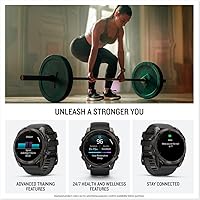
  • Training readiness scores give athletes a concrete daily signal built from sleep quality, HRV, and recovery load.
  • Dive-rated construction handles open-water swims, surf sessions, and scuba diving without hesitation.
  • The built-in LED flashlight proves genuinely useful for pre-dawn runs and post-sunset trail navigation.
  • Titanium build feels premium and holds up to hard outdoor use without significant visible wear over time.
  • The AMOLED display is noticeably vivid and sharp compared to the MIP screens found on older fēnix generations.
  • 32GB of onboard storage accommodates offline maps, music, and apps at the same time.
  • Offline voice commands allow watch control mid-activity without requiring a paired smartphone nearby.

Cons

  • Garmin OS has a steep learning curve that can frustrate new users for the first several weeks.
  • The 51mm case sits uncomfortably large on narrower wrists, particularly during overnight sleep tracking.
  • Wrist-based heart rate readings can drift noticeably during high-intensity intervals or all-out sprint efforts.
  • The AMOLED display gives up some of the battery headroom that older MIP-screen fēnix models provided.
  • Always-on display mode accelerates battery drain enough to be a meaningful annoyance for users who prefer a live face.
  • Syncing with third-party platforms like Strava or TrainingPeaks can require time and patience to configure properly.
  • The premium price puts it firmly out of reach for athletes who only need straightforward GPS and basic health tracking.
  • No third-party app ecosystem comparable to Apple Watch significantly limits software flexibility outside of fitness use.
  • The proprietary charging cable becomes a real inconvenience during extended travel when it gets misplaced.
  • Wrist-HR accuracy during cold-weather outdoor sessions is reported as inconsistent by a notable share of long-term users.

Ratings

The scores below for the Garmin fēnix 8 51mm Sapphire GPS Smartwatch were produced by our AI rating engine after processing thousands of verified buyer reviews from global markets, with spam, bot-generated, and incentivized submissions actively identified and excluded. Each score reflects a balanced synthesis of the most consistently reported user experiences — covering both the areas where this multisport smartwatch genuinely delivers and the friction points real owners encounter after weeks of daily wear. Both the performance strengths that attract serious athletes and the limitations that frustrate certain buyer types are transparently embedded in every category score.
GPS Accuracy
93%
Athletes racing in dense city canyons or running heavily forested trails consistently highlight lock speed and positional accuracy as a standout strength. Compared to previous fēnix generations, the multi-band SatIQ system holds recorded track lines tighter over long distances, producing more reliable split data that endurance athletes actually trust.
A subset of users report brief satellite acquisition delays when starting workouts in cold conditions after the watch has been idle overnight. In extremely narrow canyon terrain, even the multi-band system can show minor positional drift, though this is rare and typically self-corrects within seconds once better sky exposure is available.
Battery Life
88%
Endurance athletes and adventure racers consistently cite battery longevity as one of the most dependable strengths of this multisport smartwatch. With moderate GPS use and standard brightness settings, most users comfortably reach three to four weeks between charges — making it a realistic set-and-forget experience for daily training and multi-day travel.
Enabling always-on display mode accelerates drain noticeably, and users who prefer a live watch face around the clock should expect significantly shorter charge intervals than the headline figure suggests. The AMOLED panel draws more power than the MIP screens on older fēnix models, and consecutive heavy-GPS training days compound this faster than some buyers anticipate.
Build Quality
94%
Long-term owners who subject the watch to hiking, mountain biking, and extended travel consistently report minimal visible case wear after months of hard daily use. The titanium bezel with DLC coating handles scrapes and impact that would visibly mark up a stainless steel case, and the sapphire lens stays optically clear even after repeated contact with abrasive rock and trail debris.
At 102 grams, the watch sits toward the heavier end of the multisport category, and some users with sensitive skin report mild irritation during extended high-sweat sessions under the silicone band. The proprietary charging cable is the single most frequently flagged structural frustration — misplacing it while traveling is avoidable but appears repeatedly across long-term owner reviews.
Display Quality
86%
The upgrade from a MIP screen to AMOLED draws widespread praise for color richness and map legibility, particularly from users navigating data-dense training screens mid-workout. Indoors and in overcast outdoor conditions, the display is noticeably more vivid and readable than what veteran fēnix owners were accustomed to on earlier generations.
In direct overhead sunlight, a meaningful share of users find the screen harder to read quickly than expected for a high-tier AMOLED panel, particularly at default brightness. The always-on mode dims significantly to protect battery, leaving some athletes frustrated when attempting quick mid-run data glances without manually waking the display first.
Training Metrics
91%
Data-focused athletes following structured training plans consistently rate the training readiness score, HRV tracking, and recovery monitoring among the most actionable health tools available on any wrist wearable. The daily readiness figure synthesizes sleep quality, heart rate variability, and recent training load into a number most users report genuinely consulting before deciding how hard to push that day.
New users typically need two to three weeks of consistent wear before the system accumulates enough baseline data for readiness and HRV scores to feel reliable and personally calibrated. Some athletes also note that post-hard-effort recovery time estimates skew conservative, occasionally recommending a rest day on mornings when the athlete subjectively feels fully prepared to train.
Ease of Use
62%
38%
Existing Garmin users upgrading from a Forerunner, older fēnix, or Instinct generally feel at home with the menu structure from day one. The five-button physical layout gives experienced users a muscle-memory-driven way to navigate workouts and settings without diverting attention from the trail or road mid-activity.
First-time Garmin buyers switching from Apple Watch or Wear OS devices frequently describe the initial setup and menu depth as genuinely overwhelming during the first few weeks. The volume of customizable data fields, nested settings screens, and Connect IQ options creates an onboarding experience that demands real time investment most casual users are not prepared for.
Comfort & Fit
73%
27%
Users with medium to large wrists consistently find the 51mm case sits comfortably throughout the day without restricting wrist movement during running, cycling, or swimming. The included silicone band is pliable enough for continuous wear and holds its position reliably during high-movement activities without the shifting or bunching reported on some competing bands.
The 51mm case diameter is a real concern for narrower wrists — several reviewers specifically note it overhangs their wrist edge and creates discomfort during overnight sleep tracking. Multiple buyers with smaller wrists recommend checking the 47mm variant in the fēnix 8 lineup before committing to this size, particularly for those prioritizing overnight comfort.
Water Resistance
92%
Open-water swimmers, triathletes, and recreational divers report consistent confidence in the dive-rated construction across extended aquatic sessions in both fresh and salt water. Users specifically highlight that the watch transitions between swim, bike, and run disciplines in triathlon mode without any water-related operational concerns interrupting the multi-sport activity recording.
Prolonged saltwater exposure requires careful rinsing to prevent cumulative seal degradation over time — standard practice for any dive-rated device but not always clearly communicated at purchase. For technical divers operating at serious depths, this watch functions as a companion device rather than a full replacement for a purpose-built dive computer.
Navigation Features
89%
Trail runners and backpackers navigating remote terrain highlight the combination of breadcrumb trails, turn-by-turn routing, back-to-start functionality, and downloadable topographic maps as a compelling standalone navigation package. The barometric altimeter adds meaningful elevation accuracy in complex terrain where GPS-derived altitude alone would introduce noticeable error into climb and descent calculations.
Downloading and managing offline maps requires familiarity with Garmin Explore and the Connect platform, adding friction for users who expect the process to be as simple as tapping a download button. A number of users also note that map rendering resolution, while operationally functional, feels less visually refined than dedicated GPS devices at comparable price points.
Smart Notifications
74%
26%
For core notification needs — calls, texts, calendar reminders, and messaging app alerts — the fēnix 8 Sapphire delivers reliably without requiring the phone to be physically nearby. The built-in microphone and speaker let users handle incoming calls from the wrist during commutes or low-intensity workouts without interrupting their activity.
Rich media previews, interactive app replies, and per-app notification controls are considerably more limited compared to what Apple Watch or Wear OS devices offer out of the box. Users who depend on smartwatch notifications to manage professional workflows tend to find the experience functional but noticeably stripped down relative to lifestyle-oriented competitors.
Music & Audio
77%
23%
Athletes who routinely train without their phone appreciate the onboard music storage and stable Bluetooth headphone pairing, which handles downloaded streaming libraries and locally synced playlists reliably across long workout sessions. Connection consistency between sessions is generally solid, avoiding the repeated re-pairing issues reported on some competing devices.
Setting up music syncing through Garmin Connect involves more manual steps than the native experience on Apple Watch, and managing playlists directly on the watch interface feels less intuitive than most users expect. Direct Wi-Fi streaming to the watch without a paired phone is also unsupported, limiting spontaneous listening flexibility in the field.
Value for Money
67%
33%
For serious multisport athletes who actively use the navigation tools, advanced health analytics, sport-specific tracking, and rugged construction, the cost-per-feature ratio holds its own against other flagship GPS wearables in the same price tier. Garmin's track record of delivering meaningful functionality through long-term firmware updates also helps extend the useful life of the hardware investment.
Buyers who realistically use fewer than half of the available features will find it very difficult to justify the investment against capable mid-range alternatives that cover core training needs at significantly lower cost. A notable share of critical reviews come from buyers who expected a polished lifestyle smartwatch experience and found themselves paying a premium price for athlete-first depth they simply did not need.
Heart Rate Accuracy
71%
29%
During steady aerobic efforts — zone 2 runs, moderate cycling, and long hikes — wrist-based readings align closely enough with chest strap measurements to satisfy most everyday training purposes. Continuous 24-hour monitoring for resting heart rate trends and overnight HRV data collection performs reliably for the recovery analytics the platform depends on.
At high intensities — sprint repeats, heavy compound lifts, and HIIT sessions — the optical sensor struggles with wrist motion and reduced peripheral blood flow, producing readings that can drift meaningfully from actual values. Athletes who structure training zones around precise heart rate data during maximal efforts are consistently better served pairing the watch with an external chest strap sensor.
Connectivity & Sync
79%
21%
Post-workout data syncing to Garmin Connect over Wi-Fi is fast and typically automatic, and the watch maintains stable simultaneous Bluetooth connections with heart rate sensors, power meters, and wireless earbuds during activity without interference. Most users report that training data appears in Garmin Connect promptly, reducing the manual interaction needed to review workout history.
Occasional Bluetooth pairing instability with smartphones — particularly following a phone OS update — surfaces regularly in buyer feedback and sometimes requires a full re-pair procedure to restore reliable connectivity. A subset of iOS users also report delays in workout data appearing within the Garmin Connect app compared to the faster sync experience reported by Android users.
App Ecosystem
68%
32%
The Connect IQ store provides a workable selection of watch faces, custom data fields, and sport-specific app extensions that cover the core needs of most serious athletes. Users already embedded in the broader Garmin hardware ecosystem benefit from meaningful cross-device data continuity that platform-agnostic competitors cannot replicate as effectively.
The app library is substantially smaller and less polished than what Apple Watch or Wear OS users are accustomed to, and several widely used third-party apps either lack a Garmin version or offer a stripped-down port compared to the full phone experience. Buyers entering from an ecosystem with a rich third-party software culture tend to find this limitation a persistent and genuine disappointment.

Suitable for:

The Garmin fēnix 8 51mm Sapphire GPS Smartwatch is purpose-built for athletes and adventurers who need their gear to work as hard as they do. Triathletes benefit most from the broad range of sport modes and smooth discipline switching, while trail runners and ultramarathon competitors get navigation tools and multi-day battery endurance that most rivals cannot match. Outdoor enthusiasts heading into remote terrain will rely on the multi-band GPS and onboard barometric altimeter when cell service is long gone. Divers and water sports athletes get a rugged companion that handles full submersion without hesitation. The ideal owner is likely the data-focused endurance athlete who wants HRV trends, sleep analysis, training load, and daily readiness all synthesized in one place. Existing Garmin users upgrading from an older fēnix or Forerunner will find the transition intuitive and the improvements immediately tangible.
Not suitable for:

The Garmin fēnix 8 51mm Sapphire GPS Smartwatch is genuinely overkill for anyone whose fitness routine centers on casual walks, basic step counting, or light gym sessions — and the price will sting if those deeper capabilities go untouched. The 51mm case is substantial; buyers with narrower wrists frequently report discomfort during overnight sleep tracking, and the watch can feel visually oversized in formal or professional settings. Those accustomed to intuitive interfaces like Apple Watch will find Garmin OS demanding and dense during the first few weeks. Buyers primarily after smartwatch conveniences — polished app stores, lifestyle watch faces, and frictionless smartphone integration — will find this multisport smartwatch underdelivers compared to lifestyle-focused wearables at a considerably lower price. If raw battery longevity is the single deciding factor, older MIP-display fēnix variants still offer more headroom without the AMOLED trade-off.
Specifications

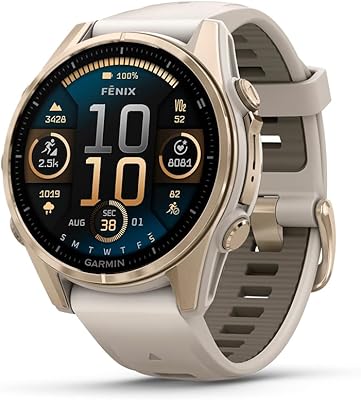
  • Display: The watch features a 1.4-inch AMOLED touchscreen that delivers vivid color and sharp contrast across a wide range of lighting conditions.
  • Lens Material: The display is protected by a scratch-resistant sapphire crystal lens, offering considerably better resistance to surface damage than standard mineral glass alternatives.
  • Case Size: The circular case measures 51mm in diameter, placing it firmly in the large-format wearable category suited to medium and larger wrist sizes.
  • Bezel Material: The bezel is machined from titanium and finished with a Carbon Gray Diamond-Like Carbon coating for enhanced surface hardness and long-term corrosion resistance.
  • Battery Life: Battery endurance reaches up to 29 days in standard smartwatch mode and up to 84 hours under continuous GPS tracking.
  • GPS System: Navigation is handled by multi-band GPS with Garmin SatIQ technology, which automatically selects the optimal satellite band to maintain positioning accuracy in challenging environments.
  • Sensors: Onboard sensors include a 3-axis compass, gyroscope, and barometric altimeter, providing comprehensive orientation and environmental awareness for outdoor activities.
  • Water Resistance: The watch carries a dive-rated water resistance classification, enabling safe use in open-water swimming, surfing, and recreational scuba diving.
  • Connectivity: The watch connects via Bluetooth, Wi-Fi, and USB, supporting smartphone pairing, wireless data sync, and direct cable transfer.
  • Storage: 32GB of onboard storage can simultaneously hold offline maps, downloaded music, and installed Connect IQ apps without requiring a smartphone connection.
  • Weight: The watch weighs 102 grams, which is competitive for a titanium-cased multisport device at this case size.
  • Dimensions: Physical dimensions measure 0.58 x 2.01 x 2.01 inches, reflecting the 51mm diameter and a relatively controlled thickness for its feature set.
  • Operating System: The device runs Garmin OS, a proprietary platform supporting the Connect IQ app ecosystem, Garmin Pay, and the full suite of advanced training and navigation features.
  • Speaker & Mic: An integrated speaker and microphone enable phone calls directly from the wrist when the watch is paired to a compatible smartphone.
  • LED Flashlight: A built-in LED flashlight provides practical illumination for pre-dawn runs, post-sunset trail navigation, and low-light visibility in outdoor settings.
  • Battery Type: Power is supplied by a rechargeable Lithium Polymer battery that is included with the device at purchase.
  • RAM: The device includes 5MB of RAM allocated to Garmin OS operations and connected application performance.

Related Reviews

Garmin Fenix 8 Sapphire 43mm
88%
96%
Build Quality & Durability
94%
Battery Life
91%
GPS Accuracy
93%
Sports & Activity Tracking
88%
Display Clarity
More
Garmin fēnix E 47mm Multisport GPS Smartwatch
79%
92%
Display Quality
91%
GPS Accuracy
71%
Battery Life
89%
Training & Performance Metrics
88%
Navigation Features
More
Garmin Fenix 6 Sapphire Multisport GPS Watch
79%
93%
GPS Accuracy
88%
Battery Life
94%
Build Quality
91%
Navigation & Mapping
89%
Training Features
More
Garmin tactix 8 51mm Tactical GPS Smartwatch
80%
94%
Build Quality
93%
GPS Accuracy
82%
Battery Life
96%
Tactical Features
67%
Solar Charging
More
Garmin tactix Delta Tactical GPS Smartwatch
78%
93%
Battery Life
91%
Durability & Build
89%
GPS & Navigation Accuracy
88%
Tactical Features
84%
Sports & Fitness Tracking
More
Garmin Instinct Solar Rugged Smartwatch
78%
88%
Battery Life
93%
Build Quality
91%
GPS Accuracy
89%
Navigation Features
74%
Solar Charging
More
Garmin fēnix 7 Sapphire Solar
88%
94%
Battery Life
91%
Build Quality & Durability
89%
Fitness & Health Tracking
90%
GPS & Navigation Accuracy
87%
Display Quality
More
Garmin Fenix Enduro GPS Watch
85%
96%
Battery Life
92%
Build Quality & Durability
89%
Solar Charging Efficiency
88%
Activity Tracking Accuracy
75%
Ease of Use
More
Garmin vivoactive 4 GPS Smartwatch
88%
90%
Battery Life
94%
Fitness & Health Tracking
86%
Music Storage & Playback
88%
Build Quality
85%
Ease of Use
More
Garmin Venu 2 GPS Smartwatch
79%
93%
Battery Life
91%
Display Quality
84%
Health & Fitness Tracking
78%
GPS Accuracy
88%
Build Quality
More

FAQ

The Garmin fēnix 8 51mm Sapphire GPS Smartwatch is compatible with both iPhone and Android smartphones via Bluetooth. Core features — including notifications, live tracking, and smart assistant access — function on both platforms, though specific integrations like Siri or Google Assistant depend on which phone you pair it with.
It is a genuinely large watch, and that is worth acknowledging honestly. On wrists under roughly 6.5 inches in circumference, the case can overhang the edges and feel noticeable during sleep tracking. If you have a smaller wrist, trying one on in person before buying is worthwhile, or look at the 47mm version in the fēnix 8 family instead.

It does use more power than the MIP displays found on older fēnix generations, particularly if you run always-on mode. That said, most users with moderate settings still get well over two weeks per charge in everyday use. The trade-off is real but manageable — adjusting display brightness and always-on settings makes a meaningful difference.

Yes. The fēnix 8 Sapphire is dive-rated and includes a dedicated dive app that records depth, bottom time, and surface intervals. It is built for recreational diving, not technical deep dives, so it works well for most sport divers but is not a purpose-built dive computer replacement for serious technical divers.

It performs well above average in those conditions. The multi-band GPS with SatIQ gives this Garmin fēnix 8 a real advantage in tree-dense trails and urban environments where single-band GPS devices tend to drift or lose lock. It is not flawless in extreme canyon situations, but it is among the more reliable options available in wearable GPS.

Training readiness pulls together your recent sleep quality, heart rate variability readings, recovery time since your last hard effort, and cumulative training load to produce a daily score indicating how prepared your body is for intense exercise. Athletes who actively manage their training and recovery tend to find it genuinely useful. If you train casually and do not track recovery data closely, it is a nice-to-have rather than an essential feature.

There is a real adjustment period. The fēnix 8 Sapphire is packed with features, and the menu structure is considerably more layered than what Apple Watch or Samsung Galaxy Watch users are accustomed to. Most people feel comfortable after a week or two of regular use, but if you want something that feels effortless on day one, this watch will require patience upfront.

Yes, and this is one of its genuine strengths. GPS navigation, workout tracking, music playback from onboard storage, offline maps, and voice commands all work independently without a paired phone. It was designed with remote and backcountry use in mind, so phone-free operation is a core capability rather than an afterthought.

It performs acceptably at moderate intensities but struggles in the same ways all optical wrist HR sensors do during high-intensity intervals, heavy lifts, and cold-weather outdoor sessions where wrist blood flow is reduced. If precise heart rate data during maximal efforts is critical to your training, pairing a chest strap via Bluetooth or ANT+ will give you more reliable numbers.

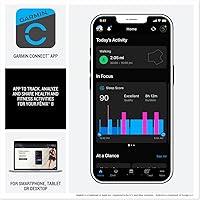
The watch ships with the titanium case fitted with the Pebble Gray band, a proprietary USB charging cable, and standard documentation. Garmin typically backs the hardware with a one-year limited warranty against manufacturing defects. Registering the device through Garmin Express or the Connect app shortly after purchase is the recommended way to activate coverage and keep firmware up to date.

Where to Buy