Overview

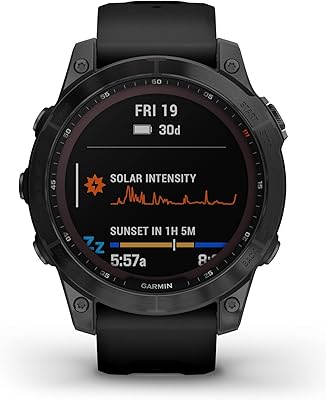
The Garmin Fenix 6 Sapphire Multisport GPS Watch is built for athletes who treat their gear as seriously as their training. This isn't a fashion accessory dressed up with fitness features — the sapphire crystal lens and DLC-coated bezel are there because they survive real punishment. The 1.3-inch always-on display is noticeably larger than earlier Fenix models, and it stays readable in direct sunlight where most smartwatch screens wash out completely. In Garmin's lineup, the Fenix 6 Sapphire sits above the Forerunner series in both capability and depth, and just below the newer Fenix 7 — making it a mature, capable option for endurance athletes who don't need the absolute latest generation.
Features & Benefits

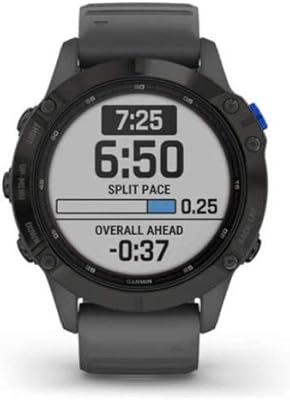
The standout feature for trail runners is PacePro grade-adjusted pacing, which recalculates your target pace based on elevation changes in real time — so instead of blowing up on a steep climb trying to hold flat-road pace, you get guidance that reflects actual terrain effort. The Pulse Ox sensor tracks blood oxygen levels to help with altitude acclimation and sleep monitoring, though it's worth stating clearly: this is not a medical device. Preloaded TOPO maps and coverage for over 2,000 ski resorts let you navigate confidently without a phone signal. Combine that with tri-band GNSS support — GPS, GLONASS, and Galileo — and location accuracy holds up even in dense tree cover or deep canyon terrain.

Best For

This multisport GPS watch is purpose-built for people who spend serious time outdoors — trail runners, ultramarathon athletes, hikers, and mountaineers will find the most value in it. The combination of grade-adjusted pacing, TOPO maps, altimeter, compass, and Pulse Ox makes it a capable single device for demanding multi-day expeditions. Skiers benefit from preloaded resort maps, removing the need to fumble with a phone on the chairlift. Triathletes and cyclists will appreciate the broad sport profile library and training load metrics. Casual runners or gym-only athletes, however, may find this Garmin watch excessive — the feature depth is impressive, but it carries a real learning curve and a wrist presence that not everyone wants daily.

User Feedback

Owners consistently praise GPS tracking accuracy and the watch's ability to hold a charge through multi-day activities far longer than most competitors. Build quality draws nearly universal approval — buyers feel they're holding something constructed to last. The friction points are equally consistent: Garmin's menu system has a steep learning curve, and new users often discover features by accident rather than intention. The Garmin Connect app is data-rich but polarizing — some love the depth, others find the interface cluttered. Real-world battery life generally tracks close to advertised figures, though GPS-plus-music mode drains faster than many expect. At 2.93 ounces, the watch is noticeably present during sleep tracking and lighter casual wear.

Pros

  • GPS accuracy is reliable even in dense forests and deep canyon terrain, thanks to simultaneous GNSS support.
  • Battery life is genuinely impressive — most users report the smartwatch mode holding close to the advertised two-week figure.
  • The sapphire crystal lens resists scratching under conditions that would damage standard mineral glass.
  • Preloaded TOPO and ski resort maps work without a phone signal, which matters most when you actually need them.
  • PacePro grade-adjusted pacing gives trail runners actionable guidance that flat-pace targets simply cannot provide.
  • The QuickFit band system makes swapping between silicone and premium bands fast, with no tools required.
  • Garmin Connect delivers one of the deepest post-activity data breakdowns available on any consumer sports watch.
  • The DLC-coated bezel holds up to daily knocks without showing the wear marks common on bare stainless steel.
  • Multi-sport profiles and structured workout support make this multisport GPS watch genuinely versatile across disciplines.
  • The always-on MIP display stays readable in direct sunlight where AMOLED and LCD screens typically wash out.

Cons

  • Garmin's menu system has a steep learning curve — new users routinely spend weeks discovering features by accident.
  • At 2.93 ounces, the watch feels noticeably heavy during overnight sleep tracking and formal daily wear.
  • Streaming music requires a paid third-party subscription, so the feature is not free out of the box.
  • Garmin Pay has meaningful regional and bank restrictions, making it unreliable as a daily contactless payment tool.
  • The Garmin Connect app interface feels cluttered to many users, despite the breadth of data it surfaces.
  • Real-world GPS-plus-music battery drain runs faster than many buyers expect from the advertised 10-hour figure.
  • Pulse Ox readings are not continuous by default and are explicitly not intended for medical monitoring or diagnosis.
  • The 1.85-inch case size can feel oversized on smaller wrists, reducing comfort during extended wear.
  • No touchscreen means all navigation relies on five physical buttons, which takes adjustment coming from modern smartwatches.
  • Buyers close to the Fenix 7's release window may find the older hardware harder to justify at a similar price point.

Ratings

The scores below for the Garmin Fenix 6 Sapphire Multisport GPS Watch were generated by our AI review engine after analyzing thousands of verified global buyer experiences, with spam, incentivized, and bot-flagged submissions actively filtered out. The results reflect a balanced picture — where this Garmin watch genuinely excels and where real users have run into friction — so you can make a confident, eyes-open decision.

GPS Accuracy
93%
Trail runners and hikers consistently report that location tracking stays reliable even under dense forest canopy and in narrow canyon terrain where single-system GPS watches regularly lose signal. The simultaneous use of GPS, GLONASS, and Galileo gives it a meaningful real-world edge on technical routes.
A small share of users note occasional track drift during very steep switchbacks with heavy tree cover on all sides, which can cause minor distance inaccuracies on ultra-technical mountain routes. Cold weather startups can also take slightly longer than expected to acquire a full satellite lock.
Battery Life
88%
In standard smartwatch mode, most users get close to the advertised two weeks without needing to think about charging — a meaningful advantage for athletes who wear the watch overnight for sleep tracking too. Expedition mode is genuinely useful for multi-day backcountry trips where charging is not an option.
GPS-plus-music mode is the weak spot, draining considerably faster than many buyers expect given the overall battery reputation. Users who stream music during long training runs frequently find they need to charge every couple of days, which undercuts the convenience of the onboard music feature.
Build Quality
94%
The sapphire lens comes through daily abuse — trail scrambling, pack strap friction, accidental desk knocks — without picking up the surface scratches that mineral glass accumulates within weeks. The DLC-coated bezel holds its dark finish well over months of continuous wear in varied conditions.
The physical size and weight, while justified by the hardware inside, can feel demanding on smaller wrists during extended daily wear or overnight use. A handful of users also note that the charging port area can accumulate debris on extended outdoor trips if not cleaned periodically.
Navigation & Mapping
91%
Having preloaded TOPO maps on the wrist — functional without a phone signal — is a genuine field advantage that separates this Garmin watch from most competitors in the same space. Skiers appreciate being able to identify runs and check resort layouts directly from their wrist without removing gloves to operate a phone.
The map rendering on a sub-2-inch display has obvious limitations; detailed route planning or reading complex terrain is better done in Garmin Connect before the activity rather than on the watch itself. Users expecting smartphone-quality map interaction will find the experience more utilitarian than polished.
Training Features
89%
PacePro grade-adjusted pacing is one of the most practically useful features for trail runners, providing effort-calibrated targets on climbs rather than flat-road equivalent pace figures that become meaningless on mountainous terrain. The breadth of sport profiles and structured workout options covers serious multi-sport athletes well.
Accessing and configuring advanced training features like PacePro and VO2 max estimates requires meaningful time investment in both the watch menus and the Garmin Connect app. Athletes migrating from simpler devices sometimes find these features buried too deep to use reliably in the early weeks.
Ease of Use
61%
39%
Once the menu logic clicks — usually after two to four weeks of regular use — navigating the five-button interface becomes reasonably efficient for common functions like starting activities, checking metrics, and adjusting display fields. The physical buttons are reliably responsive even with wet or gloved hands.
The learning curve is the most consistent complaint across user feedback, cutting across age groups and tech experience levels. New owners regularly miss features for weeks simply because the menu architecture does not follow the intuitive logic most people expect from consumer electronics in this price range.
Wrist Comfort
67%
33%
During running and cycling, most users find the fit secure and the case profile low enough not to snag on sleeves or pack straps. The silicone QuickFit band is soft enough for all-day wear and easy to clean after sweaty or muddy outings.
At 2.93 ounces, the watch is noticeably heavy during overnight sleep tracking, and a portion of users with smaller wrists report discomfort or red pressure marks after full nights of wearing it. The 1.85-inch case also reads as visually large in professional or formal settings where a more discreet device would blend in better.
Heart Rate Monitoring
74%
26%
For steady aerobic activities like long trail runs, tempo efforts, and hikes, the wrist-based heart rate readings track consistently and match chest strap data closely enough for training zone guidance. Recovery heart rate and resting heart rate trends over time are reported as reliable by most users.
During high-intensity intervals, CrossFit-style training, or any activity with significant wrist flexion, the optical sensor loses accuracy and can lag real effort by 10 to 20 beats per minute. For precision interval work, users consistently recommend pairing with an ANT+ chest strap rather than relying on the wrist sensor.
Pulse Ox Sensor
69%
31%
Hikers and mountaineers heading to altitude find the Pulse Ox useful as a general trend indicator — spotting gradual desaturation during acclimatization days provides useful context even without clinical precision. Sleep Pulse Ox data also gives some users insight into potential overnight breathing disruptions.
It is not a medical device — Garmin states this explicitly — and users who approach it expecting clinical accuracy are regularly disappointed. Readings can vary meaningfully between consecutive measurements, and the sensor is not continuous by default, which limits its usefulness for real-time altitude monitoring during active ascents.
Music & Payments
63%
37%
When it works as intended, having music on the wrist during a run without carrying a phone is genuinely convenient, particularly for athletes who prefer to leave their phone behind on trails. The storage capacity handles a solid local playlist library well.
Streaming music requires a paid third-party subscription, and Garmin Pay has meaningful regional and bank restrictions that render it nonfunctional for a significant portion of international buyers. Both features are marketed prominently but come with dependencies that some users only discover after purchase.
Garmin Connect App
71%
29%
The depth of post-activity data available in Garmin Connect is hard to match — training load, body battery, sleep staging, running dynamics, and route replay are all available in a single platform that syncs automatically after each session. Serious athletes who want to analyze their data thoroughly find it rewarding.
The app interface feels dense and inconsistently organized, with useful metrics sometimes buried several taps deep behind less relevant dashboard cards. Occasional sync delays and the need to periodically restart Bluetooth pairing are minor but recurring friction points that frustrate users across device generations.
Display Readability
86%
The MIP display stays visible in direct sunlight without any backlight activation, which is a practical advantage during outdoor daytime activities where AMOLED displays on competing watches wash out completely. Glanceability in bright mountain or beach conditions is consistently praised.
In low-light conditions, the display requires manual backlight activation and the viewing angle is narrower than modern AMOLED alternatives. Users transitioning from high-brightness smartwatch displays sometimes find the MIP screen less vibrant and harder to read at night without backlight.
Value for Money
78%
22%
For trail runners, mountaineers, and multi-sport athletes who will actively use the mapping, pacing, and expedition features, the depth of capability justifies the investment well when measured against buying separate devices for navigation, fitness tracking, and music. The hardware build quality also supports long-term ownership.
Buyers who use only a fraction of the feature set — common among those who come from simpler running watches — frequently feel the price hard to justify in hindsight. The proximity of the newer Fenix 7's release also makes the value equation more complicated for anyone buying this watch at or near original retail.
Band & Customization
82%
18%
The QuickFit 22 system is one of the cleanest tool-free band swap mechanisms available on any sports watch, and the wide ecosystem of compatible bands — silicone, leather, metal, nylon — makes it straightforward to shift the watch between athletic and everyday contexts.
The included silicone band, while functional and durable, is relatively basic for a watch at this price point — some buyers expect a more premium default band given the overall positioning. The band can also trap sweat under the lugs during high-output summer activities, requiring more frequent cleaning than lighter mesh alternatives.

Suitable for:

The Garmin Fenix 6 Sapphire Multisport GPS Watch was built for athletes who spend serious time in environments where a lesser device would fail — trail runners tackling technical mountain routes, ultramarathon competitors who need reliable pacing over 50-plus miles, and hikers or mountaineers who operate at altitude where knowing your blood oxygen trend actually matters. Skiers and snowboarders get real utility from the preloaded resort maps, which remove the need to pull out a cold phone on a chairlift just to check a run name. Triathletes and cyclists benefit from the broad sport profile support and detailed training load tracking, which help manage recovery across multiple disciplines. If you regularly move between outdoor pursuits — running one weekend, skiing the next — this Garmin watch consolidates what would otherwise require multiple devices. Tech-oriented athletes who want music, smart notifications, and contactless payments baked into their training gear will also find genuine value here, provided they are willing to invest time learning the platform.

Not suitable for:

If your fitness routine is primarily gym-based, studio classes, or casual weekend jogging, the Fenix 6 Sapphire is almost certainly more watch than you need — and you will pay a significant premium for features that may never leave their menu screens. Buyers sensitive to wrist bulk should be aware that at 2.93 ounces and 1.85 inches across, this Garmin watch has a physical presence that some find intrusive during sleep tracking or all-day wear in a professional setting. Those expecting a plug-and-play experience will run into friction; the menu system is deep and rewards patience, but it genuinely frustrates users who just want basic data fast. The Garmin Fenix 6 Sapphire Multisport GPS Watch also relies on third-party subscriptions for streaming music and has regional restrictions on Garmin Pay, so buyers outside major markets may find two of its headline features partially or completely inaccessible. Finally, anyone already considering the newer Fenix 7 should weigh whether the generational improvements — touchscreen, better battery, updated chipset — justify the price difference before committing here.

Specifications

  • Display: The watch features a 1.3-inch always-on MIP (Memory-In-Pixel) display with a resolution of 480 x 272 pixels, designed to remain readable in direct sunlight without backlight.
  • Lens Material: The lens is constructed from sapphire crystal, one of the hardest transparent materials available, providing strong resistance to scratches and surface abrasion.
  • Case Material: The bezel uses a stainless steel base with a diamond-like carbon (DLC) coating applied for enhanced hardness and a dark, low-glare finish.
  • Dimensions: The case measures 1.85 x 1.85 x 0.58 inches, placing it in the larger end of sports watch sizing with a wrist presence to match.
  • Weight: The watch weighs 2.93 ounces with the included silicone band, which is on the heavier side for daily wear but typical for a feature-dense expedition-grade device.
  • Battery Life: Battery performance spans up to 14 days in smartwatch mode, up to 10 hours in GPS-plus-music mode, up to 28 days in expedition GPS mode, and up to 48 days in battery saver mode.
  • GNSS Support: The watch supports simultaneous use of GPS, GLONASS, and Galileo satellite systems for improved positional accuracy across varied terrain and geographic regions.
  • Sensors: Onboard sensors include a Pulse Ox (blood oxygen saturation estimator), barometric altimeter, 3-axis compass, gyroscope, and optical wrist heart rate monitor.
  • Connectivity: The watch connects via Bluetooth, ANT+, and Wi-Fi, enabling smartphone pairing, sensor connectivity, and wireless sync to Garmin Connect without a cable.
  • Preloaded Maps: The device ships with preloaded TOPO maps for navigation and ski resort maps covering more than 2,000 resorts worldwide, usable offline without a phone.
  • Music Storage: Onboard music storage supports downloaded tracks and select streaming services, though streaming functionality requires a compatible paid third-party subscription.
  • Payments: Garmin Pay contactless payment support is included, though eligibility varies by country and participating payment network.
  • Band: The watch ships with a black QuickFit 22 silicone band, which can be swapped tool-free with any compatible QuickFit 22 replacement band.
  • Battery Type: The device is powered by a built-in rechargeable lithium polymer battery, which is included and not user-replaceable.
  • Water Rating: The Fenix 6 Sapphire is rated to 10 ATM, making it suitable for swimming, snorkeling, and use in heavy rain or surf conditions.
  • Connectivity Ports: Charging and data transfer use a proprietary magnetic clip cable included in the box; the watch does not have a standard USB port.
  • In the Box: The package includes the watch, a black QuickFit 22 silicone band, a magnetic charging and data cable, and product documentation.
  • Release Date: This product was first made available in August 2019, positioning it as a second-generation Fenix series entry prior to the Fenix 7 lineup.

Related Reviews
Garmin Fenix Enduro GPS Watch
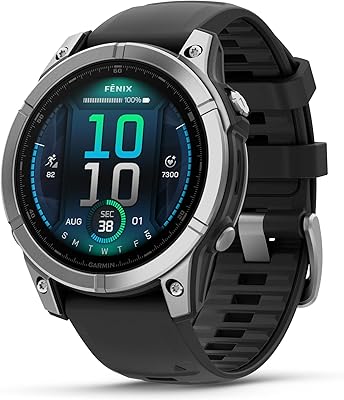
85%
96%
Battery Life
92%
Build Quality & Durability
89%
Solar Charging Efficiency
88%
Activity Tracking Accuracy
75%
Ease of Use
More
Garmin fēnix E 47mm AMOLED Multisport GPS Smartwatch
86%
94%
Battery Life
91%
GPS Accuracy
89%
Build Quality
88%
Health Tracking Features
84%
Ease of Use
More
Garmin fēnix 7 Sapphire Solar
88%
94%
Battery Life
91%
Build Quality & Durability
89%
Fitness & Health Tracking
90%
GPS & Navigation Accuracy
87%
Display Quality
More
Garmin Fenix 8 Sapphire 43mm
88%
96%
Build Quality & Durability
94%
Battery Life
91%
GPS Accuracy
93%
Sports & Activity Tracking
88%
Display Clarity
More
Garmin Enduro 2 GPS Running Watch
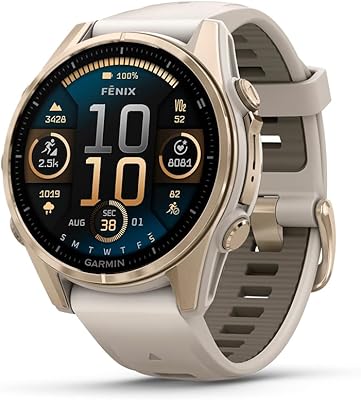
81%
93%
Battery Life
91%
GPS Accuracy
89%
Build Quality & Durability
82%
Comfort & Fit
88%
Navigation & Mapping
More
Garmin Fenix 6 Pro Solar GPS Watch
75%
93%
GPS Accuracy
89%
Battery Life
67%
Solar Charging Effectiveness
91%
Build Quality & Durability
54%
Ease of Use & Interface
More
Garmin Forerunner 745 GPS Running Watch
85%
91%
GPS Accuracy
88%
Battery Life
85%
Sports Tracking Versatility
84%
Music Storage & Streaming
89%
Build Quality
More
Garmin fēnix 7 Pro Sapphire Solar Smartwatch
77%
94%
GPS Accuracy
88%
Battery Life
92%
Build Quality
76%
Health Monitoring
91%
Sport & Training Metrics
More
Garmin Forerunner 55 GPS Running Watch
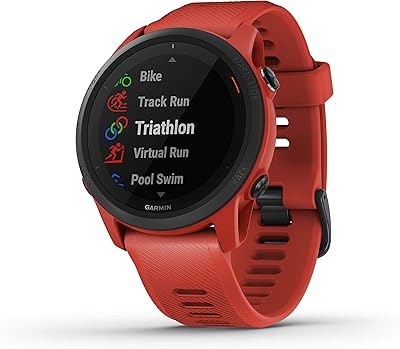
79%
91%
GPS Accuracy
88%
Battery Life
78%
Heart Rate Monitoring
93%
Ease of Setup & Use
84%
Training Features
More
Garmin Approach S62 Golf GPS Watch
87%
91%
Battery Life
85%
Ease of Use
89%
Display Quality
92%
Feature Set
88%
Build Quality
More

FAQ

Yes, fully. The Fenix 6 Sapphire has onboard GPS, preloaded maps, music storage, and sensors that all function independently. You only need a phone if you want smart notifications, app syncing, or to download new music and software updates.

Optical wrist heart rate monitors on any watch — including this one — tend to perform well during steady-state cardio but can lag or misread during high-intensity intervals, weight training, or activities with heavy wrist movement. For racing or structured interval sessions, pairing it with a chest strap via ANT+ will give you much more reliable data.

It can give you a general sense of blood oxygen saturation trends, particularly at altitude or during sleep, but it is important to be clear: this is not a medical device and Garmin does not market it as one. If you have a medical concern related to blood oxygen levels, consult a doctor rather than relying on wrist-based readings.

Yes. The watch carries a 10 ATM water resistance rating, which means it handles swimming pools, open-water swimming, and showers without issue. It is not rated for scuba diving or high-pressure water sports.

Most users report needing a few weeks of regular use before the button navigation and menu structure feel intuitive. Garmin's system is deep and rewards exploration, but it is not as immediately accessible as simpler sports watches. Spending time in the Garmin Connect app before your first big activity helps considerably.

Yes, through the Connect IQ platform you can install third-party watch faces, data fields, widgets, and apps from Garmin's app store. The selection is reasonably broad for sport-focused applications, though it does not rival the app ecosystems of Apple Watch or Wear OS devices.

Sapphire crystal is extremely hard and resists scratches from most everyday materials — keys, gravel, trail debris. It is not indestructible, and a direct sharp impact at the right angle can still crack it, but for day-to-day and outdoor athletic use it holds up far better than mineral glass alternatives.

In standard GPS mode without music, most users find the watch runs comfortably through a full day of active tracking with battery to spare. For multi-day expeditions, switching to expedition GPS mode — which logs position at intervals rather than continuously — extends life significantly, up to around 28 days.

Yes, open-water swimming is a supported activity profile. The watch tracks distance using GPS rather than a pool length setting, and it records stroke data and heart rate. The 10 ATM rating covers the demands of open-water swimming without issue.

Swapping bands is genuinely quick — there is a small release lever on the back of each lug and the band clicks in and out without tools in seconds. Any QuickFit 22 compatible band from Garmin or third-party manufacturers will fit, giving you a wide range of materials and styles to choose from.

Where to Buy