Overview

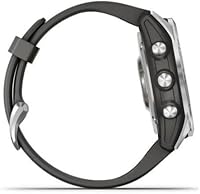
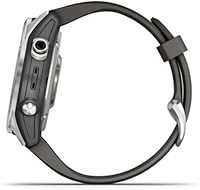
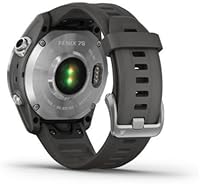
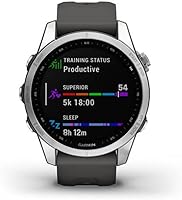
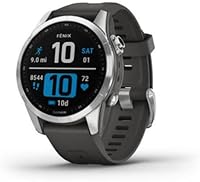
The Garmin Fenix 7S GPS Adventure Smartwatch is Garmin's answer to a question serious outdoor athletes have been asking for years: what if the full Fenix experience came in a smaller, lighter package? At just 2.24 ounces with a 1.2-inch always-on display, the Fenix 7S sits comfortably on narrower wrists without feeling like a compromise. It launched in early 2022 as part of Garmin's expanded Fenix 7 family and carries every major feature of its larger sibling. The dual-interface design — physical buttons plus touchscreen — is a practical choice for outdoor use. This is, unambiguously, a sport-first watch. If you want something elegant for dinner, look elsewhere.
Features & Benefits

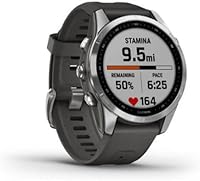
Battery life is where this Garmin adventure watch genuinely impresses — but context matters. The 11-day smartwatch mode figure assumes minimal GPS use; once you activate GPS for a trail run or hike, you're drawing from that 37-hour GPS reserve, which is still exceptional for this category. Expedition mode stretches things to 26 days by reducing GPS polling frequency, ideal for multi-day backcountry trips. Navigation tools are serious: triple-system GNSS, a barometric altimeter, and a 3-axis compass combine with downloadable TopoActive maps for real route confidence. The 30-plus built-in sports apps include genuinely useful tools like ClimbPro for elevation pacing and PacePro for race strategy. Onboard music storage and Garmin Pay round out the package nicely.

Best For

The Fenix 7S hits a very specific sweet spot, and knowing whether you're in it saves a lot of second-guessing. It's built for trail runners and hikers who need precise navigation metrics without a bulky watch overwhelming a smaller wrist. Mountain bikers benefit from the dedicated MTB dynamics profile; skiers get backcountry and XC-specific data. Multi-sport athletes who switch between disciplines frequently will appreciate having one watch that genuinely handles all of them. If you regularly head out for hours without your phone, the combination of onboard music and contactless payment makes this outdoor smartwatch surprisingly self-sufficient. Casual fitness trackers primarily drawn to notifications and app ecosystems will find the price difficult to justify.

User Feedback

Owners consistently praise GPS accuracy and the watch's ability to hold a charge through multi-day adventures — both are legitimate strengths. The breadth of sport profiles earns high marks too. Where things get complicated is the learning curve; new Garmin users routinely flag that navigating the menus and getting Garmin Connect properly configured takes real time. The 1.2-inch screen divides opinion: wearers with smaller wrists love how the watch fits, but some wish the display were larger when reading detailed maps mid-trail. Touchscreen responsiveness in rain or with gloves on is a commonly noted limitation. Compared to the Apple Watch, this outdoor smartwatch wins on battery life and sport depth; against the standard Fenix 7, it simply fits better.

Pros

  • Battery life in GPS mode lasts up to 37 hours — enough for ultramarathons and long alpine days without a recharge.
  • Triple-system GNSS coverage means the Fenix 7S locks onto satellites reliably even in dense tree cover or deep canyons.
  • At just 2.24 ounces, it sits lighter on the wrist than most full-featured GPS watches in this category.
  • Over 30 sport profiles include genuinely specialized modes for mountain biking, backcountry skiing, and surf — not just renamed cardio tracking.
  • ClimbPro and PacePro provide real-time grade and pacing guidance that actually changes how athletes approach climbs and races.
  • Onboard 16GB storage means you can leave your phone at the trailhead and still have music for a long run.
  • Garmin Pay support adds practical convenience for athletes who stop at aid stations or coffee shops mid-activity.
  • Downloadable TopoActive maps turn this outdoor smartwatch into a capable navigation device without relying on a data connection.
  • The fiber-reinforced polymer case handles knocks and scrapes without adding meaningful weight to the overall package.
  • Both Android and iOS are fully supported, so switching phone ecosystems does not require a watch replacement.

Cons

  • New Garmin users consistently report a steep learning curve getting menus, data fields, and Garmin Connect syncing configured correctly.
  • The 1.2-inch display is comfortable on the wrist but noticeably small when trying to read detailed route maps at a glance.
  • Touchscreen responsiveness drops significantly in wet conditions or with gloves, forcing reliance on physical buttons only.
  • The 11-day smartwatch battery estimate drops sharply once GPS is active — heavy GPS users should expect far shorter real-world endurance.
  • Pulse Ox and stress tracking are estimations, not clinical readings — users with medical-grade monitoring needs should look elsewhere.
  • The price tier is hard to justify for anyone who primarily uses a smartwatch for step counting and phone notifications.
  • Garmin Connect's interface has a reputation for being cluttered and unintuitive compared to competing apps like Apple Health.
  • No solar charging option at this trim level — the solar-enhanced variant requires a separate purchase at higher cost.
  • The 240 x 240 resolution looks dated compared to AMOLED displays found on competing smartwatches at a similar price.
  • Wrist-based heart rate accuracy during high-intensity interval training can lag or misread, a known limitation of optical sensors on any watch.

Ratings

The scores below reflect our AI-driven analysis of thousands of verified global reviews for the Garmin Fenix 7S GPS Adventure Smartwatch, with spam, bot-generated, and incentivized submissions actively filtered out before scoring. Each category is graded on real buyer experiences — not manufacturer claims — so both the genuine strengths and the recurring frustrations are represented honestly. Wherever users were divided, the score reflects that split rather than smoothing it over.

Battery Life
91%
Across thousands of reviews, battery endurance is the single most praised aspect of the Fenix 7S. Trail runners completing 20-plus-hour efforts report finishing with power to spare, and multi-day hikers consistently describe going four or five days between charges even with GPS running daily. Expedition mode earns particular admiration from backcountry users who need weeks of tracking without access to power.
The gap between advertised smartwatch-mode figures and real GPS-active drain catches many first-time Garmin buyers off guard. Users who run GPS continuously during long alpine days find the 37-hour ceiling approaches faster than expected when combined with music playback and heart rate polling simultaneously.
GPS Accuracy
93%
Multi-GNSS support across GPS, GLONASS, and Galileo gives the Fenix 7S positioning reliability that consistently outperforms single-system competitors in user comparisons. Runners and cyclists note that route traces are sharp even through dense forest canopy and urban canyons where other watches wander noticeably off-path.
A small but consistent subset of users report occasional satellite acquisition delays of 30 to 90 seconds when starting activities in cold weather or after the watch has been indoors for an extended period. Initial lock times are not always instant, which can be mildly frustrating when you are standing at a trailhead ready to go.
Sport Profile Depth
89%
The breadth of activity profiles genuinely impresses multi-sport users — not just in quantity but in the specificity of data each mode surfaces. MTB dynamics capture jump counts and grit scores, backcountry ski mode handles skinning and descent separately, and surf mode tracks wave counts automatically without manual lap presses, which experienced athletes describe as a meaningful quality-of-life detail.
Users who are new to Garmin often feel overwhelmed by how many data fields and profile settings are configurable within each sport mode. Without spending time on customization upfront, default screens can show metrics that feel irrelevant, and the process of tailoring each profile requires patience that not every buyer anticipates needing.
Navigation & Maps
86%
The ability to download full TopoActive maps for any region and navigate entirely offline is a standout capability that hikers and trail runners highlight repeatedly. ClimbPro's real-time grade and remaining elevation data has become a genuinely relied-upon feature for users tackling technical mountain routes, helping pace effort across long climbs rather than blowing up early.
The 1.2-inch screen makes detailed map reading during fast-moving activities genuinely difficult — this is the most commonly cited limitation around navigation. Users transitioning from handheld GPS devices or the larger Fenix 7 find the smaller display a real trade-off, particularly when trying to read trail junctions at a glance mid-run.
Wrist Comfort & Fit
88%
At 2.24 ounces, the Fenix 7S sits lighter and less obtrusively than most comparable outdoor watches, and buyers with smaller or narrower wrists specifically call out how well-proportioned the case feels during extended wear. Athletes who previously avoided the Fenix line because of bulkiness describe this as the version that finally fits their lifestyle without feeling like they are wearing a hockey puck.
Users with larger wrists who selected the 7S purely for its features occasionally report that the smaller case diameter looks and feels slightly undersized on their wrist. The included graphite band is functional but described by some as stiff out of the box, requiring a break-in period before it conforms comfortably.
Health & Wellness Tracking
74%
26%
Sleep staging data earns consistent praise from users who track recovery trends over weeks and months rather than expecting clinical precision from a single night. Stress tracking and Body Battery — Garmin's daily energy estimation tool — are frequently cited as genuinely useful nudges that influence how users plan their training and rest days.
Optical wrist-based heart rate accuracy during high-intensity intervals is a recurring criticism, with users noting readings that lag or spike unrealistically during hard efforts. Pulse Ox measurements are described by several reviewers as inconsistent depending on fit and skin tone, and the overall health suite is best understood as a wellness estimation tool rather than anything approaching medical-grade monitoring.
Touchscreen Usability
66%
34%
In dry conditions indoors or during low-intensity activities, the touchscreen is praised for making menu navigation and scrolling through data more intuitive than button-only interfaces. Buyers who use the watch primarily for urban workouts or gym sessions find the touch interface responsive and appreciate it for browsing music and checking notifications quickly.
Wet weather and gloves are the touchscreen's consistent enemies — multiple users report needing to revert entirely to physical buttons during rainy runs or winter activities because the screen simply stops registering input. This is a known limitation of capacitive touch technology, but buyers expecting Apple Watch-level touchscreen reliability in all conditions will be disappointed.
Software & App Experience
63%
37%
Garmin Connect provides an unusually deep pool of training analytics once a user learns the platform — weekly training load, VO2 max trends, race predictors, and recovery time estimates are all available and updated after every activity. Long-term Garmin users who already understand the ecosystem describe the 7S as a natural and powerful extension of a familiar system.
First-time Garmin owners consistently flag Garmin Connect as cluttered, counterintuitive, and slow to sync compared to competitor apps. The onboarding experience is a genuine weak point — finding specific settings, configuring data fields, and understanding where different metrics live requires significant time investment that the app itself does little to guide users through.
Build & Durability
84%
The fiber-reinforced polymer case handles everyday scrapes, trail impacts, and water immersion without showing meaningful wear, which users who subject their gear to genuinely harsh conditions appreciate. Reviewers who have owned multiple Garmin watches describe the construction as consistent with the brand's reputation for producing equipment that survives years of outdoor use.
Some buyers feel the polymer case looks and feels less premium than the titanium or stainless steel options available at higher price points within the Fenix family, which matters to users who want the watch to function equally well in professional or social settings. The lens is also reported to accumulate light surface scratches over time without a screen protector applied.
Smart Notifications
71%
29%
Notification mirroring from both Android and iOS works reliably for basic call and message alerts, and the ability to glance at a wrist notification during a run without pulling out a phone is a genuine quality-of-life improvement that users who have switched from basic fitness trackers notice immediately.
Notification interaction is limited compared to smartwatch competitors — users cannot respond to messages from the watch on iOS, and Android response options are basic. Buyers accustomed to Apple Watch or Galaxy Watch notification depth often describe the Fenix 7S experience as functional but one-directional.
Music Storage & Playback
78%
22%
Onboard music via Bluetooth headphones during phone-free long runs is a feature buyers genuinely use and value, not just a checkbox. The 16GB of storage fits a comfortable library of offline tracks from supported streaming services, and the setup — once completed — works without requiring any interaction mid-activity.
Initial music sync setup through Garmin Connect requires Wi-Fi and can be slow and buggy, with some users reporting repeated failed sync attempts before getting their playlist onto the watch. Streaming service support is narrower than on competing platforms, and users with less common music services may find their library is not supported.
Garmin Pay
68%
32%
For users in supported regions and with compatible payment networks, Garmin Pay performs reliably at contactless terminals and eliminates the need to carry a card or phone during shorter training runs and races. Athletes who regularly stop at aid stations or coffee shops mid-workout describe this as a surprisingly useful feature in practice.
Bank and payment network support remains inconsistent internationally, and a notable portion of international buyers report that their bank is not supported at all. Even among supported users, the setup process requires working through multiple app steps that feel unnecessarily cumbersome relative to competing payment implementations.
Value for Money
77%
23%
Serious outdoor athletes who push the watch through its intended use cases — long trail runs, multi-day expeditions, multi-sport training blocks — consistently describe the feature-to-performance ratio as justified given how comprehensively the Fenix 7S replaces multiple dedicated devices. For this specific user, the investment is well-rationalized over a multi-year ownership horizon.
Casual users or those who primarily want a stylish daily watch with basic fitness features routinely describe the price as difficult to justify against what they actually end up using. Buyers who do not regularly engage GPS, maps, or advanced sport profiles are effectively paying a substantial premium for capabilities they never access.
Display Visibility
81%
19%
The always-on transflective display performs well in direct sunlight — a genuine advantage over AMOLED screens that wash out outdoors — which trail runners and cyclists operating in bright alpine environments consistently appreciate. Visibility in daylight conditions is rarely raised as a concern in user feedback.
In low-light and indoor settings, the display looks noticeably dim and less vibrant compared to AMOLED competitors at a similar price point. Users who spend significant time indoors or running in the early morning or evening find themselves wishing for a brighter, higher-contrast panel that the transflective technology simply cannot deliver.

Suitable for:

The Garmin Fenix 7S GPS Adventure Smartwatch was built for people who take their outdoor pursuits seriously and happen to have smaller wrists — a combination that was underserved before this watch arrived. Trail runners who want turn-by-turn navigation and real-time pacing guidance without a heavy watch bouncing on their arm will find it fits both physically and functionally. Hikers and backpackers doing multi-day routes will especially appreciate the Expedition mode, which can stretch battery life to nearly four weeks by reducing GPS polling — a real-world advantage when resupply is days away. Mountain bikers, skiers, and swimmers who rotate between sports throughout the year get a single device that tracks all of them with discipline-specific metrics rather than generic step counts. If you regularly head out without your phone and want music, navigation, and contactless payment handled from your wrist, this outdoor smartwatch covers all three without requiring a separate device.
Not suitable for:

The Garmin Fenix 7S GPS Adventure Smartwatch is a poor fit for anyone who primarily wants a sleek everyday watch that happens to count steps. The interface takes real time to learn — Garmin Connect has a steep onboarding curve, and buyers who are not willing to invest time in the setup will end up frustrated and underusing what they paid for. At its price point, it demands a specific kind of user who will actually push it through GPS-heavy activities; casual fitness trackers who mostly want notifications and a heart rate graph at the end of the day are paying for capabilities they will never touch. The 1.2-inch screen, while sharp, is genuinely small for detailed map reading mid-activity, and if large-display navigation is important to you, the standard Fenix 7 or a dedicated handheld GPS unit is a smarter choice. Buyers who frequently train in heavy rain or wear thick gloves should also know the touchscreen can become unreliable in those conditions, making button-only operation the fallback.
Specifications

  • Display: The watch features a 1.2″ always-on round display with a 240 x 240 pixel resolution, remaining visible in direct sunlight without requiring a wrist raise.
  • Case Material: The case is constructed from fiber-reinforced polymer, providing impact resistance and durability while keeping overall weight low for extended wear.
  • Weight: The watch weighs 2.24 ounces, making it one of the lighter options among full-featured GPS adventure watches.
  • Dimensions: The case measures 1.65 x 1.65 x 0.56 inches, designed specifically to fit smaller wrists without sacrificing feature depth.
  • Battery Life: Battery endurance reaches up to 11 days in smartwatch mode, up to 37 hours with continuous GPS active, and up to 26 days in low-frequency Expedition mode.
  • Storage: Onboard storage totals 16GB, accommodating downloaded music, TopoActive maps, and app data simultaneously.
  • GNSS Support: The watch supports GPS, GLONASS, and Galileo satellite systems, enabling reliable position tracking across a wide range of geographic conditions.
  • Sensors: Built-in sensors include a 3-axis compass, gyroscope, and barometric altimeter for comprehensive environmental and orientation awareness.
  • Health Monitoring: Continuous health tracking covers wrist-based heart rate, Pulse Ox blood oxygen estimation, stress levels, and enhanced sleep stage analysis; this device is intended for activity estimation and is not a medical device.
  • Sports Profiles: More than 30 built-in activity profiles are included, covering trail running, mountain biking, skiing variants, swimming, and many other disciplines with sport-specific metrics.
  • Connectivity: The watch connects via Bluetooth and Wi-Fi, supporting smart notifications, automatic syncing with Garmin Connect, and wireless music transfers.
  • Interface: User input is handled through a combination of five physical buttons and a capacitive touchscreen, allowing reliable operation in varying environmental conditions.
  • Maps: Preloaded maps cover thousands of golf courses and ski resorts worldwide, with support for downloading regional TopoActive topographic maps directly to the watch.
  • Smart Features: The watch supports Garmin Pay contactless payments in supported regions, onboard music playback, and smartphone notification mirroring when paired with a compatible device.
  • Compatibility: The Garmin Connect companion app is fully compatible with both Android and iOS smartphones for activity syncing, settings management, and data analysis.
  • Battery Type: Power is supplied by a built-in rechargeable lithium-ion polymer battery that charges via the included proprietary magnetic clip cable.
  • In the Box: Each unit ships with the watch, a charging and data cable, and product documentation; no additional bands or accessories are included.

Related Reviews
Garmin fēnix 8 51mm Sapphire GPS Smartwatch
80%
93%
GPS Accuracy
88%
Battery Life
94%
Build Quality
86%
Display Quality
91%
Training Metrics
More
Garmin fēnix E 47mm Multisport GPS Smartwatch
79%
92%
Display Quality
91%
GPS Accuracy
71%
Battery Life
89%
Training & Performance Metrics
88%
Navigation Features
More
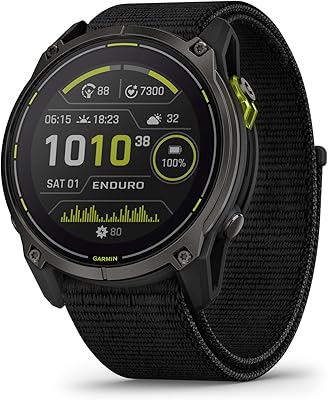
Garmin Fenix Enduro GPS Watch
85%
96%
Battery Life
92%
Build Quality & Durability
89%
Solar Charging Efficiency
88%
Activity Tracking Accuracy
75%
Ease of Use
More
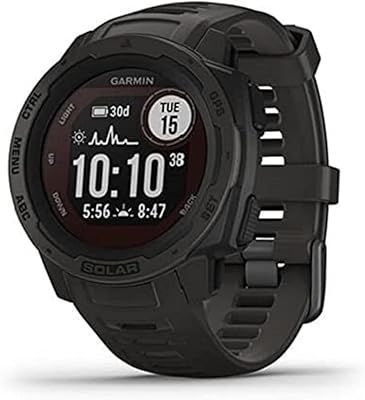
Garmin Instinct Solar Rugged Smartwatch
78%
88%
Battery Life
93%
Build Quality
91%
GPS Accuracy
89%
Navigation Features
74%
Solar Charging
More
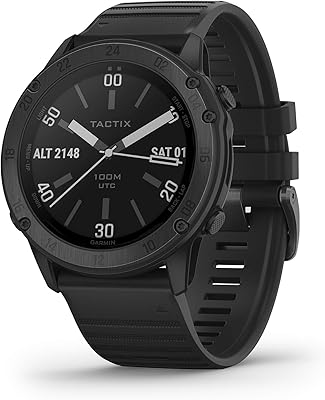
Garmin tactix Delta Tactical GPS Smartwatch
78%
93%
Battery Life
91%
Durability & Build
89%
GPS & Navigation Accuracy
88%
Tactical Features
84%
Sports & Fitness Tracking
More
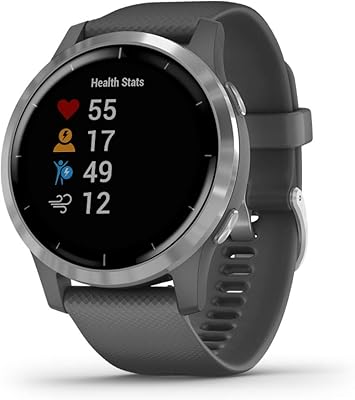
Garmin vivoactive 4 GPS Smartwatch
88%
90%
Battery Life
94%
Fitness & Health Tracking
86%
Music Storage & Playback
88%
Build Quality
85%
Ease of Use
More
Garmin Venu 2 GPS Smartwatch
79%
93%
Battery Life
91%
Display Quality
84%
Health & Fitness Tracking
78%
GPS Accuracy
88%
Build Quality
More
Garmin Approach S42 GPS Golf Smartwatch
87%
91%
Battery Life in GPS Mode
88%
Ease of Use
94%
Shot Tracking Accuracy
78%
Display Readability
85%
Build Quality
More
Garmin quatix 7 Marine GPS Smartwatch
79%
93%
Marine Integration
89%
Battery Life
91%
Build Quality & Durability
87%
Display Readability
67%
Touchscreen Performance
More
Garmin Forerunner 955 GPS Running Smartwatch
88%
93%
GPS Accuracy
91%
Battery Life
88%
Build Quality
90%
Training Metrics
87%
Health Tracking Features
More

FAQ

The 37-hour GPS figure is realistic under standard conditions, but real-world drain depends on factors like which satellite systems are active, how often the heart rate sensor polls, and whether the screen stays on frequently. For a single-day effort — even a very long one — you will not run out of power. For multi-day trips where you run GPS continuously, the Expedition mode is worth understanding; it reduces satellite polling frequency to stretch battery to nearly four weeks, which is genuinely useful for backcountry routes.

The feature set between the two is essentially identical — you are not giving up any sport profiles, sensors, or smart capabilities by choosing the smaller model. The meaningful differences are physical: smaller case diameter, lighter weight, and a 1.2″ screen versus the standard 1.3″. If your wrists are on the narrower side or you simply prefer a less imposing watch profile, the Fenix 7S is the logical choice. If you want a larger display for easier map reading mid-activity, the standard size has a slight edge there.

Yes, and this is one of its strongest use cases. You can download TopoActive maps for any region directly to the watch before you leave, giving you offline topographic navigation with no phone required. The combination of multi-GNSS support, a barometric altimeter, and a 3-axis compass means the watch is working from multiple data sources simultaneously to keep your position accurate, even in terrain where a single satellite system might struggle.

Honestly, yes — at least initially. Garmin's ecosystem is deep, and the Garmin Connect app has a lot going on. Plan to spend a few hours in the first week getting data fields configured to your liking, understanding which metrics matter for your activities, and getting syncing running smoothly. The payoff is worth it once everything is dialed in, but buyers coming from a simpler fitness band or an Apple Watch should go in with realistic expectations about the onboarding investment.

It works fully with both iPhone and Android. Smart notifications, Garmin Connect syncing, and music transfers via the app all function on iOS without any meaningful limitations. The one area where iOS users may notice a small difference is contactless payment setup, which depends on your bank and region rather than your phone platform.

This is a real limitation worth knowing about before you buy. The capacitive touchscreen can become unresponsive when the lens is wet or when you are wearing gloves, which is not unusual for this type of sensor. Garmin's solution is the five physical buttons, which work in any condition and can handle every function the touchscreen does. Most experienced users end up relying on buttons during active outdoor use and reserving the touchscreen for drier moments like browsing menus at home.

For day-to-day training zones, sleep staging, and trend data over time, the sensors perform well and are consistent with what you would see from other leading optical wrist sensors. That said, Garmin explicitly states this device is for activity estimation, not medical use, and that framing is accurate. During high-intensity intervals, optical wrist-based heart rate can lag or misread — if precise HR data is critical for your training, pairing with a chest strap through the workout gives you more reliable real-time numbers.

Yes. The watch has 16GB of onboard storage, and you can transfer music from services like Spotify, Amazon Music, or Deezer — or sideload your own files — and play them directly through Bluetooth headphones while leaving your phone behind. Setup requires a Wi-Fi connection and the relevant streaming service subscription, but once configured it works reliably for phone-free workouts.

They serve different priorities. The Apple Watch is a stronger daily companion for phone integration, app variety, and a polished interface most people learn immediately. This Garmin adventure watch wins decisively on battery life, depth of outdoor sport metrics, native map navigation, and rugged durability. If your primary concern is long trail days, multi-sport tracking, and not hunting for a charger every night, the Fenix 7S is the better tool for the job. If you spend more time at a desk than on a trail, the Apple Watch will probably serve you better overall.

The Fenix 7S is rated to 10 ATM, which means it handles swimming — both pool and open water — without issue. It includes a dedicated swim activity profile with metrics like stroke rate and SWOLF score, so it is not just water-resistant but genuinely swim-capable. You would not want to use the touchscreen underwater, but the physical buttons work fine for starting and stopping a swim session.