Overview

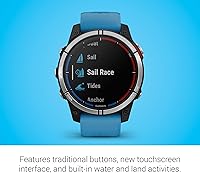
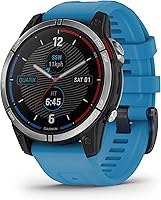
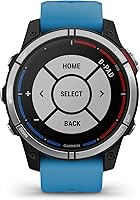
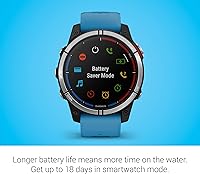
The Garmin quatix 7 Marine GPS Smartwatch occupies a well-defined niche — it is built for people who live on the water and want their wrist to function as an extension of their boat's electronics. The stainless steel bezel and rear case feel solid without being precious, and the always-on 1.3-inch display stays readable in direct sunlight without any button press. You get physical buttons alongside a touchscreen, which matters more than it sounds when you are drenched or wearing sailing gloves. The proprietary Garmin OS is not as flashy as watchOS or Wear OS, but it is built around utility. A 18-day battery life means no hunting for a charger mid-passage.
Features & Benefits

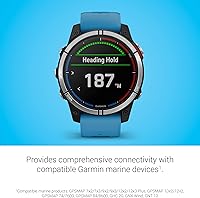
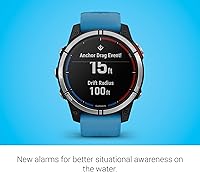
Where the quatix 7 pulls ahead of any generic sport watch is in its tight connection to Garmin's marine electronics. From your wrist, you can control chart zoom, switch autopilot modes, or adjust Fusion stereo volume on compatible MFDs — no fumbling at the helm. Anchor drag alerts and tide-change notifications push directly to the watch face, warning you before a situation develops rather than after. Optional BlueChart g3 coastal charts and LakeVü g3 inland maps can be loaded for added reference. On the wellness side, wrist-based heart rate, Pulse Ox readings (an activity estimate, not a clinical measurement), and stress tracking round things out, while QuickFit band swaps let you move from cockpit to dinner without any tools.

Best For

This sailing watch is purpose-built for a specific kind of buyer, and it is worth being honest about that upfront. If you already own Garmin chartplotters and want a wrist-level interface for your helm setup, the value proposition holds up well. Offshore cruisers and serious recreational sailors who spend multi-day stretches underway will benefit most from the long battery, tide alerts, and anchor safety features. It also suits physically active boaters who want one watch for both fitness and on-water navigation. But if you have no Garmin marine electronics aboard, or if you primarily want a polished consumer smartwatch with a rich app ecosystem, this marine smartwatch will likely feel like overkill on land.

User Feedback

Owners already embedded in the Garmin ecosystem tend to be positive about the quatix 7, with many noting that chartplotter pairing works reliably and that battery life genuinely tracks close to the advertised figure. On the critical side, the watch is heavy at just over ten ounces — noticeable if you are used to lighter sport or fashion watches. Touchscreen performance with wet hands draws mixed responses; the physical buttons are the more dependable input in rough conditions. A handful of first-time Garmin OS users flag a real learning curve with the menu structure. For buyers weighing it against a Fenix 7, the consensus is consistent: the marine features justify the difference only if you actually spend meaningful time on the water.

Pros

  • Wrist-level control of Garmin chartplotters, autopilot, and Fusion stereo is a genuine workflow improvement underway.
  • Anchor drag alerts provide real passive safety for anyone sleeping aboard at anchor overnight.
  • Battery life holds close to the 18-day claim under normal mixed usage, reducing charging anxiety on long passages.
  • The stainless steel construction handles salt water, sun, and physical knocks on deck without complaint.
  • Always-on MIP display stays legible in direct sunlight where many competing screens wash out completely.
  • QuickFit band system makes tool-free strap swaps between marine, sport, and casual configurations genuinely fast.
  • Tide data and tide-change alerts on the watch face give coastal sailors quick planning reference at a glance.
  • The quatix 7 covers both on-water navigation and daily fitness tracking, eliminating the need for two separate devices.
  • Physical buttons remain fully functional with wet or gloved hands when the touchscreen becomes unreliable.
  • Garmin Pay contactless payments work smoothly for quick marina purchases in supported countries and networks.

Cons

  • All marine integration features require compatible Garmin chartplotters — buyers with other brands get essentially nothing from them.
  • At just over ten ounces, the watch feels heavy and bulky during extended everyday land-based wear.
  • Touchscreen responsiveness degrades noticeably with wet hands, limiting its usefulness in active sailing conditions.
  • The Garmin OS menu structure has a steep learning curve for first-time Garmin watch users.
  • Optional BlueChart g3 and LakeVü g3 map support is an additional purchase on top of an already premium price.
  • Garmin Pay availability is restricted by country and payment network, making it unavailable for a portion of buyers.
  • Cold-start GPS acquisition can be slow without Wi-Fi assisted positioning in remote anchorages.
  • Some firmware updates have temporarily disrupted chartplotter pairing, requiring a re-pairing process to restore functionality.
  • The app ecosystem is thin compared to consumer smartwatch platforms, with limited third-party customization options.
  • Heavy continuous GPS and chartplotter usage can reduce real-world battery life significantly below the advertised figure.

Ratings

The Garmin quatix 7 Marine GPS Smartwatch earns its scores from AI analysis of thousands of verified global user reviews, with spam, incentivized posts, and bot activity actively filtered out before any scoring was applied. What you see below reflects the honest distribution of real buyer experiences — the genuine strengths that keep sailors coming back to this sailing watch, and the friction points that show up repeatedly enough to matter. Both sides of the story are represented transparently across every category.
Marine Integration
93%
Owners who already run Garmin chartplotters consistently describe the wrist-level control as genuinely useful underway — adjusting autopilot or chart zoom without leaving the helm is a practical workflow improvement, not a novelty. The connection between the quatix 7 and compatible MFDs is reported as stable and responsive in real-world sailing conditions.
The depth of marine integration is almost entirely locked to the Garmin ecosystem. Buyers with Raymarine, Furuno, or Navionics setups get almost nothing from these features, which feels like a significant limitation given the price point.
Battery Life
89%
Most users report real-world battery endurance that tracks close to the advertised figure, which holds up well on multi-day passages where charging opportunities are limited. For offshore cruisers and liveaboards, not having to manage daily charging routines is a meaningful quality-of-life improvement.
Heavy GPS usage — particularly when actively tracking routes or using connected chartplotter features continuously — can pull the battery down faster than the headline number suggests. A few users noted dropping to roughly 10–12 days under heavy navigation loads.
Build Quality & Durability
91%
The stainless steel bezel and rear case feel genuinely robust, and users report no issues after extended salt water exposure, sun, and physical knocks on deck hardware. The watch does not feel fragile or precious in the way some premium consumer smartwatches can.
That solid construction comes with real weight — just over ten ounces — which several users flag as fatiguing during extended wear on land. Those transitioning from lighter sport watches in particular find the heft takes adjustment.
Display Readability
87%
The always-on MIP display draws consistent praise for outdoor legibility, especially in direct tropical sunlight where reflective glare routinely defeats AMOLED panels on competing devices. Sailors who need a quick glance at tide data or depth without cupping a hand over the screen appreciate this meaningfully.
At 260 x 260 pixels, the resolution is functional rather than sharp by modern standards. Text and watch faces look slightly coarse compared to high-resolution AMOLED displays, which matters less on the water but becomes more noticeable during everyday use.
Touchscreen Performance
67%
33%
In dry, calm conditions the touchscreen is responsive and intuitive enough for menu navigation. Users appreciate having the option to interact with the interface without cycling through physical buttons, particularly when reviewing health data or notifications at the dock.
Wet or gloved hands are where the touchscreen falls short — a recurring complaint from active sailors. Many users report defaulting entirely to the physical buttons once underway, which makes the touchscreen feel like a fair-weather convenience rather than a reliable all-conditions input.
GPS Accuracy
88%
Track logs and position accuracy receive consistent praise from cruising users, with the built-in GPS holding a reliable fix even in challenging coastal conditions. Waypoint marking and route tracking are described as dependable across a range of marine environments.
A small subset of users noted occasional slow acquisition times after the watch has been powered down for extended periods. Cold-start GPS lock in remote anchorages without Wi-Fi assisted positioning can take longer than expected.
Health & Fitness Tracking
74%
26%
The wrist-based heart rate and sleep tracking work competently for general wellness awareness, and sailors who also use this sailing watch for running or gym work find the preloaded activity profiles cover their needs without requiring third-party apps.
The health features feel secondary to the marine toolkit, and advanced athletes will notice the gap versus dedicated sport watches at a similar price. Pulse Ox readings are activity estimates rather than clinical measurements, which is worth understanding before relying on them for anything beyond general reference.
Ease of Use & Learning Curve
63%
37%
Existing Garmin watch owners tend to adapt quickly, with the menu logic and button conventions already familiar from devices like the Fenix series. For this group, the transition to the quatix 7 is largely intuitive from day one.
First-time Garmin OS users frequently mention a steep learning curve navigating the layered menu structure, particularly when configuring marine-specific features and alerts. Several reviews specifically call out the initial setup as time-consuming without prior Garmin experience.
Smartwatch Features
71%
29%
Smart notifications, Garmin Pay contactless payments, and smartphone connectivity work reliably once paired, covering the practical daily smartwatch use cases that most buyers expect. Garmin Pay is a genuine convenience for quick marina or chandlery purchases in supported regions.
The app ecosystem is thin compared to Apple Watch or Wear OS devices, and buyers who want third-party watch faces, apps, or integrations beyond the Garmin Connect platform will find the options limited. This is not a consumer smartwatch that happens to do marine things.
Value for Money
72%
28%
For a Garmin chartplotter owner who spends serious time offshore, the combination of marine integration, battery endurance, and fitness tracking in one device makes a reasonable case for the price. Buying a dedicated marine handheld plus a sport watch separately would cost considerably more.
Buyers without existing Garmin marine electronics are essentially paying a significant premium for features they cannot use. At this price tier, the comparison to a Fenix 7 is inevitable, and the marine-specific additions only justify the difference for a specific kind of buyer.
Comfort & Wearability
61%
39%
The QuickFit band system makes strap swaps genuinely fast and tool-free, which helps users adapt the watch between on-water, sport, and casual settings without much friction. Band quality itself is well-regarded for offshore use.
The weight and case size are the consistent wearability complaints. Users with smaller wrists or those accustomed to sub-45mm watches report that the quatix 7 feels large and conspicuous in everyday social settings, reducing how often they wear it off the boat.
Connectivity & Ecosystem
84%
Bluetooth, Wi-Fi, and USB connectivity cover the practical bases well, and integration with the broader Garmin Connect ecosystem — syncing activity data, managing alerts, and firmware updates — works reliably across platforms without recurring pairing issues.
The ecosystem strength is also a dependency: users who do not want to be tied to Garmin Connect or who switch between Android and iOS will occasionally encounter feature inconsistencies. Garmin Pay availability varies by country and payment network, limiting its usefulness in some regions.
Anchor Drag & Tide Alerts
86%
Users who anchor regularly describe the anchor drag alert as genuinely reassuring overnight, providing the kind of passive safety net that reduces anxiety during unattended anchorages. Tide-change notifications on the watch face are described as accurate and timely for coastal planning.
The alerts require pairing with a compatible Garmin chartplotter to function fully, which is a meaningful caveat. Standalone use without a connected MFD limits these features, and not all Garmin chartplotter models are confirmed compatible.
Map & Chart Support
78%
22%
Optional BlueChart g3 coastal and LakeVü g3 inland map support gives offshore cruisers and inland boaters a useful chart reference directly on the wrist. Users who purchase the chart upgrades find the coverage detailed enough for coastal passage planning reference.
The map support is an add-on purchase rather than included, which adds to the overall cost of ownership. The 1.3-inch display also limits how much detail is practically usable on a chart at any given zoom level, making it a supplement to rather than a replacement for a full chartplotter.
Software & Firmware Reliability
76%
24%
Garmin's track record for releasing meaningful firmware updates is generally positive among longtime users, and the quatix 7 has received functional improvements since launch. Most users report a stable day-to-day experience without crashes or unexpected reboots.
A handful of users have reported that certain firmware updates temporarily disrupted chartplotter pairing or specific alert functions, requiring a re-pairing process to resolve. Garmin support responsiveness receives mixed reviews, which amplifies frustration when update-related issues do occur.

Suitable for:

The Garmin quatix 7 Marine GPS Smartwatch is purpose-built for boaters and sailors who are already invested in the Garmin ecosystem and want their wrist to function as a genuine extension of their helm setup. If you run compatible Garmin chartplotters aboard and have ever wished you could adjust autopilot, zoom charts, or check tide windows without crossing the cockpit, this sailing watch closes that gap in a practical and reliable way. Offshore cruisers and passage-makers will find the battery endurance particularly valuable — up to 18 days means you are not rationing charging cycles on a two-week ocean crossing. The anchor drag alert alone is worth serious consideration for anyone who sleeps aboard at anchor regularly, providing a passive safety layer that requires no active monitoring. Fitness-minded sailors who want heart rate, sleep, and activity tracking without carrying a second device will also find the health suite competent enough for general wellness use, with Pulse Ox readings available as an activity-level estimate rather than a clinical measurement. If long battery life and robust marine-specific alerts matter more to you than a polished app store, the quatix 7 makes a strong, coherent case.
Not suitable for:

Buyers without Garmin marine electronics aboard should think carefully before committing to the Garmin quatix 7 Marine GPS Smartwatch, because the features that justify its price over a standard sport watch are almost entirely locked to the Garmin chartplotter ecosystem. If your boat runs Raymarine, Furuno, or any non-Garmin navigation system, the marine integration layer simply does not apply to you, and what remains is a capable but expensive sport watch with a niche operating system. Consumers who prioritize a rich third-party app ecosystem, sharp AMOLED displays, or the kind of polished consumer experience offered by Apple Watch or Wear OS devices will find this sailing watch frustrating rather than liberating. The physical weight — just over ten ounces — also makes it a poor fit for everyday wear if you are sensitive to wrist bulk or transitioning from a slim fashion watch. First-time Garmin OS users should be aware that the menu structure has a genuine learning curve, and support experiences when things go wrong are inconsistent. And if your boating is primarily day-sailing or casual weekend trips where battery life and anchor alerts are not pressing concerns, the value equation becomes harder to defend at this price tier.

Specifications

  • Display: Always-on 1.3″ MIP (Memory-In-Pixel) display remains visible in direct sunlight without requiring a button press or wrist raise.
  • Resolution: The screen renders at 260 x 260 pixels, delivering clear text and watch face data legible at a glance on the water.
  • Case Material: The bezel, buttons, and rear case are all constructed from stainless steel, providing corrosion resistance suitable for regular salt water exposure.
  • Dimensions: The watch measures 1.85 x 1.85 x 0.57 inches, placing it firmly in the large-case category typical of purpose-built outdoor and marine watches.
  • Weight: At 10.2 oz, this is a notably heavy wearable that reflects its rugged stainless steel construction rather than a lightweight sport-first design philosophy.
  • Battery Life: Garmin rates battery endurance at up to 18 days in smartwatch mode, with real-world usage varying based on GPS activity and chartplotter connectivity load.
  • GPS: Built-in multi-GNSS GPS provides standalone position tracking, waypoint marking, and route navigation without requiring a paired smartphone.
  • Connectivity: The watch supports Bluetooth, Wi-Fi, and USB connectivity for smartphone pairing, firmware updates, data sync, and chartplotter integration.
  • Inputs: Both physical buttons and a capacitive touchscreen are available as input methods, with buttons providing reliable all-weather control when the touchscreen is compromised by water or gloves.
  • Band System: QuickFit-compatible band mounts allow tool-free strap swaps between marine, sport, and dress configurations in seconds.
  • Map Support: Optional BlueChart g3 coastal charts and LakeVü g3 inland maps can be loaded onto the watch for on-wrist chart reference (sold separately from the base device).
  • Sensors: Onboard sensors include wrist-based optical heart rate, Pulse Ox (blood oxygen activity estimate, not a medical device), and a stress tracking sensor.
  • MFD Compatibility: The watch integrates with compatible Garmin chartplotters and multifunction displays, enabling wrist-level remote control of chart zoom, autopilot, layout shortcuts, and Fusion stereo.
  • Payment: Garmin Pay contactless payment is supported in eligible countries and on supported payment networks, allowing purchases without a wallet or phone.
  • Operating System: The watch runs Garmin's proprietary OS, which is optimized for marine and outdoor utility rather than third-party app ecosystems or consumer smartwatch aesthetics.
  • In the Box: The package includes the quatix 7 watch, a charging and data cable, and product documentation — no additional bands or map licenses are included.
  • Battery Type: One rechargeable lithium-ion battery is included and integrated into the watch; no replaceable batteries are required.
  • Color: This variant is available in Blue, with the stainless steel hardware providing a professional finish suited to both marine and business-casual environments.
  • ASIN: The Amazon product identifier for this specific variant is B09SJSNP4M, model number 010-02540-60.
  • First Available: This model was first listed for sale on April 27, 2022, and has received firmware updates since launch adding functionality and stability improvements.

Related Reviews
Garmin GPS 73
Garmin GPS 73
80%
93%
Battery Life
88%
SailAssist Features
91%
Build Quality & Durability
54%
Display Quality
82%
Ease of Use
More
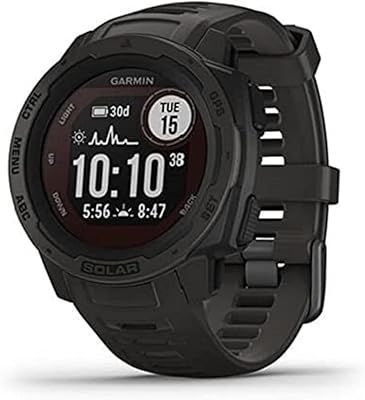
Garmin tactix Delta Tactical GPS Smartwatch
78%
93%
Battery Life
91%
Durability & Build
89%
GPS & Navigation Accuracy
88%
Tactical Features
84%
Sports & Fitness Tracking
More
Garmin vivoactive 4 GPS Smartwatch
88%
90%
Battery Life
94%
Fitness & Health Tracking
86%
Music Storage & Playback
88%
Build Quality
85%
Ease of Use
More
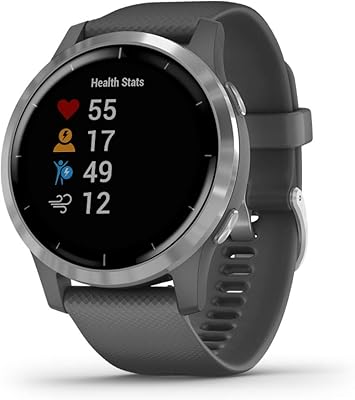
Garmin Instinct Solar Rugged Smartwatch
78%
88%
Battery Life
93%
Build Quality
91%
GPS Accuracy
89%
Navigation Features
74%
Solar Charging
More
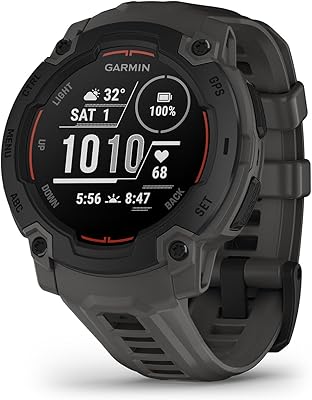
Garmin Venu 2 GPS Smartwatch
87%
94%
Battery Life
88%
Health Tracking Accuracy
91%
Display Quality
80%
Ease of Use
86%
Fitness Features
More
Garmin Enduro 3 GPS Smartwatch
83%
96%
Battery Life
91%
GPS Accuracy
93%
Build Quality
88%
Comfort & Wearability
89%
Navigation & Mapping
More
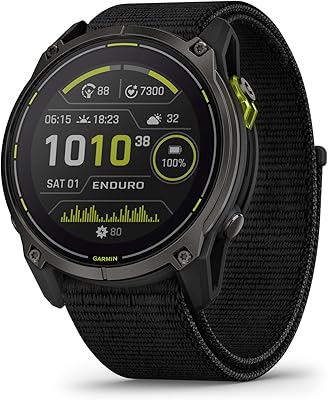
Garmin Instinct E 45mm GPS Smartwatch
84%
94%
Battery Life
90%
Build Quality
85%
Fitness Tracking Accuracy
88%
Water Resistance
89%
GPS Navigation
More
Garmin Venu Sq 2 GPS Smartwatch
79%
91%
Battery Life
88%
Display Quality
86%
Health & Fitness Tracking
83%
GPS Accuracy
84%
Sports & Activity Modes
More
Garmin Forerunner 245 GPS Running Smartwatch
75%
92%
GPS Accuracy
89%
Battery Life
88%
Training Plan Quality
71%
Running Dynamics
91%
Comfort and Wearability
More
Garmin Approach S42 GPS Golf Smartwatch
87%
91%
Battery Life in GPS Mode
88%
Ease of Use
94%
Shot Tracking Accuracy
78%
Display Readability
85%
Build Quality
More

FAQ

It only works with compatible Garmin chartplotters and MFDs. If your boat runs Raymarine, Furuno, Navionics, or another brand, the marine integration features simply will not function. The remote control of autopilot, chart zoom, and Fusion stereo is entirely Garmin-ecosystem-specific.

The anchor drag and tide-change alerts rely on a connection to a compatible Garmin chartplotter or marine device to function fully. Without that pairing, the alert functionality is limited. If anchoring safety is your primary motivation, confirm your specific chartplotter model is on Garmin's compatibility list before purchasing.

The core hardware between the two is closely related, but the quatix 7 adds marine-specific features like chartplotter integration, tide data watch faces, anchor drag alerts, and BlueChart map support that the Fenix 7 does not have. If you spend serious time on the water with Garmin electronics, those additions justify the difference. If your boating is occasional, the Fenix 7 is a strong alternative at a lower entry point.

Honestly, not reliably. Most users report that the touchscreen becomes unresponsive or inconsistent with wet hands, and gloves make it even less practical. The physical buttons are the intended primary input in active sailing conditions, and they work dependably in all weather. Think of the touchscreen as a convenience for dry-hand use at the dock or below deck.

Most users report real-world endurance reasonably close to the 18-day rating in standard smartwatch mode with occasional GPS use. If you are actively tracking routes, running continuous GPS, or maintaining a live chartplotter connection for extended periods, expect something closer to 10 to 12 days. For typical mixed-use passage-making, the battery is more than adequate between port visits.

No — and Garmin is clear about this. The Pulse Ox feature provides an activity-level estimate of blood oxygen saturation and is not a medical device. It can be useful for general wellness awareness or altitude acclimatization tracking, but it should not be used for clinical decisions or to monitor any health condition.

Yes, the QuickFit band system is tool-free and takes only a few seconds to swap. Many third-party bands use the QuickFit mounting standard and are compatible, which gives you flexibility to find aftermarket silicone, leather, or metal options at various price points without being locked into Garmin's own band catalog.

There is a real learning curve, especially for configuring the marine-specific features and alert settings. The menu structure is layered and logic that feels intuitive to longtime Garmin users can be confusing at first. Budget some time with the manual or tutorial videos during initial setup. Once the key menus become familiar, daily use is straightforward, but the onboarding experience is not as polished as mainstream consumer smartwatch platforms.

The quatix 7 carries a water resistance rating appropriate for swimming and water sports, not just splashes. It is designed to handle immersion as expected from a marine-focused device. That said, it is not rated for scuba diving depths, so keep that in mind if diving is part of your on-water activities.

They are an additional purchase. The watch ships with no preloaded coastal or inland charts — the BlueChart g3 coastal and LakeVü g3 inland map support is a compatibility feature, not a bundled inclusion. You will need to purchase and load the relevant chart regions separately if you want on-wrist chart reference beyond basic GPS tracking.

Where to Buy

Sportfish Outfitters
In stock $539.99
Backcountry.com
In stock $599.99
Anchored Trading
In stock $599.99
The Sporting Shoppe
In stock $599.99
Nomadic Supply Company
In stock $599.99
Heart Rate Monitors USA
In stock $599.99
Claudia's Jewelry
In stock $699.99