

Overview

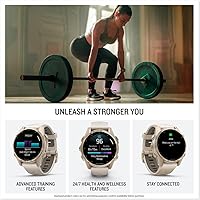
The Garmin fenix 8 43mm GPS Smartwatch lands at the top of Garmin's lineup, and the smaller 43mm case is a smart move for anyone who wants flagship power without a watch that swallows their wrist. That sapphire AMOLED display looks sharp in direct sunlight, which matters more than people expect once they've squinted at a dim screen mid-run. Pricing puts it right alongside the Apple Watch Ultra and Garmin's own Epix Pro, so this is firmly premium territory, not an impulse buy. It's clearly built with athletes, hikers, and people who spend real time outdoors in mind, rather than someone looking for a basic fitness tracker. The build quality alone signals that intention.

Features & Benefits

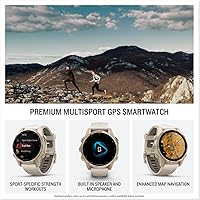
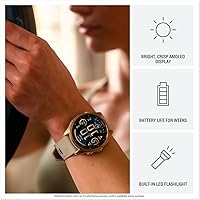
Day to day, the small touches end up mattering most. The built-in LED flashlight sounds gimmicky until you're fumbling for keys in a dark trailhead parking lot, and suddenly it's the feature you mention to friends. Multi-band GPS with SatIQ technology keeps tracking accurate even when you're weaving through canyons or dense tree cover, where older GPS chips tend to drift. The training readiness score is genuinely useful too, pulling sleep, HRV, and recovery data into a single number instead of forcing you to interpret three separate charts. Being able to take calls straight from the wrist, thanks to the onboard speaker and mic, removes the need to dig out a phone mid-workout. Add in a dive-rated, sapphire-protected build, and this multisport GPS watch feels engineered for abuse rather than careful handling.

Best For

This Garmin smartwatch makes the most sense for people training across multiple disciplines, think triathletes juggling swim, bike, and run data without switching devices. Hikers and backcountry travelers benefit from the offline navigation tools, plus the altimeter and compass working together when cell service disappears. Anyone upgrading from an older fenix model, or a non-AMOLED Garmin, will likely appreciate the jump in screen quality immediately. That said, it's worth being honest here: someone who just wants to count steps and track sleep is paying for a lot of capability they'll never touch. The premium price tag only makes sense if you're actually using the multisport and outdoor-specific tools regularly.

User Feedback

Real owners tend to highlight battery life as a pleasant surprise, especially compared to other AMOLED watches that often need nightly charging. The flashlight comes up constantly in reviews too, usually as an unexpected favorite rather than a headline feature anyone bought it for. On the flip side, some buyers admit the advanced training metrics take time to actually understand and use well, which can feel overwhelming at first. A handful of reviewers also question the value compared to simpler, cheaper options like Garmin's Forerunner series, particularly if multisport tracking and dive-rating aren't priorities. Overall sentiment leans positive, but it's clearly a watch that rewards people willing to dig into its settings.

Pros

  • Sapphire AMOLED display stays readable in bright outdoor sunlight
  • Built-in flashlight turns out to be genuinely useful, not just a gimmick
  • Multi-band GPS with SatIQ technology holds accuracy in canyons and dense tree cover
  • Battery life regularly outperforms other AMOLED smartwatches in daily use
  • Training readiness score simplifies sleep, HRV, and recovery into one clear number
  • Onboard speaker and mic let you take calls without reaching for your phone
  • Dive-rated, sapphire-protected build handles rough outdoor conditions well
  • 43mm case keeps flagship features in a smaller, more wearable size

Cons

  • Advanced training metrics take real time to learn and interpret well
  • Premium pricing is hard to justify for casual, non-athletic use
  • Menu depth can feel overwhelming compared to simpler fitness trackers
  • GPS battery drain is still noticeable during long endurance activities
  • Phone app integration feels more fitness-focused than mainstream smartwatches
  • Some buyers question the value jump over cheaper Garmin Forerunner models
  • Calling features depend on a paired phone, limiting standalone use
  • Smaller 43mm case slightly reduces screen real estate versus larger fenix sizes

Ratings

These scores for the Garmin fenix 8 43mm GPS Smartwatch were generated by AI after analyzing verified user reviews from around the world, with spam, bots, and incentivized feedback filtered out before scoring. The breakdown below reflects what real owners consistently praised and what genuinely frustrated them, not a marketing-friendly average.

Display Quality
93%
Owners consistently mention how easy this is to read outdoors, even in harsh midday sun during trail runs or beach walks. The sapphire AMOLED panel feels noticeably sharper than older Garmin screens, making everyday glances at notifications or stats genuinely pleasant.
A small number of users with smaller wrists wish the 43mm screen offered more on-screen detail during data-heavy activities like multisport transitions. AMOLED also draws more power than older transflective displays, which factors into battery complaints.
Battery Life
84%
Compared to other AMOLED smartwatches, reviewers frequently note they're charging less often than expected, often stretching close to the advertised week-plus range in smartwatch mode. For people used to daily-charging smartwatches, this feels like a real relief.
Heavy GPS use, especially with multi-band tracking enabled, drains the battery noticeably faster than Garmin's marketing numbers suggest. Ultra-distance athletes report needing a mid-event top-up if they rely on the most accurate GPS settings throughout.
GPS Accuracy
90%
Hikers and trail runners praise how steady the tracking stays in canyons, dense forest, and urban canyons where older GPS chips typically lose the signal. SatIQ technology gets singled out repeatedly for keeping pace data accurate during tempo runs.
A few users in extremely remote or mountainous terrain still report occasional drift, though it's rare compared to competing devices. Enabling the most precise multi-band setting also accelerates battery drain, creating a trade-off some find frustrating.
Build Quality & Durability
89%
The dive-rated construction and sapphire lens give owners real confidence wearing this through swims, rough trail falls, or everyday bumps without babying it. Several reviewers mention it still looks new after months of heavy outdoor use.
The premium materials add noticeable weight and bulk compared to slimmer fitness trackers, which some casual users find less comfortable for all-day wear. A handful of buyers also note the bezel attracts minor scuffs over extended rugged use.
Flashlight Feature
91%
This shows up again and again in reviews as an unexpected favorite, with owners using it for early dark runs, camping, or just finding things in a dim room. It's described as surprisingly bright and practical rather than a token gimmick.
A small minority feel it drains battery faster than expected with extended use, and the light intensity isn't adjustable enough for some night-hiking scenarios. It's a nice extra, but not a replacement for a dedicated headlamp on serious trips.
Training & Recovery Metrics
82%
18%
Serious athletes appreciate how the training readiness score pulls sleep, HRV, and recovery load into one clear daily signal instead of forcing them to interpret scattered charts. Many say it's changed how they plan hard versus easy training days.
New users frequently describe a steep learning curve, needing weeks before the metrics feel intuitive rather than overwhelming. Some also question how closely the readiness score matches how they actually feel physically on a given day.
Smartwatch Connectivity
78%
22%
Being able to take calls directly from the wrist via the built-in speaker and mic gets praised for convenience during runs or hikes when a phone isn't easily reachable. Bluetooth pairing is generally described as quick and reliable.
Compared to mainstream smartwatches, app support and notification handling feel more limited, since this is clearly built fitness-first. Some users coming from Apple Watch found the overall smartphone integration less polished.
Comfort & Wearability
80%
20%
The 43mm case size earns praise specifically from buyers with smaller wrists who found larger fenix models too bulky for daily wear. It strikes a balance many describe as flagship capability in a genuinely wearable size.
It's still heavier and thicker than slimmer fitness watches, and a few reviewers mention noticing it during sleep tracking or under tight jacket sleeves. Not everyone finds the rugged design comfortable for 24/7 wear.
Multisport Versatility
88%
Triathletes and multisport athletes specifically call out not needing separate devices for swim, bike, and run tracking, which simplifies their entire training setup. The built-in sports apps cover a wide enough range that most don't feel limited.
Casual users who only do one activity type find this depth largely wasted on them, paying for capability they'll never use. Switching between sport profiles also takes a bit of practice to navigate quickly mid-session.
Value for Money
71%
29%
Buyers who use the multisport tracking, navigation, and dive-rated durability regularly feel the price is justified by genuinely flagship-level capability that holds up over years of use. It's positioned as a long-term investment rather than a yearly upgrade.
Several reviews directly compare value against cheaper Garmin Forerunner models, questioning whether the extra features justify the price gap for less intensive users. Casual buyers in particular feel they're overpaying for tools they rarely touch.
Navigation & Outdoor Tools
92%
Backcountry hikers consistently highlight how well the compass, altimeter, and offline maps work together when cell service disappears entirely. It's frequently described as trustworthy enough to rely on for real route-finding, not just casual tracking.
A few users note the smaller 43mm screen makes detailed map reading slightly harder than on larger fenix or Epix models. Loading custom maps also requires some setup time that not every buyer expects upfront.
Ease of Use
68%
32%
Once familiar with the menu structure, long-time Garmin users describe navigation as logical and fast, especially using the physical buttons during sweaty or wet conditions where touchscreens struggle. Customization options are praised for letting people tailor data screens precisely.
First-time Garmin buyers frequently mention feeling overwhelmed by the sheer number of settings, metrics, and menus during initial setup. The learning curve is real, and several reviewers admit it took weeks to feel fully comfortable.

Suitable for:

The Garmin fenix 8 43mm GPS Smartwatch is built for people who actually train across multiple sports and need one device to track all of it. Triathletes juggling swim, bike, and run sessions will appreciate not having to switch watches or apps between disciplines. Hikers and backcountry travelers gain real value from the offline navigation, altimeter, and compass working together when phone service drops out. Early-morning or after-dark runners get genuine use out of the built-in flashlight, which solves a problem most smartwatches simply ignore. It also suits anyone upgrading from an older fenix or non-AMOLED Garmin who wants a noticeably better screen without losing the rugged build they're used to. For athletes who lean on data like training readiness and HRV trends to plan workouts, this is one of the more complete tools available.

Not suitable for:

Casual users who mainly want step counts, basic sleep tracking, or notifications will find the Garmin fenix 8 43mm GPS Smartwatch far more capability than they need. The premium price only makes sense if the multisport tracking, dive rating, and outdoor navigation tools get regular use, not occasional ones. Buyers who dislike spending time learning new software may struggle with the depth of training metrics and menus, since this isn't a watch that explains itself quickly. People focused purely on phone integration and app ecosystem, similar to what an Apple Watch offers, may also feel limited by Garmin's more fitness-first approach. If smartwatch features like calling and messaging matter more than sports tracking, simpler or cheaper alternatives will likely serve better.

Specifications

  • Display: The watch features a 1.3-inch AMOLED display protected by a scratch-resistant sapphire lens.
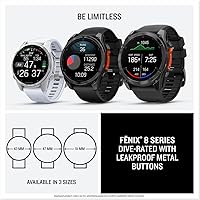
  • Case Size: The case measures 43mm, making it one of the more compact options in the fenix 8 lineup.
  • Storage: Internal storage comes in at 32GB, enough for offline maps and stored music.
  • Battery Life (Smartwatch Mode): Battery life reaches up to 10 days in standard smartwatch mode.
  • Battery Life (GPS Mode): Continuous GPS mode runs for up to 28 hours on a full charge.
  • GPS Technology: Multi-band GPS with SatIQ technology is built in for improved positioning accuracy in difficult terrain.
  • Sensors: The watch includes a 3-axis compass, gyroscope, and barometric altimeter for navigation and elevation tracking.
  • Flashlight: A built-in LED flashlight provides visibility for early morning or after-dark activities.
  • Water Resistance: The build is dive-rated, supporting underwater use beyond standard swim tracking.
  • Connectivity: The watch connects via Bluetooth wireless technology to compatible smartphones.
  • Calling: A built-in speaker and microphone allow phone calls to be taken directly from the wrist when paired.
  • Battery Type: Power comes from a lithium polymer battery rated at 5 milliamp hours.
  • Operating System: The watch runs on Garmin OS, Garmin's proprietary smartwatch software platform.
  • Shape: The case has a round shape consistent with the broader fenix lineup.
  • Weight: The watch weighs approximately 66 grams, or 2.33 ounces.
  • Dimensions: Physical dimensions measure 0.54 x 1.69 x 1.69 inches.
  • Touchscreen: The display supports touchscreen input in addition to physical button controls.
  • Training Metrics: A training readiness score combines sleep quality, HRV status, and recovery load into one daily metric.

Related Reviews
Garmin fēnix 8 51mm Sapphire GPS Smartwatch
80%
93%
GPS Accuracy
88%
Battery Life
94%
Build Quality
86%
Display Quality
91%
Training Metrics
More
Garmin fēnix E 47mm Multisport GPS Smartwatch
79%
92%
Display Quality
91%
GPS Accuracy
71%
Battery Life
89%
Training & Performance Metrics
88%
Navigation Features
More
Garmin Fenix Enduro GPS Watch
85%
96%
Battery Life
92%
Build Quality & Durability
89%
Solar Charging Efficiency
88%
Activity Tracking Accuracy
75%
Ease of Use
More
Garmin Venu 2 GPS Smartwatch
79%
93%
Battery Life
91%
Display Quality
84%
Health & Fitness Tracking
78%
GPS Accuracy
88%
Build Quality
More
Garmin tactix Delta Tactical GPS Smartwatch
78%
93%
Battery Life
91%
Durability & Build
89%
GPS & Navigation Accuracy
88%
Tactical Features
84%
Sports & Fitness Tracking
More
Garmin Fenix 7S GPS Adventure Smartwatch
79%
91%
Battery Life
93%
GPS Accuracy
89%
Sport Profile Depth
86%
Navigation & Maps
88%
Wrist Comfort & Fit
More
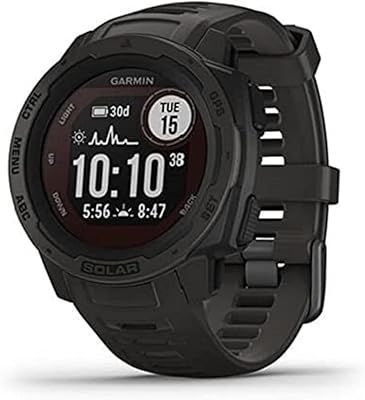
Garmin Instinct Solar Rugged Smartwatch
78%
88%
Battery Life
93%
Build Quality
91%
GPS Accuracy
89%
Navigation Features
74%
Solar Charging
More
Garmin vivoactive 4 GPS Smartwatch
80%
84%
Build Quality & Design
81%
Display & Touchscreen
83%
Battery Life (Smartwatch Mode)
58%
Battery Life (GPS + Music Mode)
82%
GPS Accuracy & Sports Tracking
More
Garmin Swim 2 GPS Swimming Smartwatch
86%
92%
Swim Tracking Accuracy
89%
Battery Life
88%
Heart Rate Monitoring
85%
Comfort and Fit
83%
Ease of Use
More
Garmin Approach S42 GPS Golf Smartwatch
79%
91%
GPS & Yardage Accuracy
93%
Course Library Coverage
74%
Battery Performance
69%
Touchscreen Usability
62%
AutoShot Tracking
More

FAQ

The 43mm case is actually the smaller option in this lineup, so it tends to sit more comfortably on narrower wrists compared to the larger fenix sizes. If you've found bigger sports watches uncomfortable before, this size is worth considering.

Garmin rates it at up to 28 hours in full GPS mode, though real-world results vary depending on which GPS settings and sensors you're using. Multi-band accuracy tends to drain the battery faster than standard GPS modes, so expect somewhat less during long endurance events.

Yes, it has a built-in speaker and microphone, so you can answer calls right from your wrist as long as it's paired with your phone over Bluetooth. It's genuinely useful when your phone is buried in a bag during a run or hike.

The build is dive-rated, which goes beyond typical swim-proof ratings on most fitness watches. That said, always check Garmin's official depth ratings if you're doing serious or technical diving.

It's surprisingly practical. Plenty of owners mention using it for early morning runs, finding gear in a dark tent, or just walking the dog after sunset. It's a small feature, but it solves a real annoyance smartwatches usually ignore.

It pulls together your sleep quality, training load, recovery status, and HRV data into a single daily score, basically telling you whether your body is primed to push hard or needs a lighter day. It's meant to be a helpful estimate rather than a precise medical reading.

It really depends on how much you value the multisport tracking, navigation tools, and rugged build. If you're a casual user who mainly wants step counts and notifications, you're paying for a lot of capability you won't use.

There's a real learning curve, especially around the training metrics and recovery data. Most owners say it takes a few weeks of regular use before the menus and data start feeling intuitive rather than overwhelming.

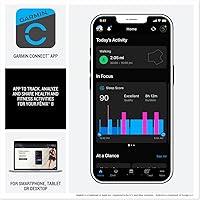
Yes, it connects over Bluetooth to compatible smartphones running either iOS or Android, syncing data through Garmin's companion app. Some smartphone-assistant features may behave slightly differently depending on your phone's operating system.

The Forerunner line is lighter on features and price, while this multisport GPS watch adds things like the flashlight, dive rating, sapphire lens, and more advanced sensors. If you don't need those extras, a Forerunner could be the more practical and budget-friendly choice.