Overview

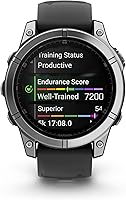
The Garmin fēnix E 47mm Multisport GPS Smartwatch sits at an interesting point in Garmin's lineup — it's the entry into the premium fēnix family, but it doesn't feel like a compromise. The most notable shift from older models in this line is the move to an AMOLED display, which makes a real visual difference if you've spent time with the older MIP screens. The stainless steel bezel and round case give it enough polish to wear off the trail, though make no mistake — this GPS training watch was built for athletes first, with the everyday appeal coming as a welcome bonus rather than the main pitch.
Features & Benefits

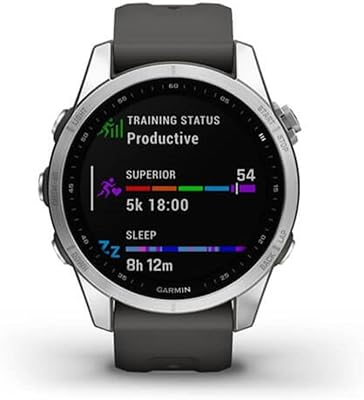
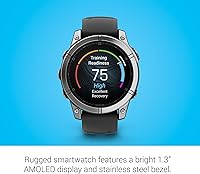
The AMOLED touchscreen is sharp and punchy — readable mid-run even in direct sunlight, which wasn't always guaranteed with previous generations. Battery life is genuinely strong for a watch with this kind of display: you can comfortably stretch two weeks of daily wear before charging, though heavy GPS use pulls that number down noticeably. Navigation leans on multi-constellation satellite support paired with a barometric altimeter and compass, so you're not guessing when the trail gets technical. The Training Readiness Score stands out — it factors in sleep, recovery, heart rate variability, and recent workload to give you an honest signal on whether today calls for a hard effort or a rest day.

Best For

This Garmin multisport watch makes the most sense for serious endurance athletes — runners, cyclists, hikers, and triathletes who need reliable multi-sport tracking without carrying extra devices. It's also a strong pick for someone stepping up from a mid-range Garmin, like a Forerunner, who wants access to the full training ecosystem but doesn't need every feature packed into the flagship fēnix 7. Outdoor adventurers heading into remote terrain will value the navigation stack. And if you care about actionable recovery metrics — not just step counts, but genuine readiness insights — the fēnix E delivers that in a round, wear-anywhere form factor.

User Feedback

Owners of the fēnix E are consistent about a few things. The display earns strong praise — people upgrading from older fēnix models say the screen improvement alone justifies the switch. GPS accuracy is rated highly across the board, and users appreciate the volume of training data Garmin surfaces without much manual configuration. The recurring frustration is battery life: longtime fēnix owners used to MIP-screen endurance find the AMOLED version needs charging noticeably more often. A smaller group flags the watch's wrist presence as slightly uncomfortable during sleep tracking. Garmin Connect sync is mostly reliable, though the app's depth can feel overwhelming for those coming from simpler platforms.

Pros

  • The AMOLED display is noticeably sharper and more vibrant than older fēnix screens — a real day-to-day improvement.
  • Multi-constellation GPS locks on quickly and holds accuracy well, even in dense tree cover or urban canyons.
  • The Training Readiness Score gives athletes a genuinely useful daily gut-check that factors in sleep, recovery, and workload.
  • Battery life in smartwatch mode stretches comfortably through extended trips without daily charging anxiety.
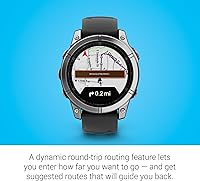
  • Built-in navigation tools — altimeter, compass, and dynamic routing — make this GPS training watch reliable off-grid.
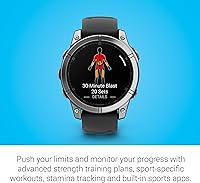
  • The fēnix E covers a wide range of sports profiles out of the box, with no need for third-party apps to unlock activities.
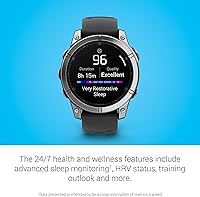
  • Health monitoring runs around the clock, tracking respiration, heart rate, and sleep without any manual setup.
  • The stainless steel bezel holds up to physical wear and looks polished enough for office or casual settings.
  • 32 GB of onboard storage gives plenty of room for maps and music without managing space constantly.
  • Garmin Connect syncs training data reliably and provides deep historical analysis for athletes who track progress over time.

Cons

  • Battery life drops noticeably with always-on display or frequent GPS use — more so than older MIP-screen fēnix models.
  • The Garmin OS learning curve is steep; new users often spend significant time navigating menus before feeling comfortable.
  • The 47mm case is bulky on smaller wrists and can feel intrusive during overnight sleep tracking.
  • Garmin Connect's app interface is data-rich but cluttered, which can overwhelm users who aren't deep into training analytics.
  • Health metrics like Pulse Ox and HRV are estimates, not medical readings — easy to over-interpret without that context.
  • No LTE connectivity means you're tethered to your phone for real-time notifications and syncing outside of Wi-Fi range.
  • The default black band is functional but basic — third-party replacements are widely available but add to the total cost.
  • Users switching from Apple Watch or Wear OS will find the smart features comparatively limited.
  • Dynamic round-trip routing, while useful, can occasionally suggest impractical paths in complex trail networks.
  • At this price tier, the absence of a solar charging option — available on higher fēnix models — feels like a missed inclusion.

Ratings

The Garmin fēnix E 47mm Multisport GPS Smartwatch scores below are generated by AI after deep analysis of verified global user reviews, with spam, bot activity, and incentivized feedback actively filtered out. Ratings reflect real-world experiences from endurance athletes, daily commuters, and outdoor adventurers — not curated brand narratives. Both the standout strengths and the recurring frustrations are represented honestly so you can make a genuinely informed decision.
Display Quality
92%
The AMOLED screen earns consistent praise from users who previously used MIP-display Garmin watches — the jump in color depth and brightness is hard to miss on a sunny trail run or a bright cycling route. Readability in direct sunlight is strong, and the touchscreen responsiveness during non-wet conditions is snappy and reliable.
A small but vocal group of users note that the always-on display mode dims noticeably to conserve power, which can make glancing at pace data mid-run less convenient than expected. The 1.3″ size is also occasionally flagged as slightly small for users who prefer larger data fields during complex navigation.
GPS Accuracy
91%
Multi-constellation satellite support means this GPS training watch locks on fast and holds its track well in challenging conditions — tree-covered trails, urban canyons, and mountainous switchbacks all come up as environments where accuracy holds firm. Runners and cyclists consistently report that mapped routes align tightly with real-world distance.
A handful of users report occasional drift during dense forest runs or in deep valley terrain, though this appears to be an edge case rather than a systemic flaw. Some users also note the initial satellite acquisition can lag slightly after long periods without use.
Battery Life
71%
29%
For casual daily wear with gesture-wake display and moderate GPS use, most users comfortably get one to two weeks between charges — genuinely useful for multi-day hiking trips where charging opportunities are limited. Compared to Apple Watch or Galaxy Watch competitors, the endurance is significantly better.
Users upgrading from older fēnix models with MIP screens feel the battery regression most sharply; what used to be a month-long charge cycle is now roughly half that. Frequent GPS users — those training twice daily or logging long weekend races — find themselves charging every three to five days, which disrupts the experience.
Training & Performance Metrics
89%
The Training Readiness Score is cited repeatedly as one of the most practically useful features for athletes who tend to overtrain — having a single daily indicator that synthesizes sleep quality, HRV, and recent load helps structure smarter training weeks. The breadth of sport profiles and real-time stamina tracking is well-regarded across running, cycling, and triathlon communities.
The sheer volume of data can overwhelm newer users or casual athletes who don't have the background to interpret HRV trends or training load curves. A few users also note that the readiness score occasionally feels disconnected from subjective feel, particularly during periods of high stress or illness.
Navigation Features
88%
The combination of barometric altimeter, 3-axis compass, and multi-GNSS makes this GPS training watch a credible navigation tool for remote trail use — users regularly report relying on it confidently without a phone in areas with zero cell coverage. Dynamic round-trip routing is highlighted as a standout feature for runners exploring unfamiliar cities or new trail systems.
Map visualization on the watch screen is functional rather than rich — users who want full topographic detail comparable to a dedicated GPS device may find it limited. Routing in complex or heavily intersected urban trail networks occasionally generates suggestions that require common-sense overrides.
Build Quality & Durability
87%
The stainless steel bezel handles daily wear, gym use, and trail exposure without showing meaningful surface damage — users who wear it 24/7 for months report the case and band holding up well. The overall assembly feels substantial and well-engineered rather than plasticky, which matters at this price tier.
The stock black band, while functional and secure, is considered the weakest material link in the package — some users report it feeling sweaty and stiff during extended wear in high humidity. A few noted minor scratching on the bezel face after impact with hard surfaces, which is typical for steel but worth noting.
Health Monitoring
79%
21%
Around-the-clock heart rate, Pulse Ox, and respiration tracking run passively without draining the battery at an alarming rate, and sleep stage monitoring is considered one of the more detailed implementations available in a sport watch. Athletes following recovery-focused training programs find the overnight HRV data genuinely actionable.
Pulse Ox readings in particular are flagged by users as inconsistent during movement, producing readings that sometimes seem implausibly high or low mid-activity. As Garmin itself notes, all health metrics are estimations rather than clinical measurements, which limits how much weight users should realistically put on individual data points.
Comfort & Wearability
73%
27%
For a stainless steel multisport watch at 47mm, the weight distribution is reasonably balanced and most medium-to-large wrist users report forgetting they're wearing it during workouts. The band buckle system is secure enough for swimming and high-intensity training without digging into the wrist.
Overnight use for sleep tracking is where comfort complaints concentrate — the case bulk is noticeable for side sleepers and those with smaller wrists, and some users simply remove it at night rather than tolerate the discomfort. A 42mm or 45mm variant option would address this for a meaningful segment of buyers.
Software & Garmin OS
74%
26%
Garmin OS is purpose-built for athletic use, and within that lane it's consistent and reliable — menus rarely crash, data fields are highly customizable, and the watch handles complex workout structures without hiccups. Users who invest time in learning the interface typically become strong advocates for its depth.
The learning curve is steep compared to consumer smartwatch platforms, and first-time Garmin users often spend the first few weeks feeling lost in nested menus. The OS also lacks the fluid, intuitive polish of Apple watchOS or Wear OS for non-sport tasks like notification management or quick setting changes.
Garmin Connect App
76%
24%
Garmin Connect offers one of the deepest post-workout analysis experiences available on a companion app — users can drill into heart rate curves, pace zones, and elevation profiles in detail that rivals dedicated sports analytics tools. Sync reliability over both Bluetooth and Wi-Fi is consistently rated as dependable.
The app interface is dense and can feel overwhelming or dated compared to sleeker competitor apps — casual users especially report struggling to find key metrics without significant exploration. A small percentage of users experience occasional sync delays or data gaps that require manual reconnection to resolve.
Smart Notifications
63%
37%
Basic notification mirroring from a paired phone works reliably for calls, texts, and app alerts — sufficient for athletes who want to stay loosely connected without pulling out their phone mid-run. The watch handles notification delivery without significant lag when the phone is within Bluetooth range.
Interaction with notifications is limited — you can read and dismiss but response options are thin compared to Apple Watch or Wear OS devices. Users transitioning from a more feature-rich smartwatch platform often describe the notification experience as a step backward, particularly for managing emails or responding to messages on the go.
Value for Money
77%
23%
For dedicated endurance athletes who will use the full feature set — training metrics, navigation, multi-sport profiles, and health monitoring — the fēnix E delivers a large amount of functional capability relative to its price, especially compared to flagship fēnix or MARQ alternatives. Users who treat it as a training tool rather than a gadget tend to feel the investment is justified.
For more casual users or those primarily after a stylish everyday smartwatch, the price is difficult to rationalize given the limited lifestyle app ecosystem and the learning investment required. Buyers comparing it to similarly priced competitors from Apple or Samsung will find those alternatives more polished for daily non-athletic use.
Setup & Initial Configuration
68%
32%
Physical setup is straightforward — band attachment, charging, and pairing via Garmin Connect is a quick process that most users complete without needing the manual. Firmware updates are handled automatically via Wi-Fi, which keeps the device current without requiring user intervention.
Configuring data fields, sport profiles, and alert settings to personal preference is time-consuming and non-intuitive for first-time Garmin users — several reviewers mention needing YouTube tutorials to unlock features they paid for. The initial volume of setup options can make the first week feel more like work than enjoyment.
Sleep Tracking Accuracy
72%
28%
The sleep stage breakdown — light, deep, and REM — is more granular than what most fitness bands offer, and users who compare it against polysomnography-level data report reasonable alignment in overall sleep duration and general stage trends. The morning sleep score gives a quick readable summary that doesn't require digging through raw data.
Sleep stage classification is inconsistent for users who wake frequently during the night or have irregular schedules — the watch sometimes misclassifies light dozing as deep sleep or vice versa. A segment of users also find the wrist bulk during overnight wear affects their natural sleep position, which ironically may skew the data it's trying to capture.

Suitable for:

The Garmin fēnix E 47mm Multisport GPS Smartwatch is built for people who take their training seriously and want a single device that can keep up across disciplines. Runners who log long miles on trails, cyclists tracking elevation and effort, triathletes juggling multiple sport profiles, and hikers venturing into remote terrain will all find this GPS training watch purpose-built for their needs. It's particularly well-matched for athletes who want data that goes beyond pace and distance — specifically those who want to understand recovery, sleep quality, and readiness as part of a structured training approach. If you're currently on a mid-range GPS watch and feeling limited by its feature set, the fēnix E offers a meaningful upgrade into Garmin's full ecosystem without requiring you to spend up to the top of the fēnix range. The stainless steel case and round design also make it presentable enough for daily wear, so you're not constantly swapping between a sport watch and a regular one.
Not suitable for:

The Garmin fēnix E 47mm Multisport GPS Smartwatch is not the right call for everyone, and it's worth being direct about that. If your primary motivation for buying a smartwatch is fashion, notifications, or app integration — think contactless payments, streaming controls, or a polished app ecosystem — this watch will feel like overkill in the wrong direction. The Garmin OS is powerful for athletes but comparatively limited in the lifestyle smartwatch department, and users coming from Apple Watch or Wear OS devices often find it a step back in that regard. The AMOLED display, while visually impressive, does come with a battery cost compared to older fēnix models with MIP screens — so if you previously relied on weeks of battery life and rarely charged, expect an adjustment. Casual fitness users who just want step counts and basic heart rate monitoring will find the depth of data here more confusing than helpful, and the price point is hard to justify for that use case. Finally, those with smaller wrists may find the 47mm case physically imposing, especially for overnight wear during sleep tracking.
Specifications

  • Display: The watch features a 1.3″ AMOLED touchscreen that delivers vivid color and strong outdoor visibility across a range of lighting conditions.
  • Case Size: The round case measures 47mm in diameter, giving it a substantial wrist presence suited to medium and larger wrists.
  • Dimensions: Overall physical dimensions are 1.85 x 1.85 x 0.57 inches, keeping the profile reasonably slim for a multisport GPS watch.
  • Weight: The watch weighs 76 grams, which is noticeable but typical for a stainless steel multisport GPS device in this category.
  • Case Material: The bezel is constructed from stainless steel, offering durability and a polished appearance that holds up to daily athletic use.
  • Battery: Watch Mode: In standard smartwatch mode, the battery is rated to last up to approximately two weeks on a single charge.
  • Battery: GPS Mode: With continuous GPS active, the battery supports roughly 42 hours of use before requiring a recharge.
  • Satellite Systems: The watch connects to GPS, GLONASS, and Galileo satellite networks simultaneously for broad, reliable positioning across environments.
  • Onboard Sensors: Built-in sensors include a barometric altimeter, 3-axis gyroscope, and 3-axis compass for accurate navigation and movement data.
  • Health Monitoring: Continuous health tracking covers wrist-based heart rate, Pulse Ox blood oxygen estimation, respiration rate, and advanced sleep monitoring.
  • Storage: Onboard storage of 32 GB accommodates downloaded maps, music, and app data without frequent management.
  • Connectivity: The watch supports Bluetooth, Wi-Fi, and USB connectivity for syncing data, transferring files, and charging.
  • Operating System: The device runs Garmin OS, optimized for sports and navigation functions rather than a general-purpose app ecosystem.
  • Band: The watch ships with a black band, and the standard quick-release system is compatible with a wide range of third-party 22mm bands.
  • Battery Type: Power comes from a built-in rechargeable lithium polymer cell; no user-replaceable battery is available.
  • Special Features: Key features include an activity tracker, multisport sport profiles, turn-by-turn navigation, smart notifications, and a touchscreen interface.
  • Shape: The watch has a round case design, distinguishing it from rectangular sport watch alternatives in this performance tier.
  • Manufacturer: The fēnix E is designed and manufactured by Garmin, a company with an established track record in GPS and fitness wearables.

Related Reviews
Garmin Instinct E 45mm GPS Smartwatch
76%
93%
Battery Life
91%
Durability & Build
76%
GPS Accuracy
58%
Display Quality
78%
Health & Fitness Tracking
More
Garmin fēnix 8 51mm Sapphire GPS Smartwatch
80%
93%
GPS Accuracy
88%
Battery Life
94%
Build Quality
86%
Display Quality
91%
Training Metrics
More
Garmin Fenix 7S GPS Adventure Smartwatch
79%
91%
Battery Life
93%
GPS Accuracy
89%
Sport Profile Depth
86%
Navigation & Maps
88%
Wrist Comfort & Fit
More
Garmin vivoactive 4 GPS Smartwatch
88%
90%
Battery Life
94%
Fitness & Health Tracking
86%
Music Storage & Playback
88%
Build Quality
85%
Ease of Use
More
Garmin Fenix Enduro GPS Watch
85%
96%
Battery Life
92%
Build Quality & Durability
89%
Solar Charging Efficiency
88%
Activity Tracking Accuracy
75%
Ease of Use
More
Garmin Venu 2 GPS Smartwatch
79%
93%
Battery Life
91%
Display Quality
84%
Health & Fitness Tracking
78%
GPS Accuracy
88%
Build Quality
More
Garmin tactix Delta Tactical GPS Smartwatch
78%
93%
Battery Life
91%
Durability & Build
89%
GPS & Navigation Accuracy
88%
Tactical Features
84%
Sports & Fitness Tracking
More
Garmin Instinct Solar Rugged Smartwatch
78%
88%
Battery Life
93%
Build Quality
91%
GPS Accuracy
89%
Navigation Features
74%
Solar Charging
More
Garmin Forerunner 245 GPS Running Smartwatch
75%
92%
GPS Accuracy
89%
Battery Life
88%
Training Plan Quality
71%
Running Dynamics
91%
Comfort and Wearability
More
Garmin Enduro 3 GPS Smartwatch
83%
96%
Battery Life
91%
GPS Accuracy
93%
Build Quality
88%
Comfort & Wearability
89%
Navigation & Mapping
More

FAQ

In practice, you can realistically expect around 10 to 14 days of battery life depending on how much you use features like always-on display, GPS tracking, and health monitoring. Turning on the always-on display will noticeably shorten that window, so most users leave it in gesture-wake mode to stretch the charge. If you're running long GPS sessions regularly, plan to charge more frequently than the maximum rated figure suggests.

It depends on what you're after. If you're hitting the ceiling of your Forerunner's features — wanting better navigation tools, more detailed recovery metrics, or a more durable build — then the fēnix E is a logical step up. The core GPS and tracking performance is strong across both lines, but the fēnix ecosystem adds depth around navigation, training readiness, and build quality that Forerunner models don't fully match.

The fēnix 7 sits above the fēnix E in the lineup and offers additional options including solar charging and a wider range of case materials. The fēnix E brings AMOLED to the fēnix family at a lower price point, which is one of its main selling points. If solar battery extension is important to you, the 7 is worth the premium; otherwise, the fēnix E covers the same core training and navigation ground competently.

Yes, the fēnix E is water-rated and includes swim tracking as part of its sport profile lineup, covering both pool and open-water swimming. It will track metrics like stroke rate, distance, and pace. Just note that the touchscreen typically becomes less responsive when wet, so you'll want to navigate using the physical buttons during water activities.

Yes, the watch pairs with both iOS and Android devices via Bluetooth. You'll use the Garmin Connect app to sync workouts, receive notifications, and manage settings. The full feature set is accessible on both platforms, though some smartphone-dependent features like certain notification interactions may behave slightly differently on iOS versus Android.

Wrist-based heart rate and Pulse Ox readings from this GPS training watch are close estimations, not clinical measurements. For the majority of training and general wellness tracking, they're useful and reasonably consistent. That said, Garmin is clear that these are not medical-grade readings, so if you have health conditions or need precise blood oxygen data, a dedicated medical device is the appropriate tool.

Think of it as a daily check-in from a data-driven coach. The score pulls together your recent sleep quality, heart rate variability, recovery time from past workouts, and current training load to give you a number indicating how prepared your body is for hard effort. It's a useful signal, not a hard rule — experienced athletes might override it based on feel, but it's particularly helpful for people who tend to overtrain or ignore recovery.

It's manageable, but the 47mm case and overall weight mean some people find it noticeable at night, especially on smaller wrists. If you're a restless sleeper or sensitive to wrist bulk, it may take a week or two to get used to. Loosening the band slightly at night helps most users, and the sleep tracking data is genuinely useful once you're past the adjustment period.

Yes, the watch supports downloadable maps and comes with enough onboard storage to hold detailed regional maps alongside music and other data. You can download maps through Garmin's tools before a trip, which means you have navigation available offline without needing a phone signal — a real advantage in remote trail or mountain environments.

For GPS tracking, heart rate, navigation, and all the training functions, the fēnix E works completely independently — no phone required. You will need your phone nearby to receive smart notifications, sync new data to Garmin Connect, or download content over Bluetooth. For standalone use on a run or hike with no phone, it handles everything you need on its own.