Overview

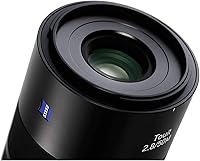
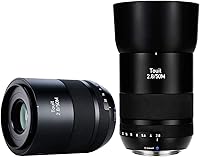
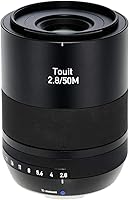
The ZEISS Touit 50mm f/2.8 Macro Lens is one of those rare optics that earns its reputation through sheer optical conviction — built by a German manufacturer with over a century of glass-making heritage, designed specifically for Fujifilm X-Mount mirrorless cameras. On an APS-C sensor, the 50mm focal length translates to roughly a 75mm full-frame equivalent, putting it squarely in short-telephoto territory — versatile enough for portraits, precise enough for close-up work. Released in 2014, this macro prime has held up remarkably well against newer competition. With over 270 real-world ratings averaging 4.3 out of 5, it speaks to buyers who are deliberate, experienced, and unwilling to settle.
Features & Benefits

What sets this ZEISS macro prime apart isn't a single standout spec — it's the consistency. The T* multi-coating applied to every optical surface does real work in the field: point this lens at a bright window or shoot in backlit conditions and you'll notice an absence of the veiling flare that plagues lesser glass. The aspherical elements keep corner sharpness honest across the entire focusing range, which matters enormously when you're shooting macro subjects at close distances. At f/2.8, subject separation is genuinely pleasant — backgrounds dissolve smoothly, not harshly. The floating elements design quietly maintains optical quality whether you're focused at minimum distance or across the room. And at 290g, it never feels burdensome in hand.

Best For

This macro lens isn't trying to be everything to everyone, and that's actually part of its appeal. Macro and close-up photographers who care more about rendering quality than convenience will feel right at home. Product and food photographers working with Fujifilm X-series bodies will appreciate how the Touit 50mm renders fine textures and subtle color transitions with real accuracy. It also works surprisingly well as a portrait prime — the 75mm equivalent framing and f/2.8 aperture are a natural fit for head-and-shoulder shots. If you're the kind of shooter who buys a lens intending to keep it for a decade, the German optical engineering and long-term Fujifilm compatibility make a compelling case.

User Feedback

Owners of this macro lens tend to be satisfied in the long run, though the path there involves some honest trade-offs. Praise centers on sharpness that holds up even at pixel level, rich color rendering, and a build quality that feels substantial without being heavy. The bokeh character gets specific mention — smooth, well-transitioned, not nervous or busy. The most consistent criticism is autofocus speed: compared to native Fujinon lenses, the Touit 50mm can feel measured rather than snappy, which matters in action situations but rarely in deliberate macro work. Some buyers question the value proposition versus Fujifilm's own macro options. That said, the majority would repurchase — and that says something.

Pros

  • Optical sharpness is exceptional — fine detail rendering holds up even at close focusing distances.
  • The T* multi-coating delivers noticeably cleaner images in backlit and high-contrast lighting.
  • Bokeh is smooth and organic, with out-of-focus backgrounds that dissolve rather than distract.
  • Color accuracy is rich and three-dimensional, reducing the need for heavy post-processing corrections.
  • Build quality feels precise and durable — nothing loose, nothing cheap about how it's assembled.
  • The floating elements design keeps optical quality consistent across the full focusing range.
  • At 290g, it is genuinely comfortable for extended handheld macro sessions without arm fatigue.
  • Doubles as a capable portrait prime — the 75mm equivalent framing flatters facial proportions naturally.
  • Autofocus accuracy, if not speed, is reliable — when it locks, it locks on the right plane.
  • Long-term owner satisfaction is high; most buyers describe it as a lens they kept and kept reaching for.

Cons

  • Autofocus speed lags noticeably behind native Fujinon lenses, especially in low-contrast or dim conditions.
  • No weather sealing is a real gap at this price point — competing primes at this tier offer splash resistance.
  • Longitudinal chromatic aberration is visible wide open, particularly on high-contrast fine-detail subjects.
  • The value proposition has weakened as the native Fujifilm lens lineup has matured and improved.
  • Does not reach true 1:1 magnification, which may disappoint dedicated macro specialists.
  • Continuous AF and subject tracking are unreliable — not a lens to pair with burst shooting.
  • On smaller Fujifilm bodies, the size and balance ratio feels ergonomically mismatched.
  • The design dates to 2014 and does not take full advantage of phase-detect AF improvements on newer bodies.
  • Corner sharpness at f/2.8 on demanding flat subjects requires stopping down slightly to peak performance.
  • Resale value holds reasonably, but the purchase price remains a difficult commitment for casual enthusiasts.

Ratings

The ZEISS Touit 50mm f/2.8 Macro Lens earns its place as one of the most discussed specialty primes in the Fujifilm X-Mount ecosystem, and the scores below reflect what real buyers actually experienced — not marketing promises. Our AI has analyzed verified global user reviews, actively filtering out incentivized, duplicate, and bot-generated submissions to surface honest signal. The result is a transparent picture of where this macro prime genuinely excels and where it asks you to compromise.
Optical Sharpness
94%
Users consistently describe center sharpness as extraordinary — the kind that reveals detail you didn't know was in the scene. At macro distances, the aspherical design holds edge resolution in a way that surprises even experienced shooters coming from full-frame systems.
A small number of reviewers note that maximum sharpness requires stopping down slightly from wide open, particularly toward the corners. At f/2.8 on demanding flat subjects, pixel-peepers may spot trace softness at the extreme edges.
Color Rendering & Contrast
91%
The T* coating delivers a color character that buyers repeatedly describe as rich and three-dimensional — not oversaturated, but vivid in a way that holds up without heavy post-processing. Food and product photographers specifically praise how it handles subtle tonal gradations.
A handful of users feel the rendering leans slightly cooler than native Fujinon lenses, which can require minor white balance adjustments when mixing glass in a shoot. This is a minor gripe, but worth knowing if color consistency across lenses matters to your workflow.
Autofocus Speed
61%
39%
For deliberate macro and still-life work, the autofocus is accurate and hunts far less than older macro designs. Users report that when shooting stationary subjects — flowers, food, jewellery — the AF locks on reliably and holds its position.
Compared to native Fujifilm XF lenses, the focusing speed feels noticeably slower, particularly in lower light. Photographers who occasionally use this lens for moving subjects or candid portraits report frustrating hesitation that no firmware update has fully resolved.
Bokeh Quality
88%
Out-of-focus rendering is smooth and organic — backgrounds dissolve gradually rather than cutting off abruptly, which gives portraits and close-ups a film-like quality that many users call the lens's most underrated feature. Specular highlights render as clean, round discs.
At very close focusing distances, bokeh can tighten and become slightly busier than expected for an f/2.8 optic. A few users also note that out-of-focus edges at certain apertures show mild outlining, though this rarely appears in real-world images.
Build Quality & Finish
89%
The lens feels exactly like what you'd expect from a German optical brand — solid, precise, and assembled with clear attention to tolerances. The focus ring turns with smooth resistance, and nothing rattles or shifts when the camera is handled firmly.
Some buyers note the absence of weather sealing, which feels like an omission at this price tier — particularly given that competing Fujinon primes offer splash resistance. Shooting outdoors in uncertain conditions requires more caution than the build quality might suggest.
Macro Performance
92%
The floating elements design genuinely earns its keep here: optical quality stays consistent whether you're focused at minimum distance or pulling back to mid-range. Users shooting insects, coins, and intricate product detail report that edge-to-edge rendering at close range is hard to fault.
Maximum magnification, while solid, stops short of true 1:1 reproduction ratio, which may disappoint scientific or forensic macro shooters expecting full-frame-filling close-ups. Buyers with very specialized macro needs sometimes pair it with an extension tube to close the gap.
Low-Light Capability
79%
21%
The f/2.8 aperture pulls genuine weight in dim environments — indoor natural light, restaurant settings, and early morning shooting all benefit from the extra stop compared to slower kit lenses. Colors stay accurate and noise-free at wider apertures.
For a premium prime, some shooters feel f/2.8 leaves a stop of light on the table compared to f/2 or f/1.8 alternatives. It is not a low-light specialist by any measure, and in genuinely dark conditions, you will be relying on ISO latitude rather than the lens aperture alone.
Handling & Weight Balance
83%
At 290g, the Touit 50mm sits well on mid-sized Fujifilm bodies like the X-T series without front-heavy imbalance. Handheld macro shooting sessions feel sustainable rather than fatiguing, which matters when you spend an hour low to the ground photographing flowers.
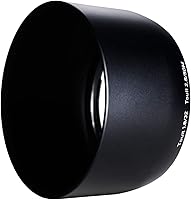
On smaller bodies like the X-E or X-A line, the lens-to-body ratio feels slightly mismatched — not unusable, but visually and ergonomically better suited to chunkier grips. The fixed hood and overall diameter also make the combination less pocketable than compact primes.
Versatility (Macro to Portrait)
76%
24%
The 75mm full-frame equivalent framing is a genuinely useful focal length that crosses over from close-up work to flattering portrait distances without swapping glass. Buyers who use it as a dual-purpose prime report real workflow savings on single-lens shoots.
It is still fundamentally a specialist lens — without image stabilization and with AF that prioritizes accuracy over speed, it feels less comfortable when pushed into street photography or event work. Buyers expecting a true all-rounder will notice its preferences.
Flare & Ghosting Resistance
87%
Shooting directly toward light sources or with harsh sun entering the frame, users are consistently impressed by how well the T* coating suppresses veiling flare. Contrast stays high even in scenarios where cheaper lenses would wash out.
In extreme backlit situations with very bright point sources, trace ghosting artifacts can still appear — this is a physics reality no coating fully eliminates. A few landscape shooters report needing to slightly reframe to avoid a residual artifact near the sun.
Compatibility & Ecosystem Fit
81%
19%
Native X-Mount communication means full EXIF data, in-body stabilization cooperation on compatible bodies, and reliable aperture control through the camera. There are no compromises in how the lens integrates with Fujifilm menus and shooting modes.
The lens was designed in 2014, and while Fujifilm has maintained compatibility, some newer body features like phase-detect AF improvements are not fully exploited. Users on the latest X-T5 or X-H2 bodies note the AF behavior does not improve the way native lenses do with firmware.
Value for Money
63%
37%
For buyers who prioritize long-term optical quality and brand heritage, the investment logic holds: the lens has retained relevance and resale value over a decade, and the output quality justifies the cost in professional contexts where image standards are non-negotiable.
Against the backdrop of what native Fujinon macro options now offer at a lower price point, the value equation is harder to defend for enthusiast buyers shooting casually. The price is a serious commitment, and some users openly admit that a Fujinon XF 80mm macro delivers comparable results at a more accessible entry point.
Autofocus Accuracy
84%
Where speed falters, accuracy compensates. Users report that when the lens does lock focus, it lands precisely on the intended plane — a critical distinction for macro work where depth of field can be measured in millimeters rather than feet.
In continuous AF scenarios or when quickly shifting focus distance from macro to mid-range, the system can take a beat to recalibrate. This is not a lens you should rely on for burst shooting or tracking fast-moving subjects.
Longitudinal Chromatic Aberration
77%
23%
Lateral chromatic aberration is well-controlled, and most users report clean edges on high-contrast subjects without needing correction in post. The optical design clearly prioritizes real-world shooting over lab test perfection.
Longitudinal chromatic aberration — color fringing in front of and behind the focus plane — is more visible at f/2.8, particularly on high-contrast fine details like hair or foliage edges. Stopping down to f/4 or f/5.6 largely resolves it, but wide-open shooting requires some post-processing awareness.
Long-Term Owner Satisfaction
86%
A clear majority of users who have owned this macro lens for multiple years describe it as a keeper — something they reach for repeatedly even after acquiring other lenses. The consistency of output and build durability generate real loyalty among deliberate shooters.
A vocal minority feels that as the Fujifilm lens ecosystem has matured, the comparative advantage of this ZEISS macro prime has narrowed. A few long-term owners have moved on to newer options, not out of dissatisfaction but because the ecosystem caught up.

Suitable for:

The ZEISS Touit 50mm f/2.8 Macro Lens was built for a specific kind of shooter — one who values optical precision over convenience and is willing to invest in glass that rewards patience and deliberate technique. Food and product photographers working with Fujifilm X-series bodies will find it particularly well-matched: the rendering of fine textures, subtle color gradients, and surface detail is genuinely difficult to replicate with cheaper alternatives. Still-life and close-up specialists will appreciate how the floating elements design maintains consistent sharpness from minimum focus distance through mid-range, removing the usual optical compromises that plague macro shooting. Portrait photographers looking for a single lens that covers both intimate close-ups and flattering head-and-shoulder framing will get real mileage from the 75mm full-frame equivalent field of view at f/2.8. Enthusiasts and working professionals who plan to keep a lens for years — and want the resale value and build durability to match — are exactly the buyers this lens was designed for.
Not suitable for:

If your shooting style relies on fast, responsive autofocus — sports, wildlife, candid street work, or chasing kids at a birthday party — the ZEISS Touit 50mm f/2.8 Macro Lens will frustrate you in ways that no amount of optical quality will offset. Buyers on a tighter budget who are comparing this against native Fujinon macro options should think carefully: the Fujifilm XF 80mm macro, for instance, offers weather sealing, faster AF, and image output that competes seriously at a meaningfully lower price point. Photographers who need true 1:1 magnification for scientific, forensic, or extreme close-up work will find this lens falls slightly short without an extension tube. Anyone shooting primarily in unpredictable outdoor conditions — rain, sea spray, dusty environments — should note the absence of weather sealing, which feels like a real omission at this tier. And if you own a smaller Fujifilm body and prefer a compact, pocketable setup, the size and weight ratio of this macro prime may work against you ergonomically.
Specifications

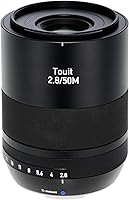
  • Focal Length: The lens has a fixed 50mm focal length, equivalent to approximately 75mm on a full-frame camera when used on an APS-C sensor body.
  • Maximum Aperture: The maximum aperture is f/2.8, enabling subject separation and usable performance in lower ambient light conditions.
  • Minimum Aperture: The aperture range closes down to f/22, giving full control over depth of field across a wide range of shooting scenarios.
  • Lens Type: This is a macro prime lens designed for close-up and general-purpose photography on Fujifilm X-Mount mirrorless systems.
  • Camera Mount: The lens is built exclusively for the Fujifilm X-Mount, with full electronic communication for aperture control and EXIF data transfer.
  • Sensor Format: Optimized for APS-C sensors, which are standard across the Fujifilm X-series mirrorless lineup.
  • Optical Coating: All optical surfaces feature ZEISS T* multi-coating, which reduces internal reflections, flare, and ghosting in high-contrast or backlit scenes.
  • Lens Design: The optical formula incorporates aspherical elements that minimize spherical aberration and maintain consistent edge-to-edge sharpness throughout the focusing range.
  • Floating Elements: A floating elements design is used to preserve optical correction quality at every focus distance, from minimum close-up range through infinity.
  • Autofocus: The lens includes a built-in autofocus motor engineered for smooth, accurate focus acquisition with minimal hunting.
  • Weight: The lens weighs 290g (10.2 oz), making it practical for extended handheld shooting sessions without significant fatigue.
  • Dimensions: The lens measures 3.6 x 3 x 3 inches, giving it a compact cylindrical profile that balances well on mid-sized Fujifilm bodies.
  • Weather Sealing: This lens does not feature weather or splash resistance sealing, requiring extra care when shooting in rain, dust, or humid environments.
  • Magnification: The lens provides close-up magnification suitable for detailed macro work, though it does not achieve a full 1:1 reproduction ratio without accessories.
  • Filter Thread: The lens accepts 52mm front filters, compatible with a wide range of standard circular polarizers and ND filters.
  • Brand Origin: Designed and engineered by ZEISS, a German optical manufacturer with over 175 years of heritage in precision optics.
  • Release Year: The lens was first made available in February 2014 and remains in active production without discontinuation by the manufacturer.
  • Market Ranking: The lens holds a Best Sellers Rank of #483 in the Mirrorless Camera Lenses category on Amazon as of the time of this review.
  • User Rating: It carries an average rating of 4.3 out of 5 stars based on 273 verified global ratings across Amazon's marketplace.
  • Model Number: The official manufacturer model number is 000000-2030-681, corresponding to the Fujifilm X-Mount variant of the Touit 2.8/50 Macro.

Related Reviews

Sony SEL90M28G FE 90mm f/2.8 Macro Lens
88%
95%
Macro Performance
91%
Autofocus Speed & Quietness
89%
Build Quality & Durability
88%
Low-Light Performance
72%
Weight & Handling
More
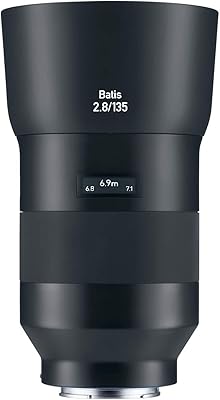
ZEISS Batis 135mm f/2.8 Lens for Sony E Mount
89%
95%
Image Quality
78%
Autofocus Performance
90%
Build Quality
92%
Weather Sealing
85%
Portability
More
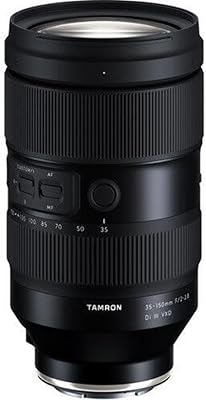
Tamron 35-150mm F/2-2.8 Di III VXD Lens
84%
92%
Optical Sharpness
89%
Autofocus Performance
94%
Aperture Versatility
87%
Build Quality
78%
Value for Money
More
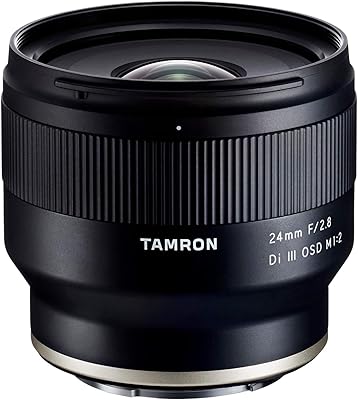
Tamron 24mm F/2.8 Di III OSD Lens
79%
91%
Image Sharpness
93%
Value for Money
74%
Build Quality & Durability
71%
Autofocus Performance
88%
Macro Capability
More
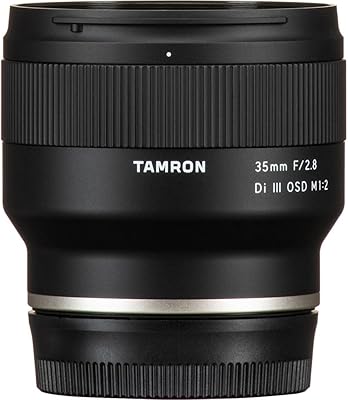
Tamron 35mm f/2.8 Di III OSD M1:2 Lens for Sony E-Mount
85%
94%
Image Quality
75%
Autofocus Speed
90%
Macro Performance
88%
Build Quality
91%
Portability
More
Nikon NIKKOR Z MC 50mm Macro Lens
84%
93%
Image Sharpness
91%
Macro Performance
72%
Autofocus Performance
84%
Build Quality & Durability
89%
Size & Portability
More
Canon EF 50mm f/1.8 STM Lens
79%
83%
Image Sharpness
88%
Bokeh & Background Separation
81%
Low-Light Performance
72%
Autofocus Speed & Accuracy
91%
Autofocus Noise
More
Canon EF-S 24mm f/2.8 STM Lens
79%
88%
Image Sharpness
82%
Autofocus Performance
61%
Build Quality
96%
Portability & Size
74%
Low-Light Capability
More
Nikon NIKKOR Z 26mm f/2.8 Pancake Lens
85%
94%
Portability & Size
88%
Image Quality & Sharpness
85%
Build Quality & Durability
92%
Value for Money
90%
Compatibility with Nikon Z Series
More
Canon EF 100mm f/2.8L IS USM Macro Lens
88%
96%
Image Stabilization
92%
Autofocus Speed & Accuracy
94%
Sharpness & Detail
91%
Build Quality & Durability
88%
Weather Resistance
More

FAQ

Yes, the lens is designed for the Fujifilm X-Mount standard and works with all current X-series mirrorless bodies, including the X-T, X-S, X-H, and X-Pro lines. Electronic communication is fully maintained, so you get aperture control, EXIF metadata, and in-body stabilization cooperation where the body supports it.

Honestly, it is slower. The ZEISS Touit 50mm f/2.8 Macro Lens was engineered with accuracy as the priority rather than speed, and it shows in real-world use. For stationary subjects — food, products, flowers, portraits — it is perfectly reliable. If you need fast continuous AF for moving subjects or sports, a native Fujinon lens will serve you better.
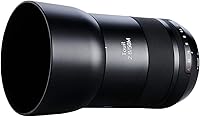
It works well for portraits. The 50mm focal length translates to roughly 75mm on APS-C, which is a flattering perspective for head-and-shoulder framing. The f/2.8 aperture gives you pleasant background separation, and the rendering character of the glass is actually quite well-suited to skin tones and natural light portrait work.

No, this macro prime does not include optical image stabilization. If you are shooting on a body with in-body image stabilization — such as the X-H2S or X-T5 — the lens will benefit from that system. For macro work at very close distances, a tripod or a stable surface is still recommended regardless.

No, and this is one of the more frequently raised criticisms from buyers. At this price point, the absence of any splash or dust resistance requires you to be more cautious shooting outdoors in unpredictable weather. It is not fragile, but you would not want to use it in drizzle without protection.

The minimum focusing distance is approximately 17cm (about 6.7 inches) from the sensor plane. The lens does not achieve true 1:1 macro magnification on its own — it falls somewhat short of that. If you need full 1:1 for scientific or extremely detailed close-up work, an extension tube can close that gap without optical quality loss.

The out-of-focus rendering is smooth and organic — backgrounds dissolve gradually rather than abruptly, which gives images a natural, film-like quality. Specular highlights render as clean circles without harsh edges. Many users actually consider the bokeh character one of the Touit 50mm's strongest differentiators from competing lenses.

Yes, because the lens communicates fully via the X-Mount electronic interface, all of Fujifilm's in-camera processing — including film simulations, highlight and shadow control, and color profiles — applies normally. The lens itself contributes rich color accuracy, which pairs particularly well with Fujifilm's Classic Chrome and Velvia simulations.

The lens accepts 52mm front filters, which is a common size with good availability. A circular polarizer works perfectly well on this lens and can be useful when shooting reflective macro subjects like jewellery, glass, or wet surfaces.

Long-term owner satisfaction is notably high — buyers who have used this macro lens for several years consistently describe it as durable, with no degradation in optical quality or mechanical performance. Buying used is a reasonable option if you can verify it has been well-maintained; the build quality means a carefully used copy should perform identically to new. Just check the focus ring action and look for any coating damage on the front element.

Where to Buy