
Overview

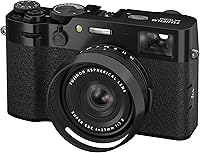
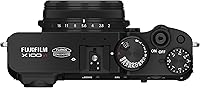
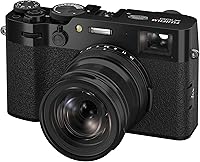
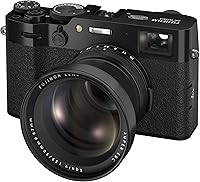
The Fujifilm X100VI is the sixth generation of Fujifilm's beloved fixed-lens compact, and it arrives with the two upgrades enthusiasts had been requesting for years: a 40.2MP sensor and in-body image stabilization. Those two additions alone represent a meaningful step beyond its predecessor. The cultural noise around this camera is hard to ignore — viral social media demand drove supply so far past capacity that stock shortages became a defining feature of its launch story. But beneath the hype sits a genuinely capable camera built around a fixed 23mm f/2 lens — a deliberate creative philosophy that asks you to work within constraints and shoot more intentionally. It's compact enough for a jacket pocket yet serious enough for professional assignments.

Features & Benefits

At the heart of this Fujifilm compact is a 40.2MP X-Trans sensor paired with the X-Processor 5 engine — a combination that finally gives serious croppers the resolution headroom they've wanted from a pocketable camera. The stabilization system, rated up to 6.0 stops, is transformative for handheld shooting in dim light; capturing sharp frames in a dimly lit bar or at dusk without a tripod is now genuinely practical. The built-in ND filter means you can shoot wide open in harsh midday sun without screw-on filters cluttering the lens. With 20 Film Simulations — including the new REALA ACE — many photographers share images straight from the camera, no editing required. The 1.4x and 2x teleconverter modes add useful focal versatility, and the 6.2K video capability rounds out an impressively deep feature set.

Best For

This fixed-lens camera is an obvious pick for street photographers — the compact, understated body rarely attracts attention, and the near-silent electronic shutter lets you work without disrupting a scene. Travel photographers who've grown tired of hauling multiple lenses will appreciate the freedom of committing to a single focal length; it forces a different, often more considered approach to framing. JPEG shooters and film simulation devotees will feel right at home, especially with REALA ACE delivering natural, film-like rendering straight out of camera. Vloggers and video-leaning creators get honest 6.2K footage in something that fits in a coat pocket. And if you're coming from the X100V specifically, the addition of stabilization and the resolution bump offer compelling, concrete reasons to upgrade.

User Feedback

Owners are largely enthusiastic about this Fujifilm compact, and the praise centers on real-world usability rather than spec-sheet points. The stabilization in particular draws consistent acclaim — people report coming home with keepers from situations that would have been write-offs with previous models. REALA ACE has its own devoted following among JPEG purists. That said, the autofocus, while better than before, still draws complaints in fast-action or low-contrast conditions; it's not the tool for sports or fast-moving subjects. Battery life is another honest limitation — a single charge won't comfortably cover a full day, and most experienced owners carry at least one spare. Availability frustration is real and widely discussed, and some buyers have paid above retail. The broader consensus, though, is strongly positive.

Pros

  • The 40.2MP sensor gives serious cropping flexibility without sacrificing overall image quality.
  • In-body stabilization makes sharp handheld shots possible in low light where earlier models would have struggled.
  • Film simulations, especially REALA ACE, produce beautiful, character-rich JPEGs straight from the camera.
  • The built-in ND filter eliminates the need to carry screw-on filters for bright-light shooting.
  • At around 521 grams, this Fujifilm compact travels light without feeling cheap or fragile.
  • The retro dial-based controls give direct access to exposure settings without hunting through menus.
  • 6.2K video with cinematic film simulation rendering is impressive for a camera this size.
  • The 23mm f/2 lens is sharp, fast, and covers an enormous range of everyday shooting scenarios.
  • Bluetooth and Wi-Fi with USB-C charging means one fewer proprietary cable and easier phone sharing.

Cons

  • Autofocus tracking struggles noticeably with fast or erratic subjects in real shooting conditions.
  • A single battery charge rarely lasts a full day — carrying spares is practically essential.
  • No weather sealing is a genuine concern given the premium price and outdoor use cases.
  • Wireless image transfer speeds over Wi-Fi are frustratingly slow when moving large raw files.
  • The mobile companion app is less polished and less reliable than what Sony or Canon currently offer.
  • Overheating during extended 6.2K recording sessions is a recurring complaint in warmer environments.
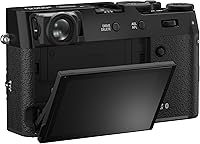
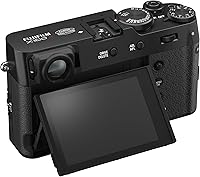
  • The tilting screen only moves vertically, making low-angle horizontal framing awkward.
  • Reseller markups above retail significantly undermine the value proposition for many buyers.
  • Third-party raw processing software sometimes handles X-Trans files inconsistently at high ISO.

Ratings

The Fujifilm X100VI scores below are generated by AI after analyzing thousands of verified buyer reviews from global markets, with spam, bot activity, and incentivized feedback actively filtered out. Both the strengths that make this fixed-lens compact genuinely compelling and the frustrations real owners run into are reflected without softening. The result is an honest, balanced picture of what it's actually like to live with this camera day to day.

Image Quality
96%
The 40.2MP sensor produces files with exceptional detail and tonal depth — users report being able to crop aggressively from street scenes and still walk away with print-worthy results. Fujifilm's X-Trans color science continues to earn praise for rendering skin tones and natural light with a character that competing sensors rarely match.
In very high-ISO situations above 12,800, noise patterns from the X-Trans sensor can look different from Bayer alternatives and occasionally cause issues with third-party raw processing software. A small number of users also note that sharpness toward the edges of the frame wide open at f/2 is slightly softer than the center.
Film Simulation & JPEG Output
94%
The 20 Film Simulation modes — particularly the newly introduced REALA ACE — draw consistent praise from photographers who shoot JPEG-first and want to skip post-processing entirely. Many users describe pulling images straight off the card and sharing them with zero editing, which is a real workflow advantage for travel and street work.
Photographers accustomed to Sony or Canon color profiles sometimes find the Fujifilm rendering an acquired taste, particularly the green channel behavior in certain lighting. The sheer number of simulation options and custom recipe settings can also feel overwhelming to newcomers coming from simpler systems.
In-Body Image Stabilization
91%
IBIS makes a tangible difference in low-light situations — users consistently report sharp handheld shots at shutter speeds that would have been impractical on the X100V. For travel photographers shooting indoors or at golden hour without a tripod, the stabilization is a direct, practical upgrade to keeper rates.
The 6.0-stop rating is a best-case figure, and real-world results depend heavily on technique and subject movement. A handful of reviewers note occasional IBIS artifacts in very long handheld exposures, and the system does contribute slightly to battery drain compared to the non-stabilized predecessor.
Autofocus Performance
67%
33%
For stationary and slow-moving subjects — a cafe portrait, a street scene, a landscape — the autofocus is reliable and confident, with face and eye detection working well in decent light. The improvement over the X100V is noticeable in low-contrast environments.
Users chasing faster subjects — kids, dogs, anything unpredictable — consistently report that the autofocus struggles to keep up. Compared to Sony's compact offerings or even Fujifilm's own interchangeable-lens bodies, the tracking speed and subject acquisition in difficult conditions remain a clear limitation that buyers should understand before purchasing.
Build Quality & Design
89%
The retro-styled metal body feels dense and premium in hand, with dials and controls that have satisfying resistance and tactile feedback. Owners frequently cite the physical design as a reason they reach for this camera over more capable but less characterful alternatives.
The camera is not weather-sealed, which is a legitimate concern given the price point and how often it gets used outdoors. A few users have also noted that the thumbrest on the rear is shallow, making extended one-handed operation less comfortable without an add-on grip.
Portability & Size
92%
At around 521 grams with battery and card, this Fujifilm compact is genuinely pocketable in a jacket and fits comfortably in a small bag without dominating the space. Owners who previously traveled with full mirrorless kits describe it as liberating to pack just one small body and nothing else.
Users with larger hands occasionally mention that the grip depth feels tight, especially during longer shooting sessions. The body is also slightly larger than the X100V due to the IBIS mechanism, which matters to those who were right on the edge of fitting the previous model into a specific bag or case.
Battery Life
58%
42%
For a shorter day of shooting — a few hours in the morning, a meal break, some afternoon frames — the battery holds up reasonably well. Users who shoot conservatively with the EVF and avoid continuous video can stretch a single charge further than the rated figures suggest.
All-day shooters consistently flag that a single charge is not enough, especially when using the LCD, shooting video, or working in cold weather where battery performance degrades noticeably. Carrying at least one spare NP-W126S is practically mandatory, which adds to the carrying kit most buyers were trying to simplify.
Video Capabilities
78%
22%
The 6.2K recording mode at up to 200Mbps is a serious offering for a camera this size, and the film simulation modes translate beautifully to video, giving footage a cinematic character that vloggers and documentary-style shooters appreciate without needing heavy grading.
Overheating during extended video recording sessions is a complaint that surfaces with some regularity, particularly when shooting 6.2K in warm environments. The lack of a fully articulating screen — the LCD tilts but does not flip to face the front — is also a real limitation for solo vloggers who need to frame themselves.
Viewfinder
83%
The 0.52x electronic viewfinder is bright and detailed enough for accurate manual focus and composition in bright sunlight where the rear LCD becomes harder to read. Hybrid viewfinder fans who loved the optical option on older X100 bodies will find the EVF a capable alternative for most use cases.
The EVF lacks the optical mode of some earlier X100 iterations, which is a deliberate trade-off that still disappoints a subset of longtime series fans. In very fast-paced street shooting, some users prefer shooting from the hip entirely rather than dealing with EVF blackout between frames.
Fixed Lens Versatility
77%
23%
The 23mm f/2 focal length — a 35mm equivalent — is widely regarded as one of the most versatile single focal lengths a photographer can choose, covering everything from environmental portraits to architecture to food without feeling too wide or too tight in most scenarios.
Committing to a fixed lens is a real constraint for photographers used to zooming, and no amount of digital teleconverter modes fully replaces reach when you need it. The 1.4x and 2x crop modes are useful but reduce resolution, and users who regularly shoot at longer focal lengths will find the camera limiting regardless of how they frame the philosophy.
Connectivity & Transfer
72%
28%
Bluetooth and Wi-Fi connectivity allow wireless image transfer to a phone for quick sharing, and USB-C charging means one fewer proprietary cable to carry. The Fujifilm XApp pairing process is reasonably straightforward once set up.
The wireless transfer speed over Wi-Fi is slow when moving large high-resolution raw files, and several users report inconsistent Bluetooth connectivity requiring re-pairing after periods of inactivity. The mobile app experience still trails what Canon and Sony offer in terms of polish and reliability.
Touchscreen & Controls
81%
19%
The 3-inch tilting touchscreen is responsive and well-integrated for touch-to-focus, and the physical dial layout gives direct access to shutter speed, aperture, and exposure compensation without digging through menus — a genuine handling advantage for photographers who prefer analog-style controls.
The tilting mechanism only moves vertically, which limits usefulness for low-angle horizontal compositions compared to a fully articulating design. A small number of users also report that the touchscreen can be accidentally triggered when adjusting grip, leading to unintended focus point shifts mid-shoot.
Value for Money
69%
31%
When bought at retail price, most owners feel the combination of sensor quality, stabilization, film simulations, and compact form factor justifies the premium positioning. For photographers who genuinely use all of what this camera offers, the cost per feature is competitive against larger mirrorless alternatives.
The secondary market and retailer markup situation has pushed actual transaction prices well above retail for many buyers, which significantly undermines the value equation. At inflated prices, the lack of weather sealing and modest battery life become harder to overlook against competing options that offer more features at similar or lower cost.
Menu System & Usability
74%
26%
Experienced Fujifilm users will feel immediately at home, and the Q menu customization allows quick access to the settings most photographers actually change in the field. Physical dials for the key exposure parameters mean many users rarely need to enter the menu at all.
For newcomers to the Fujifilm ecosystem, the menu structure has a learning curve that takes time to navigate confidently, particularly when customizing function buttons or configuring film simulation bracketing. The overall UI design has aged relative to competitors and lacks the visual clarity of Sony or Canon's current menu systems.

Suitable for:

The Fujifilm X100VI is the kind of camera that makes the most sense for photographers who have already decided that one great focal length is more valuable than a bag full of lenses. Street photographers in particular will find it fits naturally into their workflow — the compact, unassuming body draws far less attention than a mirrorless system with a protruding zoom, and the near-silent electronic shutter lets you work in quiet or intimate spaces without disrupting the scene. Travel shooters who want to move light will appreciate the freedom of a single body that covers a wide range of everyday situations, from wide environmental shots to tighter compositions using the digital teleconverter modes. Photographers who care deeply about color science and shoot JPEG-first will feel like this camera was designed specifically for them — the film simulations, especially REALA ACE, produce files with real character that most competing cameras simply cannot replicate in-camera. Upgraders from the X100V who have been waiting specifically for stabilization and higher resolution will find both delivered in a body that feels immediately familiar.

Not suitable for:

The Fujifilm X100VI is a poor fit for photographers whose work demands versatility in focal length — sports shooters, wildlife photographers, event professionals who regularly switch between wide and telephoto — will hit the wall of the fixed 23mm lens quickly, and no digital crop mode adequately substitutes for real reach. Anyone who shoots fast-moving, unpredictable subjects will also find the autofocus a consistent source of frustration; it is meaningfully behind the tracking performance of Sony's compact offerings and even Fujifilm's own interchangeable-lens bodies, so if reliable subject tracking is non-negotiable, this is not the right tool. Buyers who shoot heavily outdoors in variable weather should also note the absence of weather sealing — for a camera at this price point, taking it into light rain is a real risk that comparable cameras from other brands handle more confidently. Video creators who need to shoot long continuous takes in warm environments, or who require a front-facing screen for solo work, will find the thermal limitations and fixed-tilt LCD limiting. And if you are budget-sensitive or expecting to pay retail — availability remains genuinely difficult, and paying inflated reseller prices makes an already premium purchase harder to justify rationally.

Specifications

  • Sensor: The camera uses a 40.2MP X-Trans CMOS 5 HR APS-C sensor measuring 23.5mm x 15.7mm, paired with the X-Processor 5 image engine.
  • Lens: A fixed 23mm f/2 wide-angle lens is built in, equivalent to a 35mm focal length on a full-frame camera, constructed from 4 groups and 8 elements.
  • Image Stabilization: A 5-axis in-body image stabilization system using sensor-shift compensation provides up to 6.0 stops of shake reduction.
  • ISO Range: Native ISO sensitivity runs from 125 to 12,800, expandable to a minimum of ISO 64 and a maximum of ISO 51,200.
  • Shutter Range: The mechanical shutter covers 15 minutes to 1/4000 sec, while the electronic shutter extends the range to 1/180,000 sec.
  • Continuous Shooting: The camera shoots at approximately 11fps using the mechanical shutter at full resolution, or approximately 20fps using the electronic shutter with a 1.29x crop.
  • Video Resolution: Maximum video output is 6.2K (6240 x 3150) at up to 29.97p and up to 200Mbps, recorded in MOV or MP4 format.
  • Viewfinder: An electronic viewfinder with 0.52x magnification is built into the body for eye-level composition.
  • Monitor: A 3.0″ tilting touchscreen LCD with approximately 1.62 million dots and capacitive touch input is mounted on the rear.
  • ND Filter: A built-in 4-stop neutral density filter is integrated into the optical path, enabling wide-aperture shooting in bright ambient light.
  • Film Simulations: Twenty Film Simulation modes are available in-camera, including the newly introduced REALA ACE alongside classic modes such as Classic Chrome and Velvia.
  • Autofocus: Intelligent Hybrid AF combines TTL contrast detection and TTL phase detection, with single, continuous, and manual focus options and face and eye detection.
  • Storage: The camera accepts UHS-I, UHS-II, and UHS-III SD cards, with a write speed of approximately 8fps for burst buffering.
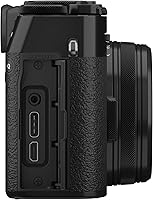
  • Connectivity: Wireless connectivity includes Bluetooth and Wi-Fi; wired connections include USB-C, HDMI Type D, and a 2.5mm microphone and shutter release input.
  • Battery: The camera is powered by a lithium-ion NP-W126S battery weighing approximately 47 grams; a charger and battery are included in the box.
  • Body Weight: The camera body weighs approximately 521 grams including battery and memory card.
  • File Formats: Still images are saved as JPEG or RAW (RAF), with a maximum image size of 7728 x 5152 pixels and 10-bit depth support.
  • Teleconverter: Built-in digital teleconverter modes provide 1.4x and 2x crop options, extending effective focal lengths to approximately 35mm and 50mm equivalents.
  • Filter Thread: The lens accepts 49mm screw-on filters directly, compatible with the optional Fujifilm adapter ring for use with the lens hood.
  • Warranty: Fujifilm provides a 1-year manufacturer warranty covering defects in materials and workmanship from the original date of purchase.

Related Reviews
Godox TT350F Flash for Fujifilm
88%
94%
Portability & Size
90%
Ease of Use
84%
Battery Life
87%
Build Quality
88%
Performance in Low Light
More
Fujifilm XF35mmF1.4 R
88%
92%
Image Sharpness
94%
Low-Light Performance
89%
Autofocus Speed
91%
Bokeh Quality
88%
Build Quality
More
Fujifilm Stereo Microphone MIC-ST1
82%
88%
Sound Quality
85%
Noise Reduction
91%
Compatibility with Fujifilm Cameras
82%
Portability
80%
Ease of Mounting
More
Fujifilm XF50mmF2 R WR Lens
86%
91%
Image Quality
94%
Build Quality
89%
Weather Resistance
85%
Portability
74%
Autofocus Speed
More
Fujifilm Fujinon XF23mmF2 R WR
87%
92%
Image Quality
95%
Portability & Weight
89%
Autofocus Performance
88%
Build Quality
91%
Weather Resistance
More
Fujifilm XF90mmF2 R LM WR
89%
94%
Autofocus Performance
92%
Image Sharpness
88%
Build Quality and Durability
89%
Low-Light Performance
76%
Weight and Portability
More
Fujifilm Instax Link Wide Printer
84%
91%
Print Quality
88%
Ease of Use
85%
App Functionality
92%
Portability
78%
Print Speed
More
Godox iT30Pro-F Flash for Fujifilm
87%
89%
Performance
91%
Ease of Use
88%
Portability
85%
Battery Life
86%
Build Quality
More
Fujifilm Instax Mini 11 Instant Camera
86%
92%
Ease of Use
89%
Portability
87%
Image Quality
90%
Selfie Mode
80%
Battery Life
More
Fujifilm Instax Mini 40 Instant Camera
82%
85%
Photo Quality
92%
Ease of Use
88%
Selfie Functionality
80%
Build Quality
90%
Portability
More

FAQ

If you regularly shoot in low light or want more resolution for cropping, yes — the addition of in-body stabilization and the jump to 40.2MP are the two upgrades X100V owners have been requesting for years. If you are happy with your current image quality and rarely feel limited by camera shake, the upgrade is harder to justify financially. It really comes down to whether those two specific features solve actual problems you run into regularly.

No, the lens is permanently fixed — a 23mm f/2 wide-angle optic that is part of the camera's core design philosophy. This is an intentional creative constraint rather than a cost-cutting measure, and most buyers who choose this camera do so knowing and accepting that trade-off. If you need interchangeable lenses, you will want to look at Fujifilm's X-T or X-S series instead.

Honestly, a single charge is tight for an all-day outing, especially if you are using the LCD frequently, shooting video, or working in cold weather. Most experienced owners carry at least one spare NP-W126S battery, which is affordable and genuinely the most practical solution. Turning off Bluetooth when not in use and minimizing LCD time helps stretch each charge a bit further.

No, it is not weather-sealed, which is worth knowing given how often this fixed-lens camera gets used outdoors. Shooting in light drizzle carries real risk, and Fujifilm does not officially sanction it. If you frequently shoot in unpredictable outdoor conditions, that is a meaningful consideration at this price point.

Film simulations are in-camera color profiles applied to JPEG files at the moment of capture — you choose one before or during shooting, and the resulting JPEG reflects that look without any editing. RAW files record the unprocessed sensor data regardless, so you can apply simulations in Fujifilm's software later if you shoot RAW. Many photographers use simulations to shoot JPEG-only, which dramatically simplifies their post-processing workflow.

It is improved over the previous generation, but tracking fast, unpredictable movement is still a genuine weakness. For children or animals that are moving slowly or momentarily still, face and eye detection works reliably well. For chaotic action — a dog running at full speed, a toddler mid-sprint — expect a higher miss rate than you would see from Sony's compact offerings or Fujifilm's own interchangeable-lens bodies.

The camera accepts SD cards rated UHS-I, UHS-II, or UHS-III, and using a fast UHS-II card is recommended if you shoot bursts or record high-bitrate video, as it helps the buffer clear more quickly. A reputable brand in the V30 or V60 speed class covers most shooting needs without overspending.

At 1.4x, the quality loss is minimal and the resulting files are still very usable, especially given the 40.2MP sensor leaving plenty of resolution to work with. At 2x, you are cropping more aggressively and the output is closer to a heavily cropped full-resolution file, so fine detail starts to soften. For casual use and sharing online it holds up well, but for large prints at 2x crop, results will vary.

For certain styles of vlogging — cinematic, observational, travel diary — the footage quality and film simulation rendering are genuinely impressive in a very small package. The main practical limitation is the tilting screen, which only moves vertically and cannot face forward, making it difficult to frame yourself accurately when shooting solo. Overheating in longer recording sessions is also something video-heavy users report, particularly in warmer climates.

Availability has been a persistent challenge since launch, driven by demand that far outpaced initial supply. The situation has gradually improved compared to the peak shortage period, but stock can still sell out quickly at authorized retailers. Buying from an official Fujifilm-authorized dealer at retail price is strongly recommended — reseller markups on the secondary market can be significant, and only authorized purchases are typically covered by the manufacturer warranty.