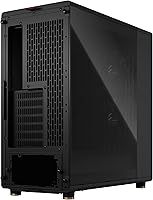
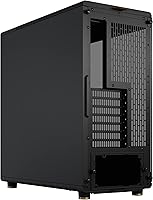
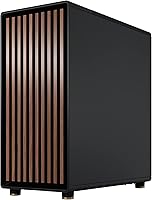
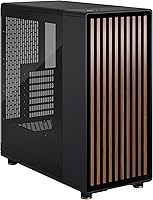
Overview

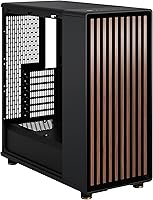
The Fractal Design North ATX Mid Tower Case arrives at a moment when most PC enclosures are stuck in an arms race of sharp angles and aggressive lighting — and it quietly refuses to participate. This Fractal case takes a different path, pairing a metal chassis with a genuine walnut wood front panel that feels warm and considered rather than flashy. It supports ATX, mATX, and ITX motherboards, so it fits a wide range of builds. The price reflects a premium positioning — this is not an impulse purchase, but one for builders who genuinely want their setup to look good on a desk, not just tucked away in a dark corner.
Features & Benefits

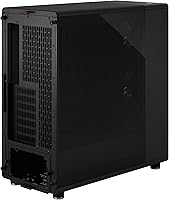
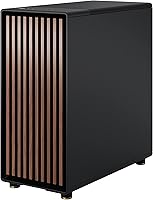
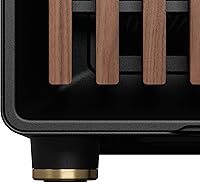
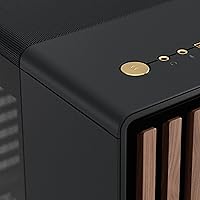
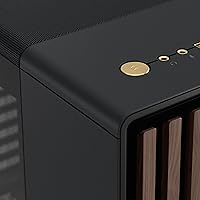
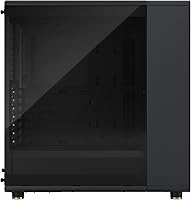
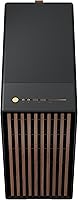
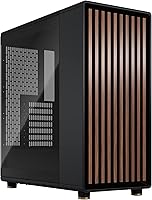
The walnut front panel is not a gimmick — it is cut from sustainably sourced wood and has a texture you notice the moment you touch it, something no plastic front can replicate. Behind it, an open mesh structure keeps air moving efficiently without restriction. The dark-tinted tempered glass on the side lets you see the internals while keeping the overall look understated. Two 140mm Aspect PWM fans come included, giving you a functional baseline that many similarly priced cases skip. GPU clearance reaches 355mm, which covers most current cards, and the front I/O includes a USB-C port alongside two USB 3.0 ports — practical choices that reflect a modern builder focus.

Best For

The North mid-tower is a natural fit for builders who want their PC to sit on a desk or shelf without looking out of place in a living room or office. If you are stepping away from RGB-saturated gaming cases and want something that reads more like furniture than hardware, this is the kind of enclosure that rewards that instinct. It handles ATX builds comfortably with standard air cooling or a modest liquid loop. That said, if you are planning a dense custom water-cooling setup with a large front radiator, know that GPU clearance drops to 300mm in that configuration — worth checking against your parts list before committing.

User Feedback

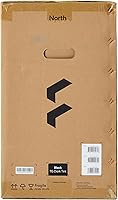
Across a large pool of buyer reviews, the wood-front build enclosure earns consistent praise for its build quality and how it holds up compared to expectations. People frequently mention how satisfying the unboxing experience is and how well the case photographs — a surprisingly common observation that speaks to its visual appeal. On the flip side, some builders note that the rear cable management area is tighter than ideal, which can be frustrating on complex builds. A handful of reviewers also point out that the dark tint on the glass side panel somewhat mutes interior lighting effects. Still, assembly is widely described as straightforward and quick, and overall buyer satisfaction sits at a notably high level.

Pros

  • The genuine walnut wood front panel feels and looks premium in a way that no plastic alternative can match.
  • Mesh ventilation across the front and top keeps thermals in check without requiring extra fan upgrades immediately.
  • Two 140mm PWM fans are included, giving you a functional, quiet baseline right out of the box.
  • GPU support up to 355mm covers virtually all current high-end graphics cards in standard configurations.
  • The front I/O includes a USB-C port, which is increasingly necessary for modern peripherals and devices.
  • Seven bridgeless expansion slots offer flexibility for multi-GPU or high-card-count builds without annoying knock-out tabs.
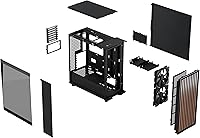
  • Assembly is consistently described as straightforward, with well-thought-out panel removal and component access.
  • The case earns an exceptionally high overall rating across thousands of verified buyers, reflecting broad satisfaction.
  • It fits ATX, mATX, and ITX boards, making it a versatile enclosure across different build sizes and budgets.

Cons

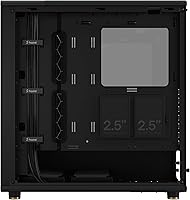
  • Rear cable management space is tighter than ideal, which can frustrate builders with fully modular power supplies and dense wiring.
  • The dark-tinted tempered glass noticeably dims interior lighting, which is a real drawback if you have invested in RGB components.
  • GPU clearance drops to 300mm when using a 360mm front radiator, limiting compatibility with larger modern cards in that config.
  • At roughly 21 pounds, the North mid-tower is on the heavier side, which matters if you move your rig frequently.
  • The premium price is difficult to justify for builders who prioritize raw performance value over aesthetics.
  • Wood panels, while attractive, require more careful handling during assembly to avoid scratching or marking the surface.
  • Front fan mounting options are somewhat limited compared to cases designed specifically around high-airflow configurations.
  • Storage expansion options are modest, which could be a constraint for builders running multiple drives or large media libraries.

Ratings

The scores below for the Fractal Design North ATX Mid Tower Case were generated by our AI engine after analyzing thousands of verified global buyer reviews, with spam, bot-submitted, and incentivized feedback actively filtered out before scoring. Each category reflects both the genuine praise and the recurring frustrations real builders have reported — nothing is glossed over. The result is an honest, data-driven picture of where this wood-front enclosure excels and where it asks for compromise.
Aesthetic Design
97%
There is near-universal agreement that the North mid-tower is one of the best-looking cases available at any price. The walnut wood front panel in particular draws reactions that reviewers rarely give to PC hardware — people describe it as something that looks intentional and considered, not just assembled. It earns compliments from non-builders who see it on a desk.
A small number of buyers feel the Charcoal Black colorway, while refined, is so understated that the interior build gets visually lost behind the dark tinted glass. Those who want their components to be the visual centerpiece sometimes feel the case competes with them rather than framing them.
Build Quality
93%
The metal chassis feels solid from the moment you lift the box, and panel tolerances are tight with no flex or rattle. Reviewers frequently note that it feels more expensive than the price suggests, which is high praise in a category where flimsy panels are common. The wood front shows no signs of warping or poor finishing in the vast majority of reports.
A handful of buyers noted minor sharp edges in the interior chassis, particularly around cable routing cutouts, which is a common mid-tower issue but still worth mentioning. A few international reviewers also flagged minor cosmetic scuffs arriving from shipping, though this appears to be a logistics issue rather than a manufacturing one.
Airflow & Thermal Performance
81%
19%
The open mesh front and top keep air moving efficiently, and the two included 140mm fans give builders a genuinely usable starting point rather than token placeholder fans. Builders running mid-range air-cooled systems report stable temperatures without needing to add extra fans immediately, which is a practical advantage.
For high-TDP builds or setups with power-hungry GPUs, the baseline two-fan configuration starts to show its limits under sustained load. The mesh is effective, but the front radiator configuration that limits GPU clearance to 300mm is a real constraint for builders trying to combine high-end cooling and a large graphics card in the same build.
Cable Management
67%
33%
The case provides standard routing cutouts and Velcro anchor points that are sufficient for clean builds when paired with a well-sleeved or modular power supply. Builders who plan their cable runs before assembly report reasonably tidy results, and the layout is logical enough for first-time builders to follow without frustration.
The rear chamber depth is on the tighter side, and builders with fully modular PSUs using thick cables consistently flag it as a pain point. There is not much forgiveness for excess cable length, and fitting everything flat enough for the side panel to close cleanly requires patience that some buyers did not expect at this price tier.
Ease of Assembly
89%
Panel removal is intuitive, standoffs are pre-installed for ATX layouts, and the overall interior organization makes logical sense for a first or second build. Multiple reviewers who were building a PC for the first time specifically called out how approachable the process felt, which is not something every premium case can claim.
The wood front panel requires a bit more care to remove and reattach than a standard plastic front, since you want to avoid nicking the surface. A few builders also noted that aligning the tempered glass panel back into position after routing cables can be slightly fiddly, especially solo.
Fan & Cooling Compatibility
78%
22%
Support for 140mm and 120mm fans across multiple positions gives builders real flexibility in how they configure airflow. The front intake supports radiators up to 360mm, which covers most common liquid cooling configurations for mainstream builds.
The 360mm front radiator option comes at the cost of GPU clearance, which makes it incompatible with many current high-end cards in that layout. Builders wanting both a large radiator and a flagship GPU will need to plan very carefully or look at a larger case entirely.
Front I/O & Connectivity
84%
The inclusion of a USB-C port on the front panel is a practical decision that many competing cases at similar prices still omit. The combination of USB-C, two USB 3.0, and one USB 2.0 covers the connection needs of the vast majority of builders without requiring a hub.
There is no audio jack on the front I/O panel in some regional variants, which surprised a portion of buyers who use wired headsets during desktop sessions. For builders who rely on front-panel audio daily, this requires routing to the rear of the case, which is a minor but noticeable inconvenience.
GPU Compatibility
82%
18%
A 355mm GPU clearance in the standard configuration is enough for virtually every current consumer graphics card, including triple-fan flagship models from both major vendors. Builders pairing this case with a high-end GPU for a home workstation or gaming setup will rarely run into a clearance issue under normal conditions.
The clearance reduction to 300mm when a 360mm front radiator is fitted is a genuine limitation for enthusiasts wanting the best of both worlds. As GPU coolers continue to grow in physical size, this constraint will become more relevant over time for future-proofing considerations.
Value for Money
76%
24%
For what you are getting — real wood, a quality metal chassis, included fans, and a USB-C front port — the price is defensible and most buyers feel it is earned rather than inflated. The consistent top-15 category ranking and high ratings across thousands of reviews suggest buyers feel the purchase holds up after living with it.
Budget-conscious builders or those who are indifferent to aesthetics will find better thermal performance per dollar in more utilitarian cases. If the wood front panel does not matter to you, the functional spec sheet alone does not justify the premium over several strong competitors at lower price points.
Noise Level
83%
The 140mm Aspect PWM fans run quietly during everyday computing and light gaming, and the larger blade diameter means they move adequate air at lower RPM than smaller fans would require. Builders in quiet home office environments report no objectionable fan noise under normal workloads.
Under sustained heavy gaming or rendering loads, the fans do spin up audibly, and there is no acoustic dampening material in the chassis to soften that. Builders who prioritize near-silent operation under load will likely want to invest in aftermarket fans with a stronger noise-to-airflow profile.
Interior Space & Layout
79%
21%
The interior is well-organized for a mid-tower, with component zones clearly separated and enough vertical clearance for tall CPU coolers up to around 170mm in most configurations. The bridgeless expansion slots add a clean look while also making card installation and removal noticeably easier.
Storage mounting options are more limited than some builders expect, with drive bay support being modest compared to older full-tower designs. Builders running multiple mechanical hard drives or a large array of SSDs may need to get creative with mounting solutions.
Packaging & Unboxing
88%
The unboxing experience is frequently cited in reviews as noticeably above average, with the case arriving well protected and components bagged and labeled clearly. Several buyers mentioned it as one of the more satisfying hardware purchases they have received, which speaks to Fractal Design taking presentation seriously.
The box is large and heavy, which creates recycling and disposal logistics that apartment-dwelling builders sometimes flag as inconvenient. There is nothing substantively wrong with the packaging — it is more of a practical nuance than a real complaint.
Dust Filtration
74%
26%
Removable dust filters on the top panel make periodic maintenance straightforward, and the mesh front inherently filters larger particles while still allowing strong airflow. For builders in reasonably clean environments, maintenance intervals are manageable without obsessive upkeep.
The open mesh design, while excellent for airflow, does mean dust accumulation on internal components can happen faster than with more enclosed cases, particularly if the case sits on the floor. Builders in dustier environments or homes with pets will likely need to clean the interior more frequently than they might expect.
Tempered Glass Quality
80%
20%
The glass panel is solid, free of distortion, and sits flush without wobbling when properly seated. Its dark tint gives the overall build a polished, coherent look that matches the rest of the case's design language well.
The dark tint is a stylistic choice that works against builders who have invested in RGB lighting, as it noticeably dims the visual effect of lit components inside. Clear-glass enthusiasts will find this variant unsatisfying, though Fractal Design does offer lighter-tinted options in other North variants.

Suitable for:

The Fractal Design North ATX Mid Tower Case is an excellent choice for builders who treat their PC as part of their living space, not just a utility tucked under a desk. If you are putting together a mid-to-high-end ATX system and care as much about how it looks as how it performs, this enclosure is designed with exactly that priority in mind. It works particularly well for home office setups, media rooms, or open shelving where the case is visible day to day — the walnut wood front genuinely holds up to that kind of scrutiny. Builders pairing it with a clean air-cooled build or a simple 240mm or 280mm liquid cooler will find the internal layout accommodating and the included fans a solid starting point. It also appeals to enthusiasts who have grown tired of the typical gaming aesthetic and want something that reads more like considered industrial design than a piece of gaming peripherals.
Not suitable for:

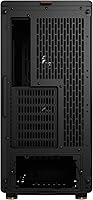
This case is not the right call for every builder, and it is worth being honest about where it falls short. If you are planning an aggressive custom water-cooling loop with a 360mm front radiator, be aware that GPU clearance shrinks to 300mm in that configuration, which rules out many current flagship cards. The rear cable management area is tighter than what you get in cases built specifically around clean builds, so if you have a lot of power connectors and modular cables to wrangle, expect to spend extra time on that. Budget-focused builders will also find the price hard to justify if aesthetics are not a priority — there are cheaper cases that offer comparable airflow and compatibility. Anyone who relies heavily on RGB lighting inside their build may also find that the dark-tinted glass mutes those effects more than they would like, which undercuts a common reason people invest in a windowed panel in the first place.

Specifications

  • Form Factor: This is a mid-tower enclosure designed to house ATX, mATX, and ITX motherboards within a standard desktop footprint.
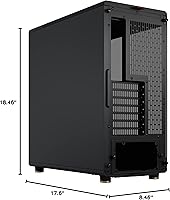
  • Dimensions: The case measures 17.6 x 8.46 x 18.46 inches (L x W x H), giving it a compact but capable mid-tower profile.
  • Weight: The unit weighs 20.9 pounds, reflecting its solid metal chassis construction and included hardware.
  • Front Panel: The front panel is crafted from sustainably sourced genuine walnut wood, providing a natural texture and appearance distinct from typical plastic fronts.
  • Side Panel: A dark-tinted tempered glass side panel allows visibility into the interior while maintaining a subdued, refined exterior look.
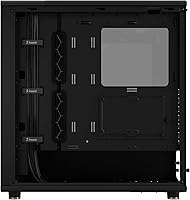
  • Included Fans: Two 140mm Aspect PWM fans are included in the box, providing baseline airflow without requiring an immediate fan upgrade.
  • GPU Clearance: Maximum GPU length is 355mm in standard configuration, reducing to 300mm when a 360mm front radiator is installed.
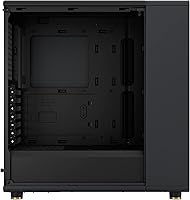
  • Expansion Slots: Seven bridgeless expansion slots are provided, offering flexibility for multi-card or high-expansion builds without requiring knock-out removal.
  • Front I/O Ports: The front I/O panel includes one USB-C port, two USB 3.0 ports, and one USB 2.0 port for accessible connectivity.
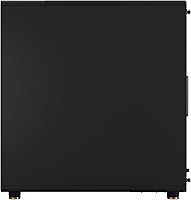
  • Chassis Material: The main chassis is constructed from steel, contributing to the case's structural rigidity and overall build quality.
  • Cooling Support: The open mesh front and top panels support air cooling natively, with additional support for liquid cooling radiators up to 360mm at the front.
  • Fan Size Support: The case is compatible with 140mm and 120mm fan sizes across the front, top, and rear mounting positions.
  • Color Variant: This specific variant is finished in Charcoal Black TG Dark, pairing a dark chassis with a tinted glass panel and dark walnut wood.
  • Model Number: The official model number for this variant is FD-C-NOR1C-02, as designated by Fractal Design.
  • Motherboard Support: Full-size ATX, Micro-ATX, and Mini-ITX motherboards are all officially supported within this enclosure.
  • Power Supply Mount: The power supply mounts in a standard bottom-rear position, consistent with modern mid-tower ATX case conventions.
  • USB-C Support: One USB Type-C port is positioned on the front I/O panel, supporting modern devices and peripherals that require the connector.
  • Ventilation Design: Airflow is managed through an integrated open-mesh front intake and a mesh top panel, reducing restriction without requiring a separate filter replacement routine.
  • Market Rank: This case holds a top-15 position in the Computer Cases category on Amazon, supported by over 2,500 verified ratings.
  • Wood Sourcing: The front panel wood is described by Fractal Design as sustainably sourced, with walnut used in this specific variant.

Related Reviews
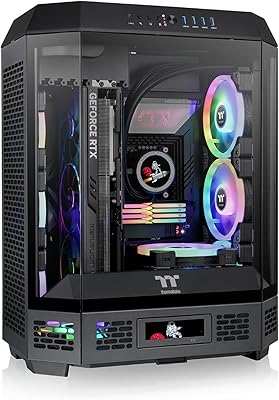
Thermaltake Tower 600 Mid-Tower ATX Case
79%
91%
Build Quality
93%
Aesthetic Design
88%
Cable Management
94%
Cooling Capacity
71%
Installation Experience
More
KEDIERS P6 Mid Tower ATX PC Case
75%
88%
Aesthetic Design
71%
Build Quality
84%
Included Fans & Lighting
78%
Airflow & Thermal Performance
81%
Radiator & Cooling Support
More
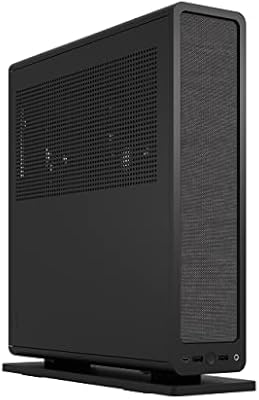
Fractal Design Ridge Mini-ITX PC Case
74%
93%
Aesthetic Design
88%
Build Quality
91%
Included Accessories
58%
Build Experience
67%
Thermal Performance
More
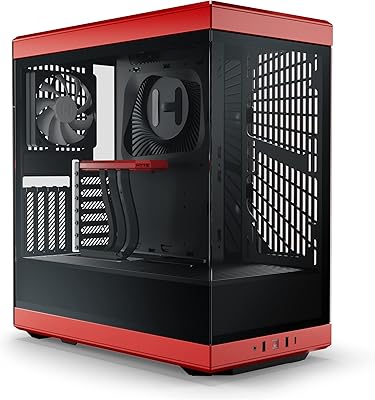
HYTE Y40 Mid-Tower ATX Case
85%
89%
Design & Aesthetics
86%
Cooling Performance
91%
Cable Management
93%
Build Quality
72%
GPU Compatibility
More
SAMA 3509 ATX Mid Tower PC Case
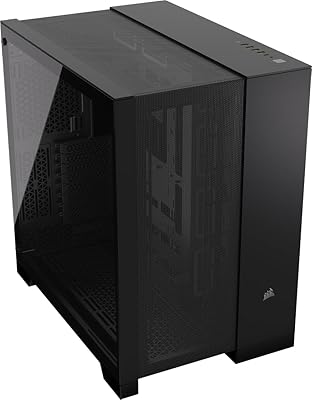
74%
88%
Value for Money
74%
Build Quality
81%
Airflow & Cooling Performance
67%
Pre-installed Fan Quality
86%
Tempered Glass Panel
More
Zalman S4 Mid-Tower ATX PC Case
81%
88%
Airflow and Cooling
80%
Build Quality and Materials
92%
Ease of Installation
60%
Acrylic Panel Durability
70%
Cable Management
More
SAMA S40 Mid Tower ATX PC Case
79%
88%
Airflow Performance
83%
Included Fan Quality
79%
Build Quality & Finish
92%
GPU Compatibility
61%
Cable Management
More
Zalman S2 ATX Mid-Tower PC Case
83%
88%
Cooling Performance
80%
Build Quality
85%
Ease of Setup
70%
Cable Management
92%
Value for Money
More
SZSKYING ATX Mid-Tower PC Gaming Case
85%
92%
Cooling Performance
85%
Build Quality
88%
Aesthetic Design
74%
Cable Management
78%
Ease of Setup
More
Zalman T6 ATX Mid Tower PC Case
71%
83%
Value for Money
67%
Build Quality
71%
Airflow & Cooling
79%
Interior Space & Layout
76%
Cable Management
More

FAQ

It is genuine wood, not a printed film or thin veneer. The walnut bars on the front have real grain and texture you can feel when you run your hand across them. It is one of the first things people comment on when they handle the case in person.

Most triple-fan cards, including the RTX 4080 in its common cooler sizes, fall well within the 355mm clearance this case offers in a standard air-cooled build. If you are also planning a front radiator, double-check your specific card length against the 300mm limit that applies in that configuration.

Yes, a 360mm radiator can be mounted at the front of the case. Just keep in mind that doing so reduces GPU clearance to 300mm, so you will want to confirm your graphics card fits before committing to that layout.

It is workable but not the most generous rear chamber you will find at this price point. Builders with modular PSUs and multiple storage drives have noted it requires a bit more patience and planning than cases specifically designed around cable routing. Velcro ties and some pre-planning go a long way here.

It does reduce the brightness of interior lighting noticeably. If showing off vibrant RGB effects is a priority for you, the dark tint will mute that more than a clear panel would. For builders going for a subtle or minimal lighting look, it actually works quite well.

The case ships with two 140mm Aspect PWM fans pre-installed. They are quiet and move a reasonable amount of air, so for a standard mid-range build they will handle things fine out of the box. If you are running a high-TDP CPU or a power-hungry GPU without liquid cooling, adding a third fan later is a reasonable next step.

Not at all — it is actually one of the more approachable cases to work in at this level. Panel removal is straightforward, the layout is logical, and the included hardware is well organized. First-time builders consistently report a smooth assembly experience in their reviews.

The 140mm Aspect PWM fans are generally considered quiet during normal operation, and the larger blade diameter means they can move air at lower RPM compared to 120mm fans. Under sustained heavy load they will spin up and become audible, but for everyday use most people find them acceptable without any tuning.

That is essentially what this enclosure was designed for. The wood front and clean metal chassis make it look more like a piece of considered furniture than a typical gaming tower. It photographs well and holds its own in open, visible spaces without drawing the wrong kind of attention.

Like any open-mesh design, the top will accumulate some dust over time, particularly in dusty environments. The trade-off is better airflow and cooler temperatures. Fractal Design includes a removable dust filter on the top, so periodic cleaning is straightforward — just pull it out and rinse or brush it off.

Where to Buy