Overview

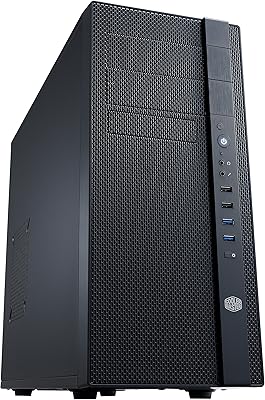
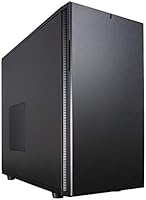
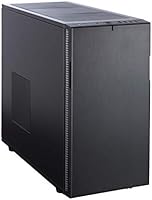
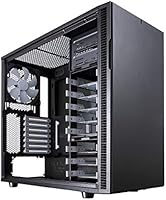
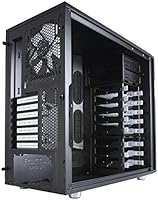
The Fractal Design Define R5 Mid Tower Case established itself as the go-to chassis for builders who refuse to choose between a quiet room and a cool-running system. The Define series built its reputation over several generations by treating noise as a first-class engineering problem rather than an afterthought, and the R5 represents that philosophy at its most refined. It sits comfortably in mid-tower territory — roomy enough for serious hardware without dominating your floor space. The all-black exterior is clean and understated, at home in a professional office or a dedicated build corner. This is a considered, deliberate purchase, not something you grab because it was cheapest on the shelf.

Features & Benefits

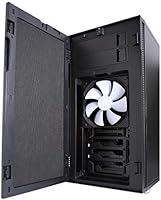
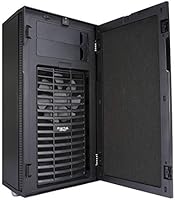
What separates the Define R5 from noisier mid-towers starts with its sound-dampening material — high-density panels that actually absorb resonance rather than just softening it slightly like the thin foam you find in budget cases. Two pre-installed Dynamic GP-14 140mm fans deliver solid airflow at noise levels that genuinely stay in the background under typical loads. The radiator clearance is impressive for a case this size: you can run a large 420mm radiator up top and a 360mm unit in the front if you go down the custom loop route. The tool-less Moduvent covers let you close off unused slots for extra quiet, or open them up when airflow takes priority. Cable routing is well thought out, and the bottom-mounted PSU keeps weight low and wiring tidy.

Best For

Fractal's quiet build chassis was made for a specific kind of builder, and it's worth being honest about who that is. If you work or game in a bedroom or home office where a loud PC genuinely disrupts your focus, this is an easy recommendation. Content creators — video editors especially — who run renders or exports for hours at a stretch will notice and appreciate the low ambient noise. It's also a strong choice for anyone planning a custom water-cooling loop who wants real radiator headroom without squeezing into a compromise. That said, if you want a compact case, a windowed side panel, or aggressive RGB visibility, the Define R5 isn't your chassis. It rewards patient, methodical builders who plan to keep their system for the long haul.

User Feedback

Among the nearly two thousand ratings this silent mid-tower has collected, build quality comes up again and again — the steel and aluminum construction feels genuinely solid, with no flexing or rattling that plagues cheaper options. Cable management gets consistent praise too, especially from builders switching from cases with less thoughtful routing. The low noise under load is frequently described as remarkable, which is the whole point. On the critical side, the front panel's lack of USB-C is a real omission that reflects the case's 2014 origins, and some users doing heavy workloads do end up swapping the stock fans for higher-performance alternatives. A few buyers also flag the weight — nearly 24 pounds empty — as a surprise, particularly for anyone planning to transport it regularly.

Pros

  • High-density sound dampening delivers genuinely quiet operation, not just marginal noise reduction.
  • Two pre-installed 140mm fans provide solid baseline airflow straight out of the box.
  • Radiator support up to 420mm on top makes this a serious option for custom water-cooling loops.
  • Cable management channels are well-placed and spacious, making clean builds far easier than in comparable cases.
  • Steel and aluminum construction feels premium and solid, with no flex or rattle under handling.
  • Tool-less Moduvent fan slot covers let you fine-tune the airflow-to-silence balance without reaching for a screwdriver.
  • The bottom-mounted PSU layout keeps center-of-gravity low and keeps wiring away from motherboard clearance.
  • The minimalist exterior fits equally well in a professional office or a dedicated build room.
  • ATX compatibility and a roomy interior mean most standard components fit without creative problem-solving.
  • Thousands of long-term owners still recommend the Define R5, which says a lot about its staying power.

Cons

  • No USB-C port on the front panel is a real daily inconvenience by modern standards.
  • At nearly 24 pounds empty, transporting this case to LAN events or new locations is a workout.
  • No side panel window means your component and lighting choices are completely hidden from view.
  • Stock fans may need upgrading if you are pushing high-end CPUs or GPUs under sustained heavy loads.
  • The closed, dampened design restricts maximum airflow compared to open-mesh cases built for extreme cooling.
  • No RGB or lighting integration built in, which matters if aesthetics are part of your build goals.
  • The physical footprint is large enough to rule it out for tight desk setups or small room constraints.
  • Fewer drive bays than some older competitors, which could frustrate builders with large storage arrays.

Ratings

The scores below reflect AI-driven analysis of thousands of verified owner reviews for the Fractal Design Define R5 Mid Tower Case, with spam, incentivized feedback, and bot activity actively filtered out before scoring. Each category captures what real builders consistently experienced across a wide range of use cases — from home office setups to custom water-cooling projects — so both the genuine strengths and the recurring frustrations are represented honestly.

Noise Reduction
93%
Owners repeatedly describe the Define R5 as one of the quietest cases they have ever used, with the high-density dampening panels making a tangible difference during long gaming or rendering sessions. Builders working in shared spaces or bedrooms specifically call out how the case stays acoustically unobtrusive even when the system is under sustained load.
A small number of users note that the dampening trades some passive ventilation for silence, which can result in slightly higher internal temperatures compared to open-mesh designs under extreme overclocking conditions. Those running very hot components without active cooling upgrades may find the thermal trade-off less comfortable.
Build Quality
91%
The steel and aluminum construction consistently earns praise for feeling premium and purposeful — panels do not flex, and there is no rattling or creaking when moving the case. Builders upgrading from cheaper chassis describe the material quality as a clear step up that is immediately obvious the moment you handle it.
The robust construction is also the reason the case tips the scales at nearly 24 pounds empty, which catches some buyers off guard. For a chassis that sits permanently on a desk or floor this is rarely a problem, but it becomes a real inconvenience for anyone who needs to transport their system.
Cable Management
89%
Cable routing is one of the most frequently praised aspects of this silent mid-tower, with thoughtfully positioned cutouts, tie-down points, and generous clearance behind the motherboard tray making tidy builds accessible even for less experienced builders. Veterans and first-timers alike describe the end result as significantly cleaner than what they achieved in previous cases.
The routing channels behind the tray, while ample for most builds, can get tight when managing thick PSU cables alongside multiple storage and fan connections simultaneously. Builders with modular PSUs fare noticeably better than those using fully cabled units.
Cooling Flexibility
88%
The radiator clearance in this case is a genuine selling point — being able to run a 420mm radiator up top or a 360mm unit up front gives custom loop builders room to work with configurations that many competing mid-towers simply cannot accommodate. AIO cooler installations are equally well supported, with clean mounting paths for tubing.
While the cooling potential is high, achieving it does require some planning around drive cage placement since removing bays is often necessary to unlock the full radiator clearance at the front. First-time water-cooling builders may find the layout requires a bit more research than they expected.
Interior Layout
86%
The interior is logically organized, with the bottom-mounted PSU chamber keeping power supply bulk well away from the main motherboard area, and removable drive cages offering real flexibility for different build configurations. Builders who iterate on their systems frequently appreciate how the layout anticipates future component changes rather than just the initial install.
Drive bay capacity, while adequate for most modern builds that lean heavily on SSDs, feels limited for users who still maintain large arrays of mechanical hard drives. Removing cages to gain cooling clearance reduces available storage mounting points, so builders with both goals need to plan carefully.
Fan Performance
79%
21%
The two included Dynamic GP-14 140mm fans are a genuine quality inclusion — they move respectable airflow at noise levels that align well with the case's silent-computing mission. For mid-range systems running typical gaming or productivity workloads, most owners find them entirely adequate without any immediate need to upgrade.
Builders pushing high-end CPUs and GPUs under sustained load fairly regularly report adding additional fans or replacing the stock units with higher-static-pressure models to maintain comfortable temperatures. The included fans set a solid baseline but are not optimized for demanding thermal scenarios.
Water Cooling Support
87%
Custom loop enthusiasts consistently highlight the Define R5 as one of the better mid-towers for fitting full custom loops, with thoughtful mounting provisions and enough internal volume to route tubing without extreme bends. The combination of top and front radiator support gives builders genuine configuration flexibility.
Fitting a truly large custom loop with a reservoir, pump, and dual radiators does require careful spatial planning and likely the removal of drive cages, which leaves the interior looking busy during the build process. Pre-planning component placement before starting the loop is strongly recommended.
Front I/O Usability
58%
42%
The front panel port placement is ergonomic and easy to reach, and the two USB 3.0 ports cover the majority of everyday connectivity needs for external drives, keyboards, and peripherals that most users plug in regularly. The combined headset audio jack is positioned sensibly and works reliably.
The complete absence of a USB-C port is the most consistently cited modern limitation of this case, reflecting its 2014 design origins. In a world where many external SSDs, modern peripherals, and smartphones rely on USB-C, this gap creates a real daily inconvenience that an adapter alone does not elegantly solve.
Ease of Build
84%
Builders across skill levels describe the Define R5 as an approachable case to work inside, with enough room to maneuver large components and a tool-less design philosophy that reduces the number of screwdrivers needed during installation. The Moduvent fan covers in particular earn praise for being genuinely easy to adjust on the fly.
The case's weight makes it slightly cumbersome to reposition on a workbench during a build, and aligning some of the larger panels back into position solo can require an extra pair of hands. These are minor friction points rather than serious complaints, but they do come up.
Aesthetics
71%
29%
The clean, all-black minimalist exterior fits unobtrusively into professional workspaces and home offices, with no aggressive styling that dates the case visually. Builders who prioritize a low-profile, understated look consistently appreciate that the design has held up well over the years without looking dated.
There is no side panel window on this model, which means all the care put into internal cable management and component selection stays completely hidden from view. Builders who want to showcase RGB lighting or premium components will find the closed design fundamentally at odds with that goal.
Value for Money
77%
23%
Given the material quality, pre-installed fans, sound dampening, and cooling flexibility packed into this chassis, most long-term owners feel the price reflects genuine engineering rather than brand markup. Builders who have lived with it for several years consistently describe it as a purchase they do not regret.
At its price point, the absence of USB-C and the lack of a windowed option feel like omissions that newer competitors at similar prices have addressed. Buyers comparing it against more recent alternatives need to weigh the Define R5's proven track record against feature sets that have moved on since 2014.
Compatibility Range
83%
ATX, Micro-ATX, and Mini-ITX motherboards all fit without issue, and the GPU length and CPU cooler height clearances cover the vast majority of components a builder is likely to pair with this case. Builders rarely report running into hard compatibility dead-ends with standard hardware.
E-ATX motherboard support is limited, which rules out the case for builders working with high-end desktop platforms that use extended form factor boards. This is a niche limitation but a hard stop for that specific segment of enthusiast builders.
Portability
41%
59%
The case's structural integrity means it protects components well during any occasional moves, and the rigid construction gives it a reassuring solidity when carried. For a system that lives permanently in one location, the weight is essentially irrelevant to daily use.
Nearly 24 pounds empty and significantly more with a full build inside makes this one of the heavier options in its category, and it has no carry handles or LAN-friendly design features to mitigate that. Anyone who plans to regularly transport their system to events or between locations should treat this as a serious drawback.
Long-Term Durability
92%
The volume of owners who purchased this case years ago and still actively recommend it speaks to how well the materials and construction hold up over time. Panels stay aligned, dampening material does not degrade noticeably, and the overall structure shows no signs of premature wear under normal use conditions.
Replacement parts and official accessories for a case this age can occasionally be harder to source than for more current models. This has not been a widely reported issue, but builders planning a very long ownership period should be aware that product support availability can shift.

Suitable for:

The Fractal Design Define R5 Mid Tower Case was built for a specific type of builder, and if you fit that profile, it is genuinely hard to beat. Anyone who works, games, or creates in a shared living space — a bedroom, a home office, an apartment — will immediately appreciate how little acoustic presence this chassis has even under sustained load. Content creators running long video exports or audio production sessions are a natural fit, since fan noise that seems minor during casual use becomes genuinely distracting after several hours. Enthusiasts who are planning a custom water-cooling loop will find the radiator clearance generous enough to accommodate serious setups without compromise. It also suits builders who treat their system as a long-term investment — the solid steel and aluminum construction, thoughtful interior layout, and tool-friendly design all make future upgrades and component swaps far less painful than they would be inside a cheaper case.

Not suitable for:

There is a clear category of builder for whom the Define R5 simply is not the right fit, and it is worth being direct about that. If you want a side panel window to show off your components or lighting, this case offers none — its design philosophy is closed and acoustically focused, which means your RGB build stays hidden. Builders chasing the smallest possible footprint or a compact desktop profile will find the mid-tower dimensions too large for their needs. At nearly 24 pounds empty, it is also a poor choice for anyone who moves their system regularly, whether for LAN events or frequent relocations. The front panel lacks a USB-C port entirely, which is a genuine daily inconvenience if your peripherals or storage devices depend on it. Finally, if raw airflow for extreme overclocking is your top priority and silence is irrelevant, the sound-dampening design philosophy actually works against you by restricting ventilation options compared to open-mesh alternatives.

Specifications

  • Form Factor: The Define R5 is a mid-tower chassis designed to accommodate standard ATX motherboards along with smaller form factors including Micro-ATX and Mini-ITX.
  • Dimensions: The case measures 23″ long by 21.5″ tall by 13″ wide, giving builders ample internal clearance without occupying an excessive floor or desk footprint.
  • Weight: The unit weighs 23.6 lbs empty, reflecting the use of steel and aluminum in its construction rather than lightweight but less rigid plastics.
  • Materials: The chassis is constructed from steel and aluminum, providing structural rigidity and contributing to the overall sound-dampening effectiveness of the enclosure.
  • Included Fans: Two Fractal Design Dynamic GP-14 140mm fans are pre-installed, one at the front intake position and one at the rear exhaust position.
  • Fan Slot Covers: Tool-less Moduvent fan slot covers are fitted across unused ventilation openings, allowing users to block airflow paths without requiring a screwdriver.
  • Top Radiator Support: The top of the case supports radiators up to 420mm in length, accommodating triple 140mm and triple 120mm radiator configurations.
  • Front Radiator Support: The front panel supports radiators up to 360mm, making it compatible with triple 120mm radiator setups for custom water-cooling loops.
  • Sound Dampening: High-density noise-reducing material is applied to the interior of the side panels, top panel, and front door to absorb mechanical and airflow-generated noise.
  • PSU Mount: The power supply unit mounts at the bottom of the case on an isolated platform, which lowers the system center of gravity and separates PSU airflow from the main chamber.
  • Motherboard Support: The case officially supports ATX, Micro-ATX, and Mini-ITX motherboard form factors using the standard mounting point layout.
  • Front I/O Ports: The front panel includes two USB 3.0 ports, two USB 2.0 ports, and a combined 3.5mm audio jack for headset connectivity.
  • Drive Bays: The interior accommodates multiple 3.5″ hard drive trays and 2.5″ solid-state drive mounts, with some bays being removable to improve radiator or cable routing clearance.
  • Cooling Method: The case supports both air cooling and liquid cooling configurations, with dedicated mounting points and clearance designed for either approach.
  • GPU Clearance: The Define R5 provides substantial GPU length clearance, typically accommodating graphics cards well over 300mm depending on drive bay configuration.
  • CPU Cooler Height: The case supports tower CPU coolers up to approximately 172mm in height, covering the majority of high-performance air coolers on the market.
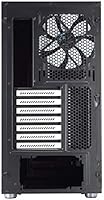
  • Expansion Slots: Seven expansion slot covers are provided along the rear of the case, supporting full-length graphics cards and multi-slot PCIe add-in cards.
  • Model Number: The official Fractal Design model identifier for this black variant is FDCADEFR5BK, which can be used to confirm compatibility documentation and replacement parts.
  • Color: This variant ships in an all-black finish across the exterior panels and interior chassis surfaces, with no windowed side panel option on this model.
  • Availability Date: The Define R5 was first made available in November 2014 and remains in active circulation, which reflects the durability of both its physical construction and its design relevance.

Related Reviews
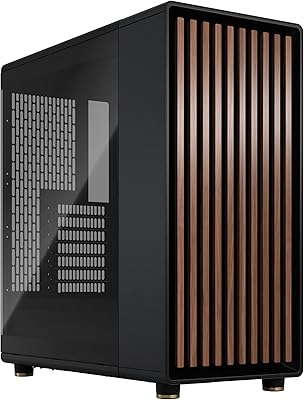
Fractal Design North ATX Mid Tower Case
82%
97%
Aesthetic Design
93%
Build Quality
81%
Airflow & Thermal Performance
67%
Cable Management
89%
Ease of Assembly
More
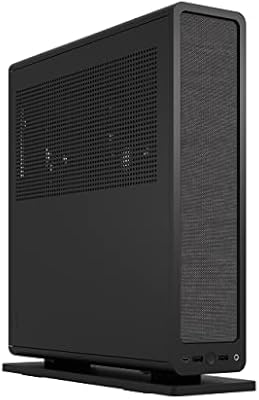
Fractal Design Ridge Mini-ITX PC Case
74%
93%
Aesthetic Design
88%
Build Quality
91%
Included Accessories
58%
Build Experience
67%
Thermal Performance
More
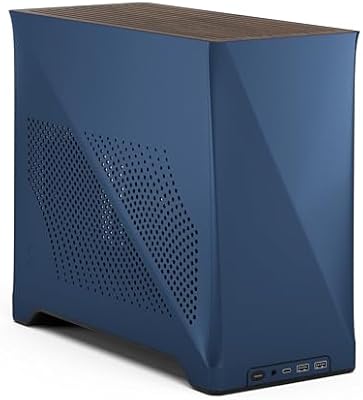
Fractal Design Era 2 Mini-Tower Case
88%
91%
Build Quality
88%
Cooling Performance
85%
Airflow Efficiency
90%
Ease of Assembly
89%
Cable Management
More
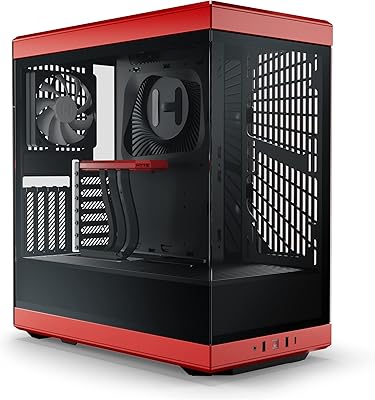
Thermaltake Tower 600 Mid-Tower ATX Case
79%
91%
Build Quality
93%
Aesthetic Design
88%
Cable Management
94%
Cooling Capacity
71%
Installation Experience
More
SAMA V60 Mid Tower PC Case
80%
93%
Out-of-Box Cooling Value
78%
Airflow Performance
91%
AIO & Radiator Flexibility
88%
Tempered Glass & Aesthetics
71%
Build Quality & Materials
More
COUGAR MX330-X Mid Tower Case
85%
88%
Cooling Performance
91%
Ease of Installation
85%
Build Quality
90%
Airflow & Ventilation
65%
Cable Management
More
SAMA 3509 ATX Mid Tower PC Case
74%
88%
Value for Money
74%
Build Quality
81%
Airflow & Cooling Performance
67%
Pre-installed Fan Quality
86%
Tempered Glass Panel
More
Fractal Design Mood Black Mini-ITX PC Case
75%
93%
Aesthetic Design
86%
Build Quality
61%
Cooling Performance
58%
CPU Cooler Compatibility
88%
GPU Compatibility
More
HYTE Y70 Mid-Tower ATX Gaming Case
80%
93%
Build Quality
96%
Aesthetic Design
78%
Cooling Potential
91%
Vertical GPU Mounting
88%
Cable Management
More
KEDIERS P6 Mid Tower ATX PC Case
75%
88%
Aesthetic Design
71%
Build Quality
84%
Included Fans & Lighting
78%
Airflow & Thermal Performance
81%
Radiator & Cooling Support
More

FAQ

Yes, quite noticeably. The high-density dampening material on the panels does more than typical foam solutions — it absorbs resonance from both fans and spinning hard drives. Most builders who upgrade from a standard mid-tower report a clear audible difference, especially during sustained workloads.

Absolutely. The front of the case supports radiators up to 360mm, so a triple-fan 120mm AIO fits there comfortably. The top also supports up to a 420mm radiator, giving you plenty of flexibility for either AIO or custom loop setups.

Yes, the Fractal Design Define R5 Mid Tower Case was specifically designed around ATX compatibility, and the interior is roomy enough that most standard ATX boards seat without any interference from drive cages or fan mounts.

Cable management is genuinely one of the stronger points here. There are well-positioned routing holes, Velcro tie-down points, and enough clearance behind the motherboard tray to tuck away a reasonable amount of cabling. You do not need to be an expert builder to end up with a tidy result.

That depends on what you value. If silence and build quality are your priorities, the Define R5 still holds up extremely well. Where it shows its age is the front panel I/O — no USB-C is a real gap in 2025. If you need USB-C regularly, factor that into your decision, but the core case design remains competitive.

For the majority of builders running mid-range hardware, the two pre-installed Dynamic GP-14 140mm fans perform well at low noise levels. If you are running a high-end CPU and GPU under sustained load, you may want to add one or two more fans, but replacement is typically not necessary out of the box.

It is a heavy case — nearly 24 pounds empty, and that weight climbs fast once components are installed. If you transport your system regularly, that is a genuine consideration. This chassis is really designed to sit in one place rather than travel frequently.

No, the Define R5 has no built-in RGB lighting and no dedicated LED strip channels. Its design philosophy is entirely focused on silent, clean aesthetics rather than visual effects. If RGB is important to your build, you would need to look at a different chassis.

Yes, the internal drive cages are designed to be removable, which is one of the smarter layout decisions in this case. Pulling them out opens up the front intake area significantly and can also improve GPU clearance for very long graphics cards.

The standard black variant has a solid steel side panel with no window. If you want to display your components or lighting, this particular model will not suit that goal. Some builders accept the trade-off for the noise reduction, but it is worth knowing upfront before you buy.

Where to Buy