Overview

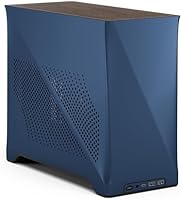
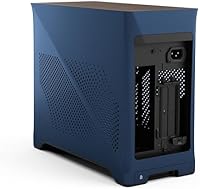
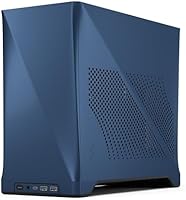
The Fractal Design Era 2 Mini-ITX Case occupies a specific and deliberate niche: it's built for the builder who wants their compact rig to look at home on a shelf or living room console rather than buried under a desk. The anodized aluminum body paired with a solid walnut accent panel isn't a gimmick — it's the whole point. In Midnight Blue, the finish is deep and restrained, nothing flashy about it. What you're buying into here is a small-form-factor chassis that takes aesthetics seriously without completely ignoring the hardware requirements that enthusiast builders actually care about.

Features & Benefits

The Era 2 punches above its weight class in terms of hardware headroom. A 326mm GPU clearance means you're not locked into cut-down or low-profile cards — full three-slot cards fit, which is rare at this footprint. Liquid cooling goes up to 280mm, though Fractal recommends sticking with a 240mm radiator for easier installation. The five-sided ventilation keeps air moving without covering the exterior in mesh cutouts, which would ruin the aesthetic entirely. A bottom-mounted PSU keeps heat separation cleaner, and the two included Aspect 12 PWM fans are a reasonable starting point, though heavy workloads may push you toward an upgrade.

Best For

This SFF chassis makes the most sense for a specific type of builder: someone who wants a capable, quiet machine that could pass for a piece of furniture. If you're putting together a living room PC or a desk build where appearance matters as much as specs, the Era 2 fits that brief well. It also suits enthusiasts who've already committed to high-end components and want a case that reflects that investment rather than undercutting it visually. That said, if maximum airflow or aggressive overclocking is your priority, a more utilitarian SFF option would serve you better without the premium material cost.

User Feedback

Early buyer reception is positive — this compact case holds a 4.5 out of 5 rating, though with around 80 ratings total, it's still too early to draw firm conclusions. The build quality and materials come up repeatedly as highlights: owners note that the walnut panel photographs beautifully and holds up to daily handling without looking worn. On the downside, some builders flag that cable management inside a chassis this tight is genuinely challenging, and thermal headroom under sustained load requires realistic expectations — this is not a mid-tower. A handful of users also mention upgrading the stock fans after noticing the included pair runs short under demanding conditions.

Pros

  • The walnut accent panel looks and feels genuinely premium — it ages gracefully and photographs exceptionally well.
  • A 326mm GPU clearance is impressive for a Mini-ITX chassis, opening the door to most full-size modern graphics cards.
  • Anodized aluminum construction feels solid in hand and resists surface wear far better than painted plastic alternatives.
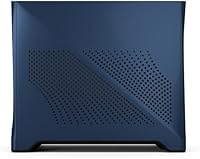
  • Five-sided ventilation keeps air moving without turning the exterior into an obvious mesh panel.
  • Support for up to a 280mm radiator gives liquid cooling builders real flexibility without needing a larger case.
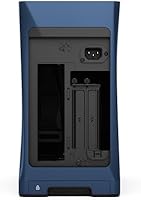
  • The bottom-mounted PSU placement improves internal heat separation and keeps the layout cleaner than many SFF competitors.
  • Midnight Blue is a rare, restrained colorway that suits adult workspaces and living rooms equally well.
  • Two Aspect 12 PWM fans are included out of the box, giving casual builders a functional starting point.

Cons

  • Cable management inside this SFF chassis is genuinely difficult and will frustrate first-time small-form-factor builders.
  • The included stock fans may not be sufficient under sustained heavy GPU and CPU loads — expect to consider upgrades.
  • Thermal headroom under prolonged high-performance workloads is limited compared to larger, less constrained enclosures.
  • The premium price is hard to justify unless the design language is a core part of your build goals.
  • With roughly 80 ratings at the time of writing, long-term durability data is still thin — more time is needed to confirm reliability.
  • The walnut accent, while beautiful, is a fixed design element — buyers who prefer a fully customizable look will find little flexibility here.
  • Tight internal clearances make component swaps and upgrades notably more time-consuming than in a standard mid-tower.

Ratings

Our AI rating engine analyzed verified global buyer reviews for the Fractal Design Era 2 Mini-ITX Case, actively filtering out incentivized submissions, single-word reviews, and suspected bot activity to surface what real builders actually experienced. The scores below reflect both the genuine strengths and the honest frustrations that emerged across the full review pool — nothing has been softened or inflated. Whether this SFF chassis earns a place in your build or falls short of your needs, the ratings here are designed to give you a clear-eyed answer.

Design & Aesthetics
96%
This is where the Era 2 genuinely stands apart from virtually every other compact case on the market. The combination of deep Midnight Blue anodized aluminum and a genuine solid walnut accent panel gives the chassis a presence that looks more like a high-end audio component than a PC — buyers consistently describe it as the case that gets noticed first on a shelf or media console.
A small number of users found the walnut grain pattern on their specific unit less visually striking than product photos suggested, since natural wood varies from piece to piece. Those who prefer a fully uniform or customizable exterior may also find the fixed walnut element too dominant a design statement.
Build Quality
91%
The anodized aluminum feels dense and well-finished, with no flex or panel rattle that often plagues cases at lower price points. Owners who handle the chassis regularly report that the finish holds up without developing micro-scratches or dull patches, and the walnut panel shows no signs of degradation even after months of daily exposure.
A handful of buyers noted that some internal mounting points and bracket edges felt less refined than the premium exterior implied, with occasional sharp edges during the build process. At this price tier, that inconsistency between exterior polish and interior finish is a fair criticism.
GPU Compatibility
88%
Supporting cards up to 326mm and three slots wide is a meaningful achievement for a Mini-ITX chassis — it means builders are not forced into cut-down or low-profile GPU options, and flagship-class cards from both major vendors can be accommodated without a riser cable or unusual mounting orientation.
While the length and slot clearance are generous, very thick three-slot cards can make internal cable routing even more difficult than usual, leaving minimal space to work around once the GPU is seated. Builders pairing oversized coolers with wide GPUs should double-check their specific combination before committing.
Thermal Performance
71%
29%
Five-sided ventilation keeps airflow moving across the chassis in a way that avoids hot spots under moderate workloads — typical gaming sessions and productivity tasks at normal sustained loads are handled comfortably by the default configuration. The bottom-mounted PSU also contributes to cleaner heat separation compared to side- or rear-mounted alternatives.
Under sustained high-TDP scenarios — extended rendering, heavy overclocking, or long gaming sessions on power-hungry GPUs — thermal headroom becomes noticeably constrained compared to what a similarly specced mid-tower could manage. This is an honest structural limitation of the SFF form factor, not a flaw unique to this chassis, but buyers should calibrate their expectations accordingly.
Liquid Cooling Support
78%
22%
Accommodating radiators up to 280mm in a case this compact is a practical win for builders who want effective cooling without going to a custom loop. A 240mm AIO fits cleanly and leaves enough breathing room for other components, making this a genuinely viable option for enthusiasts who prioritize quiet, efficient cooling.
Fitting a 280mm radiator — while technically supported — is a tight, patience-testing process that some builders found more trouble than it was worth, with limited clearance for fan connectors and routing. Fractal recommends the 240mm for a reason, and ignoring that guidance tends to produce frustrating results.
Cable Management
54%
46%
The bottom-mounted PSU layout does provide a logical anchor point for routing power cables, and builders who plan their cable run carefully before seating components can achieve a clean result. Using short modular cables or right-angle adapters makes a real difference and is worth the additional investment for this build.
This is consistently the most cited frustration in user reviews — the internal volume simply does not leave much margin for error, and fitting a full set of power and data cables around a three-slot GPU becomes a genuine puzzle. First-time SFF builders in particular describe the cable management process as stressful and time-consuming, sometimes requiring multiple attempts to close the chassis cleanly.
Included Fans
66%
34%
The two Aspect 12 PWM fans ship ready to use and are adequate for builders running mainstream components at modest power levels — casual gaming rigs and home office builds will likely find them sufficient without any immediate need to upgrade. The PWM control is a welcome baseline feature at this tier.
Enthusiast builders pairing the Era 2 with high-end, power-hungry CPUs and GPUs tend to find the stock fans running at their limits under load, with audible ramp-up becoming noticeable during intensive tasks. Several owners replaced both fans within the first few weeks, which feels like an unnecessary added expense given the premium asking price of the chassis itself.
Ease of Building
58%
42%
The case opens up reasonably well for its size, and the overall layout is logical enough that experienced SFF builders can navigate it without consulting the manual repeatedly. GPU installation and motherboard seating are straightforward steps that the internal layout handles without unusual workarounds.
For anyone without prior small-form-factor experience, the build process inside this chassis is genuinely demanding — cable routing, fan connector access, and closing the case with everything seated cleanly all require more patience than a larger enclosure. Multiple reviewers described needing to disassemble and reassemble sections mid-build, which is time-consuming and occasionally frustrating.
Footprint & Portability
83%
At just under 14.5 inches long and 6 inches tall, this compact case sits comfortably on a shelf, media console, or beside a monitor without dominating the space — it genuinely earns the living room PC designation. The weight is manageable for periodic moves between rooms or setups.
The dimensions, while compact by PC standards, are still larger than the most aggressively miniaturized SFF options like the Dan A4, so buyers looking for the smallest possible footprint may find this chassis still larger than ideal for very tight media cabinet configurations.
Value for Money
69%
31%
For builders who prioritize the intersection of premium materials and capable hardware support, the price is defensible — you are paying for genuine aluminum and walnut construction that no budget or mid-range case can replicate, and the GPU clearance means you do not need to compromise on your graphics card choice.
Compared to capable alternatives like the NR200P, which offers superior thermal flexibility and a more forgiving build experience at a considerably lower price, the Era 2 asks buyers to pay a significant premium that is almost entirely justified by aesthetics. If design is not your primary driver, the value proposition weakens considerably.
Material Durability
87%
Anodized aluminum resists surface wear, fingerprints, and corrosion far better than painted steel or plastic alternatives, and early owners report that both the metal and walnut surfaces look as good after months of use as they did out of the box. The materials genuinely age well rather than degrading under regular handling.
Natural walnut panels, while durable, are sensitive to prolonged direct sunlight and high-humidity environments, which can cause gradual color shift or minor surface changes over years of use. Buyers placing the case in sun-facing positions or humid rooms should be aware of this material characteristic.
Noise Levels
72%
28%
Under light to moderate workloads the case is genuinely quiet — the two stock fans run unobtrusively at low RPM during everyday tasks, and the solid aluminum panels do not transmit vibration noise the way thin steel cases often do. For a living room or bedroom setup under normal use, the acoustics are acceptable.
When the fans ramp up under sustained load, there is no noise dampening material inside the chassis to soften the sound, and the ventilation openings on five sides mean noise exits the case freely. Builders chasing whisper-quiet performance will need to invest in aftermarket fans and carefully manage thermal targets to keep fan curves suppressed.
I/O & Connectivity
74%
26%
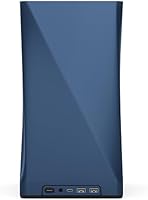
The front panel I/O provides a functional set of ports that covers the essentials for a modern desktop build, keeping the exterior clean and uncluttered in line with the case's overall design philosophy. Port placement is practical and accessible without interrupting the chassis's visual flow.
Users accustomed to more elaborate front-panel connectivity — multiple USB-A ports, USB-C, or SD card readers — may find the available options on the conservative side for a premium-priced chassis. Builders who rely heavily on front-panel ports for peripheral rotation may feel the offering is slightly underspecced relative to the price.
User Rating Confidence
61%
39%
The aggregate score of 4.5 out of 5 is encouraging, and the feedback that does exist is largely coherent and detailed — suggesting reviewers are genuine builders sharing real build experiences rather than superficial impressions. The consistent themes across reviews add credibility to the overall sentiment.
With approximately 82 ratings at the time of analysis, the dataset is still thin for a product at this price point, making it difficult to draw statistically robust conclusions about long-term reliability or edge-case build scenarios. The confidence in these ratings will increase meaningfully as the review pool grows over the coming year.

Suitable for:

The Fractal Design Era 2 Mini-ITX Case is the right call for builders who've decided that aesthetics and hardware capability don't have to be mutually exclusive in a compact form factor. If you're putting together a living room PC that needs to coexist with a TV stand or a bookshelf, this chassis fits that environment in a way that most gaming-branded cases simply don't — the walnut accent and Midnight Blue aluminum read more like consumer electronics than a rig. It also makes strong sense for enthusiasts who are already spending serious money on their CPU, GPU, and cooling stack and want the enclosure to reflect that level of investment. Builders comfortable working within Mini-ITX constraints who want liquid cooling support without going full custom loop will find the 240mm radiator compatibility practical and sufficient for most mid-range thermal loads.

Not suitable for:

Budget-conscious builders or those who treat the case as an afterthought should look elsewhere — this SFF chassis sits at a premium price point that only makes sense if the design is a genuine priority for you, not a nice-to-have. If your primary concern is extracting maximum thermal performance from your components, the airflow here — while competent for a compact case — cannot be compared to what an open-air mid-tower offers, and sustained high-load scenarios will test its limits. Cable management inside a chassis this tight is a real challenge, particularly for builders without prior SFF experience, and the build process demands patience and planning. Those who regularly swap components or upgrade on a frequent cycle may also find the confined interior more frustrating than rewarding over time. Finally, if you're running an ATX or Micro-ATX motherboard, this case simply isn't compatible — it's Mini-ITX only.

Specifications

  • Form Factor: Designed exclusively for Mini-ITX motherboards in a compact mini-tower footprint.
  • Dimensions: The chassis measures 14.4 x 12.3 x 6 inches (L x W x H).
  • Weight: Fully assembled unit weighs 10.21 pounds before any components are installed.
  • Exterior Materials: Body is constructed from anodized aluminum with a genuine solid walnut accent panel.
  • Colorway: Available in Midnight Blue anodized finish as the primary color option for this variant.
  • GPU Clearance: Supports graphics cards up to 326mm in length and up to 3 slots wide.
  • Radiator Support: Compatible with radiators up to 280mm, with 240mm recommended for optimal fit and airflow.
  • Included Fans: Ships with two Aspect 12 PWM fans, each measuring 120mm in diameter.
  • Ventilation: Features open ventilation across five sides of the chassis to promote consistent airflow throughout.
  • PSU Mounting: Power supply is mounted at the bottom of the case to improve heat separation and routing.
  • Cooling Method: Supports both air cooling and liquid cooling configurations within its compact internal volume.
  • Motherboard Type: Compatible with Mini-ITX motherboards only; ATX and Micro-ATX are not supported.
  • Memory Type: Supports standard DIMM memory modules as dictated by compatible Mini-ITX platforms.
  • Model Number: Official Fractal Design model identifier is FD-C-ERA2N-03.
  • Brand: Manufactured and sold by Fractal Design, a Swedish PC hardware brand known for understated enclosure design.

Related Reviews
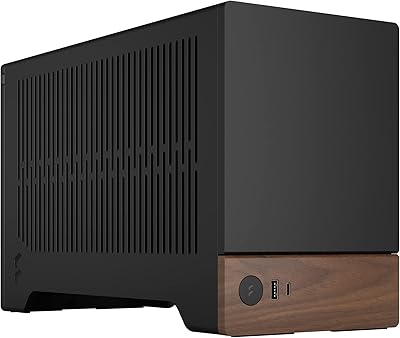
Fractal Design Terra Graphite Mini-ITX Case
79%
94%
Build Quality
97%
Aesthetic Design
78%
Internal Layout & Flexibility
66%
Thermal Performance
54%
Cable Management
More
Fractal Design Ridge Mini-ITX PC Case
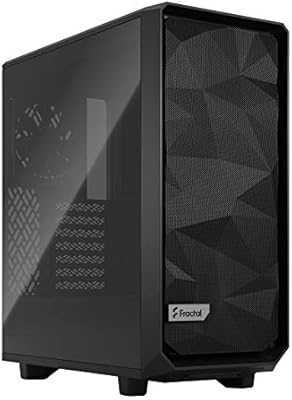
74%
93%
Aesthetic Design
88%
Build Quality
91%
Included Accessories
58%
Build Experience
67%
Thermal Performance
More
Fractal Design Meshify 2 Compact
85%
91%
Cooling Performance
89%
Build Quality
86%
Ease of Assembly
88%
Design & Aesthetics
62%
Cable Management
More
SilverStone Technology SG13P Mini-ITX Case
85%
89%
Build Quality
87%
Cooling Performance
91%
Storage Flexibility
95%
Size & Portability
65%
Cable Management
More
Cooler Master NR200 Mini-ITX Case
85%
91%
Build Quality
88%
Cooling Performance
94%
GPU Compatibility
84%
Ease of Assembly
86%
Airflow Efficiency
More
Fractal Design Mood Black Mini-ITX PC Case
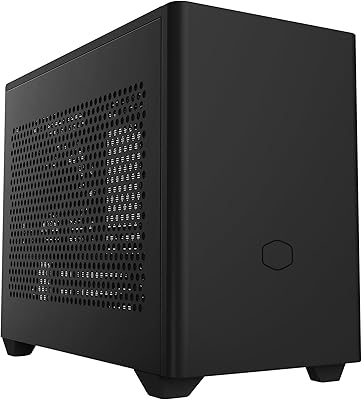
75%
93%
Aesthetic Design
86%
Build Quality
61%
Cooling Performance
58%
CPU Cooler Compatibility
88%
GPU Compatibility
More
SilverStone DS380B Mini-ITX NAS Case
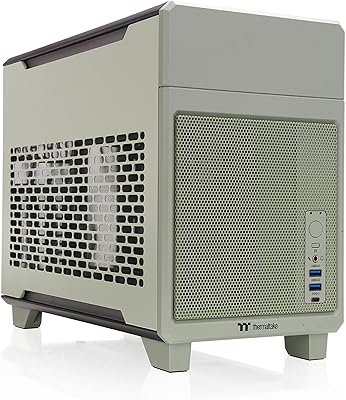
69%
93%
Drive Bay Capacity
88%
Hot-Swap Functionality
76%
Build Quality
41%
Cable Management
57%
Thermal Performance
More
Cooler Master NR200P V3 Mini-ITX Case
79%
88%
Build Quality
93%
GPU Compatibility
79%
Cooling Performance
74%
Ease of Building
82%
PCIe 5.0 Riser Cable
More
KXRORS S300 Mini-ITX PC Case
71%
88%
Build Quality & Materials
84%
Portability & Handling
67%
Airflow & Thermal Performance
53%
CPU Cooler Compatibility
72%
GPU Compatibility & Fit
More
Thermaltake TR100 Mini-ITX SFF Case
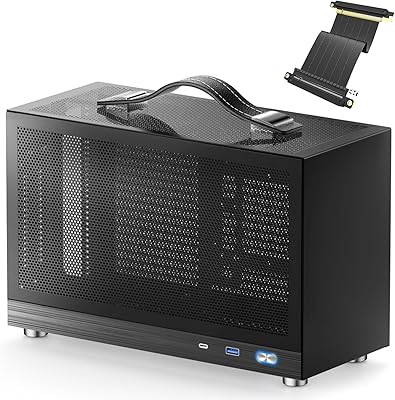
77%
91%
Component Compatibility
78%
Build Quality
86%
Value for Money
67%
Thermal Performance
72%
Cable Management
More

FAQ

Most modern consumer graphics cards will fit, as the Era 2 supports cards up to 326mm long and up to 3 slots wide. That covers the vast majority of current-generation cards, including high-end options. Just measure your card before buying and confirm it falls within those limits.

No — this SFF chassis maxes out at a 280mm radiator, and even that can be a tight fit depending on your specific cooler model. Fractal recommends using a 240mm radiator for the smoothest installation experience, so that is the safer choice if you want to avoid clearance headaches.

It is genuine solid walnut — not a veneer or a printed texture. Owners consistently note that the grain looks and feels authentic, and the panel holds up well to daily handling without developing the worn look that painted surfaces often show over time.

Expect a moderate to high level of difficulty, especially around cable management. The internal volume is tight, and routing cables cleanly takes real planning and patience. If this is your first small-form-factor build, budget extra time and consider using short or right-angle cables to make the process less frustrating.

The two Aspect 12 PWM fans that ship with the case are a reasonable baseline for light to moderate workloads. If you plan to run a high-TDP GPU or push your CPU hard for extended periods, many builders end up upgrading to higher-performance fans after noticing thermal headroom gets tight under sustained load.

No — the Fractal Design Era 2 Mini-ITX Case is strictly designed for Mini-ITX motherboards only. You cannot physically fit a Micro-ATX or ATX board inside it, so make sure your motherboard choice is locked in before purchasing.

The NR200P tends to offer better thermal flexibility and a more forgiving build experience at a lower price point, while the Dan A4 is even more compact but sacrifices some hardware compatibility. The Era 2 sits in a different lane — it is the option you choose when visual design and material quality are as important to you as internal specs.

Based on early owner feedback, the walnut panel holds up well over time and does not show wear the way painted or coated surfaces typically do. Natural wood can develop a slight patina with age, but most owners consider that a feature rather than a flaw — it tends to deepen the look rather than degrade it.

It can be, but it depends on your component choices. The case itself has no inherent noise-dampening features, so quiet operation comes down to selecting low-noise fans and a well-cooled GPU that does not ramp its fans aggressively under load. The form factor and design make it a natural fit for living room environments visually, but acoustic performance is on you to engineer.

The current 4.5 out of 5 rating is encouraging, but it is based on a relatively small number of reviews, so treat it as a promising early signal rather than a definitive verdict. The feedback that does exist is largely positive around build quality and aesthetics, with the main practical concerns centered on cable management and thermal limits — both of which are expected trade-offs for any chassis in this category.