Overview

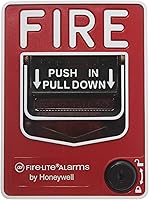
The Fire-Lite BG-12L Dual Action Pull Station is a professional-grade manual initiating device built for commercial and institutional fire alarm systems — not weekend home projects. First introduced in 2008, it has built a quiet, solid reputation among fire alarm contractors and facilities professionals who prioritize reliability over novelty. The dual-action mechanism is the defining characteristic here: unlike single-pull stations, this one requires two distinct physical steps to trigger, which meaningfully cuts down on accidental activations in busy hallways or schools. It integrates cleanly with Fire-Lite and Honeywell control panels, both addressable and conventional. Hardwired and code-compliant by design, this is a trade tool — plan on having a licensed technician handle the install.
Features & Benefits

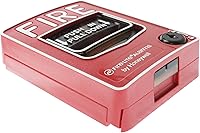
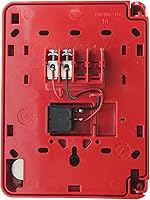
The dual-action pull mechanism is what separates this station from simpler alternatives — you lift and pull, and both steps are deliberate enough to prevent the kind of accidental triggers that cost facilities time and money. Once activated, only someone with the correct key can reset it, which keeps unauthorized tampering in check during post-incident reviews or routine drills. The housing is Lexan polycarbonate, a material that handles impacts and daily wear in high-traffic corridors without cracking or fading. Wiring is handled via screw terminals, making connections clean and solid during installation. At 5.5 x 4 x 1.5 inches, it drops into standard wall boxes without modification, and since it runs hardwired with no batteries, there is nothing to replace or check on a maintenance schedule.

Best For

This pull station is a natural fit for facilities managers overseeing offices, schools, or healthcare buildings who need a reliable, code-compliant replacement or upgrade to an aging initiating device. Licensed fire alarm contractors will also find it straightforward to specify and install — it works with both addressable and conventional Fire-Lite and Honeywell panels, which covers a wide range of existing building systems. It is a particularly strong choice in environments where local fire codes require tamper-resistant reset procedures, since the key-lock mechanism directly satisfies that requirement. If you are sourcing a replacement for a worn or damaged pull station and want something that matches original specs without tracking down an obscure part, the BG-12L is a proven, still-manufactured option.

User Feedback

Contractors who have wired this manual fire alarm initiator into live systems generally report that the screw terminals make for clean, trouble-free connections, and panel compatibility with Fire-Lite and Honeywell systems comes up consistently as a plus. The Lexan housing draws positive notes for holding up in busy corridors over years of use. On the critical side, a handful of users note that the dual-action mechanism can feel stiff initially, requiring a firm deliberate pull — some see this as a feature, others as a minor friction point during drills. A few facility managers mention the key-reset process adds a small but noticeable administrative overhead after real activations. Overall, the consensus leans positive among professional installers, with most criticisms centering on preference rather than any functional defect.

Pros

  • The dual-action mechanism reliably prevents accidental activations in busy hallways, classrooms, and public corridors.
  • Key-lock reset keeps post-incident control in the hands of authorized staff, not curious bystanders.
  • Lexan polycarbonate housing stands up to years of daily wear in high-traffic institutional environments.
  • Screw terminal wiring makes for clean, secure connections that experienced contractors can complete efficiently.
  • Fits standard single-gang and double-gang wall boxes with no cutting or custom mounting required.
  • Hardwired operation means zero battery maintenance — one less item on the monthly inspection checklist.
  • Compatible with both addressable and conventional Fire-Lite and Honeywell panels, covering a broad install base.
  • Still actively manufactured, so sourcing replacements or multiples for large facilities is not a problem.
  • Compact and lightweight at just 8 ounces, making handling and positioning during install straightforward.
  • Long track record since 2008 gives facilities teams confidence in long-term parts availability and support.

Cons

  • Professional installation is required in most jurisdictions, adding labor cost on top of the unit price.
  • The dual-action pull can feel noticeably stiff out of the box, which may surprise occupants during their first drill.
  • No standalone operation — without a compatible control panel, this pull station does nothing on its own.
  • Compatibility outside the Fire-Lite and Honeywell ecosystem is not guaranteed and requires verification before purchase.
  • The key-lock reset adds a procedural step after activations that some small facilities find cumbersome to manage.
  • No wireless or battery-backup option exists, making it unsuitable for locations without hardwired panel infrastructure.
  • Sourcing the reset key separately can be an unexpected hassle if it is lost or not included in the shipment.
  • Not appropriate for residential or light-commercial applications where a simpler, less specialized device would suffice.

Ratings

The Fire-Lite BG-12L Dual Action Pull Station scores here reflect AI analysis of verified purchaser reviews from professional installers and facilities managers worldwide, with spam, bot-generated, and incentivized submissions actively filtered out. The resulting scores capture where this manual fire alarm initiator genuinely earns its reputation — and where real-world users have flagged legitimate friction points. Both strengths and trade-offs are represented transparently, so you can make an informed call before specifying or purchasing.
Build Quality
88%
Contractors consistently note that the Lexan polycarbonate housing holds up well in demanding environments — busy school corridors, hospital lobbies, and office common areas where incidental contact is routine. The overall assembly feels solid and well-toleranced, with no reported issues around warping, discoloration, or structural fatigue over extended service life.
A small number of users report that the pull handle itself can develop minor play over many years of use in very high-traffic areas. While not a structural failure, it is worth flagging during annual inspections if the station has been in service for a decade or more.
False Alarm Prevention
93%
The dual-action design is the single most praised aspect of this pull station among facilities managers, particularly in schools and healthcare settings where accidental activations have historically caused costly disruptions. Requiring two deliberate steps — rather than a single pull — meaningfully filters out the casual or accidental triggers that plague simpler single-action devices.
The same mechanism that prevents false alarms occasionally frustrates occupants during emergency drills, particularly first-time users who hesitate at the second step. Clear posted instructions near the station help, but the design assumes a baseline level of familiarity that not every building occupant will have.
Installation Experience
81%
19%
Licensed contractors generally describe the wiring process as clean and uncomplicated, with screw terminals that accept standard gauge wire without issue and align well with typical commercial panel circuit configurations. The compact form factor drops into existing wall boxes in most replacement scenarios, which saves meaningful time on multi-station retrofit jobs.
A handful of installers note that the terminal block positioning can feel slightly cramped when working inside older, shallower wall boxes, requiring extra care to avoid pinching conductors. Panel programming steps for addressable configurations also add time that first-time BG-12L installers should budget for.
Panel Compatibility
79%
21%
The BG-12L performs reliably within the Fire-Lite and Honeywell panel ecosystem, which covers a substantial share of the commercial building installed base in North America. Contractors working predominantly with these brands rarely encounter signaling or supervision issues once wiring is properly terminated.
Users running panels from other manufacturers — Notifier, EST, Simplex — report mixed results and occasionally need to verify loop resistance and signaling protocol compatibility before committing to a large order. The station is not a universal fit, and assuming cross-brand compatibility without verification is a documented source of post-installation headaches.
Reset Mechanism
76%
24%
The key-lock reset is well-regarded by facilities teams that need to maintain clear accountability after activations — particularly in schools and healthcare facilities where post-incident documentation is important. It directly satisfies the tamper-resistant reset requirements found in many local fire codes without requiring any additional hardware.
Facilities managers at smaller buildings with lean maintenance staff find the reset process adds a procedural layer that extends response time after nuisance activations. The separate key also introduces a low-level administrative burden: lost or misplaced keys are a recurring complaint, and sourcing a replacement key is not always straightforward through standard distribution channels.
Durability Over Time
86%
Units installed since the mid-2000s are still reportedly functional in buildings where they have been properly maintained, which speaks to the longevity of both the mechanical pull assembly and the Lexan enclosure. There are no widespread reports of housing cracking, hinge failure, or terminal corrosion under normal commercial operating conditions.
In coastal or high-humidity environments, a small number of users have noted early oxidation on the screw terminals if the installation area lacks adequate environmental control. This is more a site condition issue than a product defect, but it is worth considering for installations near loading docks or exterior-adjacent walls.
Ease of Reset After Drill
67%
33%
When the reset key is on hand and staff are familiar with the procedure, resetting the pull station after a scheduled fire drill is quick — typically under a minute for an experienced technician. Facilities that conduct regular drills report that the routine becomes second nature after the first few cycles.
Facilities running drills with rotating maintenance staff consistently report confusion around the reset sequence, particularly when the assigned person is unavailable or the key storage location has not been clearly communicated. The lack of a visual reset guide on the unit itself is a missed opportunity that several users have pointed out.
Tamper Resistance
91%
The combination of the dual-action pull and key-lock reset makes unauthorized or playful activations substantially harder to execute, which is a concrete operational benefit in environments with minors or high foot traffic from the general public. Building owners in school districts specifically call this out as a deciding factor over cheaper alternatives.
The tamper resistance, while strong, is not absolute — a determined individual can still activate the station with deliberate effort, as it is designed to be usable in a real emergency. The station does not include any anti-vandalism enclosure or protective cage, which some high-risk environments may need to source separately.
Code Compliance
89%
The UL listing and dual-action design align with the requirements found in NFPA 72 and the specifications most commonly enforced by Authorities Having Jurisdiction across commercial and institutional occupancies. Contractors report consistent AHJ approval without special waiver requests when specifying this pull station on new and renovation projects.
Local amendments to fire codes vary, and a small number of users in jurisdictions with more stringent requirements have needed to supplement the installation with additional documentation or protective hardware. Verifying current local code before specifying is always advisable, even with a well-established UL-listed device.
Value for Money
74%
26%
For a UL-listed, dual-action pull station from a recognized brand within the Honeywell ecosystem, the pricing sits at a reasonable point relative to comparable commercial-grade initiating devices from competing manufacturers. Contractors sourcing multiple units for large facilities report that volume pricing through authorized distributors improves the overall cost picture considerably.
Buyers expecting a consumer price point will find this pull station positioned above basic alternatives, and when professional installation labor is factored in, the total cost of ownership is meaningfully higher than it appears at the unit level. For small or budget-constrained facilities, this cumulative cost requires honest planning upfront.
Documentation & Instructions
58%
42%
The technical data sheet available through Fire-Lite covers wiring diagrams, terminal specifications, and compatibility notes at a level of detail that experienced contractors find sufficient for most standard installations. Professionals already familiar with the Fire-Lite product family rarely need to consult documentation beyond a quick reference check.
End-users and facilities managers without a fire alarm background frequently describe the included documentation as inadequate, particularly for understanding post-activation reset procedures and key management. The absence of a clear, plain-language quick-start card in the box is a consistent minor complaint that Honeywell could address with minimal effort.
Mechanism Feel & Feedback
72%
28%
Most users describe the dual-action pull as having a firm, positive feel that communicates a sense of reliability — there is no ambiguity about whether the device has been fully activated. In occupied buildings, this tactile clarity matters during high-stress real-alarm scenarios where hesitation costs seconds.
Out of the box, the pull mechanism on some units has been reported as noticeably stiff, requiring more force than expected — which can be a concern in facilities serving elderly occupants or individuals with limited hand strength. The stiffness generally eases with use, but it is worth testing upon installation rather than assuming it will feel right from day one.
Long-Term Parts Availability
84%
The BG-12L has remained an active, non-discontinued product since 2008, and Fire-Lite continues to support it through its authorized distributor network. For facilities making a long-term infrastructure investment, this continuity significantly reduces the risk of being stranded with an orphaned device in five or ten years.
While the station itself is available, sourcing specific accessories — particularly replacement reset keys and optional protective covers — through non-specialist retailers can be inconsistent. Facilities managers who lose keys or need spares should work directly with a Fire-Lite authorized distributor rather than expecting general hardware suppliers to stock them.

Suitable for:

The Fire-Lite BG-12L Dual Action Pull Station is purpose-built for commercial and institutional environments where false alarms carry real operational and financial consequences. Licensed fire alarm contractors will find it straightforward to specify and wire into both addressable and conventional Fire-Lite or Honeywell control panels, making it a reliable choice across a wide range of existing building infrastructure. Facilities managers responsible for offices, schools, hospitals, or multi-tenant commercial buildings will appreciate the key-lock reset, which ensures that only authorized personnel can restore the system after activation — a requirement that many local fire codes now mandate. It is equally well-suited as a drop-in replacement for aging or damaged pull stations, since its compact 5.5 x 4 x 1.5 inch footprint fits standard wall boxes without additional modification. Building owners pursuing AHJ (Authority Having Jurisdiction) approval on new construction or renovation projects will find that its UL-listed status and dual-action design check the right compliance boxes from the start.
Not suitable for:

The Fire-Lite BG-12L Dual Action Pull Station is not the right device for homeowners, hobbyists, or anyone hoping to self-install a fire alarm component without professional credentials. This is a hardwired, line-voltage device that must be integrated into a compatible fire alarm control panel — it does not operate as a standalone alarm and will not function simply by mounting it to a wall. In most jurisdictions, installation must be performed by a licensed fire alarm technician, which adds labor cost that buyers should factor in from the beginning. If your building runs a control panel from a brand outside the Fire-Lite and Honeywell ecosystem, compatibility should be carefully verified before purchasing, as mismatches can create integration headaches. Anyone expecting a plug-and-play safety device or a battery-operated backup initiator will need to look elsewhere entirely.
Specifications

  • Brand: Manufactured by Fire-Lite Alarms, a brand within the Honeywell family of fire and life safety products.
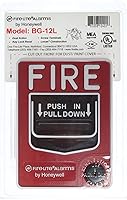
  • Model Number: The part number is BG-12L, with an item model number listed as FLA BG-12L.
  • Dimensions: The unit measures 5.5 x 4 x 1.5 inches, fitting standard single-gang and double-gang wall boxes without modification.
  • Weight: The pull station weighs 8 ounces (0.5 pounds), making it easy to handle during installation.
  • Housing Material: The enclosure is constructed from Lexan polycarbonate, a high-impact-resistant thermoplastic suited for high-traffic commercial environments.
  • Color: The station is finished in red, consistent with NFPA fire alarm device color conventions for manual initiating devices.
  • Activation Type: Uses a dual-action pull mechanism that requires two deliberate physical steps — lift and pull — before the alarm is triggered.
  • Reset Method: Post-activation reset is controlled via a key-lock mechanism, restricting restore capability to authorized personnel only.
  • Terminal Type: Wiring connections are made through screw terminals, providing secure and reliable integration with fire alarm control panel circuits.
  • Power Source: The device is hardwired (corded electric) and does not require any batteries for operation or standby power.
  • Batteries Required: No batteries are required or included; the unit draws power entirely from the connected fire alarm control panel circuit.
  • Alarm Output: The station produces an audible alarm signal when activated, routed through the connected fire alarm control panel.
  • Sensor Type: Listed with a photoelectric sensor type classification in product documentation, consistent with its initiating device function.
  • Compatibility: Designed for use with Fire-Lite and Honeywell fire alarm control panels, supporting both addressable and conventional system configurations.
  • Listing Status: The BG-12L carries a UL listing, meeting the compliance requirements typically mandated by Authorities Having Jurisdiction (AHJ) for commercial fire systems.
  • National Stock No.: Assigned National Stock Number 6350-01-504-8347, indicating use and sourcing within government and institutional procurement channels.
  • UPC: The product UPC is 783008104016, used for retail and distribution identification.
  • Availability: The BG-12L has not been discontinued by the manufacturer and remains an actively available product as of its latest listing.
  • First Available: This pull station was first made available for purchase in March 2008, establishing a long and verified track record in the field.
  • Package Contents: The package contains one pull station unit; verify separately whether a reset key is included in the specific lot purchased.

Related Reviews

Playmobil 71195 City Action Fire Helicopter

88%
93%
Build Quality
89%
Ease of Use
91%
Play Value
85%
Age Appropriateness
94%
Durability
More
QUIA Dual-Action Toner Pads 70 Count
87%
87%
Effectiveness in Exfoliating
91%
Hydration and Moisture Lock
94%
Skin Sensitivity Compatibility
82%
Pore Refining Results
85%
Oil Control and Sebum Reduction
More
ZO Skin Health Dual Action Scrub 4oz
84%
88%
Effectiveness in Acne Treatment
91%
Texture & Feel
86%
Ease of Application
90%
Pore Refining & Skin Clarity
83%
Hydration After Exfoliation
More
RSHTECH RSH-DS02 Dual Bay Hard Drive Dock
80%
88%
Offline Cloning Reliability
83%
Build Quality
76%
Transfer Speed
71%
Heat Management
62%
Large Drive Compatibility
More
JSAUX FlipGo Lite 15.6″ Portable Dual Monitor
83%
92%
Portability & Design
89%
Ease of Setup
84%
Display Quality
91%
Compatibility with Windows/Linux
65%
Display Brightness
More
MAIWO Dual-Bay Hard Drive Docking Station
78%
88%
Offline Clone Reliability
91%
Value for Money
67%
Transfer Speed
83%
Drive Compatibility
93%
Ease of Setup
More
dockteck Dual Bay External Hard Drive Docking Station
84%
90%
Performance and Speed
88%
Ease of Use
85%
Build Quality
91%
Cloning Functionality
82%
Compatibility
More
VisionTek VT4510
VisionTek VT4510
73%
84%
Dual Display Performance
52%
Driver Setup & Ease of Use
74%
Laptop Charging & Power Delivery
61%
macOS & Apple Silicon Compatibility
88%
Port Selection & Connectivity
More
StarTech 129N-USBC-KVM-DOCK Dual-Laptop KVM Docking Station
75%
83%
KVM Switching Reliability
88%
Display Performance
51%
Setup & Driver Experience
72%
Power Delivery
81%
Build Quality
More
Minisopuru MK808M-US Dual Monitor KVM Switch Docking Station
84%
94%
Dual Monitor Performance
91%
USB Peripheral Compatibility
88%
Switching Convenience
90%
Build Quality
82%
Setup & Installation
More

FAQ

It is designed primarily for use with Fire-Lite and Honeywell control panels, covering both addressable and conventional system types. If your building runs a panel from a different manufacturer, you should verify compatibility with that vendor before ordering — mixing initiating devices across incompatible ecosystems can cause signaling issues that are difficult to troubleshoot after the fact.

In most jurisdictions, fire alarm devices like this pull station must be installed by a licensed fire alarm contractor — it is not a DIY item. Beyond the legal requirement, the wiring needs to be correctly supervised by the control panel to confirm the circuit is intact, which requires proper configuration knowledge. Hiring a qualified technician also ensures the installation passes inspection by your local AHJ.

Dual-action means a person must perform two separate physical steps to trigger the alarm — typically lifting a cover and then pulling the handle. This design significantly reduces accidental activations, which are a major operational headache in schools, hospitals, and office buildings. A single-pull station can be set off by someone bumping into it; this one requires deliberate effort.

Once activated, the pull station latches in the open position and sends a signal through the circuit to the fire alarm control panel. Resetting it requires a specific key to unlock the mechanism and return it to the ready state. This means only your facilities staff or the responding fire alarm technician — whoever holds the key — can restore the station, which prevents unauthorized resets before the cause of activation has been investigated.

This is worth double-checking before you complete your order or take delivery. Some suppliers include the key, others do not. Fire-Lite reset keys for the BG-12L series are available separately, but discovering the key is missing after installation creates an unnecessary delay. Confirm with your distributor upfront.

In most cases, yes. It is designed to mount on standard single-gang and double-gang electrical boxes, which are the most common configurations in commercial construction. The unit itself measures 5.5 x 4 x 1.5 inches, so as long as your existing box is a standard size and in good condition, it should be a direct swap without cutting or custom work.

This manual fire alarm initiator does not have its own built-in sounder or horn. It is a manual initiating device — its job is to send a signal to the fire alarm control panel, which then triggers the building-wide notification appliances (horns, strobes, etc.). Think of it as the trigger, not the alarm itself.

The Lexan polycarbonate construction is genuinely tough — this is the same class of material used in safety goggles and riot shields, so it handles impacts and rough handling well without cracking or shattering. That said, no plastic housing is indestructible, and deliberate vandalism is a different scenario than normal wear. For extremely high-abuse environments, consider whether an optional protective cover is appropriate.

The BG-12L is compatible with both conventional and addressable Fire-Lite and Honeywell panels. Conventional panels treat all devices on a circuit as a group, while addressable panels identify each device individually by address. The BG-12L can work in either configuration, though the exact wiring and programming will differ — your installing contractor will know how to set it up for your specific panel generation.

As of the most recent product listing, the BG-12L has not been discontinued by Fire-Lite. It has been available since 2008 and remains an active product in the Fire-Lite line, which is reassuring for facilities that need to source additional units for large buildings or future replacements. That said, it is always worth confirming current availability with your fire alarm distributor before placing a large order.

Where to Buy