Overview

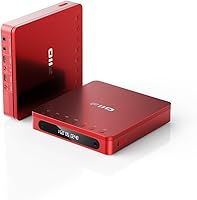
The FiiO DM13 Portable CD Player arrived in late 2024 as a serious answer to a question most of the audio industry stopped asking: what if portable CD playback could actually keep pace with modern Hi-Fi expectations? FiiO has built its name on no-nonsense audio hardware — DACs, amplifiers, IEMs — and this machine fits squarely within that philosophy. It's compact enough to hold in one hand, yet the internal architecture is closer to a desktop DAC than anything you'd associate with portable disc players. This isn't a device for casual listeners; it's built for people who still have shelves of CDs and refuse to compromise on how they sound.

Features & Benefits

At the core of the DM13 sits a dual CS43198 DAC configuration paired with dual SGM8262 op-amps. In practical terms, that combination tends to produce a clean, detailed, low-distortion sound — less the warm, forgiving character of some older DAC chips, more the transparent, analytical presentation audiophiles reach for when they want to hear exactly what is on a disc. The 99-step volume control is a genuine pleasure; adjustments feel smooth and each step holds its character without noise or channel imbalance. What really sets this player apart is its 4.4mm balanced output — a rarity in portable CD players — plus optical and coaxial digital outputs that let you feed an external DAC or amp directly. The USB ripping function, which saves discs as WAV files to external storage, is a genuinely useful addition.

Best For

The DM13 makes the most sense for a specific kind of listener: someone with a real CD collection, a decent pair of headphones or IEMs, and zero interest in streaming. The 4.4mm balanced connection means it pairs well with higher-end headphones that benefit from lower output impedance and cleaner signal separation. It also works nicely as a desktop source component — run coaxial or optical out to a dedicated DAC or integrated amp and you have a capable transport that costs far less than a dedicated CD transport box. Commuters and travelers who want lossless audio without relying on a wireless signal will find this player surprisingly practical, provided they are willing to carry discs.

User Feedback

Buyers who have spent time with this portable CD player tend to highlight the sound quality jump over older or entry-level players as the most immediate impression — cleaner highs, better channel separation, and a noticeably lower noise floor. The balanced output draws consistent praise from headphone users who actually have gear to take advantage of it. That said, a few users have noted the USB ripping workflow can be finicky depending on the storage device used, and the learning curve is not zero. Battery life gets mixed marks, though the USB-powered mode helps in desktop use. Overall, buyers expecting premium Hi-Fi performance seem satisfied; those hoping for a plug-and-play experience may need patience.

Pros

  • Dual CS43198 DAC chips deliver a clean, low-distortion sound that clearly outperforms budget portable players.
  • The 4.4mm balanced output is rare in this product category and makes a real difference with quality headphones.
  • 99-step volume control gives precise, noise-free adjustments at every level — no channel imbalance issues.
  • USB ripping to WAV is a genuinely useful feature that few competitors at this tier offer.
  • Optical and coaxial digital outputs let it function as a capable CD transport in a desktop setup.
  • USB-powered mode protects battery health during long stationary listening sessions.
  • Compact dimensions for the amount of hardware packed inside.
  • 660mW of balanced output power can drive most demanding headphones without an external amplifier.
  • FiiO's track record in audio hardware gives buyers reasonable confidence in long-term reliability.
  • Multiple output options make it unusually versatile for both portable and home use.

Cons

  • The USB ripping workflow can be finicky and depends heavily on the external storage device used.
  • Carrying the unit plus physical discs adds real bulk compared to a DAC dongle or a phone.
  • Battery life under heavy balanced-output use gets mixed reviews from real buyers.
  • The price places it out of reach for casual listeners who just want occasional CD playback.
  • No onboard digital storage — you must carry discs or use an external drive for ripped files.
  • The learning curve for new users unfamiliar with digital audio outputs is steeper than expected.
  • Limited appeal if you have already transitioned your library to digital or streaming formats.
  • Build quality impressions vary; some buyers feel the chassis does not fully match the internal component quality.

Ratings

The scores below reflect an AI-driven analysis of verified global user reviews for the FiiO DM13 Portable CD Player, with spam, bot-generated, and incentivized feedback actively filtered out before scoring. Each category is rated on the genuine balance of praise and frustration real buyers have reported, so both the strengths and the friction points are represented honestly. The DM13 is a niche device with a passionate user base, and these scores reflect that — high highs in audio performance, more mixed results in a few practical areas.

Sound Quality
93%
Audiophile buyers consistently describe a step-change in clarity and detail compared to older portable CD players. The dual DAC architecture produces a low noise floor and precise imaging that holds up even on demanding IEMs, where coloration and distortion are most obvious.
A small number of users with very analytical listening preferences find the signature slightly clinical rather than musical, particularly at lower volume steps. This is a character trait of the CS43198 chip family rather than a defect, but it is worth knowing before you buy.
Balanced Output
91%
Headphone enthusiasts who have paired the DM13 with balanced-terminated cables report a clear improvement in channel separation and perceived dynamics over the single-ended output. The 660mW output power is enough to drive most full-size headphones without a separate amplifier in the chain.
The benefit is only accessible if you already own a 4.4mm terminated cable or are willing to buy one, which adds cost and friction. Users with entry-level headphones are unlikely to notice a meaningful difference, making this feature effectively invisible for a portion of buyers.
Output Versatility
89%
The combination of 3.5mm, 4.4mm, optical, and coaxial outputs gives this player a flexibility that no competing portable CD player comes close to matching. Desktop users who want to run it into an external DAC or integrated amplifier via coaxial found setup to be straightforward and the signal quality strong.
Having so many output options also means the device requires more user knowledge to get the best from it. Buyers who are unfamiliar with digital audio interfaces have occasionally expressed confusion about which output to use for which scenario.
USB Ripping Feature
74%
26%
The ability to rip a CD directly to WAV on a USB flash drive without a computer is genuinely rare and useful, particularly for buyers who want to preserve their physical library digitally. Several users have successfully built substantial lossless digital archives this way with minimal effort once the workflow is understood.
Compatibility with different USB storage devices is inconsistent, and some buyers have encountered failed rips or unrecognized drives without clear error feedback. The process is more trial-and-error than plug-and-play, which is a real pain point for less technically confident users.
Volume Control
88%
The 99-step volume control is one of those features that sounds minor until you actually use it daily. Late-night listening at low levels is noticeably more comfortable because each step is fine-grained enough to find the exact level you want without overshooting.
A few users have noted that the very lowest volume steps can still feel slightly louder than expected with sensitive IEMs, suggesting the floor could be lower for in-ear use cases. This is a minor complaint but relevant for IEM-focused buyers.
Build Quality
71%
29%
The chassis feels solid for a portable device of this size, and most buyers describe it as well-assembled out of the box. The physical controls have a purposeful feel, and the disc lid mechanism has not drawn significant complaints in general use.
Some buyers feel the external materials and finish do not quite match the premium positioning suggested by the internal components and price. A few long-term users have raised questions about durability of the lid hinge after extended daily use.
Battery Life
67%
33%
For casual listening sessions under a few hours, the battery performs adequately and the USB-powered mode is a smart addition that helps preserve cell health during desktop use. Users who primarily use it plugged in at a desk are largely satisfied.
Heavy balanced-output use drains the battery noticeably faster, and real-world figures under those conditions have disappointed users expecting all-day portable performance. The lack of a clearly published battery life specification makes it hard to set expectations before purchasing.
Portability
69%
31%
The form factor is compact relative to the feature set, and buyers who carry a bag daily find it manageable alongside a small disc wallet. The weight is reasonable for a device with this level of internal hardware.
It is simply not pocketable, and that limitation is compounded by the need to carry physical discs. Buyers who envisioned using it the way they use a phone-based audio setup will find the physical footprint more demanding than anticipated.
USB Power Mode
84%
The D.MODE switch that routes power directly from USB is a thoughtful design choice that desktop users have warmly received. It means the internal battery is not slowly degraded during long stationary listening sessions, which matters a lot for long-term ownership.
The switch itself requires the user to remember to toggle it manually, and a handful of buyers have run down their battery because they forgot to activate it. A more automated or clearly indicated mode would reduce this friction.
Disc Compatibility
78%
22%
Standard audio CDs play reliably in normal use, and most buyers have not reported issues with disc reading under typical conditions. The mechanism handles well-maintained discs cleanly and consistently.
A small number of users have reported occasional read errors with older or lightly scratched discs, which is somewhat expected for any CD mechanism but worth noting for buyers with an older, imperfect collection. Edge cases like CD-R and CD-RW compatibility have not been widely tested in user reports.
Value for Money
76%
24%
For buyers who specifically want a high-output balanced portable CD player with digital outputs, there is genuinely nothing else in production that competes feature-for-feature. Within that context, the price is defensible and most audiophile buyers feel the performance justifies the spend.
Casual buyers or those who only need basic CD playback will find the price hard to justify against far cheaper alternatives that cover core functionality. The value proposition is strong but narrow — it depends heavily on whether you will actually use the advanced outputs.
Setup & Usability
72%
28%
For users already comfortable with digital audio gear, getting the most out of this player is straightforward. The output switching and mode controls are logically laid out, and experienced buyers report a short learning curve.
First-time owners without a Hi-Fi background may find the interface and output options overwhelming without a more detailed quick-start guide. The manual has drawn criticism for being sparse on practical setup guidance, particularly around the ripping function.
Companion App & Software
55%
45%
The USB ripping function operates as a standalone hardware feature, meaning no software installation is required for basic use. This keeps the out-of-box experience cleaner than products that depend on proprietary apps.
There is no dedicated companion app or firmware update utility that buyers are widely aware of, which means advanced configuration options are limited. Users who encounter ripping issues have few software-side tools to troubleshoot or optimize the process.

Suitable for:

The FiiO DM13 Portable CD Player is squarely aimed at audiophiles and Hi-Fi enthusiasts who have held onto their CD collections and want a modern, high-performance way to enjoy them. If you own a pair of demanding headphones or IEMs and have been frustrated by the anemic output of older portable players, the 4.4mm balanced output and 660mW of power here open up a noticeably better listening experience. It also works well as a compact desktop source — connect it via coaxial or optical output to an external DAC or integrated amplifier and you have a capable CD transport at a reasonable price point for the feature set. The built-in USB ripping function is a real differentiator for anyone who wants to digitize their library to lossless WAV files without buying dedicated software or a separate drive. Travelers and commuters who prefer physical media over streaming subscriptions will find it a practical companion, especially in environments where wireless connectivity is unreliable or unwanted.

Not suitable for:

The FiiO DM13 Portable CD Player is not the right choice for casual listeners who just want background music and have no existing CD collection to speak of. If your library lives entirely on streaming platforms or digital files, this device offers you nothing a good DAC dongle or Bluetooth receiver could not handle more conveniently and cheaply. The USB ripping workflow, while genuinely useful, requires some patience and is not always plug-and-play depending on your storage device; buyers who want effortless, zero-friction operation may find it frustrating. The weight and physical dimensions also mean it is not as pocketable as truly portable options — carrying discs alongside the unit adds further bulk. Anyone expecting basic, no-setup operation or who is unfamiliar with concepts like balanced output and digital audio interfaces may find the feature set more complicated than helpful.

Specifications

  • Brand: Manufactured by FiiO, a well-regarded Chinese audio hardware company known for DACs, amplifiers, and portable audio devices.
  • Model: The DM13 is FiiO's flagship portable CD player, released in November 2024.
  • DAC Chips: Uses a dual CS43198 configuration, delivering a transparent, low-distortion audio signal suited to critical listening.
  • Op-Amps: Paired dual SGM8262 op-amps support the DAC stage, contributing to a clean, stable output with low noise.
  • Volume Control: 99-step digital volume control is handled directly by the CS43198 chip for precise, artifact-free level adjustments.
  • Headphone Outputs: Equipped with both a 3.5mm unbalanced and a 4.4mm balanced headphone output for broad headphone compatibility.
  • Line Outputs: Provides 3.5mm and 4.4mm balanced line outputs for connecting to active speakers or external headphone amplifiers.
  • Digital Outputs: Includes both optical (TOSLINK) and coaxial S/PDIF digital outputs for feeding external DACs or AV receivers.
  • Balanced Power: The 4.4mm balanced output delivers up to 660mW, sufficient to drive most full-size and high-impedance headphones.
  • USB Ripping: Supports ripping CDs directly to WAV format on external USB storage without requiring a computer or additional software.
  • USB Power Mode: A D.MODE switch enables direct USB bus power, bypassing the internal battery to extend its long-term lifespan.
  • Dimensions: The unit measures approximately 144 x 137 x 27mm, making it compact for the feature set it offers.
  • Weight: Weighs approximately 1.51 pounds, which is light for a device of this output capability but not truly pocketable.
  • Battery: Powered by an included lithium-ion rechargeable battery; exact rated battery life is not officially specified.
  • Connectivity: Connects to external devices and power sources via USB, with a dedicated mode switch to select USB power operation.
  • Color Variant: The reviewed variant is Red Bluetooth, which refers to the colorway and wireless connectivity variant of the DM13.
  • Included Accessories: Ships with a cable in the box; additional adapters or storage media are not included and must be sourced separately.
  • Market Rank: Ranked #24 in Portable CD Players on Amazon as of its listing data, reflecting strong positioning in a niche category.

Related Reviews
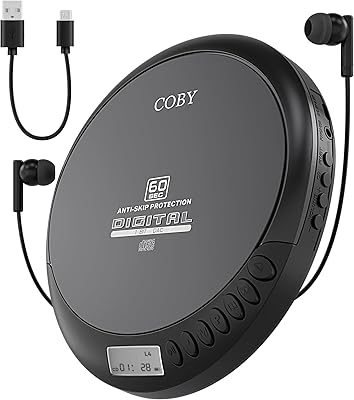
Sunoony CD-20 Portable CD Player
71%
83%
Value for Money
91%
Ease of Setup
67%
Anti-Skip Performance
61%
Build Quality
78%
Power Flexibility
More
Coby CD191BLK Portable CD Player
75%
91%
Ease of Use
88%
Value for Money
71%
Anti-Skip Performance
58%
Battery Life
67%
FM Radio Quality
More
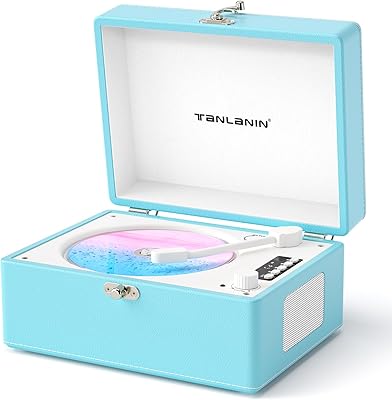
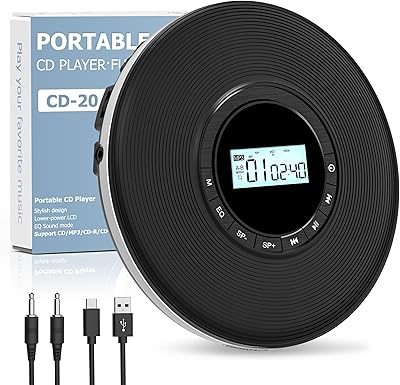
TANLANIN CD-001BE Portable Bluetooth CD Player
75%
91%
Ease of Setup
74%
Bluetooth Performance
61%
Speaker Volume & Output
69%
Sound Quality
67%
Battery Life
More
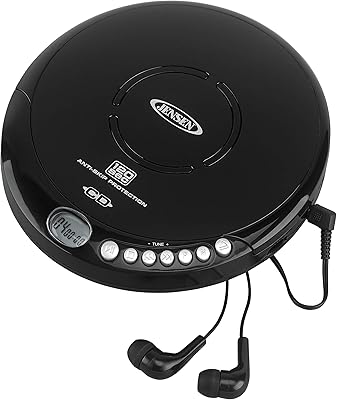
Jensen CD-120
Jensen CD-120
71%
84%
Value for Money
71%
Anti-Skip Performance
91%
Ease of Use
63%
Sound Quality
58%
Battery Life
More
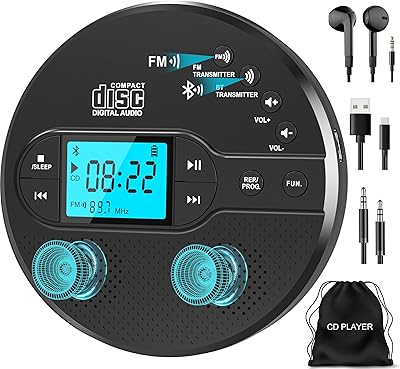
Weeuus CD-806 Portable Bluetooth CD Player
74%
88%
Ease of Setup
79%
Bluetooth Performance
67%
Speaker Sound Quality
61%
Build Quality & Materials
58%
FM Radio Reception
More
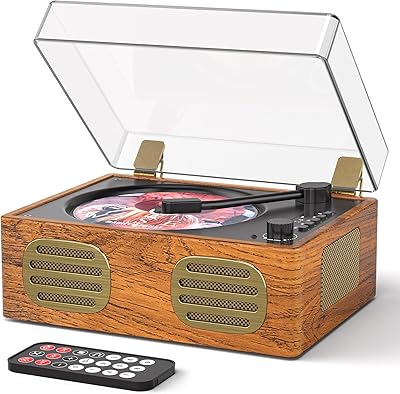
Sunoony CD-35H Portable CD Player
76%
84%
Value for Money
76%
FM Transmitter Performance
62%
Bluetooth Reliability
81%
Battery Life
78%
Anti-Skip Protection
More
Jensen CD-660 Portable Stereo CD Player Boombox
82%
78%
Sound Quality
89%
Bluetooth Connectivity
91%
Portability
85%
FM Radio Performance
88%
Ease of Use
More
Jensen CD-60R-BTEB Portable CD Player
74%
83%
Bluetooth Connectivity
76%
Sound Quality
61%
Build Quality
67%
Battery Life
79%
Anti-Skip Performance
More
MANGOSTAN CD-003CT Vintage Suitcase Portable CD Player
82%
72%
Audio Quality
88%
Bluetooth Connectivity
90%
Portability
80%
Battery Life
83%
Build Quality
More
MANGOSTAN CD-005-BR Portable CD Player
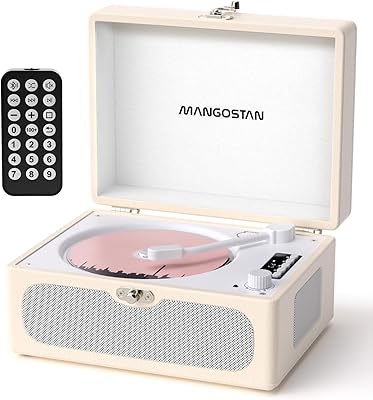
73%
91%
Design & Aesthetics
63%
Sound Quality
71%
Build Quality
74%
Battery Life
68%
Bluetooth Performance
More

FAQ

In most head-to-head comparisons, yes — noticeably so. The dual DAC chip setup produces a cleaner, more detailed sound with a lower noise floor than budget players. The difference is most obvious when you use quality headphones or IEMs rather than basic earbuds.

If you own headphones or IEMs with a 4.4mm balanced cable, it matters quite a bit. Balanced connections reduce crosstalk between channels and typically deliver more power with less background noise. The DM13 puts out 660mW in balanced mode, which is serious output for a portable device.

Yes, and this is one of the features that genuinely sets it apart. You plug in a USB flash drive or portable SSD, flip the ripping mode on, and the player saves the disc as a WAV file. That said, it is not entirely foolproof — some users report compatibility issues with certain storage devices, so it is worth testing with a few drives before relying on it for your whole library.

Absolutely — that is one of its strongest use cases. Both optical and coaxial digital outputs are available, so you can run it straight into most external DACs or AV receivers. For a desktop setup, this makes it a capable and affordable source component.

This is one area where user experiences vary. Balanced output at higher volumes draws more power, and battery life under those conditions gets mixed reviews. The USB-powered mode is worth using when you are sitting at a desk, since it bypasses the battery entirely and helps preserve it over time.

Better than most portable players in this category. The 660mW balanced output gives it enough headroom for most full-size headphones. Extremely demanding loads might still benefit from a dedicated amplifier downstream, but for the majority of headphone pairings it holds up well.

Based on available information, WAV is the supported ripping format. That is actually a good thing for audio quality since WAV is lossless and uncompressed, but it does mean larger file sizes compared to FLAC or MP3, so plan your storage accordingly.

The Red Bluetooth variant name can be misleading — it refers to the color and product variant designation rather than a Bluetooth audio transmission feature. All audio outputs on this player are wired: 3.5mm, 4.4mm, optical, and coaxial.

It sits somewhere in between. The dimensions are compact for what it does, but you still need to carry physical discs, which limits true portability for most people. Commuters who are already used to carrying a bag will manage fine; anyone expecting something pocketable will be disappointed.

The 99-step volume control is one of its quieter but genuinely useful features. Many portable players jump volume in large, uneven steps that make it hard to find a comfortable level. Here, adjustments are fine-grained and consistent, with no channel imbalance at low volumes — something that matters a lot when you are listening late at night at low levels.

Where to Buy