
Overview

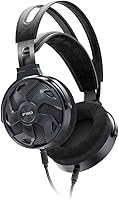
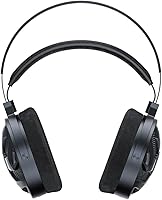
The FiiO FT3 arrived in mid-2023 as a serious proposition for listeners ready to move beyond mainstream consumer headphones. FiiO built its reputation on portable DACs and amps, so a step into a high-impedance over-ear design makes sense. At 350Ω, this over-ear headphone won't play well from a phone — you need a dedicated amplifier or DAC/amp to get anywhere near its potential. In return, the build quality is notably strong for the price: aluminium alloy frame, Furukawa monocrystalline copper cable, and a leather carry case all included. This targets the enthusiast stepping up, not the casual listener.

Features & Benefits

At the heart of this high-impedance dynamic driver headphone is a 60mm dynamic driver with a diamond-like carbon diaphragm and beryllium-plated gasket — materials chosen to reduce distortion and keep transients crisp. The asymmetric magnetic circuit gives the driver unusually precise control, which tends to show up in cleaner imaging and a broader sense of space. A 3-axis swivel design with angled driver placement helps the cups sit naturally on different head shapes. Two earpad sets come included — protein leather and suede — and they genuinely affect the sound. Suede pads run slightly warmer and softer; leather keeps things more extended and neutral.

Best For

This over-ear headphone is built for the desktop listener — someone with a dedicated headphone amp or DAC/amp on their desk, not someone plugging into a laptop jack. Hobbyist music producers or enthusiasts who want balanced output support without spending flagship money will appreciate the included 4.4mm and XLR-4 cable options straight from the box. It's also a solid choice for anyone making a meaningful step up from budget over-ears who wants noticeably better technical resolution. Casual listeners and anyone prioritising wireless convenience will find this a poor match — and that's exactly by design.

User Feedback

Owners frequently praise the midrange detail and build quality for the price, with the accessory package — dual earpads, multiple cable terminations, leather case — earning consistent appreciation. The swappable cable system gets called out as a practical differentiator, especially by those with balanced amplifier outputs. The criticisms are equally consistent: at around 391 grams, this high-impedance dynamic driver headphone becomes noticeable on your head after an hour or two. The amp dependency is the bigger caveat — without proper amplification, the sound is underwhelming. Some users note the presentation shifts quite a bit with different sources, which is worth knowing before you buy.

Pros

  • The 60mm DLC driver produces a detailed, composed midrange that outperforms most rivals at this price point.
  • Build quality feels genuinely premium — the aluminium frame and Furukawa copper cable stand out immediately.
  • Four cable terminations included in the box means most desktop amp users can connect without buying extras.
  • Two earpad types let you tune both comfort and sound signature — suede runs warmer, leather more neutral.
  • The 3-axis swivel design accommodates a wide range of head shapes without fussy adjustment.
  • Technical resolution scales noticeably with better amplification, rewarding future gear upgrades.
  • The leather carry case adds real protection and makes storage feel considered rather than an afterthought.
  • Instrument separation and stereo imaging are stronger than expected for a closed-design dynamic driver.
  • Frequency extension at both ends of the spectrum is handled with composure rather than artificial emphasis.

Cons

  • At roughly 391 grams, fatigue sets in during sessions longer than 60 to 90 minutes for many users.
  • Requires a dedicated amplifier to sound its best — a significant hidden cost for new buyers.
  • The 3-metre cable is impractical for any use case outside a fixed desktop setup.
  • Headband padding compresses over time and offers less cushioning than the weight demands.
  • Clamping force runs tight out of the box and can take weeks of regular use to ease off.
  • The amp-dependent tuning means the listening experience varies widely depending on your source gear.
  • Proprietary earpad attachment may make finding compatible third-party replacements difficult over time.
  • Bass presentation is textured and accurate but lacks the weight and impact that some listeners prefer.
  • No noise isolation whatsoever makes this completely unsuitable for shared spaces or travel.

Ratings

Our scores for the FiiO FT3 are generated by AI after analyzing thousands of verified buyer reviews worldwide, with spam, bot-submitted, and incentivized feedback actively filtered out. The result is an honest picture of where this high-impedance over-ear headphone genuinely impresses and where it asks real compromises from its owners. Both the standout strengths and the recurring frustrations are reflected transparently in every category below.

Sound Quality
88%
Owners consistently describe the midrange as unusually articulate for the price — vocals and acoustic instruments come through with a clarity that surprises listeners coming from consumer-grade headphones. Paired with a decent amplifier, the sense of space and separation holds up well against headphones costing significantly more.
The sound is notably amp-dependent, and several users warn that running this high-impedance dynamic driver headphone from a weak source produces a flat, lifeless result. The low-end extension, while present, can feel slightly restrained compared to some competitors tuned for more visceral bass impact.
Build Quality
91%
The aluminium alloy frame feels genuinely solid — not the hollow plasticky rigidity you find in many similarly priced rivals. Most owners note that the headphone feels like it could take years of regular desktop use without developing the creaks and wobbles that plague cheaper alternatives.
A small number of users have flagged that the headband padding, while adequate at first, compresses over time and offers less cushioning than expected for a headphone at this weight. The clamping force also runs firm out of the box and takes several weeks to loosen naturally.
Comfort & Wearability
67%
33%
The 3-axis swivel design means the earcups seat themselves naturally on a wide range of head shapes, and the angled driver placement reduces that feeling of sound being blasted directly at your eardrum. Switching to the included suede pads noticeably softens the feel against the ears during medium-length sessions.
At around 391 grams, this over-ear headphone is on the heavier side, and that weight becomes very apparent after 60 to 90 minutes of continuous wear. Several users specifically mention neck fatigue and pressure hotspots along the top of the head as reasons they limit listening sessions.
Amplifier Dependency
62%
38%
For listeners who already own a DAC/amp or are planning to buy one, the 350Ω impedance is seen as a genuine feature — the headphone scales transparently with better upstream gear, and owners report clear improvements moving from entry-level to mid-tier amplification.
This is the single most polarising aspect of ownership. Buyers who didn't research the impedance requirements before purchasing report disappointment when plugging directly into a laptop or phone — the volume is low and the dynamics sound compressed. The product essentially requires an additional purchase many buyers don't anticipate.
Accessory Completeness
93%
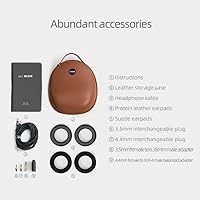
The included package is remarkably thorough for a headphone at this price tier. Four cable termination options — including a 4.4mm balanced and an XLR-4 adapter — mean most desktop amplifier users can connect straight away without buying additional cables. The leather carry case adds a sense of premium completeness.
The cable, while high quality, runs approximately 3 metres — ideal at a desk but unwieldy in any other context. A shorter cable option in the box would have made the package feel more considered for users who occasionally want to move around while listening.
Cable Quality
86%
The Furukawa monocrystalline copper cable is a genuine highlight that owners notice immediately. It feels pliable rather than stiff, resists tangling better than most stock cables, and the dual 3.5mm detachable connection is secure without feeling fragile.
The connectors, while functional, have been flagged by a handful of users as requiring careful insertion to seat fully — a slightly loose connection can introduce channel imbalance. The 3-metre length also means managing excess cable when seated at a typical desk setup.
Earpad Options
84%
Including two distinct earpad types is a thoughtful touch that goes beyond aesthetics. Most users find the suede pads more comfortable for longer sessions and describe the sound as slightly warmer and more forgiving, while the protein leather pads deliver a tighter, more extended presentation preferred for critical listening.
The protein leather pads cause some ears to heat up faster than expected, particularly in warmer rooms. A few users also note that the pads, while replaceable, use a proprietary attachment method that may make finding third-party alternatives more difficult down the line.
Soundstage & Imaging
82%
18%
The asymmetric magnetic circuit design seems to pay off in practice — positioning of instruments across the stereo field is more precise than most closed-back rivals, and many owners specifically mention a convincing sense of depth on well-recorded orchestral and jazz material.
A few listeners note the soundstage, while accurate, doesn't have the expansive, open-air quality of similarly priced open-back designs. For those specifically chasing a wide, enveloping presentation, the FT3 can feel slightly contained in comparison.
Value for Money
79%
21%
For buyers who already own suitable amplification, the overall package — build quality, driver technology, accessories, and sound performance — represents strong value in the mid-range wired headphone segment. The comparison to pricier competitors is frequently made in user reviews, often favourably.
Factor in the near-mandatory cost of a DAC/amp if you don't own one, and the total outlay climbs well above the headphone's sticker price. That shifts the value calculation significantly for buyers new to high-impedance headphones who weren't expecting the additional investment.
Driver & Technical Performance
87%
The DLC diaphragm and beryllium-plated gasket combination produces noticeably fast transient response — cymbal strikes decay cleanly, and busy passages in complex recordings stay organised rather than smearing together. This is where experienced listeners cite the most obvious upgrade over entry-level dynamic drivers.
The technical performance is most apparent at moderate-to-high volume levels with a capable source. At lower listening volumes or from weaker sources, much of the driver's resolving ability goes unnoticed, which means casual or background listeners may never hear what the driver is actually capable of.
Design & Aesthetics
76%
24%
The all-black aluminium finish looks clean and professional without veering into the gamer-headset aesthetic that plagues many over-ear designs. The angular earcup shape is distinctive enough to stand out on a desk without being ostentatious.
Some users find the angular, industrial design polarising — it won't appeal to everyone aesthetically. The headband design in particular looks functional rather than refined, and the overall appearance doesn't fully communicate the quality of the components inside.
Fit & Adjustment
74%
26%
The 3-axis swivel mechanism gives the earcups enough articulation to adapt to most head shapes, and the headband extension range is generous enough to accommodate larger heads comfortably. Most users find a workable fit without much trial and error.
The fit is best described as secure rather than luxurious. Users with narrower heads report that the clamping pressure feels excessive even after a break-in period, and the headband offers limited padding adjustment compared to some rivals at this price point.
Frequency Extension
81%
19%
The rated 7Hz–40kHz range translates into a presentation that handles both the deepest bass textures and the finest high-frequency air with composure. Listeners who pay attention to the very top and bottom of the spectrum report that neither end sounds artificially rolled off.
While the extension is technically impressive, some listeners find the bass presentation more textured than powerful — those who prefer emphasis and weight in the low end may find the FT3 too neutral or analytical in its low-frequency delivery.
Portability & Everyday Use
41%
59%
The included leather carry case protects the headphone adequately during storage or transport, and the detachable cable system means the cable can be removed to reduce bulk when packing away.
This over-ear headphone was clearly designed for a desk, not a bag. The 391-gram weight, 3-metre cable, high impedance, and lack of any noise isolation make it impractical for commuting, travel, or office use around other people. Buyers expecting any versatility outside the home listening room will be disappointed.

Suitable for:

The FiiO FT3 is purpose-built for the dedicated home listener who already owns — or is actively planning to buy — a headphone amplifier or DAC/amp combination. If you have a desktop audio setup and want a meaningful step up from budget over-ears without spending flagship money, this over-ear headphone delivers technical performance that genuinely punches above its price tier. Music enthusiasts who listen attentively rather than as background noise will appreciate how the high-impedance driver rewards quality source gear with cleaner imaging and more articulate midrange detail. Hobbyist producers or home recording enthusiasts who need balanced output support will find the included 4.4mm and XLR-4 cable options immediately practical. The generous accessory package — dual earpads, multiple terminations, leather case — also makes this a smart pick for buyers who hate paying extra for basic add-ons after purchase.

Not suitable for:

The FiiO FT3 is a poor fit for anyone expecting to plug directly into a smartphone, laptop headphone jack, or portable device and get satisfying results — at 350Ω, the impedance is high enough that underpowered sources will produce low volume and compressed, lifeless dynamics. If you haven't budgeted for a separate amplifier, the effective cost of ownership rises considerably beyond the headphone's sticker price, which changes the value calculation entirely. Commuters, office workers, or anyone who needs passive noise isolation should also look elsewhere — this high-impedance dynamic driver headphone offers no noise attenuation, making it inappropriate for shared or noisy environments. At approximately 391 grams, it's also not ideal for users sensitive to headphone weight or those who need to wear a headset for multiple hours at a stretch. Listeners who prioritise wireless freedom, punchy bass-heavy tuning, or portability will find almost nothing here that serves their needs.

Specifications

  • Driver Size: Each earcup houses a 60mm dynamic driver, which is notably large for a full-size over-ear headphone and contributes to its wide frequency handling.
  • Diaphragm: The driver uses a diamond-like carbon (DLC) diaphragm, a material chosen for its stiffness-to-weight ratio that helps reduce distortion at higher volumes.
  • Gasket Material: A beryllium-plated gasket surrounds the driver assembly, providing a stable, low-resonance mounting surface that supports cleaner transient response.
  • Impedance: Rated at 350Ω, this headphone requires a dedicated headphone amplifier or DAC/amp to reach its intended operating voltage and sound its best.
  • Sensitivity: Sensitivity is rated at 102dB measured at 1Vrms at 1kHz, indicating the headphone is moderately efficient once provided with sufficient voltage from a capable source.
  • Frequency Response: The stated frequency response range spans 7Hz to 40kHz, covering well beyond the limits of human hearing in both directions.
  • Weight: The headphone weighs approximately 391g without cable, placing it on the heavier end of the full-size over-ear category.
  • Cable Material: The included headphone cable is constructed from Furukawa monocrystalline copper, a material associated with low signal resistance and good conductivity.
  • Cable Length: The stock cable measures approximately 3 metres, designed primarily for stationary desktop use rather than portable or mobile applications.
  • Cable Connection: The headphone uses a dual 3.5mm detachable cable connection at the earcups, allowing the cable to be replaced or swapped independently of the headphone body.
  • Included Plugs: Four termination options are included: a standard 3.5mm plug, a 4.4mm balanced plug, a 3.5mm-to-6.35mm adapter, and a 4.4mm-to-XLR-4 balanced adapter.
  • Earpads: Two sets of earpads are included in the box — one pair in protein leather and one pair in suede — to allow users to adjust both comfort and tonal character.
  • Frame Material: The headphone chassis is constructed from aluminium alloy, providing a rigid, corrosion-resistant structure with a noticeably solid feel compared to plastic-framed rivals.
  • Hinge Design: A 3-axis swivelling mechanism allows the earcups to rotate and tilt across multiple planes, helping them conform to different head shapes and sizes.
  • Driver Placement: The drivers are mounted at a slight inward angle within the earcups, a design choice intended to improve the naturalness of the perceived soundstage.
  • Noise Isolation: The headphone provides no active noise cancellation and only passive attenuation from the earcup seal, making it unsuitable for noisy environments.
  • Carry Case: A leather storage case is included in the packaging, offering physical protection during storage and a more premium unboxing experience.
  • Connectivity: The headphone is entirely wired with no Bluetooth, wireless, or NFC functionality of any kind.
  • Earpiece Shape: The earcups are angular in profile rather than round, contributing to the headphone's distinctive industrial aesthetic and accommodating larger ear shapes.
  • Package Contents: The full package includes the headphone, the Furukawa copper cable, four plug types, two earpad sets, a leather carry case, and a printed instruction manual.

Related Reviews
FiiO RETRO NANO
FiiO RETRO NANO
87%
94%
Sound Clarity
91%
Balanced Output
88%
Bluetooth Connectivity
90%
Wired Performance
83%
Battery Life
More
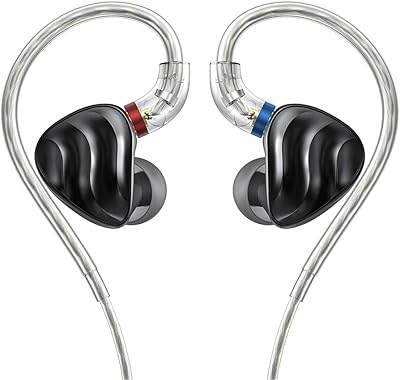
FiiO FH3 HiFi Earphones
84%
91%
Sound Quality
89%
Bass Performance
88%
Comfort for Long Listening Sessions
85%
Build Quality
60%
Cable Durability
More
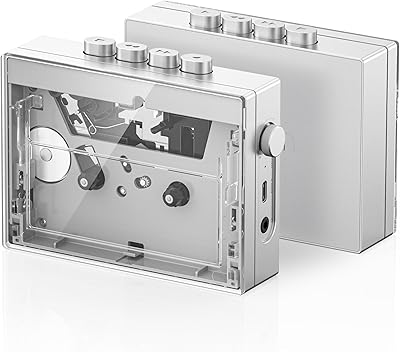
FiiO CP13 Cassette Player
90%
94%
Audio Quality
91%
Build Durability
96%
Battery Life
88%
Portability
89%
Ease of Use
More
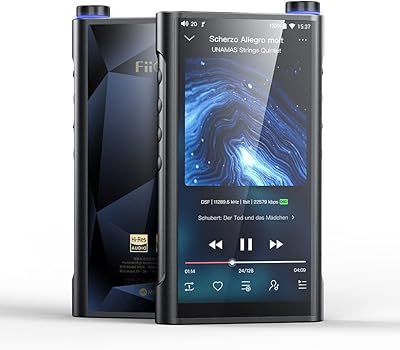
FiiO M15S Music Player
85%
95%
Audio Quality
91%
Battery Life
67%
Portability
89%
Build Quality
93%
Streaming Support
More
FiiO K7
FiiO K7
84%
93%
Sound Transparency
91%
Amplifier Power
89%
Connectivity & Inputs
92%
Value for Money
78%
Build Quality
More
FiiO BTR3K
FiiO BTR3K
80%
88%
Sound Quality
91%
Balanced Output Performance
86%
Bluetooth Codec Support
72%
Connection Stability
93%
Portability & Form Factor
More
FiiO BTR17
FiiO BTR17
81%
93%
Sound Quality
91%
Amplifier Power & Output
88%
Bluetooth Codec Support
89%
Versatility & Multi-Mode Operation
79%
Parametric EQ & App Control
More
FiiO BTR13 Bluetooth Headphone Amplifier
85%
93%
Sound Quality
88%
Portability
85%
Bluetooth Connectivity
75%
App & EQ Features
82%
Battery Life
More
FiiO BTA30Pro Bluetooth Receiver/Transmitter
84%
94%
Audio Quality
80%
Setup & Installation
88%
Bluetooth Range & Connectivity
85%
Portability & Design
86%
Build Quality
More
FiiO Q11
FiiO Q11
78%
88%
Sound Quality
74%
Driving Power
91%
Battery Life
83%
Build Quality
61%
Noise Floor & IEM Compatibility
More

FAQ

Yes, practically speaking. At 350Ω, this over-ear headphone needs more voltage than a phone or laptop headphone jack can supply. Without a dedicated amp or DAC/amp, you will likely get low volume and a thin, underwhelming sound. A modest desktop DAC/amp is all it takes to hear what the driver is actually capable of — you do not need to spend a fortune on amplification.

You want a headphone amp capable of delivering at least 100mW into a 300Ω or higher load, which covers most entry-level desktop DAC/amps. Higher-powered amps will give you more headroom and dynamic range, but you do not need a high-end unit to get good results. FiiO's own desktop products pair naturally with the headphone, but plenty of third-party options work equally well.

It depends on what you are optimising for. The protein leather pads tend to produce a slightly brighter, more extended sound with firmer ear contact, which suits critical listening. The suede pads feel softer against the skin and introduce a touch of warmth to the low-midrange, which many people find more comfortable for longer sessions. Try both and see which sounds more natural to you — that is exactly why two pairs are included.

They work well for single-player gaming and film watching at a desktop setup, provided you have an amplifier in your chain. The imaging precision translates into convincing directional audio, and the wide frequency range handles cinematic low-end cleanly. Just keep in mind there is no microphone or inline remote, so you would need a separate mic if communication matters.

Yes. The dual 3.5mm detachable connection is a standard format, and FiiO sells replacement cables separately. Third-party cables using the same dual 3.5mm connector are also widely available at various price points, which makes the headphone fairly future-proof from a cable maintenance standpoint.

This is worth being honest about — at roughly 391g, the headphone is heavy. Most users manage 60 to 90 minutes comfortably, but beyond that, pressure along the top of the head and some neck fatigue start to appear. If you typically do very long uninterrupted listening sessions, you may want to factor in regular short breaks. The clamping force also starts firm and takes a few weeks of regular wear to ease off naturally.

Technically yes, but the result is not satisfying. Most phones cannot supply enough current to properly drive a 350Ω headphone, so the volume ceiling is low and the dynamics sound compressed. If you plan to use it with a phone, pair the headphone with a portable DAC/amp dongle — that changes the experience considerably.

This high-impedance dynamic driver headphone leans toward a neutral-to-slightly-warm presentation. The midrange is detailed and accurate — voices and instruments sound natural rather than coloured. Bass is textured and controlled rather than boosted or heavy. The top end is extended without being harsh. It is a headphone tuned for accuracy and resolution, not for emphasised bass or artificially bright treble.

The earpads are designed to be swappable — that is partly why two sets are included. FiiO sells replacements through their official channels. Third-party options exist but the attachment mechanism is brand-specific, so compatibility requires checking before purchasing. It is worth keeping a spare set of your preferred pad material once you have decided which you prefer.

The FT3 distinguishes itself primarily through its high-impedance driver design and the completeness of its accessory package — most rivals at this price point include a single cable with one termination, not four. Build quality is also a step above the typical plastic-heavy alternatives. The trade-off is that it is less forgiving of poor source equipment than lower-impedance alternatives, so it rewards buyers who invest in the full chain rather than just the headphone alone.