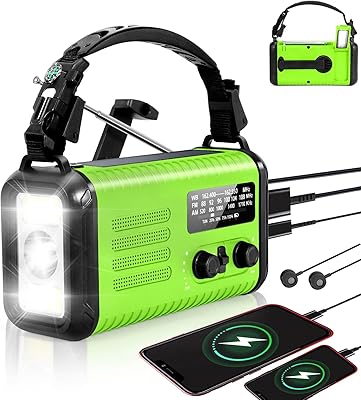
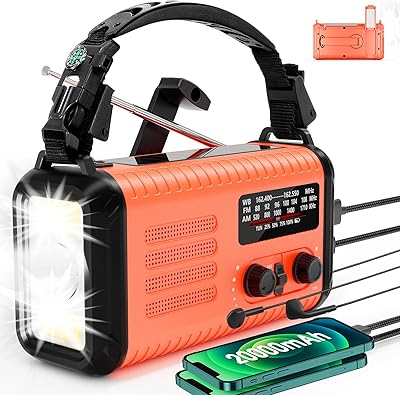
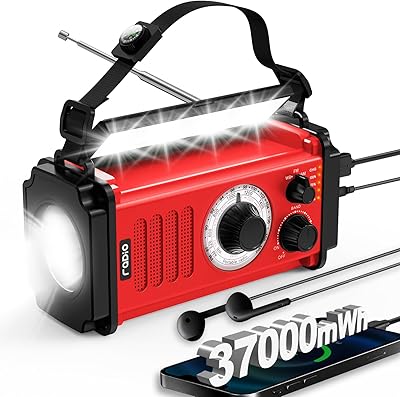
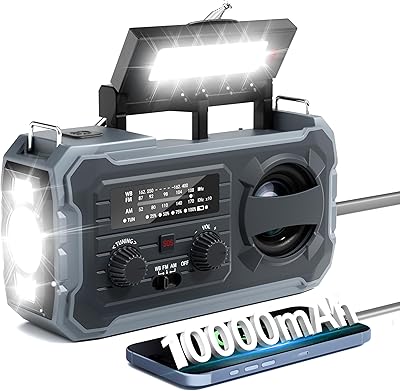
Overview

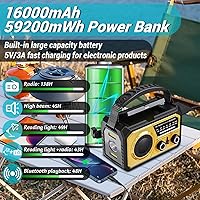
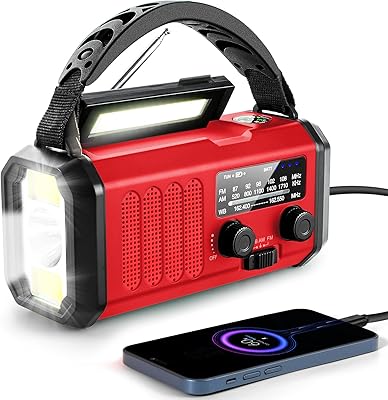
The FFQRLP H21 16000mAh Solar Crank Emergency Radio is a compact, do-everything survival device that packs a weather radio, power bank, LED flashlight, and compass into a package weighing under two pounds. At roughly 6 by 3 by 4 inches, it fits without issue in a go-bag or a hall closet. It sits firmly in the budget tier — this is not a Midland or Eton, and it makes no attempt to compete there. What it offers is a practical starting point for anyone who doesn't yet own dedicated emergency gear. The solar charging works, though real-world output will consistently trail the lab-tested figures cited in the product listing.
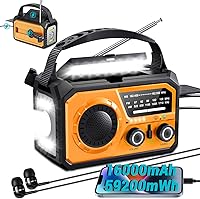
Features & Benefits

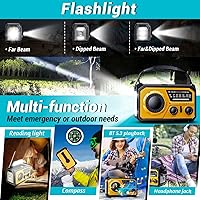
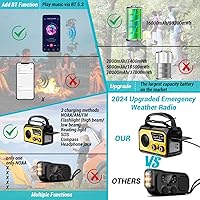
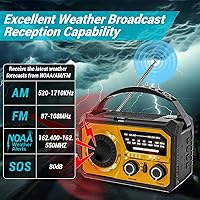
The standout feature is the NOAA weather radio, which pulls in all seven alert frequencies through a 16-inch antenna — genuinely useful during hurricane season when your phone signal is the first thing to go. Charging redundancy is well thought out: solar, hand crank, USB-C input, and an AAA battery slot that covers situations where extreme cold drains rechargeable cells entirely. The 16000mAh power bank won't fully top up a modern smartphone multiple times, but it gets you to a usable percentage when it counts. Three LED modes cover realistic scenarios, from trail lighting to a readable glow inside a tent. Bluetooth streaming at up to 33 feet and a 3.5mm headphone jack handle audio needs on both ends of the spectrum.

Best For

This solar crank radio makes the most sense for someone building a first emergency kit on a realistic budget. Households in hurricane-prone regions, campers who prefer one device over three separate ones, and RV travelers needing redundant off-grid backup will all find it earns its place. It also works well as a practical gift for first-time preppers who need an accessible entry point without a steep financial commitment. Families camping with kids will appreciate the reading lamp and SOS strobe for everyday campsite scenarios. If you already own a dedicated emergency radio and a quality power bank, the overlap may not justify the addition — but as a starting point, the value is hard to dispute.

User Feedback

With over 200 ratings averaging 4.4 stars, this all-in-one survival radio has earned a broadly positive response for its price tier. Buyers frequently praise the solid feel of the build and note that the hand crank is genuinely functional rather than decorative — an important distinction in emergency gear you hope to never actually rely on. On the flip side, solar charging speed in real outdoor conditions draws skepticism, which is fair; the gap between marketing claims and practical output is real. Bluetooth audio quality gets mixed feedback, and antenna sensitivity in fringe areas can be inconsistent. The AAA battery backup earns appreciation in concept but rarely gets tested in practice, according to reviewers.

Pros

  • Covers all 7 NOAA weather alert frequencies — genuinely useful during active storm events when phone networks fail.
  • Four independent charging methods mean you are rarely left without a way to power the unit back up.
  • At under two pounds, this all-in-one survival radio fits in a go-bag without adding meaningful weight.
  • The hand crank is functional and responsive, not the flimsy afterthought you find on cheaper units.
  • Three LED modes cover real scenarios: bright trail lighting, a soft reading glow, and a long-range SOS strobe.
  • An 18-month warranty from the manufacturer provides reasonable peace of mind for a budget-category device.
  • Bluetooth streaming and a 3.5mm headphone jack make it practical for everyday camp use, not just emergencies.
  • The built-in compass works independently of battery power, which matters when your phone is dead.
  • AAA battery backup is a thoughtful inclusion for extreme cold conditions where rechargeable cells lose efficiency fast.
  • For first-time preppers, the value of consolidating five tools into one affordable package is hard to argue against.

Cons

  • Solar charging speed in real outdoor conditions falls well short of the lab-tested figures listed in the product description.
  • Bluetooth audio quality is inconsistent and unlikely to satisfy anyone accustomed to a dedicated portable speaker.
  • Antenna sensitivity in fringe or rural reception areas can be unreliable compared to purpose-built NOAA radios.
  • Actual usable power bank output under sustained load is lower than the stated 16000mAh capacity suggests.
  • The hand crank, while functional, is a common long-term failure point in this device category — durability under repeated use is uncertain.
  • The compass, while present, lacks the precision of a dedicated navigation tool and should not be trusted for serious orienteering.
  • Build quality feels solid initially but the all-orange plastic housing raises questions about resistance to UV degradation over time.
  • The reading lamp brightness, while adequate for close tasks, may not satisfy users expecting strong ambient illumination inside a tent.

Ratings

Our AI rating system analyzed verified global buyer reviews for the FFQRLP H21 16000mAh Solar Crank Emergency Radio, actively filtering out incentivized, duplicate, and bot-generated submissions to surface what real owners actually experienced. Scores reflect a transparent synthesis of both genuine praise and recurring frustrations — nothing is inflated to flatter the product. Where this solar crank radio earns its keep and where it falls short are both reflected honestly below.

Value for Money
88%
Buyers consistently cite this as one of the best-consolidated emergency tools available at its price point, especially when compared to purchasing a separate NOAA radio, power bank, and flashlight. For first-time preppers or households putting together a basic storm kit, the cost-to-function ratio is difficult to argue with.
Users who later upgraded to a dedicated NOAA radio or high-output power bank often felt the individual functions didn't match standalone alternatives. The value equation works best when evaluated as a bundle rather than judging any single feature against a specialist device.
NOAA Reception
79%
21%
In suburban and urban areas with reasonable NOAA transmitter coverage, the 16-inch antenna pulls in all seven frequencies with minimal fuss. Users in coastal hurricane zones reported picking up clear weather alerts during active storm watches, which is ultimately the most important use case for the radio.
Buyers in rural or mountainous regions reported frustrating drop-outs and weak signal on several NOAA channels, which is a recurring limitation of budget-tier antennas. A few reviewers noted that AM reception was noticeably noisier than FM, making voice clarity on some stations unreliable.
Hand Crank Functionality
76%
24%
Unlike many crank radios where the handle feels like an afterthought, users found this one generates usable power and engages with satisfying resistance. For campsite lighting emergencies or short-term radio use when no other source is available, the crank reliably delivers.
Several long-term reviewers flagged that the crank mechanism developed looseness or wobble after repeated heavy use, which is a known vulnerability across this product category. It functions well as an occasional backup but may not hold up to the sustained daily use a truly serious emergency prep mindset demands.
Power Bank Performance
67%
33%
The ability to charge a smartphone from a completely dead state during a multi-day outage is genuinely appreciated by users who tested it during real blackouts. GPS devices and smaller tablets also charge without issue from the USB-C output at 5V/3A.
The real-world output consistently lands below what the 16000mAh rating implies, once internal conversion losses are factored in. Users expecting to fully charge a modern flagship phone three or four times over were disappointed — two partial charges is a more realistic expectation under normal conditions.
Flashlight Performance
82%
18%
The high-beam mode is bright enough to light a trail confidently at night, and users camping with children specifically praised the low-beam reading lamp as genuinely useful inside a tent without blinding everyone. The three-mode design covers a practical range of real scenarios rather than just padding the spec sheet.
The SOS strobe, while visually impressive and rated to 500 meters, had a few reviewers questioning whether the LED maintains that intensity over extended run times as the battery drains. The high-beam runtime also shortens noticeably when the battery drops below half capacity.
Solar Charging
51%
49%
In ideal conditions — direct summer sun with the panel angled correctly — users noted a slow but measurable trickle charge over several hours, which is better than nothing during a prolonged outdoor emergency. The orange housing makes the unit easy to spot when left charging in sunlight.
Real-world solar performance falls well short of the figures cited in the product listing, particularly on overcast days or during the storm conditions the radio is designed for. Most honest reviewers treat the solar panel as a last-resort supplement rather than a meaningful daily charging method.
Build Quality
77%
23%
The casing feels denser and more substantial than competing units at a similar price, and users report the buttons and ports hold up well after moderate use. The overall assembly doesn't rattle or creak, which builds confidence for a device you hope to store for years before needing it.
The all-plastic orange housing raises questions about UV resistance after prolonged outdoor exposure, and a handful of reviewers noted the antenna connection point showing early wear. It is solid for the price tier but clearly not engineered to the tolerances of professional emergency equipment.
Bluetooth Audio
58%
42%
Wireless pairing is quick and the connection holds reliably within a reasonable range, making it functional for campsite background music or streaming a weather podcast without cables. It adds genuine everyday utility beyond pure emergency use.
Audio quality through the built-in speaker is where expectations need calibrating — the sound is thin and struggles with bass-heavy content. At range, signal dropout becomes noticeable, and multiple reviewers noted the Bluetooth feels like a bonus feature rather than a polished one.
Portability
86%
Under two pounds and small enough for the outer pocket of a hiking pack, this all-in-one survival radio genuinely earns its place in a go-bag without the bulk penalty of carrying separate devices. The compact footprint also means it stores flat in a nightstand drawer for home emergency kits.
The 16-inch antenna, while necessary for signal quality, must be manually extended and is an awkward protrusion during transport if not folded carefully. A few users reported the antenna hinge loosening slightly over time when frequently deployed and retracted.
Compass Accuracy
63%
37%
For basic trail orientation — confirming you are heading generally north or south — the built-in compass does its job without requiring any power or setup. Casual campers and hikers found it a useful backup when their phone battery was dead.
Precision-oriented users and anyone serious about backcountry navigation found the compass reading inconsistent, particularly near metal objects or electronics. It is not calibrated to the standard of even a basic dedicated compass and should not be treated as a primary navigation tool.
AAA Battery Backup
71%
29%
The inclusion of an AAA battery slot as a fallback is a thoughtful design choice that most competitors skip, and it genuinely matters in extreme cold conditions where lithium cells lose efficiency below freezing. Users in northern climates specifically called this out as a differentiator.
AAA batteries are not included, and the compartment powers only limited functions rather than the full device at normal output. Reviewers who tested it in cold conditions noted it extended functionality meaningfully, but those in temperate climates rarely found a reason to use it.
Ease of Use
84%
Controls are straightforward enough that family members who are not tech-savvy could operate the radio and flashlight functions under stress. The one-touch reading lamp and clearly labeled charging ports reduce friction during actual emergencies when clear thinking is harder.
The manual is sparse and some of the Bluetooth pairing steps are not clearly documented, leading to initial confusion among less experienced users. Switching between radio bands also requires holding a button longer than expected, which a few older buyers found counterintuitive.
SOS Alarm Effectiveness
78%
22%
The combination of a visible strobe at up to 500 meters and an audible SOS alarm gives this emergency radio a meaningful distress signaling capability that most competitors at this price omit entirely. Users who tested it at night found the strobe genuinely eye-catching from distance.
The audible alarm volume, while sufficient for open outdoor environments, may not carry effectively in windy conditions or dense forest. A few reviewers wanted a louder alarm tone and noted the strobe intensity dims as battery levels drop below a third of capacity.
Antenna Durability
62%
38%
The 16-inch extendable antenna improves reception meaningfully over fixed short antennas on competing budget radios, and most users found it easy to deploy and retract without damage during normal use cycles. It is a meaningful functional advantage when positioned correctly.
The hinge point where the antenna connects to the body was flagged by multiple reviewers as showing wear and looseness after six to twelve months of regular use. Treating it gently — rather than snapping it open forcefully — appears to extend its lifespan noticeably.

Suitable for:

The FFQRLP H21 16000mAh Solar Crank Emergency Radio is a strong fit for anyone assembling their first emergency preparedness kit without wanting to spend heavily on separate, specialized devices. Households in hurricane-prone or tornado-prone regions will appreciate having a single unit that covers weather alerts, backup lighting, and phone charging when the grid goes down for an extended stretch. Campers and weekend hikers who travel light will find real value in consolidating a radio, flashlight, and power bank into one sub-two-pound device that fits in the outer pocket of a backpack. RV travelers and van lifers who already manage limited power budgets will appreciate the four-way charging redundancy, particularly the hand crank and AAA backup slot that work independently of any power source. Families with children will find the reading lamp and SOS strobe genuinely useful at a campsite, not just in a worst-case scenario.
Not suitable for:

Buyers who need a primary, mission-critical emergency radio should look at established brands with proven antenna sensitivity and long-term durability before considering this solar crank radio. The FFQRLP H21 16000mAh Solar Crank Emergency Radio is a budget-tier device, and while it punches above its weight in many areas, it is not engineered to the same tolerances as professional-grade emergency equipment designed for search-and-rescue or extended disaster response. Anyone expecting the solar panel to meaningfully recharge the internal battery during a cloudy multi-day storm will be disappointed — solar output in real conditions is marginal at best and should be treated as a supplemental trickle rather than a reliable primary source. Power users who routinely need to fully recharge multiple modern smartphones will also run into the gap between the listed capacity and what the unit actually delivers under sustained load. If you already own a quality NOAA radio and a high-output power bank, the consolidation argument weakens considerably.
Specifications

  • Dimensions: The unit measures 6.14″ long by 2.99″ wide by 3.93″ tall, making it compact enough to fit in the outer pocket of most emergency bags.
  • Weight: At 1.98 pounds, this solar crank radio is light enough to carry on day hikes or store without taking up meaningful space in a go-bag.
  • Battery Capacity: The internal rechargeable battery is rated at 16000mAh (59200mWh), intended to power the radio and charge connected devices during extended outages.
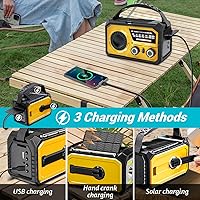
  • Charging Inputs: The unit accepts charge via solar panel, hand crank, and USB-C input, with an additional AAA battery compartment as a cold-weather backup.
  • USB Output: The USB-C output delivers 5V at 3A, which is compatible with most modern smartphones, GPS units, and small tablets.
  • Radio Bands: AM, FM, and all seven NOAA weather alert frequencies (162.400–162.550MHz) are supported for broad domestic reception coverage.
  • Antenna: A 16-inch external antenna is included to improve NOAA and FM signal capture, particularly in areas with moderate to weak broadcast strength.
  • LED Modes: The built-in flashlight offers three modes: a high-beam spotlight for trail use, a low-beam reading lamp, and an SOS strobe rated visible at up to 500 meters.
  • Bluetooth Range: Wireless audio streaming via Bluetooth operates at a stated range of up to 33 feet under open, unobstructed conditions.
  • Audio Jack: A standard 3.5mm headphone jack is included for wired private listening, compatible with most earbuds and over-ear headphones.
  • Compass: A 360-degree analog compass is built into the unit, functioning independently of battery power for basic directional orientation.
  • Model Number: The manufacturer model designation for this unit is H21, produced by Shenzhen Huashengtimes Electronic Technology Co., LTD.
  • Color Option: The unit is available in orange, a high-visibility color practical for locating the device quickly in low-light or emergency situations.
  • Warranty: The manufacturer provides an 18-month warranty backed by stated US-based customer support for defects and operational failures.
  • Included Items: Each unit ships with the emergency radio, a Type-C charging cable, and an owner's manual; AAA batteries are not included.

Related Reviews
Mesqool Solar Radio Emergency Hand Crank 12000mAh
86%
89%
Battery Life
91%
Ease of Use
87%
Weather Reception (NOAA)
84%
Charging Efficiency (Solar/Hand Crank)
88%
Build Quality
More
ZZMICHP 16000mAh Hand Crank Emergency Weather Radio
85%
92%
Battery Life & Power
87%
Ease of Use
68%
Portability & Size
85%
Durability & Build Quality
90%
Radio Performance
More
Emgykit R11 Emergency Crank Radio
85%
92%
Value for Money
89%
Battery Life and Charging Options
88%
Portability and Size
94%
NOAA Weather Alerts Performance
80%
Bluetooth Connectivity
More
Rckskaya Condor 1 Emergency Hand Crank Radio
73%
88%
Power Source Versatility
72%
NOAA Weather Reception
83%
Flashlight Performance
67%
Phone Charging Capability
79%
SOS Alarm & Signaling
More
LUOZROLL 20000mAh Emergency Crank Weather Radio
70%
78%
NOAA Reception Quality
63%
AM/FM Reception
67%
Battery Capacity & Real-World Output
44%
Hand Crank Charging
51%
Solar Charging Efficiency
More
Aivica 10000mAh Emergency Crank Radio
83%
88%
Value for Money
83%
Battery Life
85%
Ease of Use
91%
Portability
80%
Durability
More
GIDEZH H27 30000mAh Emergency Weather Radio
75%
82%
Battery Capacity
86%
NOAA Reception Quality
78%
Charging Versatility
88%
All-in-One Convenience
74%
Flashlight Performance
More
RunningSnail Emergency Crank Weather Radio
72%
88%
Value for Money
84%
Power Redundancy
91%
Built-in Cables
73%
NOAA Reception Quality
62%
Battery Capacity
More
AXYEBI AB-US-107Y Emergency Weather Radio
75%
91%
Value for Money
82%
NOAA Signal Reception
88%
Flashlight Performance
63%
Build Quality & Durability
67%
Hand Crank Usability
More
Pristar Hand Crank 10000mAh Emergency Weather Radio
71%
83%
Value for Money
76%
Build Quality
52%
Hand Crank Performance
78%
NOAA Reception
47%
Solar Charging
More

FAQ

Honestly, manage your expectations here. The solar panel works best as a slow trickle charger in direct, unobstructed sunlight — think of it as a supplement rather than a primary charging method. During overcast days or storm conditions (ironically, when you most need the radio), solar input drops significantly. Use USB-C to keep it topped up before an emergency, and rely on the hand crank and AAA backup when sunlight is unavailable.

Yes, but partially. The USB-C output at 5V/3A is compatible with most modern phones, and the 16000mAh battery has enough theoretical capacity for several charges. In practice, internal conversion losses mean you will get fewer full charges than the raw numbers suggest — closer to two or three partial charges on a typical smartphone depending on battery size. It is genuinely useful in a power outage, just not a substitute for a high-output dedicated power bank if that is your primary concern.

The crank feels solid out of the box and generates usable power — a couple of minutes of cranking yields meaningful light runtime. That said, hand cranks across this product category are historically one of the first components to show wear under repeated use. It works fine as an occasional backup, but if you anticipate cranking it daily for extended periods, approach its long-term durability with some caution.

In areas with decent NOAA transmitter coverage, the 16-inch antenna does a good job pulling in all seven alert frequencies. In rural or fringe reception areas, performance can be inconsistent — which is true of most radios in this budget range. If you live in a remote area, test it before you actually need it by tuning to your local NOAA frequency to confirm signal quality.

The AAA battery compartment provides an independent power source when the internal rechargeable battery is depleted and no charging method is available. It is particularly relevant in extreme cold, where lithium-based rechargeable cells lose efficiency quickly. It is a thoughtful safety net, though most users will never need it under normal conditions.

The unit pairs wirelessly with smartphones and other Bluetooth-enabled devices to stream audio through its built-in speaker, with a stated range of about 33 feet. It works for campsite music or podcast listening, but the audio quality is functional rather than impressive — the speaker prioritizes volume and clarity for voice (weather alerts, radio) over music fidelity. For private listening, the 3.5mm headphone jack is the better option.

The built-in compass gives you basic directional orientation and is useful for confirming which way you are heading on a trail. It is not a precision instrument, and you should not rely on it for serious backcountry navigation where a quality standalone compass or GPS is the right tool. For general camping use and orientation purposes, it works fine.

The SOS strobe is a visual signal rated visible at up to 500 meters — it is genuinely bright and useful for attracting attention at a distance. The unit also includes an audible SOS alarm function, which adds a layer of signal capability beyond the light alone. Together they cover the two most common distress signaling methods in one device.

It is a reasonable fit for that use case. The compact size, multiple charging methods, and combination of radio, flashlight, and power bank cover most roadside emergency scenarios. Keep in mind that car interiors can get very hot in summer, which affects lithium battery longevity over time — if you store it in the vehicle long-term, check it periodically and top up the charge every few months.

The main differences show up in antenna sensitivity, build durability, and long-term reliability. Established brands like Midland and Eton have proven track records in fringe reception areas and tend to use more robust components. This solar crank radio competes on price and consolidation — it bundles more functions into one device for a fraction of the cost of buying each tool separately. If your priority is the absolute best NOAA reception or you are buying gear for serious emergency response use, a dedicated brand-name radio is the better investment. For everyday preparedness and casual camping, this unit covers the bases at a realistic price point.