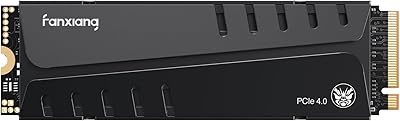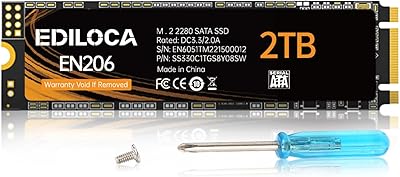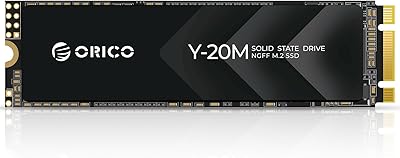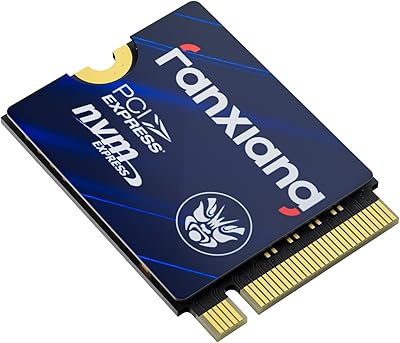
Overview

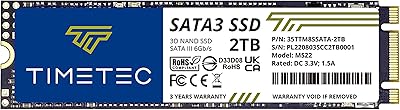
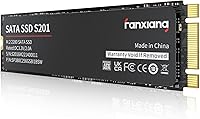
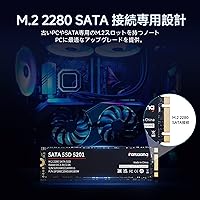
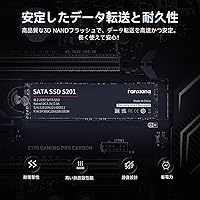
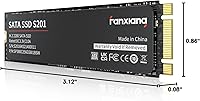
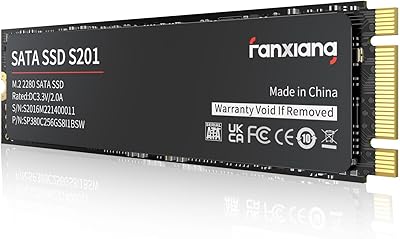
The fanxiang S201 2TB M.2 SATA SSD entered the market in late 2023 as a high-capacity option from a Chinese brand still building its reputation in the West. It uses the M.2 2280 form factor with a SATA III interface — not NVMe, and that distinction matters. The gap caps its theoretical throughput, but for everyday computing tasks, that ceiling rarely causes real frustration. fanxiang is not Samsung or Crucial, and buyers should carry realistic expectations. What this fanxiang drive delivers is generous storage at an accessible price point, not benchmark-breaking speed records.

Features & Benefits

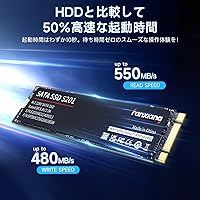
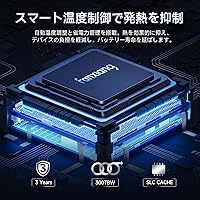
The S201 2TB relies on SLC caching to handle burst workloads — think booting Windows or saving large files — where it briefly performs above its baseline. Sequential reads top out at 550MB/s and writes at 480MB/s, standard for SATA-class drives and perfectly respectable for non-demanding use. The 300TBW endurance rating suggests years of moderate use without concern. Because there are no spinning platters, the drive handles bumps and drops better than a traditional HDD — genuinely useful for laptop users on the move. The bundled screws and screwdriver are a small but practically appreciated inclusion.

Best For

This M.2 SATA upgrade makes the most sense for someone pulling a slow spinning hard drive out of an aging laptop and wanting a meaningful speed boost without overspending. It also fits well as secondary storage in a desktop with a free M.2 SATA slot sitting idle. Students and light office users who need space for documents, photos, and applications — but rarely move massive files daily — will find the 2TB capacity more valuable than a faster but smaller NVMe drive. One critical caveat: confirm your motherboard supports M.2 SATA, not exclusively M.2 NVMe, before ordering.

User Feedback

Among more than 500 ratings, this fanxiang drive holds a 4.4-star average — a solid result for a newer brand competing in a crowded category. Buyers consistently highlight easy installation and the noticeable jump in day-to-day responsiveness compared to an aging HDD. The bundled hardware earns repeated mentions as a thoughtful inclusion. On the flip side, some users raise reasonable questions about long-term reliability, a fair concern with any lesser-known brand that only extended ownership data can fully resolve. A handful of reviewers also wished for faster sustained write speeds — a reminder that SATA has hard limits regardless of who makes the drive.

Pros

  • 2TB of storage at an accessible price makes this one of the better-value M.2 SATA options in its tier.
  • SLC caching delivers noticeable burst speed improvements for everyday tasks like booting and launching apps.
  • The M.2 2280 form factor fits a wide range of laptops and desktop motherboards without modification.
  • A 300TBW endurance rating is reasonable for moderate daily use over several years.
  • No moving parts means the drive handles physical bumps well — a real advantage for laptop users.
  • Bundled screws and a screwdriver make installation easier, especially for first-timers.
  • A 3-year warranty provides a basic but meaningful safety net for a newer brand.
  • Over 500 user ratings averaging 4.4 stars suggests consistent satisfaction across a broad buyer base.
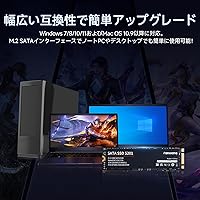
  • Compatible with Windows 7 through 11, covering virtually any PC a buyer might be upgrading.

Cons

  • SATA III has a hard throughput ceiling that no amount of caching can push past — NVMe it is not.
  • fanxiang lacks the long track record of established brands, making multi-year reliability harder to assess confidently.
  • Sustained write speeds beyond the SLC cache buffer drop noticeably, which matters for large continuous transfers.
  • Brand support and customer service responsiveness remain question marks compared to more established competitors.
  • Some users find the performance gap versus similarly priced NVMe drives hard to justify on newer hardware.
  • The drive is not compatible with M.2 slots that are wired exclusively for NVMe, a common source of buyer confusion.
  • Long-term resale value and ecosystem trust are lower than with household-name SSD brands.
  • Write speeds up to 480MB/s, while functional, trail behind what many competing drives in adjacent categories offer.

Ratings

The scores below for the fanxiang S201 2TB M.2 SATA SSD were generated by AI after analyzing verified buyer reviews from global markets, with spam, bot-generated, and incentivized feedback actively filtered out. Each category reflects what real users experienced in day-to-day use — not manufacturer claims — and both strengths and recurring pain points are represented transparently. This S201 2TB earns strong marks where it matters most for its target audience, with honest deductions where trade-offs are real.

Value for Money
88%
Buyers consistently flag the capacity-to-cost ratio as the main reason they chose this fanxiang drive over alternatives. Getting 2TB in the M.2 form factor without paying NVMe pricing is a genuine win for budget-focused shoppers, and most feel they received more than their money's worth for light to moderate use.
A handful of reviewers note that as NVMe prices continue to drop, the value gap is narrowing, making the SATA trade-off harder to justify. Users who later discovered faster drives at only marginally higher prices felt the value proposition was less clear-cut than it first appeared.
Read & Write Speed
71%
29%
For everyday computing — booting Windows, launching Chrome, opening Office files — the sequential read speeds feel snappy compared to any spinning hard drive. Users upgrading from HDDs almost universally report a dramatic and immediate improvement in system responsiveness that makes the drive feel fast in normal use.
The SATA III interface imposes a hard ceiling that no caching trick can overcome, and users moving large files continuously notice the speed drop once the SLC cache is exhausted. Anyone benchmarking this drive against NVMe options will find the gap uncomfortable, particularly for sustained write-heavy tasks.
Installation Ease
91%
The bundled screws and screwdriver earned genuine praise from first-time builders and upgraders who appreciated not having to hunt for a tiny Phillips head before getting started. The M.2 2280 form factor slots in cleanly, and most users reported the physical installation took under ten minutes.
A small number of buyers struggled with cloning their existing drives to the new one, which is a software challenge rather than a hardware flaw but still contributed to frustration. A few users also noted the lack of included migration software, which comparable drives from larger brands sometimes provide.
Compatibility
79%
21%
The M.2 2280 size is widely supported, and users across a broad range of laptop and desktop configurations reported no physical fitment issues. Windows 7 through 11 compatibility means this drive works in machines old and new without driver headaches.
The most common compatibility complaint stems from buyers who did not realize their M.2 slot was NVMe-only before purchasing, resulting in returns. This is a buyer education issue, but it appears frequently enough in negative reviews to be worth flagging as a real friction point.
Long-Term Reliability
63%
37%
The 300TBW endurance rating is adequate for typical home or student use, and owners who have had the drive for several months report no unexpected failures. Early adopters are generally satisfied and have not reported unusual error rates or data loss incidents.
fanxiang simply does not have the multi-year track record that brands like Crucial or Western Digital carry, and some buyers are uneasy about that gap. The drive has only been on the market since late 2023, so there is not yet enough long-term ownership data to score this category with full confidence.
SLC Cache Performance
76%
24%
The SLC caching implementation handles the burst workloads that most users actually encounter — quick file copies, app launches, and system updates — with noticeably better responsiveness than a drive relying purely on its raw NAND speed. For the typical buyer, this is rarely a bottleneck in practice.
Once the cache buffer fills during a large sustained transfer, write speeds drop to the underlying NAND baseline, which some users found disappointing during bulk file migrations. The cache size is not specified in documentation, leaving buyers to discover its limits through trial rather than informed expectation.
Build Quality
82%
18%
The drive feels solid in hand for its weight class, and the absence of moving parts means there are no mechanical points of failure to worry about. Laptop users in particular appreciated the shock resistance, noting it held up without issue during normal travel and commuting conditions.
The bare PCB design without a heatspreader may concern users who plan to run the drive in a thermally constrained enclosure or a desktop case with poor airflow. No thermal throttling data is publicly available, which leaves some questions unanswered for power users.
Brand Trust
61%
39%
fanxiang is gaining recognition in the budget SSD space and has accumulated a meaningful number of verified ratings in a short time, which suggests real market traction. Buyers who researched the brand before purchasing generally came away with tempered but positive confidence.
The brand lacks the established service infrastructure and reputation of legacy storage names, and some buyers expressed concern about warranty claim responsiveness if something went wrong. Without years of community feedback to draw from, trust is built on faith in early reviews rather than a proven track record.
Thermal Performance
67%
33%
In typical laptop use and light desktop workloads, the drive runs at acceptable temperatures without throttling noticeably. Users who installed it as a secondary storage drive in desktops report it sitting quietly within normal operating ranges during everyday tasks.
No official thermal specification is provided, and a few users running the drive in compact or thermally challenged systems noted temperature readings they found higher than expected under sustained load. The lack of a heatspreader means thermal management is entirely dependent on the host system.
Capacity Delivered
93%
The advertised 2TB capacity is what buyers actually get in terms of usable space after formatting, with formatted capacity falling in the expected range consistent with industry norms. For users who need to store large media libraries, game collections, or project archives, the space holds up well in practice.
A small number of technically minded buyers noted the typical gap between advertised and formatted capacity and wished it were disclosed more prominently upfront. This is an industry-wide convention rather than a fanxiang-specific issue, but it still generates occasional confusion.
Packaging & Accessories
84%
Including a screwdriver and mounting screws in the box is a thoughtful detail that comes up repeatedly in positive reviews, especially from buyers doing their first internal hardware upgrade. The packaging itself is clean and protective, arriving without reported damage in the vast majority of orders.
There is no included software for drive cloning or diagnostics, which some competitors bundle in. Buyers who expected migration tools out of the box had to seek third-party solutions, adding a step to the setup process that could have been streamlined.
Noise & Vibration
97%
As a fully solid-state device, the S201 2TB produces zero audible noise and no vibration under any workload, which users coming from spinning hard drives immediately notice and appreciate. Silent operation makes it particularly well-suited for quiet work environments and noise-sensitive setups.
There is genuinely very little to criticize here — the absence of mechanical components makes this a non-issue by design. The only marginal note is that some users mistakenly expected the drive to produce some operational feedback and were briefly confused by the complete silence during first use.
Customer Support
57%
43%
A portion of buyers who reached out to fanxiang support reported satisfactory resolutions within a reasonable timeframe, and the 3-year warranty provides a formal avenue for claims. Support documentation available in English appears to cover the most common setup scenarios adequately.
Several reviewers flagged slow or inconsistent response times from customer service, particularly for warranty inquiries, and this pattern appears with enough regularity to indicate a structural gap. As a newer brand operating globally, fanxiang has not yet built the support infrastructure that larger competitors offer as standard.

Suitable for:

The fanxiang S201 2TB M.2 SATA SSD is a strong fit for anyone pulling a sluggish mechanical hard drive out of an older laptop and wanting a meaningful, affordable upgrade. Students who accumulate large libraries of class materials, projects, and media files will appreciate having 2TB of breathing room without paying a premium for NVMe speed they would rarely use. It also works well as secondary storage inside a desktop PC that has a spare M.2 SATA slot, particularly for users archiving photos, backups, or game installations. Light office workers running productivity software, browsing, and handling documents will notice a real improvement in day-to-day responsiveness compared to any spinning drive. If your motherboard supports M.2 SATA and your budget is limited, this fanxiang drive offers a practical, no-fuss solution with solid capacity at the center of its value pitch.

Not suitable for:

The fanxiang S201 2TB M.2 SATA SSD is not the right call for anyone who needs the fastest possible storage for demanding workloads. Video editors working with 4K or RAW footage, software developers running intensive build pipelines, or gamers who want the shortest possible load times on titles that actively benefit from NVMe throughput should look at PCIe-based drives instead — the SATA III interface simply cannot match those speeds regardless of brand or caching tricks. Buyers who prioritize long-term brand accountability and established warranty service ecosystems may also feel more comfortable with a proven name like Samsung or Crucial. This M.2 SATA upgrade is equally unsuitable for systems whose M.2 slot is NVMe-only, which is increasingly common in modern motherboards — always verify slot compatibility before purchasing. If raw sustained write performance matters for your workflow, the limits of SATA will become apparent quickly.

Specifications

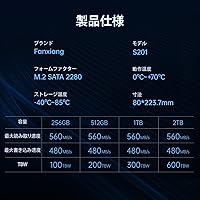
  • Form Factor: The drive uses the M.2 2280 form factor, meaning it is 22mm wide and 80mm long, the most common M.2 size found in laptops and desktops.
  • Interface: It connects via SATA III at 6Gb/s, which is a different and slower protocol than NVMe — an important distinction when checking motherboard compatibility.
  • Capacity: Total usable storage is 2TB, offering substantial space for operating systems, applications, media libraries, and file archives.
  • Sequential Read: Maximum sequential read speed is rated at up to 550MB/s under optimal burst conditions using SLC caching.
  • Sequential Write: Maximum sequential write speed is rated at up to 480MB/s, typical for SATA-class solid state drives in this category.
  • Cache Type: The drive uses SLC (Single-Level Cell) caching to accelerate burst read and write operations during common everyday tasks.
  • Endurance: The rated endurance is 300TBW (terabytes written), which is a reasonable lifespan for moderate daily workloads over several years.
  • Warranty: fanxiang provides a 3-year limited warranty covering manufacturing defects from the date of purchase.
  • Weight: The drive weighs 1.06 ounces, making it negligibly light and easy to handle during installation.
  • Dimensions: Physical dimensions are 3.15″ long by 0.87″ wide by 0.12″ thick, consistent with the standard M.2 2280 specification.
  • OS Compatibility: The drive is compatible with Windows 7, 8, 10, and 11, covering the vast majority of PCs currently in use.
  • Device Compatibility: Designed for use in laptops, desktop PCs, and all-in-one machines equipped with an M.2 SATA interface slot.
  • Shock Resistance: Because the drive contains no mechanical moving parts, it is inherently more resistant to physical shocks and vibration than a traditional spinning hard drive.
  • Color: The drive is finished in black, which is the standard aesthetic for most internal M.2 SSDs.
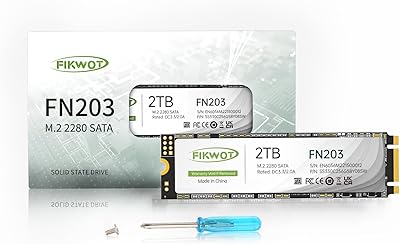
  • In the Box: Each unit ships with the drive itself, along with installation screws and a small screwdriver included in the package.

Related Reviews
fanxiang S201 512GB M.2 SSD
84%
88%
Performance
91%
Value for Money
85%
Compatibility with Older Systems
90%
Ease of Installation
82%
Power Efficiency
More
Fikwot FN203 2TB M.2 SATA SSD
88%
88%
Sequential Read Speed
84%
Sequential Write Speed
90%
Durability
87%
Data Integrity/Error Correction
95%
Ease of Installation
More
ORICO Y20M 2TB M.2 SATA SSD
81%
88%
Value for Money
83%
Compatibility Clarity
79%
Read & Write Speed
91%
Installation Experience
74%
Long-term Reliability
More
fanxiang S770 2TB NVMe M.2 SSD
79%
88%
Sequential Read Speed
91%
PS5 Compatibility
86%
Value for Money
83%
Thermal Management
74%
Build Quality
More
Ediloca EN206 2TB M.2 SATA SSD
74%
88%
Value for Money
71%
Read & Write Speed
93%
Installation Ease
82%
Compatibility
61%
Long-Term Reliability
More
fanxiang S630 2TB M.2 2230 NVMe SSD
79%
88%
Read Speed Performance
71%
Sustained Write Speed
93%
Form Factor Compatibility
79%
Thermal Management
86%
Installation Experience
More
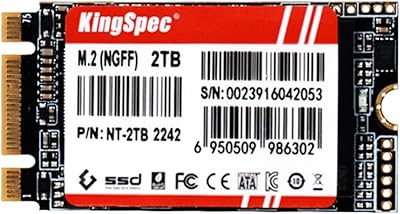
KingSpec NT 2TB M.2 2242 SATA SSD
78%
88%
Value for Money
91%
Form Factor Compatibility
74%
Read & Write Speed
86%
Installation Experience
71%
Endurance & Longevity
More
KingSpec NT 2TB M.2 2280 SATA SSD
74%
88%
Value for Money
74%
Read & Write Speed
61%
Compatibility
86%
Installation Experience
63%
Long-term Reliability
More
Timetec JM600 2TB M.2 2280 SATA SSD
82%
91%
Value for Money
83%
Read Speed Performance
61%
Sustained Write Speed
93%
Installation Ease
69%
Long-Term Reliability
More
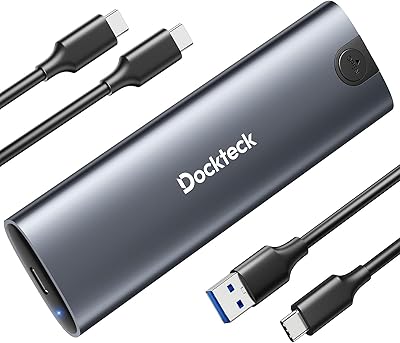
dockteck DH0002 M.2 NVMe/SATA SSD Enclosure
84%
88%
Transfer Speed (NVMe)
76%
SATA Drive Performance
83%
Build Quality
93%
Ease of Setup
79%
Thermal Management
More
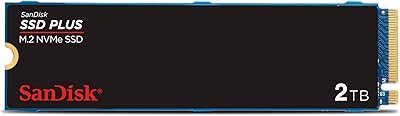
SanDisk 2TB SSD Plus M.2 NVMe SSD
86%
89%
Performance
92%
Ease of Installation
88%
Reliability
91%
Value for Money
90%
Capacity
More

FAQ

Not necessarily — you need to confirm whether your M.2 slot supports SATA, NVMe, or both. Many older laptops support M.2 SATA, but a growing number of newer machines have slots that only accept NVMe drives. Check your laptop's manual or the manufacturer's spec page before ordering.

Yes, significantly so. Even though this drive uses the SATA interface rather than the faster NVMe standard, it is still many times quicker than a spinning hard disk for everyday tasks like booting, opening apps, and saving files. Most users coming from an HDD notice the difference immediately.

SLC caching is a technique where the drive temporarily treats a portion of its storage as faster single-level cell memory to handle short bursts of data more quickly. For typical tasks — launching software, copying a folder, loading a web browser — it makes a real difference. For very large sustained transfers, like copying hundreds of gigabytes at once, speeds will settle to the drive's baseline once the cache fills.

Both are M.2 SATA drives with similar interface-imposed speed limits, so raw performance is in the same ballpark. The Samsung 870 EVO carries a longer reliability track record and stronger brand reputation, while the S201 2TB competes primarily on capacity-per-dollar. If brand confidence matters more to you than savings, the Samsung is worth the premium.

Yes, absolutely. It is fully compatible with Windows 7 through 11 and works well as a primary system drive. Just make sure to install your OS fresh or clone your existing drive correctly, and the system should boot noticeably faster than it did on a spinning hard drive.

For most home and office users, yes. Writing 300TB sounds like a lot because it is — at a generous 50GB written per day, that is roughly 16 years of use before hitting the rated limit. Heavy workloads like constant video rendering or database writes would wear it down faster, but typical users have little to worry about.

Yes, and that is a detail worth noting. The package includes mounting screws and a small screwdriver, which saves you from hunting for a tiny Phillips head before you can seat the drive. It is a small touch, but genuinely useful if you are doing this for the first time.

M.2 drives are among the easier upgrades to perform. You remove a small screw from the M.2 slot standoff, slide the drive in at a slight angle, press it down flat, and secure it with the screw. The whole process usually takes under five minutes. That said, you will also want to either reinstall your operating system or clone your existing drive to the new one, which takes a bit more time but is well-documented online.

The drive only entered the market in late 2023, so there is not yet years of widespread ownership data to draw from. Early ratings are encouraging — over 500 reviews averaging 4.4 stars suggests most buyers are happy. However, if long-term reliability data from a brand with a decade of history matters to you, an established name might give you more peace of mind.

Absolutely, and it is actually a great use case for it. If your desktop motherboard has a free M.2 SATA slot, you can add this M.2 SATA upgrade purely for secondary storage — games, media, backups — without touching your existing primary drive. Just confirm the slot type and that your motherboard supports booting from or recognizing M.2 SATA devices.

Where to Buy