Overview

The EVGA RTX 3090 FTW3 Ultra Graphics Card sits at the very top of EVGA's Ampere-based lineup — specifically the FTW3 Ultra trim, which is the brand's highest factory-overclocked variant, a clear step above the standard and XC3 models. This listing is Amazon Renewed, so the unit has been refurbished and inspected rather than sold new. That matters: warranty coverage is typically more limited than a retail box, and condition can vary. Still, buyers who understand that trade-off often find it worthwhile. One hard requirement: this high-end GPU needs a full-size desktop case and at minimum an 850W power supply. It is purely enthusiast territory.

Features & Benefits

The RTX 3090 FTW3 carries 24GB of GDDR6X memory — that is the headline spec, and it genuinely changes what is possible. At 4K, most demanding games do not approach 12GB, let alone 24, but for 3D scene rendering or video editing with heavy assets, that headroom is real and practical. The 10,496 CUDA cores clocked past 1800MHz mean the card trades punches with anything from its generation. EVGA's triple-fan cooler keeps thermals manageable even under sustained load, and the full metal backplate adds structural support to a card this heavy. PCIe 4.0 connectivity and hardware ray tracing round things out, while four display outputs — HDMI plus three DisplayPort — handle multi-monitor setups without adapters.

Best For

The FTW3 Ultra is squarely aimed at 4K gamers who want to push past 60fps in titles like Cyberpunk 2077, Microsoft Flight Simulator, or Hogwarts Legacy — games where VRAM and raw compute both matter. It is also a natural fit for content creators and 3D artists who regularly work with large project files, high-resolution textures, or compute-heavy renders. Machine learning hobbyists running local inference or fine-tuning smaller models will appreciate the VRAM ceiling, too. If you are upgrading from an RTX 2080 Ti or an older AMD flagship, the performance jump is substantial. Just make sure you are comfortable buying renewed hardware — this card rewards buyers who have done their homework.

User Feedback

Across 86 ratings, the RTX 3090 FTW3 holds a 4.4-star average — solid for a renewed listing where buyer trust is harder to earn. Most positive reviews highlight out-of-box reliability, with buyers noting the card arrived in good condition, performed immediately, and ran cooler than expected under gaming loads. The main complaints center on fan noise at full throttle and fitment in tighter mid-tower cases; at nearly 12 inches long, case compatibility is worth checking before ordering. A few buyers also flag the high power draw as a surprise if they had not sized their PSU adequately. Compared to the RTX 3080 Ti, most reviewers feel the 24GB VRAM justifies the cost for professional workloads, though casual gamers note they rarely need that much memory.

Pros

  • 24GB of GDDR6X VRAM is a practical advantage for 4K gaming, heavy rendering, and local AI workloads.
  • The FTW3 Ultra is EVGA's highest factory-overclocked variant, delivering more headroom than standard RTX 3090 models.
  • Triple-fan cooling keeps temperatures well-managed even during sustained high-load sessions.
  • The full metal backplate adds structural rigidity and prevents GPU sag on a heavy card.
  • Hardware ray tracing and DLSS support remain genuinely useful for modern AAA titles.
  • Four display outputs — HDMI plus three DisplayPort — handle multi-monitor setups without needing adapters.
  • Renewed pricing makes flagship Ampere performance accessible without full new-retail cost.
  • PCIe 4.0 interface ensures compatibility headroom with current and near-future platforms.
  • Buyers report strong out-of-box reliability, with most renewed units arriving in solid working condition.
  • Upgraders from RTX 2080 Ti or older AMD flagships will see a substantial performance jump.

Cons

  • Renewed condition means limited warranty coverage compared to a brand-new retail purchase.
  • At around 350W TDP, electricity costs and heat output are noticeably higher than mid-range alternatives.
  • Nearly 12 inches long — case compatibility must be verified before ordering, especially in mid-towers.
  • Fan noise under full load is a recurring complaint from real-world users.
  • Newer-generation competitors offer better efficiency and updated features at similar price points.
  • EVGA has exited the GPU market, meaning no future driver or product support directly from the manufacturer.
  • Overkill for 1080p or casual gaming — the performance ceiling will never be reached by lighter workloads.
  • High power draw requires an 850W or stronger PSU, adding cost if an upgrade is needed.
  • Stock and unit condition can vary with renewed listings, so careful seller and return-policy review is essential.
  • The card's triple-slot cooler footprint can block adjacent PCIe slots in some motherboard layouts.

Ratings

The scores below for the EVGA RTX 3090 FTW3 Ultra Graphics Card were generated by AI after analyzing verified buyer reviews from global markets, with spam, bot activity, and incentivized feedback actively filtered out. Based on 86 confirmed ratings averaging 4.4 stars, both the card's genuine strengths and its real-world frustrations are reflected without sugarcoating.

Raw Gaming Performance
91%
At 4K, the FTW3 Ultra handles the most demanding AAA titles with headroom to spare — buyers upgrading from a 2080 Ti or Vega 64 consistently describe the jump as dramatic and immediately noticeable. The factory overclock pushes it meaningfully past reference RTX 3090 performance right out of the box.
Against newer-generation cards at similar price points, the generational efficiency gap becomes hard to ignore, particularly in ray-traced workloads where the RTX 4080 pulls ahead while drawing significantly less power.
VRAM Capacity
94%
The 24GB GDDR6X buffer is the card's defining advantage for professional users — video editors running 8K timelines, 3D artists loading complex scenes, and ML hobbyists running local inference all report that this headroom removes a ceiling they regularly hit on 12GB or 16GB alternatives.
For pure gaming, most current titles do not come close to exhausting this much VRAM, meaning a meaningful portion of buyers are paying for capacity they will not use unless their workloads extend beyond gaming into creative or compute territory.
Thermal Management
83%
The triple-fan cooler keeps GPU core temperatures in a healthy range during extended gaming sessions, and buyers running benchmarks for 30-plus minutes note that thermals plateau comfortably rather than climbing toward throttling thresholds. The full metal backplate also reduces heat concentration on the PCB.
Memory junction temperatures on the RTX 3090 family are a known Achilles heel across the entire product line — some buyers report GDDR6X memory temps running warmer than ideal under sustained loads, a limitation tied to the chip design itself rather than EVGA's cooler.
Build Quality
89%
The card feels genuinely substantial — the all-metal backplate, reinforced PCIe connector, and thick shroud give it a premium physical presence that buyers frequently comment on when unboxing. The triple-slot design contributes to a sense of durability that cheaper reference designs lack.
The card's sheer size and weight mean it almost always causes some GPU sag without additional support, which is not unique to this model but is still a real concern that buyers in mid-tower cases routinely deal with after installation.
Noise Level
67%
33%
At typical gaming loads — say, running an open-world title at 4K on max settings — fan noise is present but not intrusive, sitting at a level most users in enclosed setups or with headphones on would find easy to ignore.
Under extended full-load scenarios like long rendering jobs or synthetic stress tests, the fans ramp audibly and become the dominant sound in a quiet room. Several buyers specifically flag this as a surprise after expecting quieter operation given the card's size and price tier.
Renewed Condition Reliability
78%
22%
The majority of buyers report that their renewed unit arrived functional, well-packaged, and stable from the first boot — which is the baseline expectation for a refurbished card at this price, and most sellers appear to be meeting it.
A minority of reviews describe units arriving with cosmetic wear, missing accessories, or early stability issues that required returns. The lack of a full manufacturer warranty means buyers bear more risk if a problem surfaces outside the return window.
Value for Money
74%
26%
For buyers specifically targeting 24GB VRAM for professional workloads, the renewed price makes a strong case — getting this much memory in a performant GPU for less than a new flagship card is a real value proposition for content creators and ML users on a budget.
Pure gamers can find newer-generation cards offering better performance-per-watt and fresh warranties at comparable prices, which makes the value argument weaker for anyone who does not specifically need the VRAM advantage this card offers.
Power Efficiency
53%
47%
The card delivers its performance targets consistently, and buyers who planned for it by installing a high-wattage PSU report stable operation without throttling or power-related crashes during long sessions.
At around 350W TDP, the RTX 3090 FTW3 is among the least efficient cards by modern standards — electricity costs over a year of regular use are noticeably higher, and the mandatory 850W-plus PSU is an additional cost for system builders starting fresh.
Driver & Software Stability
82%
18%
Running on NVIDIA's standard driver stack, the card benefits from continued NVIDIA support regardless of EVGA's market exit — buyers report no unusual driver-related issues beyond what the broader RTX 3090 user base occasionally encounters with specific game updates.
EVGA's own companion software, including Precision X1, is no longer actively developed since EVGA left the GPU market, which limits RGB and overclocking control options to third-party tools for buyers who want fine-grained software management.
Multi-Monitor Support
88%
Four outputs — one HDMI 2.1 and three DisplayPort 1.4a — give buyers genuine flexibility for multi-monitor setups without needing adapters, and the HDMI 2.1 port handles 4K at 120Hz cleanly for buyers connecting to high-refresh TVs.
Four simultaneous displays is the maximum supported, which is more than enough for most users but may fall short for highly specialized multi-screen workstation builds that exceed that count.
Installation & Compatibility
71%
29%
Buyers with full ATX builds and adequate PSUs generally report a smooth installation process — the card is standard PCIe and works without proprietary steps or unusual BIOS requirements on current Intel and AMD platforms.
The physical size creates real compatibility friction: the 11.81-inch length and triple-slot width require case verification before purchase, and several buyers have reported having to rearrange drives or remove internal structures to make the card fit.
Ray Tracing & DLSS Quality
81%
19%
Hardware RT cores deliver a meaningful visual upgrade in titles that implement ray tracing well, and DLSS 2.x at 4K strikes a practical balance between image quality and recovered frame rates that buyers using it regularly find compelling.
DLSS 3 frame generation — one of the more impactful features in newer NVIDIA cards — is not supported on Ampere, leaving RTX 3090 FTW3 owners on the older DLSS 2 implementation as that ecosystem evolves toward newer titles optimized for DLSS 3.
ARGB Lighting
76%
24%
The ARGB implementation looks polished in builds with windowed side panels, and buyers note the lighting syncs reliably with major motherboard ecosystems including ASUS Aura and MSI Mystic Light without significant setup friction.
With EVGA's software development stalled, advanced lighting customization outside of motherboard-level sync is increasingly dependent on third-party workarounds, which is a minor but real inconvenience for users wanting standalone control.

Suitable for:

The EVGA RTX 3090 FTW3 Ultra Graphics Card is an excellent choice for enthusiast PC builders who want top-tier Ampere performance without paying new retail prices — provided they are comfortable with a renewed unit. It is genuinely well-suited to 4K gamers who play demanding AAA titles and want consistent high framerates without compromise. Content creators working in Blender, DaVinci Resolve, or Adobe Premiere will find the 24GB GDDR6X buffer a practical advantage when handling large-resolution projects, heavy effects stacks, or multi-stream video timelines. Machine learning hobbyists who want to run local model inference or fine-tune smaller language models on consumer hardware will also benefit from that same VRAM headroom. Upgraders coming from older high-end cards — an RTX 2080 Ti, a Vega 64, or similar — will notice a meaningful generational improvement in both rasterization and ray-traced workloads.

Not suitable for:

The EVGA RTX 3090 FTW3 Ultra Graphics Card is a poor fit for anyone building a compact or mid-range system. At nearly 12 inches long and drawing around 350 watts under load, it demands a full-size ATX case and an 850W or higher power supply — anything less risks instability or outright failure to boot. Budget-conscious buyers should also think carefully: newer-generation cards like the RTX 4080 or RX 7900 XTX are available at comparable price points and offer better performance-per-watt, more modern driver support, and fresh retail warranties. Casual gamers who play at 1080p or 1440p on lighter titles will never stress this card enough to justify its power and cost footprint. Anyone with a strict budget or a smaller form-factor build should look elsewhere, as this high-end GPU was designed around no-compromise enthusiast desktops with adequate power delivery.

Specifications

  • GPU Architecture: Built on NVIDIA's Ampere architecture, delivering improved performance-per-watt and ray tracing capability over the previous Turing generation.
  • VRAM: Equipped with 24GB of GDDR6X memory, providing substantial headroom for 4K gaming, professional rendering, and machine learning workloads.
  • CUDA Cores: Features 10,496 CUDA cores for high-throughput parallel compute across gaming and creative applications.
  • Boost Clock: Factory-overclocked boost clock exceeds 1800MHz, placing it above standard RTX 3090 reference specifications out of the box.
  • Power Draw: Rated at approximately 350W TDP, requiring a quality 850W or higher power supply for stable operation.
  • PCIe Interface: Uses a PCIe 4.0 x16 interface, ensuring full bandwidth compatibility with current-generation AMD and Intel platforms.
  • Display Outputs: Provides one HDMI 2.1 port and three DisplayPort 1.4a ports, supporting up to four simultaneous displays.
  • Cooling System: Triple-fan active cooling solution manages thermals across the card's full length under sustained gaming or compute loads.
  • Card Length: Measures 11.81 inches in length, requiring case compatibility verification before installation, particularly in mid-tower builds.
  • Form Factor: Occupies a triple-slot footprint, which may block adjacent PCIe slots depending on motherboard layout.
  • Backplate: Full metal backplate provides structural rigidity and helps prevent GPU sag given the card's substantial weight.
  • Lighting: Includes ARGB LED lighting along the shroud, controllable via compatible motherboard software or EVGA's own utility.
  • Ray Tracing: Dedicated RT cores enable hardware-accelerated ray tracing in supported titles without entirely relying on shader fallback.
  • AI Acceleration: Tensor cores support DLSS (Deep Learning Super Sampling) for AI-driven upscaling and improved frame rates in compatible games.
  • API Support: Fully supports DirectX 12 Ultimate, Vulkan, and OpenGL 4.6 for broad compatibility with modern games and professional software.
  • Condition: Sold as Amazon Renewed, meaning the unit has been inspected and tested by a qualified refurbisher prior to resale.
  • Manufacturer: Produced by EVGA, which has since exited the GPU market, so no new EVGA-branded cards or direct manufacturer support are available going forward.

Related Reviews
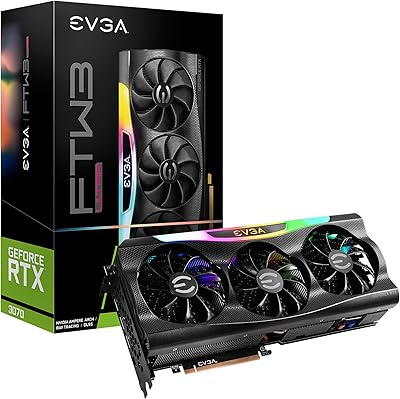
EVGA RTX 3070 FTW3 Ultra Graphics Card
77%
94%
Thermal Performance
91%
Noise Level
93%
Build Quality
88%
Gaming Performance at 1440p
67%
Gaming Performance at 4K
More
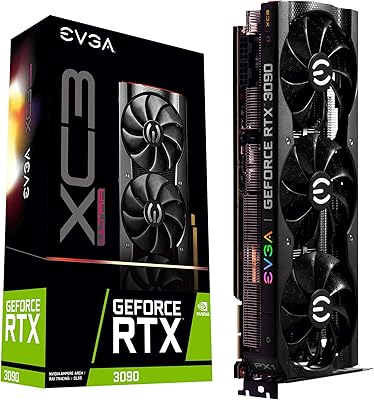
EVGA GeForce RTX 3090 XC3 Ultra Gaming 24GB GDDR6X
83%
94%
Performance for 4K Gaming
88%
Cooling Efficiency
82%
Value for Money
91%
Build Quality and Durability
85%
VR Performance
More
EVGA GeForce RTX 3080 FTW3 Ultra Graphics Card
79%
93%
Thermal Performance
88%
Acoustic Performance
89%
Gaming Performance
94%
Build Quality
71%
Value for Money
More
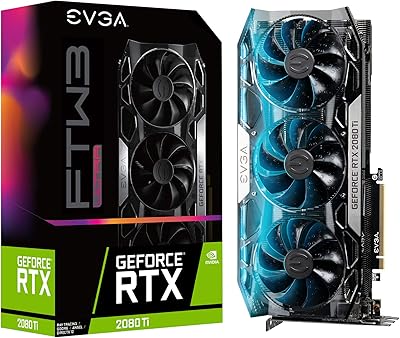
EVGA GeForce RTX 2080 Ti FTW3 Ultra 11GB GDDR6
87%
96%
Gaming Performance (4K)
94%
Ray Tracing & Graphics Quality
88%
Cooling & Noise Level
92%
Build Quality & Durability
91%
Overclocking Support
More
EVGA GeForce RTX 2070 XC Gaming 8GB GDDR6 Graphics Card
85%
91%
Gaming Performance
88%
Cooling Efficiency
75%
Ease of Installation
78%
Power Consumption
85%
Build Quality
More
EVGA GeForce RTX 3070 Ti FTW3 Ultra Gaming 8GB GDDR6X
85%
93%
Performance in Gaming
88%
Thermal Management
91%
Build Quality
85%
Ease of Installation
78%
Compatibility with PC Cases
More
EVGA GeForce RTX 3080 Ti FTW3 ULTRA GAMING 12GB GDDR6X
87%
96%
Gaming Performance
92%
Ray Tracing Performance
94%
Cooling Efficiency
89%
Build Quality
85%
Value for Money
More
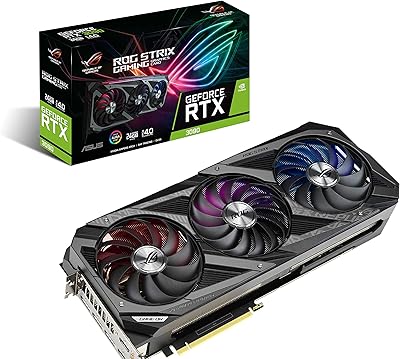
ASUS ROG Strix NVIDIA GeForce RTX 3090 24GB GDDR6X Graphics Card
87%
96%
Gaming Performance
94%
Ray Tracing Quality
91%
Cooling Efficiency
89%
Build Quality
92%
AI and DLSS Support
More
ASUS TUF RTX 3090 OC Graphics Card
80%
91%
Raw Gaming Performance
88%
Thermal Management
93%
Build Quality
94%
VRAM Capacity & Usefulness
83%
Noise Levels
More
NVIDIA Titan RTX 24GB Graphics Card
76%
96%
VRAM Capacity
83%
Compute Performance
78%
AI & Machine Learning Suitability
74%
Ray Tracing Capability
67%
Thermal Management
More

FAQ

This is an Amazon Renewed listing, which means the card has been refurbished and tested before resale. It is not new. Condition is generally described as good or like-new, but warranty coverage is more limited than a retail box purchase — so reviewing the specific return policy before buying is worth the extra few minutes.

You will want at least an 850W PSU from a reputable brand, and 1000W gives you comfortable headroom if the rest of your system is power-hungry. The card draws around 350W under full load, and pairing it with an undersized or low-quality power supply is a common source of instability and crashes.

Possibly, but you need to check. At nearly 12 inches long and occupying three slots, this is one of the larger consumer GPUs ever made. Most full ATX mid-towers accommodate it, but compact mid-towers and ITX builds almost certainly will not. Measure your case's GPU clearance spec before ordering.

Yes, it does. DLSS is supported through dedicated Tensor cores, and it works in any game that has implemented DLSS 2.x support. It is particularly useful at 4K where you can recover performance without a significant visual quality trade-off.

For pure gaming at 4K, the difference is smaller than the spec gap suggests — the RTX 3080 Ti is very close in rasterization performance. Where this card pulls ahead is VRAM: 24GB versus 12GB matters for some professional workloads and future-proofs against games that push above 10GB at 4K with maximum texture settings.

Yes, and the 24GB of GDDR6X is a genuine advantage here. Running local language model inference, fine-tuning smaller models, or working with image generation tools like Stable Diffusion all benefit significantly from large VRAM. It is not a professional data center card, but for hobbyist and small-scale research use, it performs well.

EVGA exited the GPU business, so no new EVGA-branded cards are in production and manufacturer-level support is winding down. However, the card itself runs on NVIDIA drivers, which NVIDIA continues to release — so standard driver updates, bug fixes, and game optimizations still apply through NVIDIA's own channels.

Under heavy gaming loads, the triple-fan cooler runs audibly — several users describe it as noticeable but not aggressive at typical gaming workloads. If you push the card to 100% utilization for extended periods, like in benchmarks or long rendering sessions, fan speed picks up meaningfully. It is not unusually loud for a card this powerful, but it is not quiet either.

It handles 4K at high refresh rates comfortably in most games, and with DLSS enabled you can push beyond 60fps in demanding titles at max settings. For 1440p gaming, performance headroom is substantial. The HDMI 2.1 port also supports 4K at 120Hz for TV-based gaming setups.

Boot the system and run a quick stress test — something like FurMark or Unigine Superposition for 15 to 20 minutes — to confirm the card is stable under load. Check for any visual artifacts, screen flickering, or unexpected shutdowns. Also confirm all fans are spinning and that the card is properly seated in the PCIe slot before your first real session.

Where to Buy