Overview

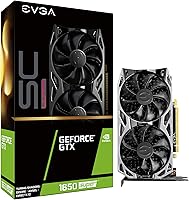
The EVGA GTX 1650 Super 4GB Graphics Card sits in a comfortable middle ground — capable enough to handle serious 1080p gaming, yet priced well below enthusiast-tier hardware that most casual builders simply don't need. What separates it from the standard GTX 1650 is a meaningful upgrade: GDDR6 memory, which delivers noticeably faster bandwidth and better texture throughput in real gaming scenarios. EVGA's SC Ultra branding also carries weight here — the company has long been regarded for solid build quality and responsive customer support. Just set expectations accordingly: this mid-range GPU is tuned for 1080p, not 4K, and ray tracing is largely off the table.
Features & Benefits

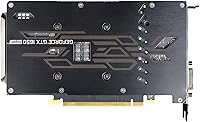
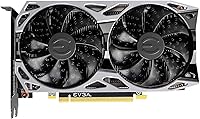
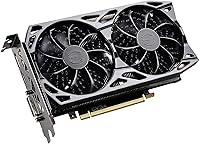
The switch to GDDR6 over the GDDR5 found in the base GTX 1650 is where this EVGA card genuinely earns its place. In practice, that faster memory bus translates to smoother frame delivery in texture-heavy scenes — not just a spec sheet number. EVGA's factory overclock pushes the boost clock to 1755 MHz right out of the box, meaning there's headroom without any manual tuning required. The dual-fan cooling keeps temperatures in check during extended sessions, staying impressively quiet at moderate loads. At under 8 inches long, the compact footprint is a practical bonus for anyone building into a tighter case, and the all-metal backplate adds real structural solidity.

Best For

The GTX 1650 Super makes the most sense for a fairly specific type of builder — someone stepping up from integrated graphics or an aging GTX 1050 who wants a real performance jump without overspending. It handles 1080p gaming at 60fps in popular mainstream titles comfortably, and the compact dimensions make it a strong candidate for mATX and mini-tower builds where longer cards simply won't fit. EVGA's 3-year warranty and responsive technical support are genuine selling points for anyone who values peace of mind over raw specs. Light content creators who need a dedicated GPU bump — but not a pro-tier card — will also find this mid-range GPU a practical fit.

User Feedback

Across a large pool of buyer reviews, the most consistent praise centers on installation ease and how quietly the fans run during everyday gaming sessions. Titles like Fortnite and Valorant run without a hitch, with most users hitting their 60fps targets effortlessly. Where some frustration surfaces is around the 4GB VRAM ceiling — in heavily modded games or newer titles with high-resolution texture packs, that limit can make itself known. A fair number of owners also compare this mid-range GPU favorably against the RX 5500 XT, particularly valuing EVGA's after-sales support when issues arise. The overall tone is genuinely positive, especially among builders who went in with realistic expectations.

Pros

  • GDDR6 memory delivers noticeably faster bandwidth than the base GTX 1650, improving in-game texture performance.
  • Factory overclock at 1755 MHz means out-of-the-box speed gains with no manual tuning required.
  • Dual-fan cooling keeps the card quiet and thermally stable during extended gaming sessions.
  • The all-metal backplate adds structural durability that budget cards at this tier rarely include.
  • Compact 7.96-inch length fits comfortably into small form factor and mATX cases.
  • EVGA's 3-year warranty and responsive technical support are genuine long-term peace of mind.
  • Strong 1080p performance in popular competitive titles like Fortnite and Valorant at smooth frame rates.
  • Low power draw makes this EVGA card easy to pair with modest PSUs common in budget builds.
  • Compatible with EVGA Precision X1 for users who want fine-grained tuning control without third-party tools.
  • Installation is straightforward, making it a confident choice for first-time builders.

Cons

  • 4GB VRAM is increasingly tight in newer AAA titles and heavily modded game environments.
  • No DisplayPort output limits multi-monitor flexibility compared to similarly priced competing cards.
  • Ray tracing support exists on paper but is too performance-costly to be practically usable.
  • The GTX 1650 Super faces stiff competition from AMD alternatives that occasionally offer better price-to-performance ratios.
  • Turing architecture, while efficient, is now a couple of generations behind current GPU releases.
  • Future-proofing is limited — as game requirements grow, 4GB VRAM will become a bottleneck sooner than later.
  • Performance in 1440p gaming is underwhelming and not a realistic use case for this mid-range GPU.
  • No USB-C or VR-ready certification may rule it out for certain peripheral setups.
  • The card runs warmer under sustained heavy workloads despite the dual-fan setup.
  • Driver support for older Turing cards may become less prioritized over time compared to current-gen hardware.

Ratings

Our AI rating system analyzed thousands of verified global buyer reviews for the EVGA GTX 1650 Super 4GB Graphics Card, actively filtering out incentivized, bot-generated, and spam submissions to surface what real users actually experience. The scores below reflect an honest synthesis of both the genuine strengths and the recurring frustrations that surface across long-term ownership — not just first-impression honeymoon feedback. Where this mid-range GPU earns praise, the scores reflect it; where real-world limitations show up, those are represented transparently too.

1080p Gaming Performance
83%
For everyday gaming at 1080p, this EVGA card consistently delivers smooth frame rates in competitive titles and mainstream releases. Users running Fortnite, Valorant, and CS2 regularly report stable 60fps-plus performance at medium-to-high settings, making the experience genuinely playable and enjoyable without configuration headaches.
Push into more graphically demanding AAA titles at high or ultra settings and frame rates start to dip noticeably. The performance ceiling becomes visible in newer open-world games, where users occasionally drop into the low 40s fps range — not unplayable, but not comfortable either.
Value for Money
76%
24%
Buyers upgrading from integrated graphics or old GTX 1050-era cards consistently describe the performance jump as well worth the spend. The combination of a factory overclock, GDDR6 memory, and EVGA's 3-year warranty gives this card a compelling overall package relative to its tier.
The competitive GPU landscape at this price point is crowded, and several users note that AMD alternatives like the RX 5500 XT occasionally offer comparable or better performance per dollar depending on timing and regional availability. The value proposition is real but not uncontested.
VRAM Adequacy
61%
39%
For standard 1080p gaming with default texture settings, 4GB of GDDR6 is workable and most users do not hit a wall in everyday gaming sessions. The faster GDDR6 bandwidth helps squeeze more efficiency out of the available capacity compared to slower GDDR5 alternatives.
This is the most frequently cited concern in long-term ownership reviews. Users running heavily modded games, high-resolution texture packs, or newer titles with aggressive VRAM demands regularly report stuttering and texture pop-in. Four gigabytes is increasingly a limiting factor as the game library evolves.
Thermal Management
79%
21%
The dual-fan cooling setup handles moderate gaming loads quietly and effectively — users consistently note that temperatures stay within comfortable ranges during typical gaming sessions of an hour or two. The card rarely throttles under standard 1080p workloads, which keeps performance consistent.
Under extended heavy loads or in cases with poor airflow, temperatures climb more than some users expect. A handful of owners in warmer climates or tighter cases report hitting thermal limits during long sessions, causing the fans to spin up loudly enough to become distracting.
Build Quality
88%
The pre-installed all-metal backplate is a standout feature at this price tier — most competing budget cards skip it entirely. Users frequently comment on how sturdy and premium the card feels during installation, especially compared to plasticky alternatives they have handled previously.
While the backplate and overall construction impress, a small number of users report that the fan shroud feels slightly less robust than the backplate itself. It is a minor complaint but worth noting for buyers who transport or reposition their builds frequently.
Noise Level
81%
19%
During typical gaming sessions, the dual fans are impressively quiet — most users describe them as nearly inaudible over normal game audio. The card operates in semi-passive territory during light tasks, meaning the fans sometimes do not spin at all during web browsing or video playback.
At sustained peak loads, the fans spin up to a level that some users in quiet rooms find noticeable. It is not loud by GPU standards, but buyers using open-frame cases or gaming in silence-sensitive environments should be aware of the upper fan speed behavior.
Installation Ease
92%
This is one of the most consistently praised aspects across all review sources. The compact dimensions, absence of external power connectors, and standard PCIe slot interface make installation genuinely straightforward even for first-time builders. Driver installation via NVIDIA's standard process adds no friction.
A very small subset of users reported minor fitment issues in cases with unusual PCIe slot positioning or non-standard standoff heights — but these appear to be case-specific anomalies rather than a card-level issue. For the vast majority, installation is described as completely trouble-free.
Driver Stability
78%
22%
NVIDIA's driver ecosystem is mature and well-supported, and the GTX 1650 Super benefits from consistent updates and broad game compatibility. Users rarely report driver-related crashes or instability under normal operating conditions, which matters for long gaming sessions.
A handful of users on older operating systems or non-standard PC configurations reported occasional driver conflicts after major NVIDIA update cycles. This is not unique to this card, but it is a pattern worth flagging for users who prefer not to actively manage driver versions.
Software & Tuning
74%
26%
EVGA Precision X1 is a genuinely capable companion app — users who want granular control over fan curves, voltage, and clock speeds have a solid tool available without needing third-party alternatives. The interface is cleaner and more intuitive than older versions of EVGA's software.
Users who just want to plug in and play tend to ignore Precision X1 entirely, and EVGA's push to use it as the default tool rather than MSI Afterburner frustrates some in the enthusiast community. The software occasionally requires manual updates to maintain compatibility with newer Windows builds.
Compact Form Factor
89%
At under 8 inches long, this mid-range GPU fits builds that longer cards simply cannot accommodate. Owners of mATX cases, mini-towers, and HTPC-style builds consistently highlight the compact length as a deciding factor, and it delivers on that promise without sacrificing the dual-fan setup.
While the length is compact, the dual-slot width still eliminates any adjacent PCIe slot for expansion cards in tighter motherboard configurations. For most users this is a non-issue, but it is worth noting for builds with multiple expansion cards planned.
1440p & Higher Resolution
38%
62%
There is technically nothing preventing the card from outputting at 1440p, and in less demanding titles or older games it can maintain playable frame rates at that resolution with settings turned down meaningfully.
Anyone hoping to game seriously at 1440p will be disappointed — the GTX 1650 Super simply is not built for it. Frame rates in demanding titles at 1440p are inconsistent and frequently unsatisfying, and 4K is effectively off the table for gaming purposes entirely.
Ray Tracing Support
29%
71%
The Turing architecture does include hardware ray tracing support, which is technically more than Pascal-era cards can claim. In very light implementations or low-demand scenes, a trace of the feature is technically accessible.
In practice, enabling ray tracing on this card results in frame rate drops severe enough to make it completely unusable for actual gameplay. This should not factor into any purchase decision — ray tracing is a paper spec here, not a functional feature at this hardware tier.
Brand & Warranty Trust
91%
EVGA's 3-year warranty is backed by customer support that buyers consistently describe as genuinely responsive and human. Multiple reviewers specifically mention positive warranty claim experiences — a rare thing in consumer electronics — which adds meaningful confidence to the purchase.
EVGA's decision to exit the GPU market has left some buyers uncertain about the long-term future of software updates and warranty infrastructure, even if active support continues for existing products under current commitments.
Future-Proofing
47%
53%
For buyers who plan to use this card for two to three years in a stable gaming setup focused on 1080p and existing game libraries, it delivers enough headroom to remain relevant in the near term without requiring an immediate upgrade.
The 4GB VRAM ceiling, aging Turing architecture, and increasingly VRAM-hungry game releases make long-term ownership a genuine concern. Buyers planning to hold onto their GPU for four or more years will likely find this card feels limiting sooner than expected.
Competitive Positioning
67%
33%
Within the budget GPU segment, the GTX 1650 Super has carved out a respectable reputation and holds its own against several competing options. The EVGA-specific additions — backplate, factory overclock, dual fans — push it ahead of bare reference alternatives at similar specs.
Against AMD's competing offerings at a similar price point, the GTX 1650 Super does not always come out ahead in raw benchmark comparisons. Buyers who shop across brands rather than defaulting to NVIDIA will find the competitive landscape genuinely close enough to warrant comparison before committing.

Suitable for:

The EVGA GTX 1650 Super 4GB Graphics Card is a strong fit for budget-conscious PC builders who want a genuine performance step up without committing to a high-end GPU budget. If you're running integrated graphics or an older card like the GTX 1050 or 1050 Ti, the jump in real-world 1080p performance is substantial and immediately noticeable. Gamers who primarily play popular competitive or mainstream titles — think Fortnite, Valorant, Apex Legends, or older AAA games — will hit smooth 60fps targets without much fuss. The compact dimensions also make it a practical pick for anyone working within the constraints of a mATX or mini-tower case where longer cards are simply off the table. Light content creators who need a dedicated GPU to accelerate rendering or video work at a modest scale will also find solid value here, especially when paired with EVGA's well-regarded 3-year warranty and reliable customer support.
Not suitable for:

The EVGA GTX 1650 Super 4GB Graphics Card is not the right tool if your ambitions push beyond 1080p gaming or into graphically demanding modern titles at high settings. At 4GB of VRAM, you will encounter real limitations in games with high-resolution texture packs, heavily modded titles, or newer releases that increasingly expect more video memory headroom. Ray tracing is technically supported by the Turing architecture but is effectively unusable at this tier — the performance hit makes it a non-starter in practice. If you are targeting 1440p or 4K resolutions, this mid-range GPU simply does not have the horsepower to deliver a satisfying experience and you would be better served investing in a higher-tier card from the outset. Enthusiast builders or those who run GPU-intensive creative workloads like 3D rendering, machine learning, or high-resolution video production should look elsewhere — the 4GB frame buffer and mid-range compute performance will become a bottleneck quickly.
Specifications

  • GPU Model: The card is built on the NVIDIA GeForce GTX 1650 Super chip, manufactured by NVIDIA using the Turing architecture.
  • Architecture: Turing architecture delivers improved power efficiency and compute performance compared to the older Pascal generation.
  • VRAM: Equipped with 4GB of GDDR6 memory, offering faster bandwidth than the GDDR5 found on the standard GTX 1650.
  • Boost Clock: The factory overclock pushes the boost clock to 1755 MHz, providing out-of-the-box performance gains over reference speeds.
  • Memory Speed: Memory operates at 1500 MHz, contributing to improved texture throughput in gaming and light creative workloads.
  • Max Resolution: Supports a maximum output resolution of 7680x4320, though practical gaming performance is optimized for 1080p.
  • Cooling System: A dual-fan active cooling setup manages thermals during sustained loads while keeping acoustic noise at a reasonable level.
  • Backplate: An all-metal backplate comes pre-installed, adding structural rigidity and protecting the PCB from flex during transport or installation.
  • Card Length: The card measures 7.96 inches in length, making it compatible with compact mATX and mini-tower cases.
  • Card Width: At 1.54 inches wide, the card occupies a standard dual-slot footprint on the motherboard.
  • Card Height: The card stands 4.38 inches tall, fitting within standard ATX and most compact case clearances.
  • Weight: The card weighs 1.15 pounds, which is light enough to avoid significant PCIe slot stress in most standard motherboard configurations.
  • Video Output: Connectivity includes an HDMI output for connecting to monitors, televisions, or other display devices.
  • Software: Compatible with EVGA Precision X1, which allows users to monitor temperatures, adjust fan curves, and fine-tune clock speeds.
  • Warranty: EVGA covers this card with a 3-year limited warranty, backed by the company's well-regarded technical support team.
  • Power Interface: The card draws power via the PCIe slot with a low TDP profile, making it compatible with modest power supply units.
  • Chipset Brand: The GPU chipset is designed and manufactured by NVIDIA, ensuring broad driver support and ecosystem compatibility.
  • Card Description: This is a dedicated discrete graphics card, not an integrated solution, providing its own dedicated video memory and processing resources.

Related Reviews

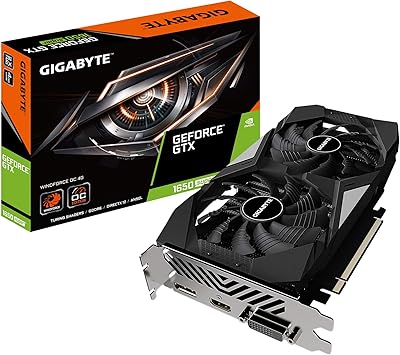
Gigabyte GeForce GTX 1650 Super Windforce OC 4GB Graphics Card
86%
92%
Value for Money
88%
Gaming Performance
85%
Cooling Effectiveness
90%
Noise Levels
80%
Build Quality
More
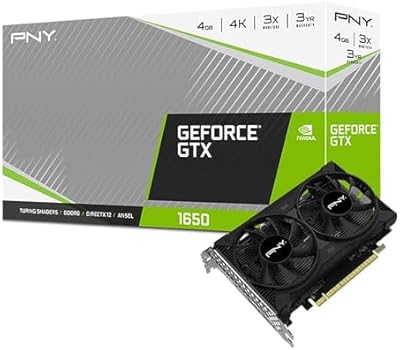
PNY GeForce GTX 1650 4GB GDDR6 Graphics Card
85%
87%
Gaming Performance (1080p)
92%
Value for Money
84%
Cooling & Thermals
90%
Setup & Installation
82%
Noise Levels
More
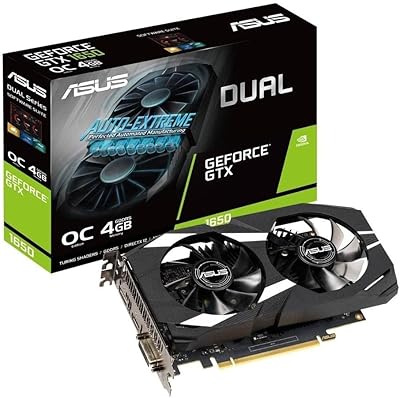
ASUS GeForce GTX 1650 Dual-Fan 4GB Graphics Card
84%
88%
Performance at 1080p
91%
Cooling Efficiency
92%
Value for Money
80%
VR Gaming Experience
85%
Multi-Display Support
More
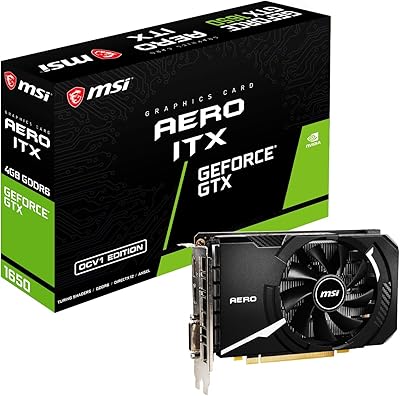
MSI GeForce GTX 1650 D6 AERO ITX 4GB Graphics Card
85%
85%
Performance at 1080p
88%
Noise Levels
87%
Cooling Efficiency
90%
Ease of Installation
79%
VR Performance
More
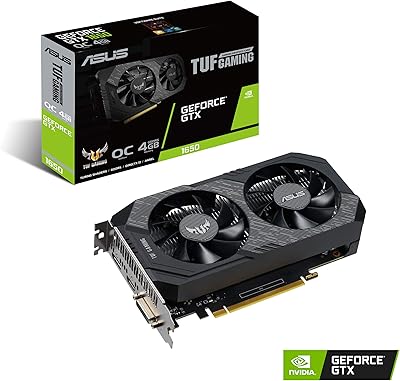
ASUS TUF Gaming GeForce GTX 1650 OC Edition 4GB Graphics Card
83%
86%
Performance at 1080p
90%
Cooling Efficiency
88%
Build Quality and Durability
84%
Noise Levels
92%
Ease of Installation
More
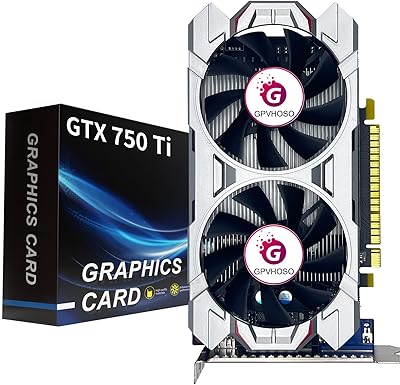
GPVHOSO GTX 750Ti 4GB Graphics Card
75%
71%
Value for Money
52%
Gaming Performance
89%
Power Efficiency
81%
Multi-Monitor Support
86%
Installation Ease
More
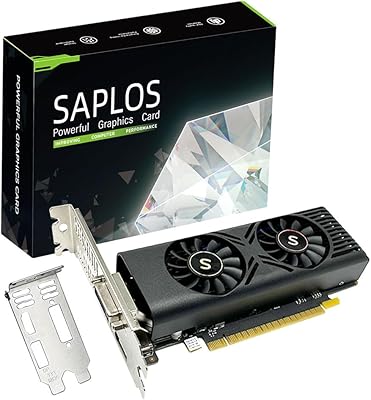
SAPLOS GTX 1050 4GB GDDR5 Graphics Card
83%
92%
Value for Money
85%
Performance for Gaming
90%
Cooling & Noise
88%
Build Quality
91%
Ease of Installation
More
SRhonyra GTX 1050 Ti 4GB Graphics Card
74%
91%
Multi-Monitor Output
87%
Setup & Installation
83%
Driver Stability
71%
Resolution Performance
78%
Thermal Performance
More
PNY GeForce GTX 1660 SUPER 6GB Graphics Card
84%
92%
Value for Money
91%
1080p Gaming Performance
88%
Cooling & Noise Levels
90%
Installation & Compatibility
87%
Graphics Rendering
More
ASUS TUF GTX 1660 Super 6GB GPU
79%
88%
1080p Gaming Performance
86%
Thermal Management
83%
Fan Noise & Acoustics
91%
Build Quality
79%
Value for Money
More

FAQ

At just under 8 inches long, the GTX 1650 Super is one of the more compact dual-fan cards available at this performance tier. It fits comfortably in most mATX, mini-tower, and standard mid-tower cases. That said, always double-check your case's maximum GPU length spec before ordering, just to be safe.

No external power connector is required. This EVGA card draws all the power it needs directly through the PCIe slot on your motherboard. That makes it a particularly easy fit for smaller builds with basic power supplies.

In competitive titles like Fortnite, Valorant, and Apex Legends at 1080p, this mid-range GPU handles things very comfortably — most users are hitting well above 60fps, often pushing into triple digits at medium-to-high settings. It is less impressive in graphically demanding AAA titles at ultra settings, but for the games most people actually play daily, it performs well.

For standard 1080p gaming in most current titles, 4GB is workable. Where it starts to feel tight is in games with very high-resolution texture options enabled, heavily modded setups, or newer releases that are increasingly VRAM-hungry. It is worth keeping in mind if you plan to keep the card for several years, as game requirements continue to creep upward.

Technically it can output at those resolutions, but the performance at 1440p in demanding titles will be noticeably choppy, and 4K is not a realistic gaming target for this hardware. This card was designed and optimized for 1080p, and that is where it delivers the best experience.

The Turing architecture does include support for ray tracing, but practically speaking the performance hit makes it unusable at this tier. You will get very low frame rates if you enable it in supported titles. It is better to think of this card as a rasterization-focused GPU and leave ray tracing for higher-end hardware.

The EVGA GTX 1650 Super 4GB Graphics Card includes an HDMI output, and depending on the exact model configuration, may also include DisplayPort and DVI connections. Check the specific model outputs before purchasing if multi-monitor use is a priority for your setup.

Under moderate gaming loads, the dual fans are impressively quiet — many users report barely noticing them. At heavier sustained loads the fans do spin up more audibly, but nothing that stands out as disruptive compared to other cards at this price point.

Yes, it is a meaningful jump. The combination of GDDR6 memory and the factory overclock means real-world gaming performance is noticeably better than what the GTX 1050 series can deliver, particularly in texture-heavy environments. If you are still on a 1050-era card, this mid-range GPU offers a worthwhile boost without requiring a full system rebuild.

EVGA offers a 3-year limited warranty on this card, and their customer support is genuinely one of the better experiences in the GPU space. Users consistently report helpful and responsive service when warranty claims or technical questions arise, which is a real differentiator compared to some other brands at this tier.