Overview
The ASUS TUF GTX 1650 OC Graphics Card sits at the practical end of NVIDIA's Turing lineup — the OC edition arrives with a factory overclock applied, giving you a measurable performance bump without touching any tuning software. Turing brought genuine efficiency gains over the Pascal generation before it, and this TUF 1650 uses GDDR6 memory rather than the GDDR5 found on cheaper variants of the same chip, delivering noticeably more bandwidth during fast-paced scenes. The TUF Gaming name carries real meaning here: it signals a focus on long-term reliability over flashy aesthetics. That said, keep expectations grounded — this is a 1080p card, and while it can output a signal to a 4K display, gaming at that resolution is firmly outside its wheelhouse.
Features & Benefits
Two things stand out about this budget Turing GPU beyond the spec sheet. The GDDR6 memory bandwidth — over 50% wider than GDDR5 — means textures load faster and frame pacing stays smoother during hectic moments in demanding titles. Equally notable is the build quality: ASUS uses its Auto Extreme Manufacturing process, which relies on automated soldering to minimize human-introduced defects. The fans use dual-ball bearings and space-grade lubricant, both of which extend operational lifespan considerably compared to typical sleeve-bearing designs. There is also IP5X dust resistance on the shroud, a real benefit if your case airflow is not ideal or you live somewhere with airborne particulate. At just 8.11 inches long, it fits comfortably in mATX and compact ITX cases.
Best For
This TUF 1650 makes the most sense for a few specific types of buyers. If you are escaping integrated graphics or nursing a GPU from the GTX 900-series era, the jump will feel significant. Small form factor builders will appreciate that it only needs a single 6-pin connector — many compact power supplies handle that without drama. Casual gamers who mostly play indie titles, older AAA games, or esports staples will find it handles those scenarios without complaint. It is also a reasonable pick for a home theater PC where you want clean multi-display output across HDMI and DisplayPort without paying for rendering power you will never use. Anyone in a dusty environment will find the IP5X certification quietly reassuring over time.
User Feedback
Across more than 800 ratings averaging 4.6 out of 5, the ASUS TUF card has earned consistent praise — but the feedback is worth reading carefully. Buyers frequently highlight quiet fan behavior under typical loads and straightforward driver installation as genuine strengths. Real-world game performance tracks closely with expectations: smooth 1080p in lighter titles, occasional frame rate dips in heavier modern games. The honest criticism centers on value — newer budget options from AMD and NVIDIA's own Ampere lineup sometimes offer more performance at comparable prices, so timing your purchase matters. Long-term durability reports lean positive, which aligns with the TUF engineering philosophy. Heat output rarely surfaces as a complaint, though a handful of users in poorly ventilated setups noted higher temperatures under sustained load.
Pros
- GDDR6 memory delivers noticeably more bandwidth than older GDDR5 GTX 1650 variants, benefiting fast-paced gaming scenarios.
- The factory overclock means out-of-box performance is better than reference spec without any manual tuning required.
- IP5X dust resistance on the shroud is a rare and practical feature at this price tier.
- Dual-ball-bearing fans with space-grade lubricant are built to last well beyond typical sleeve-bearing designs.
- At just over 8 inches long, this TUF 1650 fits easily into compact mATX and ITX cases with minimal clearance concerns.
- A single 6-pin power connector means compatibility with a wide range of modest and older power supplies.
- Auto Extreme Manufacturing reduces solder defects, contributing to the card's strong long-term reliability reputation.
- Buyers consistently report quiet fan operation under everyday and moderate gaming loads.
- Driver stability and straightforward installation make it a low-friction choice for first-time discrete GPU owners.
- A 4.6-star average across hundreds of verified purchases signals consistent real-world satisfaction over time.
Cons
- Newer budget GPUs from AMD and NVIDIA's Ampere lineup can offer better raw performance at comparable price points.
- Only 4GB of VRAM is increasingly tight in modern titles that push higher texture memory usage.
- No ray tracing support means the card sits outside the ecosystem of newer lighting and rendering effects entirely.
- PCIe 3.0 interface offers no upgrade path benefit for users on newer motherboards with PCIe 4.0 or 5.0 slots.
- 1080p high-settings performance in graphically demanding modern AAA titles can be inconsistent, with frame dips under load.
- No DLSS support removes an important performance-scaling tool that budget buyers on newer cards can access.
- Users in poorly ventilated cases have reported higher operating temperatures under sustained heavy load.
- The card's age means it is unlikely to receive long-term driver optimization priority from NVIDIA going forward.
Ratings
The ASUS TUF GTX 1650 OC Graphics Card has been scored across 12 performance and ownership categories by our AI rating engine, which analyzed hundreds of verified global buyer reviews while actively filtering out incentivized, bot-generated, and spam submissions. The scores reflect the full picture — where this budget Turing GPU genuinely delivers and where real buyers have hit frustrating limits. Both the strengths and the trade-offs are represented transparently so you can make a confident, informed decision.
1080p Gaming Performance
Build Quality
Thermal Management
Noise Level
Driver Stability
Installation Ease
Value for Money
VRAM Adequacy
Compact Form Factor
Longevity & Durability
Connectivity & Display Output
Power Efficiency
Suitable for:
The ASUS TUF GTX 1650 OC Graphics Card is a strong fit for anyone stepping up from integrated graphics or a genuinely aging discrete GPU from the GTX 900 series or earlier, where the performance gap will feel immediately meaningful. Builders working with compact mATX or ITX cases will find it particularly appealing, since its modest 8.11-inch length and single 6-pin power requirement mean it slots into smaller chassis and modest power supplies without fuss. Casual and indie gamers who spend most of their time in esports titles, older AAA games, or lighter modern releases will get smooth 1080p experiences without needing to spend significantly more. Home theater PC builders are also well served here — the card outputs cleanly to a 4K display over HDMI or DisplayPort for media consumption, even if gaming at that resolution is not realistic. Finally, users in dusty rooms, workshops, or warm climates will quietly appreciate the IP5X dust resistance and long-life fan bearings over months of use.
Not suitable for:
The ASUS TUF GTX 1650 OC Graphics Card is the wrong choice for anyone whose gaming ambitions stretch into demanding modern titles at high settings or resolutions above 1080p. With 4GB of GDDR6 and no support for ray tracing or DLSS, it simply does not have the headroom that newer, graphically intensive games increasingly require. Competitive players who need consistently high frame rates in visually complex games will hit a ceiling fairly quickly and find themselves wanting more GPU headroom than this card can provide. Shoppers who are not constrained by budget or system compatibility should also know that newer-generation budget options — including cards from AMD's RX 6000 line and NVIDIA's own Ampere-based entry-level GPUs — sometimes offer better performance per dollar, so timing and availability should factor into the decision. If your existing system supports PCIe 4.0 and you want to future-proof even modestly, this card's PCIe 3.0 interface is another reason to look at newer alternatives.
Specifications
- GPU: Powered by the NVIDIA GeForce GTX 1650 chip built on the Turing architecture, which brings efficiency and performance improvements over the older Pascal generation.
- Memory: Equipped with 4GB of GDDR6 VRAM running at 1785 MHz, providing significantly more memory bandwidth than GDDR5 variants of the same GPU.
- Interface: Connects via a PCIe 3.0 x16 slot, compatible with any modern motherboard that has a standard PCIe x16 slot, including PCIe 4.0 boards running in backward-compatible mode.
- Display Outputs: Offers three video outputs: one HDMI port, one DisplayPort, and one DVI-D connector, supporting up to three simultaneous displays.
- Max Resolution: Capable of outputting a digital signal at up to 7680x4320 pixels, suitable for 4K and 8K display connectivity for media and desktop use.
- Power Connector: Requires a single 6-pin PCIe power connector from the system power supply, making it compatible with a wide range of entry-level and compact PSUs.
- Dimensions: Measures 8.11 x 4.92 x 1.81 inches, occupying a dual-slot footprint that fits standard mATX and compact ITX cases without issue.
- Weight: The card weighs 1.39 pounds, which is light enough that a standard PCIe slot backplate can support it without auxiliary GPU support brackets in most builds.
- Dust Resistance: The fan shroud carries an IP5X dust-resistance certification, protecting the internals from dust ingress under normal and moderately dusty operating environments.
- Fan Bearing: Both fans use dual-ball bearings lubricated with space-grade lubricant, a design that typically outlasts sleeve-bearing fans significantly over multi-year operation.
- Manufacturing: Built using ASUS Auto Extreme Manufacturing, an automated soldering process designed to reduce defect rates and improve long-term component reliability.
- Cooling Design: Uses a dual-fan active cooling solution with a heatsink and heatpipe configuration sized to manage the GTX 1650 thermal envelope under sustained gaming loads.
- Backplate: Includes a protective metal backplate that stabilizes the PCB during installation and transportation while also contributing to overall structural rigidity.
- Overclock: Ships in OC Edition configuration, meaning the GPU boost clock is factory-set above NVIDIA reference specifications without requiring any manual tuning from the user.
- Form Factor: Dual-slot card measuring under 8.5 inches in length, designed to be broadly compatible with small and mid-tower cases as well as compact form factor builds.
- Brand Series: Part of ASUS TUF Gaming lineup, a sub-brand focused on component longevity, compatibility testing with other TUF-certified hardware, and durability over aesthetics.
- Model Number: Official model identifier is TUF-GTX1650-O4GD6-P-GAMING, which distinguishes this specific GDDR6 OC variant from other GTX 1650 board designs in the ASUS lineup.
- Release Date: First made available in August 2020, positioning it as a mature product with a well-established driver ecosystem and a known reliability track record.
Related Reviews
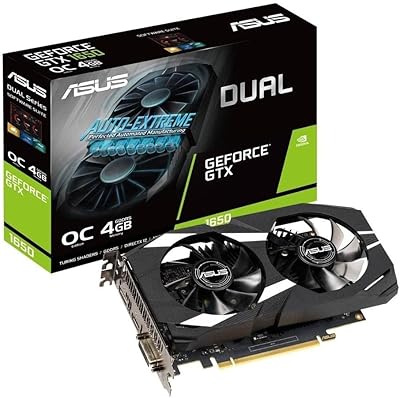
ASUS GeForce GTX 1650 Dual-Fan 4GB Graphics Card
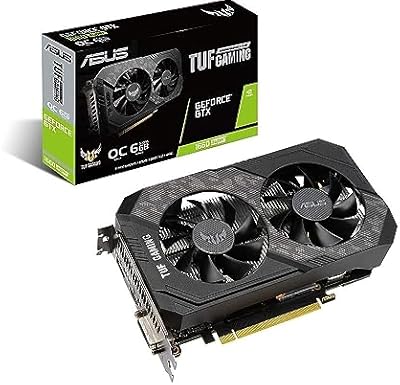
ASUS TUF GTX 1660 Super 6GB GPU
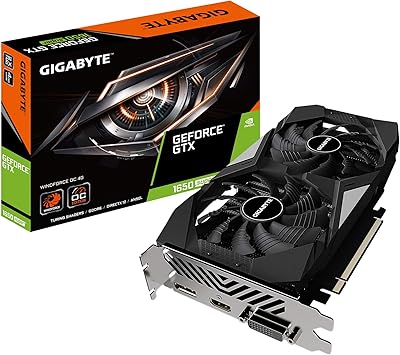
GIGABYTE GeForce GTX 1650 Super Graphics Card
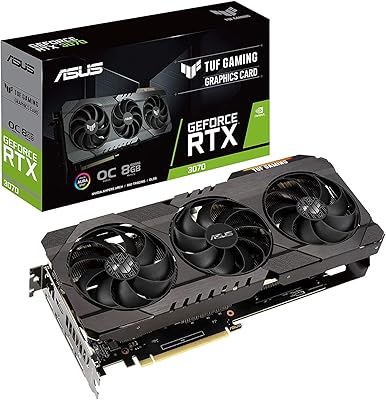
ASUS TUF RTX 3070 OC Graphics Card
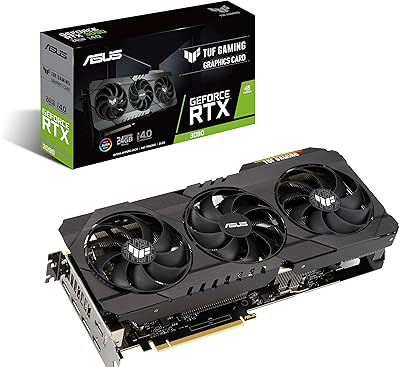
ASUS TUF RTX 3090 OC Graphics Card
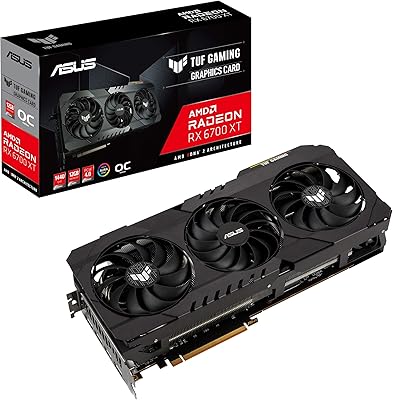
ASUS TUF RX 6700 XT Graphics Card
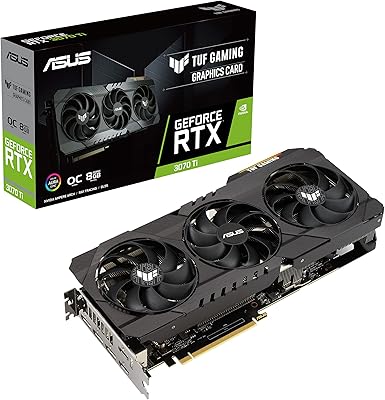
ASUS TUF RTX 3070 Ti Graphics Card
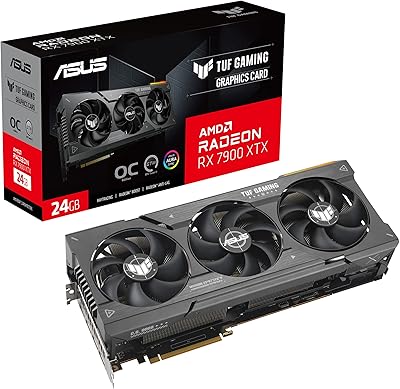
ASUS TUF RX 7900 XTX Graphics Card
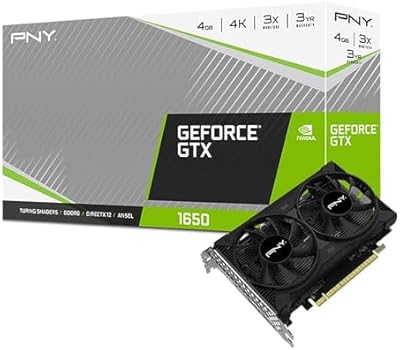
PNY GeForce GTX 1650 4GB GDDR6 Graphics Card