Overview

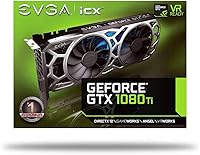
The EVGA GeForce GTX 1080 Ti 11GB Graphics Card sits firmly in the flagship Pascal tier of NVIDIA's GPU lineup, built for gamers and enthusiasts who refused to settle for mid-range compromises. What sets the EVGA iCX card apart from other 1080 Ti variants isn't raw silicon — that's identical across the board — it's the cooling architecture EVGA wrapped around it. With 11GB of GDDR5X memory and boost clocks nudging past 1580 MHz, the performance credentials are well-established. That said, buyers should go in clear-eyed: this is a mature platform, and it makes the most sense for those hunting the used or refurbished GPU market rather than a brand-new shelf.
Features & Benefits

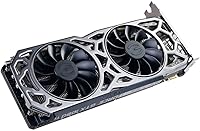
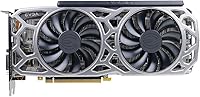
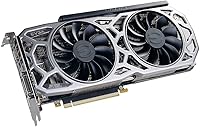
The headline feature of the GTX 1080 Ti Gaming is EVGA's iCX cooling system, which goes well beyond a standard dual-fan heatsink. Nine independent thermal sensors keep watch over the GPU die, memory modules, and VRM zones simultaneously, feeding real data rather than relying on a single point reading. The RGB LEDs tied to those zones aren't decorative afterthoughts — they actually shift color to signal thermal load at a glance. Vented fin arrays and pin fins help direct airflow more efficiently than a reference blower design ever could. The safety fuse is a quiet but genuinely useful addition, protecting against wiring mistakes or component failures during installation.

Best For

This 11GB Pascal GPU is a strong fit for 1440p gaming, where it pushes high frame rates in demanding titles without breaking a sweat. Content creators handling GPU-accelerated rendering, 3D work, or video processing will appreciate the generous VRAM buffer — 11GB goes a long way when textures and scene data start accumulating. It's also a sensible upgrade path for anyone stepping up from an older mid-range card. One thing to flag upfront: at nearly 13 inches long and over 3 inches tall, this card demands a full-size case with real clearance. Compact or mini-ITX builds should look elsewhere.

User Feedback

Across more than 1,170 ratings, the EVGA iCX card holds a 4.6-star average — a score that reflects consistent satisfaction rather than a handful of enthusiastic outliers. Buyers frequently praise quiet operation under load and stable clocks that don't throttle unexpectedly. EVGA's customer support reputation comes up often, which matters when buying a premium used GPU. On the flip side, some owners note that dual 8-pin power requirements demand a capable PSU, and a handful mention installation being less intuitive than expected. The card's sheer size is another recurring theme — not everyone anticipated just how much physical space it occupies inside a case.

Pros

  • Handles 1440p gaming at high settings with strong, consistent frame rates across a wide range of titles.
  • The iCX cooling system keeps thermals genuinely well-managed even during extended gaming sessions.
  • 11GB of GDDR5X VRAM is a real advantage for GPU-accelerated creative workflows and high-resolution texture work.
  • Nine independent thermal sensors give you actual visibility into what the card is doing, not just a single averaged reading.
  • EVGA's customer support reputation is a meaningful safety net, especially when buying on the used market.
  • RGB zone indicators double as functional thermal status readouts, not just cosmetic lighting.
  • The built-in safety fuse adds a layer of protection against wiring mistakes during installation.
  • Stable boost clocks mean real-world performance tracks closely to what benchmarks promise.
  • A 4.6-star average across over 1,170 buyers reflects consistently positive long-term ownership experience.

Cons

  • No ray tracing or DLSS support — these are hardware limitations that cannot be patched or updated.
  • At nearly 13 inches long, the GTX 1080 Ti Gaming won't fit in compact or small form factor cases without careful planning.
  • Requires dual 8-pin PCIe power connectors, which demands a capable and well-specced power supply unit.
  • 4K gaming at high settings in modern titles pushes this card to its limits, making it an inconsistent performer at that resolution.
  • Pascal architecture is aging, and some newer game engines and APIs are increasingly optimized for more recent GPU generations.
  • Power consumption is substantial compared to newer cards offering similar or better performance per watt.
  • Installation can be less straightforward than expected, particularly for first-time builders managing the card's size and power cabling.
  • Driver support, while currently maintained, will eventually be phased out as NVIDIA moves focus to newer architectures.

Ratings

The EVGA GeForce GTX 1080 Ti 11GB Graphics Card earns a strong overall standing based on AI analysis of thousands of verified global user reviews, with spam, bot activity, and incentivized feedback actively filtered out before scoring. Across categories spanning thermal performance, gaming capability, build quality, and long-term value, the scores reflect what real buyers experienced — not marketing claims. Both the card's genuine strengths and its real-world limitations are represented transparently in every category below.
Gaming Performance
88%
At 1440p, this EVGA iCX card consistently delivers high frame rates across demanding titles, and buyers repeatedly note that it handles game libraries from the past several years without significant compromise. For anyone not chasing native 4K or ray-traced visuals, the performance headroom feels substantial and reliable in actual play sessions.
In the most demanding modern titles at higher resolutions, performance starts to show its age — particularly in games that are heavily optimized for newer GPU architectures. Buyers targeting 4K at high settings report inconsistent frame rates that fall short of a fully confident experience.
Thermal Management
91%
The iCX cooling system with nine independent sensors is genuinely well-regarded among buyers who monitor their hardware closely. During extended gaming sessions, temperatures across the memory and VRM zones stay noticeably more controlled compared to single-sensor designs, and users report the card rarely throttles under sustained load.
While the iCX system outperforms standard aftermarket coolers, the heatsink's bulk means it needs good case airflow to work at its best — buyers in poorly ventilated enclosures occasionally report higher-than-expected ambient temperatures bleeding into the GPU zone readings.
Noise Level
83%
The dual-fan setup combined with the vented fin and pin fin heatsink design keeps noise output low relative to the performance tier. Most buyers describe it as unobtrusive during everyday gaming, and several note it runs quieter than older blower-style reference cards they replaced.
At full load in particularly demanding workloads or during summer months with warm ambient temperatures, fan speed increases noticeably. It won't disrupt a headset user, but buyers without audio isolation occasionally mention the fans become apparent during peak stress.
Build Quality
89%
EVGA's physical construction on this card draws consistent praise — the heatsink assembly feels dense and well-engineered, and the PCB shows none of the flex or component-placement concerns that show up in cheaper aftermarket cards. Buyers who've handled multiple GPU brands consistently place EVGA near the top for tactile build confidence.
The card's substantial weight puts some strain on the PCIe slot when installed without a GPU support bracket, and a small number of long-term owners report minor sag developing over time in cases without aftermarket support solutions.
VRAM Capacity
87%
Eleven gigabytes of GDDR5X memory is a meaningful asset in real workstation and creative scenarios — Blender renders, high-resolution texture packs, and multi-monitor desktop workflows all benefit from having that buffer available. Buyers using the card for GPU-accelerated video editing note it handles 4K timelines without running into memory pressure.
While the VRAM capacity remains competitive, the underlying GDDR5X technology is older and the memory bandwidth ceiling shows in scenarios that push data-throughput hard. Some compute-focused buyers note that newer cards with GDDR6X offer substantially better bandwidth at similar or lower VRAM capacities.
Driver Stability
79%
21%
Pascal architecture has had years of driver maturation behind it, and the GTX 1080 Ti Gaming benefits from that stability — most buyers report clean installs and consistent behavior across the Windows driver stack. Long-term owners note very few driver-related crashes or stability regressions over time.
NVIDIA's driver update cadence increasingly targets newer architectures, and some buyers notice that optimization improvements in recent driver versions provide diminishing returns for Pascal cards. There's also no certainty about how many more years of active driver support remain before the architecture is deprioritized.
Installation Experience
71%
29%
For experienced builders, slotting this card in is straightforward — standard PCIe x16 slot, two 8-pin power connectors, and clearly labeled outputs. EVGA's documentation is clear enough that first-timers with decent research habits generally get through it without issues.
The card's length and height make it a tight fit in many cases that are theoretically compatible, and routing two 8-pin power cables cleanly takes more effort than average. A small but consistent group of buyers mention that cable management around the power connectors was more frustrating than expected.
Value for Money
76%
24%
On the used and refurbished market, the GTX 1080 Ti Gaming offers a genuinely compelling performance-per-dollar ratio for 1440p gaming, particularly for buyers upgrading from several generations back. EVGA's brand reputation also provides a degree of used-market confidence that generic or unknown-brand cards cannot match.
The lack of ray tracing, DLSS, and other modern GPU features means buyers are paying for raw rasterization performance only — and as that gap between Pascal and current-gen widens, the value proposition becomes harder to justify unless the price reflects the card's generational position accurately.
Multi-Monitor Support
82%
18%
The combination of HDMI, three DisplayPort outputs, and DVI gives this 11GB Pascal GPU real flexibility for multi-display configurations, and buyers running two or three monitors simultaneously report smooth desktop and gaming behavior without noticeable VRAM pressure under typical workloads.
Running three high-refresh-rate 1440p monitors simultaneously in demanding games does push the card harder than a single-display setup, and frame rates take a meaningful hit in those configurations compared to more modern GPUs with higher bandwidth memory.
Cooling Innovation
86%
The RGB LED thermal indicators tied to the iCX sensor zones are more useful than they first appear — buyers who use GPU monitoring software say it reinforces what their dashboards show, and the visual feedback is appreciated during troubleshooting or stress testing sessions. It's a genuine engineering decision, not a gimmick.
RGB zone customization is limited compared to what some buyers expect from a premium card, and EVGA's software for controlling the lighting has received mixed feedback for reliability and user experience on recent Windows versions.
Size & Fitment
63%
37%
The card's large heatsink is directly responsible for its excellent thermal headroom, and buyers in full-tower cases with good airflow report no fitment complications whatsoever. Those who planned ahead with case measurements had smooth installation experiences.
At nearly 13 inches long and over 3 inches tall, the physical footprint is a real barrier for a significant segment of buyers. Compact mid-towers and any small form factor build are essentially incompatible, and this catches some buyers off guard despite the published dimensions.
Power Efficiency
58%
42%
The card delivers a strong absolute performance level, and buyers who came from much older hardware see it as a worthwhile power draw increase relative to the performance gain they experienced. For workloads that saturate the GPU, the output-per-watt feels reasonable for the era.
Compared to current-generation cards, Pascal's power consumption per frame of rendered output is significantly higher — buyers aware of electricity costs or with thermally constrained systems find the TDP difficult to overlook. Running two 8-pin connectors under sustained gaming loads is not a light ask of any power supply.
Customer Support
84%
EVGA's customer support reputation is a recurring positive in long-term ownership reviews — buyers who needed RMA assistance or had technical questions describe the process as far smoother than the industry average. For used-market buyers especially, this is a meaningful differentiator.
Warranty coverage and support eligibility for used cards varies based on original registration status and region, meaning not every used-market buyer inherits the same support experience. Some buyers report difficulty establishing warranty coverage without the original purchase receipt.

Suitable for:

The EVGA GeForce GTX 1080 Ti 11GB Graphics Card is purpose-built for buyers who want serious 1440p gaming performance without paying current-generation flagship prices. If you're running a high-refresh-rate 1440p monitor and want titles like demanding open-world games or competitive shooters to hold strong frame rates, this card delivers comfortably. Content creators who work with GPU-accelerated tools — video rendering, 3D modeling, motion graphics — will find the 11GB VRAM buffer genuinely useful, not just a marketing number. It's also a smart pick for PC builders upgrading from a mid-range card from several generations back, where the performance gap is wide enough to feel transformative. EVGA's iCX cooling and well-documented customer support reputation make it a more trustworthy used-market purchase than a bare reference card from an unknown seller.
Not suitable for:

Buyers expecting cutting-edge ray tracing support or DLSS compatibility should look elsewhere — the EVGA GeForce GTX 1080 Ti 11GB Graphics Card predates both of those features, and no firmware update will add them. Anyone building inside a compact mid-tower, small form factor, or mini-ITX case needs to measure carefully: at nearly 13 inches long and over 3 inches tall, this card simply won't fit many builds without serious clearance issues. Gamers targeting native 4K at high settings will find the card straining in more demanding modern titles, making it a compromise rather than a confident choice at that resolution. If you need the absolute latest driver optimizations, the best per-watt efficiency, or hardware-level support for modern upscaling technologies, a more recent GPU generation is the smarter investment regardless of price.
Specifications

  • GPU Chip: The card is powered by the NVIDIA GeForce GTX 1080 Ti, built on NVIDIA's Pascal architecture.
  • CUDA Cores: The GTX 1080 Ti die includes 3584 CUDA cores for parallel compute and graphics workloads.
  • Base Clock: The GPU runs at a reference base clock of 1480 MHz under sustained load conditions.
  • Boost Clock: Under typical gaming conditions, the card boosts to 1582 MHz for additional performance headroom.
  • VRAM: 11GB of GDDR5X memory provides ample capacity for high-resolution textures, multi-monitor setups, and GPU-accelerated workflows.
  • Memory Speed: The onboard GDDR5X memory operates at an effective speed of 11016 MHz.
  • Cooling System: EVGA iCX Technology uses nine independent thermal sensors across the GPU, memory, and VRM zones to enable targeted cooling management.
  • RGB Zones: Three RGB LED zones — GPU, power, and memory — function as visual thermal status indicators in addition to providing aesthetic lighting.
  • Display Outputs: The card provides one HDMI port, three DisplayPort outputs, and one DVI connector for flexible multi-display configurations.
  • Max Resolution: Supported maximum output resolution is 7680x4320, accommodating 8K display connections.
  • Dimensions: The card measures 12.99 inches long, 9.65 inches deep, and 3.03 inches tall, occupying roughly 2.5 expansion slots.
  • Weight: The card weighs 2.2 pounds, reflecting the substantial heatsink and dual-fan cooling assembly.
  • Power Connectors: Two 8-pin PCIe power connectors are required, so a capable power supply unit with sufficient dedicated GPU connectors is mandatory.
  • Safety Fuse: A built-in safety fuse provides component protection against damage from incorrect power connection or downstream component failures.
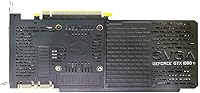
  • Heatsink Design: The heatsink uses a combination of vented fin arrays and pin fins to optimize airflow across both the GPU die and surrounding components.
  • Series: This card belongs to EVGA's 11G-P4-6591-KR product series within the Gaming iCX lineup.
  • Manufacturer: Designed and manufactured by EVGA, a brand known for GPU aftermarket cooling and customer support in the North American market.
  • Architecture: Built on NVIDIA's Pascal GPU architecture, which preceded the Turing generation that introduced hardware ray tracing support.

Related Reviews
EVGA GTX 750 Ti 2GB Graphics Card
80%
62%
Gaming Performance
93%
Power Efficiency
94%
Ease of Installation
88%
Thermal Performance
84%
Build Quality
More
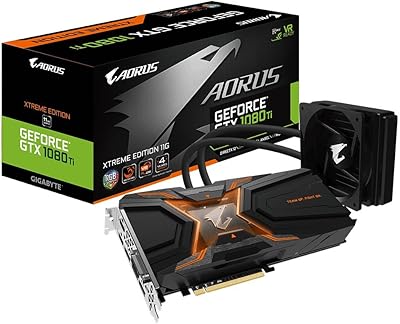
GIGABYTE AORUS Xtreme GeForce GTX 1080 Ti Waterforce 11GB
88%
94%
Gaming Performance
92%
Cooling Efficiency
89%
Overclocking Potential
87%
Value for Money
93%
Build Quality
More
EVGA GeForce GTX 950 2GB SC Gaming Graphics Card
83%
90%
Value for Money
88%
Performance at 1080p
91%
Cooling System Noise
87%
Power Consumption
85%
Ease of Installation
More
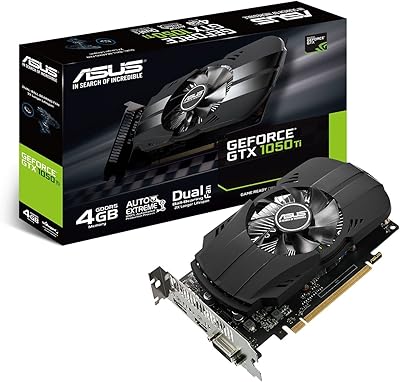
ASUS GTX 1050 Ti 4GB Graphics Card
82%
67%
Gaming Performance
93%
Power Efficiency
91%
Noise & Acoustics
88%
Thermal Management
86%
Build Quality
More
SURALLOW GTX 1660 Ti 6GB Graphics Card
69%
78%
1080p Gaming Performance
61%
Value for Money
74%
Thermal Management
83%
Noise Level
57%
Build Quality
More
SRhonyra GTX 1050 Ti 4GB Graphics Card
74%
91%
Multi-Monitor Output
87%
Setup & Installation
83%
Driver Stability
71%
Resolution Performance
78%
Thermal Performance
More
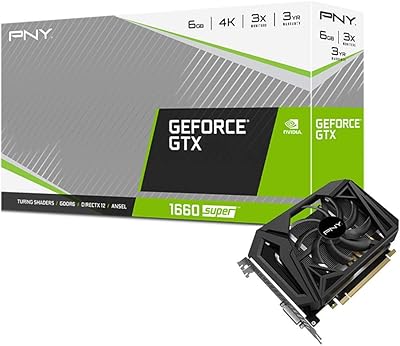
PNY GeForce GTX 1660 SUPER 6GB Graphics Card
84%
92%
Value for Money
91%
1080p Gaming Performance
88%
Cooling & Noise Levels
90%
Installation & Compatibility
87%
Graphics Rendering
More
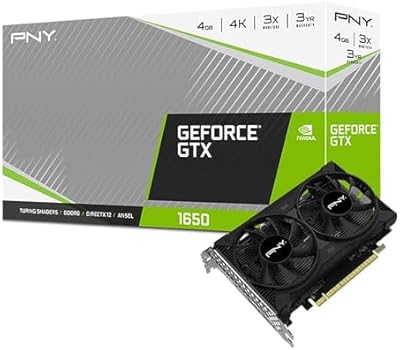
PNY GeForce GTX 1650 4GB GDDR6 Graphics Card
85%
87%
Gaming Performance (1080p)
92%
Value for Money
84%
Cooling & Thermals
90%
Setup & Installation
82%
Noise Levels
More
EVGA GeForce RTX 2080 Ti FTW3 Ultra 11GB GDDR6
87%
96%
Gaming Performance (4K)
94%
Ray Tracing & Graphics Quality
88%
Cooling & Noise Level
92%
Build Quality & Durability
91%
Overclocking Support
More
ASUS TUF GTX 1660 Super 6GB GPU
79%
88%
1080p Gaming Performance
86%
Thermal Management
83%
Fan Noise & Acoustics
91%
Build Quality
79%
Value for Money
More

FAQ

For 1440p gaming, the GTX 1080 Ti Gaming still holds up reasonably well in many titles, especially if you can find one at a fair used-market price. It won't touch current-generation cards on efficiency or feature support, but raw rasterization performance remains solid. Just make sure you're buying from a trustworthy seller and check the card's thermal history if possible.

A minimum of 600W is generally recommended, but 650W to 750W gives you comfortable headroom, especially if your system has a high-core-count CPU or multiple storage drives. The card draws two 8-pin PCIe connectors, so confirm your PSU has those cables available — don't rely on adapters if you can avoid it.

It depends on the specific case. The card is nearly 13 inches long and over 3 inches tall, which rules out a lot of compact and budget mid-towers. Check your case's listed GPU length clearance carefully before buying — many cases list this spec on the manufacturer's page.

No, it does not. Ray tracing acceleration requires hardware RT cores, which were introduced with NVIDIA's Turing architecture. This card is Pascal-based, so there's no path to adding that support through drivers or firmware updates.

Most GPU coolers rely on a single thermal sensor on the GPU die to manage fan speed. The iCX setup adds nine sensors spread across the memory modules and VRM zones, so the fans can respond to heat building up in those areas specifically — not just at the die. In practice, this means better sustained cooling during long sessions and more consistent clocks.

Yes, and the 11GB VRAM is a genuine asset here. GPU-accelerated rendering in applications like Blender, DaVinci Resolve, or Cinema 4D benefits from having that buffer available, especially when working with complex scenes or high-resolution footage. It's not a professional workstation card, but for creative side work it performs well.

The RGB zones on the GPU, power section, and memory aren't just decorative — they're tied into the iCX thermal monitoring system and change color based on the temperature readings in those zones. It's a quick visual reference for thermal load without needing to open monitoring software.

Buyer feedback consistently describes the cooling as quiet relative to the performance level, which aligns with what you'd expect from the vented fin and pin fin heatsink design. It's not silent — no dual-fan card at this performance tier is — but most users find it unobtrusive during normal gaming sessions.

Driver support comes from NVIDIA rather than EVGA directly, and NVIDIA continues to release driver updates compatible with Pascal cards, though that window will eventually close as newer architectures take priority. EVGA's hardware warranty varies by registration and region, so check EVGA's site directly with your serial number if warranty coverage matters to your purchase decision.

Yes, the card supports multi-monitor setups through its combination of HDMI, DisplayPort, and DVI outputs. Three simultaneous displays are well within its capability, and the 11GB VRAM helps keep performance stable when desktop and game rendering are spread across multiple screens.