Overview

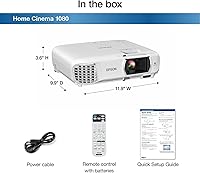
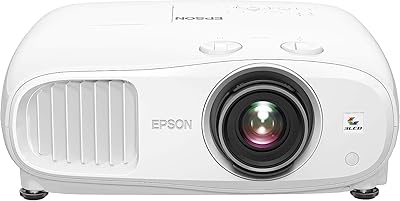
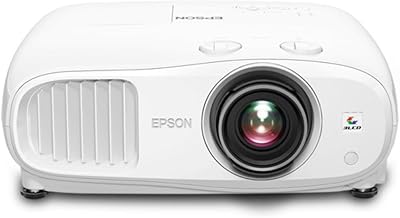
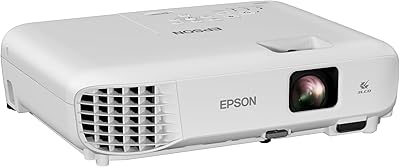
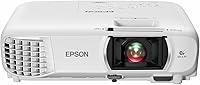
The Epson Home Cinema 1080 1080p Projector launched in 2020 and has quietly held its ground as one of the stronger mid-range options in a crowded projector market — and its staying power is no accident. Built on Epson's 3LCD technology, this Epson projector delivers color accuracy and image quality that genuinely outpaces what you would expect at this price tier. It carries a clean white finish and a medium footprint that fits naturally in a living room without dominating the space. With over 400 ratings averaging 4.5 stars, the level of sustained buyer satisfaction here is hard to ignore.
Features & Benefits

What separates the Home Cinema 1080 from cheaper single-chip DLP alternatives is its three-chip 3LCD engine. With DLP projectors, the color wheel can cause a distracting rainbow effect, and color brightness often lags well behind white brightness. Here, both color and white brightness land at 3,400 lumens — that parity matters in practice, especially during scenes with rich, saturated colors. The auto keystone correction is genuinely handy; the built-in sensor reads your projection angle and squares the image automatically. Two HDMI 2.0 ports mean your cable box and gaming console can stay plugged in simultaneously, and the built-in speaker handles basic audio well enough to get things running without a soundbar.

Best For

This 3LCD home projector fits a wide range of buyers, but a few use cases stand out. If you watch movies or sports in a room that gets some ambient light, 3,400 lumens gives you breathing room — though dimming the lights still makes a visible difference. Console and PC gamers will appreciate the sharp 1080p image on a large screen; it holds up well during fast-action titles where clarity matters. Cord-cutters can plug a streaming stick into one HDMI port and a Blu-ray player into the other without juggling cables. It is also a strong pick for anyone upgrading from a budget DLP who is ready to see what proper color rendering actually looks like.

User Feedback

Owners consistently highlight two things: how vibrant the colors look straight out of the box, and how easy the initial setup is. The auto-keystone feature gets called out repeatedly as a real convenience — not just a box-ticking spec. On the gaming side, players using PS5 and Xbox consoles report that the image stays crisp even during fast movement. That said, the fan noise can be noticeable at maximum brightness, and the built-in speaker is really just a starting point — most users pair it with external audio within weeks. A recurring note from longer-term owners is the lack of 4K support; if you are planning ahead, that is worth weighing carefully before committing.

Pros

  • 3LCD color accuracy is noticeably better than single-chip DLP alternatives at this price point.
  • Both color and white brightness reach 3,400 lumens — that parity is rare and makes a real difference on screen.
  • Auto-keystone correction genuinely works, saving users the frustration of manual geometric adjustments.
  • Two HDMI 2.0 ports let you keep a streaming device and a console connected at the same time.
  • Setup is fast enough that most buyers are watching content within minutes of opening the box.
  • The 1080p image holds up well for console gaming, with crisp detail during fast-action sports and adventure titles.
  • A clean white chassis and medium footprint sit naturally in a living room without drawing attention.
  • Rich shadow detail and a strong contrast ceiling make dark cinematic scenes look genuinely compelling.
  • Sustained 4.5-star ratings from hundreds of verified buyers signal reliable real-world performance over time.
  • The 2-year warranty and widely available Epson service network add a practical layer of post-purchase confidence.

Cons

  • Fan noise becomes clearly audible at full brightness, which is distracting during quiet dialogue scenes.
  • No 4K or HDR support limits this projector's relevance as streaming libraries shift toward higher formats.
  • The built-in speaker lacks the volume and bass needed to fill even a medium-sized room adequately.
  • No built-in Wi-Fi or Bluetooth means wireless streaming requires an external dongle taking up an HDMI port.
  • Auto-keystone struggles with steep projection angles, occasionally requiring manual correction to finish the job.
  • Input lag is not low enough for competitive multiplayer gaming where milliseconds affect performance.
  • The plastic chassis surface scuffs relatively easily, which matters for buyers who reposition the unit frequently.
  • Lamp replacement costs after the warranty period add to the total cost of ownership over several years.
  • Two-year warranty coverage falls short of the three-year terms some competing brands offer at similar prices.

Ratings

The scores below for the Epson Home Cinema 1080 1080p Projector were generated by our AI system after analyzing verified purchaser reviews from multiple global markets, with spam, bot-submitted, and incentivized feedback actively filtered out. This Epson projector has accumulated a substantial review base since its 2020 release, giving us enough signal to reflect both its genuine strengths and the recurring frustrations real buyers encounter. Nothing here is sanitized — the pain points are weighted just as seriously as the praise.
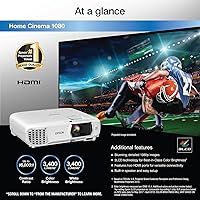
Image Quality
91%
The 3LCD engine consistently draws praise for producing colors that look natural and fully saturated — not the washed-out or overly punchy rendition you get from cheaper single-chip alternatives. Buyers watching HDR-graded streaming content report that skin tones and shadow detail hold up well at typical living room viewing distances.
Without native HDR support, high-contrast content does not reach the same visual ceiling as competing displays in a similar price range. A handful of users also note that fine text and sharp edges can look slightly soft compared to high-end 4K alternatives, though this is rarely a concern for standard movie and TV use.
Brightness & Ambient Light Performance
84%
At 3,400 lumens across both color and white output, this 3LCD home projector handles moderately lit rooms better than most competing units at this tier. Users running it in open living spaces with afternoon light filtered through curtains report a watchable, clear image without needing a fully blacked-out room.
In rooms with direct sunlight or bright overhead lighting, the image still washes out noticeably — some light control remains necessary for the best experience. A few buyers expected it to perform more like a commercial display in fully lit environments, which is an unrealistic bar for any home projector at this output level.
Color Accuracy
88%
The 3-chip 3LCD design routes red, green, and blue light simultaneously rather than spinning them in sequence, which eliminates the color fringing that plagues single-chip DLP projectors. Movie watchers consistently describe the palette as rich and reliable, with greens and reds in particular looking more lifelike than expected.
Out of the box, the default color mode leans slightly warm for some users, requiring a manual calibration pass to dial in neutral whites. Those without calibration tools or experience adjusting projector color settings may simply accept an image that is slightly off from accurate.
Gaming Performance
79%
21%
Console gamers using PS5 and Xbox Series X report that fast-action titles like racing games and shooters look crisp and responsive on a large projected screen. The native 1080p resolution handles the visual demands of current-gen gaming well for buyers who have not yet committed to 4K.
Input lag, while acceptable for casual and story-driven gaming, is not low enough to satisfy competitive players who are sensitive to display latency. PC gamers looking for high-refresh-rate support will also find the Home Cinema 1080 limiting, as it is capped at a standard 60Hz-equivalent output.
Setup & Ease of Use
93%
First-time projector owners consistently highlight how little friction there is getting this unit up and running — unbox, position, plug in an HDMI source, and the auto-keystone sensor handles the geometric correction automatically. For buyers who dread the calibration process that typically comes with projector ownership, this is a genuine relief.
The automatic keystone correction works well for modest angles but struggles with more extreme off-axis placements, occasionally producing edges that are not perfectly squared. Users mounting the projector at steep vertical angles report needing to fall back on manual fine-tuning to finish the job.
Fan Noise
61%
39%
At lower brightness settings, the fan stays quiet enough that it fades into the background during movies with active soundtracks. Buyers using it primarily for streaming in eco mode tend to find the noise level acceptable for everyday use.
At full brightness, the fan becomes audible enough to be distracting during quiet dialogue scenes or late-night viewing sessions. This is one of the most consistent criticisms across user reviews — it is not a dealbreaker for most, but it is clearly a real limitation rather than an isolated complaint.
Built-in Speaker
54%
46%
The onboard speaker is functional enough to confirm the projector is working during setup and to get through a casual viewing session without needing to source additional audio hardware immediately. For users who already own a soundbar or receiver, the speaker is simply irrelevant.
Beyond basic utility, the built-in audio lacks the bass response and volume headroom needed to fill even a medium-sized room convincingly. The vast majority of buyers pair this projector with an external speaker or soundbar within their first few weeks of use, which means treating this as a true audio solution would be a mistake.
Connectivity
86%
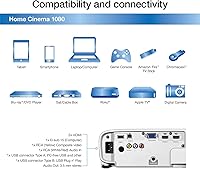
Two HDMI 2.0 ports cover the most common real-world scenario of having both a streaming device and a gaming console or Blu-ray player connected simultaneously. The addition of a 3.5mm audio output and USB port gives buyers flexible options for routing audio and powering streaming sticks.
There is no built-in Wi-Fi or Bluetooth, which means wireless streaming requires an external dongle plugged into one of the HDMI ports. Buyers expecting smart TV-style wireless connectivity without additional hardware will need to adjust their expectations.
Contrast & Black Levels
76%
24%
The dynamic contrast ratio delivers genuinely deep blacks during dark cinematic scenes, which is more than most projectors at this price tier can claim. Night scenes in films and moody content benefit noticeably from the rich shadow detail this contrast ceiling allows.
The rated contrast figure is a dynamic measurement, meaning it shifts based on scene content rather than being a fixed panel characteristic. In practice, dark scenes in a room with any ambient light bleed show a grey tint on what should be pure black, which is a known limitation of projection technology generally.
Build Quality & Design
82%
18%
The chassis feels solid for its weight class and the white finish reads as clean and neutral in most living room setups. At 8.2 pounds, it is manageable for repositioning between rooms without feeling flimsy or impermanent.
The plastic housing does not convey the premium feel of higher-end Epson models, and the lens cover mechanism feels noticeably lighter than the rest of the unit. A few buyers have noted minor cosmetic scuffing after modest handling, suggesting the surface finish is not especially scratch-resistant.
Value for Money
87%
For buyers comparing this 3LCD home projector against single-chip DLP units at similar price points, the color quality improvement is immediately apparent and justifies the investment on its own. The combination of auto-keystone, dual HDMI, and genuine brightness output at this price tier is difficult to replicate without spending considerably more.
Entry-level 4K projectors are now available at prices that are not dramatically higher, which makes the value calculation more complicated for buyers thinking about longevity. If you plan to use this projector for more than three or four years, the absence of 4K and HDR support may eventually feel like a gap.
4K & Future-Proofing
47%
53%
For buyers who are firmly committed to 1080p content — broadcast TV, older Blu-ray libraries, standard streaming tiers — the lack of 4K is not an immediate problem, and the native resolution handles that content well.
This is the single most commonly raised concern among buyers who revisit their purchase after several months. The absence of 4K upscaling or HDR processing means the Home Cinema 1080 is already behind the curve on formats that streaming services are actively prioritizing, making it a weaker long-term investment than its other qualities might suggest.
Portability
73%
27%
At just over 8 pounds with a compact footprint, the Home Cinema 1080 is easy to relocate between a bedroom and a living room or bring to a friend's place for a movie night. No permanent installation is required, which suits renters and buyers who prefer flexibility.
It lacks a carrying case in the box, and the power cable is not especially short, making impromptu transport a bit less elegant than it could be. There is also no battery option, so true portability is tethered to a power outlet.
Warranty & Brand Support
78%
22%
Epson's two-year limited warranty provides a reasonable safety net for a mid-range electronics purchase, and the brand has a well-established service network in most major markets. Buyers report that replacement lamp availability and customer service responsiveness are generally reliable.
Two years falls short of the three-year coverage some competing brands offer at a similar price tier. Lamp replacement costs after the warranty period can add meaningfully to the total cost of ownership, which is worth factoring in before purchase.

Suitable for:

The Epson Home Cinema 1080 1080p Projector is a strong fit for buyers who want a large-screen experience without committing to a dedicated home theater room. If your living room gets moderate ambient light and you are not willing to install blackout curtains, the brightness output here gives you more flexibility than most projectors in this category. Families who use the same space for movie nights, casual gaming, and sports will appreciate that this 3LCD home projector handles all three without requiring separate setups. Console gamers — particularly those on PS5 or Xbox playing story-driven or sports titles — will find the 1080p image sharp and responsive on a large projected screen. Cord-cutters who plug a streaming stick into one HDMI port and a soundbar into the audio output can have a genuinely capable home cinema running in under twenty minutes. It is also an excellent step-up purchase for anyone coming from a budget single-chip DLP projector who has noticed dull colors or rainbow artifacts and wants a meaningful, visible improvement.
Not suitable for:

The Epson Home Cinema 1080 1080p Projector is not the right call for buyers who are already invested in 4K content or planning to be within the next year or two. Streaming services are actively expanding their 4K and HDR libraries, and this projector cannot decode or display either format natively — that gap will only become more noticeable over time. Competitive gamers who are sensitive to input lag or who need high refresh rates for fast-paced multiplayer titles should look elsewhere, as this unit is not tuned for low-latency performance. If you are hoping the built-in speaker will serve as your primary audio solution in a medium or large room, you will be disappointed — it covers basic functionality, but it is not a substitute for even an entry-level soundbar. Buyers who want to install a projector in a fully lit room with no window treatment should also temper their expectations, since even 3,400 lumens has its limits against direct sunlight. Finally, anyone who values whisper-quiet operation for late-night viewing in a small room may find the fan noise at higher brightness modes an ongoing irritant.
Specifications

  • Display Technology: Uses a 3-chip 3LCD system that processes red, green, and blue light simultaneously through three dedicated liquid crystal panels for consistent, accurate color reproduction.
  • Resolution: Outputs a native Full HD image at 1920x1080 pixels, delivering sharp detail across the full frame without any pixel-shifting or upscaling.
  • Brightness: Rated at 3,400 lumens for both color brightness and white brightness, with both figures matching — a meaningful distinction from projectors where color brightness lags significantly behind white brightness.
  • Contrast Ratio: Achieves a dynamic contrast ratio of up to 16,000:1, which contributes to deeper black levels and richer shadow detail during dark scenes.
  • Keystone Correction: Includes a built-in picture skew sensor that automatically detects projection angle and applies digital keystone correction to produce a geometrically square image without manual input.
  • HDMI Ports: Equipped with two HDMI 2.0 ports, allowing simultaneous connection of two video sources such as a streaming device and a gaming console.
  • Audio Output: Features a 3.5mm stereo audio output jack for routing sound to an external speaker or soundbar, in addition to the onboard speaker.
  • Built-in Speaker: Includes an integrated mono speaker intended for basic audio output during initial setup or casual use, not as a primary room-filling audio solution.
  • USB Port: Provides a USB port that can be used to power compatible streaming sticks or other low-draw accessories connected to the projector.
  • Dimensions: Measures 14.57 x 14.96 x 7.87 inches (L x W x H), giving it a medium footprint that suits tabletop or shelf placement in typical living room environments.
  • Weight: Weighs 8.2 pounds, making it manageable for repositioning between rooms without requiring permanent installation hardware.
  • Lamp Type: Uses a replaceable UHE (Ultra High Efficiency) lamp; Epson rates standard lamp life at approximately 4,000 hours in normal mode and up to 7,000 hours in eco mode.
  • Aspect Ratio: Supports a native 16:9 widescreen aspect ratio, aligned with the format used by standard HD broadcast, streaming content, and modern gaming.
  • Color: Available in a white chassis finish that presents a clean, neutral appearance suited to living room and bedroom environments.
  • Warranty: Covered by Epson's 2-year limited warranty, which includes parts and labor, with a 90-day lamp warranty from the date of original purchase.
  • Model Number: Officially identified by Epson as model V11H980020, also marketed under the product code HC1080.
  • Release Year: First made available to consumers in October 2020, and has remained in active distribution since without a direct successor replacing it in Epson's lineup.
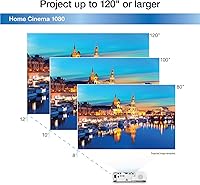
  • Throw Ratio: Operates with a throw ratio of approximately 1.22–1.47:1, meaning it requires roughly 8 to 12 feet of distance to produce a 100-inch diagonal image.
  • Recommended Use: Designed primarily for home cinema and gaming applications, with Epson optimizing image processing for both cinematic content and fast-motion video signals.
  • Zoom: Features a 1.2x optical zoom lens, providing modest flexibility in positioning the projector relative to the screen without sacrificing image quality.

Related Reviews
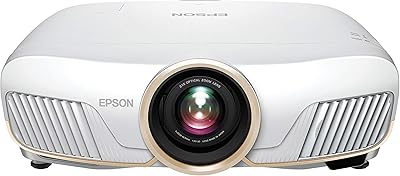
Epson Home Cinema 5050UB 4K PRO-UHD Projector
85%
94%
Picture Quality
90%
Brightness
93%
Color Accuracy
85%
Setup & Installation
91%
HDR Performance
More
Epson Home Cinema 3200 4K PRO-UHD Projector
83%
93%
Image Quality
89%
Brightness Performance
74%
Ease of Setup
91%
HDR Performance
88%
Gaming Performance
More
Epson Home Cinema 3800 4K Projector
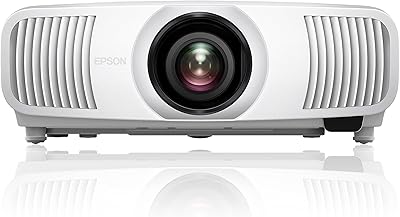
75%
93%
Color Accuracy
91%
Brightness Performance
78%
Image Sharpness & 4K Detail
82%
HDR Performance
84%
Contrast & Black Levels
More
Epson LS11000 4K Laser Home Theater Projector
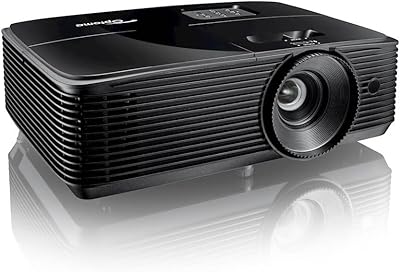
79%
91%
Picture Quality
93%
Color Accuracy
83%
Brightness Performance
88%
HDR Performance
86%
Gaming Performance
More
Optoma HD146X Home Theater Projector
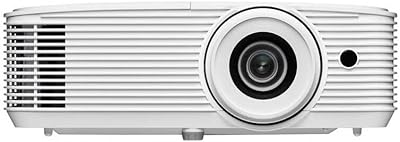
74%
88%
Image Brightness
83%
Image Sharpness & Clarity
74%
Contrast & Black Levels
69%
Color Accuracy
77%
Gaming Performance
More
Optoma HD30LV 1080p Home Theater Projector
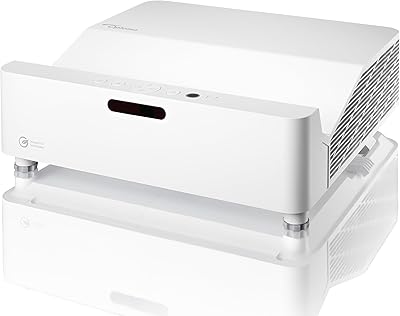
72%
88%
Brightness Performance
79%
Image Quality
76%
Gaming Experience
71%
Setup & Placement
86%
Portability
More
Optoma GT3500HDR 1080p Full HD Home Laser Projector
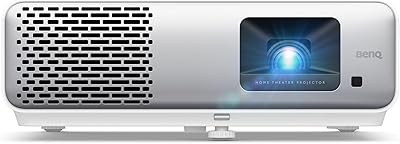
88%
91%
Image Quality
87%
Brightness
85%
Ease of Setup
82%
Portability
90%
Design & Build Quality
More
BenQ HT2060 1080p Home Theater Projector
79%
93%
Color Accuracy
81%
Image Sharpness
76%
HDR Performance
89%
Gaming Performance
67%
Brightness & Room Versatility
More
GKLPO 1080P Projector
86%
88%
Image Quality
92%
Wi-Fi Connectivity
89%
Bluetooth Connectivity
90%
Portability
85%
Setup & Ease of Use
More
Epson EX3290 WXGA 3LCD Business Projector
77%
88%
Image Brightness
91%
Color Accuracy
74%
Resolution & Sharpness
86%
Setup & Ease of Use
83%
Portability
More

FAQ

With a throw ratio of roughly 1.22 to 1.47:1, you are looking at approximately 10 to 12 feet of distance from the lens to your screen or wall to hit around 100 inches diagonal. Most standard living rooms can accommodate this without any issue, but it is worth measuring your space before assuming it will fit.

For most typical placements — sitting on a coffee table or a shelf at a slight upward angle — the automatic correction does a solid job squaring the image quickly. Where it starts to struggle is with more extreme vertical angles, like projecting from floor level up toward a high wall. In those cases, you may need to do a small manual adjustment to finish the job, but the auto feature handles the bulk of the work reliably.

Yes, and it works well for console gaming. Both consoles connect via HDMI 2.0, and the projected 1080p image looks sharp and detailed during gameplay. Just keep in mind that 4K output from those consoles will be downscaled to 1080p, and the input lag, while acceptable for most gaming, is not optimized for competitive multiplayer where every millisecond matters.

Honestly, the built-in speaker is fine for getting started and confirming everything works, but it is not something you will want to rely on for regular movie nights. It lacks the bass and volume to properly fill a room. Most users pick up even a basic Bluetooth speaker or a budget soundbar within the first few weeks, and the difference is immediately noticeable.

No — it does not support native 4K resolution or HDR decoding. It outputs a maximum of 1080p, and HDR metadata from connected sources is not processed or tone-mapped. If your streaming service or disc is sending a 4K HDR signal, the projector will display it at 1080p in standard dynamic range. This is the most important spec to consider if you are thinking about how long you plan to own this unit.

At full brightness, the fan is audible enough that it can intrude on quiet dialogue scenes or sparse soundtracks, especially in a small room. Switching to eco mode noticeably reduces the fan speed and noise, though it also dims the image somewhat. It is a real trade-off that comes up frequently in owner reviews, so if you are particularly sensitive to background noise, it is worth factoring into your decision.

Yes, and this is actually one of the more practical setups for this projector. Plug the streaming stick into one of the HDMI ports and use the USB port to power it — no separate power adapter needed in most cases. It keeps the cable situation clean and means you do not need any additional hardware to start streaming.

The practical difference comes down to color and the rainbow effect. DLP projectors use a spinning color wheel that can produce a brief rainbow artifact — flashes of red, green, and blue — especially noticeable when bright objects move across a dark background. Some people never notice it; others find it impossible to ignore. The 3LCD approach in this Epson projector eliminates that entirely by handling all three colors simultaneously, and it also means color brightness matches white brightness, which results in richer, more natural-looking images.

It performs better than most projectors in moderately lit conditions — 3,400 lumens is a meaningful output level. With curtains drawn or in a room without direct sunlight, the image remains clear and watchable. That said, it is not immune to ambient light; a fully lit room with overhead lights blazing will wash out the image. Some basic light management — even just closing the blinds — makes a significant difference.

Epson rates the lamp at around 4,000 hours in normal mode and up to 7,000 hours in eco mode. For typical household use — say, two to three hours a night — that translates to several years before a replacement is needed. Replacement lamps are widely available through Epson and third-party retailers, and while they represent a real added cost over time, they are easy to source and install yourself without any special tools.

Where to Buy