Overview

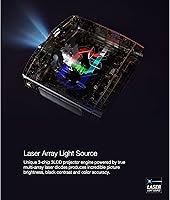
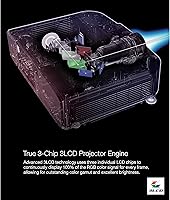
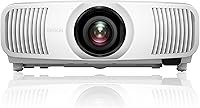
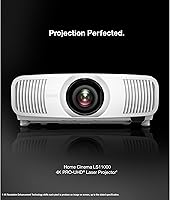
The Epson LS11000 4K Laser Home Theater Projector is built squarely for enthusiasts who treat their viewing room as a serious investment, not an afterthought. Unlike single-chip DLP projectors, this Epson laser projector runs a 3-chip 3LCD engine, which means every frame gets the full RGB color signal simultaneously — no color wheel, no rainbowing artifacts. The laser light source is rated at 20,000 hours, making the old ritual of bulb replacements irrelevant. One honest caveat upfront: the unit is large, weighs 28 pounds, and demands real thought about placement. The motorized lens helps considerably, but this is not a casual plug-and-play setup.
Features & Benefits

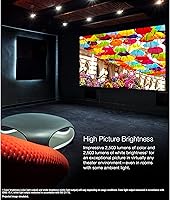
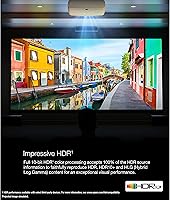
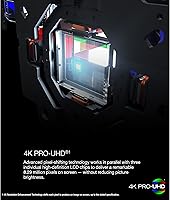
Epson's Precision Shift Glass Plate technology is the engine behind the 4K PRO-UHD label — it uses a digitally controlled glass element to refract pixel light and produce an 8.29-million-pixel image. That is pixel-shifting, not native 4K, and informed buyers should understand the distinction. In practice, sharpness is genuinely impressive. Brightness holds steady at 2,500 lumens for both color and white, so colors do not wash out under moderate ambient light. The 10-bit HDR pipeline handles HDR10+, HDR10, and HLG, with a 16-step manual adjustment that gives calibration-minded owners real control. With HDMI 2.1 delivering 4K at 120 Hz and input lag under 20ms, gaming demands are covered without compromise.

Best For

This home theater projector earns its place in dedicated screening rooms — ideally ones where you control the light. Those with a proper blackout setup will get the most from the contrast and HDR performance. Gamers are a genuine secondary audience: 4K at 120 Hz with low input lag is not a marketing line here, it is a real spec with HDMI 2.1 to back it up. Buyers burned by lamp replacement costs will value the 20,000-hour laser source. And anyone juggling a challenging room layout — off-center ceiling mount, long throw distance — will find the motorized lens with shift and zoom genuinely useful rather than just a nice-to-have.

User Feedback

With around 113 ratings and a 4.2-out-of-5 average, owner sentiment for the LS11000 skews positive but not without nuance. Color accuracy and build quality come up repeatedly as genuine strengths — owners note the picture holds calibration well over time. The most common friction points are worth flagging: at this price, some buyers feel the pixel-shifting approach invites fair comparison to native 4K rivals. There are also no built-in speakers whatsoever, so budgeting for an external audio solution is not optional. Setup feedback is mostly positive, with the motorized lens drawing praise, though first-time projector owners occasionally find initial HDR tone-mapping adjustment less intuitive than expected.

Pros

  • The 3-chip 3LCD engine produces genuinely accurate color without the rainbowing artifacts common in single-chip DLP projectors.
  • Matched 2,500 lumens of color and white brightness means colors stay vivid rather than washing out under light loads.
  • A 20,000-hour laser light source eliminates bulb replacement costs for the foreseeable ownership period.
  • The motorized lens with 2.1x zoom and lens shift makes installation in awkward rooms far more manageable.
  • HDMI 2.1 with 4K at 120 Hz and under-20ms lag makes this a credible choice for large-screen gaming.
  • Full 10-bit HDR processing with 16-step manual adjustment gives calibration-minded owners real fine-tuning control.
  • HDR10+, HDR10, and HLG support covers every major HDR format in active use today.
  • Build quality is consistently praised by owners, with the unit feeling appropriately solid for its price tier.
  • The dynamic contrast ratio delivers deep blacks that noticeably outperform many lamp-based competitors.

Cons

  • At 28 pounds with a large chassis, this is a fixed installation — not a projector you reposition casually.
  • No built-in speakers at all; a separate audio system is a mandatory additional expense, not optional.
  • 4K PRO-UHD relies on pixel-shifting, not a native 4K panel, which matters to specification-conscious buyers.
  • Initial HDR tone-mapping calibration has a learning curve that can frustrate less experienced users.
  • The high asking price puts it in direct competition with native 4K laser projectors worth comparing before committing.
  • Only 113 owner reviews exist at the time of writing, which limits the depth of real-world reliability data.
  • The two HDMI 2.1 ports are shared with eARC, so users with multiple sources need to plan their input setup carefully.
  • Rooms without proper light control will noticeably undercut the contrast and HDR performance this projector is capable of.

Ratings

Our AI-generated scores for the Epson LS11000 4K Laser Home Theater Projector are built by analyzing verified buyer reviews from multiple global markets, with spam, bot activity, and incentivized feedback actively filtered out before any score is calculated. The ratings below reflect real ownership experiences — the highs that keep buyers recommending this home theater projector years after purchase, and the friction points that show up consistently enough to take seriously. Nothing is glossed over.
Picture Quality
91%
Owners consistently describe the image as genuinely cinematic — particularly on screens above 110 inches where the 3-chip 3LCD engine's color depth becomes unmistakable. Skin tones in live content and fine gradient detail in dark scenes are where buyers say this projector clearly separates itself from cheaper rivals.
A recurring note from more technically minded owners is that the pixel-shifting approach, while producing sharp results, can exhibit subtle softness on extremely fine static detail when compared side by side with a native 4K optical panel. It is a small gap, but noticeable to trained eyes in a direct comparison.
Color Accuracy
93%
The 3LCD architecture's ability to display 100% of the RGB color signal on every frame is one of the most praised aspects across owner reviews — color-critical content like nature documentaries and HDR films look vivid without appearing oversaturated or artificially boosted. Buyers with calibrated setups report the projector holds its color profile reliably across long viewing sessions.
Out-of-box color calibration is not perfect for every room and content type, and a handful of owners note that getting the most accurate results requires time with the 16-step HDR adjustment or a professional calibration. Those who skip that step may find certain content looks slightly cooler or more punchy than intended.
Brightness Performance
83%
The matched 2,500 lumens of color and white brightness is a practical advantage over competitors where white brightness is quoted high but color brightness lags behind — in real use, colors maintain their saturation and richness even in rooms with some reflected ambient light. Buyers in basement theater setups describe the brightness as more than sufficient for screens up to 130 inches.
In rooms with active ambient light — open curtains on a sunny afternoon, for example — the image loses punch noticeably and HDR highlights become less dramatic. This is a projector that rewards proper light control, and buyers who expected it to compete with a high-brightness commercial unit in bright rooms have been disappointed.
HDR Performance
88%
Support for HDR10+, HDR10, and HLG in a single unit means buyers are not locked out of any major HDR format regardless of their source device or streaming service. The 16-step manual tone-mapping curve is a feature that enthusiast owners specifically call out as genuinely useful — it means you can adapt the HDR rendering to your room without third-party tools.
The HDR tone-mapping defaults are not universally liked out of the box, and some owners find that certain streaming content arrives with HDR curves that look either clipped in highlights or crushed in shadows until manually adjusted. For buyers who do not want to spend time in the menu system, this can be a frustrating early experience.
Gaming Performance
86%
The combination of HDMI 2.1, 4K at 120 Hz, and sub-20ms input lag gives this Epson laser projector legitimate credentials for large-screen gaming with current-generation consoles and capable gaming PCs. Owners who game on it regularly — particularly in titles with fast movement or competitive shooters — report that the input lag is unnoticeable in practice.
The gaming mode, like on most projectors in this class, involves trade-offs in image processing — some frame interpolation and enhancement features are disabled to achieve the low lag figure. A minority of owners also note that the 120 Hz benefit is only accessible through specific HDMI ports and requires the correct cable and source settings, which can cause confusion during setup.
Build Quality
89%
The physical construction of the LS11000 draws consistent praise from owners who have handled other projectors in this category — the chassis feels solid and premium, and nothing rattles or flexes under normal handling or during motorized lens adjustments. For a device being ceiling-mounted and left in place for years, that build confidence matters.
At 28 pounds, the unit demands serious mount hardware and ideally a two-person installation — a few owners report the weight as genuinely inconvenient during setup, particularly for solo installers working from a ladder. The large footprint also limits shelf-mounting options in smaller rooms.
Lens & Installation Flexibility
84%
The motorized lens with 2.1x optical zoom, horizontal and vertical shift, and motorized focus is repeatedly described as a setup lifesaver by owners dealing with off-center ceiling mounts or unusual throw distances. Being able to adjust all three parameters from the remote without physically touching the projector makes fine-tuning after installation much less painful.
The lens shift range, while useful, is not unlimited — buyers with extreme offset requirements may still find the placement constraints limiting. A handful of owners also note that the motorized mechanisms, while smooth, add a layer of complexity for first-time projector buyers who are unfamiliar with how shift, zoom, and focus interact during alignment.
Light Source Longevity
94%
The 20,000-hour laser array is one of the clearest long-term value arguments for this home theater projector — at five hours of use per day, that rating projects to roughly a decade of ownership before meaningful brightness degradation becomes an issue. Owners who previously dealt with lamp replacements on older projectors specifically call this out as a relief.
The laser array is not a user-replaceable component the way a bulb was in older projectors, meaning if degradation or failure occurs outside the warranty window, the repair path involves Epson service rather than a simple DIY fix. This is standard for laser projectors across the industry but worth understanding upfront.
Value for Money
67%
33%
For buyers who prioritize color fidelity, the 3LCD engine, a maintenance-free laser source, and genuine gaming-grade specs in a single unit, the LS11000 represents a coherent and well-rounded package at its price tier. Owners who did thorough pre-purchase research tend to feel their expectations were met or exceeded.
The value debate is the single most common concern across owner reviews — at this price, native 4K laser projectors from competing brands sit in the same conversation, and several owners acknowledge that pixel-shifting versus native 4K is a real trade-off for the money. Buyers who did not factor in the additional cost of a sound system have also expressed frustration at the true total cost of ownership.
Setup & Calibration
71%
29%
The motorized lens controls and on-screen menu system are functional and reasonably well-organized — most owners report getting a watchable image within the first hour of installation. The 16-step HDR adjustment gives experienced users a meaningful toolkit for dialing in the picture without needing external calibration hardware.
For first-time projector owners, the number of variables involved — throw distance, lens shift, HDR tone-mapping, color mode selection — can make initial setup genuinely overwhelming. Several reviewers mention spending multiple evenings adjusting settings before feeling confident the image was performing as intended, which is a real time investment.
Contrast & Black Levels
87%
Owners watching dark-scene-heavy content — horror films, space documentaries, noir cinematography — consistently note that the black levels hold up well compared to lamp-based competitors, with the high dynamic contrast ratio producing a sense of genuine depth in shadowed areas. The laser source contributes to more stable blacks over time as the light output does not shift the way aging lamps do.
In very bright scenes immediately followed by dark sequences, a small number of owners observe brief dynamic iris adjustment artifacts — a slight dimming effect that is occasionally perceptible on cuts between very different luminance levels. This is a known characteristic of dynamic contrast management in projectors at this price range, not unique to the LS11000.
Connectivity
78%
22%
Two HDMI 2.1 ports with eARC support cover most modern source setups — a gaming console and a media player or AV receiver can coexist without a switch for most buyers. Ethernet connectivity also enables IP-based control integration for those running home automation systems.
Two HDMI ports is workable but limiting for buyers with three or more active source devices, as both ports share the eARC function and cannot be independently assigned. Users running a full home theater stack — console, streamer, Blu-ray player, AV receiver — will almost certainly need an HDMI switcher, which adds cost and potential signal management complexity.
Audio
21%
79%
The absence of built-in speakers is, in a narrow sense, a deliberate design decision appropriate for a projector at this tier — no buyer spending this much on a home theater projector should be relying on integrated speakers, and Epson rightly assumed the audience has or will invest in proper audio.
There are zero built-in speakers, full stop. Buyers who did not carefully read the specifications before purchasing have left frustrated reviews after discovering this on setup day. For anyone without an existing audio solution, the total cost of ownership rises substantially before the first movie even plays.

Suitable for:

The Epson LS11000 4K Laser Home Theater Projector is purpose-built for the kind of buyer who has already dedicated a room — or at least a serious wall — to the viewing experience. If you have light control sorted out, whether through blackout curtains, a dedicated basement cinema, or a properly treated media room, this projector will reward you with color accuracy and contrast that flat-panel displays genuinely struggle to match at large screen sizes. Gamers with a big-screen setup in mind will also find it compelling: 4K at 120 Hz with sub-20ms input lag is a real, hardware-backed specification, not a footnote. The laser light source makes it a strong long-term investment for anyone tired of budgeting for bulb replacements every few years. Buyers who need installation flexibility — an off-center mount, a longer-than-ideal throw distance, or a room where the projector cannot sit perfectly centered — will find the motorized lens with shift, zoom, and focus genuinely helpful. It also handles HDR streaming, physical media, and gaming from the same box without any meaningful compromise across those use cases.
Not suitable for:

If you are hoping to set this up in a bright living room and watch afternoon content without managing the light, the LS11000 will disappoint — 2,500 lumens is respectable, but it is not a substitute for a controlled environment at this image quality level. Buyers who want a quick, lightweight setup should also look elsewhere: at 28 pounds and with dimensions closer to a small piece of luggage, this home theater projector is a permanent or semi-permanent installation, not something you move around. The 4K PRO-UHD label is honest pixel-shifting technology, and while the results are sharp, buyers who insist on a native 4K optical panel will need to look at competing options or accept that distinction. There are zero built-in speakers, which means anyone without an existing audio setup needs to factor that cost in separately — this is not a minor omission at this price tier. Finally, first-time projector owners who expect a simple plug-in experience may find the initial calibration process, particularly HDR tone-mapping, more involved than anticipated.

Specifications

  • Resolution: The projector outputs a 3840 x 2160 image using Epson's 4K PRO-UHD pixel-shifting technology, producing approximately 8.29 million pixels per frame.
  • Light Source: A multi-array laser diode system powers the image engine, rated for up to 20,000 hours of use under normal operating conditions.
  • Brightness: Color brightness and white brightness are both rated at 2,500 lumens, ensuring the two figures are matched rather than one inflated at the expense of the other.
  • Contrast Ratio: Dynamic contrast ratio reaches up to 1,200,000:1, enabling deep blacks alongside bright highlights in the same frame.
  • Projection Tech: A 3-chip 3LCD engine uses three separate LCD panels to process red, green, and blue channels simultaneously for every frame.
  • HDR Support: The projector accepts and processes HDR10+, HDR10, and HLG signals with full 10-bit color depth and a 16-step manual HDR curve adjustment.
  • Refresh Rate: Maximum supported input refresh rates are 4K at 120 Hz and 1080p at 120 Hz via the HDMI 2.1 ports.
  • Input Lag: Input lag is rated at under 20 milliseconds, making the unit suitable for fast-paced gaming at large screen sizes.
  • HDMI Ports: Two HDMI 2.1 ports are included, both shared with eARC functionality, supporting the full bandwidth required for 4K 120 Hz signals.
  • Lens: A motorized optical lens offers 2.1x zoom range along with motorized vertical and horizontal lens shift and motorized focus adjustment.
  • Connectivity: Beyond HDMI, the unit includes USB ports for service and media use, as well as an Ethernet port for network-based control integration.
  • Speakers: No speakers are built into the unit; an external audio system or AV receiver is required for sound output.
  • Dimensions: The projector body measures 17.6 x 20.5 x 7.6 inches, reflecting its permanent-installation design rather than a portable form factor.
  • Weight: The unit weighs 28 pounds, which requires appropriate ceiling mount hardware or a sturdy dedicated shelf for safe installation.
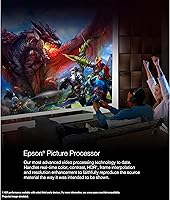
  • Color Processing: Epson's onboard picture processor handles real-time color, contrast, frame interpolation, and resolution enhancement with 10-bit color pipeline support.
  • Pixel Technology: The Precision Shift Glass Plate uses a digitally controlled glass element to physically refract pixel light and simulate a full 4K pixel count.
  • Model Number: The official Epson model number is V11HA48020, with retail ASIN B09TS2M1ZS for identification across purchasing platforms.
  • Availability: The projector was first made available in March 2022 and holds a Best Sellers Rank of 551 in the Video Projectors category on Amazon.

Related Reviews

BenQ TK800M 4K UHD Home Theater Projector
86%
93%
Picture Quality
89%
Brightness
91%
Gaming Performance (Low Input Lag)
85%
Ease of Setup
88%
Connectivity Options
More
Epson EpiqVision Ultra LS500 4K Laser Projector
87%
94%
Image Quality
92%
Brightness Performance
88%
Ease of Setup
87%
Value for Money
70%
Sound Quality
More
BenQ TK860i 4K Smart Home Theater Projector
85%
91%
Picture Quality
88%
Ease of Setup
87%
Connectivity Options
65%
Sound Quality
82%
Streaming Performance (Android TV)
More
Epson Home Cinema 3800 4K Projector
75%
93%
Color Accuracy
91%
Brightness Performance
78%
Image Sharpness & 4K Detail
82%
HDR Performance
84%
Contrast & Black Levels
More
Epson Home Cinema 5050UB 4K PRO-UHD Projector
85%
94%
Picture Quality
90%
Brightness
93%
Color Accuracy
85%
Setup & Installation
91%
HDR Performance
More
Formovie Theater Ultra Short Throw 4K Laser Projector
86%
94%
Picture Quality
88%
Ease of Setup
85%
Audio Performance
77%
Brightness
90%
Connectivity
More
Epson Home Cinema 3200 4K PRO-UHD Projector
83%
93%
Image Quality
89%
Brightness Performance
74%
Ease of Setup
91%
HDR Performance
88%
Gaming Performance
More
BenQ HT4550i 4K HDR LED Smart Home Theater Projector
85%
94%
Image Quality
89%
Brightness
93%
Color Accuracy
75%
Ease of Setup
65%
Sound Quality
More
Optoma HD39HDR Home Theater Projector
76%
91%
Brightness Performance
88%
Gaming Performance
83%
Image Quality
67%
HDR Quality
79%
Color Accuracy
More
Dangbei DBOX02 4K Laser Projector
79%
91%
Image Quality
78%
Brightness & Ambient Light Performance
88%
Setup & Ease of Use
93%
Smart Platform & App Ecosystem
67%
Audio Quality
More

FAQ

It is pixel-shifting, which Epson brands as 4K PRO-UHD. The projector uses a glass plate to rapidly shift pixels and produce an 8.29-million-pixel image, rather than having a native 4K imaging panel. In practical viewing the result is very sharp, but if native 4K chip resolution is a firm requirement for you, that distinction matters and is worth weighing against competing models before you buy.

Yes, absolutely. The LS11000 has no built-in audio whatsoever. You will need either a dedicated AV receiver with speakers or a soundbar connected via the eARC-enabled HDMI port. Factor that into your total budget before committing, because a projector at this level really deserves a proper audio setup to match.

To a reasonable degree, yes. At 2,500 lumens of both color and white brightness, the LS11000 handles rooms with moderate ambient light better than many rivals in its class. That said, it will always perform at its best in a light-controlled environment. If your room gets significant daylight during viewing hours, results will be noticeably less impressive than in a darker setup.

The gaming credentials are genuinely solid here. The Epson LS11000 4K Laser Home Theater Projector supports 4K input at 120 Hz through its HDMI 2.1 ports, and input lag is rated under 20 milliseconds — both figures that hold up in real use. For large-screen gaming with a current-generation console or a capable PC, this home theater projector is a legitimate option, not an afterthought.
It takes more planning than a typical consumer projector. The unit weighs 28 pounds and has a large footprint, so ceiling mounting requires appropriate hardware and ideally a second person. The motorized lens with shift, zoom, and focus does make dialing in the image much easier once it is in position, but expect to spend meaningful time on initial placement and calibration before the picture is where you want it.

Realistically, not for a very long time. The laser array is rated at 20,000 hours, which translates to roughly 20 years of use at five hours a day. Unlike traditional lamp projectors, there is no bulb to degrade or swap out — the laser output does dim gradually over time, but it is a slow process rather than a sudden failure.

Yes, it supports HDR10, HDR10+, and HLG, which covers the HDR formats used by all major streaming platforms as well as 4K Blu-ray discs. The 10-bit color pipeline processes the full HDR signal, and the 16-step manual adjustment lets you fine-tune how HDR content is tone-mapped if the default rendering does not suit your taste.

The most practical difference is that 3LCD uses three separate chips — one each for red, green, and blue — and projects all three simultaneously. DLP projectors with a single chip use a spinning color wheel, which can produce a visual artifact known as the rainbow effect where fast motion shows brief color fringing. If you are sensitive to that effect, the 3LCD approach in this projector eliminates it entirely. Color brightness also tends to be more consistent with 3LCD because there is no alternating between color segments.

The 2.1x motorized zoom lens gives you meaningful flexibility here. At a typical living room or theater throw distance, this home theater projector can fill screens ranging roughly from 100 to 150 inches diagonally depending on distance and zoom setting. Consulting Epson's official throw distance calculator with your specific room measurements before mounting is strongly recommended, since the exact numbers vary with zoom position.

From the roughly 113 reviews available, color accuracy and brightness consistency are the most frequently praised qualities, with owners noting the image holds its calibration well over extended use. The main recurring concern is the value comparison against native 4K competitors at similar price points — it is a debate that comes up often in the owner community. Build quality draws consistent compliments, and the motorized lens gets positive mentions for simplifying installation.

Where to Buy