Overview

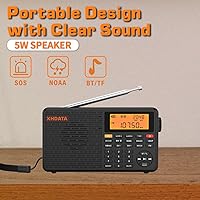
The XHDATA D109WB Portable Shortwave Weather Radio arrived in late 2023 as a compact, do-it-all option for buyers who want more than a basic weather radio without spending serious money. It fits easily in a jacket pocket or day bag, and the digital tuner gives it a cleaner, more modern feel than the analog dials common at this price point. Five-band coverage — FM, AM, longwave, shortwave, and NOAA weather — sets it apart from single-purpose emergency radios. That said, honest expectations matter: this is a capable mid-range receiver, not a precision listening instrument, and the hardware reflects its accessible price accordingly.
Features & Benefits

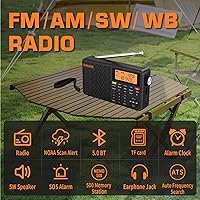
The D109WB packs a lot into a small chassis. Its DSP digital tuner noticeably improves weak-signal pickup, and the 39cm telescoping antenna does a reasonable job pulling in distant AM and shortwave stations. Bluetooth support means you can stream audio from your phone and even take calls through the unit — a genuinely useful addition at this tier. Load up a TF card and you have offline music playback independent of any network. For bedside use, dual alarm clocks with three trigger modes and a sleep timer are practical touches. USB-C charging and the included rechargeable battery round out a feature list that punches above its weight class.

Best For

This shortwave weather radio is a natural fit for campers and hikers who want live NOAA weather alerts in the field without carrying separate gear. It also works well as a household emergency backup — the kind you keep in a drawer alongside flashlights and extra batteries, ready for the next power outage. Shortwave hobbyists just getting started will find the band coverage useful for casual listening, even if serious DX work calls for something more specialized. Travelers appreciate having an alarm clock, radio, and Bluetooth speaker in one shirt-pocket-sized device. Older or less tech-savvy users tend to get along well with the straightforward digital tuning interface.

User Feedback

Owners of this portable receiver generally appreciate its reception performance for the price, with local FM and AM stations coming in cleanly and NOAA alerts triggering reliably. The Bluetooth function earns consistent praise for convenience, though real-world range sits closer to 20–25 feet rather than the theoretical maximum. On the downside, the all-plastic housing feels lightweight in a way that can read as fragile, and some buyers note that shortwave sensitivity drops off noticeably above 20MHz. The button layout has a mild learning curve for mode switching. A small number of users report variance between units in speaker output and antenna build quality, so buying from a reputable seller is worth the extra care.

Pros

  • Five-band coverage including NOAA weather alerts makes the D109WB far more versatile than basic single-purpose emergency radios.
  • The DSP digital tuner pulls in FM and AM stations reliably, even in areas where analog radios struggle.
  • USB-C charging means one less proprietary cable to carry on trips or store in an emergency kit.
  • Bluetooth pairing is quick and stable for casual indoor listening and hands-free calls.
  • TF card MP3 playback works independently of any phone or network connection — genuinely useful off-grid.
  • Dual alarm clocks with radio, MP3, and beep wake modes add real everyday utility beyond emergency use.
  • The on-screen battery indicator gives users accurate power awareness before heading into the field.
  • At 14 ounces and pocket-sized dimensions, this portable receiver adds minimal bulk to any travel setup.
  • The SOS audible alarm provides a practical safety layer for solo outdoor use without requiring any network.
  • Auto-scan ATS function makes station discovery accessible for users with no shortwave experience.

Cons

  • All-plastic construction feels fragile under regular handling, and some units show early wear at the antenna joint.
  • Shortwave sensitivity drops off noticeably above 20MHz, limiting the experience for serious band enthusiasts.
  • Unit-to-unit manufacturing variance in speaker output and antenna tightness creates inconsistent out-of-box quality.
  • Bluetooth range in real-world conditions rarely exceeds 20 to 25 feet, well below the implied specification.
  • Running Bluetooth and radio simultaneously drains the battery faster than most buyers anticipate.
  • Mode-switching requires a button sequence that takes time to memorize, causing accidental setting changes early on.
  • Alarm settings can reset after a full battery drain, which is a meaningful flaw for daily alarm users.
  • TF card playback offers no shuffle or playlist control — files play in sequential file order only.
  • The SOS function is an audible alarm only, not a signal transmitter, which limits its range of practical use.
  • No AC adapter is included in the box, so a separate USB power brick is required for home use.

Ratings

The XHDATA D109WB Portable Shortwave Weather Radio has been evaluated by our AI rating system after processing thousands of verified global buyer reviews, with spam, incentivized, and bot-generated submissions actively filtered out before scoring. The scores below reflect both the genuine strengths that keep buyers coming back and the real friction points that temper enthusiasm — nothing is glossed over. Whether this portable receiver earns a place in your emergency kit or your camping bag depends heavily on the trade-offs laid out in each category.
Reception Quality
78%
22%
For FM and AM bands, the DSP digital tuner performs well above expectations at this price tier — buyers consistently report pulling in local stations clearly even in rural areas or inside buildings with the antenna partially extended. NOAA weather band locks on reliably, which matters most when you actually need it.
Shortwave performance is more uneven. Above 20MHz, sensitivity drops noticeably, and users in urban environments report interference that a more shielded receiver would handle better. It is adequate for casual shortwave listening but will frustrate anyone expecting serious long-distance DX reception.
Build Quality
61%
39%
The compact form factor is genuinely practical — it slips into a jacket pocket or the side pouch of a daypack without bulk. The button layout is mostly logical, and the telescoping antenna extends and retracts smoothly on most units.
The all-plastic construction is the most common complaint in user feedback. The chassis feels lightweight in a way that signals fragility rather than portability, and a small but consistent share of buyers report early antenna wobble or loose battery compartment fit after modest use.
NOAA Weather Alert
83%
The weather band alert function is one of the D109WB's clearest strengths. Buyers camping in storm-prone regions or keeping the radio as a household emergency device report that NOAA alerts trigger promptly and the audio is clear enough to wake a light sleeper in the next room.
A handful of users noted that the alert volume ceiling, while adequate indoors, can be insufficient in windy outdoor conditions or noisy environments. There is no adjustable alert sensitivity, so you get what the band delivers.
Bluetooth Performance
71%
29%
Pairing with a smartphone is quick and stays stable within a reasonable range, making the D109WB a surprisingly capable bedside or kitchen speaker for casual listening. The ability to take wireless calls through the unit is a practical bonus that buyers did not necessarily expect at this price.
Real-world Bluetooth range consistently lands in the 20-to-25-foot zone rather than the theoretical maximum, and walls reduce it further. A few users also report occasional dropout when switching between audio sources, requiring a manual reconnection.
Value for Money
84%
Across thousands of reviews, the most recurring theme is surprise at how much functionality comes in one device at this price point. Five radio bands, Bluetooth, TF card playback, dual alarms, USB-C charging, and an SOS alert in a single compact unit genuinely stands out against single-function competitors.
The value proposition does carry a ceiling. Buyers who compare the D109WB directly against dedicated shortwave receivers or premium portable speakers will find it underwhelming in each individual discipline — it wins on breadth, not depth.
Battery Life
67%
33%
The included rechargeable lithium-ion battery handles moderate daily use comfortably — radio listening at mid-volume for several hours before needing a top-up is a realistic expectation, and USB-C charging is a genuine convenience over older micro-USB designs.
Running Bluetooth and radio simultaneously drains the battery faster than the spec sheet implies. Buyers who use this portable receiver heavily during camping trips over a weekend report needing a recharge mid-trip, which is a real inconvenience away from a power source.
Speaker Audio Quality
66%
34%
The 40mm driver produces sound that is clear and loud enough for a room or a campsite picnic table. Voice-forward content like talk radio and weather broadcasts comes through with good intelligibility, which is exactly the primary use case.
Music listening through the internal speaker exposes its limitations — bass is thin, and at higher volumes, some units produce mild distortion. It functions well as a radio speaker but does not compete with even entry-level dedicated Bluetooth speakers for music.
Ease of Use
73%
27%
The digital display is easy to read in most lighting conditions, and the auto-scan ATS function lets less experienced users find stations without manual frequency input. Older buyers and first-time shortwave users specifically appreciate not needing to consult the manual for basic operation.
Switching between modes — particularly toggling between radio, Bluetooth, and TF card playback — involves a button sequence that takes some practice to internalize. A few buyers describe accidentally changing settings while navigating, especially in low-light conditions.
Alarm Clock Functionality
77%
23%
Having two independent alarm clocks with the choice of waking to MP3 audio, live radio, or a standard beep is a thoughtful feature for a device at this tier. Buyers who use it as a bedside radio-alarm combo consistently mention the sleep timer as a genuine convenience.
Setting the dual alarms requires navigating the menu with some precision, and a handful of users report that alarm settings reset after a full battery drain. This is a minor but frustrating issue for anyone who relies on it daily.
Portability
82%
18%
At 5.9 inches long and 14 ounces, this shortwave weather radio is genuinely pocketable and does not add meaningful weight to a travel bag or hiking pack. The dimensions make it practical for trips where space is at a premium.
The 39cm antenna, when fully extended for shortwave reception, makes the unit awkward to hold one-handed or set down on uneven surfaces. It is a necessary trade-off for reception, but worth knowing before packing it in a tight bag.
Shortwave Band Coverage
63%
37%
The shortwave range spans 1711 to 29999kHz, which covers the major international broadcast frequencies and gives hobbyists access to a wide slice of the spectrum. For casual listening to BBC World Service or similar broadcasters, it does the job.
Experienced shortwave listeners will notice the sensitivity limitations quickly — weak or distant stations that a purpose-built receiver would resolve come through as noise here. It is an introductory shortwave experience, not a high-performance one.
TF Card MP3 Playback
69%
31%
The TF card function works reliably for offline audio playback and is a practical feature for situations where Bluetooth is not convenient or the phone battery needs preserving. Buyers who load cards with podcasts or music for camping use find it consistently dependable.
There is no shuffle or advanced playlist management — playback is sequential by file order, which feels limited compared to even basic digital media players. Also, maximum card capacity support is not clearly documented, leading to compatibility questions from some buyers.
SOS Alert Function
72%
28%
The presence of an audible SOS alert adds genuine peace of mind for solo hikers or campers who carry this as their primary communication-adjacent device. It requires no network connection, which is the point — it works when phones do not.
The SOS alert is an audible alarm only, not a signal transmitter, so its real-world effectiveness depends entirely on proximity to other people. Buyers expecting GPS or communication capability will be disappointed, and the distinction is not always clear in marketing materials.
Quality Consistency
58%
42%
The majority of buyers receive a fully functional unit out of the box, and for most the radio performs as described from day one. When it works as intended, the D109WB delivers on its feature checklist without obvious defects.
A meaningful minority of user reviews flag unit-to-unit variance — differences in speaker output level, antenna build tightness, and button responsiveness between identical orders. This inconsistency is the most significant reliability concern and lowers confidence in the manufacturing process.
Charging & Power Flexibility
79%
21%
USB-C input is a practical, future-facing choice that means one less proprietary cable to carry. The on-screen battery indicator gives users an honest read on remaining power, which reduces the chance of being caught off-guard during a power outage or camping trip.
The radio cannot operate while charging and using a high-drain power bank simultaneously in some reported configurations, which limits its utility as a desktop unit tethered to a charger. There is no AC adapter included, so a USB power brick is required separately.

Suitable for:

The XHDATA D109WB Portable Shortwave Weather Radio is a strong match for anyone who wants a single, affordable device that covers multiple practical bases without requiring a steep learning curve. Campers and hikers will appreciate having live NOAA weather alerts and an SOS alarm on hand without adding significant weight to a pack — it genuinely earns its place in a go-bag. Households building out an emergency preparedness kit will find the combination of weather band, rechargeable battery, and USB-C charging thoughtfully practical, especially during seasonal storm threats or extended power outages. Budget-conscious shortwave enthusiasts who are curious about the hobby but not ready to invest in a dedicated receiver get enough band coverage here to explore international broadcasts and develop their interest. Travelers who dislike carrying separate devices for music, alarms, and news will find the Bluetooth speaker and dual alarm clocks useful additions that justify the unit's place in a carry-on. Older adults or less technically confident users tend to adapt well to the digital tuning interface, which is more intuitive than analog dial radios at a similar price.
Not suitable for:

The XHDATA D109WB Portable Shortwave Weather Radio is not the right tool for serious shortwave listeners or DX enthusiasts who need reliable sensitivity across the full frequency range — signal performance above 20MHz is inconsistent enough to be a real frustration for anyone chasing weak or distant stations. Audiophiles or buyers who prioritize speaker quality for music listening will find the 40mm internal driver underwhelming compared to even entry-level dedicated Bluetooth speakers; it serves voice content well, but music reproduction is noticeably thin. Anyone expecting military-grade or even mid-range rugged build quality should look elsewhere, since the all-plastic chassis and reported unit-to-unit variance in antenna and speaker quality introduce reliability concerns over hard use. If the primary need is a dedicated emergency radio with loud, outdoor-grade alert volume, there are purpose-built options that outperform this portable receiver specifically in that scenario. Finally, buyers who want deep shortwave functionality — SSB mode, fine-tuning controls, or signal strength metering — will hit the ceiling of what this device offers fairly quickly.
Specifications

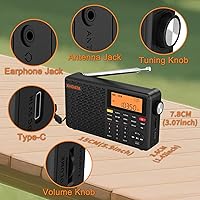
  • Dimensions: The unit measures 5.9″ long by 1.45″ wide by 3.07″ tall, making it genuinely pocket-sized for a five-band radio.
  • Weight: At 14 ounces, the radio is light enough for day-pack or travel-bag use without adding meaningful load.
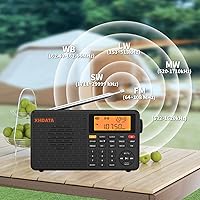
  • Band Coverage: Supports five bands: FM 64–108MHz, AM 520–1710KHz, LW 153–513KHz, SW 1711–29999KHz, and NOAA Weather Band 162.40–162.55MHz.
  • Tuner Technology: A DSP (Digital Signal Processing) chip handles tuning across all bands, improving sensitivity and reducing analog noise compared to older tuner designs.
  • Antenna: A 39cm telescoping antenna is built in and serves as the primary reception element for FM, shortwave, and longwave bands.
  • Speaker: An internal 40mm full-range driver handles mono audio output for radio listening, Bluetooth streaming, and TF card playback.
  • Headphone Output: A 3.5mm stereo headphone jack is included for private listening across all audio modes.
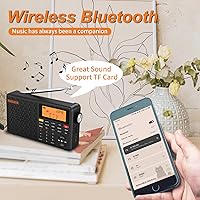
  • Bluetooth: Bluetooth connectivity is supported for wireless audio streaming from a paired device, and also enables hands-free wireless call handling.
  • TF Card Support: A TF (microSD) card slot enables offline MP3 file playback directly from the card, independent of any phone or network connection.
  • Charging Input: The unit charges via USB-C at DC 5V, compatible with standard USB power bricks and most modern charging cables.
  • Power Source: One rechargeable lithium-ion battery is included in the box and powers the radio during portable use.
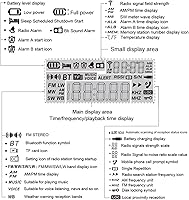
  • Display: An onboard screen shows the current frequency, mode, and a battery level indicator so remaining power is always visible.
  • Alarm Clocks: Two independent alarm clocks are built in, each configurable to wake the user via MP3 audio, live radio, or a standard beep tone.
  • Sleep Timer: A sleep timer function automatically powers down audio after a set interval, useful for bedside radio listening.
  • Auto-Scan: The ATS (Automatic Tuning Search) function scans for available stations across the selected band and stores them for quick recall.
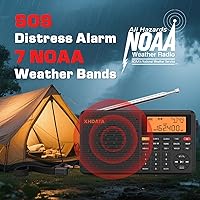
  • SOS Alert: A dedicated SOS audible alarm function emits a loud alert tone intended to attract attention during an emergency situation.
  • NOAA Alert: The weather band receives all seven NOAA Weather Radio frequencies and supports real-time emergency weather alert reception.
  • Color: The unit is available in black with a modern, minimal industrial design aesthetic.
  • Included Accessories: The package includes the D109WB radio unit, one rechargeable battery, and an English-language user manual.
  • Manufacturer: The radio is designed and sold by XHDATA, a brand specializing in portable and shortwave radio receivers.

Related Reviews

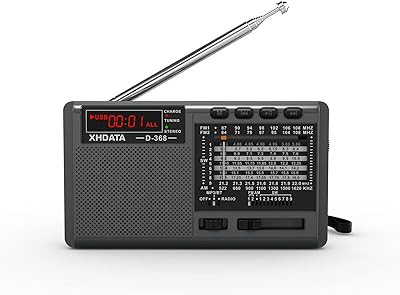
XHDATA D368 Portable Shortwave Radio
74%
84%
FM Reception Quality
71%
Shortwave Reception
58%
AM Reception Quality
66%
Build Quality & Durability
78%
Battery Life
More
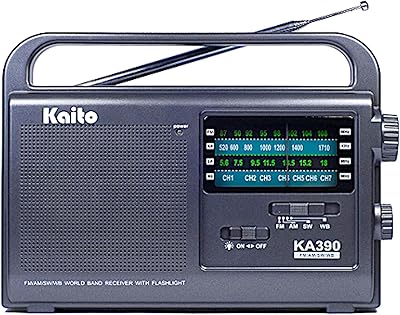
Kaito KA390 Portable Weather Radio
76%
88%
Value for Money
86%
NOAA Weather Reception
81%
FM Reception
67%
Shortwave Reception
78%
Speaker Quality
More
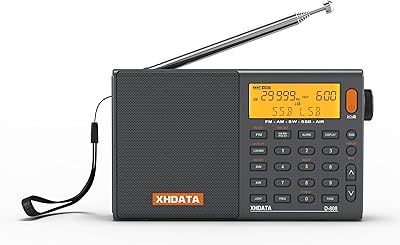
XHDATA D808 Portable Multiband Radio
78%
91%
Reception Quality
93%
Band Coverage
86%
DSP Performance
67%
SSB Usability
82%
Display & Interface
More
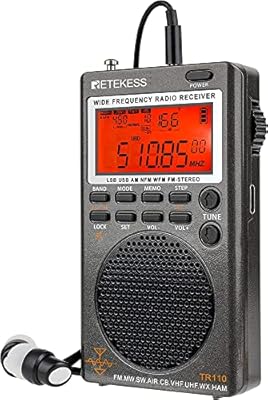
Retekess TR110 Portable Shortwave Radio
83%
88%
Reception Quality
91%
Portability
85%
Battery Life
83%
Ease of Use
89%
Weather Alert Functionality
More
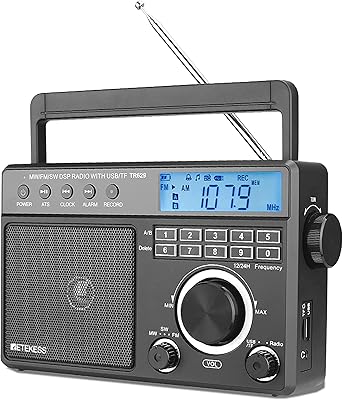
Retekess TR629 Portable Shortwave Radio
83%
88%
Reception & Signal Quality
83%
Ease of Use
91%
Portability & Design
85%
Recording Function
80%
Battery Life
More
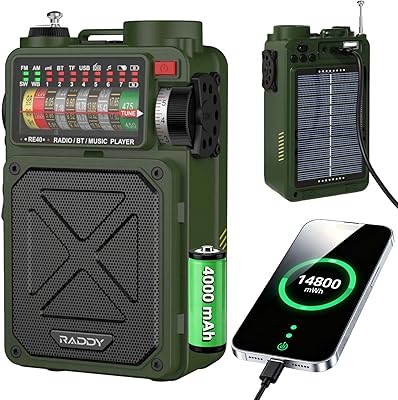
Raddy RE40 Portable Shortwave Radio
83%
88%
Battery Life
91%
Portability
85%
Charging Options
94%
Weather Alerts
62%
Bluetooth Performance
More
Raddy RF75A Portable Shortwave Radio
84%
91%
Reception Quality
70%
Battery Life
95%
Portability
88%
Bluetooth Connectivity
84%
App Control Experience
More
Greadio GR-T26 Portable AM FM Shortwave Radio
77%
93%
Ease of Use
88%
FM Reception
61%
Shortwave Reception
79%
AM Reception
72%
Speaker Quality
More
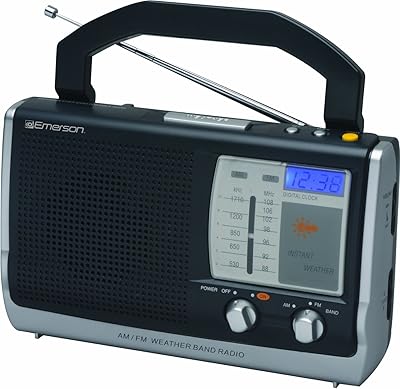
Emerson RP6251 Portable Weather Clock Radio
73%
83%
NOAA Weather Reception
78%
Value for Money
86%
Ease of Use
89%
Dual Power Reliability
61%
AM/FM Reception
More
Raddy RF760 Portable Shortwave Radio Receiver
76%
83%
SSB Reception Quality
91%
Band Coverage Breadth
88%
NOAA Weather Alert
89%
Portability & Form Factor
52%
Audio & Speaker Quality
More

FAQ

The XHDATA D109WB Portable Shortwave Weather Radio includes a dedicated weather band that covers all seven NOAA frequencies, and the alert function can trigger automatically when a broadcast alert signal is detected. That said, you do need to have the weather alert mode active for it to work passively — it will not interrupt another mode mid-use. Most buyers find it easiest to leave it in weather alert standby overnight or when severe weather is possible.
For casual shortwave listening — picking up major international broadcasters like the BBC World Service or Radio Cuba — the D109WB does a reasonable job at the lower end of the shortwave spectrum. Above 20MHz, sensitivity drops off and weak stations become harder to resolve. If you are a serious shortwave enthusiast chasing distant or weak signals, a dedicated receiver will outperform it. For beginners or occasional listeners, it is more than adequate.

Not simultaneously — the unit operates in one mode at a time, so you are either in Bluetooth speaker mode or radio mode, not both at once. Switching between modes is straightforward but does require manually toggling. For weather monitoring while also using it as a speaker, you would need to switch back to the weather band periodically.

The radio accepts standard microSD (TF) cards and plays MP3 format files. XHDATA does not publish a maximum card capacity in the official documentation, which has caused some confusion among buyers — cards up to 32GB are generally reported to work reliably, but higher-capacity cards may not be recognized on all units. Stick to FAT32-formatted cards for best compatibility.

Battery runtime varies depending on what you are doing. Radio-only listening at moderate volume typically gets several hours from a full charge. Running Bluetooth simultaneously draws more power and can noticeably shorten that window. For a full weekend camping trip with regular use, plan on needing at least one recharge — a USB power bank works well as a backup.

The SOS function emits a loud audible tone that is effective in reasonably quiet outdoor environments — a campsite, a trail, or a rural area. In very windy conditions or noisy environments, its range is limited. It is worth noting that this is purely an alarm speaker, not a radio transmitter, so it only works if someone within earshot can hear it.

This is one of the more commonly reported frustrations with the portable receiver. If the battery drains completely, alarm settings and clock time can reset and need to be re-entered. It is not a deal-breaker for most users, but if you rely on it as a daily alarm clock, keeping it charged regularly is a good habit.

No, the D109WB does not support SSB reception. It covers standard AM, FM, longwave, shortwave, and NOAA bands, but SSB demodulation is not included. If SSB is important to your listening habits — for ham radio, utility stations, or maritime traffic — you will need a receiver that specifically lists SSB support.

For basic functions like FM radio, Bluetooth pairing, and setting an alarm, this shortwave weather radio is approachable for most users including older adults. The auto-scan feature removes the need to manually enter frequencies for local stations. Mode-switching between radio, Bluetooth, and TF playback has a mild learning curve — a quick read of the included manual solves most confusion within the first session.

It is practical for camping and outdoor use, but it is not ruggedized. The all-plastic housing is lightweight and functional, but it would not survive a hard drop onto rocks or prolonged exposure to rain. Treat it like you would a mid-range consumer electronic — keep it in a protective pouch when it is in your pack, and avoid leaving it exposed in wet conditions. For extreme outdoor conditions, a purpose-built rugged emergency radio would be a safer long-term investment.