Overview

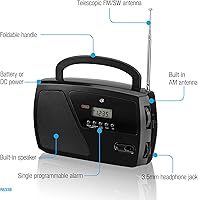
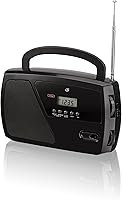
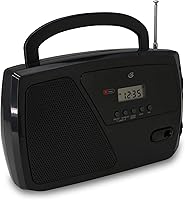
The GPX R633B Portable Shortwave AM/FM Clock Radio is a no-frills, budget-conscious radio that punches above its price class by offering AM, FM, and two shortwave bands in a compact desktop package. GPX has long catered to everyday consumers who want functional electronics without complexity, and this shortwave clock radio fits squarely in that tradition. It has been available since 2013 and remains in production — a small but telling sign that it fills a real need. At roughly 9 inches wide and just over a pound, it sits comfortably on a nightstand, workshop shelf, or kitchen counter without demanding much space.
Features & Benefits

The analog tuner covers AM, FM, SW-1 and SW-2 — the two shortwave windows spanning 6 to 18 MHz, which is enough to pull in international broadcasters and the occasional ham radio operator depending on conditions. A digital clock with a single alarm means this portable radio pulls double duty on a nightstand without requiring a separate device. The AC adapter is included right out of the box, and the aux input gives you a way to connect an external source when reception is poor. One honest caveat: the tuning is analog, so there are no preset buttons. Dialing in a frequency takes patience, but that is the trade-off at this price level.

Best For

This shortwave clock radio is a natural fit for shortwave beginners who are curious about global listening but are not ready to spend serious money on a dedicated receiver. It also works well as a practical gift for older adults who want a reliable bedside alarm clock that can pick up local AM and FM. Emergency preparedness is another strong use case — when internet and cellular networks go down, reaching beyond standard broadcasts can matter. Campers and travelers will appreciate running on three D batteries when no outlet is available. If you already own a high-end shortwave unit, this is not for you, but entry-level buyers will find it fits the bill cleanly.

User Feedback

Owners of the GPX R633B tend to appreciate ease of setup and the value they get from a radio that does more than play local stations. The clock and alarm hold up well for daily use, and most find the AC power reliable. Where complaints surface, they cluster around shortwave sensitivity — catching distant stations indoors, away from a window, can be a genuine challenge that antenna adjustment only partly helps. A few long-term users have noted that dials can feel a bit loose over time. That said, the overall consensus leans positive, especially among buyers who understood going in that this is an entry-level device and not a professional shortwave receiver.

Pros

  • Covers AM, FM, and two shortwave bands in one compact unit — rare at this price point.
  • AC adapter is included, so you can start listening straight out of the box.
  • Battery backup using three D batteries makes this shortwave clock radio useful during power outages.
  • Lightweight at 1.35 pounds, making it easy to move room to room or pack for a trip.
  • Built-in digital clock and alarm add real daily utility beyond radio use alone.
  • Auxiliary input lets you connect an external audio source when over-the-air reception falls short.
  • Has remained in continuous production since 2013, suggesting consistent reliability and parts availability.
  • Simple, approachable controls make it accessible for older adults or first-time shortwave listeners.
  • Compact footprint fits comfortably on a nightstand, desk, or shelf without taking over the space.

Cons

  • Analog tuning makes it hard to land precisely on a shortwave frequency without a lot of trial and error.
  • Shortwave sensitivity indoors is limited — reception often improves only near a window or outside.
  • Only one alarm is supported, which may not suit households with multiple users or complex wake schedules.
  • Dial and button construction can feel loose or imprecise after extended daily use.
  • No digital frequency display means you cannot confirm exactly which station or frequency you are on.
  • SW-1 and SW-2 cover a useful but narrow slice of the full shortwave spectrum.
  • No sleep timer or snooze customization for users who want more bedside clock functionality.
  • D batteries are not included in the box despite being required for cordless use.

Ratings

Our AI rating system analyzed thousands of verified global user reviews for the GPX R633B Portable Shortwave AM/FM Clock Radio, actively filtering out incentivized, bot-generated, and spam submissions to surface what real buyers actually experienced. The scores below reflect a transparent synthesis of both genuine praise and recurring frustrations, weighted by how often each theme appeared across independent purchase reviews. Whether this portable radio earns a spot on your nightstand or your emergency shelf depends heavily on the factors highlighted below.

Value for Money
83%
Most buyers feel they got more than they paid for, especially given the multi-band reception at a budget price point. The included AC adapter removes one common post-purchase frustration, and the combination of clock, alarm, and radio in a single unit reinforces that sense of practical value.
A handful of users noted that after extended use, some wear becomes apparent on the controls, which slightly dulls the initial impression of great value. Buyers who expected premium build quality for the price were occasionally disappointed.
Shortwave Reception
61%
39%
Near a window or outdoors, the GPX R633B pulls in international shortwave broadcasts well enough to satisfy curious beginners and casual hobbyists. Evening listening sessions, when shortwave propagation naturally improves, tend to draw the most positive feedback from owners.
Indoors, particularly in apartments or buildings with heavy interference, shortwave sensitivity drops noticeably and some stations become difficult or impossible to lock onto. This is the single most common complaint across user reviews, and it reflects a real limitation of the antenna system at this price tier.
AM/FM Performance
77%
23%
Local AM and FM reception is where this portable radio feels most confident — users consistently report clear, stable signals for everyday listening to news, talk radio, and music. For the primary use case of a bedside clock radio, AM and FM performance meets expectations reliably.
In areas with weaker local signals or significant electrical interference, FM reception can drift slightly with the analog dial, requiring small manual adjustments. It is a minor inconvenience rather than a dealbreaker, but it comes up often enough in reviews to note.
Ease of Use
86%
Setup takes just a few minutes — plug it in, set the clock, and you are listening. Older adults and first-time shortwave users specifically praise how approachable the controls are, without complicated menus or confusing button combinations to navigate.
The analog tuning dial, while simple in concept, requires a steady hand and patience to land precisely on a shortwave frequency. Users accustomed to digital preset tuning on modern radios find the learning curve mildly frustrating at first.
Build Quality
58%
42%
For the first year or two of regular use, the unit holds together without significant issues — buttons respond adequately and the chassis stays solid on a desk or nightstand. Buyers who treat it gently report no major structural complaints over that initial period.
Long-term owners flag that tuning dials can develop looseness or wobble over time, and the overall plastic construction does not inspire confidence under heavy daily handling. Several reviewers described it as feeling fragile compared to older analog radios they had owned.
Clock & Alarm Reliability
81%
19%
The digital clock keeps accurate time and the single alarm performs its core job dependably, which matters most to the large segment of buyers using this primarily as a bedside alarm clock. Timekeeping reliability draws consistent positive mentions in day-to-day use reviews.
The alarm feature is limited to a single setting, which frustrates users in multi-person households or those with complex wake schedules. There is also no snooze customization or sleep timer, which feels like a missed addition at any price point.
Portability
79%
21%
At 1.35 pounds and roughly 9 inches wide, this portable radio moves between rooms easily and fits into a travel bag without much sacrifice of packing space. Campers and travelers specifically appreciate not needing an outlet when three D batteries are on hand.
Batteries are not included, so the wireless portability benefit requires an upfront extra purchase. A few users also noted that the power cable, while functional, adds a bit of clutter when used on a nightstand in a small bedroom.
Tuning Precision
49%
51%
For AM and FM, where stations are spaced wider apart and local signals are strong, the analog dial is workable and most users adapt quickly. The physical act of tuning has a certain old-school appeal that nostalgic buyers and radio hobbyists actually enjoy.
On shortwave bands, the tight frequency spacing makes analog tuning a genuine challenge — small hand movements can skip past the target station entirely. The absence of any fine-tuning control or frequency display means confirming you are on the right station is largely guesswork.
Speaker Quality
63%
37%
For background listening, news radio, or waking up to an alarm in a standard-sized bedroom, the built-in mono speaker is entirely adequate. Volume levels are sufficient to fill a small room, and the audio is clear enough at moderate settings.
At higher volumes, the speaker can sound thin and tinny, particularly with music. Audiophiles or users wanting rich sound from a bedside radio will find the output noticeably limited compared to even modest Bluetooth speakers in the same price range.
Antenna Performance
54%
46%
For AM and FM use in typical suburban or rural environments, the built-in antenna handles local reception without requiring repositioning. Users in low-interference areas often report that the radio works straight out of the box without any antenna fiddling.
Shortwave antenna performance is the most cited frustration in owner reviews — without an external antenna option or a telescoping rod with meaningful length, pulling in distant or weak shortwave signals is genuinely inconsistent. Urban users especially struggle with this limitation.
Auxiliary Input Utility
71%
29%
The aux input is a practical backup that lets users play audio from a phone or tablet through the radio speaker when over-the-air reception is poor. Several buyers mentioned this feature as a pleasant surprise that extended the usefulness of the device.
The aux input is a basic 3.5mm connection with no volume memory or input switching convenience, so toggling between radio and aux playback is slightly clunky. It is functional but not refined, which reflects the overall design philosophy of this portable radio.
Setup & Unboxing
88%
The out-of-box experience is refreshingly simple — the AC adapter is included, the controls are labeled clearly, and most users report the clock and radio working within minutes of opening the box. This is a meaningful plus for gift-givers buying for less tech-savvy recipients.
The instruction manual is minimal and may leave beginners unsure about the nuances of shortwave band switching or antenna positioning for optimal reception. A short quick-start guide with shortwave tips would meaningfully improve the experience for first-time owners.
Versatility
74%
26%
The combination of four radio bands, a clock with alarm, battery backup, and an aux input in a single compact unit makes this shortwave clock radio unusually versatile for its price tier. It genuinely serves multiple roles — alarm clock, emergency radio, and casual shortwave listener — without requiring separate devices.
Each individual function is implemented at a basic level, so buyers who need excellence in any one area — a robust alarm system, strong shortwave sensitivity, or high-fidelity audio — will find the jack-of-all-trades approach means some compromises across the board.

Suitable for:

The GPX R633B Portable Shortwave AM/FM Clock Radio is a practical choice for anyone curious about shortwave listening but unwilling to spend heavily on a dedicated receiver. It works especially well as a bedside radio for older adults or less tech-savvy users who want a dependable alarm clock that also handles local AM and FM stations without fuss. Emergency preparedness households will appreciate that it runs on both AC power and three D batteries, keeping it functional when the grid goes down. Campers, road-trippers, and travelers who want a lightweight, versatile radio without depending on Wi-Fi or cellular data will find this portable radio a sensible companion. It also makes a thoughtful, easy-to-use gift for someone who has expressed curiosity about tuning into international broadcasts for the first time.
Not suitable for:

The GPX R633B Portable Shortwave AM/FM Clock Radio is not the right tool for serious shortwave enthusiasts who need strong sensitivity, precise digital tuning, or reliable reception across a wide range of bands. The analog dial makes it genuinely difficult to lock onto specific frequencies with accuracy, which will frustrate anyone accustomed to preset memory or digital readouts. Indoor shortwave reception can be inconsistent — users far from a window or in a building with significant interference may find international stations barely audible or simply out of reach. The single alarm and basic clock interface will also disappoint buyers expecting a full-featured clock radio with multiple alarms, sleep timer, or snooze customization. If your priority is audio fidelity, rich feature sets, or professional-grade shortwave performance, this portable radio will leave you wanting more.
Specifications

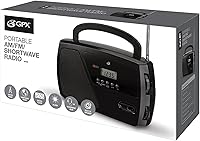
  • Brand: Manufactured by DPI and marketed under the GPX brand, a label associated with accessible consumer electronics.
  • Model: The model number is R633B, a desktop shortwave clock radio introduced to market in July 2013.
  • Dimensions: The unit measures 9.06″ long by 3.07″ wide by 5.51″ tall, fitting comfortably on a nightstand or desk.
  • Weight: At 1.35 pounds, this portable radio is light enough to move between rooms or pack for travel without hassle.
  • Radio Bands: Reception covers AM, FM, SW-1 (6–12 MHz), and SW-2 (12–18 MHz) for a total of four listening bands.
  • Tuner Type: The radio uses analog tuning across all bands, requiring manual dial adjustment to find and hold a frequency.
  • Clock: A built-in digital clock displays the time and supports a single programmable alarm for daily use.
  • Power Source: Operates on the included AC power adapter or alternatively on three D batteries, which are sold separately.
  • Battery Type: Three standard D-size batteries are required for cordless operation; none are included in the box.
  • AC Adapter: An AC/DC power adapter is included in the package, allowing immediate plug-in use without purchasing accessories.
  • Connectivity: An auxiliary input port allows connection of an external audio source for playback through the radio's speaker.
  • Color: Available in black with a modern desktop styling that suits most home or office environments.
  • Speaker: Features a built-in mono speaker typical of compact clock radios in this category and price range.
  • Antenna: Uses a built-in antenna for AM, FM, and shortwave reception; no external antenna is included or required.
  • Manufacturer: The product is manufactured by DPI, a consumer electronics company that distributes under multiple brand names including GPX.
  • Production Status: As of the time of this review, the R633B is confirmed to still be in active production and has not been discontinued.

Related Reviews
GPX R602B Portable AM/FM Clock Radio
78%
93%
Ease of Use
88%
AM Reception
58%
FM Reception
86%
Clock Accuracy & Reliability
67%
Build Quality & Durability
More
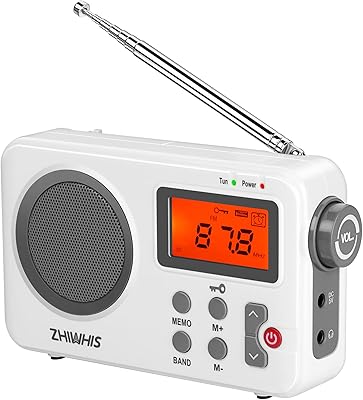
ZHIWHIS ZWS-8801 Portable AM/FM/Shortwave Radio
83%
88%
Reception Performance
90%
Portability & Size
85%
Ease of Use
75%
Sound Quality
82%
Battery Life
More
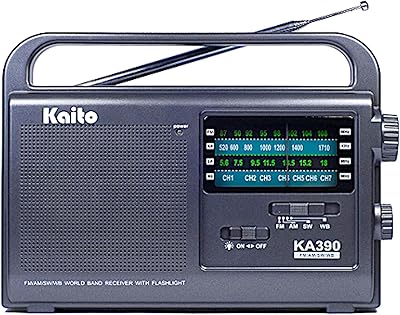
Kaito KA390 Portable Weather Radio
76%
88%
Value for Money
86%
NOAA Weather Reception
81%
FM Reception
67%
Shortwave Reception
78%
Speaker Quality
More
WENPZERAY D-216 Portable AM/FM/SW Radio
78%
91%
Ease of Use
83%
AM/FM Reception
53%
Shortwave Reception
74%
Speaker Quality
71%
Build Quality
More
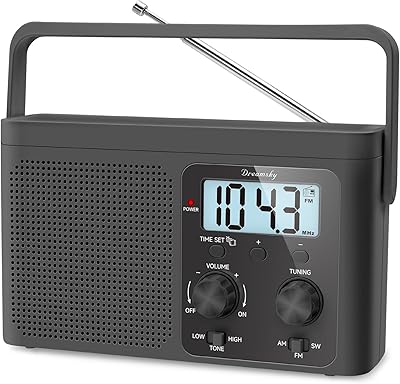
DreamSky AM/FM Shortwave Portable Radio
78%
93%
Ease of Use
86%
AM/FM Reception
61%
Shortwave Reception
74%
Speaker Quality
67%
Build Quality
More
Raddy RF75A Portable Shortwave Radio
84%
91%
Reception Quality
70%
Battery Life
95%
Portability
88%
Bluetooth Connectivity
84%
App Control Experience
More
Philips TAR1506 Portable AM/FM Radio
79%
93%
Ease of Use
78%
FM Reception Quality
54%
AM Reception Quality
91%
Portability
61%
Build Quality
More
Yewrich Portable AM/FM Bluetooth Radio
78%
84%
AM/FM Reception
91%
Ease of Use
67%
Bluetooth Performance
63%
Speaker Quality
78%
Build Quality
More
Raddy RE40 Portable Shortwave Radio
83%
88%
Battery Life
91%
Portability
85%
Charging Options
94%
Weather Alerts
62%
Bluetooth Performance
More
Jazmm Portable AM/FM/SW Pocket Radio
74%
83%
FM Reception Quality
54%
Shortwave Performance
88%
Battery Life
71%
AM Reception Quality
62%
Build Quality & Durability
More

FAQ

It genuinely receives shortwave broadcasts — this is not a decorative feature. That said, results depend heavily on where you are and how you position the radio. Near a window or outdoors, you can pull in international broadcasters, particularly in the evening when shortwave propagation improves. Indoors in a dense urban building, reception can be inconsistent. Temper expectations accordingly; this is an entry-level receiver, not a high-sensitivity shortwave unit.

You can plug it straight in — the AC adapter is included in the box, so there is nothing extra to buy just to get started. Batteries are only needed if you want to use the radio without access to an outlet, and those three D batteries are sold separately.

The tuning is fully analog, meaning you turn a dial to sweep through frequencies. There are no preset memory buttons or digital frequency readouts. If you are used to punching in a station number, that adjustment will take some getting used to, but casual listeners generally find it manageable after a little practice.

Yes, the digital clock and alarm function independently of the radio. You can set the alarm and use it as a standard bedside clock without turning on any radio band.

The aux input lets you plug in an external audio device — like a phone or MP3 player — and play audio through the radio's built-in speaker. It is a handy fallback when over-the-air reception is poor or you simply want to stream something through the speaker.

For a single room like a bedroom or small office, the built-in speaker is adequate at moderate volumes. It is a mono speaker typical of compact radios in this class, so do not expect rich, room-filling sound. For background listening while reading or waking up, it does the job fine.

It is a reasonable option for that purpose. The ability to run on three D batteries means it stays functional during power outages, and AM and shortwave bands can carry emergency broadcasts and international news when local infrastructure is disrupted. Just make sure to have fresh batteries on hand, since they are not included.

The overall construction is plastic and feels in line with its budget positioning — functional but not premium. The clock and alarm tend to hold up reliably for daily use, but some long-term owners have noted that tuning dials can develop a slightly loose feel over time. It is not a device built to last a decade of heavy use, but for light to moderate daily operation, most users report it performing reliably for years.

The radio itself will receive AM, FM, and shortwave signals regardless of country, so it works internationally in terms of reception. However, you should check whether the included AC adapter is compatible with local voltage and outlet types before plugging in abroad, as it is designed primarily for domestic use.

The available product information does not confirm a sleep timer or snooze function beyond the single alarm. If those features are important to your daily routine, it is worth verifying before purchase, as the clock interface is fairly basic by design.

Where to Buy