Overview

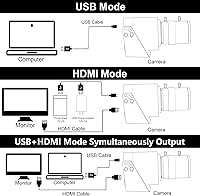
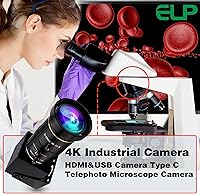
The ELP USB4KCAM01H 4K USB/HDMI Camera (5-50mm 10X Zoom) sits in an interesting gap between off-the-shelf webcams and dedicated machine vision hardware. It's built around a Sony IMX415 sensor — a 1/2.8-inch CMOS chip with genuine low-light capability — and pairs it with a manual varifocal lens spanning 5mm to 50mm. That's real optical zoom, not a digital crop. The dual-output design, pushing signal simultaneously over USB-C and HDMI, gives it flexibility most cameras in this class don't offer. Compact enough to mount almost anywhere, this varifocal 4K USB camera clearly targets technical users rather than anyone looking for a plug-and-stream webcam replacement.

Features & Benefits

At the core of this industrial-style webcam is a 4K 30fps output with support for H.264, MJPEG, and YUY2 compression — a flexibility that matters when integrating into different capture or streaming pipelines. Being UVC-compliant means it works without hunting for drivers on Windows, Linux, macOS, or even a Raspberry Pi. The manual zoom ring and focus collar require physical adjustment, which is worth noting: this isn't a camera you set and forget. But that hands-on control is exactly what precision workflows demand. The compact 1.65 x 1.69 x 4.8-inch housing fits tight mounting rigs, and the included USB-C and HDMI cables mean dual-output use is ready from the moment you unbox it.

Best For

This varifocal 4K USB camera makes the most sense for users with specific imaging requirements — not general video calls. Lab technicians and researchers doing close-up inspection work will appreciate the zoom range and resolution combination. It fits naturally into telescope or microscope afocal capture setups where manual focus control is non-negotiable. Industrial monitoring, document digitization, and machine vision prototyping are all solid use cases. Raspberry Pi and Linux developers benefit from reliable driver-free operation. Even content creators who work in fixed, controlled environments and want manual control over their field of view will find it useful — though that's a secondary audience for what is fundamentally a technical imaging tool.

User Feedback

Users tend to praise the ELP zoom camera's image clarity at lower zoom levels and the reliable plug-and-play experience across operating systems, particularly Linux and Raspberry Pi. The build quality feels solid for the price point, with the lens barrel drawing appreciation from buyers integrating it into professional rigs. That said, some report sharpness softening noticeably at the 50mm end of the zoom range — worth keeping in mind for long-distance detail work. Low-light performance, despite the IMX415 sensor's 0.2 LUX rating, has received mixed reactions in practice. A few users note the cable quality is adequate but not premium. One consistent theme: first-time users unfamiliar with manual varifocal lenses face a short but real learning curve adjusting focus and zoom by hand.

Pros

  • True 10X optical zoom via a physical varifocal lens — not a digital crop — is genuinely rare at this price point.
  • The Sony IMX415 sensor delivers clean, detailed 4K output in well-lit environments and controlled lab conditions.
  • UVC compliance means driver-free plug-and-play on Windows, Linux, macOS, Raspberry Pi, and Android without configuration.
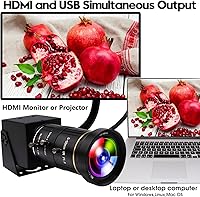
  • Simultaneous USB-C and HDMI output lets you feed a monitor and a PC at the same time from a single camera.
  • Compact 1.65 x 1.69 x 4.8-inch form factor fits into mounting rigs and tight enclosures where larger cameras cannot.
  • H.264, MJPEG, and YUY2 compression options give developers and capture software real flexibility in how they process the signal.
  • Both a USB-C and an HDMI cable are included in the box, so dual-output setups are ready to go immediately.
  • The metal lens barrel feels solid and well-suited for professional or semi-permanent installation in inspection or lab rigs.
  • Manual focus control holds reliably once set, making it ideal for static, repetitive capture workflows like document scanning.

Cons

  • Image sharpness drops noticeably at the 50mm end of the zoom range, limiting critical detail work at maximum zoom.
  • Real-world low-light performance does not live up to the 0.2 LUX spec — supplemental lighting is effectively mandatory.
  • No autofocus means every change in shooting distance requires manual lens adjustment, which slows down dynamic workflows.
  • Sustained 4K output at 30fps strains mid-range host systems and USB 2.0 ports, sometimes causing dropped frames.
  • No built-in microphone is present despite audio format specs listed in the product description — external audio is required.
  • The included cables are short and feel functional rather than premium; most users in permanent rigs replace them quickly.
  • No companion software means exposure, white balance, and color tuning must be handled entirely through third-party capture apps.
  • The cylindrical housing requires an adapter or custom mount to work with standard flat-surface tripod hardware.
  • First-time varifocal lens users face a real learning curve — adjusting zoom and focus simultaneously without reference marks is not intuitive.

Ratings

The ELP USB4KCAM01H 4K USB/HDMI Camera (5-50mm 10X Zoom) has been scored across 13 categories by our AI system after processing verified buyer reviews from global markets, with spam, bot activity, and incentivized feedback actively filtered out. The scores reflect what real technical users — lab researchers, developers, and industrial integrators — consistently praised and complained about, without softening the rough edges. Both the genuine strengths and the recurring frustrations are represented transparently below.

Image Sharpness & Clarity
78%
22%
At shorter focal lengths — roughly 5mm to 25mm — users report impressively crisp 4K output with well-defined edges, which matters greatly for close-up inspection and macro documentation work. The Sony IMX415 sensor handles well-lit scenes cleanly, producing images that hold up when zoomed in during post-processing.
At the 50mm end of the zoom range, a noticeable softening appears that several technically experienced users flagged specifically. For critical detail work at maximum zoom — like reading fine text on a PCB or identifying small specimens — the drop in sharpness becomes a real limitation.
Optical Zoom Performance
83%
True 10X optical zoom from a varifocal barrel lens is genuinely rare at this price tier, and users familiar with the difference between optical and digital zoom consistently call this out as the standout feature. Researchers using it on telescope or microscope rigs particularly value having physical zoom control rather than software-interpolated cropping.
The zoom ring requires deliberate, steady rotation — there is no click-stop or indexed position, so repeating an exact focal length across sessions takes practice and patience. Users who need to switch zoom levels frequently during live capture find this workflow slower than expected.
Low-Light Performance
61%
39%
The IMX415 sensor carries a 0.2 LUX minimum illumination rating, and in moderately dim conditions — like a partially lit lab bench or indoor workspace with ambient lighting — the camera does produce usable footage without excessive noise. Some users working in controlled artificial lighting report solid results.
Real-world low-light performance falls short of what the sensor specification implies on paper. In genuinely dark environments, grain and color noise become disruptive, and several buyers expecting night-vision-adjacent capability from the 0.2 LUX spec were clearly disappointed. Supplemental lighting is essentially required for quality output.
Plug-and-Play Compatibility
91%
UVC compliance means the ELP zoom camera works without any driver installation on Windows, Linux, macOS, and Raspberry Pi — a fact that developers and hobbyists repeatedly praise. Getting it recognized as a capture device in OBS, VLC, or custom Python pipelines typically takes under two minutes from first plug-in.
A small number of users on older Android devices or non-standard Linux kernels encountered recognition issues that required manual configuration. The camera also lacks companion software for exposure or color tuning, which is fine for experienced users but frustrating for those expecting an easy adjustment interface.
Dual USB + HDMI Output
86%
The ability to simultaneously feed a 4K signal over both USB-C to a computer and HDMI to a monitor is a practical workflow feature that users integrating this into lab or inspection stations genuinely rely on. It removes the need for a signal splitter and keeps the setup clean and cable-managed.
A handful of users noted that at 4K resolution, simultaneous dual output occasionally caused minor frame drops or signal instability depending on the host system and USB controller. Lowering resolution to 1080p resolved it, but that workaround defeats part of the camera's value proposition.
Build Quality & Housing
74%
26%
For an industrial-category camera at this price point, the metal-barreled lens and compact housing feel noticeably more robust than typical consumer webcams. Users mounting it in professional rigs or custom enclosures appreciate that it does not feel disposable, and the overall dimensions make it straightforward to work with standard camera mounting hardware.
The main body housing has some plastic elements that feel less premium than the lens barrel itself, and a few buyers noted slight play in the lens mount after extended use. It holds up fine in stationary setups, but it would not inspire confidence in high-vibration industrial environments.
Manual Focus Control
69%
31%
Physical manual focus gives users in precision workflows — document scanning, specimen photography, circuit board inspection — the exact control they need without relying on autofocus algorithms that can drift or hunt. Once dialed in, the focus holds reliably for static shooting setups.
For users coming from autofocus webcams, the learning curve is steeper than expected. There is no focus assistance indicator, so achieving critical focus requires trial and error, particularly for users new to varifocal lenses. Remote or software-driven focus control is not available on this model.
Compression Format Flexibility
82%
18%
Support for H.264, MJPEG, and YUY2 gives this camera real versatility across different capture pipelines. Developers piping frames into OpenCV or custom vision applications particularly value YUY2 for raw processing, while streamers and recorders tend to default to H.264 for efficient file sizes at 4K.
Switching between compression formats typically requires going through the capture software settings rather than any hardware toggle, which is standard practice but can confuse less experienced users. H.265 is not supported, which would have been a welcome addition for storage-efficient 4K recording.
Ease of Initial Setup
77%
23%
Experienced users — particularly those with Linux or Raspberry Pi backgrounds — report a clean, frictionless setup experience. The camera shows up as a standard UVC device, cables are included in the box, and most professional capture applications detect it without any additional configuration steps.
Users without prior experience handling varifocal lenses often spend significant time getting both zoom and focus dialed in simultaneously, as adjusting one tends to shift the other. A brief setup guide specific to common use cases like telescope capture or macro work would meaningfully reduce this friction.
Frame Rate Consistency
72%
28%
At 1080p and lower resolutions, the camera delivers consistently smooth frame rates that users running it in continuous monitoring or inspection setups rely on without issue. For most industrial and lab applications where frame consistency matters more than peak resolution, it performs reliably.
Sustained 4K at 30fps puts real demand on the host system's USB controller and CPU, and some users on mid-range laptops or single-board computers report occasional dropped frames or stuttering under full resolution load. USB 3.0 ports perform noticeably better than USB 2.0 in these scenarios.
Cable Quality & Length
63%
37%
Including both a USB-C cable and an HDMI cable in the box is a practical touch that lets users get started with dual-output immediately. The 1.2m USB-C and 1.5m HDMI cables cover most desktop and bench-mounted setups without needing immediate replacements.
The cables themselves are functional but unremarkable — the connectors feel adequate rather than premium, and the lengths are on the short side for installations where the camera is mounted at any meaningful distance from the host device. Several users replaced them with longer, better-shielded cables shortly after purchase.
Size & Mountability
88%
At roughly 1.65 x 1.69 x 4.8 inches and just over a pound, this industrial-style webcam fits into tight spaces and custom enclosures where larger cameras simply cannot go. Users building it into inspection rigs, mounting arms, or 3D-printed housings consistently praise how manageable the physical footprint is.
The cylindrical form factor, while compact, is not the easiest to work with on standard flat-surface tripod mounts without an adapter. Users expecting typical webcam-style clip or desktop mounting will need additional hardware, which is not included in the box.
Value for the Use Case
79%
21%
For the specific niche this camera targets — optical zoom capture with dual USB and HDMI output, UVC compatibility, and a quality sensor — the price sits well below comparable industrial or machine vision alternatives. Technical buyers who understand what they are getting consistently rate it as a strong value for specialized workflows.
Casual buyers who purchase it expecting a premium general-purpose webcam experience tend to feel it overdelivers on complexity and underdelivers on convenience. The value proposition depends entirely on whether the manual zoom and dual-output features align with the buyer's actual needs.

Suitable for:

The ELP USB4KCAM01H 4K USB/HDMI Camera (5-50mm 10X Zoom) was clearly built with a specific type of buyer in mind, and if you fall into that group, it delivers real value. Lab researchers and technicians who need to capture close-up or variable-distance imagery directly into a computer — think specimen documentation, PCB inspection, or materials analysis — will find the 10X optical zoom range and 4K resolution a genuinely capable combination. Developers and makers working on Raspberry Pi or Linux-based computer vision projects benefit from the UVC plug-and-play compatibility, which removes the driver headaches that plague many specialty cameras on non-Windows systems. It also fits naturally into telescope or microscope afocal imaging rigs where physical manual focus and zoom control are not just preferred but necessary. For anyone running a dual-display inspection or monitoring station, the simultaneous USB and HDMI output is a practical feature that reduces hardware overhead considerably.
Not suitable for:

If you are looking for a camera to handle video calls, content creation on the go, or general home office use, the ELP USB4KCAM01H 4K USB/HDMI Camera (5-50mm 10X Zoom) is almost certainly the wrong tool for the job. There is no autofocus, no built-in microphone, and no companion app for easy exposure or white balance adjustments — things most everyday users take for granted. The manual varifocal lens requires deliberate physical calibration every time your shooting distance changes, which creates real friction in dynamic or fast-paced environments. Low-light performance, despite the IMX415 sensor's specifications, falls short in practice without controlled supplemental lighting, ruling it out for dim home or office settings. Buyers who have never worked with varifocal lenses before should also factor in a meaningful learning curve before they can get consistently sharp, properly framed results.

Specifications

  • Image Sensor: Uses a Sony IMX415 1/2.8-inch CMOS sensor, a back-illuminated chip known for low-light sensitivity and clean color reproduction.
  • Max Resolution: Captures video at up to 3840 x 2160 pixels (4K UHD) at 30 frames per second.
  • Lens Type: Manual varifocal lens with a 5-50mm focal range, delivering true 10X optical zoom with no digital interpolation.
  • Compression Formats: Supports H.264, MJPEG, and YUY2 compression formats, selectable through compatible capture software.
  • Interface: Dual-output via USB Type-C and HDMI, both of which can operate simultaneously from a single camera unit.
  • Power Supply: Powered entirely through the USB Type-C connection, requiring no external power adapter for standard operation.
  • Compatibility: UVC-compliant and works driver-free on Windows, Linux, macOS, Raspberry Pi, and Android operating systems.
  • Dimensions: Measures approximately 1.65 x 1.69 x 4.8 inches, with a cylindrical barrel form factor suited for mounting in rigs or enclosures.
  • Weight: Weighs 1.12 pounds, making it light enough for arm-mounted or overhead inspection installations.
  • Min Illumination: Rated at a minimum illumination of 0.2 LUX, though adequate supplemental lighting is recommended for optimal image quality.
  • Shutter Type: Equipped with a rolling shutter, which is standard for this sensor class and suitable for most static or slow-motion capture scenarios.
  • Included Cables: Ships with one 1.2m USB Type-C cable and one 1.5m HDMI cable, enabling immediate dual-output setup out of the box.
  • Focus Control: Focus is adjusted manually by rotating the lens barrel collar; there is no autofocus motor or software-driven focus control.
  • Zoom Control: Zoom is set manually via the varifocal lens ring, with no motorized zoom or remote zoom actuation available on this model.
  • Model Number: Officially designated as the ELP-USB4KCAM01H-CFV, which is the identifier to reference when contacting ELP support or sourcing replacement parts.
  • Manufacturer: Produced by ELP, a brand specializing in industrial and embedded USB camera modules with a focus on machine vision and technical imaging applications.
  • BSR Ranking: Holds a Best Sellers Rank of #146 in the Webcams category on Amazon, indicating sustained demand in a competitive specialty segment.
  • Date Available: First listed for sale on August 7, 2023, placing it in a relatively recent product generation for this class of industrial USB camera.

Related Reviews

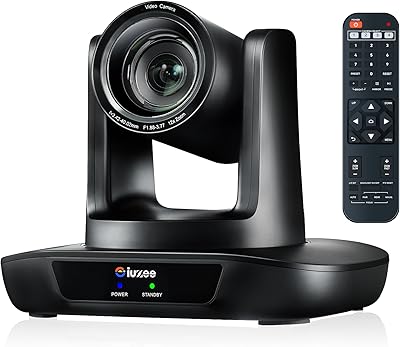
iuZee UHD12U-4K 4K PTZ Camera with 12X Optical Zoom
84%
88%
Video Quality
92%
Ease of Setup
85%
Zoom Performance
89%
Build Quality
87%
Low-Light Performance
More
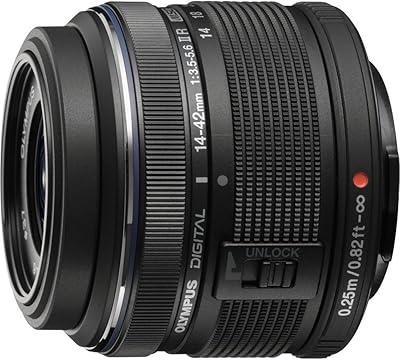
Olympus M.14-42mm F3.5-5.6 2R Zuiko Camera Zoom Lens
86%
91%
Portability & Design
88%
Autofocus Performance
78%
Image Quality
82%
Build Quality & Durability
85%
Ease of Use
More
Sony 16-50mm f/3.5-5.6 OSS Alpha E-Mount Retractable Zoom Lens
85%
91%
Value for Money
87%
Image Quality
93%
Portability/Size
88%
Ease of Use
82%
Build Quality
More
StarTech USB-C / USB-A Hybrid Docking Station for MacBook Pro/Air & Windows - Triple 4K 60Hz HDMI/DP, 85W Power Delivery
83%
94%
Multi-Display Performance
89%
Charging Efficiency
80%
Compatibility with OS
91%
Data Transfer Speed
88%
Ethernet Stability
More
RunCam 5 4K Action Camera
81%
88%
Video Quality
85%
Stabilization Performance
94%
Portability/Size
75%
Battery Life
90%
Ease of Use
More
ELP 1MP HD USB Dome Camera
79%
91%
Ease of Setup
85%
Video Quality
88%
Night Vision Performance
63%
Field of View
72%
Build Quality
More
Ideao DC400 4K USB Document Camera
86%
89%
Image Quality
93%
Portability & Design
71%
OCR Functionality
86%
Video Performance
90%
Ease of Setup
More
Kitchbai KB-700 4K USB Document Camera
81%
88%
Image Clarity
67%
Autofocus Performance
94%
Ease of Setup
91%
Image Invert Function
79%
LED Lighting
More
AV Access 4K HDMI USB KVM Extender
86%
89%
Ease of Setup
92%
Signal Range & Reliability
90%
Performance Over Long Distances
85%
USB Port Functionality
88%
Audio Support
More
Atomos Shinobi II 5-inch HDMI 4K Monitor
86%
94%
Display Brightness
88%
Touchscreen Responsiveness
91%
Portability
75%
Battery Life
89%
Color Accuracy
More

FAQ

No drivers are needed on any of the supported platforms. The ELP USB4KCAM01H 4K USB/HDMI Camera (5-50mm 10X Zoom) is UVC-compliant, which means Linux, Raspberry Pi OS, macOS, and Windows all recognize it as a standard capture device the moment you plug it in. Most users are capturing frames in tools like fswebcam or OpenCV within minutes of connecting it.

It is genuine optical zoom. The 5-50mm varifocal lens physically adjusts the focal length when you rotate the zoom ring, which means you are getting true magnification without any loss in native resolution. This is an important distinction from software-based digital zoom, which simply crops and upscales the existing image. For technical imaging work, that difference matters significantly.

Yes, simultaneous dual output is one of the core design features of this camera. You can feed a live 4K signal to a monitor via HDMI while the USB-C connection streams or records to a computer at the same time. Some users have noted occasional frame drops at full 4K resolution when running both outputs on weaker host systems, but at 1080p the dual-output performance is consistently stable.

No, there is no built-in microphone on this unit. Despite some audio format references appearing in the product specification listing, the camera itself does not have an integrated mic. If your workflow requires audio alongside the video capture, you will need a separate external microphone or audio interface.

At the wide end of the zoom range — say 5mm to 25mm — sharpness is quite strong and the Sony IMX415 sensor produces clean, well-defined output. At the maximum 50mm focal length, a noticeable softening occurs that several technically experienced users have flagged. It is usable for many applications, but if your work demands critical fine detail at full zoom, you may find it falls just short of expectations.

The camera uses a cylindrical barrel form factor, which is common in industrial and machine vision cameras. It does not have the flat clip-style mount you would find on a typical consumer webcam. Most users attach it using a standard C-mount or custom 3D-printed bracket. If you plan to use it on a regular camera tripod, you will need a compatible adapter ring or mounting clamp.

You adjust focus by physically rotating a collar on the lens barrel. Once it is set, it holds position reliably for static shooting setups like inspection stations or document scanners. The tricky part for newcomers is that the zoom ring and focus collar interact — changing your zoom level will shift the focus slightly, so you often need to fine-tune both together. There is no focus peaking, magnification assist, or any other aid built in, so it does take some patience the first few times.

Yes, because it is a standard UVC device, it appears as a regular video capture source in OBS, XSplit, and most other streaming or recording applications. You select it from the video source list the same way you would any webcam. Compression format selection — H.264 versus MJPEG, for example — is typically handled through the software or through a DirectShow/V4L2 settings panel depending on your operating system.

Honestly, it is a mixed picture. The 0.2 LUX rating sounds impressive on paper, and the IMX415 sensor does have better-than-average low-light capability compared to budget webcam sensors. In practice though, dim environments produce noticeable noise and soft color. Users who work in controlled lab or studio lighting report solid results, but anyone expecting strong performance in a dark room without supplemental light will likely be disappointed.

For a standard desktop or bench-mounted installation where the camera sits within a meter or so of the host device, the included 1.2m USB-C and 1.5m HDMI cables are workable. For setups where the camera is mounted overhead, at a distance, or integrated into a larger rig, the cable lengths tend to feel restrictive. Quite a few buyers swap them out for longer, better-shielded cables early on, which is worth budgeting for if you have a specific installation in mind.