Overview

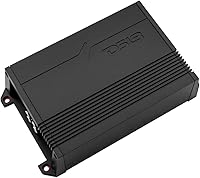
The DS18 G1000.4D 4-Channel Class D Car Amplifier entered the market in early 2023 as a genuinely compact option for builders who don't have the luxury of space. Roughly the size of a hardcover novel, it fits under seats, inside door panels, or tucked into tight trunk corners without complaint. Class D circuitry keeps heat output low and efficiency high — two things that matter a lot when you're running wires through a daily driver. This isn't an audiophile statement piece. It's a practical mid-range amplifier built for people who want real improvement over stock audio without ripping out their entire dashboard to do it.

Features & Benefits

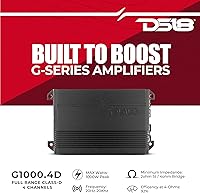
The 1000W label on this amp refers to peak power — the number that actually matters is RMS. At 4 ohms, continuous RMS output is 90 watts per channel; drop to 2 ohms and that climbs to 150 watts per channel. Bridge two channels and you're pushing 300 watts into a subwoofer or mid-bass driver. The compact footprint — 8.1″ x 4.72″ x 1.96″ — is a direct result of Class D efficiency, which also keeps the unit running cooler than older Class AB designs. Built-in variable crossover filters cover high-pass, low-pass, and full-range modes, so you can shape your sound without adding a separate processor. High-level input support lets you tap directly into a factory radio, skipping the need for a line output converter entirely.

Best For

DS18's mini Class D amplifier makes the most sense for builders working within real constraints. If your mounting options are limited — under a seat, inside a custom kick panel, behind a rear seat — the small form factor isn't just convenient, it might be the deciding factor. It's also a strong pick for anyone keeping a factory head unit, since the high-level inputs remove a common installation headache. Those looking to run four full-range speakers with the option to later bridge down to a two-channel subwoofer setup will get solid mileage out of the configuration flexibility. Where it's less suited: if you're chasing high-fidelity sound or need sustained high-volume output for extended listening sessions, more robust higher-RMS competition is worth the look.

User Feedback

Across roughly 184 ratings, the G1000.4D sits at 4.2 out of 5 — a solid score, though not without its caveats. Buyers consistently praise the compact footprint, with many noting how much cleaner their installs look compared to bulkier amps they replaced. The jump in sound quality over stock audio comes up repeatedly as the most satisfying outcome. On the critical side, a recurring frustration involves the power rating — some buyers feel the 1000W max figure overpromises what the amp actually delivers at real-world listening levels. A handful of users also report that sustained loud playback causes noticeable warmth in the housing, so ventilation during installation is worth planning for. DS18's support response doesn't get much attention in reviews, which can cut both ways.

Pros

  • Genuinely compact build fits under seats, behind panels, or in tight trunk corners with no modifications.
  • Class D design runs notably cooler and draws less current than older Class AB amps in the same power range.
  • High-level inputs let you connect directly to a factory radio without buying a line output converter.
  • Built-in variable crossover filters cover high-pass, low-pass, and full-range — no external processor needed.
  • Bridgeable configuration gives you a path to a two-channel subwoofer setup as your system grows.
  • Stable at both 2 and 4 ohms, offering flexibility when matching different speaker loads.
  • At roughly 3 pounds, the unit is easy to mount and reposition without heavy hardware.
  • FCC-certified, which at least confirms it clears basic regulatory standards for electronics.
  • Buyers consistently report a noticeable, satisfying jump in clarity and volume over stock audio.
  • Competitive pricing for a 4-channel amp with this combination of features and form factor.

Cons

  • The 1000W max power figure is peak-rated — actual continuous RMS output is significantly lower and can mislead buyers.
  • Housing gets noticeably warm during sustained loud playback, so ventilation around the install point is not optional.
  • Instruction documentation is thin, which can frustrate first-time installers during wiring and configuration.
  • RMS power per channel at 4 ohms is modest at 90 watts, limiting headroom for demanding speaker setups.
  • DS18 customer support responsiveness does not earn strong marks in buyer feedback, which is a real concern if something goes wrong.
  • Not well-suited for high-power subwoofer duty on its own — the bridged output may not satisfy bass-heavy builds.
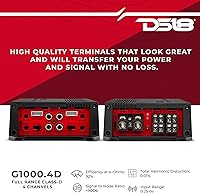
  • Terminal and connection access can feel cramped given the compact housing, making tidy cable management harder.
  • Limited brand recognition compared to established names in the segment may affect resale value and long-term parts support.

Ratings

Our AI-generated scores for the DS18 G1000.4D 4-Channel Class D Car Amplifier were produced by analyzing verified global buyer reviews, actively filtering out incentivized, repeated, and bot-flagged submissions to reflect genuine ownership experiences. The ratings below cover both the standout strengths and the recurring frustrations that real installers and audio enthusiasts encountered across a wide range of vehicle types and build scenarios. Nothing has been softened — if buyers consistently ran into a problem, it shows up in the score.
Value for Money
83%
Most buyers feel the G1000.4D delivers more than expected for its price bracket, particularly given the built-in crossover filters and high-level input support that competing amps at this tier often omit. For a first system upgrade or a secondary vehicle build, the feature-to-cost ratio lands well.
A segment of buyers who expected the 1000W headline figure to translate into usable output felt shortchanged once they understood the RMS reality. If your budget expectations were set by the peak power claim, the actual performance headroom can feel modest for the money.
Compact Form Factor
91%
The physical size is one of the most consistently praised attributes across all buyer feedback. At roughly 8.1″ x 4.72″ x 1.96″, it fits cleanly under front seats, inside custom door enclosures, and in trunk corners where a standard-size amp would simply not go.
The compact chassis does create some installation tightness around the terminal block and wiring connections, making cable management more fiddly than on larger units. Buyers using thicker gauge power wire have noted that routing cleanly into the compact housing requires patience.
Power Output (Real-World)
67%
33%
At 2-ohm loads, the 150-watt-per-channel RMS output is genuinely capable of driving a set of aftermarket speakers to satisfying levels on a daily commute or weekend drive. Buyers upgrading from stock head unit power notice an immediate and meaningful difference in clarity and volume.
The 90-watt RMS rating at 4 ohms leaves limited headroom for demanding listening scenarios or higher-sensitivity builds. The gap between the marketed 1000W peak and the practical continuous output is wide enough that some buyers feel the power claims are misleading, and that perception damages trust regardless of technical accuracy.
Installation Ease
72%
28%
High-level input support is the feature that simplifies installation most dramatically for the majority of buyers. Being able to wire directly to a factory head unit without sourcing a line output converter removes a step that trips up many first-time installers and reduces overall parts cost.
The included documentation is sparse, and several buyers noted that terminal labeling and crossover adjustment guidance could be clearer. For installers unfamiliar with gain structure and crossover tuning, the lack of a detailed setup guide means relying on third-party resources or forums to configure the amp properly.
Thermal Management
61%
39%
Class D circuitry is inherently more efficient than Class AB designs, and under moderate listening conditions the G1000.4D does run cooler than older-generation amps of similar output. For everyday commuting at reasonable volumes, heat buildup is rarely reported as a concern.
Extended high-volume playback — particularly during summer months in vehicles without strong HVAC airflow — pushes the housing to noticeably warm temperatures. Buyers who mounted the unit in enclosed spaces with minimal ventilation reported thermal protection kicking in during long drives, which cuts audio output until the unit cools.
Build Quality
74%
26%
The surface-mount housing feels solid for its weight class, and the FCC certification at least confirms the unit passed basic electromagnetic compliance testing. At 3.1 pounds, the chassis doesn't rattle or flex during installation, which gives a reasonable first impression of durability.
A small but consistent group of buyers raised concerns about long-term reliability, with a handful reporting failure within the first year of normal use. The build doesn't inspire the same confidence as heavier, more robustly heatsunk competitors in the same price range.
Crossover Flexibility
86%
Having variable high-pass, low-pass, and full-range filter modes built directly into the amp is a genuine advantage for budget builds where adding a separate signal processor isn't in the plan. Buyers running a mixed speaker setup — tweeters up front, mid-bass in the rear — found the built-in crossover enough to achieve a clean, well-separated sound.
The crossover controls are functional but basic, without the precision or range that a dedicated DSP or external processor would offer. Buyers trying to fine-tune a more complex speaker setup found the onboard options limiting once they started chasing specific frequency rolloff points.
Signal Compatibility
88%
Support for both high-level and low-level (RCA) inputs makes this amp genuinely versatile across factory and aftermarket head unit pairings. Buyers retaining OEM radios in daily drivers particularly appreciated avoiding the cost and complexity of adding a line output converter to their build.
A small number of buyers reported minor background noise when using high-level inputs in certain vehicles, likely related to ground loop sensitivity rather than a unit defect. Proper grounding technique resolves this in most cases, but it's a step the minimal instructions don't adequately prepare first-timers for.
Bridged Output Performance
69%
31%
The 300-watt RMS bridged output at 4 ohms gives buyers a usable path to running a midsize subwoofer from the same amp that handles their full-range speakers, which is a cost-effective approach for entry-level builds. Buyers who used the bridged mode for a 10-inch sub in a ported box reported satisfying low-end output.
300 watts bridged falls short of what a dedicated mono subwoofer amp would deliver, and buyers expecting serious bass impact from a larger or less-efficient sub driver found the bridged output underwhelming. It works best as a convenience feature rather than a primary subwoofer solution.
Mounting Versatility
84%
The small footprint and surface-mount design open up installation locations that most amplifiers simply cannot reach, including tight custom enclosures, under-seat rails in compact sedans, and behind rear seat panels in hatchbacks. Buyers consistently praised how cleanly the unit hid in custom builds.
Because the unit is so small, the mounting screw points are close together and the chassis offers less mechanical leverage than a larger amp when torqueing down mounting hardware. In high-vibration environments, buyers reported needing to add foam padding or additional securing hardware to prevent resonance.
Audio Clarity
76%
24%
For a Class D amp at this price tier, the signal reproduction is clean enough that most buyers coming from factory amplification notice a clear and immediate improvement in midrange detail and stereo separation. Paired with quality aftermarket coaxials or component speakers, the improvement over stock is not subtle.
Critical listeners and audio enthusiasts with more discerning reference points found the sound slightly clinical or lacking in warmth compared to Class AB alternatives. At higher volumes, some buyers detected a slight compression in dynamic range that was absent at moderate listening levels.
Customer Support
53%
47%
A portion of buyers who reached out to DS18 directly reported receiving replacement units for defective products within a reasonable timeframe, which suggests the brand does handle warranty claims in at least some cases.
DS18 customer support responsiveness is one of the more negatively discussed topics in buyer feedback, with multiple reviewers describing slow or unhelpful responses when troubleshooting installation issues or requesting warranty service. For a product category where configuration questions arise frequently, this is a meaningful gap.
Documentation & Setup Guide
49%
51%
The physical unit is labeled clearly enough that experienced installers can work through the setup without needing to reference the manual at all, and the terminal layout is logically organized.
The included documentation is genuinely thin, covering only the most basic wiring connections without addressing gain structure, crossover adjustment, or common troubleshooting scenarios. First-time installers consistently flagged this as the biggest friction point in getting the amp configured correctly out of the box.

Suitable for:

The DS18 G1000.4D 4-Channel Class D Car Amplifier is a strong fit for anyone who wants a meaningful audio upgrade without gutting their vehicle's interior to make space. If your car doesn't offer a roomy trunk or a dedicated amp rack, the unit's small footprint — roughly the size of a thick hardcover book — opens up mounting spots that a full-size amp simply can't reach, like under a front seat or inside a custom door panel. It's also a practical choice for drivers keeping their factory head unit, since the high-level inputs remove the need for a separate line output converter and simplify the whole installation. Builders who want four-channel coverage now but may want to bridge down to a two-channel subwoofer setup later will appreciate that flexibility being baked in from the start. At its price point, this compact 4-channel amp offers a reasonable entry into the mid-tier amplifier market without demanding audiophile-level commitment.
Not suitable for:

If your priority is maximum continuous power output for loud, extended listening sessions, the DS18 G1000.4D 4-Channel Class D Car Amplifier will likely leave you wanting more — the real-world RMS figures are modest, and the unit can run warm under sustained high-volume use. Serious audio enthusiasts chasing low distortion, flat frequency response, and tight dynamic range should budget higher and look at brands with a stronger pedigree in high-fidelity amplification. The G1000.4D is also not the right call if you plan to drive demanding, low-sensitivity speakers or need to power a high-wattage subwoofer setup on its own. Anyone expecting the 1000W headline figure to translate directly into continuous output will be disappointed — that number reflects peak, not RMS, and the gap matters. If you need detailed installation documentation or expect responsive after-sales support, the available evidence from buyers suggests that could be a frustrating experience.

Specifications

  • Model: This amplifier carries the model designation G1000.4D, produced by DS18.
  • Topology: The unit uses Class D amplifier circuitry, which prioritizes power efficiency and reduced heat output over raw analog warmth.
  • Channels: Four independent amplifier channels are available, with bridging support to reduce to a two-channel configuration.
  • RMS Power (4-ohm): Continuous RMS output is rated at 90 watts per channel when all four channels are driven into 4-ohm loads.
  • RMS Power (2-ohm): Continuous RMS output increases to 150 watts per channel when all four channels are driven into 2-ohm loads.
  • Bridged Power: In bridged mode, the amp delivers 300 watts RMS into a 4-ohm load across two channels.
  • Peak Power: DS18 rates maximum (peak) power at 1000 watts total, a figure that reflects momentary headroom rather than continuous output.
  • Impedance: The amplifier is stable at both 2-ohm and 4-ohm speaker loads across all four channels.
  • Dimensions: The chassis measures 8.1″ in length, 4.72″ in width, and 1.96″ in height, making it one of the more compact units in its power class.
  • Weight: The unit weighs 3.1 pounds, light enough for single-person installation in most vehicle configurations.
  • Input Voltage: The amplifier is designed to operate on a standard 12-volt DC automotive electrical system.
  • Crossover: A built-in variable crossover filter covers high-pass, low-pass, and full-range modes, all adjustable without external components.
  • Signal Input: High-level (speaker-level) inputs are supported, allowing direct connection to a factory or OEM head unit without a line output converter.
  • Mounting Type: The housing uses a surface-mount design with integrated mounting points suitable for flat or bracketed installation surfaces.
  • Certification: The G1000.4D carries FCC certification, confirming it meets United States federal electromagnetic compliance standards.
  • Color: The unit ships in a black finish with a low-profile chassis design intended to blend into custom enclosures or hidden mounting locations.
  • In the Box: The package includes the amplifier unit only; wiring kits, RCA cables, and mounting hardware are not included.
  • Availability: This model first became available in March 2023 and is currently listed as an active, non-discontinued product by the manufacturer.

Related Reviews

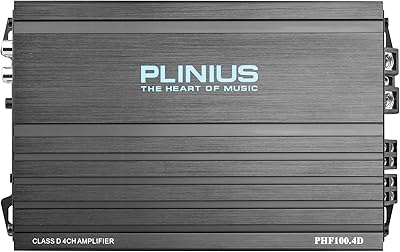
Plinius PHF100.4D 4-Channel Car Amplifier
74%
88%
Value for Money
76%
Sound Quality
63%
Power Output
54%
Thermal Management
84%
Ease of Installation
More
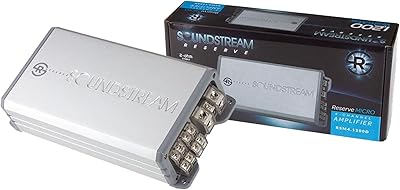
Soundstream RSM4.1200D 4-Channel Car Amplifier
71%
91%
Ease of Installation
83%
Value for Money
71%
Sound Quality
67%
Build Quality
58%
Thermal Management
More
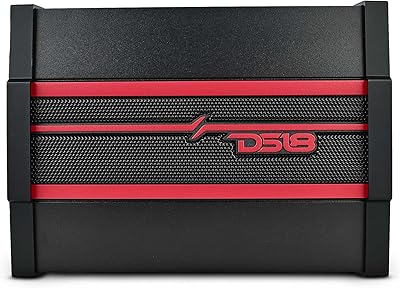
DS18 CANDY-X4B 4-Channel Car Amplifier
75%
88%
Value for Money
71%
Power Output
82%
Installation Ease
63%
Thermal Management
74%
Sound Quality
More
NVX VADM4 v2 4-Channel Amplifier
84%
93%
Power Accuracy
91%
Compact Form Factor
89%
Marine & Weather Durability
88%
Thermal Management
84%
Crossover Flexibility
More
Soundstream PN4.1000D 1000W 4-Channel Class D Amplifier
85%
87%
Performance
92%
Value for Money
85%
Build Quality
89%
Ease of Installation
83%
Power Output
More
CT Sounds CT-80.4D 4-Channel Car Amplifier
74%
91%
Value for Money
78%
Power Output Accuracy
84%
Installation Ease
61%
Heat Management
67%
Build Quality
More
CT Sounds CT-150.4D 4-Channel Car Amplifier
75%
83%
Value for Money
78%
Sound Quality
61%
Build Quality
86%
Ease of Installation
77%
Thermal Management
More
Soundstream ST4.1000DB Stealth Series 1000W Class D 4-Channel Amplifier
85%
94%
Power Output
92%
Sound Clarity
88%
Installation Ease
58%
Heat Management
91%
Build Quality
More
Hifonics Zeus Delta ZD-750.4D 750 Watt 4-Channel Car Audio Amplifier
86%
92%
Power Output
90%
Sound Quality
88%
Heat Dissipation
89%
Ease of Installation
86%
Build Quality
More
Planet Audio PL1600.4 4-Channel Car Amplifier
72%
88%
Value for Money
84%
Ease of Installation
74%
Sound Quality
58%
Power Output (Real-World)
61%
Build Quality
More

FAQ

Not exactly. The 1000W figure is a peak power rating, which reflects the absolute maximum the amp can handle in very short bursts. The number that matters for real listening is the RMS rating — 90 watts per channel at 4 ohms, or 150 watts per channel at 2 ohms. That's what you'll actually experience during normal use, and it's still a solid improvement over most factory systems.

You can absolutely use it with a factory head unit. The G1000.4D includes high-level (speaker-level) inputs, which let you tap directly into the existing speaker wires coming out of your stock radio. No line output converter needed, which saves money and simplifies the install considerably.

In most vehicles, yes. At 8.1″ x 4.72″ x 1.96″ — roughly the footprint of a thick hardcover book — this compact 4-channel amp is one of the easier units to tuck under a seat or into a tight trunk corner. That said, it's worth measuring your specific vehicle's clearance before committing, especially in smaller cars with very low seat rails.

Class D amps are more efficient than older Class AB designs, so heat output is lower in general. That said, some buyers have reported the housing gets noticeably warm during sustained high-volume playback. If you're mounting it in an enclosed space with limited airflow, leave a few inches of clearance around the unit and avoid sealing it completely inside a box.

Not simultaneously — bridging combines two channels into one, which reduces your total to two channels. So you could bridge channels 3 and 4 to drive a subwoofer at 300 watts, but that leaves only channels 1 and 2 for your two front speakers. If you need four speaker channels plus a dedicated sub, you'd need a separate mono amp for the subwoofer.

The DS18 G1000.4D 4-Channel Class D Car Amplifier is stable at both 2-ohm and 4-ohm loads. Most aftermarket car speakers are 4 ohms, so standard setups will work fine. Running 2-ohm speakers gives you more power per channel, but make sure your speaker wiring is clean — 2-ohm setups are less tolerant of wiring resistance.
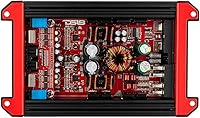
You can run it in full-range mode if you want to keep things simple, but taking a few minutes to set the high-pass filter is worth it. Blocking low frequencies from reaching your door speakers reduces distortion and protects your tweeters and mid-range drivers from bass frequencies they weren't built to handle. The controls are on the amp itself and don't require any software or tools.

The package only includes the amplifier itself. You'll need to purchase a wiring kit separately — look for a kit rated for the amp's power draw, typically an 8-gauge kit for an amplifier in this power range. Most installers also recommend picking up a set of RCA cables if you're using low-level signal inputs.

The install is manageable for a careful first-timer, but the included instructions are minimal. The high-level input feature removes one of the more confusing steps (installing a line output converter), which helps. If you're not comfortable working with your car's wiring, a one-hour shop install is usually inexpensive and worth the peace of mind.

The G1000.4D stands out primarily because of its size-to-feature ratio. At this price tier, most compact amps sacrifice either the built-in crossover or the high-level input — this one includes both. The trade-off is that RMS output is modest compared to physically larger amps at similar prices. If raw power is the priority, a bigger unit will likely serve you better; if space and install simplicity are the constraints, this one competes well.

Where to Buy