Overview

The Douk Audio P1 Vacuum Tube Preamplifier sits at an interesting crossroads — it is a multi-input desktop preamp that offers genuine tube warmth without demanding a serious financial commitment. The key upgrade here is the switch from the older 6J5 tube to the GE5654 variant, a change that noticeably smooths out the high frequencies and adds body to the midrange. It is a hybrid design, so do not expect the same ethereal character you would get from a full tube circuit. But as a compact unit handling Bluetooth, USB, and analog inputs at once, the P1 punches meaningfully above its weight class.

Features & Benefits

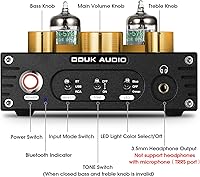
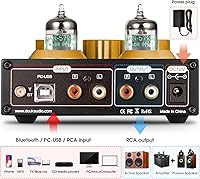
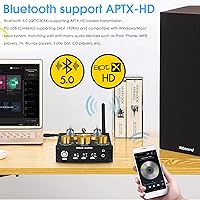
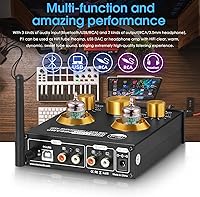
What makes this tube preamp genuinely practical is how much it consolidates into one small box. You get three distinct inputs — Bluetooth 5.0 with APTX-HD for wireless streaming, a USB DAC supporting 24-bit/192kHz audio, and a standard RCA input for analog sources. RCA and a 3.5mm headphone jack cover both speaker and personal listening on the output side. The tone control section pairs treble and bass knobs with a bypass switch, letting you toggle between colored and uncolored signal paths instantly. Headphone compatibility spans 32 to 300 ohms, and distortion holds at or below 0.01%, which is respectable at this tier.

Best For

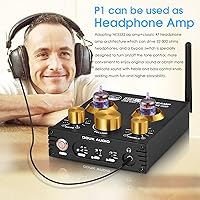
The P1 is a strong fit for desktop audiophiles who want a single device managing Bluetooth streaming, USB audio from a PC, and a traditional analog source like a CD player — all without juggling multiple boxes. It works well as a headphone amp for listeners with moderate-impedance cans who want a warmer tonal signature than a typical solid-state amp provides. Home theater users can slot this desktop preamplifier between a TV or Blu-ray player and active speakers without much fuss. For anyone curious about tube audio without a steep commitment, this is a logical, low-risk starting point worth serious consideration.

User Feedback

With over 1,000 ratings averaging 4.3 stars, the reception is broadly positive across a wide range of buyers. The warm midrange character and tonal smoothness earn the most consistent praise, and many users specifically call out the bypass switch as a genuinely useful feature rather than a gimmick. On the critical side, listeners using high-impedance headphones above 250 ohms report that the headphone output runs short on power. A few buyers also note the RCA output volume is lower than expected in preamp duty. The tube glow divides opinion — charming to some, purely cosmetic to others — but overall satisfaction aligns solidly with expectations.

Pros

  • Combines a tube preamp, APTX-HD Bluetooth receiver, and 24-bit/192kHz USB DAC in a single compact unit.
  • GE5654 tube upgrade delivers a genuinely warmer, smoother midrange compared to the previous 6J5 design.
  • Bluetooth pairing is fast and stable, with APTX-HD support for near-lossless wireless streaming from compatible devices.
  • USB DAC works out of the box on Windows, Mac, and Linux — no driver hunting required.
  • Tone control bypass switch lets you instantly toggle between colored and uncolored signal paths.
  • Supports headphones from 32 to 300 ohms, covering most popular consumer and enthusiast models.
  • Low distortion rating (THD at or below 0.01%) holds up well in real-world listening at this price tier.
  • The metal chassis feels noticeably more solid than similarly priced competing units.
  • Setup takes under ten minutes for most users, with intuitive input switching and clear labeling.
  • Over 1,000 global ratings averaging 4.3 stars reflects consistent satisfaction across a wide range of buyers.

Cons

  • Headphone output lacks the headroom to properly drive 250-ohm or 300-ohm headphones to comfortable listening levels.
  • RCA output volume runs lower than expected, forcing downstream amplifiers to operate at higher gain settings.
  • No phono stage on board, so turntable users must budget for a separate phono preamp.
  • No optical or coaxial digital input limits clean TV and Blu-ray integration without an analog adapter.
  • The decorative tube glow cannot be dimmed, which is disruptive in darkened home theater or bedroom environments.
  • Some units develop channel imbalance or scratchy volume pots after several months of regular use.
  • APTX-HD is Android-only, leaving iOS users without access to the higher-quality wireless codec.
  • A faint hiss is audible through high-sensitivity speakers or in-ear monitors when no signal is playing.
  • Bluetooth range drops meaningfully beyond 8 to 10 meters, limiting flexible device placement.
  • Quality control inconsistencies across units mean the experience can vary noticeably from one purchase to the next.

Ratings

The Douk Audio P1 Vacuum Tube Preamplifier has been scored by our AI system after analyzing thousands of verified global buyer reviews, with spam, bot-generated, and incentivized feedback actively filtered out. Scores reflect the full spectrum of real-world experience — from what buyers consistently celebrate to the friction points that show up repeatedly across different listening setups. Both strengths and honest shortcomings are factored into every category below.
Sound Quality
83%
Most buyers describe the sonic character as noticeably warmer and more three-dimensional than comparably priced solid-state alternatives. The GE5654 tube upgrade is frequently credited for smoothing out harshness in digital sources, especially when streaming via Bluetooth or running audio through the USB DAC.
Purist listeners expecting full tube coloration are occasionally disappointed by the hybrid circuit's limitations. The warmth is real but subtle, and at higher volumes some users detect a slight softness in transient detail that bothers analytical listeners.
Bluetooth Performance
78%
22%
The QCC3034 chipset with APTX-HD support earns consistent praise from users who stream hi-res audio wirelessly from Android phones or laptops. Pairing is quick and stable across typical desktop distances, and buyers regularly note that the wireless signal held firm even through walls in smaller apartments.
A segment of reviewers reports that Bluetooth range drops noticeably beyond about 8 to 10 meters, which limits placement flexibility. A handful of users on iOS devices also found codec negotiation inconsistent, since APTX-HD is not supported on Apple hardware.
USB DAC Quality
81%
19%
The CM6642 chip handles 24-bit/192kHz audio without driver installation on most operating systems, which users on Mac and Linux specifically appreciate. Several home studio hobbyists mention using this desktop preamplifier as a reliable secondary DAC for casual listening sessions at their desks.
The USB DAC input is competent but not exceptional — users comparing it directly to dedicated DACs in the same price bracket notice a slightly flatter soundstage. Windows users occasionally report a pop or click on device initialization, which a small but vocal group finds irritating.
Headphone Amplifier Power
61%
39%
For listeners using headphones in the 32 to 150 ohm range — including popular options like the Audio-Technica ATH-M50x or Sony WH-1000XM series — the headphone output delivers sufficient volume with decent control. The tube influence adds a pleasant warmth to the overall presentation at moderate listening levels.
Users with 250-ohm or 300-ohm headphones such as the Sennheiser HD 6XX frequently flag that the output runs out of headroom before reaching comfortable listening volumes. This is the single most recurring complaint in negative reviews, and it is a genuine hardware ceiling rather than a setup issue.
Build Quality
74%
26%
The chassis feels more solid than the price point suggests, with a metal enclosure that does not flex or creak under normal handling. Buyers who have owned similarly priced Chinese audio gear often note this unit feels like a step up in physical construction.
Some component-level concerns appear in longer-term ownership reviews — a few users report the volume knob developing a channel imbalance at low settings after several months of use. The tube sockets also feel slightly loose on certain units, which raises questions about consistency in quality control.
RCA Input & Output
76%
24%
The RCA section is well-received by users running CD players, turntables with an external phono stage, or TV optical-to-RCA converters into this preamp. Signal handling is clean and users report no audible hum or ground loop issues in most standard home setups.
The RCA output level runs lower than expected when used as a preamp feeding a power amplifier, which forces some users to run their downstream amp at higher gain settings than they would prefer. A few buyers note this can introduce noise from less refined amplifiers in the chain.
Tone Controls
79%
21%
The treble and bass knobs give meaningful, usable adjustment without feeling overly aggressive — users who listen to bass-heavy music genres or older recordings with brittle highs find real value in being able to dial in a preferred curve. The bypass switch is consistently praised as a practical inclusion that feels intentional rather than token.
The tone control range is relatively limited compared to dedicated equalizer units, so users with more specific correction needs may find it insufficient. At extreme settings, a small number of reviewers detect a slight coloration bleed even when the bypass is engaged, suggesting imperfect circuit isolation.
Value for Money
88%
The breadth of functionality packed into this price tier is the most frequently cited reason buyers feel satisfied with their purchase. Getting a tube preamp, a Bluetooth APTX-HD receiver, and a USB DAC in one compact unit at this cost is genuinely difficult to match with comparable separate components.
Buyers who step up to the next price tier quickly realize the P1 has real sonic and power limitations that become more apparent with better source material or more demanding headphones. It earns its value rating at entry level, but it is not a forever-device for listeners who plan to grow their system.
Setup & Ease of Use
91%
Nearly every reviewer mentions that the initial setup took under ten minutes, with no manual consultation required. Switching between inputs is intuitive, and the USB DAC worked out of the box on every major operating system without hunting for drivers.
The input switching mechanism is a rotary selector that some users find imprecise — it occasionally sits between detents and causes channel dropout until firmly seated. The labeling on the rear panel is also quite small, which causes brief confusion during initial cabling.
Design & Aesthetics
82%
18%
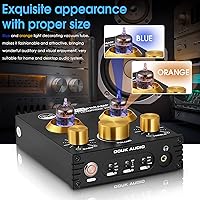
The combination of blue and orange tube illumination draws frequent compliments from buyers who place this on an open desk or shelf system. Several reviewers specifically purchased this over competing units partly because it looks like genuine audio equipment rather than a generic black box.
The decorative lighting cannot be dimmed or disabled, which bothers users in light-sensitive environments like bedrooms or home theater rooms used for late-night viewing. A small number of buyers also report the orange glow fades noticeably after several hundred hours of use.
Connectivity Versatility
86%
Having three distinct input types — Bluetooth, USB, and RCA — on a single compact unit solves a real problem for users managing multiple source devices at one listening position. Users who rotate between a laptop, a phone, and a CD player all day find this consolidation genuinely practical.
There is no optical or coaxial digital input, which leaves out buyers who want to connect a TV or Blu-ray player digitally rather than through an analog RCA conversion. Adding a digital input option would have made this preamp significantly more versatile for home theater integration.
Noise Floor & Interference
72%
28%
In quiet listening environments with sensitive speakers, most users report an acceptably low noise floor during normal operation. The SNR rating of 103dB holds up reasonably well in practice when inputs are properly matched and cables are kept short.
A handful of users pick up a faint hiss through high-sensitivity speakers or in-ear monitors when no signal is playing, particularly through the headphone output. USB ground noise is also mentioned by a few PC users who connect this desktop preamplifier directly to a desktop computer with a noisy power supply.
Compatibility with Sources
84%
The P1 works reliably with a wide range of consumer devices — users have successfully connected Echo Dot units, iPods, phones, CD players, and Blu-ray players without signal matching problems. The broad input impedance tolerance means it plays nicely with both budget and mid-tier source components.
Users attempting to connect moving-magnet phono cartridges directly will be disappointed — there is no phono stage, requiring an external preamp in that use case. A few users were also surprised to find the USB input does not accept audio from iOS devices without an adapter.
Long-term Reliability
67%
33%
Most buyers who report back after six or more months of regular use describe the unit as still performing close to its original condition. Tube life appears adequate for daily desktop listening, and the unit does not run excessively hot in normal ambient temperatures.
There is a meaningful tail of reviews describing channel imbalance, scratchy potentiometers, or intermittent input switching failures appearing after several months of use. The inconsistency in these reports suggests unit-to-unit variation in component quality rather than a universal design flaw.

Suitable for:

The Douk Audio P1 Vacuum Tube Preamplifier is genuinely well-suited for desktop listeners who want to consolidate multiple audio sources — a laptop, a phone, and an analog device like a CD player — into a single, tidy hub without spending serious money on separates. If you are new to tube audio and curious about the warm, rounded character that vacuum tube circuits are known for, this is a logical and financially forgiving way to find out whether it suits your ears before committing to more expensive gear. Headphone users who own moderate-impedance cans in the 32 to 150 ohm range will find the built-in headphone amp a welcome addition to a desk setup, especially when paired with Bluetooth streaming via an APTX-HD-capable Android phone or laptop. Home theater users who want to add a preamp stage between a TV and a pair of active speakers will also find the RCA connectivity practical and the setup straightforward. It works best as a primary device for casual, everyday listening rather than a critical-listening reference component.
Not suitable for:

The Douk Audio P1 Vacuum Tube Preamplifier is not the right call for listeners who own high-impedance headphones — particularly anything at 250 ohms or above — because the headphone output simply does not have the current delivery to drive them to satisfying volumes. Audiophiles who have already invested in a quality dedicated DAC or headphone amp will likely find the individual functional blocks here outperformed by their existing gear, making the all-in-one convenience less compelling. This is also not a good match for users who need a phono stage for a turntable, since there is none on board, or for those wanting an optical or coaxial digital input to connect a TV cleanly without an analog adapter. Buyers who expect the kind of tube saturation and euphonic coloration associated with classic full-tube designs will be underwhelmed — the hybrid circuit delivers a subtle warmth, not a dramatic tube signature. If long-term reliability over several years is a non-negotiable priority, the mixed track record in extended-use reviews warrants caution.
Specifications

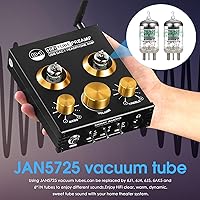
  • Tube Type: Uses GE5654 (JAN5654) vacuum tubes, an upgrade from the previous 6J5 design, selected for improved midrange warmth and reduced high-frequency harshness.
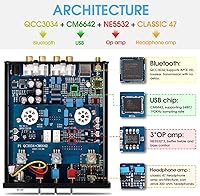
  • Bluetooth Version: Bluetooth 5.0 powered by the Qualcomm QCC3034 chipset, supporting the APTX-HD codec for near-lossless wireless audio transmission.
  • USB DAC Chip: Built around the CM6642 DAC chip, supporting PCM audio up to 24-bit depth and 192kHz sample rate.
  • OS Compatibility: USB DAC input is driverless and compatible with Windows, macOS, and Linux operating systems out of the box.
  • Audio Inputs: Three inputs are provided: Bluetooth 5.0 (APTX-HD), USB (PC audio), and one pair of stereo RCA analog inputs.
  • Audio Outputs: Two outputs are available: one pair of stereo RCA line outputs and one 3.5mm headphone jack.
  • Headphone Impedance: Headphone amplifier circuit supports headphones with impedance ratings between 32 and 300 ohms.
  • Headphone Amp Circuit: Uses an NE5532 operational amplifier paired with a classic 47 headphone amplifier architecture for the output stage.
  • THD Rating: Total harmonic distortion is rated at or below 0.01% under standard operating conditions.
  • SNR Rating: Signal-to-noise ratio is rated at 103dB or above, indicating a low background noise floor relative to the output signal.
  • Tone Controls: Separate treble and bass control knobs are included, along with a dedicated bypass switch to route audio around the tone control circuit entirely.
  • Dimensions: Packaged unit measures 10.08 x 8.58 x 2.8 inches, making it compact enough for most standard desktop or shelf audio setups.
  • Weight: The unit weighs 1.03 pounds, keeping it light enough to reposition easily without disturbing connected cables significantly.
  • Tube Lighting: Each vacuum tube is illuminated with a combination of blue and orange decorative lighting that is always active when the unit is powered on.
  • Manufacturer: Designed and sold under the Nobsound and Douk Audio brand umbrella, a Chinese audio manufacturer known for budget-to-mid-tier tube audio products.
  • Model Number: Official model identifier is P1, as designated by the manufacturer for this specific preamp configuration.
  • First Available: This product was first listed for sale in June 2019 and has since accumulated over 1,000 verified buyer ratings on major retail platforms.
  • BSR Ranking: Ranked #58 in the Audio Component Preamplifiers category and #72,398 overall in Electronics on Amazon at the time of analysis.

Related Reviews
Douk Audio T4 Plus
Douk Audio T4 Plus
78%
78%
Sound Quality
81%
Phono Stage Performance
74%
Headphone Amplifier
88%
Value for Money
76%
Build Quality & Construction
More
Douk Audio T9 Tube Phono Preamp
82%
83%
Sound Quality
78%
Phono Stage Accuracy
76%
Headphone Amplifier Performance
88%
Build Quality
81%
Tube Rolling Flexibility
More
Douk Audio ST-01 PRO
74%
84%
Sound Character & Warmth
88%
Value for Money
91%
Input Versatility
67%
Build Quality
93%
Visual Design & VU Meters
More
Douk Audio T8 Pro Tube EQ Preamplifier
77%
91%
Value for Money
78%
Sound Quality
83%
EQ Performance
81%
Build Quality
87%
Tube Rolling Flexibility
More
Douk Audio X1
Douk Audio X1
78%
78%
Sound Quality
71%
Phono Stage Performance
84%
Bluetooth Performance
83%
Power Output & Speaker Driving
76%
Build Quality
More
Fosi Audio BOX X4 Tube Phono Preamp
78%
81%
Sound Quality
67%
Noise Floor & Hiss
84%
Build Quality
89%
Value for Money
63%
Tube Quality (Stock)
More
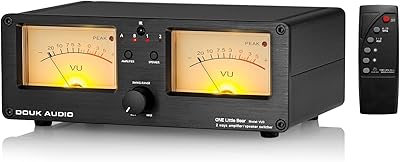
Douk Audio KN102 2-IN-1-OUT XLR Switcher
80%
83%
Build Quality
78%
Signal Integrity
94%
Ease of Setup
89%
Value for Money
76%
Switch Modes & Functionality
More
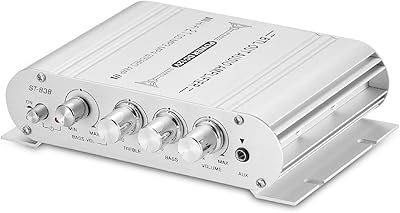
Douk Audio OK013 Mini 2.1 Channel HiFi Stereo Amplifier
75%
83%
Value for Money
71%
Sound Output & Power
77%
Build Quality
88%
Ease of Installation
58%
Thermal Management
More
Douk Audio VU3
Douk Audio VU3
90%
94%
Build Quality
91%
VU Meter Accuracy
87%
Ease of Setup
89%
Remote Control Functionality
93%
Channel Isolation
More
Douk Audio U3 Headphone Amplifier
89%
94%
Sound Clarity
91%
Frequency Response Accuracy
89%
Output Power
86%
Build Quality
90%
Ease of Setup
More

FAQ

Not directly, no. This preamp does not include a phono stage, so if your turntable has a standard moving-magnet cartridge, you will need a separate phono preamp between the turntable and this unit. Some turntables have a built-in phono stage with a line-level output, and those will work fine connected via the RCA input.

Unfortunately, no. APTX-HD is a Qualcomm codec and Apple devices do not support it. You can still pair an iPhone via standard Bluetooth, but the connection will fall back to a lower-quality codec like SBC. If APTX-HD is important to you, an Android phone or a laptop with a Qualcomm-based Bluetooth chip is the way to go.

The HD 650 is rated at 300 ohms, which sits right at the top of the stated headphone impedance range. In practice, many users find the output volume acceptable at low to moderate listening levels, but the amp does not have the current delivery to reach higher volumes with authority. If you listen loud or want serious dynamic headroom with 300-ohm headphones, a dedicated headphone amp would serve you better.

No drivers are needed for most systems. The CM6642 chip is class-compliant, which means Windows, macOS, and Linux all recognize it automatically as a USB audio device. Just plug it in, select it as your audio output in your system settings, and you are ready to go.

There is no switch or setting to disable the tube lighting — it is always on when the unit is powered. If you are sensitive to light while sleeping or watching films in a dark room, this is worth considering before you buy. A few users simply drape a small cloth over the tubes when they want darkness, which is not elegant but does the job.

It is a hybrid design. The GE5654 tubes are part of the signal path and do contribute a genuine tube character, but the output stage also relies on solid-state components including the NE5532 op-amp. This means you get some of the warmth and smoothness associated with tube audio, but it is more subtle than what a fully tube-based amplifier would produce.

There is a rotary input selector on the front panel that cycles between the three input sources. Most users find it intuitive, though the detents between positions can feel slightly imprecise on some units — make sure the knob is firmly seated in a position before judging the sound quality, as sitting between positions can cause signal dropout.

Yes, absolutely. The 3.5mm headphone output operates independently, and you can simply plug in your headphones without anything connected to the RCA outputs. The tone controls and bypass switch both function normally in this configuration, so you have full control over the sound regardless of whether speakers are in the chain.

Most users report reliable connectivity up to around 8 to 10 meters in typical home conditions with some walls between devices. Beyond that distance or through multiple walls, the signal can become unstable. For desktop use where your phone or laptop is within arm's reach or a few meters away, range is essentially a non-issue.

GE5654 tubes generally last several thousand hours under normal use, so daily listening for a few hours should keep them going for years before any degradation is noticeable. When they do eventually wear out, the tubes are standard and replaceable — compatible 5654, 6AK5, EF95, or similar small-signal pentode types can be used, and tube rolling is a popular modification among owners who want to experiment with the sound character.

Where to Buy