

Overview

The Polk Audio PSW10 10-inch Powered Subwoofer has been a staple in the entry-level home theater market since 2006 — and that kind of longevity says something real. Polk Audio is an American brand with decades of speaker engineering behind it, and this compact powered sub reflects that heritage without asking you to spend a fortune. It sits squarely in small-to-mid-size room territory, delivering satisfying low-end reinforcement for movies and music. With a 4.7-star rating across more than 15,000 buyer reviews, it has earned genuine credibility. Just go in with the right expectations: this is not an audiophile tool, it's a well-executed everyday bass solution.

Features & Benefits

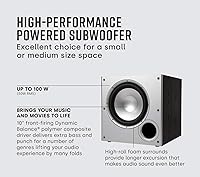
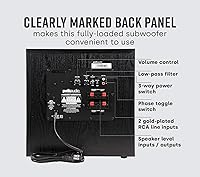
The PSW10 runs on a 10-inch Dynamic Balance woofer paired with Polk's Power Port technology, which channels airflow through the port more cleanly than a standard tube design — the result is bass that feels tighter and reaches lower without the typical port noise. A built-in amplifier delivers 50 watts continuously, peaking at 100 watts, which is more than adequate for a 12-by-14-foot living room. The crossover is continuously variable between 80 and 160 Hz, with a phase toggle that helps you dial in the blend when positioning is less than ideal. Speaker-level and line-level inputs mean this Polk subwoofer will work with almost any receiver you already own.

Best For

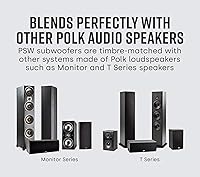
This compact powered sub makes the most sense for someone taking their first real step into home theater audio. If you're coming from a soundbar or a basic stereo pair, the difference in low-end presence will be immediately obvious. It's especially well-suited to apartments and smaller living rooms where a larger, more powerful subwoofer would simply overwhelm the space. Existing Polk Monitor or T-Series speaker owners will find that the tonal balance integrates naturally, since the drivers are designed to match. Casual listeners who want explosions and bass lines to actually register — without the hassle of a complex installation — will get exactly what they're looking for.

User Feedback

Across thousands of reviews, buyers consistently highlight easy out-of-box setup and the noticeable improvement in bass presence as the PSW10's strongest selling points. Most owners in smaller rooms report that it delivers enough punch for both action movies and bass-heavy music without straining. That said, the picture isn't entirely rosy. A recurring concern is reliability of the internal amplifier over several years of use, and listeners in larger spaces often find the output falls short of their expectations. The low-frequency floor of around 40 Hz also means the deepest cinematic rumbles won't fully come through. Overall, the PSW10 consistently delivers on its promise — as long as buyers match it to an appropriately sized room.

Pros

  • Setup takes minutes — connect speaker-level or line-level cables, tune the crossover dial, and you are done.
  • The PSW10 fits neatly into small spaces where a larger sub would dominate the room.
  • Power Port technology keeps bass output clean and controlled, even at higher volume levels.
  • Works with virtually any AV receiver or stereo amplifier thanks to both speaker-level and line-level inputs.
  • Tonal balance integrates naturally when paired with Polk Monitor or T-Series speakers.
  • A 4.7-star rating across more than 15,000 owners is an unusually strong real-world endorsement.
  • The removable front grille gives it a tidy, furniture-friendly appearance in any living space.
  • Represents a significant upgrade in bass presence over soundbars and bookshelf-only stereo setups.
  • Has proven itself as a reliable everyday performer for casual home theater use over nearly two decades.

Cons

  • Output runs thin in rooms larger than roughly 200 square feet — bass presence drops noticeably.
  • The low-frequency floor sits around 40 Hz, meaning the deepest cinematic and musical content is not fully reproduced.
  • A recurring pattern of amplifier failures after several years of use is reported often enough to flag as a real risk.
  • No auto-on via signal detection — the sub must be switched on manually, which some buyers find inconvenient.
  • The phase control is a simple toggle rather than a continuous dial, limiting fine-tuning options.
  • At 26 pounds, repositioning for room acoustics testing is more effort than it looks.
  • Buyers who regularly watch content with very low-frequency effects may feel the need to upgrade sooner than expected.
  • No wireless connectivity option, which matters increasingly as modern AV setups move toward cleaner cable management.

Ratings

The scores below reflect an AI-driven analysis of thousands of verified global owner reviews for the Polk Audio PSW10 10-inch Powered Subwoofer, with spam, incentivized, and bot-generated submissions actively filtered out before scoring. Each category is rated on its own merits, drawing from both consistent praise and recurring complaints to give you an honest, complete picture. Strengths are credited where they are genuinely earned, and real pain points are not softened.

Bass Performance
78%
22%
For a compact, entry-level powered sub, the low-end output is genuinely satisfying in smaller rooms — movie explosions land with real weight, and bass-heavy music like hip-hop or electronic feels noticeably fuller than any bookshelf-only setup can manage. Owners in apartments and small living rooms consistently describe the difference as immediately obvious.
The low-frequency floor sits around 40 Hz, which means the deepest cinematic effects in modern action films or nature documentaries simply do not fully register. In rooms larger than roughly 200 square feet, the bass thins out at moderate volumes, leaving listeners wanting considerably more output than the PSW10 can deliver.
Ease of Setup
93%
This is one of the PSW10's most consistently praised qualities across all experience levels. First-time buyers regularly describe being up and running within 15 minutes — connect one cable to the receiver's subwoofer pre-out, set the crossover dial, and the bass is already working. The inclusion of both speaker-level and line-level inputs means compatibility is almost never an obstacle.
While the initial hookup is straightforward, dialing in the crossover and phase toggle for optimal blending with main speakers requires some trial and error that less experienced buyers do not always anticipate. The lack of any auto-calibration system, which competing units at similar price points sometimes include, means you are on your own for the fine-tuning.
Build Quality
67%
33%
The cabinet feels solid and the external finish holds up well to everyday handling — the removable grille attaches securely and the rear panel connections feel robust enough for permanent installation. For a floor-standing sub in this price tier, the physical construction does not attract many complaints in short-to-medium-term ownership.
Long-term reliability is a genuine concern: a recurring pattern of internal amplifier failures after three to five years of regular use is too consistent in owner feedback to overlook. The amplifier board appears to be the weak link, and some buyers report failure even with conservative, everyday use rather than high-volume abuse.
Value for Money
84%
Relative to what it costs and what it does within its intended use case, the PSW10 represents fair value for a casual home theater buyer. Owners who matched it correctly to a small room and a modest 5.1 or 2.1 setup consistently say it delivered more than they expected for the investment.
Buyers who push it beyond its designed scope — larger rooms, louder listening habits, or deeper bass expectations — tend to feel they overpaid once the limitations become clear. The amplifier reliability concern also shifts the long-term value calculation, since a repair or replacement within a few years erodes the original price advantage.
Room Suitability
72%
28%
The compact footprint and modest output actually work in its favor for apartment living and smaller dedicated spaces, where an oversized sub would cause more problems than it solves. Owners in studio apartments and smaller dedicated media rooms repeatedly call it the right-sized solution that fits physically and acoustically.
Step into a mid-size open-plan living area or a room with high ceilings, and the PSW10 starts to feel underpowered fairly quickly. It is not a scalable purchase — buyers who anticipate moving to a larger space or upgrading their main system will likely outgrow it faster than they expect.
Integration & Compatibility
89%
The dual-input design — speaker-level and line-level — means this Polk subwoofer connects cleanly to entry-level stereo amps, mid-range AV receivers, and everything in between without adapters or workarounds. Polk Monitor and T-Series speaker owners particularly benefit from the intentional tonal matching that makes the bass blend naturally rather than stick out.
There is no wireless or Bluetooth connectivity option, which is an increasingly noticeable gap as more modern AV setups prioritize clean cable management. Buyers who want to integrate it into a wireless speaker ecosystem will find it simply does not fit that workflow.
Crossover Flexibility
74%
26%
The continuously variable crossover dial covering 80 to 160 Hz gives owners enough range to work with most main speaker configurations, from compact bookshelf models that need extra support up high to larger towers that only need the lowest octave filled in.
The phase control is limited to a simple two-position toggle rather than a continuous dial, which restricts how precisely you can align the sub's output with your main speakers — particularly in rooms with awkward placement constraints. Buyers coming from more advanced subwoofers may find the adjustment options frustratingly basic.
Volume & Headroom
63%
37%
At everyday listening levels in a properly sized room, the amplifier keeps up comfortably without audible strain or distortion. For background music and casual TV watching, there is enough dynamic range to feel engaged without needing to push the level control past the midpoint.
When buyers try to push the volume during demanding content — high-action sequences, bass-heavy concerts, or late-night loud sessions — the amplifier starts to compress and the bass loses definition before it reaches the kind of output levels enthusiasts expect. The 100-watt peak ceiling is reached faster than the spec sheet implies.
Low-Frequency Extension
61%
39%
For typical home theater content — dialogue-driven dramas, standard action films, and most popular music genres — the usable bass range is sufficient to add genuine impact where a stereo pair alone would fall short. The Power Port design does help extract a bit more clean low-end than a basic ported cabinet would.
The 40 Hz practical floor is a real limitation for content that lives in the 20–35 Hz range, which includes a meaningful portion of modern blockbuster soundtracks and some electronic music subgenres. Buyers specifically seeking that chest-compression, room-pressurizing bass effect will be disappointed by the PSW10's extension limits.
Physical Footprint
86%
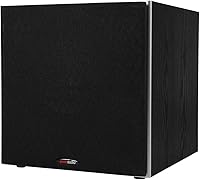
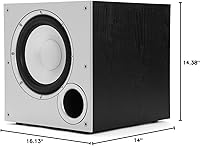
At roughly 14 inches wide and 17 inches deep, the compact powered sub tucks into corners and along walls without dominating a living space visually. The clean black cabinet and matching grille allow it to blend into most room decors without drawing attention to itself.
At 26 pounds, it is manageable for initial placement but noticeably inconvenient if you want to experiment with positioning — the subwoofer crawl technique for finding optimal bass placement becomes a workout with this unit. Some buyers also note the grille attachment feels slightly less secure over time with repeated removal.
Long-Term Reliability
54%
46%
Units that remain within their operational limits — moderate volumes, well-ventilated placement, and casual daily use — do hold up reasonably well for the first two to three years of ownership. Short-term reliability within the warranty period draws relatively few complaints.
Beyond the three-year mark, amplifier section failures become a disproportionately common theme in owner feedback. For a product that has been on the market since 2006, the persistence of this complaint across multiple production runs suggests a systemic rather than incidental weakness in the internal electronics.
Distortion Control
77%
23%
Within its comfortable operating range, the Dynamic Balance driver and Power Port combination do a respectable job of keeping bass output clean and controlled. At moderate levels in a small room, distortion is not audible under normal listening conditions, which is genuinely more than some competing units at this price tier manage.
Push the level control into the upper half of its range and distortion becomes noticeable fairly quickly, particularly on low-frequency transients like kick drums and bass guitar notes. The amplifier's limited headroom is the primary culprit here, rather than any flaw in the driver itself.
Aesthetic Design
81%
19%
The understated black cabinet and removable fabric grille give the PSW10 an inoffensive, furniture-friendly appearance that most buyers appreciate in a living room context. It reads more like household furniture than a piece of audio equipment, which matters to buyers who share living spaces.
The design is functional rather than distinctive — it carries the same generic black-box aesthetic that has defined entry-level subwoofers for decades. Buyers who care about premium fit-and-finish or a modern aesthetic may find it looks its age, particularly given that it has been largely unchanged in appearance since its original launch.

Suitable for:

The Polk Audio PSW10 10-inch Powered Subwoofer is a strong fit for anyone taking their first serious step into home theater audio, particularly in apartments, bedrooms, or living rooms under roughly 200 square feet. If you have been relying on a soundbar or a basic stereo pair and want to finally feel movies and music rather than just hear them, this Polk subwoofer closes that gap without demanding a complicated setup or a dedicated amplifier. It also makes excellent sense for existing Polk Monitor or T-Series speaker owners, since the drivers are tuned to blend tonally with those lines rather than stick out. Casual listeners who prioritize convenience and a clean, unobtrusive look will appreciate that the compact powered sub tucks neatly into a corner and connects to nearly any receiver in minutes. If your expectations are grounded in real-room performance rather than reference-grade audio, the PSW10 delivers honest, satisfying value.

Not suitable for:

The Polk Audio PSW10 10-inch Powered Subwoofer is not the right choice for listeners who want to pressurize a large open-plan room or a dedicated home theater with high seating capacity — the amplifier simply does not have the headroom for that kind of demand. Serious bass enthusiasts who expect the sub to reproduce the very lowest cinematic frequencies will find the 40 Hz low-end floor a genuine limitation; organ pedals, certain film soundtracks, and deep electronic music will lose their full impact. Long-term reliability is also a reasonable concern, as a pattern of amplifier section failures after a few years of use shows up consistently enough in owner feedback to take seriously. Those already running a capable subwoofer and looking to upgrade will likely find the PSW10 a lateral move rather than an improvement. In short, if your room is large, your listening habits are demanding, or you want a sub that will anchor a high-performance system, this compact powered sub is not the right tool.

Specifications

  • Woofer Size: The driver measures 10 inches in diameter, sized appropriately for small-to-mid-size room bass reproduction.
  • Amplifier Power: The built-in amplifier delivers 50 watts RMS continuously, with peaks reaching 100 watts for dynamic transients.
  • Frequency Response: The usable frequency range spans 40–160 Hz at -3dB, covering most home theater and music bass content.
  • Crossover Range: A continuously variable crossover dial lets you set the high-frequency cutoff anywhere between 80 and 160 Hz.
  • Phase Control: A rear-panel toggle switch allows 0 or 180-degree phase adjustment to align bass output with your main speakers.
  • Inputs: Both speaker-level and line-level (RCA) inputs are provided on the rear panel for broad receiver compatibility.
  • Outputs: Speaker-level outputs are included, allowing the subwoofer to pass signal through to main speakers where needed.
  • Driver Technology: Polk's Dynamic Balance driver design uses resonance-reducing materials to minimize distortion at higher output levels.
  • Port Technology: The Power Port system replaces a conventional tube port with a shaped aperture that reduces turbulence and port noise.
  • Impedance: The driver is rated at 8 ohms, which is standard for passive driver loads in powered subwoofer configurations.
  • Dimensions: The cabinet measures 17″ deep by 14.25″ wide by 14.5″ tall, making it compact enough for most room corners.
  • Weight: The unit weighs 26 pounds, which is manageable for a single person during initial placement but not easy to reposition frequently.
  • Surround Config: The PSW10 is designed to function as the LFE channel in a standard 5.1 surround sound configuration.
  • Mounting Type: The subwoofer is intended for floor mounting and is not designed for wall or ceiling installation.
  • Color & Finish: The cabinet comes in black with a matching detachable fabric grille included in the box.
  • Power Source: The unit requires a standard AC mains connection and does not support battery or DC power operation.
  • Warranty: Polk Audio covers the PSW10 under a limited warranty; buyers should confirm current warranty terms directly with the manufacturer.
  • In the Box: The package includes the powered subwoofer, a removable grille, an owner's manual, and an online registration card.

Related Reviews
Acoustic Audio PSW400-10 10-Inch Powered Subwoofer
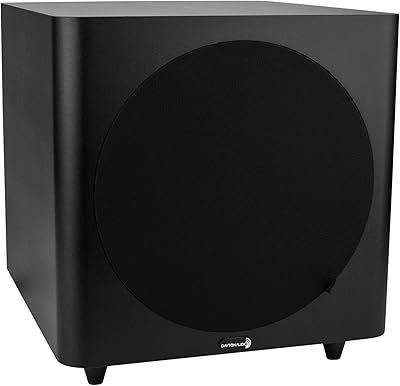
85%
91%
Bass Performance
88%
Ease of Setup
85%
Sound Quality
92%
Value for Money
87%
Build Quality
More
MTX Audio RT8PT 8-Inch Powered Subwoofer
83%
88%
Bass Performance
92%
Value for Money
89%
Build Quality
85%
Ease of Installation
80%
Sound Clarity
More
Rockville RW10CA 10-inch Powered Car Subwoofer
77%
88%
Ease of Installation
74%
Bass Output Quality
91%
Low-Profile Fit
69%
Built-in Amplifier Performance
86%
Remote Bass Knob
More
Dayton Audio SUB-1000 10″ Powered Subwoofer
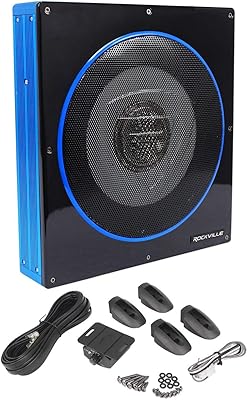
79%
83%
Bass Output & Extension
91%
Value for Money
93%
Ease of Setup
76%
Build Quality
62%
Room Size Suitability
More
Planet Audio P10AWK 10-Inch Amplified Car Subwoofer
71%
83%
Ease of Installation
71%
Bass Output & Impact
76%
Sound Tuning & Flexibility
86%
Compatibility & Input Options
58%
Build Quality & Materials
More
Dayton Audio SUB-1500 15-inch Powered Subwoofer
75%
88%
Bass Output & Depth
63%
Amplifier Power
91%
Value for Money
74%
Build Quality
86%
Setup & Installation
More
Planet Audio P10AW 10-Inch Amplified Car Subwoofer
76%
91%
Ease of Installation
83%
Value for Money
67%
Bass Output & Impact
74%
Build Quality
62%
Sound Clarity
More
Kicker Hideaway HS10 10-Inch Powered Subwoofer
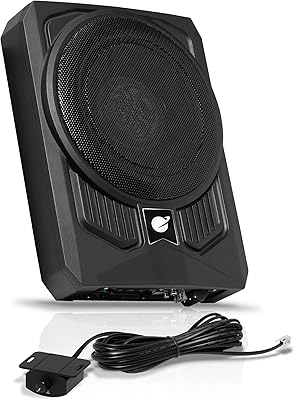
82%
92%
Build Quality
81%
Bass Output
94%
Installation Ease
88%
Sound Tuning Flexibility
91%
Factory Stereo Compatibility
More
BOSS Audio CH10DVC 10-Inch Car Subwoofer
69%
88%
Value for Money
74%
Bass Output
62%
Build Quality
57%
Longevity & Durability
83%
Wiring Flexibility
More
Q Power QBOMB10TB Dual 10-Inch Subwoofer Enclosure
80%
88%
Build Quality
91%
Finish & Appearance
83%
Bass Performance
79%
Ease of Installation
62%
Terminal Quality
More

FAQ

Almost any receiver will work. The PSW10 accepts both line-level RCA input (the standard subwoofer pre-out found on most AV receivers) and speaker-level input (bare wire connections). If your receiver has a dedicated subwoofer output jack, just run an RCA cable and you are set. If it does not, you can use the speaker-level inputs instead.

It performs best in rooms up to roughly 200 square feet — think a typical apartment living room or a dedicated bedroom theater setup. In larger, open-plan spaces, you will likely notice the bass feeling thin or underwhelming at normal listening volumes. If your room is significantly bigger than that, a higher-output sub would be a smarter investment.

Yes, it works with any brand of speakers. The timbre-matching to Polk Monitor and T-Series lines is a bonus for Polk owners, but it does not limit compatibility elsewhere. The crossover adjustment on the rear panel lets you dial in the blend with whatever main speakers you are running.

The crossover dial on the back adjusts the point at which the subwoofer rolls off and lets your main speakers take over. A common starting point is around 80 Hz, which is also the setting most AV receivers default to for their bass management. If your main speakers are small bookshelf models, try nudging it up toward 100–120 Hz so the sub fills in more of the lower midrange.

The phase switch flips the sub's output between 0 and 180 degrees, which affects how it aligns with the sound waves from your main speakers. If the bass seems thin or hollow even at high volume, try flipping the switch — you may immediately notice more impact. It is a simple adjustment, and worth the 30 seconds it takes to experiment.

Subwoofers are generally the main culprit for low-frequency sound transmission through floors and walls, and this one is no exception. At moderate volumes in a small room it is reasonably contained, but if you tend to push the bass hard during late-night movie sessions, neighbors below you may notice. Using it on a foam isolation pad can help reduce floor vibration transfer meaningfully.

No, the PSW10 does not include automatic signal-sensing power on. You will need to manually switch it on and off using the rear-panel power control. It is a minor inconvenience that some buyers mention, though many people just leave it in standby when not in use.

It is a fair concern and worth acknowledging honestly. A consistent thread in long-term owner feedback mentions amplifier section failures after three to five years of regular use. It is not universal, but it is common enough that it would be misleading to dismiss it. Keeping the unit well-ventilated and avoiding running it at high volume continuously for long periods may help extend its life.

It handles a solid range of cinematic bass, but it does have a low-frequency floor around 40 Hz. Below that point, content simply will not be reproduced at full intensity. Most explosions, action sequences, and dialogue-driven drama fall well within its range. For content mixed with very deep sub-20 Hz effects, you will notice some of the floor-shaking impact is missing.

Start by placing it near the front of the room, close to your main speakers, to make bass localization less obvious. Corner placement tends to boost perceived output since walls reinforce bass naturally, though it can also make the sound boomier — so you may need to trim the level dial back. A practical trick called the subwoofer crawl — putting the sub in your listening seat and moving around the room to find where bass sounds most even — works well and costs nothing to try.

Where to Buy