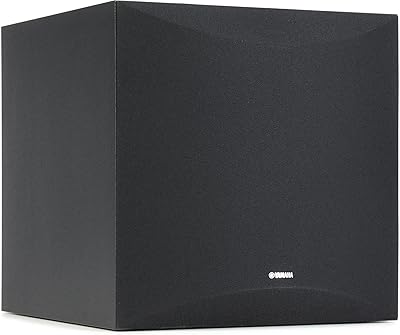
Overview

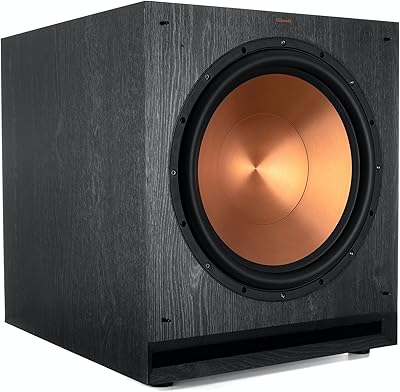
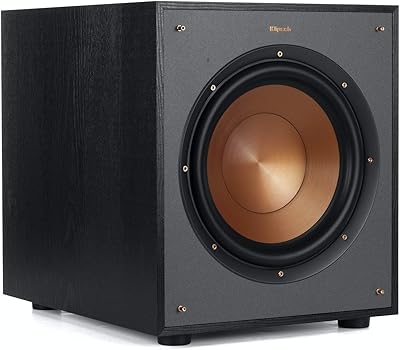
The Klipsch SPL-100 10″ Powered Subwoofer sits at a price point where expectations run high, and Klipsch largely delivers on them. This is not a casual add-on for a bedroom desk setup — it is a serious floor-standing sub built around a 10-inch Cerametallic woofer, a 450W Class D amplifier, and a peak output of 118dB. Klipsch has long been associated with high-efficiency, dynamically punchy sound, and the SPL-100 carries that reputation forward. If you have a medium-to-large room and want bass that actually pressurizes the space during action scenes or demanding music, this powered sub is worth a close look.
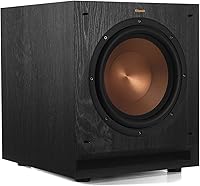
Features & Benefits

The Cerametallic woofer cone is stiffer and lighter than a standard paper cone, which translates directly to less distortion during long, deep excursions — the kind that happen constantly in cinematic bass tracks. The Class D amplifier runs efficiently without generating excess heat, and its 450W of headroom means the sub rarely sounds strained. Placement is genuinely flexible here: the front-firing slot port with an internal flare lets you push this powered sub close to a wall without the port noise that plagues rear-ported designs. The low-pass crossover and phase control make blending with existing speakers straightforward. Wireless connectivity is possible, but only via the separately sold WA-2 adapter — that cost needs factoring into your budget.

Best For

This Klipsch subwoofer is built for people putting together a real home theater, particularly those running a 5.1 surround configuration in a room with actual space to breathe. It pairs especially well with Klipsch satellite or bookshelf speakers, giving the system a cohesive tonal character. Music listeners who want bass that is tight and controlled rather than overblown will also appreciate how the SPL-100 handles low-frequency detail. The front-firing port makes it a good pick where placement options are limited. It is not the right choice for small rooms, apartment setups with thin walls, or buyers who need built-in wireless without an extra purchase.

User Feedback

Across roughly 147 ratings — a modest but credible pool for a premium subwoofer — the SPL-100 holds a strong 4.8-star average. Buyers consistently highlight its impact and clarity during movies, calling out how well it handles both deep rumble and sharp dynamic hits. Build quality earns regular praise too. On the critical side, a few users mention the app-based control has a learning curve, and the 37-pound weight makes repositioning it a two-person job. Some note mild frustration that wireless capability requires a separate accessory. Non-Klipsch pairings generally work fine with careful crossover adjustment, though the sub truly shines when matched with speakers from the same family.

Pros

  • Delivers genuinely room-pressurizing bass that holds up in medium-to-large home theater spaces.
  • The Cerametallic woofer keeps bass tight and defined, even during complex film soundtracks or dense music mixes.
  • Front-firing slot port allows wall-adjacent placement without port noise — a real practical advantage.
  • 450W Class D amplifier runs cool and handles dynamic peaks without audible compression.
  • Phase control and variable crossover make blending with most existing speaker setups manageable.
  • Solid wood cabinet construction shows no resonance or flex at high output levels.
  • The SPL-100 earns a strong 4.8-star average from buyers, with impact and clarity as the most consistently praised qualities.
  • Optional wireless connectivity via the WA-2 adapter is a clean solution for cable-free installs in finished rooms.
  • 118dB maximum output gives genuine headroom for large spaces without the sub ever sounding strained.

Cons

  • Wireless capability requires purchasing the WA-2 adapter separately — it is not included in the box.
  • At 37 pounds, repositioning this powered sub is a two-person task and not something you will do casually.
  • The companion app has a learning curve and occasional connectivity issues that frustrate some users.
  • RCA-only analog input limits direct compatibility with some modern receivers that use LFE or digital-only outputs.
  • The included manual provides only basic setup guidance, leaving crossover tuning largely to trial and error.
  • Small room and apartment buyers consistently report difficulty taming the output at practical volume levels.
  • A faint standby hum has been noted by a minority of users in otherwise quiet listening environments.
  • The digital control and app experience lags noticeably behind competitors at a similar price point.

Ratings

The Klipsch SPL-100 10″ Powered Subwoofer has been evaluated by our AI system after parsing verified buyer reviews from global markets, with spam, bot submissions, and incentivized feedback actively filtered out. Based on a pool of 147 ratings — modest in volume but consistent in sentiment for a premium-tier subwoofer — the scores below reflect where this powered sub genuinely excels and where real buyers have run into friction. Both the highs and the honest shortcomings are represented.
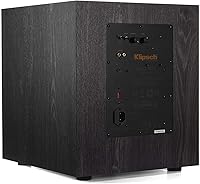
Bass Output & Impact
93%
Buyers running this sub in dedicated home theater rooms consistently describe the low-end impact as visceral and room-pressurizing, especially during action films and orchestral music. The 118dB ceiling means it rarely runs out of headroom, even in larger open-plan spaces.
In smaller rooms or apartments, the raw output can feel overwhelming at moderate volume settings, requiring careful level trimming. A handful of users noted the sub benefits from break-in time before the bass fully opens up and tightens.
Bass Clarity & Accuracy
88%
The Cerametallic woofer cone earns genuine praise for keeping bass lines distinct and defined rather than turning everything into a single muddy wall of sound. Music listeners in particular appreciate how instrument separation holds up even at higher playback volumes.
A few users found that dialing in the low-pass crossover correctly takes patience, and out-of-the-box settings can sound slightly boomy until the crossover and phase controls are properly tuned to match the main speakers.
Build Quality
91%
The wood cabinet feels dense and well-constructed, with no audible resonance or cabinet flex even during demanding low-frequency passages. The finish and grille both hold up well over time according to long-term owners, giving the unit a premium physical presence.
At 37 pounds, the SPL-100 is genuinely heavy and awkward to reposition alone. A few buyers noted the grille attachment could be more secure, and minor cosmetic scuffs can appear if the unit is moved frequently across hard floors.
Placement Flexibility
86%
The front-firing slot port with an internal flare is one of the standout practical advantages here. Users who placed the sub against a back wall or in a corner reported no port chuffing or bass bloat, which is a real problem with rear-ported designs in tight spaces.
Despite good port design, the physical footprint is sizeable at over 17 inches deep, which can be a real constraint in smaller living rooms. The unit is also floor-standing only, so shelf or cabinet mounting is not a realistic option.
System Integration
84%
The combination of a variable low-pass crossover and phase control gives this powered sub meaningful tuning range for blending with a wide variety of main speakers. Users pairing it with Klipsch bookshelf and tower speakers reported fast, natural integration with minimal adjustment.
Buyers pairing the SPL-100 with non-Klipsch speakers sometimes needed multiple calibration passes to smooth out the crossover region. RCA-only analog connectivity also limits plug-and-play compatibility with some modern AV receivers that favor LFE-only outputs.
Amplifier Performance
89%
The Class D amplifier runs noticeably cooler than older linear designs, and users report no thermal throttling even during extended high-volume sessions covering entire movie marathons. The 450W power rating translates to clean, dynamic output without compression artifacts.
A small number of users reported a faint standby hum when the sub is idle, which is more noticeable in otherwise quiet rooms. This is a known minor trait in some Class D designs rather than a defect, but it is worth flagging for audiophile-sensitivity buyers.
App & Controls
67%
33%
App-based control is a functional convenience for users who want to adjust volume or settings without physically reaching behind or under a cabinet. A few buyers appreciated being able to fine-tune settings from the listening position after initial setup.
The app has a learning curve that multiple users called out as unintuitive, especially for first-time subwoofer owners. Reports of occasional connectivity drops and an interface that lacks visual feedback make this one of the weaker aspects of the overall ownership experience.
Wireless Capability
58%
42%
When the optional WA-2 wireless adapter is added, users who invested in it found the wireless connection stable up to roughly 20 meters, which is genuinely useful for clean installs without cable runs across a room.
Wireless is not included in the box, and this surprises a meaningful number of buyers who assume it is standard given how the feature is positioned. The added cost of the WA-2 accessory is a real budget consideration that should be factored in upfront.
Setup & Initial Configuration
74%
26%
Physical hookup is straightforward for anyone with basic AV experience — RCA cable in, power on, set the crossover and level. Users with existing Klipsch systems reported getting a solid baseline sound within minutes of unboxing.
Buyers without prior subwoofer tuning experience found the phase and crossover interaction confusing at first, and the included manual provides only basic guidance. Getting the most out of this sub requires either prior knowledge or willingness to experiment.
Value for Money
81%
19%
For the performance delivered — particularly the dynamic headroom, woofer quality, and placement flexibility — most buyers in the verified pool concluded the SPL-100 justifies its mid-to-premium price tag. Long-term owners especially felt the build quality held the value over time.
Budget-conscious buyers comparing it against similarly priced competitors may find the lack of included wireless, the separately purchased adapter, and a relatively modest feature set on the digital side harder to overlook at this price point.
Performance in Large Rooms
92%
Users in dedicated home theater rooms and open-plan living spaces consistently praised how the SPL-100 fills a large volume without losing authority or becoming diffuse. At high output levels, bass remains controlled and directional rather than spreading into undefined rumble.
In very large rooms exceeding around 4,000 cubic feet, some users noted they needed to push the volume higher than expected to achieve full room pressurization, suggesting a 12-inch option might be better matched to truly cavernous spaces.
Performance in Small Rooms
51%
49%
At low volume settings, the sub can technically function in smaller spaces, and a few apartment users reported enjoying it at restrained levels for music listening without disturbing neighbors.
This is not the right tool for small rooms. Multiple buyers in studio apartments or compact listening spaces found it difficult to tame the bass output without sacrificing the punch that makes the sub worthwhile in the first place. Neighbors in adjacent units were a recurring concern.
Noise & Distortion at High Volume
83%
The long-throw woofer design handles high-excursion scenarios — explosions, deep synth drops, subterranean film scores — without audible breakup or cone slap. Several users specifically tested it at near-maximum output and reported distortion remaining well controlled.
At truly extreme levels, a small number of users detected minor port noise on sustained low-frequency tones, though this was rare and typically only reproduced in calibration sweeps rather than real program material.
Aesthetics & Form Factor
77%
23%
The rectangular wood cabinet with a black finish is clean and unobtrusive, fitting naturally into most home theater furniture arrangements. The included grille gives a finished look that works in living rooms without looking overly utilitarian.
The form factor is purely functional — there is nothing distinctive about the visual design, and at 37 pounds with a relatively large footprint, it demands a dedicated floor position. Buyers hoping for a compact or visually statement-making sub will look elsewhere.

Suitable for:

The Klipsch SPL-100 10″ Powered Subwoofer is purpose-built for home theater enthusiasts who are serious about their listening environment and have the room to match. If you are assembling or upgrading a 5.1 surround system in a medium-to-large space — a dedicated theater room, a spacious living room, or an open-plan area — this powered sub has the output and control to fill that space convincingly. It pairs especially well with Klipsch satellite or tower speakers, giving the whole system a cohesive sonic character rather than a bolted-on bass afterthought. Music listeners who care about accuracy over artificial boom will also find it rewarding, since the Cerametallic woofer reproduces bass lines with definition rather than smearing them into a low-frequency haze. Buyers who need placement flexibility — particularly those who can only position a sub against a wall — will appreciate the front-firing port design that sidesteps the placement constraints of rear-ported competitors. If a clean, cable-free install matters to you and you are willing to invest in the optional WA-2 wireless adapter separately, that option is there too.
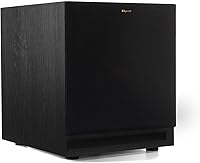
Not suitable for:

The Klipsch SPL-100 10″ Powered Subwoofer is a poor fit for small rooms, studio apartments, or any space where neighbors share walls or ceilings. At 37 pounds with a footprint over 17 inches deep, it also demands a permanent floor position — this is not a sub you will be casually rearranging on a shelf or tucking into a media console. Buyers expecting wireless connectivity straight out of the box will be disappointed: the WA-2 adapter that enables wireless operation is sold separately and adds meaningful cost to the total investment. If your existing AV receiver or amplifier relies solely on digital or HDMI connectivity with no analog RCA outputs, integration will require extra components or adapters. First-time subwoofer buyers who want a simple plug-and-play experience may find the crossover and phase tuning process intimidating without prior knowledge. Finally, shoppers comparing raw feature lists at this price tier may find the app control experience underwhelming relative to competitors that offer more polished digital interfaces.
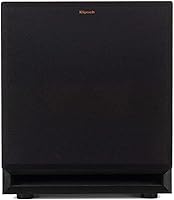
Specifications

  • Woofer Size: The SPL-100 uses a 10-inch long-throw Cerametallic woofer cone engineered for high rigidity and low distortion during deep bass excursions.
  • Amplifier Type: A built-in Class D amplifier powers the woofer, running efficiently with minimal heat generation even during extended high-output sessions.
  • Peak Power: The amplifier delivers 450 watts of peak power output, providing substantial headroom for dynamic transients in film soundtracks and live recordings.
  • Max Output: Maximum acoustic output is rated at 118dB, placing this powered sub among the louder options in the 10-inch category for home theater use.
  • Port Design: A front-firing slot port with an internal flare manages airflow and bass reflex, allowing wall-adjacent placement without chuffing or bass bloat.
  • Dimensions: The cabinet measures 17.27″ deep by 14″ wide by 16.58″ tall, making it a substantial floor-standing unit that requires dedicated floor space.
  • Weight: The unit weighs 37 pounds, which reflects the dense wood cabinet construction and should be considered when planning installation or future repositioning.
  • Cabinet Material: The enclosure is constructed from wood, chosen for its acoustic damping properties and resistance to resonance at high playback volumes.
  • Connectivity: Primary connectivity is via RCA analog input, compatible with the LFE or subwoofer output found on most AV receivers and stereo preamps.
  • Wireless Option: Wireless audio transmission is possible using the separately sold Klipsch WA-2 accessory, which extends connectivity up to 20 meters without a signal cable.
  • Crossover Control: A variable low-pass crossover allows the user to set the frequency cutoff point to match the bass extension of their main speakers.
  • Phase Control: An adjustable phase control helps align the subwoofer's output with the main speakers, minimizing cancellation at the crossover frequency.
  • Surround Config: The SPL-100 is designed for use in 5.1 surround sound configurations, serving as the dedicated LFE channel in a home theater system.
  • Control Method: System settings including volume and adjustments can be managed via a companion app, in addition to manual controls on the unit itself.
  • In the Box: Each unit ships with a power cord, a removable grille, and a printed manual; no wireless adapter or subwoofer cable is included.
  • Warranty: Klipsch covers the SPL-100 under a limited warranty; buyers should verify the specific duration and terms directly with Klipsch or their authorized retailer.
  • Power Source: The subwoofer is powered via a standard corded AC connection and is not battery-operated or compatible with any portable power source.
  • Placement Type: Designed exclusively for floor-standing placement, the SPL-100 is not intended for shelf, cabinet, or wall-mounted installation.

Related Reviews
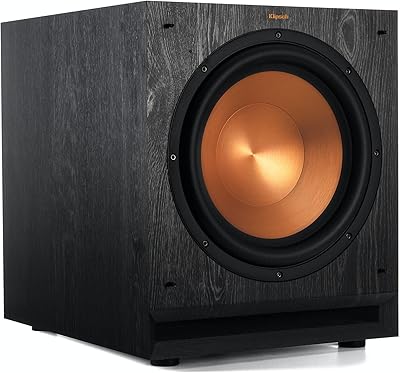
Klipsch SPL-150SW 15-inch Powered Subwoofer
79%
93%
Bass Output & Power
89%
Build Quality & Materials
84%
Placement Flexibility
88%
Amplifier Performance
71%
Integration & Tuning Controls
More
Klipsch SPL-120 Powered Subwoofer 12-inch
87%
92%
Bass Performance
89%
Sound Clarity
87%
Ease of Setup
91%
Value for Money
88%
Build Quality
More
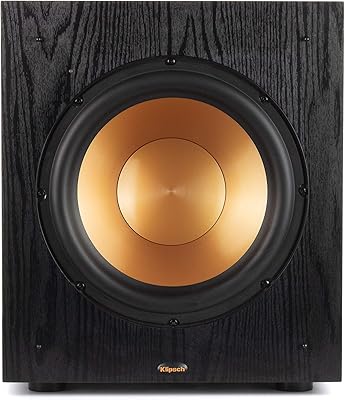
Klipsch Sub-100 10-inch Subwoofer
80%
83%
Bass Performance
88%
Build Quality
91%
Value for Money
86%
Setup & Integration
87%
Placement Flexibility
More
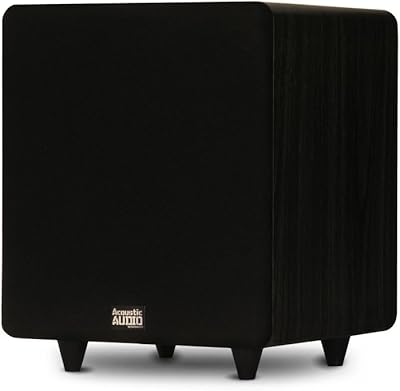
Acoustic Audio PSW400-10 10-Inch Powered Subwoofer
85%
91%
Bass Performance
88%
Ease of Setup
85%
Sound Quality
92%
Value for Money
87%
Build Quality
More
Rockville RTB10A 10″ Powered Subwoofer
83%
91%
Sound Quality
88%
Bass Performance
75%
Ease of Installation
86%
Build Quality
82%
Durability
More
Klipsch R-100SW 10″ Subwoofer
86%
92%
Bass Quality
89%
Sound Clarity
91%
Integration with Klipsch Systems
85%
Compactness/Size
88%
Ease of Setup
More
Rockville Bass Blaster 10
77%
78%
Bass Performance
83%
Build Quality
76%
Amplifier & Power Delivery
81%
Tuning & Customization
87%
Connectivity & Compatibility
More
Polk Audio PSW10 10-inch Powered Subwoofer
75%
78%
Bass Performance
93%
Ease of Setup
67%
Build Quality
84%
Value for Money
72%
Room Suitability
More
KICKER BassStation 10″ Powered Subwoofer Enclosure
75%
88%
Ease of Installation
83%
Bass Output & Impact
79%
Value for Money
71%
Sound Quality & Clarity
82%
Build Quality
More
Yamaha NS-SW100BL 10″ Powered Subwoofer
79%
88%
Bass Accuracy
71%
Volume & Headroom
86%
Build Quality
91%
Ease of Setup
84%
Dialogue Clarity Integration
More

FAQ

Wireless is not built in. To use the Klipsch SPL-100 10″ Powered Subwoofer without a cable, you need to purchase the Klipsch WA-2 wireless audio adapter separately. It is worth factoring that added cost into your budget before buying if a cable-free install is important to you.

It works fine with other speaker brands. The variable low-pass crossover and phase control give you enough tuning flexibility to integrate the SPL-100 with most satellite, bookshelf, or tower speakers. It may take a few rounds of adjustment to get the crossover blend right, but it is not locked to the Klipsch ecosystem in any technical way.

Honestly, for a small apartment it is likely overkill. The SPL-100 is engineered for medium-to-large spaces, and at even moderate volume settings in a compact room it can feel overwhelming — and carry through walls to neighbors. If your room is small or you share walls, a less powerful sub would serve you better.

Wall placement is actually one of this sub's practical strengths. The front-firing slot port with its internal flare means the bass reflex system works correctly regardless of what is behind the unit. You can push it close to a back wall without triggering the port noise or bass bloat that rear-ported designs often suffer in the same position.

The physical hookup is simple — an RCA cable from your receiver's subwoofer output and a power connection. The trickier part is dialing in the crossover frequency and phase to match your main speakers, which the included manual handles only at a basic level. If you are new to this, expect to spend some time experimenting, or look up a crossover tuning guide online for your specific speaker combination.

The app is used for adjusting settings like volume and potentially other parameters from your listening position rather than walking up to the unit. It is a convenience feature, not a requirement — the sub has physical controls and will operate normally without ever touching the app. That said, some users find the app interface unintuitive, so do not rely on it being polished out of the box.

A Cerametallic cone is significantly stiffer and lighter than paper, which matters because a stiffer cone resists flexing during long, deep bass excursions. In practical terms, that translates to bass that stays cleaner and more defined at higher volumes, with less of the distortion and muddiness that can creep in when a softer cone starts to bend under pressure.

It is worth planning for. Once it is in position you will likely leave it there, but getting it into place — especially up stairs or into a corner — is a two-person job. If you anticipate needing to move it frequently, the weight will be a genuine inconvenience. For a permanent home theater install, most buyers find it manageable.

This is a real compatibility gap to check before buying. The SPL-100 uses an analog RCA input, so your AV receiver needs a dedicated subwoofer preamp output or a line-level RCA output. Most traditional AV receivers have this, but some newer minimalist or soundbar-style receivers do not. If yours lacks an analog subwoofer output, you would need a DAC or audio converter to bridge the connection.

It holds up well for music, particularly if you value accuracy over artificial bass emphasis. The Cerametallic woofer and the tuning controls allow it to reproduce bass instruments with good pitch definition rather than turning everything into a generic low-frequency thud. Buyers who listen to jazz, acoustic, or any genre where bass clarity matters tend to respond positively to how the SPL-100 handles musical content.

Where to Buy