Overview

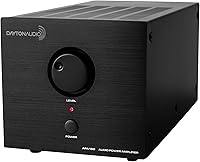
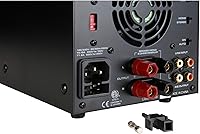
The Dayton Audio APA150 has been a quiet staple in the DIY audio world since 2008 — and that kind of staying power says something. Built around a Class A/B topology, this Dayton amp keeps distortion low while running cool enough for everyday use. It delivers 150 watts across two channels, which is plenty for driving a passive subwoofer or filling out a home theater setup. At 11.5 x 6 x 5.5 inches, it is surprisingly compact for what it offers. The 5-year warranty rounds things out — not something you typically see at this price tier.

Features & Benefits

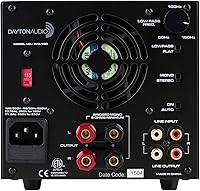
The adjustable low-pass crossover, sweepable between 50 and 150 Hz, gives you real control over where the bass rolls off rather than locking you into a fixed setting. Frequency response stretches from 10 Hz all the way to 40 kHz, which matters if you are using this power amplifier for acoustic measurement work or high-resolution playback. The fan runs quietly enough that you will rarely notice it in nearfield setups. Discrete output transistors handle heat well under sustained load. Dual-voltage support — 120V domestic or up to 230V — adds useful flexibility if your setup changes down the line.

Best For

This Dayton amp was practically made for the DIY subwoofer builder — the kind of person who wants to pair a quality passive woofer driver with a clean, stable amp rather than buying a pre-built box. Home theater enthusiasts adding a dedicated bass channel will find it a comfortable fit. The extended low-frequency headroom also makes it genuinely useful for acoustic measurement hobbyists doing room correction work. Compact size and quiet operation suit small studio installs well. If you want reliable Class A/B performance without spending boutique money, this power amplifier is hard to argue with.

User Feedback

Across nearly 240 ratings, the APA150 holds a 4.4 out of 5 — a score that reflects consistent satisfaction rather than polarized opinions. Most buyers single out the low noise floor and cool running temps as standout qualities, particularly those using it in listening rooms or small spaces. DIY builders report clean, controlled bass output when paired with passive woofers. That said, not everything is perfect. The crossover knob lacks the fine-tuned precision some users expect, and anyone needing balanced inputs for a serious studio rig will find this Dayton amp's connectivity a bit limiting. Long-term owners report units still running strong after years of use.

Pros

  • Built-in adjustable low-pass crossover removes the need for a separate crossover unit in most builds.
  • Near-silent fan operation keeps the noise floor low, even in quiet nearfield listening environments.
  • Class A/B topology delivers clean, low-distortion bass output that holds up during extended sessions.
  • The compact chassis fits easily into half-rack spaces, DIY cabinets, or equipment shelving.
  • A 5-year manufacturer warranty is unusually generous for an amplifier at this price tier.
  • Dual-voltage support makes the APA150 usable internationally and across different studio environments.
  • Long-term owners report consistent reliability, with many units performing well after five or more years.
  • Frequency response extending to 40 kHz makes this Dayton amp useful for acoustic measurement work beyond subwoofer duty.
  • Strong real-world user rating across a large review pool signals broad, sustained satisfaction.

Cons

  • No balanced XLR inputs limits integration into semi-professional or studio signal chains.
  • The crossover knob lacks precise detents, making repeatable fine-tuning difficult during room calibration.
  • Two-channel configuration is less convenient for users who specifically need a dedicated mono subwoofer block.
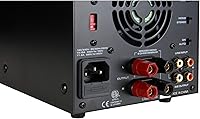
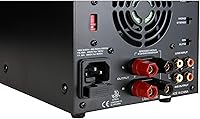
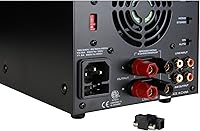
  • Rear-panel connections are tightly spaced, which complicates cable management with bulkier plugs or connectors.
  • Fan noise, while generally quiet, can become perceptible in warmer ambient environments or poorly ventilated enclosures.
  • Warranty support response times have drawn complaints from some buyers, particularly those outside the US.
  • Front panel provides minimal operational feedback, with no clear indicators for signal presence or protection status.
  • The utilitarian finish may look out of place in high-end visible installations alongside premium components.

Ratings

The Dayton Audio APA150 has accumulated a substantial body of verified buyer feedback since its launch in 2008, and our AI-driven scoring system has analyzed those reviews globally — filtering out incentivized, duplicate, and bot-generated submissions — to surface what real users actually experience. Scores reflect both where this Dayton amp genuinely excels and where it falls short, so you get an honest picture before you buy.

Sound Quality
88%
Users consistently describe the bass output as clean and controlled, with no noticeable muddiness even during demanding listening sessions. For a Class A/B design at this price point, the low distortion characteristics are regularly called out as a genuine strength, particularly by DIY subwoofer builders who are picky about signal integrity.
A handful of more experienced listeners note that the APA150 does not quite match the textural refinement of higher-end dedicated mono amplifiers. At higher volumes in larger rooms, some users detect a slight compression in the low-end dynamics.
Build Quality
83%
The chassis feels sturdy and well-assembled, and long-term owners regularly mention units running reliably for years without any hardware failures. The discrete output transistor design contributes to a sense of durability that budget-range amps often lack.
A few buyers feel the external finish, while clean, leans more utilitarian than premium. The crossover adjustment knob in particular has drawn criticism for feeling slightly loose or plasticky relative to the rest of the unit.
Value for Money
91%
For what you get — 150 watts, a built-in adjustable crossover, near-silent cooling, and a 5-year warranty — this power amplifier punches well above its weight class. DIY builders especially appreciate not having to buy a separate crossover component, which keeps the overall project budget in check.
The value proposition does weaken slightly for buyers who need balanced inputs or more precise crossover control, since those limitations may push them toward pricier alternatives. If your use case is simple, the value is hard to beat; if it is complex, the savings may come with trade-offs.
Noise Floor & Fan Operation
89%
The near-silent fan is one of the most praised aspects of this Dayton amp, especially among users who run it in nearfield monitoring setups or quiet listening rooms. Even at sustained load, most buyers report that the fan is effectively inaudible from a normal seating distance.
A small number of users report that older units — or units running in warmer ambient environments — can produce a faint hum that becomes noticeable in very quiet rooms. This appears to be an edge case rather than a systemic issue, but it is worth flagging for noise-sensitive applications.
Crossover Precision
61%
39%
The adjustable low-pass crossover sweeping from 50 to 150 Hz is a genuinely useful feature that gives users real flexibility when integrating a subwoofer into an existing system. Being able to dial in the rolloff point without an external unit saves both money and rack space.
The crossover knob lacks fine-tuned detent steps, making precise repeat settings difficult. Several buyers note that small adjustments can produce disproportionate changes, which is frustrating during room calibration sessions where repeatability really matters.
Thermal Management
86%
The high-current discrete output transistors handle heat dissipation well under extended use, and the vast majority of buyers report the unit running comfortably cool even after several hours of continuous operation. This is particularly valued in always-on home theater setups.
In poorly ventilated enclosures or rack installations with minimal airflow, a few users have noted the unit running warmer than expected. Surface mount installations in tight spaces should factor in some breathing room around the chassis.
Connectivity & Inputs
57%
43%
Standard unbalanced RCA inputs cover the needs of most home theater and DIY subwoofer applications cleanly. For the typical buyer pairing this amp with a consumer AV receiver or preamp, the input options are entirely adequate.
The absence of balanced XLR inputs is a recurring complaint from buyers trying to integrate the APA150 into semi-professional or studio environments. If your signal chain runs on balanced connections, you will need an adapter or a direct box, which adds cost and a potential noise point.
Setup & Ease of Use
84%
Most buyers report a straightforward setup experience, with clear labeling and an intuitive layout that does not require consulting the manual for basic hookup. DIY builders particularly appreciate how quickly the unit is operational once wired into a passive subwoofer project.
The crossover knob, as noted elsewhere, adds a small learning curve for users trying to dial in a precise frequency cutoff. First-time amplifier buyers may also find the lack of detailed documentation a minor hurdle.
Compact Form Factor
87%
At 11.5 x 6 x 5.5 inches, this power amplifier fits neatly into half-rack spaces, on equipment shelves, or inside DIY subwoofer cabinets with room to spare. Multiple reviewers specifically chose it over competitors because of the small footprint.
The compact chassis does mean that rear-panel connections are closer together than on larger units, which can make cable management slightly fiddly, especially with bulkier RCA plugs or speaker wire terminations.
Frequency Response Range
82%
18%
A response window stretching from 10 Hz to 40 kHz is well beyond what most amplifiers in this class offer, and audiophile buyers interested in high-resolution audio or acoustic measurement work genuinely benefit from the extended headroom at both ends of the spectrum.
For pure subwoofer duty, the extended high-frequency response is largely irrelevant, which means casual buyers are paying for a capability they may never use. This is not a flaw per se, but it is worth noting for buyers doing a purely use-case-based comparison.
Long-Term Reliability
88%
A product that has been in continuous production since 2008 and still maintains a strong rating is a reasonable reliability signal. Long-term owners in the review pool regularly mention units performing without issue well into their fifth or sixth year of use.
As with any amplifier running continuously in a home theater context, a small number of users have reported component issues after several years. These appear to be exceptions, but availability of replacement parts or repair support for older units has not been universally praised.
Warranty & Manufacturer Support
79%
21%
A 5-year warranty is genuinely uncommon at this price tier and gives buyers a meaningful safety net. Dayton Audio has a reputation within the DIY audio community for honoring warranty claims without excessive friction.
Some buyers note that reaching Dayton Audio support for warranty or technical queries can involve slower response times than they expected. A handful of international buyers also found the warranty process less straightforward when dealing with cross-border returns.
Aesthetic & Design
72%
28%
The clean, utilitarian look works well in rack-mounted setups or on open shelving, and does not look out of place next to more expensive components. The low-profile chassis avoids the bulky, industrial look of many amplifiers in this output class.
It is not a visually striking piece of gear, and buyers assembling a high-end living room system may find it underwhelming beside premium components. The front panel is minimal to the point of sparse, with little visual feedback about operational status.
Compatibility & Versatility
81%
19%
Dual-voltage support and a wide crossover range make this Dayton amp usable across a broader range of setups than most single-purpose amplifiers. International buyers and those repurposing the unit across different systems appreciate the built-in flexibility.
The two-channel configuration is less ideal for users who specifically need a single-channel mono block for dedicated subwoofer applications. Some buyers end up bridging the channels, which works, but adds a step that not everyone is comfortable with.

Suitable for:

The Dayton Audio APA150 is a natural fit for anyone who wants to build or upgrade a subwoofer setup without spending serious money on boutique gear. DIY builders pairing a quality passive woofer driver with a reliable amplifier will find it particularly well-suited — the built-in adjustable crossover removes the need for a separate component, which keeps both cost and complexity down. Home theater enthusiasts looking to add a dedicated bass channel to an existing receiver-based system will appreciate the compact footprint and quiet fan, which make it easy to tuck into a rack or cabinet without creating noise or clutter. Acoustic hobbyists doing room correction or speaker measurements also benefit from the wide frequency response, which extends well beyond what most amps in this class offer. If you want a dependable, no-nonsense Class A/B amplifier that has proven itself over many years of real-world use, this power amplifier is a genuinely smart choice.

Not suitable for:

Buyers with more demanding or professional requirements will likely find the Dayton Audio APA150 a frustrating fit. Anyone running a balanced signal chain — common in semi-pro studios or more serious recording setups — will immediately run into the lack of XLR inputs, which means added adapters or converters that introduce potential noise and extra cost. Users who need precision crossover control for critical room integration work may find the knob too imprecise for repeatable settings, which is a real practical limitation during calibration. Those building a high-output system for large rooms should also temper expectations — 150 watts is solid for a single passive subwoofer in a mid-size space, but it is not the right tool for demanding, high-SPL installations. Buyers who prioritize a premium aesthetic for a visible living room setup may also find the utilitarian look underwhelming next to higher-end components.

Specifications

  • Brand: Manufactured by Dayton Audio, a brand well-established in the DIY audio and home theater amplifier market.
  • Model Number: The unit is designated APA150 and has been in continuous production since November 2008.
  • Output Power: Delivers 150 watts of total output power across two channels under rated conditions.
  • Topology: Uses a Class A/B circuit design, which balances thermal efficiency with low harmonic distortion during operation.
  • Frequency Response: Rated from 10 Hz to 40 kHz, providing headroom well beyond the audible range for high-resolution and measurement applications.
  • Low-Pass Crossover: Features a continuously adjustable low-pass crossover sweepable between 50 Hz and 150 Hz for flexible bass integration.
  • Channels: Two-channel stereo configuration, which can be bridged to mono for dedicated single-driver subwoofer applications.
  • Input Voltage: Operates natively at 120V and supports up to 230V, making it compatible with both North American and international mains supply.
  • Dimensions: Chassis measures 11.5 x 6 x 5.5 inches (L x W x H), suitable for half-rack or surface-mount installations.
  • Weight: Unit weighs 11.68 pounds, reflecting the solid internal component construction despite the compact external footprint.
  • Cooling System: Equipped with a near-silent variable-speed fan designed to minimize noise floor impact in nearfield and quiet listening environments.
  • Output Transistors: Uses high-current discrete output transistors for improved thermal stability and reliable performance during sustained playback sessions.
  • Mounting Type: Designed for surface mount installation, with a form factor compatible with standard equipment shelving and rack enclosures.
  • Inputs: Accepts unbalanced RCA line-level inputs; no balanced XLR connectivity is provided on this unit.
  • Warranty: Backed by a 5-year manufacturer warranty from Dayton Audio, which is notably longer than the industry norm for this amplifier class.
  • Amazon Rating: Holds a 4.4 out of 5 star rating based on 237 verified buyer ratings as of the time of review compilation.
  • Availability: First listed for sale in November 2008 and confirmed as still in active production, with no discontinuation announced by the manufacturer.

Related Reviews
Dayton Audio DSP-408
85%
94%
Value for Money
88%
Software Interface & GUI
92%
Audio Routing Flexibility
87%
Compactness & Form Factor
61%
Out-of-the-Box Connectivity
More
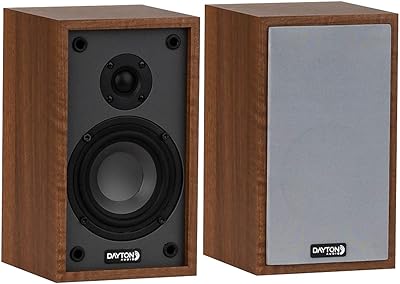
Dayton Audio Classic B65
78%
83%
Sound Quality
71%
Bass Performance
86%
Treble Clarity
78%
Build Quality
91%
Value for Money
More
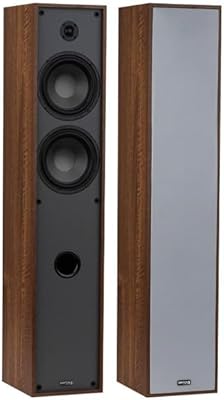
Dayton Audio Classic T65 Tower Speakers
86%
91%
Sound Quality
87%
Bass Performance
88%
Treble Clarity
85%
Power Handling
92%
Build Quality
More
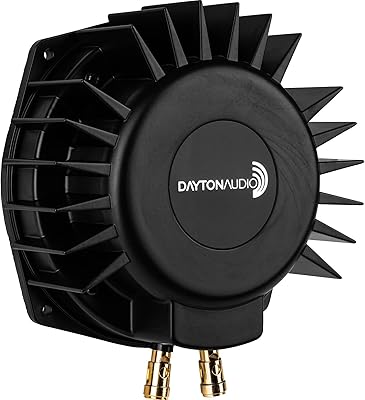
Dayton Audio BST-300EX Bass Shaker
84%
88%
Bass Performance
91%
Build Quality
85%
Ease of Setup
90%
Value for Money
87%
Durability
More
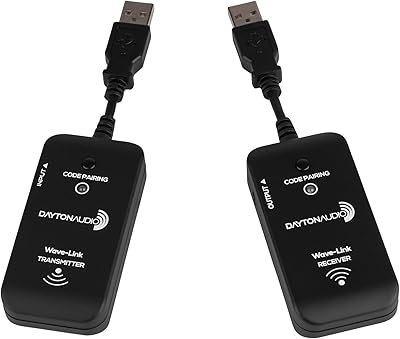
Dayton Audio Wave-Link WLS System
86%
89%
Wireless Performance
91%
Ease of Setup
87%
Multi-room Compatibility
84%
Sound Quality
65%
Latency
More
Dayton Audio Classic B40
77%
88%
Sound Clarity
91%
Treble Performance
54%
Bass Extension
83%
Build Quality
93%
Value for Money
More
Dayton Audio SUB-1200 12″ Powered Subwoofer
86%
88%
Bass Performance
91%
Ease of Integration
89%
Value for Money
85%
Build Quality
93%
Size/Space Efficiency
More
Dayton Audio SD215A-88 8″ DVC Subwoofer
85%
92%
Sound Quality
89%
Bass Response
85%
Ease of Installation
90%
Durability
87%
Value for Money
More
Dayton Audio CCS-33B Center Channel Speaker
90%
94%
Sound Clarity
96%
Dialogue Intelligibility
87%
Bass Performance
91%
Build Quality
90%
Ease of Installation
More
Dayton Audio SUB-800 8″ Powered Subwoofer
85%
86%
Bass Quality
92%
Value for Money
89%
Ease of Setup
93%
Compactness/Size
85%
Connectivity Options
More

FAQ

You can absolutely use it for a single passive subwoofer — just bridge the two channels into mono mode, which combines the output for a stronger single-channel drive. Most DIY builders do exactly this. Just make sure your woofer's impedance is compatible with the bridged load before wiring it up.

In most real-world setups it is essentially inaudible from a normal listening position. The fan is variable-speed and only ramps up under heavier thermal load, so during typical home theater or music listening sessions it tends to stay very quiet. A small number of users in warmer rooms have noticed it more, but that appears to be the exception rather than the rule.

No, it does not. The unit accepts unbalanced RCA inputs only. If your source gear or preamp outputs balanced signals via XLR, you will need a balanced-to-unbalanced adapter or a direct injection box. It works fine, but it does add a step and a potential noise point in more demanding signal chains.

This is honestly one of the weaker points of this power amplifier. The knob is continuous rather than stepped, so there are no click-stop detents to lock you into a specific frequency. You can get close to 80 Hz with some patience, but if you need to reproduce an exact setting after adjusting it, you will likely need to re-tune by ear or with a measurement tool each time.

For most single-driver DIY subwoofer builds in medium-sized rooms, yes — 150 watts is a reasonable amount of clean power. It is not a monster amp, and it will not pressurize a large dedicated home theater room with a high-excursion 15-inch driver, but for the typical 10 to 12-inch driver build in a living room context it is more than workable.

It supports both 120V and up to 230V input, so it is usable in most countries with the appropriate power cable or adapter. Just confirm your local mains voltage falls within that range before powering it up.

Quite well, based on the long-term owner feedback. A good number of reviewers specifically mention units that have been running for five or more years without any failures. The discrete output transistor design and solid thermal management appear to contribute to that durability. No amp is immune to eventual wear, but the track record here is genuinely reassuring for a product at this price.

It is not a full 19-inch rack unit, so it will not slide into a rack rail directly without a shelf or custom bracket. However, it is compact enough to sit comfortably on a rack shelf or inside a DIY cabinet, and the surface mount design makes it easy to secure in place. Many buyers use it this way without any issues.

The front panel is quite minimal — there is no dedicated clip indicator or multi-color status lighting. You get basic power-on indication, but not much else in terms of real-time visual feedback. If you are used to amps with comprehensive metering, the sparse front panel takes a little adjustment.

The APA150 is designed to work with standard 4-ohm and 8-ohm loads in stereo mode. If you are running it bridged into mono for a subwoofer application, you will want to stick with an 8-ohm driver to stay within the safe operating range. Dropping below that in bridged mode can stress the output stage, so check your driver specs before wiring.