Overview

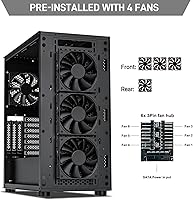
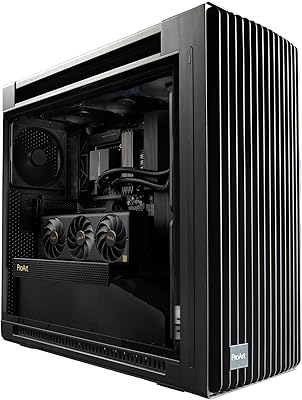
The DARKROCK Classico Max E-ATX Full Tower Case arrived in late 2024 as a mid-range chassis built squarely around two priorities: serious storage capacity and solid thermal performance. This full tower case supports everything from Mini-ITX up to E-ATX motherboards, ships with four 120mm fans pre-installed, and wraps it all in a mesh-forward design that actually breathes. At just under 20 pounds, the metal and plastic build feels appropriately substantial without being excessive. It is not trying to be a boutique showpiece — it is a workhorse chassis designed for builders who need real expandability without spending boutique money.
Features & Benefits

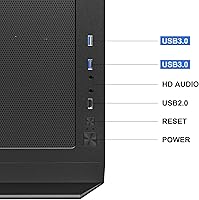
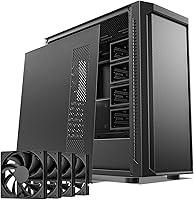
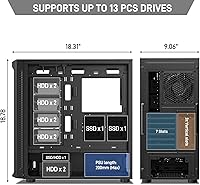
The headline feature here is storage — 10 x 3.5-inch HDD bays plus three 2.5-inch SSD slots give this storage-focused chassis a drive count you rarely see outside dedicated NAS enclosures. A 400mm GPU clearance and three vertical PCIe slots mean your graphics card can be mounted upright for both aesthetics and improved airflow alignment. Up top, there is room for a full 360mm radiator, so pairing a high-end AIO cooler with a powerful CPU is entirely straightforward. The bottom-mounted PSU keeps heat sources separated and cable routing tidier. Front I/O covers USB 3.0 and USB 2.0 ports — functional if not particularly generous.

Best For

The Classico Max makes the most sense for builders with specific, practical needs. Video editors and photographers managing large local libraries will appreciate having 13 drive bays accessible in a single desktop chassis. It also suits anyone stepping up to an E-ATX workstation board on a reasonable budget — though worth noting upfront, installing that board requires removing the HDD cages, so plan your configuration carefully before buying. Home office power users who want to run simultaneous air and water cooling will find the layout accommodating. If your build is compact or storage-light, the sheer size of this full tower case is likely more than you need.

User Feedback

Across more than 300 ratings averaging 4.4 out of 5, buyer sentiment is fairly consistent. Drive bay count is the most praised aspect — people building media storage rigs or multi-drive workstations call it a genuine differentiator at this price tier. The mesh panels also earn regular credit for keeping temperatures reasonable under sustained load. On the critical side, the included fans are adequate but not quiet; builders sensitive to noise should budget for replacements. A handful of users found the assembly manual unclear, particularly around E-ATX configurations. Nothing deal-breaking, but having a build guide handy before you start is worth the extra few minutes.

Pros

  • Thirteen total drive bays make this full tower case exceptional for high-capacity local storage builds.
  • Vertical GPU mounting is included without requiring expensive aftermarket riser kits.
  • Mesh panels deliver noticeably better airflow than solid-panel alternatives at this price range.
  • Supports ATX through E-ATX motherboards, giving builders genuine long-term upgrade flexibility.
  • 360mm radiator support up top pairs well with premium AIO coolers on high-TDP processors.
  • GPU clearance up to 400mm means even the largest current graphics cards install without compromise.
  • Bottom-mounted PSU improves cable routing and keeps heat sources physically separated.
  • Over 300 buyer reviews averaging 4.4 out of 5 reflects consistent real-world satisfaction across varied build types.
  • Air and liquid cooling can coexist in the same chassis without layout conflicts.

Cons

  • Included 120mm fans become audibly noticeable under sustained gaming or rendering workloads.
  • E-ATX motherboard installation requires removing HDD cages, directly sacrificing the main storage advantage.
  • No front-panel USB-C port is an increasingly frustrating omission in a 2024 chassis.
  • Assembly manual is frequently criticized for being unclear, especially for complex or E-ATX configurations.
  • CPU cooler height is capped at 180mm, which limits compatibility with some large air tower coolers.
  • Only two USB 3.0 front ports feels sparse given the full-tower size and target audience.
  • A PCIe riser cable is not included, so the vertical GPU feature costs extra to actually use.
  • Fully populated HDD configurations introduce vibration noise that builds noticeably in quiet environments.

Ratings

The DARKROCK Classico Max E-ATX Full Tower Case has been evaluated by our AI rating system after analyzing hundreds of verified global buyer reviews, with spam, bot activity, and incentivized submissions actively filtered out. What emerges is a clear picture of a storage-first chassis that earns real loyalty from the right kind of builder — while also carrying a few honest trade-offs worth knowing before you commit. Both the standout strengths and the recurring frustrations are reflected directly in the scores below.

Storage Capacity
94%
For builders who have outgrown conventional cases, the combination of 10 x 3.5-inch HDD bays and 3 x 2.5-inch SSD slots is genuinely rare at this price tier. Video editors archiving raw footage, or home users consolidating multiple external drives into one machine, consistently call this the single reason they chose this chassis over everything else.
The sheer number of drive bays does consume significant interior real estate. If you are not planning to populate most of them, all that cage infrastructure can make the build area feel more cramped than the external dimensions would suggest.
Thermal Performance
83%
The mesh front and side panels create a noticeably more open airflow path than solid-panel competitors, and several buyers running GPU-intensive workloads reported stable temperatures under sustained use. The layout, with the PSU isolated at the bottom, helps keep heat sources from compounding on each other.
Four included 120mm fans are a reasonable starting point but fall short under heavier workloads. Builders pushing high-TDP components will almost certainly want to add or replace fans, which adds to the total cost and should be factored in from the start.
Build Quality
78%
22%
The metal and plastic hybrid construction feels appropriately solid for the price bracket — panels align well, and the overall rigidity is better than some comparably priced competitors. At just under 20 pounds, the chassis has enough heft to suggest durability without becoming a hassle to position on a desk or floor mount.
Up close, some plastic trim pieces and internal brackets show the cost savings more clearly. Nothing that affects structural integrity, but buyers used to premium all-steel cases may notice the difference in tactile finish quality at panel edges and bezels.
Value for Money
88%
For a full tower case offering this level of drive bay count, vertical GPU support, and 360mm radiator compatibility simultaneously, the pricing sits well within what most builders would consider a fair deal. It regularly gets cited by buyers as punching above its weight class compared to name-brand alternatives at higher price points.
The value equation holds up best when you actually need the storage capacity. If your build only uses two or three drives, you are paying for infrastructure you will never use — and more focused mid-tower options would likely serve you better for less.
Cooling Flexibility
81%
19%
Support for a 360mm radiator up top gives builders meaningful flexibility to pair this chassis with a high-end AIO cooler without compromise. The vertical GPU slots also help redirect airflow more deliberately through the case, which enthusiasts running custom cooling loops have noted as a genuine layout advantage.
The 180mm CPU cooler height limit is on the tighter side for an E-ATX full tower, and a few buyers running large air coolers have flagged compatibility concerns. Anyone committed to a tall tower cooler should verify clearance carefully before purchasing.
E-ATX Compatibility
67%
33%
The chassis does technically accommodate E-ATX motherboards, which is not a given at this price point, and builders wanting to run high-core-count workstation platforms appreciate having a compatible enclosure without moving into premium territory.
Installing an E-ATX board requires removing the HDD cages entirely, which directly undermines the storage capacity that is the case's main selling point. This trade-off catches buyers off guard regularly and is the most common source of frustration in reviews from workstation builders.
Cable Management
74%
26%
The bottom-mounted PSU design creates a clean separation between the power supply and the main build area, and the routing channels behind the motherboard tray are reasonably well spaced for a tidy finish. Most builders report achieving a respectable result without extraordinary effort.
The abundance of drive bays means power cables can multiply quickly, and the space behind the tray is not deep enough to absorb the bulk of a fully populated build cleanly. Modular PSUs are effectively a necessity here, not an optional luxury.
GPU Vertical Mount
79%
21%
Having three vertical PCIe slots built into the chassis at this price point is a feature that usually requires either a boutique case or an aftermarket riser kit. Showcase builders and those who want their GPU facing outward through a mesh panel will find the implementation genuinely functional.
A PCIe riser cable is not included, so the vertical mount capability comes with an additional purchase. Depending on the GPU and riser cable quality, some users have also reported minor signal stability considerations worth researching before committing to a vertical configuration.
Fan Quality
58%
42%
The four included 120mm fans are a practical inclusion that lets you boot and test your build immediately without any additional purchases. For a light workstation or general productivity build, they cover basic airflow needs without being completely inadequate.
Under load in a gaming or rendering environment, the included fans become audibly noticeable, and their static pressure performance does not scale well with high-density builds. Most serious builders treat them as temporary placeholders and budget for aftermarket replacements accordingly.
Front I/O
66%
34%
Having both USB 3.0 and USB 2.0 ports on the front panel covers most day-to-day peripheral needs — external drives, keyboards, mice, and the occasional thumb drive all connect without reaching around to the back of the machine. Functional and accessible.
Two USB 3.0 ports is a modest offering for a full tower chassis in 2024 and 2025. There is no USB-C port anywhere on the front panel, which is an increasingly conspicuous omission for builders who regularly transfer files with modern devices.
Assembly Experience
63%
37%
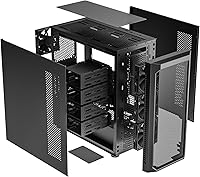
The physical layout of the case is logical enough that experienced builders can work through most of the process intuitively. Panel removal is straightforward, and the drive bays themselves click into place without requiring special tools for basic configurations.
The included manual has drawn repeated criticism for being unclear, particularly around E-ATX installation and HDD cage removal sequences. First-time builders or those attempting a more complex configuration should plan to supplement the manual with third-party guides or video walkthroughs.
Radiator Support
86%
A full 360mm radiator slot up top is a meaningful spec that opens the door to premium AIO coolers without a chassis upgrade. Builders pairing this storage-focused chassis with a high-end processor for video encoding or 3D rendering find the cooling headroom genuinely useful.
Radiator support is limited to the top panel only, with no front radiator mounting option. Builders wanting push-pull radiator configurations or those running dual-radiator custom loops will find the layout restrictive compared to cases specifically designed for water cooling.
Motherboard Compatibility Range
82%
18%
Supporting the full range from Mini-ITX up to E-ATX within a single chassis makes this a practical long-term buy for builders who anticipate future upgrades. You can start with a standard ATX board today and expand to a workstation E-ATX platform later without replacing the case.
The wide compatibility range masks the practical compromise at the E-ATX end — losing drive bays to fit the largest boards is a significant functional trade-off that narrows the appeal of that particular configuration considerably.
Noise Levels
61%
39%
Under light loads and at desktop idle, the Classico Max is reasonably quiet. The mesh panels do not create resonance issues, and the drive bays with HDDs installed produce the expected low mechanical hum rather than anything disruptive in a home office setting.
When the system is pushed under gaming or production workloads, the stock fans become clearly audible. Additionally, a fully populated HDD configuration introduces multiple spinning drive vibration sources that can accumulate into noticeable background noise without anti-vibration mounts.
Exterior Aesthetics
72%
28%
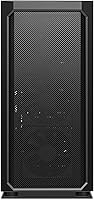
The all-black mesh exterior has a clean, understated look that suits both home office and desk setups without drawing unwanted attention. It does not rely on RGB or flashy accents, which a meaningful segment of buyers specifically prefer for a professional environment.
The design is functional rather than distinctive, and buyers who want a case that makes a visual statement will find it underwhelming. The plastic accents on the front panel in particular can look slightly budget-tier in person compared to promotional images.

Suitable for:

The DARKROCK Classico Max E-ATX Full Tower Case was built for a specific kind of builder, and if you fit that profile, it is hard to argue against it. Anyone accumulating large amounts of local storage — video editors sitting on terabytes of raw footage, photographers with sprawling asset libraries, or home users finally consolidating a pile of external drives into one permanent machine — will find the 13-bay drive configuration nearly impossible to match at this price tier. It also makes a practical choice for small home or office workstations that need to handle demanding workloads over years, since the E-ATX and ATX motherboard support gives you room to grow without replacing the chassis. Enthusiasts who want vertical GPU mounting as a display feature, but do not want to spend boutique case money to get it, will find this storage-focused chassis delivers that without requiring add-on kits. If your priority is expandability, internal headroom, and a layout that supports serious cooling alongside serious storage, this full tower case earns its place on the shortlist.
Not suitable for:

The DARKROCK Classico Max E-ATX Full Tower Case is easy to over-buy for the wrong build. If you are assembling a straightforward gaming PC with one or two SSDs and no plans to expand, you will be paying for 10 HDD bays that will sit empty and a chassis footprint that dominates a desk or floor space for no practical reason. Builders expecting a quiet system out of the box should also recalibrate — the included fans are functional placeholders, not a finished acoustic solution, and planning for replacements is a near-certainty in noise-sensitive environments. Anyone hoping to run an E-ATX motherboard while keeping all those drive bays filled will run into a genuine hardware conflict: the largest boards require removing the HDD cages, which directly undermines the storage advantage. There is also no front USB-C port, which is a real daily inconvenience if you regularly transfer files with modern laptops, phones, or peripherals. Compact build enthusiasts, minimalist aesthetic-focused buyers, or anyone constrained on space should look elsewhere.
Specifications

  • Form Factor: Full tower chassis designed to accommodate demanding, high-component-count desktop builds.
  • Dimensions: The case measures 18.3″ long by 9.06″ wide by 18.78″ tall.
  • Weight: Assembled unit weighs 19.71 pounds, reflecting a sturdy metal and plastic hybrid construction.
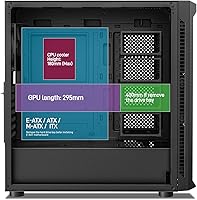
  • Motherboard Support: Compatible with E-ATX, ATX, Micro-ATX, and Mini-ITX form factor motherboards, though E-ATX requires HDD cage removal.
  • Drive Bays: Provides 10 x 3.5-inch HDD bays and 3 x 2.5-inch SSD slots for a total of 13 internal storage positions.
  • Included Fans: Ships with four 120mm black fans pre-installed to provide baseline airflow coverage out of the box.
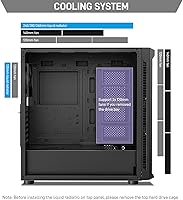
  • Radiator Support: Top panel supports radiators up to 360mm in length, compatible with standard triple-fan AIO liquid coolers.
  • GPU Clearance: Maximum GPU length is 400mm, accommodating virtually all current full-size consumer graphics cards.
  • CPU Cooler Height: Maximum CPU air cooler height is 180mm, which covers most mid-tower and standard full-tower cooler designs.
  • GPU Orientation: Three vertical PCIe slots allow the graphics card to be mounted upright for display or improved directional airflow.
  • PSU Mount: Power supply installs at the bottom of the chassis, isolating heat and simplifying cable routing toward the build area.
  • Front I/O Ports: Front panel provides 2 x USB 3.0 ports and 2 x USB 2.0 ports; no USB-C port is included.
  • Cooling Methods: The chassis supports both air cooling and liquid water cooling configurations simultaneously within the same build.
  • Materials: Primary construction uses a combination of metal for the main frame and plastic for panel trims and bezels.
  • Color: Available in black with a uniform matte-style finish across exterior panels and included fans.

Related Reviews

Antec C8 ARGB Full-Tower E-ATX PC Case
84%
91%
Cooling Performance
89%
Build Quality
94%
Airflow Efficiency
82%
Installation Ease
88%
ARGB Lighting Customization
More
Montech AIR 903 MAX E-ATX Mid Tower Case
85%
91%
Cooling Performance
88%
Build Quality
89%
Airflow Efficiency
83%
Ease of Setup
71%
Cable Management
More
Corsair 7000D AIRFLOW Full-Tower ATX Case
88%
96%
Cooling Performance
92%
Build Quality
90%
Cable Management
70%
Size and Compatibility
85%
Ease of Setup
More
Antec Flux Mid-Tower E-ATX PC Case
85%
93%
Build Quality
88%
Cooling Performance
91%
Design & Aesthetics
87%
Ease of Assembly
72%
Cable Management
More
darkFlash DY470 Full-Tower ATX Gaming PC Case
84%
88%
Build Quality
92%
Airflow & Cooling Efficiency
85%
Ease of Installation
80%
Cable Management
90%
Aesthetics & Design
More
DARKROCK EC2 Black ATX Mid Tower PC Case
86%
89%
Cooling Performance
88%
Build Quality
85%
Ease of Installation
90%
Aesthetics
80%
Size/Space Flexibility
More
Thermaltake Tower 600 Black Mid-Tower ATX Case
84%
91%
Cooling Performance
87%
Build Quality
84%
Ease of Setup
89%
Aesthetics & Design
93%
Cooling Flexibility
More
SilverStone CS380 ATX Tower Case
79%
90%
Build quality
94%
Drive bay system
68%
Thermal performance
72%
Noise levels
88%
Ease of maintenance
More
SAMA 3509 ATX Mid Tower Case
85%
88%
Airflow Performance
85%
Build Quality
91%
Cooling Support
83%
Ease of Setup
87%
Aesthetic Design
More
HYTE Y40 Mid-Tower ATX Case
85%
89%
Design & Aesthetics
86%
Cooling Performance
91%
Cable Management
93%
Build Quality
72%
GPU Compatibility
More

FAQ

This is the most important trade-off to understand before buying. Fitting an E-ATX board requires removing the HDD cages, which significantly reduces your available drive bay count. If maximizing both storage and E-ATX motherboard support is your goal, you will need to plan your configuration carefully and accept that you cannot have both at full capacity simultaneously.

No, a riser cable is not included in the box. The three vertical PCIe slots are there, but you will need to purchase a compatible PCIe riser cable separately to actually use the vertical GPU orientation. Make sure to get one rated for your GPU's PCIe generation to avoid any bandwidth or stability issues.

For a light workstation or a system running moderate loads, the four 120mm fans that come installed are functional enough to get started. That said, under gaming or sustained rendering workloads they become noticeable, and noise-sensitive builders will want to swap them for higher-quality fans relatively early. Think of them as temporary rather than a finished solution.

Yes, the DARKROCK Classico Max E-ATX Full Tower Case supports GPU lengths up to 400mm, so even the longest current consumer graphics cards should install cleanly. Just double-check your specific GPU's length against that figure and confirm your PSU cable routing will not create any obstruction near the front of the card.
There is not. The front I/O gives you two USB 3.0 ports and two USB 2.0 ports, which covers most standard peripherals, but there is no USB-C connection on the front panel. If you regularly transfer files between modern devices and your PC, this is a real daily inconvenience worth factoring into your decision.

The physical layout is logical and most of the process is straightforward, but the included manual has drawn repeated criticism for being unclear, particularly around HDD cage removal and E-ATX configurations. First-time builders should expect to supplement it with online guides or video walkthroughs rather than relying on the printed instructions alone.

Yes, the 360mm radiator mounts in the top panel and does not interfere with the drive bays, so you can run a full AIO cooling setup while keeping the storage bays populated. Just be mindful of your cable management with a large radiator and multiple drive power connectors sharing the interior space.

A fully populated build with multiple spinning hard drives will produce a low but cumulative mechanical hum that is noticeable in a quiet room. Adding anti-vibration mounts on the HDD bays can help dampen this considerably if noise is a concern for you.

The layout supports both. The top 360mm radiator slot works for AIO coolers, but there is nothing stopping you from running a custom loop through it as well. The main limitation is that radiator mounting is only available at the top, so elaborate dual-radiator custom loop configurations will be constrained by that single mounting point.

The metal frame handles the weight of a fully populated drive configuration without structural concerns. That said, with 10 spinning drives installed, vibration transmission through the chassis is noticeable, and using rubber or silicone drive mounting grommets will make a meaningful difference to how much of that vibration you actually feel and hear during operation.