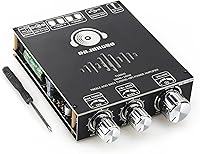
Overview

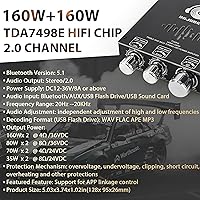
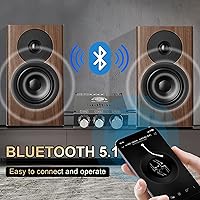
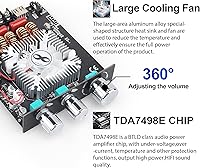
The DAMGOO T160HS Stereo Amplifier Board is a compact 2.0 channel amp board built around the TDA7498E Class D chip — a solid choice at this price point for anyone serious about DIY audio builds. It accepts a wide DC input range of 12 to 38 volts, giving builders real flexibility when selecting a power supply rather than being locked into a single option. A built-in cooling fan ships standard, addressing a genuine weakness in many budget Class D boards that rely on passive heat dissipation alone. Bluetooth connects without a password, making it easy to pair any phone or tablet instantly.

Features & Benefits

What separates the T160HS from bare-bones competitor boards is its onboard tone control — physical treble and bass knobs that let you shape the sound on the fly without wiring in a separate equalizer. Four input modes cover most practical scenarios: Bluetooth, standard AUX, USB flash drive, and USB sound card. The board measures roughly 5 by 3.7 inches, small enough to tuck inside almost any custom cabinet build. It also includes overheat, over-voltage, and under-voltage safeguards that help prevent costly failures. The 160W per channel rating is a peak figure, not continuous RMS — expect noticeably lower real-world output, especially at lower supply voltages.

Best For

This DIY amplifier board hits its stride in workshop, garage, or hobby room setups where sonic perfection takes a back seat to practicality and convenience. It makes particular sense for anyone reviving old passive speakers with modern wireless capability, or building a custom cabinet from scratch without wanting the bulk and cost of a full integrated amplifier. Beginners will appreciate the straightforward wiring and the tone knobs that remove the need for extra signal-processing gear. It is not the right fit for a critical listening room or an audiophile-grade build — but for casual everyday use, it genuinely punches above its price class.

User Feedback

Across more than 700 ratings, the amp board holds a strong 4.5 out of 5 average — notable for a niche electronics component. Buyers consistently highlight quick and painless setup, along with the value of having multiple input options on a single board. DAMGOO's after-sales responsiveness draws positive mentions, which matters when buying from a lesser-known brand. On the downside, fan noise is a real consideration — it is audible in quieter rooms and may bother some listeners during low-volume sessions. USB audio quality earns mixed marks and is best treated as a backup input rather than a primary one.

Pros

  • The TDA7498E Class D chip is a well-regarded IC that delivers clean-enough performance for casual and hobbyist listening.
  • Four input modes — Bluetooth, AUX, USB flash drive, and USB sound card — reduce the need for external switching hardware.
  • Onboard treble and bass knobs let you dial in tone without adding an external EQ to your build.
  • A wide 12–38V DC input range gives builders real flexibility when choosing or reusing a power supply.
  • The active cooling fan is a practical inclusion that helps the board run stably during long listening sessions.
  • Built-in overheat, over-voltage, and under-voltage protection adds a meaningful layer of safety for DIY builds.
  • The compact 5 x 3.7-inch footprint fits inside most custom enclosures without requiring major design compromises.
  • Password-free Bluetooth pairing makes it effortless to connect a phone or tablet without any configuration steps.
  • DAMGOO's after-sales support is noted positively by buyers, which is reassuring when buying from a smaller brand.
  • Over 700 user ratings averaging 4.5 out of 5 reflects consistent satisfaction for a niche electronics component.

Cons

  • The 160W per channel rating is peak power only — continuous RMS output at real-world voltages is significantly lower.
  • The cooling fan generates audible noise that can be distracting in quiet or low-volume listening environments.
  • USB audio input quality is inconsistent and unreliable enough that it should not be your primary source connection.
  • Password-free Bluetooth is convenient but means anyone nearby can hijack or interrupt your audio without permission.
  • The power adapter is sold separately, adding to the total cost and requiring buyers to source a compatible 36V supply.
  • This amp board is not suited for high-fidelity or critical listening applications where audio transparency matters.
  • Real-world output headroom drops noticeably if you are running the board from a lower-voltage supply like 12V.
  • There is no remote control or digital volume adjustment — all tone and volume changes require physical access to the board.

Ratings

The DAMGOO T160HS Stereo Amplifier Board has been scored by our AI system after analyzing hundreds of verified global buyer reviews, with spam, incentivized posts, and bot activity actively filtered out. The scores below reflect where this DIY amp board genuinely delivers and where real users ran into frustration — no sugarcoating on either side.

Value for Money
91%
For builders who need a capable, multi-input amp board without spending on a branded integrated unit, the T160HS offers a feature set that would cost considerably more elsewhere. The inclusion of tone controls, active cooling, and four input modes at this price tier is something buyers repeatedly call out as a genuine surprise.
The value equation shifts slightly if you factor in the separately purchased power adapter, which adds to the real total cost. Buyers who assumed everything needed was in the box occasionally felt misled by the listing.
Ease of Setup
88%
Most users report getting the board up and running within minutes, even without prior electronics experience. The input options are clearly labeled, Bluetooth pairs instantly without any app or PIN, and the screw terminals for speaker connections are straightforward enough for first-time DIY builders.
A small number of buyers found the lack of a printed quick-start guide frustrating, particularly when troubleshooting speaker wiring polarity or figuring out input switching. Digital-only documentation is fine for experienced makers but less forgiving for true beginners.
Audio Quality
74%
26%
For casual workshop or garage listening, the amp board produces clean enough sound that most users are genuinely satisfied day-to-day. The onboard tone knobs give enough range to compensate for speaker colorations without any extra gear in the chain.
Anyone with a tuned ear will notice the limitations of the TDA7498E at lower supply voltages — the low end loses control and the soundstage feels compressed. This is a hobbyist-grade board, not a hi-fi component, and the audio quality reflects that distinction honestly.
Power Output Accuracy
52%
48%
Running the board at or near its maximum recommended voltage does deliver strong output that can fill a medium-sized room comfortably. Users who understood the peak-versus-RMS distinction going in were largely happy with the real-world headroom available.
The 160W per channel claim causes consistent confusion and disappointment among buyers who expect continuous RMS performance at that level. At 12V to 24V supply voltages — which many users default to — actual output drops sharply, and several reviewers felt the spec was misleading rather than informative.
Build Quality
78%
22%
The PCB feels solid for its price class, with components that are neatly laid out and solder joints that hold up to the mechanical stress of DIY enclosure installation. The screw terminals for speaker and power connections are robust enough to handle repeated adjustment during a build.
The overall construction still has the hallmarks of a budget board — the potentiometer knobs feel a little loose, and a few users reported minor cosmetic inconsistencies on the PCB surface. It is functional rather than refined, which is acceptable at this price point but worth knowing.
Thermal Management
83%
The inclusion of an active cooling fan is a meaningful advantage over passive-only boards at this price, and users running extended listening sessions at higher volumes report the board stays comfortably cool. The overheat protection circuit provides a useful safety backstop if airflow gets restricted inside an enclosure.
The fan itself is the trade-off — it is audible, particularly at low listening volumes or in quieter environments. Builders who did not plan for fan noise in their enclosure design occasionally found it more intrusive than expected after installation.
Bluetooth Performance
79%
21%
Bluetooth connection is fast and hassle-free in typical home or workshop environments, and most users stream from their phones without experiencing drop-outs during normal use. The password-free approach makes it genuinely convenient for single-user setups where you just want music playing quickly.
In shared spaces like workshops or small offices, the lack of any pairing security means nearby devices can connect and interrupt playback unexpectedly. Bluetooth range and reliability also degrade more noticeably than premium boards when walls or other interference sources are present.
Input Versatility
86%
Having Bluetooth, AUX, USB flash drive, and USB sound card inputs on a single board removes the need for any external input switcher, which simplifies builds considerably. Users particularly appreciate the AUX input for connecting older source devices that lack Bluetooth.
Input switching is manual rather than automatic, which can be a minor nuisance if you frequently alternate between sources. The USB audio input, while present, delivers inconsistent sound quality and is better treated as a backup option than a reliable daily-use connection.
USB Audio Quality
58%
42%
For basic flash drive playback of MP3 files, the USB input is functional and convenient — users who just want background music from a loaded drive find it serves that purpose adequately without any extra hardware.
Compared to the AUX and Bluetooth inputs, USB audio quality is noticeably inferior to many users, with some describing a thin or slightly distorted character at higher volumes. It is the weakest input on the board and should not be treated as a primary listening source.
Tone Control Usability
84%
The physical treble and bass knobs are genuinely useful for adapting the sound to different speaker types without any external EQ hardware. Builders repurposing older speakers with uneven frequency responses found the controls helped correct tonal imbalances that would otherwise require additional gear.
The control range is moderate rather than sweeping — users expecting dramatic EQ-style adjustments may find the available boost and cut somewhat limited. There is also no mid-frequency control, which leaves a gap for users who want finer tonal shaping.
Protection Circuits
87%
The combination of overheat, over-voltage, and under-voltage protection gives builders reasonable confidence that a wiring mistake or power fluctuation will not immediately destroy the board. Several users specifically mentioned the protection features as a reason they trusted this amp board for a first DIY build.
Protection circuits work as advertised in most reported cases, but they do not cover every failure scenario — a direct short on the speaker terminals, for example, can still cause damage. The protection is a helpful safety net, not a substitute for careful wiring practice.
After-Sales Support
81%
19%
DAMGOO's customer service response rate draws genuinely positive mentions across reviews, which is not a given for smaller electronics brands selling on marketplace platforms. Users who reached out about wiring questions or defective units generally reported timely and helpful replies.
Support quality can be inconsistent depending on the complexity of the issue — straightforward defect replacements tend to go smoothly, but more technical questions about voltage configurations or speaker matching sometimes receive vague or templated answers.
Enclosure Compatibility
89%
At just over 5 x 3.7 inches, the board slides into most DIY cabinet designs without requiring significant internal restructuring. The compact profile is one of the most consistently praised physical traits among builders working with tight internal dimensions.
The cooling fan adds a height dimension that builders need to account for when planning internal clearances — a few users discovered the fan conflicted with bracing or other internal components after the fact. Measuring the full assembled height before finalizing enclosure plans is advisable.

Suitable for:

The DAMGOO T160HS Stereo Amplifier Board is a strong pick for DIY enthusiasts who want a self-contained, ready-to-wire amp solution without the overhead of a full receiver or integrated amplifier. It fits naturally into custom speaker cabinet builds, especially projects where the enclosure needs to stay compact and the builder wants wireless audio baked in from the start. Hobbyists repurposing old passive bookshelf speakers for a garage, workshop, or hobby room will find the combination of Bluetooth, AUX, and USB inputs genuinely practical rather than gimmicky. Beginners who are new to the DIY audio space will appreciate the onboard tone controls — having treble and bass knobs on the board itself removes the need to source and wire a separate equalizer. Anyone working with a tight build budget who still wants protection circuits and active cooling will find the value proposition here hard to beat at this price tier.

Not suitable for:

The DAMGOO T160HS Stereo Amplifier Board is not the right tool for anyone building a critical listening setup or expecting hi-fi performance. The 160W per channel figure is a peak rating under ideal conditions — real-world continuous output at moderate supply voltages and typical speaker loads will fall noticeably short of that number, which can disappoint buyers who take the spec at face value. The active cooling fan, while useful for thermal management, produces audible noise that will be distracting in a quiet living room or dedicated listening space. USB audio input performance is inconsistent enough that it should not be treated as a primary source connection. Those who need rock-solid, stable Bluetooth in a shared or semi-public environment should also note that the password-free pairing, while convenient, means any nearby device can connect and interrupt playback.

Specifications

  • Amplifier Chip: The board is built around the TDA7498E, a Class D amplifier IC known for efficient power delivery at this market tier.
  • Peak Output: Rated at 160W per channel (160W + 160W) in a 2.0 stereo configuration under peak conditions.
  • Working Voltage: Accepts a DC input range of 12V to 38V, offering flexibility when selecting or reusing a power supply.
  • Audio Inputs: Supports four input modes: Bluetooth, AUX (3.5mm), USB flash drive, and USB sound card.
  • Tone Controls: Onboard physical knobs provide independent treble and bass adjustment without requiring an external equalizer.
  • Bluetooth: Bluetooth connectivity is password-free, allowing any nearby device to pair without a PIN or app.
  • Heat Dissipation: An active cooling fan is included on the board to manage thermal output during sustained high-volume use.
  • Protections: Onboard protection circuits guard against overheat, over-voltage, and under-voltage conditions to reduce risk of board damage.
  • Dimensions: The board measures 5.03 x 3.74 x 1.02 inches, compact enough to fit inside most DIY speaker enclosures.
  • Weight: The board weighs 9.59 ounces, keeping the overall assembly light for portable or wall-mounted cabinet builds.
  • Channel Config: Configured as a 2.0 stereo channel setup; there is no subwoofer output channel on this board.
  • Power Adapter: A compatible 36V 8A power adapter with a 5.5 x 2.5mm plug (also compatible with 5.5 x 2.1mm) is sold separately.
  • Manufacturer: Designed and sold by DAMGOO, a consumer electronics brand that offers direct after-sales support.
  • Model Number: The official model designation is T160HS, used to identify this specific variant within the DAMGOO amplifier lineup.
  • Customer Rating: Holds a 4.5 out of 5 average rating based on over 700 customer reviews on Amazon.

Related Reviews
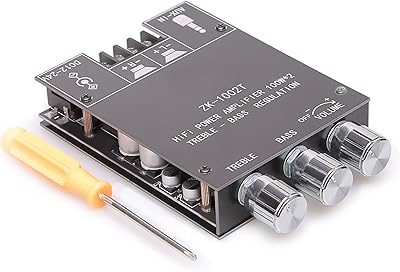
DAMGOO ZK-1002T
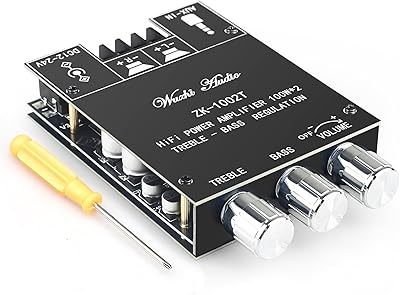
DAMGOO ZK-1002T
77%
83%
Sound Quality
91%
Value for Money
78%
Bluetooth Performance
74%
Ease of Installation
58%
Power Output Accuracy
More
UWAYKEY ZK1002T Bluetooth Stereo Amplifier Board
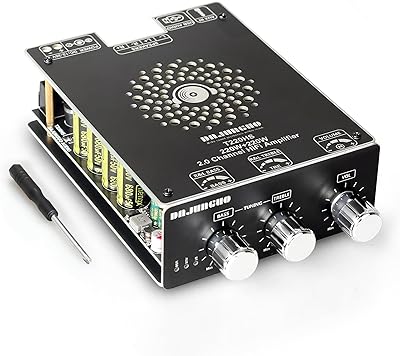
75%
86%
Value for Money
82%
Bluetooth Performance
58%
Output Power (Real-World)
63%
Build Quality
61%
Heat Management
More
DAMGOO TPA3251 440W Bluetooth Stereo Amplifier Board
80%
83%
Sound Quality
86%
Bluetooth Connectivity
67%
Power Output (Real-World)
88%
Value for Money
79%
Ease of Setup
More
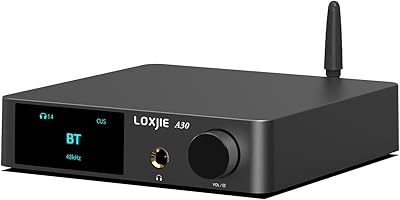
LOXJIE A30
LOXJIE A30
79%
86%
Sound Quality
82%
Build Quality
91%
Value for Money
89%
Input Versatility
63%
Bluetooth Performance
More
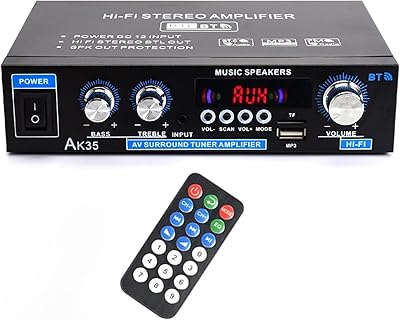
AK35 Stereo Mini Amplifier
71%
83%
Value for Money
67%
Sound Quality
71%
Bluetooth Performance
54%
Build Quality
89%
Setup & Ease of Use
More
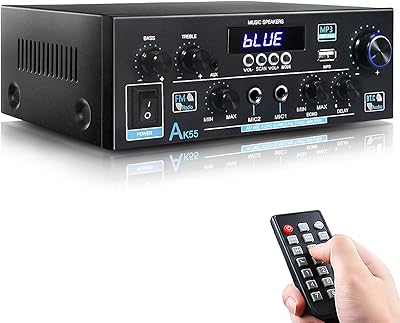
AK55 Stereo Amplifier
79%
88%
Value for Money
74%
Sound Quality
86%
Karaoke & Mic Performance
83%
Bluetooth Connectivity
91%
Input Variety
More
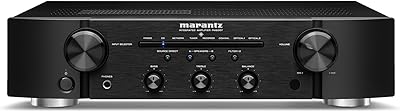
Marantz PM6007 Integrated Stereo Amplifier
79%
93%
Sound Quality
91%
Build Quality
74%
Phono Stage
78%
Value for Money
57%
Connectivity & Inputs
More
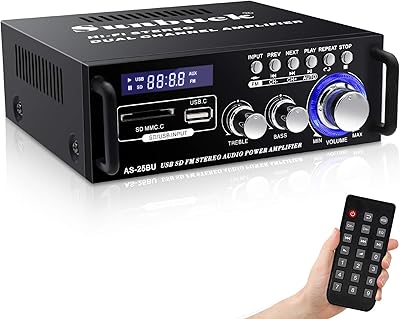
Sunbuck AS-25BU Stereo Amplifier
73%
88%
Value for Money
74%
Sound Quality
91%
Connectivity & Input Range
63%
Bluetooth Performance
51%
Power Output Accuracy
More
Marantz MM7025 Stereo Power Amplifier
86%
94%
Power Output
91%
Sound Quality
88%
Build Quality
90%
Cooling System
87%
Connectivity Options (RCA/XLR)
More
Yamaha A-S701SL Integrated Stereo Amplifier
88%
94%
Sound Quality
91%
Build Quality
88%
Ease of Use
89%
Power Output
85%
Energy Efficiency
More

FAQ

The board itself does not include a power supply. You will need to source a DC power adapter separately. DAMGOO recommends a 36V 8A adapter with a 5.5 x 2.5mm barrel connector, though it is also compatible with the slightly narrower 5.5 x 2.1mm plug style. Running it at lower voltages like 12V is possible but will significantly reduce output power.

Not quite. The 160W figure is a peak rating measured under ideal conditions — high supply voltage and a specific load impedance. In typical real-world use, particularly at 12V to 24V supply voltages, you should expect considerably lower continuous output. For most casual listening or workshop use that is perfectly fine, but do not expect concert-level volume from a modest power supply.

The fan is noticeable, especially during quieter passages or at low listening volumes. If you are building a speaker for a living room or bedroom where background noise matters, this is worth factoring into your decision. In a garage, workshop, or utility space it is rarely an issue. Some builders add foam dampening inside their enclosures to reduce the perceived fan noise.

The T160HS is generally compatible with both 4-ohm and 8-ohm passive speakers. That said, running 4-ohm loads will draw more current and generate more heat, so make sure your power supply can handle the increased demand and that ventilation around the board is adequate.

Most users report stable Bluetooth connections for typical close-range streaming from a phone or tablet. The range and stability will depend on your environment — walls and interference from other devices can affect it. One thing to be aware of: because pairing is password-free, any device within range can connect and potentially interrupt playback.

For most DIY builds using this amp board, 16 AWG or 18 AWG speaker wire is a practical choice for runs up to a few feet inside a cabinet. If your speaker wiring runs longer than a couple of meters, stepping up to 14 AWG reduces resistance and helps preserve output quality.

Yes, that is actually one of the most common uses for the DAMGOO T160HS Stereo Amplifier Board. As long as your enclosure has room for the board's footprint and you can route a compatible power supply in, it works well as a drop-in upgrade for old or failed amp modules. Just confirm the replacement board's output matches what your speakers can handle.

It works for basic playback from a USB flash drive loaded with MP3 or WAV files. That said, user feedback suggests the USB audio quality is functional rather than impressive — it is a convenient backup option but not something most people rely on as their main listening source. Bluetooth or AUX will give you better results in most cases.

No, the T160HS is a 2.0 stereo board only. There is no dedicated subwoofer output channel. If you need a 2.1 setup with a dedicated bass driver, you would need to look at a different board or add an external crossover and a separate sub amplifier.

The board includes built-in overheat protection that is designed to trigger a shutdown before damage occurs, rather than letting the components burn out silently. In practice, keeping the board in a ventilated enclosure and not blocking the cooling fan should prevent thermal shutdowns in normal use. If the fan stops working for any reason, though, extended high-volume sessions could push it closer to the protection threshold.

Where to Buy