


Overview

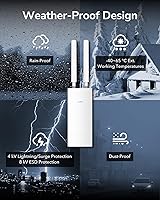
The Cudy RE1200 Outdoor AC1200 WiFi Extender is a budget-friendly networking unit built specifically for outdoor environments, covering everything from backyard patios to small farm outbuildings. Unlike most cheap extenders that stop at the front door, this outdoor extender carries an IP65 weatherproof rating alongside 4KV lightning protection — genuinely useful specs for anything left exposed to the elements year-round. It runs on passive PoE, meaning a single Ethernet cable handles both data and power, so there is no need for a separate outlet at the mounting point. Three operating modes — range extender, access point, and mesh satellite — give it flexibility that most competitors at this price point simply do not offer.

Features & Benefits

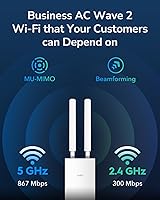
On the spec side, the RE1200 Outdoor delivers dual-band AC1200 throughput — 867 Mbps on 5 GHz for less congested links and 300 Mbps on 2.4 GHz for longer-range coverage. What genuinely stands out at this price tier is the detachable RP-SMA antennas: if you need to push signal further across a large property, you can swap in higher-gain outdoor antennas without replacing the unit entirely. MU-MIMO support means several devices can pull data simultaneously without queuing up, which matters when you have security cameras or smart sensors running outdoors. A guest network option lets shops or hospitality setups keep visitor traffic cleanly separated from the main network.

Best For

This weatherproof access point makes the most sense for people who need connectivity somewhere a power outlet simply does not reach. Think a detached garage, a barn well away from the house, a food stall in an open market, or an RV hookup where running new wiring is not practical. The single-cable PoE install means you run one Ethernet line, mount the unit on a pole or wall, and you are done. It also fits into an existing Cudy mesh network as an outdoor satellite node, though it will not integrate with other brands’ mesh systems. For browsing, IoT devices, and light outdoor use, it handles the job well.

User Feedback

Across buyer reviews, ease of setup comes up repeatedly — the web interface is clear enough that most users are running without ever consulting a support forum. Outdoor range improvements are frequently praised, particularly in open areas with few obstructions. That said, a few caveats matter: this outdoor extender uses 24V passive PoE, which is not compatible with standard 802.3af PoE switches — buyers who assume any PoE switch will work will be caught off guard. Some users also note the 2.4 GHz band feels sluggish in congested radio environments, and a handful recommend flashing the firmware right after unboxing to sidestep early stability hiccups.

Pros

  • Single Ethernet cable delivers both power and data, making outdoor installation genuinely clean and simple.
  • IP65 weatherproofing and 4KV lightning protection mean it can handle real outdoor conditions, not just a light drizzle.
  • Three operating modes — extender, access point, and mesh satellite — offer flexibility uncommon at this price tier.
  • Detachable RP-SMA antennas let you upgrade to higher-gain options if your property demands longer range.
  • Web-based setup is clear and well-documented, with most users up and running quickly without support calls.
  • MU-MIMO support keeps performance reasonable when multiple outdoor devices are connected simultaneously.
  • Guest network mode allows basic traffic separation, useful for shops or hospitality setups.
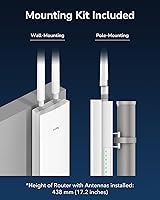
  • Pole and wall mounting hardware is included, so you are not scrambling for extra parts on install day.
  • Build quality is rated positively by most buyers relative to what this unit costs.

Cons

  • Uses 24V passive PoE, which is incompatible with standard 802.3af PoE switches — a frustrating surprise if you own one.
  • Mesh satellite functionality is locked to the Cudy ecosystem, offering no cross-brand compatibility.
  • The 2.4 GHz band can feel sluggish in areas with dense wireless interference from nearby networks.
  • Several buyers report needing a firmware update immediately after unboxing to achieve stable operation.
  • AC1200 throughput is not suitable for bandwidth-heavy outdoor use cases like 4K streaming or large backups.
  • Only two antennas limit coverage patterns compared to tri-band or multi-antenna outdoor units at higher price points.
  • No 802.3af or 802.3at PoE support means it cannot be cleanly integrated into most business network switch setups.

Ratings

The scores below reflect our AI-driven analysis of verified global buyer reviews for the Cudy RE1200 Outdoor AC1200 WiFi Extender, with spam, bot submissions, and incentivized feedback actively filtered out before scoring. Each category is weighted against real-world usage reports from property owners, small business operators, and rural network installers. Both the standout strengths and the genuine frustrations are reflected transparently in every score.

Ease of Setup
86%
Most buyers had the unit broadcasting within fifteen minutes of unpacking, thanks to a clean web interface and documentation that actually explains each operating mode clearly. Reviewers installing it as a straight access point — common for backyard or shop-front deployments — found the process particularly straightforward with no technical background required.
A handful of users hit stability snags on the factory firmware that required an immediate update before the unit behaved reliably, which added an unexpected step. Those configuring it in mesh satellite mode found the process slightly less intuitive than the other two modes.
Outdoor Range
83%
In open environments — large backyards, farm lanes, campsite lots — real-world range improvements were consistently praised, with many buyers covering distances that previous indoor extenders could not touch. The detachable antenna design means users who need to push further can swap in higher-gain options without replacing the whole unit.
Performance drops noticeably when obstructions like dense hedgerows, thick walls, or metal structures sit between the unit and the client devices. Users on properties with complex terrain or heavy foliage reported more modest gains than those with clear line-of-sight paths.
Build Quality
78%
22%
The housing feels solid relative to the price point, and most buyers who mounted it outdoors through rain and temperature swings reported no cracking, warping, or visible weathering after months of exposure. The IP65 rating holds up in real use — no complaints of water ingress under typical outdoor conditions.
The plastic construction does not inspire the confidence of more expensive commercial-grade access points, and a few buyers noted the antenna connections feel slightly loose straight out of the box. At this price tier it is acceptable, but it is clearly not built to the same standard as enterprise outdoor hardware.
Weather Resistance
84%
The IP65 enclosure and 4KV lightning protection combination is genuinely rare at this price point, and buyers in wet climates — the Pacific Northwest, the UK, coastal Australia — reported clean operation through sustained rain seasons. The lightning protection in particular stood out for farm and rural installs where exposure to electrical storms is a real concern.
No consumer-level unit is completely immune to the elements over a multi-year lifespan, and buyers in extremely high-UV or coastal salt-air environments may see housing degradation faster than those in moderate climates. Long-term durability data beyond one to two years is still limited given the product only launched in late 2023.
Value for Money
88%
For what this outdoor extender delivers — three operating modes, PoE power, IP65 protection, upgradeable antennas, and guest network — the asking price is hard to argue with. Buyers consistently noted that comparable weatherproof access points from more established brands cost significantly more without proportional performance gains for basic outdoor coverage needs.
The value calculation shifts if you need standard 802.3af PoE compatibility, since you would need an additional passive PoE injector to bridge the gap. Buyers who discover this after purchase feel the real cost of ownership is slightly higher than the sticker price initially suggested.
WiFi Throughput
67%
33%
For the intended use cases — smart home devices, security cameras, general browsing, and light file transfers — the AC1200 speeds are more than sufficient, and the 5 GHz band handles a handful of simultaneous users without obvious congestion. MU-MIMO support helps avoid the worst of the queuing issues that plague older single-stream extenders.
The 2.4 GHz band is a weak point in denser residential or commercial areas where the channel is crowded with competing networks, with some users reporting noticeably sluggish speeds on that band specifically. This is not a unit for heavy streaming, large NAS backups, or latency-sensitive outdoor workloads.
PoE Implementation
62%
38%
The single-cable installation concept works exactly as described — run one outdoor Ethernet line, mount the unit, and you are done — which is a real convenience advantage over setups requiring both a data cable and a separate power run. The included adapter covers most home and small business scenarios without any extra purchases.
The reliance on 24V passive PoE rather than the 802.3af standard is the single most complained-about compatibility issue in the review pool. Network administrators and small business owners with managed PoE switches were caught off guard, and this limitation should be prominently disclosed before purchase.
Antenna Upgradeability
81%
19%
The RP-SMA connectors are a standard interface that opens up a wide range of third-party high-gain antennas, which is a genuine differentiator for budget outdoor hardware. Farm owners and property managers trying to bridge longer distances found this upgrade path practically useful and relatively inexpensive.
The stock 5 dBi antennas are adequate for typical residential use, but buyers who purchased the unit expecting long-range coverage without upgrading the antennas sometimes reported disappointment. The upgrade path exists but requires additional spending and some basic research to choose the right antenna type for the deployment scenario.
Mesh Integration
59%
41%
For existing Cudy mesh network owners, adding this as an outdoor satellite node is a clean way to extend their mesh footprint to the garden or driveway without a second router purchase. The configuration process within the Cudy ecosystem is straightforward once you understand which mode to select.
Mesh functionality is entirely locked to Cudy hardware, meaning anyone with a TP-Link Deco, ASUS ZenWiFi, Eero, or any other brand is completely excluded from this feature. This is a meaningful limitation given that many buyers come to this unit from a different brand and assume generic mesh compatibility.
Multi-Device Handling
73%
27%
MU-MIMO support allows the unit to serve several connected clients — outdoor cameras, tablets on a patio, smart irrigation controllers — without forcing devices to take turns, which keeps latency reasonable for typical mixed outdoor deployments. Most users with five to ten connected outdoor devices reported no significant performance complaints.
Heavier client loads, particularly on the 2.4 GHz band, push the unit toward its limits, and users running dense IoT setups with fifteen or more devices reported occasional slowdowns. This is a budget unit, not a high-density access point, and it should be evaluated accordingly.
Mounting & Installation
82%
18%
The included pole and wall mounting hardware is practical and covers the two most common outdoor scenarios without needing a hardware store run. Buyers installing on fence posts, barn rafters, and exterior walls all reported clean, stable mounting with the provided hardware.
The mounting bracket is fixed in design, which can make precise angle adjustments for optimizing antenna direction slightly fiddly once the unit is up. A more adjustable ball-mount style bracket — common on higher-end outdoor APs — would have improved fine-tuning flexibility.
Firmware & Software
64%
36%
The web-based admin interface is functional and clear enough for non-technical users to navigate mode switching, guest network setup, and basic configuration without confusion. Documentation quality is above average for a budget Chinese networking brand, and Cudy has a history of releasing firmware updates for its product lines.
The out-of-box firmware on some early units caused stability issues that required an immediate update, which is a poor first impression for buyers who expect a plug-and-play experience. Firmware update frequency beyond the initial release period is uncertain, which may be a concern for buyers planning long-term outdoor deployments.
Documentation & Support
71%
29%
Setup guides are clear and cover all three operating modes with enough detail for a confident non-specialist installation. Multiple buyers noted that the included quick-start guide alone was sufficient to get them running without needing to search for online help.
Post-purchase support beyond documentation — live chat, phone support, or active community forums — is limited compared to larger networking brands. Buyers who run into edge-case configuration issues may find themselves relying on third-party forums rather than official Cudy support channels.

Suitable for:

The Cudy RE1200 Outdoor AC1200 WiFi Extender is a strong fit for anyone who needs reliable wireless coverage somewhere a power outlet simply does not exist. Property owners trying to reach a detached garage, a backyard shed, or a far corner of a farm will appreciate that a single Ethernet cable handles both power and data, cutting out the need for an electrician or an extension cord run. Small business operators — a food stall, an outdoor market booth, a rural shop — can put up a weatherproof guest network without spending significantly more on commercial-grade hardware. RV owners and campsite managers who need a mountable, weather-resistant signal extender on a tight budget will also find it practical. It also slots in naturally for existing Cudy mesh users who want to push their network outdoors without buying into an entirely different ecosystem.

Not suitable for:

The Cudy RE1200 Outdoor AC1200 WiFi Extender is not the right tool for anyone expecting high-throughput performance for outdoor video streaming, large file transfers, or latency-sensitive applications. At AC1200, the raw speeds are modest, and the 2.4 GHz band in particular can struggle in environments with heavy wireless interference from neighbors or other devices. Buyers who already have a standard 802.3af PoE switch should know upfront that this unit runs on 24V passive PoE, not the 802.3af standard — it will not power on from a typical managed PoE switch without the included adapter. Anyone running a non-Cudy mesh network should also look elsewhere, since the mesh satellite mode only works within the Cudy ecosystem. If your outdoor deployment demands WiFi 6 speeds, enterprise-grade management, or active PoE compatibility, a higher-budget option will serve you better.

Specifications

  • WiFi Standard: The unit uses 802.11ac (WiFi 5) technology across both frequency bands.
  • Frequency Bands: Operates simultaneously on 2.4 GHz and 5 GHz dual-band for flexible device coverage.
  • Max Speed: Delivers up to 867 Mbps on the 5 GHz band and 300 Mbps on the 2.4 GHz band.
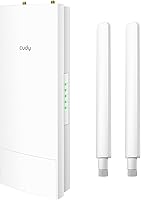
  • Antennas: Includes two detachable 5 dBi external antennas with RP-SMA connectors for optional high-gain upgrades.
  • Power Input: Powered via 24V passive PoE; the required adapter is included in the box.
  • PoE Standard: Uses 24V passive PoE only — not compatible with 802.3af or 802.3at PoE switches.
  • Weatherproofing: IP65-rated enclosure protects against dust ingress and low-pressure water jets from any direction.
  • Lightning Protection: Built-in 4KV surge protection reduces the risk of damage from nearby lightning strikes.
  • Operating Modes: Supports three modes: wireless range extender, standalone access point, and Cudy mesh satellite.
  • MU-MIMO: MU-MIMO technology allows multiple devices to receive data simultaneously rather than sequentially.
  • Guest Network: A dedicated guest network mode enables basic traffic separation for visitors or public users.
  • Mounting Options: Ships with hardware supporting both pole mounting and wall mounting for flexible outdoor placement.
  • Dimensions: The unit measures 3.94 x 2.11 x 9.45 inches, making it compact enough for discreet pole installation.
  • Weight: Weighs 1.69 pounds, light enough for single-person installation without additional support.
  • Mesh Compatibility: Functions as a satellite node exclusively within the Cudy mesh ecosystem; not compatible with third-party mesh systems.
  • Manufacturer: Designed and produced by Shenzhen Cudy Technology Co., Ltd., based in China.
  • Release Date: First made available for purchase in October 2023.

Related Reviews
WAVLINK WN572HP3 AC1200 Outdoor WiFi Extender
72%
78%
Outdoor Signal Range
71%
Ease of Setup
66%
PoE Implementation
73%
Build Quality & Weatherproofing
74%
Dual-Band Performance
More
INEAUTO AC1200 Outdoor WiFi Extender
75%
91%
Weather Durability
88%
PoE Installation
83%
Signal Range
62%
Setup & Configuration
78%
Throughput Performance
More
BrosTrend AC1200 Outdoor WiFi Extender
79%
91%
Weather Durability
74%
Signal Coverage
82%
Ease of Installation
78%
Value for Money
86%
Build Quality
More
MyMAX WN572HP3 Outdoor WiFi Extender
73%
84%
Build Quality
88%
Weatherproofing
71%
Signal Range
58%
Setup & Installation
76%
Throughput Performance
More
Cudy WR1200 AC1200 Dual-Band WiFi Router
74%
88%
Value for Money
83%
Setup & Ease of Use
76%
Wireless Performance
54%
Wired Port Performance
72%
Range & Coverage
More
WAVLINK WN588HX3 WiFi 6 Outdoor Access Point
75%
83%
Outdoor Signal Range
91%
Build Quality & Weatherproofing
78%
Installation & Mounting
61%
Setup & Configuration Experience
86%
WiFi 6 Performance
More
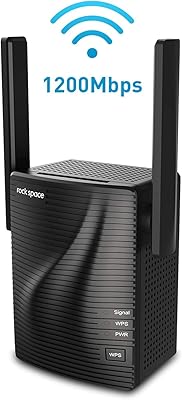
rockspace AC1200 WiFi Range Extender
72%
79%
Value for Money
88%
Ease of Setup
71%
Signal Coverage
57%
Real-World Speed
61%
Connection Stability
More
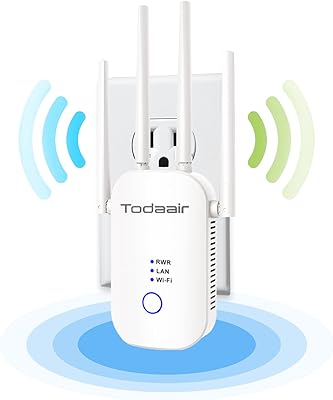
TODAAIR AC1200 WiFi Range Extender
82%
88%
Wireless Coverage
85%
Dual-Band Performance
90%
Setup & Installation
82%
Device Capacity
80%
Speed Consistency
More
TODAAIR Outdoor N300 WiFi Extender
65%
78%
Weatherproof Durability
63%
Signal Range
74%
Ease of Setup
51%
Real-World Speed
67%
Build & Hardware Quality
More
MyMAX WN570HA1 Outdoor WiFi Extender
71%
88%
Weather Durability
74%
Ease of Installation
63%
Real-World Coverage Range
57%
5GHz Band Performance
81%
Build Quality & Materials
More

FAQ

Only if your switch supports 24V passive PoE. Standard 802.3af and 802.3at PoE switches — the kind most IT-managed setups use — will not power this unit. You would need to use the included 24V passive PoE adapter instead, which injects power into a regular Ethernet run.

Yes, access point mode works independently of any Cudy hardware. You connect it via Ethernet to any router or switch, configure it through the web interface, and it broadcasts its own WiFi network. No Cudy router is required for this mode.

In open outdoor conditions with minimal obstructions, most users report meaningful coverage gains of 100 to 200 feet or more beyond where their existing signal fades. Dense vegetation, walls, or heavy interference will reduce that range. The detachable antennas allow you to swap in higher-gain options if you need to push further.

For most typical climates, yes. The IP65 rating means it handles rain, dust, and outdoor humidity well, and the 4KV lightning protection adds a reasonable degree of electrical safety. That said, no consumer-grade unit is indestructible — in regions with extreme sustained temperatures or direct exposure to severe weather events, some additional shielding or sheltering is sensible.

No. The mesh satellite function is specific to the Cudy mesh ecosystem. If you connect it to a TP-Link, ASUS, or any other brand of router, you can use it in access point or repeater mode, but mesh roaming and mesh management features will not function.

A number of users recommend checking for a firmware update before deploying it permanently. You can do this through the web-based admin interface right after first setup. It only takes a few minutes and can save you from stability issues some early units had on the original firmware.

Yes, and this is one of the more practical features at this price point. The RP-SMA connectors are a standard interface, so you can attach compatible higher-gain outdoor directional or omni-directional antennas. Just make sure the replacement antennas match the RP-SMA connector type and are rated for outdoor use.

Most users find it straightforward. The unit has a web-based configuration interface that walks you through mode selection and network settings. As long as you know your existing WiFi password and can access the admin page from a laptop or phone, the whole process typically takes under fifteen minutes.

Yes, the guest network feature lets you broadcast a second SSID that is isolated from your main network. It is a basic implementation — you get traffic separation and password control — but it is enough for a small retail or hospitality setup where you just want customers online without access to your internal devices.

You need outdoor-rated Cat5e or Cat6 Ethernet cable — the key word being outdoor-rated, which means it has UV-resistant jacketing that will not degrade in sunlight over time. Standard indoor Ethernet cable will work electrically but the jacket will crack and fail within a year or two if left exposed to sun and weather.