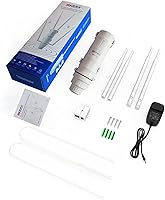
Overview

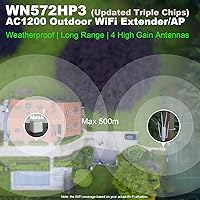
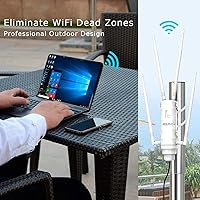
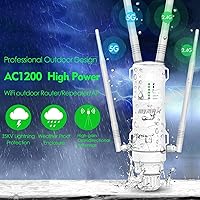
The MyMAX WN572HP3 Outdoor WiFi Extender is a mid-range networking solution built for homeowners who've exhausted every indoor trick trying to push a signal across a large yard, farm, or garden. Unlike its predecessor, this outdoor extender runs a triple-chip architecture — MTK 7621DA, 7603E, and 7613B — which represents a genuine hardware upgrade rather than a simple rebadge. It operates in Access Point, Repeater, or Mesh mode, offering real flexibility depending on your existing setup. The IP65 weatherproof rating is a legitimate differentiator for anyone shopping specifically for outdoor hardware. One honest caveat: the advertised 500-meter range assumes open, unobstructed line-of-sight. Real-world gardens and farms will deliver noticeably less.

Features & Benefits

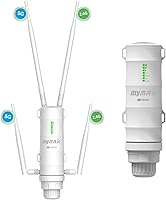
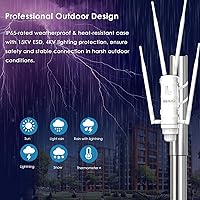
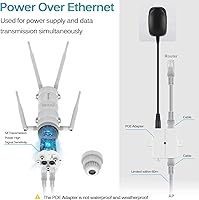
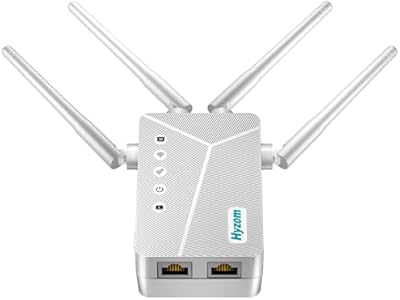
The WN572HP3 runs dual-band AC1200 — 300Mbps on 2.4GHz for stretched-out range and 867Mbps on 5GHz for bandwidth-heavy tasks. What makes outdoor installation genuinely practical is Power over Ethernet support: one cable from your router handles both power and data, removing the need for a nearby outlet entirely. Four detachable 7dBi omni-directional antennas distribute signal broadly, and you can reposition them around obstacles without tools. A gigabit WAN port ensures the cable connection itself never becomes the bottleneck. On top of that, 4KV lightning protection, 15KV ESD shielding, and a working temperature range down to -30°C mean this weatherproof access point is built to stay outside through whatever the seasons throw at it.

Best For

This outdoor extender suits rural or suburban homeowners who need dependable coverage across a large backyard, garden, or small farm — anyone whose indoor router simply can't reach where they actually need Wi-Fi. It works especially well for DIY installers comfortable running a single Ethernet cable through a wall or conduit; the PoE setup genuinely cuts complexity. Small hospitality operators — vacation rental hosts, outdoor café owners — will appreciate the weatherproofing and layered security options. If you're stepping up from a basic plug-in repeater and want proper access point hardware, this is a meaningful upgrade. It's less suited for anyone hoping for plug-and-play setup with minimal technical involvement.

User Feedback

Sitting at a 4.0-star average across more than 200 ratings, the WN572HP3 earns that score, though not without some reservations worth knowing about. Buyers consistently highlight the solid build quality and report real coverage gains over whatever they replaced. The PoE installation draws praise too, particularly from people who expected the process to be harder than it was. The friction points are on the software side: the web-based configuration interface feels dated, and several reviewers mention the documentation leaves gaps for less technical users. A recurring thread involves occasional firmware stability issues and connection drops after extended uptime — not universal, but worth flagging. Compared to the older WN572HG3's 3.8-star rating, the hardware improvements here are clear; software polish is where MyMAX still has room to grow.

Pros

  • Triple-chip hardware architecture delivers a measurable performance upgrade over the older dual-chip predecessor.
  • PoE support means a single Ethernet cable handles both power and data, keeping outdoor installation clean and flexible.
  • IP65 weatherproofing holds up through rain, heat, and freezing temperatures without any additional protective housing.
  • Four detachable antennas let you fine-tune signal direction around real-world obstacles like fences or hedges.
  • Gigabit WAN port ensures the wired backhaul connection is never the weakest link in your network chain.
  • Supports Access Point, Repeater, and Mesh modes, making it adaptable to a variety of existing home network setups.
  • Built-in lightning and ESD protection adds meaningful peace of mind for units mounted on poles or rooftops.
  • Solid physical build quality earns consistent praise from buyers across multiple user reviews.
  • 1000mW PA+LNA amplifiers give this outdoor extender noticeably stronger signal penetration than typical consumer-grade hardware.
  • MAC filtering and WPA2 security options provide adequate access control for guest Wi-Fi or small hospitality deployments.

Cons

  • Web-based setup interface feels outdated and lacks the guided experience that modern networking products typically provide.
  • Printed documentation is thin, leaving less technical users to search forums or YouTube to complete installation.
  • Some buyers report intermittent connection drops after extended uptime, pointing to firmware maturity issues.
  • The 500-meter range figure is achievable only in completely open, obstacle-free environments — most buyers will see significantly less.
  • No dedicated mobile app means remote management or quick setting adjustments require access to a browser and local network.
  • Firmware update process is not automatic and requires manual intervention, which is easy to overlook after initial setup.
  • At roughly 1.57 pounds with four protruding antennas, secure outdoor mounting requires more attention to bracket and cable strain than lighter units.
  • No clear warranty or support escalation path is prominently communicated, which can be a concern for a device left permanently outdoors.

Ratings

The scores below were generated by our AI after analyzing verified buyer reviews for the MyMAX WN572HP3 Outdoor WiFi Extender from across global marketplaces, with spam, bot-generated, and incentivized feedback actively filtered out before scoring. Each category reflects the honest consensus of real-world users — including the frustrations — so you can make a purchase decision grounded in what buyers actually experienced, not just what the spec sheet promises.

Build Quality
84%
The physical construction of this weatherproof access point draws consistent praise, with buyers frequently noting that the enclosure feels more substantial than competing units at a similar price point. The thick plastic housing shows minimal warping or discoloration even after months of direct sun exposure, which is a genuine concern for permanently mounted outdoor hardware.
A handful of buyers reported that the antenna connector threads felt slightly loose out of the box, and a few noted minor surface crazing on the housing after prolonged exposure to intense UV. These are not widespread failures, but they suggest the finishing and component tolerances could be tighter for a unit intended to live outdoors year-round.
Weatherproofing
88%
The IP65-rated enclosure handles rain and humidity reliably, with numerous buyers confirming it survived full winters in harsh northern climates and monsoon-season downpours in tropical regions without ingress issues. The rubber gasket sealing on the cable entry points appears well-executed in practice, not just on paper.
A small number of reviewers in regions with extreme and prolonged heat — think southwestern US desert summers — noted the enclosure ran noticeably hot to the touch, which raised concerns about long-term thermal stress even if the unit continued to operate. IP65 addresses water resistance but does not speak to sustained radiant heat from direct sun at the upper end of the rated temperature range.
Signal Range
71%
29%
For buyers upgrading from a basic indoor repeater pushed near a window, the improvement in outdoor coverage is real and noticeable — farms and large garden setups that previously had zero signal at 80 to 100 meters from the house are well served. Mounting the unit high on a wall or pole, as most experienced users recommend, makes a meaningful difference in usable range.
The advertised 500-meter figure is a source of genuine frustration among reviewers who took it at face value. In typical suburban environments with hedges, fences, and outbuildings in the path, most users report practical coverage closer to 100 to 150 meters before signal quality degrades noticeably — still useful, but a significant gap from marketing claims.
Setup & Installation
58%
42%
Buyers with prior networking experience — those who have configured a router or managed a home network before — generally found the web-based setup process straightforward and were operational within 20 to 30 minutes. The PoE power delivery is particularly appreciated since it eliminates the need to route a separate power cable, which simplifies the physical installation considerably.
For users without a networking background, the web admin interface is where things fall apart. The UI is visually dated, terminology is unexplained in context, and the printed documentation has gaps that leave non-technical buyers searching for YouTube tutorials just to complete a basic Access Point configuration. This is probably the most consistent complaint across the review base.
Throughput Performance
76%
24%
In Access Point mode with a clean Ethernet backhaul, the WN572HP3 delivers throughput that comfortably supports HD video streaming and video calls at moderate distances, which is the primary use case for most backyard and garden deployments. The gigabit WAN port means the wired connection itself is not the limiting factor.
In Repeater mode, speeds drop meaningfully — as they do with any single-radio repeater architecture — and buyers using it primarily for 5GHz performance at distances beyond 50 meters report inconsistency. The AC1200 ceiling is a combined theoretical figure, and real-world 5GHz throughput at range is considerably lower than that headline number suggests.
Firmware Stability
61%
39%
When the firmware is running cleanly after a fresh setup, the WN572HP3 holds a stable connection for days or weeks at a stretch for a solid portion of the user base. Some technically proficient buyers have reported improved stability after manually applying firmware updates available on the MyMAX support site.
Intermittent connection drops after extended uptime appear frequently enough in reviews to be a genuine concern rather than isolated incidents. The pattern — stable for several days, then a drop requiring a reboot — points to a memory or process management issue in the firmware. There is no automatic firmware update mechanism, which means many buyers are unknowingly running older builds.
PoE Implementation
86%
The PoE support is consistently highlighted as one of the most practical features for outdoor deployment, letting installers run a single cable through an exterior wall rather than sourcing both power and data separately. Buyers mounting the unit on a barn wall or fence post particularly appreciate avoiding the need for a weatherproof outdoor outlet.
The unit does not always include a PoE injector in the box depending on the purchase variant, which catches some buyers off guard mid-installation. Compatibility with passive PoE injectors is also not clearly documented, and a few users reported needing a specific active 802.3af injector to power the unit reliably.
Antenna Performance
79%
21%
Four detachable 7dBi omni-directional antennas give users more flexibility than fixed-antenna units, and buyers who took the time to experiment with angle and orientation reported noticeably better coverage patterns in irregular-shaped yards. The ability to swap in third-party antennas is a plus for power users who want directional coverage.
Out of the box, the antennas are positioned parallel by default, and the documentation offers no guidance on optimal positioning for different deployment scenarios. A few buyers also noted that the connector fit on one or two antennas felt inconsistent, requiring extra hand-tightening to ensure good contact.
Value for Money
74%
26%
Relative to what dedicated outdoor networking hardware costs at the enterprise or prosumer level, the WN572HP3 offers a meaningful feature set — IP65 housing, PoE, gigabit port, multiple modes — at a price accessible to homeowners who cannot justify commercial-grade equipment. For buyers who primarily need access point functionality in a weatherproof body, the hardware justifies the cost.
The firmware and software experience feels mismatched with the hardware quality, which undermines the overall value proposition somewhat. Buyers comparing this unit against newer alternatives from established networking brands at a similar price point may find the competition has narrowed enough to make the decision less clear-cut than it was at launch.
Documentation & Support
47%
53%
The physical quick-start guide covers the very basics of initial cable connection and browser-based login, which is enough for experienced users to get oriented quickly. Some buyers found the MyMAX support website useful for locating firmware files when they searched proactively.
Documentation quality is one of the weakest aspects of the overall ownership experience. The manual does not adequately explain the differences between operation modes, there is no guided troubleshooting section, and customer support response times have drawn criticism in reviews. Non-technical buyers are largely on their own once they move past the first login screen.
Ease of Mounting
81%
19%
The included mounting bracket accommodates both wall and pole installations without requiring additional hardware in most cases, and the unit's 1.57-pound weight makes single-person installation manageable even at height. Buyers mounting it under eaves or on a wooden fence post found the process took under 15 minutes once the cable was routed.
The cable management at the mounting point is not particularly elegant — the Ethernet entry is positioned in a way that makes weatherproof drip-loop routing slightly awkward depending on the mounting surface. A few reviewers noted the bracket screws stripped more easily than expected in softer wood, suggesting the hardware kit could use an upgrade.
Security Features
77%
23%
Support for WPA2, AES encryption, and MAC address filtering gives this outdoor extender a reasonable security toolkit for both private home use and small guest-network deployments like vacation rentals. MAC filtering in particular is appreciated by buyers running hospitality setups who want to manage device access without a more complex network management system.
There is no built-in VLAN support or guest network isolation in the traditional sense, which limits how cleanly you can separate guest traffic from your main home network. Buyers with more advanced security requirements — particularly small business users — may find the security configuration options too limited compared to more capable access points in a similar price range.
Mesh Capability
66%
34%
The inclusion of a Mesh operating mode gives the WN572HP3 a future-proof quality that basic repeaters lack, and buyers who deployed two units across a large rural property reported reasonable roaming behavior between nodes. For straightforward two-node outdoor mesh setups, it functions adequately.
The mesh implementation is relatively basic compared to dedicated mesh networking systems, and configuration of a multi-node mesh topology is not well-documented. Buyers expecting the kind of seamless, app-managed mesh experience offered by consumer mesh systems will find this considerably more hands-on and less polished.

Suitable for:

The MyMAX WN572HP3 Outdoor WiFi Extender is a strong match for homeowners with large outdoor properties — farms, generous backyards, acreages — where an indoor router simply cannot reach the garage, barn, workshop, or garden seating area. It works particularly well for DIY-minded buyers who are comfortable running a single Ethernet cable through an exterior wall, since PoE support means no separate power outlet is needed at the mounting point. Those upgrading from a basic plug-in repeater will notice a real step up in both hardware quality and operational flexibility, given the choice between Access Point, Repeater, and Mesh modes. Small hospitality operators — vacation rental hosts or outdoor café owners — will appreciate the IP65 weatherproofing and layered security options that indoor consumer hardware simply does not offer. If your priority is getting reliable Wi-Fi to a specific outdoor area year-round without paying enterprise-tier prices, this weatherproof access point hits a practical mid-range sweet spot.

Not suitable for:

The MyMAX WN572HP3 Outdoor WiFi Extender is not the right pick for anyone expecting a truly plug-and-play experience with guided app-based setup — the configuration interface is web-based, dated in feel, and the included documentation has frustrated more than a few non-technical buyers. If you live in an apartment or have a small yard where an indoor router already covers the space adequately, the added complexity and cost simply are not justified. Buyers who need rock-solid firmware stability for always-on applications — security cameras, smart irrigation systems — should note that some users have reported occasional connection drops after extended uptime, suggesting the software side has not quite caught up with the hardware. Those expecting to hit anywhere near the advertised 500-meter range in a typical suburban environment with trees, fences, and walls in the way will be disappointed; real-world range is meaningfully shorter in most setups. Finally, anyone without basic networking knowledge — understanding of IP addressing, access point vs. repeater differences, or PoE injectors — may find the setup process genuinely frustrating without additional research.

Specifications

  • Brand & Model: Manufactured by MyMAX under the model designation WN572HP3, an upgraded variant of the earlier WN572HG3.
  • Wi-Fi Standard: Complies with IEEE 802.11 ac/a/b/g/n, covering all major wireless standards used in home and small-business networking.
  • Frequency Bands: Dual-band operation delivers up to 300Mbps on the 2.4GHz band and up to 867Mbps on the 5GHz band for a combined AC1200 ceiling.
  • Chipset: Powered by a triple-chip configuration — MTK 7621DA, 7603E, and 7613B — which distinguishes it from the dual-chip architecture of its predecessor.
  • Antennas: Equipped with four detachable omni-directional antennas, each rated at 7dBi, allowing repositioning to optimize signal spread around obstacles.
  • Transmit Power: High-power PA+LNA amplifiers deliver a transmit power of 1000mW, providing stronger penetration through foliage, walls, and building materials than typical consumer units.
  • WAN Port: Features a single Gigabit Ethernet WAN port supporting 10/100/1000Mbps speeds, ensuring the wired backhaul connection does not limit overall throughput.
  • Power Input: Supports Power over Ethernet (PoE), allowing a single RJ-45 cable to carry both network data and electrical power to the unit.
  • Operation Modes: Can be configured as a Wi-Fi Access Point, Wireless Repeater, or Wi-Fi Mesh node, depending on the needs of the existing network.
  • Weatherproof Rating: Carries an IP65 certification, meaning the enclosure is fully dust-tight and protected against low-pressure water jets from any direction.
  • Temperature Range: Rated for continuous operation between -30°C and 70°C (-22°F to 158°F), covering the extremes of most residential outdoor climates worldwide.
  • Surge Protection: Built-in 4KV lightning surge protection and 15KV electrostatic discharge (ESD) protection help guard the unit and connected equipment during storms.
  • Wireless Security: Supports WPA, WPA2, WPA-PSK, WPA2-PSK, AES, TKIP, and MAC address filtering for layered access control on both private and guest networks.
  • Dimensions: The unit measures 11.4 x 4.8 x 2.4 inches, a form factor suited for wall bracket or pole mounting in exposed outdoor locations.
  • Weight: Weighs 1.57 pounds without mounting hardware, light enough for single-person installation on a standard exterior wall bracket.
  • Claimed Range: MyMAX advertises a maximum coverage radius of up to 500 meters, a figure that applies strictly to open, unobstructed line-of-sight environments.
  • Flash & Memory: Equipped with 64MB of flash storage and 512MB of SDRAM, providing adequate headroom for firmware operation and connection state management.

Related Reviews
MyMAX WN570HA1 Outdoor WiFi Extender
71%
88%
Weather Durability
74%
Ease of Installation
63%
Real-World Coverage Range
57%
5GHz Band Performance
81%
Build Quality & Materials
More
WAVLINK WN588HX3 WiFi 6 Outdoor Access Point
75%
83%
Outdoor Signal Range
91%
Build Quality & Weatherproofing
78%
Installation & Mounting
61%
Setup & Configuration Experience
86%
WiFi 6 Performance
More
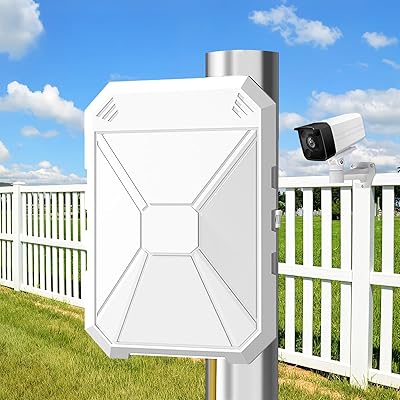
WAVLINK WN572HP3 AC1200 Outdoor WiFi Extender
72%
78%
Outdoor Signal Range
71%
Ease of Setup
66%
PoE Implementation
73%
Build Quality & Weatherproofing
74%
Dual-Band Performance
More
BrosTrend AC1200 Outdoor WiFi Extender
79%
91%
Weather Durability
74%
Signal Coverage
82%
Ease of Installation
78%
Value for Money
86%
Build Quality
More
TODAAIR Outdoor N300 WiFi Extender
65%
78%
Weatherproof Durability
63%
Signal Range
74%
Ease of Setup
51%
Real-World Speed
67%
Build & Hardware Quality
More
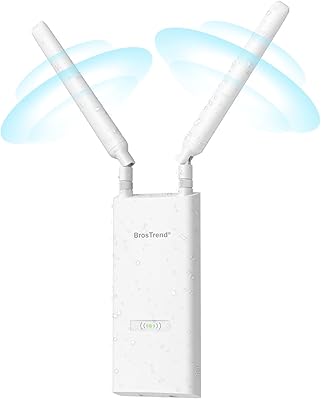
INEAUTO AC1200 Outdoor WiFi Extender
75%
91%
Weather Durability
88%
PoE Installation
83%
Signal Range
62%
Setup & Configuration
78%
Throughput Performance
More
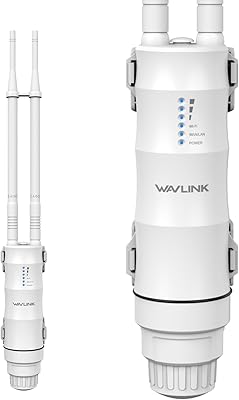
WAVLINK WN570HP2 Outdoor WiFi Range Extender
71%
61%
Wireless Range
78%
Installation Ease
83%
Build Quality & Weatherproofing
53%
Throughput & Speed
74%
Value for Money
More
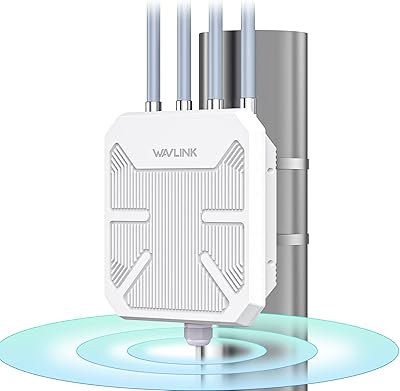
WAVLINK AC600 Outdoor WiFi Extender
76%
86%
Build Quality
89%
Weather Resistance
91%
PoE Installation
72%
Signal Range
61%
Throughput & Speed
More
WAVLINK WN573HX1 AX1800 Outdoor WiFi 6 Access Point
80%
92%
Weather Resistance & Durability
84%
WiFi Range & Signal Strength
81%
Installation & Setup
61%
Configuration Interface (UI/UX)
86%
WiFi 6 Performance & Speed
More
Xilkoze WiFi Range Extender
76%
88%
Ease of Setup
63%
Signal Coverage
67%
Connection Stability
54%
Wireless Speed
82%
Ethernet Port Utility
More

FAQ

A PoE injector or adapter is typically required to power the unit through your Ethernet cable, but inclusion varies by purchase listing — check the specific package contents before ordering. If yours does not include one, a standard 802.3af or passive PoE injector rated for the unit's voltage will work. This is a common point of confusion, so it is worth confirming before you start running cable.

That 500-meter figure represents absolute best-case performance in a wide-open field with no obstructions. In a typical suburban or rural setting with trees, fences, hedges, or outbuildings in the path, expect real-world coverage to land somewhere between 100 and 200 meters under normal conditions. Placement height and antenna orientation have a meaningful impact, so mounting it higher generally helps.

In Access Point mode, the WN572HP3 connects to your router via an Ethernet cable and creates a fresh wireless network — this gives you the best possible speed and reliability. In Repeater mode, it picks up your existing Wi-Fi signal wirelessly and rebroadcasts it, which is easier to set up but typically cuts available bandwidth roughly in half. Access Point mode is the recommended approach if you can run a cable.

Honestly, it depends on your comfort level with browser-based network interfaces. The configuration is done through a web admin panel rather than a smartphone app, and the interface is functional but not particularly modern or beginner-friendly. The included documentation covers the basics but has gaps, so less experienced users may want to look up a walkthrough video before starting. If you have set up a router before, you will likely be fine.

The MyMAX WN572HP3 Outdoor WiFi Extender is brand-agnostic and works with routers from any manufacturer, including Asus, TP-Link, Netgear, and ISP-provided gateway routers. It communicates using standard IEEE 802.11 protocols, so compatibility is not a concern as long as your router operates on 2.4GHz or 5GHz frequencies.

The unit is rated for operation between -30°C and 70°C, which covers the temperature range of nearly every residential climate on earth. The enclosure is heat-resistant as well as cold-resistant, so prolonged exposure to direct summer sun should not cause thermal shutdown under normal circumstances. The IP65 rating also keeps moisture and condensation out of the housing during freeze-thaw cycles.

In Access Point mode, this weatherproof access point can serve as a wireless bridge to bring internet connectivity to a location where you then plug in a wired device. However, the unit itself has a WAN input port rather than a multi-port LAN switch, so connecting multiple wired devices simultaneously would require an additional small network switch at that end. For a single wired device like a camera NVR, it works well.

Yes, all four antennas are detachable and use a standard connector type, so in principle they can be swapped for higher-gain directional or sector antennas if you need to focus coverage in a specific direction rather than broadcasting outward evenly. That said, directional antennas are best suited for point-to-point links, so the included 7dBi omni-directional units are the right choice for general area coverage.

This is a recurring thread in user reviews — a subset of buyers report intermittent disconnections after extended uptime, which typically points to firmware memory management rather than a hardware fault. Performing periodic reboots on a scheduled timer is a practical workaround some users have adopted. It is worth checking the MyMAX support site for firmware updates before and after installation, as newer builds have addressed stability issues in some cases.

Pole mounting works well as long as you can route the PoE Ethernet cable to it from your home or a nearby structure — underground conduit is the cleanest approach for a pole in an open yard. The mounting bracket included with the unit accommodates both wall and pole installation. Positioning the unit higher up on the pole generally improves line-of-sight coverage across the property.