Overview

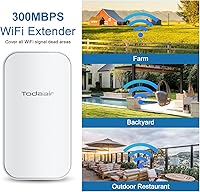
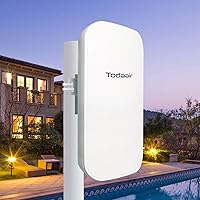
The TODAAIR Outdoor N300 WiFi Extender is a budget-focused option for anyone tired of dead zones in their backyard, garage, or side yard. Launched in late 2024, this outdoor extender targets everyday home and small-business users who need basic wireless coverage pushed beyond their router's reach — without running new cables or buying expensive mesh hardware. Its IP65-rated housing is designed to survive the elements, which immediately sets it apart from indoor-only repeaters at this price point. With a 3.5-star average across nearly 200 ratings, it is not a crowd favorite, but it has clearly found a practical niche.
Features & Benefits

This weatherproof repeater ships with two operating modes that give it genuine flexibility. In Repeater mode, it latches onto your existing WiFi signal and rebroadcasts it further. Switch to Access Point mode, and you can plug in a buried Ethernet cable to create a fresh wireless zone from scratch — handy if you have already run a wire to the garage. Speed-wise, the 300Mbps figure is a theoretical ceiling on a single-band 2.4GHz network; real-world throughput will be noticeably lower, especially in neighborhoods with heavy wireless traffic. It handles video calls and light streaming comfortably, but do not expect it to juggle multiple 4K streams. WPA2 security keeps the connection reasonably protected.

Best For

This outdoor extender makes the most sense for homeowners who want WiFi on a patio, deck, or in a detached garage without a major infrastructure project. Small business owners stretching coverage to an outdoor seating area or parking lot will find it adequate for basic tasks. If you already have an Ethernet line running outside, the Access Point mode is especially practical. It is also a reasonable pick for RV parks or vacation rentals where guests need reliable browsing and light streaming. One caveat: if you live in a dense urban area with heavy competing 2.4GHz signals, or require strong multi-device performance, this unit will likely disappoint.

User Feedback

Across its 192 ratings, the TODAAIR unit lands at 3.5 stars — below average for this product category. Satisfied buyers tend to highlight how quickly it gets running and that the weatherproof casing genuinely holds up through rain and cold snaps. Decent range improvements for simple setups also earn praise. On the other side, signal instability over time is a recurring complaint, with some users reporting drops after weeks of use. The gap between advertised and real-world speeds frustrates others. Mounting can be trickier than the listing implies, and firmware quirks surface occasionally. Customer support is responsive according to seller claims, though buyer experiences vary. Solid for light, occasional outdoor use — less so for anything demanding.

Pros

  • IP65-rated housing genuinely withstands rain, dust, heat, and freezing temperatures without special sheltering.
  • Dual operating modes add real flexibility — extend existing WiFi or create a new wireless zone from a wired line.
  • Setup is approachable for non-technical users, with video guidance and responsive seller support available.
  • The built-in Ethernet port opens up wired backhaul options that most budget outdoor extenders skip entirely.
  • Works out of the box with virtually any router brand, so there is no compatibility guesswork involved.
  • WPA2 security keeps the network reasonably protected without requiring any manual configuration.
  • Compact and lightweight enough to mount discreetly on a fence post, wall, or eave.
  • For light tasks like smart cameras, basic browsing, or a single streaming device, performance holds up well.
  • Competitively priced for an IP65-certified outdoor unit with both Repeater and AP functionality.

Cons

  • Real-world throughput falls well short of the advertised 300Mbps ceiling — typical for 2.4GHz single-band hardware.
  • Signal stability has been a recurring complaint, with some users reporting drops after extended use.
  • Single-band 2.4GHz is prone to interference in busy wireless environments, limiting usefulness in urban settings.
  • Mounting hardware and instructions leave room for improvement, with several buyers finding installation trickier than expected.
  • Not suited for multi-device households where several people stream or work simultaneously outdoors.
  • Firmware issues have surfaced in user reports, occasionally requiring resets to restore normal operation.
  • Long-term durability remains an open question for a product only launched in late 2024 with limited field history.
  • No dual-band or WiFi 6 support means the hardware will feel dated faster than pricier alternatives.
  • Customer support quality appears inconsistent based on buyer experiences, despite the seller's claims of prompt assistance.

Ratings

Our AI rating engine analyzed verified global buyer reviews for the TODAAIR Outdoor N300 WiFi Extender, actively filtering out incentivized, bot-generated, and low-quality submissions to surface what real users actually experience. The scores below reflect both the genuine strengths and the recurring frustrations that emerge across hundreds of purchase-verified accounts. Nothing is glossed over — the numbers tell the full story.

Weatherproof Durability
78%
22%
The IP65-rated shell consistently earns praise from users in wet climates, with multiple buyers reporting the unit surviving full rain seasons, sleet, and extended summer heat without visible degradation. Homeowners who mounted it on exposed fence posts or eaves found the housing held up better than expected at this price point.
A handful of buyers in coastal or high-humidity environments noted early corrosion around the Ethernet port seal after several months. Long-term durability data is limited given the product only launched in late 2024, so confidence in multi-year resilience remains unconfirmed.
Signal Range
63%
37%
For straightforward line-of-sight situations — a backyard patio, a driveway camera, or a garage directly behind a house — users report a noticeable and practical improvement in signal strength compared to relying on the main router alone. Basic browsing and smart device connectivity hold up reasonably well within moderate distances.
Range drops off faster than many buyers hope once obstacles like walls, dense hedges, or fences enter the picture. Users in suburban areas with heavy 2.4GHz traffic from neighboring networks frequently report inconsistent signal strength, and real coverage rarely approaches the advertised ceiling.
Ease of Setup
74%
26%
Non-technical users make up a solid portion of satisfied reviewers, with many noting the browser-based wizard was straightforward enough to complete without calling for help. The video guide linked in the product listing bridges the gap for buyers who get confused mid-process.
Some users hit snags when their router settings conflicted with the default configuration, requiring manual adjustments that the guide does not fully cover. A few buyers reported the initial connection failing silently with no clear error message, leading to frustrating trial-and-error troubleshooting sessions.
Real-World Speed
51%
49%
For low-demand tasks like checking email, controlling smart home devices, or running a basic outdoor security camera, the actual throughput is adequate. Buyers using it as a simple connection point for a single device outdoors tend to report acceptable performance for their needs.
The 300Mbps figure is a theoretical maximum that almost no real-world 2.4GHz single-band setup will approach, and buyers who expected near-advertised speeds came away disappointed. Multiple reviews cite noticeably sluggish performance when more than two devices connect simultaneously, and the single-band limitation compounds the issue in signal-congested neighborhoods.
Build & Hardware Quality
67%
33%
The enclosure feels solid and purposeful compared to many flimsy indoor repeaters, and the mounting bracket is sturdy enough for permanent outdoor installation. At its price tier, the physical construction exceeds what buyers typically expect.
The Ethernet port cover, while functional, feels like the weakest physical point on the unit and has drawn criticism for being difficult to reseat firmly after use. The overall plastic housing, while weatherproofed, does not inspire the same confidence as units from more established networking brands.
Value for Money
72%
28%
For a buyer who needs basic outdoor WiFi coverage on a tight budget and understands the hardware limitations going in, this weatherproof repeater delivers a reasonable return on a modest investment. The combination of IP65 protection and dual operating modes at this price is genuinely competitive.
Buyers who purchased expecting performance comparable to more expensive outdoor access points felt let down, particularly around speed and long-term reliability. The value equation weakens for anyone who ends up needing to replace the unit within the first year due to signal degradation or firmware issues.
Firmware & Software Stability
48%
52%
Initial firmware behavior is generally stable out of the box, and the setup interface works as intended during the onboarding process. Some users report months of trouble-free operation without needing to intervene.
Firmware-related drops and the need for periodic reboots are among the most repeated complaints in critical reviews. There is no clear update mechanism documented for end users, which raises concerns about long-term security patches and bug fixes as the product ages.
AP Mode Performance
71%
29%
Users who had existing Ethernet lines running to outbuildings found the Access Point mode surprisingly effective, creating a clean and dedicated wireless zone without piggyback signal degradation that repeater mode inherently introduces. This mode is where the hardware performs most consistently.
Switching between modes is not as intuitive as it could be, and some users accidentally misconfigured the unit during the mode-change process. Documentation for AP mode is thinner than for Repeater mode, leaving buyers to figure out VLAN or IP assignment issues independently.
Compatibility
81%
19%
Across reviews, there are very few reports of the unit refusing to connect with specific router brands, which suggests the 802.11n standard compatibility claims hold up in practice. It paired without issue with common consumer routers from major brands in the vast majority of reported cases.
Compatibility narrows when routers are configured with non-standard channels or certain band-steering features enabled, which can prevent the extender from connecting reliably. Mesh network users occasionally reported the unit struggling to maintain a stable backhaul connection to the primary node.
Mounting & Installation
59%
41%
The mounting bracket accommodates both wall and pole installations, giving buyers some flexibility in placement. Users who took their time with positioning reported clean, permanent installs that held up through wind and weather without loosening.
Several reviewers noted the included mounting hardware is minimal, and anchoring the unit securely into masonry or vinyl siding required purchasing additional components. The bracket design does not accommodate fine angle adjustments, which matters when trying to aim the signal precisely at a target area.
Customer Support
61%
39%
TODAAIR's support team does respond to a portion of buyer questions on the Amazon listing, and some users mention receiving helpful direct assistance via email when standard setup guidance failed. Response times are described as reasonable by satisfied buyers.
Support quality appears inconsistent, with a segment of users reporting generic or unhelpful replies that did not resolve their specific technical issue. There is no live chat or phone support option, and buyers dealing with firmware or signal stability problems often found the support exchange inconclusive.
Signal Consistency Over Time
53%
47%
A portion of the user base reports months of stable operation with no intervention required, particularly in low-traffic rural or suburban environments. When conditions are favorable, the connection remains steady for everyday tasks.
Signal degradation over weeks or months is one of the most cited long-term complaints from users who initially rated the unit positively. The pattern of needing periodic resets to restore normal operation suggests an underlying stability issue that a firmware update has not definitively addressed.
Security Features
69%
31%
WPA2 support is present and functional, meaning the network broadcast by this outdoor extender is protected at the same baseline level as most modern home routers. For typical residential or small-business use, the security provision is adequate.
There is no mention of a guest network feature or advanced access controls, which limits usefulness for businesses wanting to segment outdoor visitor WiFi from their main internal network. Security-conscious buyers will also note the absence of any documented firmware update channel for patching future vulnerabilities.

Suitable for:

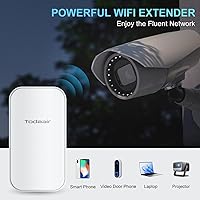
The TODAAIR Outdoor N300 WiFi Extender is a practical fit for homeowners who simply need a working wireless signal on their back patio, in a detached garage, or along a driveway without spending heavily or hiring an installer. If your use case is light — think smart doorbells, outdoor security cameras, occasional phone browsing in the yard, or a basic point-of-sale tablet at an outdoor stand — this unit can handle it without fuss. Small business owners operating food trucks, outdoor markets, or garden centers with modest connectivity needs will likely get enough range and stability for day-to-day tasks. It also works well in vacation rentals, RV parks, or seasonal properties where guests just want browsing and video calls covered. Buyers who already have a buried Ethernet cable running to an outbuilding will particularly appreciate the Access Point mode, which lets them convert that wired line into a clean wireless zone with minimal configuration.
Not suitable for:

The TODAAIR Outdoor N300 WiFi Extender is not the right call for buyers who need reliable, high-throughput coverage across multiple devices simultaneously. Its single-band 2.4GHz radio is inherently more vulnerable to interference in apartment complexes or densely built neighborhoods where the spectrum is already congested, so signal quality can degrade unpredictably in those environments. Anyone planning to stream 4K video outdoors, run video conferencing on several devices at once, or use bandwidth-heavy smart home ecosystems should look at a dual-band or WiFi 6 capable device instead. Long-term reliability also gives pause — a 3.5-star average across nearly 200 ratings reflects a meaningful share of users experiencing signal drops or durability concerns over months of use. If your outdoor coverage needs are critical to a business operation rather than a convenience, investing in a more enterprise-grade access point will save frustration down the line.
Specifications

  • Brand: Manufactured and sold by TODAAIR, a networking accessories brand focused on budget-friendly connectivity hardware.
  • Model: The unit is identified as the Outdoor N300 (IP65 Weatherproof), TODAAIR's entry-level outdoor repeater.
  • WiFi Standard: Operates on the 802.11n protocol, which is a mature, widely compatible standard found on virtually all routers and client devices.
  • Frequency Band: Single-band 2.4GHz only; there is no 5GHz radio included in this unit.
  • Max Data Rate: Theoretical maximum throughput is rated at 300Mbps under ideal lab conditions; real-world speeds will be considerably lower.
  • Operating Modes: Supports two modes: Repeater mode to extend an existing wireless network, and Access Point (AP) mode to convert a wired Ethernet connection into a wireless signal.
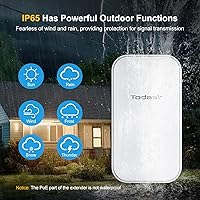
  • Weatherproof Rating: Certified to IP65, meaning the enclosure is fully dust-tight and protected against low-pressure water jets from any direction.
  • Special Protections: Housing is designed to resist lightning surges, freezing temperatures, high heat, corrosion, and physical dust ingress.
  • Connectivity: Includes one RJ-45 Ethernet port usable for wired backhaul input in AP mode or as a wired client connection in Repeater mode.
  • Security Protocols: Supports WPA-PSK, WPA2-PSK, WPA, and WPA2 wireless encryption standards to protect the network from unauthorized access.
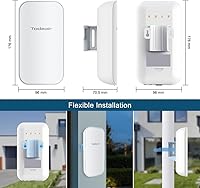
  • Dimensions: The unit measures 9 x 3 x 4 inches, making it a moderately sized enclosure suitable for wall or pole mounting outdoors.
  • Weight: Weighs 15 ounces, which is substantial enough to require secure mounting hardware rather than simple adhesive strips.
  • ASIN: The Amazon product identifier is B0DJP377L5, useful for locating the correct listing when searching for accessories or support.
  • Availability Date: First listed for sale in October 2024, making it a relatively new entrant with limited long-term field data available.
  • Setup Method: Initial configuration is handled through a web-based setup interface, supported by an installation video guide linked in the product listing.
  • Compatibility: Designed to work with any standard WiFi router or access point regardless of brand, as long as it broadcasts on 2.4GHz.
  • Manufacturer Support: TODAAIR states that a dedicated technical support team is available to assist buyers experiencing setup or operational issues.

Related Reviews
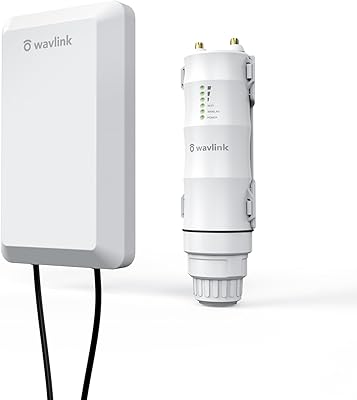
WAVLINK N300 Outdoor WiFi Range Extender
86%
90%
WiFi Range & Coverage
88%
Ease of Installation
93%
Build Quality & Durability
86%
Signal Strength in Rural Areas
89%
Device Compatibility
More
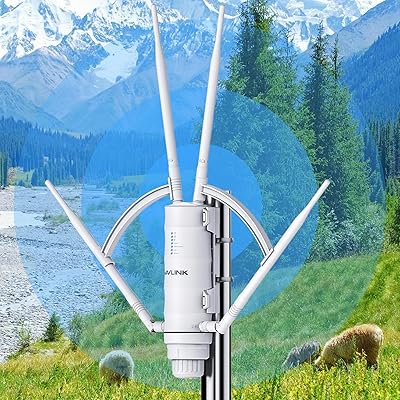
WAVLINK WN588HX3 WiFi 6 Outdoor Access Point
75%
83%
Outdoor Signal Range
91%
Build Quality & Weatherproofing
78%
Installation & Mounting
61%
Setup & Configuration Experience
86%
WiFi 6 Performance
More
TODAAIR AC1200 WiFi Range Extender
82%
88%
Wireless Coverage
85%
Dual-Band Performance
90%
Setup & Installation
82%
Device Capacity
80%
Speed Consistency
More
WAVLINK WN572HP3 AC1200 Outdoor WiFi Extender
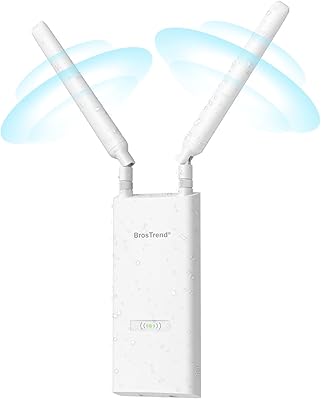
72%
78%
Outdoor Signal Range
71%
Ease of Setup
66%
PoE Implementation
73%
Build Quality & Weatherproofing
74%
Dual-Band Performance
More
INEAUTO AC1200 Outdoor WiFi Extender
85%
88%
Overall Performance
92%
Ease of Setup
85%
Range & Coverage
90%
Weatherproof Durability
87%
WiFi Speed & Stability
More
BrosTrend AC1200 Outdoor WiFi Extender
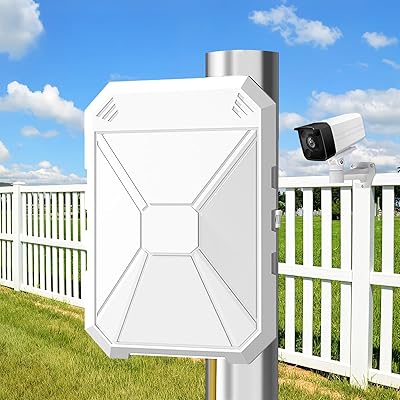
79%
91%
Weather Durability
74%
Signal Coverage
82%
Ease of Installation
78%
Value for Money
86%
Build Quality
More
MyMAX WN572HP3 AC1200 Outdoor WiFi Extender
86%
88%
Wi-Fi Performance
91%
Weatherproofing and Durability
83%
Ease of Installation
85%
Range Coverage
87%
Dual-Band Connectivity
More
WAVLINK AC600 Outdoor WiFi Extender
76%
86%
Build Quality
89%
Weather Resistance
91%
PoE Installation
72%
Signal Range
61%
Throughput & Speed
More
MyMAX WN570HA1 AC600 Outdoor WiFi Extender
83%
88%
Range and Coverage
90%
Ease of Installation
91%
Weatherproof Durability
78%
Signal Stability
89%
Power over Ethernet (PoE) Convenience
More
WAVLINK WN573HX1 AX1800 Outdoor WiFi 6 Access Point
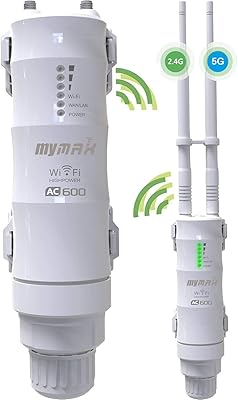
80%
92%
Weather Resistance & Durability
84%
WiFi Range & Signal Strength
81%
Installation & Setup
61%
Configuration Interface (UI/UX)
86%
WiFi 6 Performance & Speed
More

FAQ

The IP65 rating means the housing is built to handle direct water spray and dust without letting moisture inside, so typical rain and snow should not be a problem. The listing also specifically mentions anti-freeze and temperature resistance as design features. That said, no consumer-grade device is truly indestructible, so positioning it under a roof overhang when possible is always a smart precaution.

That depends a lot on your environment. In an open yard with clear line of sight back to your router, 100 to 150 feet of usable range is a reasonable expectation for light tasks. Walls, fences, dense foliage, and competing 2.4GHz signals from neighbors will all chip away at that figure. Do not plan around the theoretical maximum.

Yes, and this is actually one of the best use cases for the unit. If you already have a live Ethernet cable in the garage, you can plug it into the device and switch to Access Point mode. That turns the wired connection into a fresh wireless zone without needing to extend your router signal at all.

Only 2.4GHz. This outdoor extender is a single-band 802.11n device, so it cannot connect to or rebroadcast a 5GHz network. If your router only broadcasts 5GHz, you will need to enable a 2.4GHz band first.

Most users find it manageable. You connect to the device's default network from your phone or laptop, then follow a browser-based wizard to link it to your home WiFi. TODAAIR provides an installation video beneath the product images that walks through the process step by step. If you get stuck, their support team is reportedly reachable for direct help.

It is a reasonable fit for that. Security cameras tend to use modest bandwidth, and a stable 2.4GHz connection is usually all they need. Just make sure the camera is within a practical distance of the extender and that your overall network speed is sufficient to support cloud recording or live viewing.

For a single device streaming standard or HD video, yes. The 300Mbps figure is a marketing ceiling though — real-world speeds on 2.4GHz single-band hardware typically land well below that, especially with distance and interference factored in. For one or two people casually watching video outdoors, it should be fine. Trying to run multiple simultaneous 4K streams is a different story.

A mesh node from a major brand will generally deliver better speed, more reliable handoffs, and a unified network name, but at a significantly higher price. This unit is better suited to buyers who just need basic outdoor coverage and are not looking to build a whole-home mesh system. If outdoor performance is critical to you daily, a dedicated outdoor mesh node is worth the extra investment.

This is one of the more consistent complaints in user reviews. Some buyers report stable operation for months, while others notice intermittent drops after the first few weeks. Occasional firmware or power-cycle resets seem to resolve the issue for some users. It is worth keeping in mind if you need a truly set-and-forget connection for something like a business operation.

The unit includes basic mounting hardware, but a few reviewers have found the physical installation less intuitive than expected. It is designed for wall or pole mounting. Having a drill, appropriate anchors for your surface type, and a second pair of hands for positioning will make the job noticeably easier. The 15-ounce weight means a secure mount really does matter.