Overview

The Cudy LT700 Outdoor 4G LTE Modem Router is built for one specific problem: getting reliable internet to places where running cable simply isn't an option. It packs a cellular modem and dual-band AC1200 WiFi into a single weatherproof unit, so there's no juggling separate devices on a barn wall or RV roof. Power runs through the included passive PoE adapter, meaning one Ethernet cable handles both data and electricity — a real convenience when outlets are scarce. Cudy has been expanding its networking lineup steadily, and this outdoor unit sits at a mid-range price point that appeals to farms, cabins, and off-grid setups without demanding enterprise budgets.

Features & Benefits

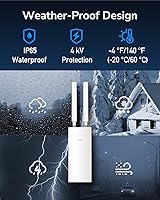
The IP65-rated enclosure handles rain, dust, and humidity without complaint, and the built-in 6kV lightning protection is genuinely worth noting if you're mounting this in an exposed location. On the cellular side, Cat 6 LTE with carrier aggregation and 4x4 MIMO gives the router the best shot at pulling solid speeds from your carrier — though real-world throughput will always depend on your local tower and signal conditions. The SMA antenna ports are a quiet highlight: swapping the stock units for higher-gain directionals is straightforward and can meaningfully improve reception in fringe areas. Add five VPN protocols and multiple operating modes, and this cellular modem router offers more flexibility than most units in its class.

Best For

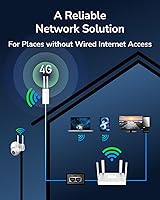
This outdoor LTE router makes the most sense for anyone whose property sits beyond the reach of cable or fiber. Think rural homeowners, farmers managing remote outbuildings, or cabin owners who only need connectivity seasonally. RV travelers will appreciate the pole-mount design and the single-cable PoE setup — no extra outlet hunting required beyond one run of Cat5e. It also works well as a dedicated feed for outdoor security cameras, keeping surveillance traffic off your main home network entirely. IT professionals setting up cellular backup links at small branch sites will find the VPN options and band-lock feature particularly useful. If wired broadband is already available, though, this isn't the right tool.

User Feedback

Owners who upgraded to directional high-gain antennas report noticeably better signal — probably the most consistent praise across reviews. The single-cable PoE installation also draws frequent compliments for keeping the mounting clean and uncomplicated. On the downside, a handful of buyers have hit carrier compatibility snags, particularly with US MVNOs relying on bands not in this router's lineup, so verifying your carrier's specific requirements before purchasing is genuinely important. A few users raised concerns about antenna port durability over extended outdoor use, and opinions on Cudy's customer support responsiveness are decidedly mixed. The web interface is functional but assumes some networking familiarity — not the friendliest starting point for complete beginners.

Pros

  • IP65 weatherproofing and 6kV lightning protection make this outdoor LTE router genuinely deployable in harsh, exposed environments year-round.
  • Single-cable passive PoE power delivery keeps installations clean and avoids the need for a separate power outlet at the mount point.
  • Detachable SMA antenna ports let you upgrade to high-gain directionals without replacing the unit — a meaningful and affordable performance boost.
  • Band lock and carrier aggregation give technically minded users real control over how the device connects to their carrier's network.
  • Five VPN protocols including WireGuard and OpenVPN make it a credible option for secure remote site deployments, not just basic home use.
  • Multi-mode operation — Router, AP, WISP, Extender, and Mesh node — covers a wide range of deployment scenarios in a single device.
  • Wide operating temperature range handles cold-climate winters without issue, and industrial SIM support extends that range further for demanding environments.
  • The gigabit Ethernet port ensures wired devices connected directly are not bottlenecked by the hardware itself.
  • Pole and wall mounting hardware is included, and the physical form factor installs cleanly against a flat surface.

Cons

  • Real-world LTE speeds depend entirely on your carrier and local tower — peak spec figures are not a reliable planning baseline.
  • Stock antennas leave noticeable performance on the table in fringe coverage areas, meaning additional hardware spend is often necessary for best results.
  • MVNO and regional carrier compatibility is inconsistent; band mismatches have caught buyers off guard after purchase.
  • The web UI assumes networking familiarity — beginners will likely need external guides to configure anything beyond basic SIM connectivity.
  • Cudy's customer support responsiveness is unreliable, which is a real risk for remote deployments where troubleshooting help matters.
  • Firmware updates have occasionally introduced instability in VPN persistence and mode-switching, sometimes requiring a factory reset to resolve.
  • Passive PoE compatibility means it will not work directly with active 802.3af/at PoE switches without an additional injector.
  • Long-term durability of the SMA antenna ports under repeated outdoor use and frequent swaps has drawn concern from some buyers.
  • AC1200 WiFi throughput is adequate for light to moderate use but shows its limits when serving many simultaneous devices at distance.

Ratings

The Cudy LT700 Outdoor 4G LTE Modem Router has been scored by our AI system after processing verified global buyer reviews, with spam, bot-generated, and incentivized feedback actively filtered out. Ratings reflect the honest distribution of real-world experiences — including where this outdoor LTE router genuinely impresses and where it falls short. Both the strengths that keep buyers satisfied and the friction points that generate complaints are transparently baked into every score below.
Build Quality & Weatherproofing
83%
The IP65 enclosure holds up well in sustained rain and dusty farm environments, and most buyers report the casing feels solid rather than flimsy after months of outdoor exposure. The 6kV lightning protection is a genuine differentiator that gives users in storm-prone rural areas real peace of mind.
A portion of reviewers have raised doubts about the long-term durability of the SMA antenna ports, particularly after repeated antenna swaps. A few units showed seal degradation after extended exposure to UV and temperature swings, which is worth watching over a multi-year deployment.
Cellular Signal Performance
76%
24%
In areas with decent carrier coverage, the 4x4 MIMO configuration and carrier aggregation make a noticeable difference compared to single-antenna alternatives. Users mounting the unit high on a pole with upgraded antennas consistently report pulling stronger, more stable signals than they expected given their rural locations.
Real-world speeds vary dramatically by location and carrier — buyers in marginal coverage zones sometimes see only modest gains. The stock antennas are adequate but leave performance on the table in fringe areas, meaning the best results require additional investment in aftermarket high-gain antennas.
Antenna System & Upgradability
81%
19%
The detachable SMA design is genuinely practical — swapping to directional or higher-gain antennas is straightforward and requires no special tools. Buyers who made that upgrade frequently noted it as the single most impactful change they made, with measurable signal improvements in challenging locations.
The stock 5dBi antennas are a reasonable starting point but not the ceiling this hardware is capable of reaching. Some users were frustrated that unlocking full performance required sourcing additional hardware that should arguably have been included at this price tier.
Installation & Setup
78%
22%
The passive PoE setup is a genuine convenience highlight — running a single Cat5e cable to a rooftop or barn wall instead of managing separate power lines simplifies installation considerably. Pole and wall mounting hardware is included, and the physical setup process is clean and well-documented.
The web interface assumes a baseline of networking knowledge, and complete beginners have reported confusion navigating band lock, WISP mode, and VPN configuration. First-time router owners will likely need to consult external guides or forums to get past basic SIM insertion and into advanced features.
Carrier & Band Compatibility
71%
29%
The band list covers the major US carriers well — T-Mobile, AT&T, and Verizon users with compatible plans generally report trouble-free activation. The band lock feature is a useful tool for forcing the router onto the strongest available band rather than letting it roam unpredictably.
MVNO compatibility is where things get inconsistent. Some budget carriers or regional operators use band configurations that overlap only partially with this router's supported list, and a handful of buyers discovered post-purchase that their specific SIM plan did not work as expected. Verifying band support before buying is strongly recommended.
WiFi Performance
74%
26%
Dual-band AC1200 coverage is sufficient for small to medium outdoor areas — a farmyard, a seasonal cabin, or an RV site — without needing a separate access point. The 5GHz band handles streaming and video calls well when devices are within reasonable range of the unit.
AC1200 is not a high-throughput standard by modern measures, and buyers expecting to serve many simultaneous devices at distance will notice its limits. Range in dense outdoor environments with obstacles is average at best, and heavy users may find a mesh extender necessary even at modest distances.
VPN & Security Features
86%
Supporting Zerotier, WireGuard, OpenVPN, IPSec, L2TP, and PPTP in a single outdoor unit at this price is genuinely unusual and well-received by IT professionals managing remote sites. WireGuard in particular performs efficiently on the hardware without noticeable speed penalty.
Configuring multi-protocol VPN setups is not for beginners, and the UI documentation could be more detailed for less experienced users. A few users noted occasional stability issues with persistent VPN tunnels after firmware updates, requiring a reconnect or reboot to resolve.
Operating Mode Flexibility
82%
18%
Having Router, WISP, AP, Wi-Fi Extender, and Mesh node modes in a single outdoor device gives this cellular modem router unusual versatility across different deployment scenarios. Users who needed to integrate it as a secondary node in an existing Cudy mesh network found the process reasonably straightforward.
Switching between modes isn't always intuitive through the UI, and there are reports of configuration settings not persisting correctly after a mode change or reboot. Users running non-Cudy mesh hardware will also find the mesh functionality off-limits, which limits flexibility in mixed-brand setups.
PoE Power Delivery
88%
The included 48V passive PoE adapter works reliably and the single-cable approach is consistently praised as one of the cleanest aspects of the installation. For remote deployments where power access is awkward, this feature alone saves meaningful time and cost.
The adapter is passive PoE rather than 802.3af/at active, which means it will not play nicely with active PoE switches without a separate injector. Buyers who assumed standard active PoE compatibility were caught off guard, which is worth clarifying before integrating into an existing managed switch setup.
Temperature & Environmental Tolerance
84%
The rated operating range down to -20°C covers the majority of North American winter deployments without issue, and users in cold climates report the unit starting up and maintaining connectivity reliably through freezing temperatures. The extended range with an industrial SIM card is a useful option for genuinely harsh environments.
At the upper end of the temperature range, prolonged exposure to direct sunlight in hot climates can push internal temperatures close to the rated ceiling. A few users in desert or subtropical regions noted occasional thermal throttling or reboots during peak summer heat, particularly when mounted without shade.
Value for Money
77%
23%
Relative to dedicated industrial outdoor LTE routers that carry significantly higher price tags, this unit offers a compelling feature-to-price ratio — IP65 housing, multi-mode operation, VPN support, and upgradable antennas in a single package is difficult to replicate for less.
The value calculus gets murkier once you factor in the near-certain cost of better antennas and the possibility of needing to troubleshoot carrier compatibility issues. Buyers who hit band incompatibility or firmware snags may feel the out-of-box experience doesn't fully justify the asking price.
Customer Support
53%
47%
Cudy does maintain an active presence in networking forums and has released firmware updates for the LT700 Outdoor since launch, which at least signals the product hasn't been abandoned. Some buyers report getting useful responses through official channels when issues were clearly documented.
Response times and resolution quality are inconsistent, and negative experiences with support are common enough in reviews to represent a real pattern rather than isolated cases. Users dealing with complex carrier or firmware issues frequently report being left to troubleshoot independently after initial contact.
Firmware & Software Stability
67%
33%
Core routing functionality is stable for most users running standard configurations, and Cudy has pushed updates that addressed some early bugs. For straightforward setups — SIM in, WiFi out — the firmware mostly stays out of the way.
Advanced features like VPN persistence and mode-switching have generated complaints about occasional instability following updates. A subset of users report needing to perform factory resets after firmware upgrades to restore full functionality, which is disruptive in remote deployments where physical access isn't easy.
Mounting & Physical Design
85%
The pole and wall mount options are practical and the hardware included covers the most common installation scenarios. The elongated form factor sits flat against a surface cleanly, and the cable entry points are positioned sensibly for real outdoor installations.
The unit is not the lightest in its category, and in high-wind locations some users felt the included mounting hardware was adequate but not confidence-inspiring for truly exposed installations. Heavy-duty mounting brackets are an optional but worthwhile addition in demanding outdoor conditions.

Suitable for:

The Cudy LT700 Outdoor 4G LTE Modem Router is purpose-built for anyone who has given up waiting for cable or fiber to reach their property. Rural homeowners, farmers, and cabin owners are the most natural fit — particularly those who need a single device that can survive mounted on an outbuilding wall through rain, frost, and summer heat without babysitting. RV travelers benefit from the pole-mount design and single-cable PoE power, which makes installation and relocation genuinely practical rather than a weekend project. Security camera operators who want dedicated outdoor 4G connectivity — completely separate from their home network — will find this cellular modem router a cleaner solution than routing everything indoors. IT professionals managing small remote sites will appreciate the broad VPN protocol support and band-lock feature, which together make it viable as either a primary cellular link or a wired-backup failover node.
Not suitable for:

The Cudy LT700 Outdoor 4G LTE Modem Router is not the right call if wired broadband is already available at your location — its advantages are specifically tied to cellular-only scenarios, and no LTE router replaces a fiber connection for consistent speed or latency. Buyers on budget MVNOs or regional carriers should verify band compatibility carefully before purchasing, because mismatches have caught enough people off guard that it is a real purchasing risk rather than an edge case. If you are a complete networking beginner expecting plug-and-play simplicity, the web interface will likely frustrate you; this device rewards users with at least a basic understanding of LTE bands, VPN configuration, and network modes. Power users who need to connect a large number of devices simultaneously across a wide area will also bump into the limits of AC1200 WiFi, which is workable but not a high-throughput standard by current measures. Finally, anyone who needs fast, reliable manufacturer support as a safety net should temper expectations — Cudy's customer service track record in reviews is inconsistent enough to be a genuine consideration.
Specifications

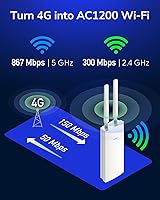
  • LTE Category: Supports 4G LTE Category 6 with a maximum theoretical download speed of 300 Mbps and upload speed of 50 Mbps.
  • Carrier Aggregation: 2-carrier aggregation (2x CA) combines two LTE bands simultaneously to improve throughput and connection stability.
  • MIMO Technology: 4x4 MIMO uses four cellular antennas to establish multiple simultaneous data streams, offering up to 200% more throughput than standard 2x2 configurations.
  • LTE Bands: Supports LTE-FDD bands B2, B4, B5, B7, B12, B13, B14, B25, B26, B29, B30, B66, and B71, plus LTE-TDD bands B41 and B48.
  • WiFi Standard: Dual-band AC1200 WiFi delivers up to 867 Mbps on the 5 GHz band and up to 300 Mbps on the 2.4 GHz band via 802.11ac.
  • Antennas: Includes two detachable 5dBi SMA 4G cellular antennas and two internal WiFi antennas; SMA ports accept third-party high-gain antennas.
  • Weatherproofing: IP65-rated enclosure is fully dust-tight and protected against water jets from any direction, suitable for permanent outdoor mounting.
  • Surge Protection: Built-in 6kV lightning and surge protection plus 8kV ESD protection guards against electrical damage in exposed outdoor deployments.
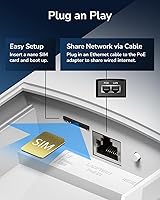
  • Power Input: Powered via 48V passive PoE; a PoE adapter is included in the box, allowing a single Ethernet cable to carry both data and power.
  • Operating Temperature: Standard operating range is -20°C to 60°C (-4°F to 140°F), extendable to -40°C to 70°C (-40°F to 158°F) with an industrial-grade SIM card.
  • VPN Protocols: Supports Zerotier, WireGuard, OpenVPN, IPSec, L2TP, and PPTP as both VPN server and client configurations.
  • Operating Modes: Can be configured as a 4G Router, WISP (with 4G backup), Access Point, Wi-Fi Extender, or primary Mesh node with other Cudy Mesh devices.
  • Ethernet Port: Equipped with one Gigabit Ethernet port for wired device connections or PoE power input.
  • Dimensions: Router body measures 9.5 x 3.9 x 2.1 inches; each detachable 4G antenna measures approximately 7.8 x 0.9 x 0.6 inches.
  • Weight: Complete unit weighs 1.17 lbs (approximately 530 grams) including the router body.
  • Mounting Options: Supports both pole mounting and wall mounting; necessary hardware is included in the package for standard installations.
  • DNS Security: Supports DNS over TLS with Cloudflare, Google, and Quad9 resolvers for encrypted DNS queries.
  • Cellular Features: Includes band lock, TTL settings, and cellular-to-WAN failover for advanced carrier management and redundancy configurations.
  • Package Contents: Box includes the router, two detachable antennas, a 1-meter Ethernet cable, the PoE adapter, and an installation guide.
  • Operating Humidity: Rated for 0% to 100% non-condensing operating humidity, covering the full range of outdoor environmental conditions.

Related Reviews
Cudy LT500 4G LTE Modem Router
76%
88%
Ease of Setup
82%
4G LTE Signal Performance
79%
WiFi Coverage & Speed
74%
VPN Functionality
71%
Carrier Compatibility
More
Cudy LT700E 4G LTE Modem Router
82%
88%
Performance
85%
Wi-Fi Speed & Range
90%
Ease of Setup
87%
Value for Money
80%
VPN Functionality
More
Cudy N300 WiFi Unlocked 4G LTE Modem Router LT400
84%
85%
Performance & Speed
91%
Ease of Setup
88%
VPN Functionality
78%
Range & Coverage
70%
Signal Reliability in Rural Areas
More
TUOSHI LT15F 4G LTE Modem Router
69%
83%
Setup & Ease of Use
71%
Carrier Compatibility
78%
Signal Reception & Antenna Performance
66%
LTE Speed & Performance
72%
Wi-Fi Coverage & Range
More
KuWFi QC300K-L 300Mbps Outdoor 4G LTE CPE WiFi Router
83%
89%
Ease of Setup
84%
Reliability of Connectivity
86%
Signal Range
91%
Weatherproof Performance
88%
Compatibility with Carriers
More
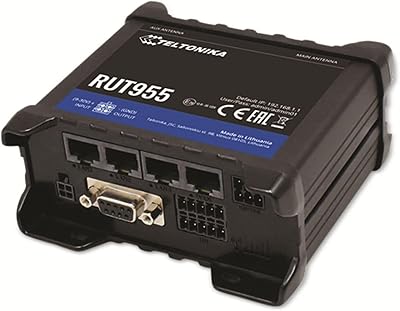
Teltonika RUT955 4G/LTE Router
85%
90%
Performance and Reliability
70%
Ease of Setup
88%
Connectivity Options
93%
Dual SIM Failover
85%
Software and Remote Management
More
NETGEAR 4G LTE Broadband Modem LB1120
82%
92%
Ease of Setup
89%
Connection Stability
84%
Carrier Compatibility
88%
Performance in Rural Areas
90%
Compact Design
More
Wiflyer WE826-T 4G LTE Router
84%
89%
Value for Money
83%
Performance (Signal Strength)
94%
Ease of Setup
86%
Build Quality
88%
Security Features (WPA2, MAC Filtering)
More
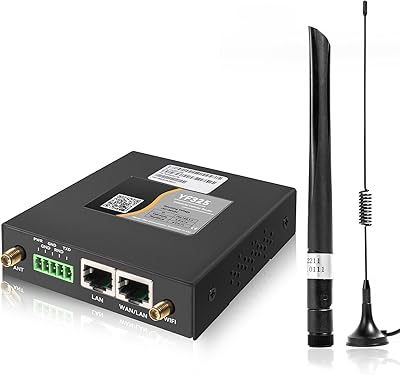
Yeacomm YF325 4G LTE Industrial Router
87%
95%
Network Reliability
93%
Dual SIM Failover Performance
90%
VPN Security
94%
Build Quality
87%
Ease of Setup
More
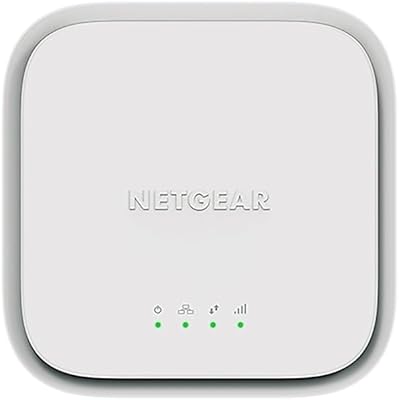
NETGEAR LM1200 4G LTE Broadband Modem
70%
83%
Ease of Setup
88%
Failover Reliability
71%
Carrier Compatibility
63%
Real-World Speeds
79%
Build Quality
More

FAQ

It works well with T-Mobile and AT&T — both carriers rely heavily on bands this router supports, including B12, B66, and B71 for T-Mobile and B14 and B30 for AT&T. Verizon compatibility is more limited since Verizon prioritizes bands B13 and B48, and only B48 appears in this router's TDD band list. Always cross-reference your specific carrier plan's bands against the supported list before buying.

For basic use — inserting a SIM and getting WiFi running — the setup is manageable with the included guide. Where things get more involved is configuring advanced features like band lock, VPN tunnels, or WISP mode, which assume some familiarity with networking concepts. Complete beginners may need to spend time with online forums or Cudy's documentation to get past the basics.

Yes, this is an unlocked device and accepts any standard nano SIM from compatible carriers. There is no carrier locking involved, so you bring your own data plan. Just verify that your carrier's LTE bands are on the supported list to avoid compatibility surprises after purchase.

In areas with marginal 4G coverage, the difference can be significant — users who switched to directional high-gain antennas have reported noticeably stronger and more stable signals. The detachable SMA connectors make the swap straightforward, and aftermarket options are widely available. In strong-signal urban or suburban areas, the stock antennas are usually sufficient.

The IP65 rating means it handles sustained rain, dust, and temperature swings reliably, and most buyers in cold or wet climates report no issues after extended outdoor use. The main concern raised in real-world reviews is long-term durability of the SMA antenna ports under repeated antenna changes, so if you are not planning to swap antennas regularly, that is less of an issue. For extremely hot climates with direct sun exposure, some users have noted occasional thermal reboots during peak summer heat.

The mesh functionality is specific to Cudy's own mesh ecosystem, so it will only act as a mesh node when paired with other compatible Cudy devices. If you have an existing mesh network from another brand, you can still use this outdoor LTE router as a standard access point or upstream router feeding that network, but the seamless mesh roaming features will not apply.

Passive PoE means power is delivered over the Ethernet cable at a fixed 48V without the handshake negotiation that active 802.3af or 802.3at PoE switches use. This means it will not work directly with most managed PoE switches — you need to use the included PoE adapter instead. Plugging it directly into an active PoE port without the adapter could damage the device or the switch.

That depends almost entirely on your carrier and how close you are to a tower. The hardware is capable of pulling strong speeds where signal is good, but in rural fringe areas the limiting factor is always the cellular signal, not the router itself. Treat the 300 Mbps theoretical maximum as a ceiling that only ideal conditions would approach, not as a planning baseline.

Yes, and it is genuinely well-equipped for that use case — supporting WireGuard, OpenVPN, and IPSec means you have solid, modern VPN options rather than just legacy protocols. WireGuard in particular runs efficiently on this hardware. The main caveat is that configuring a VPN server or persistent tunnel requires comfort with network settings, so it is better suited to technically confident users or IT professionals than casual home users.

It has happened to some users — a small but notable number of reviews mention needing to perform a factory reset after a firmware update to restore stable operation, particularly around VPN persistence and mode-switching. For remote deployments where you cannot easily access the device physically, it is worth reading the Cudy firmware release notes before applying any update and waiting a few days to see if other users report issues first.

Where to Buy