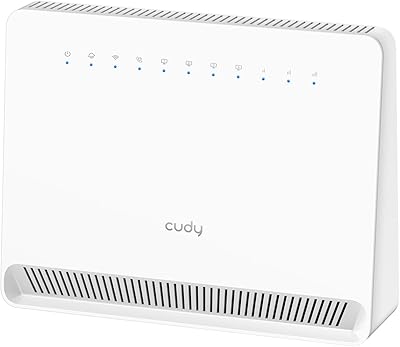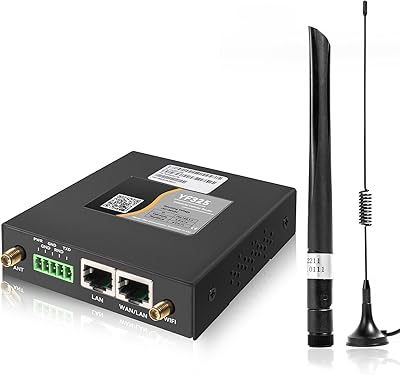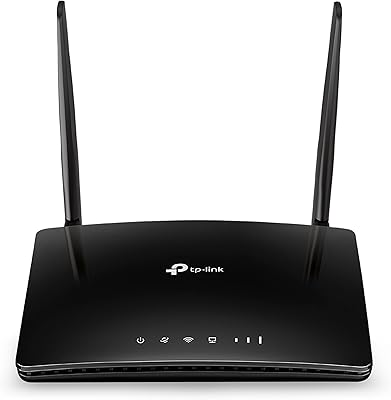


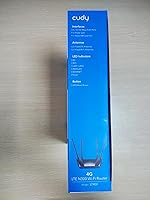
Overview

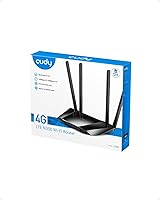
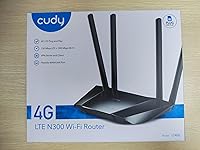
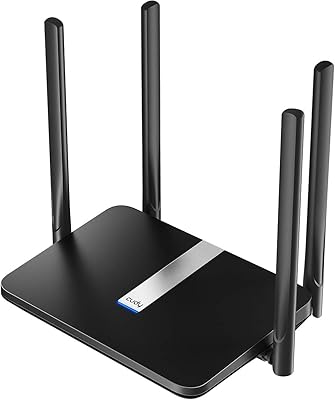
The Cudy LT400 4G LTE Modem Router is a no-frills solution for anyone stuck in a spot where cable internet simply isn't an option. Pop in a SIM card from AT&T or T-Mobile and you're online — that's about as simple as it gets. This LTE router runs on a single-band 2.4GHz network, topping out at 300Mbps over Wi-Fi and up to 150Mbps via LTE, which is honest, not spectacular. It's compact, ships with four external antennas, and is clearly built for people who need reliable connectivity in remote spots rather than a powerhouse home network setup. One important note: it only works with North and South American carriers.

Features & Benefits

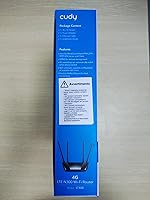
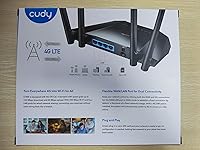
The four 5dBi high-gain antennas are probably the standout hardware detail here — they help pull in a usable LTE signal in areas where weaker routers would struggle, and extend Wi-Fi reach around a cabin or small property reasonably well. On the software side, this SIM-based router packs in more than you'd expect at this price tier. VPN client support covers PPTP, L2TP, OpenVPN, and WireGuard, giving remote users a solid privacy layer without needing a separate device. DNS encryption through Cloudflare or NextDNS is a thoughtful addition too. Throw in compatibility with over 20 DDNS providers and a clean web GUI, and setup rarely becomes a headache.

Best For

This LTE router really clicks into place for a specific kind of buyer. If you have a seasonal cabin or RV where running a cable line isn't practical, this is a strong contender — just drop in an AT&T or T-Mobile SIM and you've got usable internet. Remote camera operators will appreciate the DDNS support, which makes managing off-site security setups far less tedious. It's also well suited for privacy-focused users who want VPN encryption handled at the router level rather than per device. That said, if you're inside an apartment and stream heavily, the single-band limitation will be noticeable pretty quickly.

User Feedback

With over 5,400 ratings and a 4.1-star average, this SIM-based router has clearly earned some real-world trust. Most buyers highlight easy SIM setup and stable LTE connections as the biggest wins — people who just needed internet at a cabin or off-grid property and got exactly what they hoped for. The build quality also gets regular praise for the price point. Complaints, though, are consistent: the absence of a 5GHz band frustrates users who place laptops or streaming devices nearby, and a handful of buyers have run into firmware oddities after updates. A few international buyers have left negative reviews after discovering the North and South America SIM limitation too late.

Pros

  • SIM card setup is genuinely plug-and-play — most users are online within minutes of unboxing.
  • Four 5dBi antennas pull in a usable LTE signal in low-coverage areas where weaker routers fail.
  • Built-in WireGuard and OpenVPN client support is a rare and valuable feature at this price tier.
  • DNS encryption through Cloudflare or NextDNS adds a meaningful layer of privacy with no extra hardware.
  • DDNS support for 20-plus providers makes remote camera management practical and reliable.
  • The web-based management interface is clean enough that non-technical users can configure it without frustration.
  • Compact and lightweight at just 7.2 ounces, making it easy to pack for RV trips or cabin stays.
  • The Qualcomm EC25-AFX chipset delivers consistent LTE Cat4 performance without unexpected dropouts.
  • Over 5,400 real-world ratings with a 4.1-star average suggests it holds up well across varied conditions.
  • Solid build quality that feels durable relative to what you pay for it.

Cons

  • Single-band 2.4GHz only — no 5GHz option means congestion is a genuine issue with multiple nearby devices.
  • Real LTE speeds vary widely by location; do not expect anywhere near the theoretical maximum in rural areas.
  • Strictly limited to North and South American carriers — international SIM cards will not work.
  • Some users have reported firmware bugs emerging after updates, occasionally requiring a manual reset.
  • No USB port for attaching a backup modem or external storage, limiting flexibility for advanced setups.
  • 802.11n Wi-Fi standard is aging and noticeably slower than the 802.11ac or Wi-Fi 6 found on newer routers.
  • Customer support response times from Cudy have drawn criticism in some user reviews.
  • Carrier lock-in to AT&T and T-Mobile may be restrictive depending on coverage in your specific area.

Ratings

Our AI-generated scores for the Cudy LT400 4G LTE Modem Router were produced by analyzing thousands of verified global purchases, with spam, bot-generated, and incentivized reviews actively filtered out before scoring. The result is an honest, balanced picture that reflects both the genuine strengths buyers consistently praise and the recurring pain points that affect real-world satisfaction. Every category below is scored independently to help you make a confident, well-informed decision.

Ease of Setup
91%
Buyers across all technical skill levels consistently report being online within minutes of opening the box. Inserting the SIM, powering the unit on, and entering credentials through the web interface is straightforward enough that cabin owners and RV travelers with no networking background rarely hit a wall.
A small but vocal group of users found the initial APN configuration for certain carrier plans confusing, particularly with MVNOs running on the AT&T or T-Mobile network. The documentation could do more to address these edge cases upfront.
LTE Signal Reception
78%
22%
The four 5dBi external antennas make a genuine difference in marginal signal areas, and users in rural cabins frequently note that this SIM-based router pulls in a usable LTE connection where a phone hotspot would barely register. Positioning the antennas vertically and near a window tends to yield the best results.
Performance is still highly dependent on carrier tower proximity, and users in very remote locations report inconsistent throughput even with a good antenna position. The Cat4 ceiling also means that even in strong-signal areas, speeds plateau well below what modern Cat12 or Cat18 devices can achieve.
Wi-Fi Coverage & Speed
63%
37%
For a small cabin, a single-floor vacation property, or an RV, the 2.4GHz signal covers the space adequately. Users managing a handful of light-use devices — phones, a tablet, a security camera — generally find the wireless performance acceptable for their needs.
The single-band 2.4GHz radio is the most commonly flagged limitation in user reviews. Anyone placing a laptop or streaming device near the router immediately notices the congestion and lower throughput compared to a dual-band setup, and there is simply no 5GHz option to fall back on.
VPN Performance
83%
Having WireGuard, OpenVPN, PPTP, and L2TP baked directly into the router firmware is a feature that users genuinely appreciate, especially those managing remote properties where every connected device benefits from encrypted traffic without individual configuration. WireGuard in particular runs noticeably leaner than OpenVPN on this hardware.
Throughput does take a measurable hit when VPN is active, which matters most in already-marginal LTE signal conditions. Users running OpenVPN rather than WireGuard report more noticeable speed drops, so protocol choice matters here more than on higher-end hardware.
DDNS & Remote Access
86%
Support for more than 20 DDNS providers gives remote camera operators and property managers real flexibility. Users who access security cameras or smart home devices from hundreds of miles away consistently single this feature out as a key reason they chose the Cudy LT400 over simpler alternatives.
Setting up DDNS for the first time requires a bit of research if you have never done it before, and the in-router documentation is sparse. A handful of users also report that DDNS hostname updates occasionally lag after a carrier IP refresh, causing brief access interruptions.
DNS Encryption & Privacy
81%
19%
Built-in support for Cloudflare and NextDNS encrypted DNS is a genuinely thoughtful inclusion that privacy-conscious users highlight with enthusiasm. Enabling it takes only a few clicks in the web interface, and it protects every device on the network without any client-side configuration.
Users who prefer more granular DNS-over-HTTPS settings or custom resolver configurations may find the options a bit limited compared to open-source firmware alternatives. It covers the basics well but does not satisfy advanced users who want fine-grained control.
Build Quality
74%
26%
For the price tier, the physical construction holds up reasonably well. The chassis feels solid enough for a fixed installation at a cabin or in an RV bay, and the antennas attach and swivel without feeling flimsy. Most users who have had the unit running continuously for months report no physical degradation.
The plastic housing is clearly not premium, and buyers accustomed to enterprise or prosumer networking hardware will notice the difference immediately. A few users have also reported that the SIM card tray feels less precise than expected, requiring careful insertion to maintain a reliable connection.
Value for Money
79%
21%
When measured against its specific use case — off-grid or temporary internet access in North America — the Cudy LT400 offers a feature set that genuinely punches above its weight. VPN client support, DNS encryption, and DDNS at this price point represent strong overall value for the target buyer.
Buyers who push it into a primary home internet role or expect dual-band performance often feel the value proposition breaks down quickly. Compared to a slightly pricier dual-band LTE router, the single-band limitation can make the savings feel less meaningful for moderate to heavy users.
Carrier Compatibility
57%
43%
For buyers in the United States using AT&T or T-Mobile — including many popular MVNOs running on those networks — the compatibility is solid and well-validated by the large volume of verified purchases. It handles standard and eSIM-adjacent setups on supported carriers reliably.
The North and South America restriction is a hard wall, and it accounts for a disproportionate share of negative reviews from buyers who missed the fine print. Verizon band support is also limited depending on specific band requirements in a given area, which catches some domestic buyers off guard.
Web Interface Usability
72%
28%
The graphical web interface is functional and navigable without a manual for most common tasks. Casual users setting up basic Wi-Fi, checking signal status, or enabling WPS find it approachable, and the layout is cleaner than many budget routers in this category.
More advanced configuration — particularly around VPN profiles and DDNS settings — surfaces some UI inconsistencies that make the experience feel unpolished. A few users have also noted that the interface can be sluggish on older browsers or low-resource devices.
Firmware Stability
61%
39%
Under standard conditions with no recent firmware updates, the router runs stably for extended periods. Users who leave it on a known-good firmware version and avoid updating unless necessary tend to report a largely trouble-free experience over months of continuous use.
Post-update instability is one of the more consistent complaints in the review pool. Several users report needing a factory reset after a firmware push, and Cudy's communication around what each update changes is limited, making it hard to assess whether an update is worth the risk.
Portability
84%
At just 7.2 ounces and with a compact footprint, this LTE router is easy to pack into an RV storage bay, tuck into a gear bag, or move between properties. The four antennas fold back neatly enough that transport is not particularly awkward.
The antennas, while foldable, are fully external and add some bulk to what would otherwise be an even more packable device. There is also no battery, so you always need an AC outlet nearby, which limits truly mobile deployment scenarios.
Customer Support
54%
46%
Cudy does maintain an online support presence and community forum where some technical questions get addressed. Users who engage with the forum occasionally find helpful peer-sourced solutions to common configuration issues, particularly around VPN and DDNS setup.
Direct customer support response times draw consistent criticism, with multiple buyers reporting slow or unhelpful replies when dealing with firmware issues or compatibility questions. For a product targeting less technical users, the support infrastructure feels underdeveloped.

Suitable for:

The Cudy LT400 4G LTE Modem Router is a practical fit for anyone who needs internet access in a location where running a cable line simply isn't realistic. Seasonal cabin owners, RV travelers, and van lifers using AT&T or T-Mobile SIM plans will find the plug-and-play setup refreshingly straightforward — no technician, no installation appointment, no waiting. People managing remote security cameras or wildlife monitoring setups will particularly appreciate the built-in DDNS support, which makes accessing those devices from anywhere far easier than most routers at this price allow. If you also want VPN protection and DNS encryption handled at the router level rather than juggling settings on every individual device, this SIM-based router checks that box without requiring technical expertise. It's a well-rounded option for light to moderate internet use in off-grid or temporary locations.

Not suitable for:

Buyers expecting a full home broadband replacement should think carefully before committing to the Cudy LT400 4G LTE Modem Router. The single-band 2.4GHz radio is a real constraint — anyone who regularly streams 4K video, runs video calls, or connects multiple devices simultaneously will run into congestion and speed limitations that a dual-band or tri-band router would handle with ease. Real-world LTE speeds also depend heavily on your carrier signal at the actual location, so the advertised 150Mbps ceiling is rarely what you'll see in a rural hollow or deep in the woods. This LTE router is also strictly limited to North and South American carriers, meaning buyers in Europe, Asia, Africa, or the Middle East will find it completely incompatible with their SIM cards. If you're a power user, a gamer, or someone who needs consistently fast speeds for a full household, the hardware ceiling here will frustrate you quickly.

Specifications

  • Brand: Manufactured by Shenzhen Cudy Technology Co., Ltd. under the Cudy brand.
  • Model: The router carries the model designation LT400.
  • LTE Category: Supports LTE Cat4 with theoretical download speeds of up to 150Mbps and upload speeds up to 50Mbps.
  • Chipset: Powered by the Qualcomm EC25-AFX modem chipset, optimized for North and South American LTE band support.
  • Wi-Fi Standard: Uses the 802.11n standard operating on the 2.4GHz single-band frequency only.
  • Max Wi-Fi Speed: Wireless throughput reaches a maximum of 300Mbps under ideal conditions.
  • Antennas: Equipped with four detachable 5dBi high-gain external antennas for improved LTE reception and Wi-Fi coverage.
  • VPN Support: Built-in VPN client supports PPTP, L2TP, OpenVPN, and WireGuard protocols.
  • DNS Encryption: Supports encrypted DNS through Cloudflare, NextDNS, and Google DNS to protect against DNS-based attacks.
  • DDNS Support: Compatible with more than 20 DDNS service providers for remote device access management.
  • SIM Compatibility: Accepts standard SIM cards from AT&T and T-Mobile; designed exclusively for use in North and South America.
  • Network Bands: Operates on FDD LTE bands aligned with the frequency allocations used by major North American carriers.
  • Management: Configured and monitored through a web-based graphical user interface accessible via any connected browser.
  • Dimensions: Physical dimensions measure 9.06 x 5.75 x 8.27 inches including the antenna assembly.
  • Weight: The unit weighs 7.2 ounces, making it compact and easy to transport for mobile or temporary deployments.
  • Color: Available in black only.
  • Special Features: Includes QoS traffic prioritization and WPS one-touch wireless pairing for added network management flexibility.
  • Availability: First listed for sale on Amazon on April 25, 2021.

Related Reviews
Cudy LT700E 4G LTE Modem Router

72%
78%
LTE Connectivity
71%
Wi-Fi Performance
83%
Setup & Ease of Use
86%
VPN Functionality
81%
Value for Money
More
Cudy LT500 4G LTE Modem Router
76%
88%
Ease of Setup
82%
4G LTE Signal Performance
79%
WiFi Coverage & Speed
74%
VPN Functionality
71%
Carrier Compatibility
More
Cudy LT700 Outdoor 4G LTE Modem Router
78%
83%
Build Quality & Weatherproofing
76%
Cellular Signal Performance
81%
Antenna System & Upgradability
78%
Installation & Setup
71%
Carrier & Band Compatibility
More
TUOSHI LT15F 4G LTE Modem Router
69%
83%
Setup & Ease of Use
71%
Carrier Compatibility
78%
Signal Reception & Antenna Performance
66%
LTE Speed & Performance
72%
Wi-Fi Coverage & Range
More
Teltonika RUT955 4G/LTE Router
85%
90%
Performance and Reliability
70%
Ease of Setup
88%
Connectivity Options
93%
Dual SIM Failover
85%
Software and Remote Management
More
Wiflyer WE826-T 4G LTE Router
69%
83%
Build Quality
71%
LTE Connectivity
88%
TTL Feature
62%
Setup & Ease of Use
57%
Wi-Fi Performance
More
NETGEAR LM1200 4G LTE Broadband Modem
70%
83%
Ease of Setup
88%
Failover Reliability
71%
Carrier Compatibility
63%
Real-World Speeds
79%
Build Quality
More
Yeacomm YF325 Dual-SIM Industrial 4G LTE Router
74%
83%
Build Quality
87%
Connectivity Reliability
89%
Dual SIM Failover
58%
Setup & Configuration
47%
Web Management Interface
More
NETGEAR 4G LTE Broadband Modem LB1120
82%
92%
Ease of Setup
89%
Connection Stability
84%
Carrier Compatibility
88%
Performance in Rural Areas
90%
Compact Design
More
TP-Link TL-MR6400 4G LTE Router
82%
88%
Setup & Installation
91%
4G LTE Performance
83%
Wi-Fi Speed & Reliability
85%
Portability
82%
Bandwidth Management (QoS)
More

FAQ

The Cudy LT400 4G LTE Modem Router is designed specifically for North and South American LTE bands, so it works with AT&T and T-Mobile SIM cards out of the box. If you are outside those regions — for example in Europe, Asia, or Africa — this particular model will not be compatible with your local carrier frequencies. Cudy does sell region-specific variants, so make sure you are buying the right one for your location.

Setup is genuinely straightforward. You insert your SIM card, power the router on, connect to its Wi-Fi network, and enter any required PIN through the web interface. Most users are online within five to ten minutes. The web GUI is clean and approachable, so you do not need a networking background to get it working.

Yes, this is actually one of the best use cases for it. The router is compact, light, and runs on a standard SIM data plan, so as long as you have an AT&T or T-Mobile signal where you are camping or parked, you are good to go. Just keep in mind that actual speeds will depend entirely on the signal strength at your location.

For light to moderate use — occasional video calls, standard-definition streaming, or general browsing — the router handles things well enough. However, the single-band 2.4GHz radio does get congested with multiple simultaneous users, and real-world LTE speeds in rural areas are often well below the theoretical maximum. If you are expecting consistent 4K streaming for a full household, this SIM-based router will likely disappoint.

It genuinely supports WireGuard alongside PPTP, L2TP, and OpenVPN. WireGuard is the most modern and efficient of the four, so if you already use a WireGuard-based VPN service, you can point the router at it and protect every connected device at once without configuring VPN on each one individually.

That is exactly the kind of job this router was built for. The built-in support for over 20 DDNS providers means you can assign a consistent hostname to the router even when its public IP address changes, which is common on mobile data plans. Once configured, you can reach your cameras remotely without needing a static IP from your carrier.

No, this LTE router only operates on the 2.4GHz band. There is no 5GHz radio. If you need faster speeds for devices that are physically close to the router — like a laptop or a smart TV — the lack of a 5GHz band will be a noticeable limitation compared to dual-band routers.

That really depends on your carrier plan and the signal strength at your location. The hardware ceiling is 150Mbps download under LTE Cat4, but in practice, rural and remote areas often deliver anywhere from 10Mbps to 50Mbps. Do not plan around best-case numbers — test your carrier signal at the physical location before committing to this as your primary connection.

Yes, a portion of users in the review community have flagged occasional bugs appearing after firmware updates, sometimes requiring a factory reset to resolve. It is not a universal experience, but it is frequent enough to be worth noting. Checking the Cudy support forums before applying a new firmware update is a reasonable precaution.

The router itself is designed for indoor use, so it should not be exposed directly to the elements. That said, users in cabins, sheds, and seasonal properties consistently report that the build feels sturdy relative to the price point. For a fixed installation at a remote property, placing it near a window to catch signal and keeping it sheltered is the practical approach most buyers take.