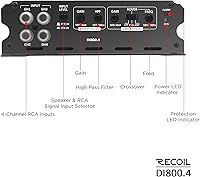
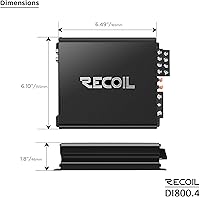
Overview

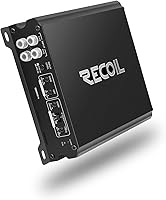
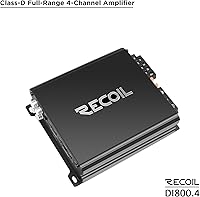
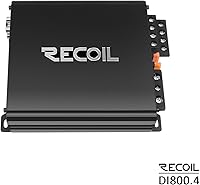
The Recoil DI800.4 4-Channel Car Amplifier enters a crowded market where the sub-$100 bracket is packed with questionable options — and it holds its own surprisingly well. Recoil is a newer name in car audio, not yet carrying the legacy of Alpine or Rockford Fosgate, but that's reflected honestly in the price. The compact 8″ x 6.1″ footprint makes tight trunk or under-seat installs genuinely feasible. Class-D efficiency means it runs cooler and draws less current than older AB designs, which matters for everyday street use. Think of it as a strong value-per-watt option — capable and practical, but not a statement piece for a dedicated build.

Features & Benefits

The MOSFET power supply is one of the DI800.4's more underappreciated advantages — it stabilizes output when your vehicle's electrical system fluctuates, which happens more than most people expect during hard bass hits. Four-way protection covers thermal shutdown, short circuits, overload, and DC offset, so the amp looks after itself without you babysitting it. The onboard controls — gain, low-pass filter, high-pass filter, crossover, and bass EQ — give real flexibility for tuning different speaker configurations. That's not common at this price point. It's also bridgeable to two channels, delivering 360 watts RMS into 4 ohms, which opens the door to running a subwoofer without adding a separate mono amplifier.

Best For

This Recoil amplifier is a natural fit for anyone doing a first real upgrade — think replacing factory door speakers on a compact sedan, hatchback, or small truck. The slim profile makes it easy to tuck under a seat or behind a panel without a major fabrication effort. Intermediate builders will appreciate the bridgeable option, since it eliminates the need for a dedicated mono block in modest systems. What it isn't suited for is high-output audiophile builds or competition installs where actual RMS headroom matters significantly. But for daily commuters wanting a genuine improvement over stock audio, it hits the brief well.

User Feedback

With over 200 reviews and a 4.5-star average, the DI800.4 earns consistent praise for clean output at everyday listening levels and a straightforward install process. Most buyers found the tuning controls usable rather than fiddly. On the flip side, a recurring frustration is the advertised 1500-watt figure — that's a peak number, and the real continuous output is considerably lower. A few buyers also noted that build quality feels budget-grade up close: the terminal plastic and knobs aren't going to impress anyone used to premium hardware. Since the product launched in early 2023, long-term durability data is still thin, so treat early reliability signals as encouraging but not yet conclusive.

Pros

  • Class-D design runs efficiently and cool, reducing strain on your vehicle's electrical system during long drives.
  • The slim, lightweight chassis makes it one of the easier amps to tuck into tight or unconventional install locations.
  • Onboard gain, crossover, LPF, HPF, and bass EQ controls handle most tuning needs without extra hardware.
  • Bridgeable configuration lets you run speakers and a subwoofer from a single unit, saving money and space.
  • MOSFET power supply helps maintain stable, consistent output even when the car's voltage fluctuates.
  • Four-way protection circuitry means the amp will shut itself down safely before damage occurs.
  • Over 200 real-world reviews back up a strong average rating, suggesting consistent performance across a wide range of installs.
  • 2 to 4 ohm stability gives flexibility when matching different aftermarket speaker brands and impedances.
  • Solid value per watt for a daily-driver upgrade coming from a factory head unit setup.

Cons

  • The advertised 1500-watt figure is peak-only; usable continuous RMS output is considerably more modest.
  • Plastics, terminal blocks, and control knobs feel budget-grade and do not inspire confidence on close inspection.
  • Recoil lacks the brand history and community support that established names like Alpine or Rockford Fosgate carry.
  • Long-term durability is still an open question — the product has only been on the market since early 2023.
  • Bridged output of 360 watts RMS at 4 ohms is modest and may underwhelm buyers expecting serious subwoofer performance.
  • No remote bass knob is included, which is a common expectation at this price point for amps with bass EQ controls.
  • Warranty and after-sales support from a newer brand like Recoil are harder to assess compared to established manufacturers.
  • At higher volumes, the gap between rated peak power and actual clean output becomes more noticeable, particularly on demanding speakers.

Ratings

Our AI rating system analyzed verified buyer reviews for the Recoil DI800.4 4-Channel Car Amplifier from global sources, actively filtering out incentivized, bot-generated, and low-quality feedback to surface what real owners actually experience. The scores below reflect both what this amp does well and where it falls short, so you can make a genuinely informed decision rather than a marketing-driven one.

Value for Money
88%
Buyers consistently flag this 4-channel amp as one of the better-performing options in its price tier, particularly for daily commuters who just want their aftermarket speakers to sound noticeably better than stock. The combination of onboard tuning controls and bridgeable design at this price point is genuinely hard to match.
The value perception takes a hit once buyers realize the advertised wattage is a peak figure. Shoppers expecting close to 1500 usable watts feel misled, and the honest RMS numbers — while respectable — are far less dramatic than the marketing implies.
Power Accuracy
51%
49%
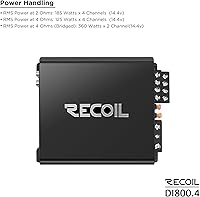
At 2-ohm loads, the 185 watts RMS per channel is a legitimate output for this class of amplifier, and buyers running efficient aftermarket coaxials in a compact car report satisfying volume levels without obvious distortion at moderate listening levels.
The gap between the 1500-watt headline and the real continuous output is a recurring frustration across reviews. Buyers who planned their system around the peak figure find themselves underpowered, and this disconnect is the single most common complaint tied to the DI800.4.
Build Quality
63%
37%
The overall chassis feels solid enough for a budget amp, and the heatsink construction is adequate for the power levels involved. Most buyers doing their first install reported no obvious defects out of the box, which matters when you are committing time to a full wiring job.
The terminal blocks, control knobs, and plastic endcaps all feel noticeably budget-grade on close inspection. Buyers upgrading from mid-tier brands like Rockford Fosgate or Alpine will find the tactile quality a step down, and a few users flagged looseness in the RCA input connections after extended use.
Thermal Management
79%
21%
Class-D efficiency means the DI800.4 generates significantly less waste heat than a comparable Class-AB design, and buyers mounting it under seats or in enclosed panels report it running comfortably warm rather than hot during typical commutes. The heatsink does its job at moderate output levels.
Push the amp harder in a poorly ventilated location — like a sealed trunk panel or a tightly packed under-seat area — and thermal protection trips more readily than some owners expected. Sustained high-volume use without airflow is a real limitation that a few reviewers discovered the hard way.
Ease of Installation
86%
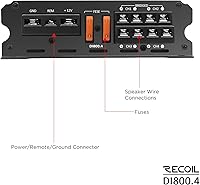
First-time installers specifically call out how approachable this amp is to wire up, with a clearly labeled control panel and a compact form factor that fits into locations where larger amps simply cannot go. Most buyers reported a clean install in a few hours without professional help.
The included documentation is minimal, and buyers without prior car audio experience may struggle to set gain and crossover points correctly without consulting external resources. There is no setup guide that walks through common configurations like bridged subwoofer wiring.
Tuning Flexibility
82%
18%
Having independent gain, LPF, HPF, crossover, and bass EQ controls onboard is a genuine advantage over stripped-down competitors in this price range. Buyers running component front speakers alongside a small subwoofer appreciate being able to tailor the crossover points without adding an external processor.
The controls themselves are small and close together on the endplate, which makes fine adjustments fiddly once the amp is mounted in a tight location. A few buyers also noted that the bass EQ knob has a coarse adjustment throw, making precise tuning harder than it should be.
Bridgeability
77%
23%
The ability to bridge down to two channels and push 360 watts RMS into a 4-ohm subwoofer is a practical feature that saves buyers the cost of a dedicated mono block for modest bass setups. Daily drivers running a single 10-inch or 12-inch sub report adequate output for their needs.
360 watts RMS bridged is on the lower end for subwoofer duty, and buyers with bass-heavy music preferences or larger subwoofers will likely find the output underwhelming at higher volumes. It is best treated as a convenience feature rather than a dedicated sub solution.
Signal Clarity
74%
26%
At moderate volumes, buyers describe the audio output as clean and well-defined, with a notable improvement over factory amplification when paired with quality aftermarket coaxials. The MOSFET power supply helps maintain consistent output without the voltage sag that creates audible distortion.
At higher gain settings or when driven close to its rated limits, some buyers report a slight harshness in the upper mids that suggests the amp is being pushed beyond its clean operating range. This Recoil amplifier is best kept at 70 to 80 percent of its usable output ceiling for optimal clarity.
Noise Floor
69%
31%
Buyers using aftermarket head units with clean RCA outputs report a quiet noise floor, with no audible hiss at idle. Proper grounding and cable routing — which the amp's compact size makes easier — results in a clean signal in most straightforward installs.
When paired with factory head units via a line output converter, some buyers report a faint alternator whine or background hiss that requires careful ground loop troubleshooting. The amp is not uniquely problematic here, but it is also not especially forgiving of sloppy signal chain setups.
Compact Footprint
91%
At just 8″ x 6.1″ x 1.8″ and under 3.5 pounds, this is one of the more install-friendly amps in its output class. Buyers in compact sedans and small SUVs consistently mention fitting it under a front or rear seat without any fabrication work.
The slim profile is a genuine advantage, but the short depth does mean the terminal and control access panel is tightly packed. Running larger-gauge power wire in a confined space can be awkward, and a few buyers noted that the 8-gauge terminal openings feel snug with quality copper wire.
Protection Circuitry
83%
The 4-way protection system covering thermal, short circuit, overload, and DC offset conditions gives buyers — especially beginners — a meaningful safety net against common wiring mistakes. Several reviewers reported the amp recovering cleanly after a brief short during installation without sustaining damage.
The protection system can be slightly over-sensitive in some installs, triggering shutdowns at volume levels that should be within the amp's comfortable range. A handful of buyers reported needing to recheck impedance loads and gain settings after unexpected protection trips during normal use.
Brand Reliability
61%
39%
Early user feedback since the 2023 launch is broadly positive, with most buyers reporting consistent unit-to-unit quality and no widespread reports of premature failure in the first year of ownership. That is an encouraging sign for a new entrant in a crowded category.
Recoil simply does not have the multi-year reliability track record that established brands carry, and the lack of a strong warranty support community makes post-purchase issues harder to resolve. Buyers who prioritize long-term peace of mind should factor in the brand's limited history before committing.
Impedance Stability
84%
Stable operation at both 2 and 4 ohms gives buyers flexibility when mixing speaker brands and models in the same build. Buyers running mismatched aftermarket speaker sets report consistent behavior without the instability issues that affect cheaper amps at lower impedance loads.
The amp is not rated below 2 ohms, which limits compatibility with some dual-voice-coil subwoofer configurations wired in parallel. Buyers planning complex subwoofer wiring scenarios need to confirm their final impedance load stays within the rated range.
Packaging & Accessories
57%
43%
The unit arrives well-protected and undamaged in the vast majority of orders, with buyers rarely reporting transit damage. The box includes the basic hardware needed to get started, which is appropriate given the price tier.
There is no wiring kit, remote bass knob, or meaningful installation guide included. Buyers new to car audio will need to budget separately for a wiring kit and may find the bare-bones accessory set frustrating compared to brands that bundle installation essentials at comparable price points.

Suitable for:

The Recoil DI800.4 4-Channel Car Amplifier is a strong pick for everyday drivers who are done tolerating flat, lifeless factory audio and want a meaningful upgrade without spending a fortune. It fits naturally into compact sedans, hatchbacks, and small trucks where physical space under a seat or behind a panel is limited, since the slim chassis genuinely makes tight installs achievable. Beginners who have never wired an amplifier before will appreciate the straightforward layout and the onboard controls that handle most tuning tasks without external processors. Intermediate builders who want to power front and rear full-range speakers while leaving the bridged channels open for a modest subwoofer will find this 4-channel amp punches above its price class for that kind of flexible, all-in-one setup. If your goal is a noticeably better daily commute — more defined mids, cleaner highs, and a bit of low-end punch — this Recoil delivers that without requiring a complex or expensive system build.

Not suitable for:

The Recoil DI800.4 4-Channel Car Amplifier is not the right tool for anyone chasing serious output levels or building a competition-grade or audiophile system. The honest RMS figures — 125 watts per channel at 4 ohms — are respectable for the price tier but fall well short of what high-sensitivity component speakers or demanding subwoofers require at louder, sustained volumes. Power-hungry builds pairing multiple subs with high-wattage component sets will push this amp past its comfortable operating range quickly. Buyers who put a premium on build quality and tactile fit-and-finish will likely be disappointed by the budget-grade plastics and terminals that come with the territory at this price. And if you need long-term reliability data before committing — perhaps for a vehicle you depend on daily in extreme climates — this Recoil amplifier is simply too new to the market to offer that kind of proven track record yet.

Specifications

  • Model Number: The amplifier carries the official model designation DI800.4.
  • Configuration: This is a 4-channel amplifier built on a Class-D topology for high operating efficiency.
  • Max Power: Total peak power output is rated at 1500 watts across all four channels combined.
  • RMS at 2 Ohm: Each channel delivers 185 watts RMS when driving a 2-ohm load.
  • RMS at 4 Ohm: Each channel delivers 125 watts RMS when driving a 4-ohm load.
  • Bridged RMS: When bridged to two channels, the amplifier outputs 360 watts RMS per channel into a 4-ohm load.
  • Peak per Channel: Peak output reaches 370 watts per channel at 2 ohms under burst conditions.
  • Impedance: The amplifier is stable at both 2-ohm and 4-ohm loads across all channels.
  • Power Supply: An internal MOSFET power supply regulates voltage delivery for stable output under varying electrical conditions.
  • Protection: Four-way protection circuitry guards against thermal overload, short circuits, overload conditions, and DC offset faults.
  • Onboard Controls: User-adjustable controls include gain, low-pass filter, high-pass filter, crossover selector, and bass EQ.
  • Bridgeable: All four channels can be bridged down to two channels for dedicated subwoofer or high-power two-speaker applications.
  • Dimensions: The amplifier body measures 8″ x 6.1″ x 1.8″ (203mm x 155mm x 46mm).
  • Weight: The unit weighs 3.42 pounds, making it easy to handle and mount in confined spaces.
  • Cooling: An integrated heatsink runs along the chassis exterior to passively dissipate heat during extended use.
  • Mounting Type: Designed exclusively for car-mount installation in standard automotive environments.
  • Brand: Manufactured and marketed by Recoil, a brand that entered the car audio market in 2023.
  • Availability Date: The DI800.4 was first made available for purchase in March 2023.

Related Reviews
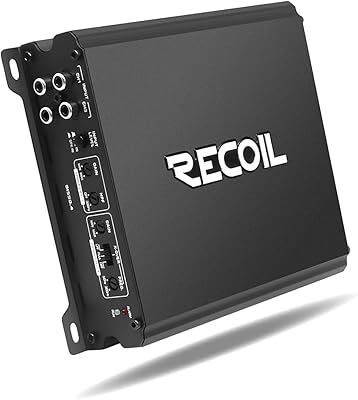
Recoil DI550.4 4-Channel Car Audio Amplifier
74%
91%
Value for Money
78%
Power Output
86%
Ease of Installation
74%
Sound Quality
67%
Build Quality
More
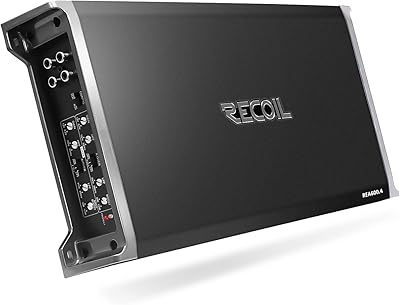
Recoil REA600.4 4-Channel Car Audio Amplifier
84%
89%
Audio Performance
91%
Ease of Installation
85%
Sound Quality at High Volumes
62%
Heat Management
90%
Power Output
More
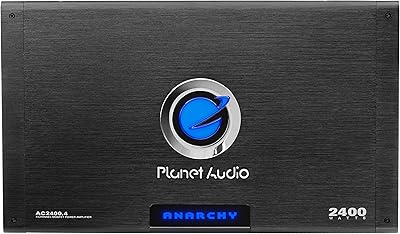
Planet Audio AC2400.4 4-Channel Car Amplifier
84%
95%
Power Output
89%
Sound Clarity
87%
Bass Performance
82%
Ease of Installation
65%
Thermals/Heat Management
More
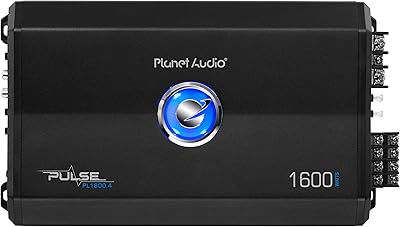
Planet Audio PL1600.4 4-Channel Car Amplifier
72%
88%
Value for Money
84%
Ease of Installation
74%
Sound Quality
58%
Power Output (Real-World)
61%
Build Quality
More
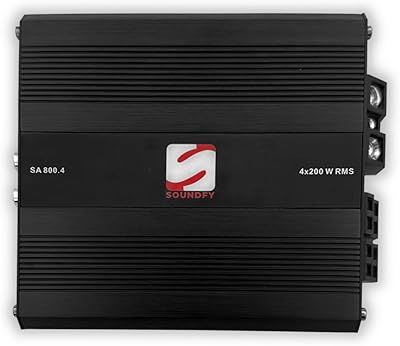
Soundfy SA 400.4 4-Channel Car Amplifier
71%
78%
Value for Money
72%
Sound Quality
63%
Power Output
58%
Build Quality
81%
Thermal Management
More
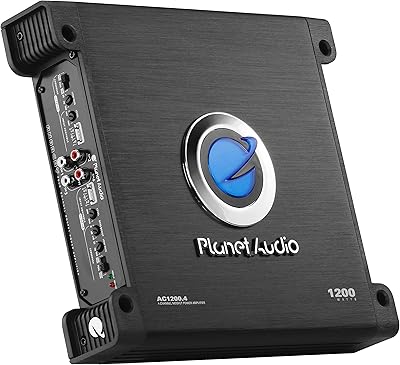
Planet Audio AC1200.4 4-Channel Car Amplifier
73%
88%
Value for Money
67%
Power Output
83%
Installation Ease
74%
Sound Quality
61%
Build Quality
More
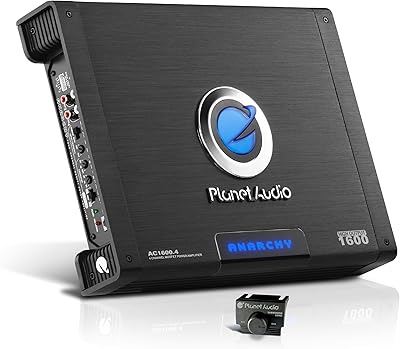
Planet Audio AC1600.4 Anarchy Series 4-Channel Car Amplifier
82%
94%
Power Output
88%
Sound Quality
70%
Ease of Installation
92%
Value for Money
85%
Build Quality
More
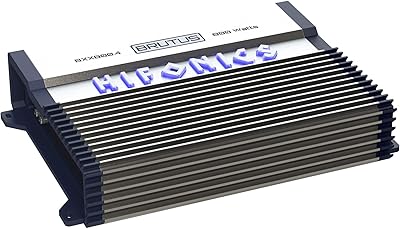
Hifonics BXX800.4 Brutus 800W RMS 4-Channel Car Audio Amplifier
86%
88%
Sound Quality
92%
Power Output
85%
Build Quality
72%
Heat Management
89%
Ease of Installation
More
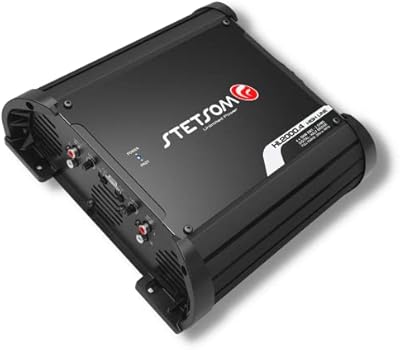
Stetsom HL 2000.4 2-Ohm 4-Channel Car Audio Amplifier
87%
93%
Power Output
85%
Cooling System Efficiency
88%
Sound Quality
91%
Ease of Installation
82%
Durability
More
Blaupunkt AMP1904D 4-Channel Car Amplifier
70%
81%
Value for Money
47%
Power Output Accuracy
74%
Sound Clarity
83%
Ease of Installation
61%
Thermal Management
More

FAQ

The 1500-watt figure is a peak or maximum rating, not a continuous one. The honest continuous RMS output is 125 watts per channel at 4 ohms, or 185 watts per channel at 2 ohms. Those are the numbers that matter for real-world speaker matching — plan your build around the RMS figures, not the peak number.

Yes, and this is one of the more practical reasons to consider the DI800.4. You can run two channels in full-range mode for your front or rear speakers, then bridge the remaining two channels together to push 360 watts RMS into a 4-ohm subwoofer. It won't shake the ground, but it's a solid everyday setup without buying a separate mono block.

It works with factory head units, though you may need a line output converter (LOC) if your factory radio doesn't have dedicated pre-amp RCA outputs. Many budget installs use exactly this approach — LOC into the amp — and it works well. Just keep the gain set conservatively to minimize noise from the factory signal.

The compact dimensions of 8″ x 6.1″ x 1.8″ make under-seat installs genuinely realistic in most compact and mid-size vehicles. Measure your available clearance first, particularly height, since the heatsink adds a little to the overall profile. Most sedan and hatchback seats offer enough room, but it's worth checking before you commit to wiring.

For an amp in this power class, 8-gauge wiring is typically sufficient and is what most budget wiring kits are spec'd for. If you plan to bridge channels and run the amp harder, or if your power wire run from the battery is longer than roughly 15 feet, bumping to 4-gauge is a safe choice that reduces resistance and voltage drop.

No, a remote bass knob is not included in the box. The bass EQ is adjustable directly on the amplifier chassis, which works fine for initial setup but is less convenient if the amp is mounted out of easy reach. Some buyers add an aftermarket remote knob, though you would need to verify compatibility before purchasing one separately.

Class-D amplifiers are inherently more efficient than Class-AB designs, so the DI800.4 runs noticeably cooler under typical listening conditions. The onboard heatsink handles passive cooling adequately during daily commutes and moderate-volume driving. If you mount it in a sealed enclosure or push it hard for extended periods without airflow, you may trigger the thermal protection — so ensure reasonable ventilation around the unit.

It's actually one of the more beginner-friendly options in its price range. The controls are laid out clearly on the end panel, the gain and crossover adjustments are intuitive enough for first-timers, and the 4-way protection circuitry gives you a safety net against common wiring mistakes like shorts. A basic wiring kit, a LOC if needed, and a few hours of time is genuinely all most people require.

Established brands carry more proven reliability history and generally better after-sales support networks. That said, the DI800.4 holds up well in direct performance comparisons at the same price tier — the power output, feature set, and cooling are competitive. The trade-off is that Recoil is a newer brand, so long-term durability data is still limited. If brand confidence matters to you, an established name might be worth a small premium.

Any 4-ohm aftermarket coaxial or component speakers with an RMS power handling between 50 and 150 watts per channel will pair well with this 4-channel amp. Popular options in the 6.5-inch coaxial category from brands like Polk Audio, Pioneer, or JVC sit right in that range. Avoid pairing it with high-sensitivity competition speakers that need significant headroom — match the speaker's RMS rating to the amp's RMS output, not the peak figures.