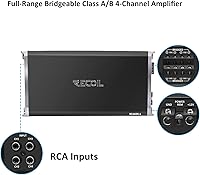
Overview

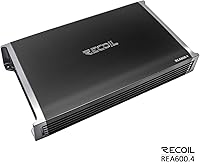
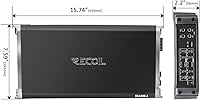
The Recoil REA600.4 4-Channel Car Amplifier sits in a sweet spot for drivers who want a real upgrade from a stock system without committing to a high-end build budget. Unlike Class D designs, which prioritize efficiency above all else, the Class A/B topology here delivers a warmer, more linear sound that many listeners prefer for full-range speaker duty. The MOSFET power supply keeps output stable under load — something cheaper amps with basic power stages often struggle with. At roughly 15.7 inches long and just over 2 inches tall, it tucks neatly into a trunk corner or under a rear seat without demanding a custom enclosure. This is a solid value amp, not a reference-grade unit.

Features & Benefits

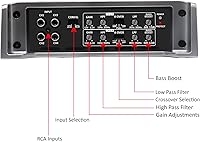
Most amp listings lead with peak wattage — a number that rarely reflects real-world performance. What matters is RMS output: this 4-channel amp delivers 130 watts per channel at 2 ohms, which is genuinely usable power for quality aftermarket speakers. The bridgeable design lets you collapse it to two channels, handy if you want to run a subwoofer without buying a second amp. On the tuning side, you get onboard gain, high-pass and low-pass filters, a crossover, and a bass EQ control — all accessible directly on the unit. For first-time installers, that means dialing in your sound without expensive outboard processors. The 4-way protection circuitry guards against thermal overload, short circuits, overload, and DC offset failures.

Best For

This Recoil amplifier makes the most sense for someone stepping up from a factory head unit to a proper 4-speaker aftermarket setup for the first time. If your plan is front and rear component pairs — or even a set of coaxials — this 4-channel amp covers you cleanly without forcing a separate processor purchase. The slim, surface-mount chassis is practical for installers working around spare tires or limited trunk real estate. It also suits anyone running a dedicated mono amp for a sub, since the REA600.4 handles full-range speaker duty independently while keeping the sub on its own channel. For entry-level builds, the value-per-watt ratio is genuinely hard to argue with at this price point.

User Feedback

Among nearly 100 verified buyers, the REA600.4 holds a 4.2 out of 5 rating — respectable for this price range. Positive reviews consistently highlight clean output at moderate volumes and praise how straightforward the wiring and initial setup are. On the critical side, a recurring complaint worth taking seriously is heat buildup during long high-volume sessions; the passive heatsink does its job, but sustained loud listening in a hot car can push temps noticeably. Some users also note the gain control is sensitive, requiring careful adjustment to minimize noise on the RCA inputs. Compared to similarly priced rivals, buyers generally rate this Recoil amplifier favorably on build quality and overall reliability.

Pros

  • Genuine RMS output of 130 watts per channel at 2 ohms gives real, usable power for aftermarket speakers.
  • Class A/B design produces a warmer, more natural sound than many Class D alternatives at this price.
  • MOSFET power supply keeps voltage delivery stable even when the system is working hard.
  • Onboard gain, LPF, HPF, crossover, and bass EQ controls remove the need for a separate processor.
  • Bridgeable to two channels, giving you flexibility if your build evolves to include a dedicated subwoofer amp.
  • Slim 2.2-inch profile fits into tight trunk corners or under seats where space is limited.
  • 4-way protection circuitry provides real safeguards against thermal, short-circuit, overload, and DC offset failures.
  • Buyers consistently rate installation as straightforward, with clear labeling and sensible wiring layout.
  • 2-3 ohm stability gives you some flexibility in speaker matching without risking amp damage.
  • Solid build quality relative to price — the unit feels more substantial than its cost suggests.

Cons

  • Passive heatsink struggles during extended high-volume sessions, with multiple buyers reporting noticeable heat buildup.
  • Gain control is sensitive and requires careful calibration — small adjustments can introduce audible noise.
  • RCA input noise floor is not class-leading; picky listeners or revealing speakers may notice background hiss.
  • Peak wattage marketing overstates real-world performance — buyers must look past the headline number.
  • No built-in fan means thermal management depends entirely on airflow around the mounting location.
  • Not well-suited to 4-ohm speaker systems where RMS output drops to 95 watts per channel.
  • Brand recognition is limited compared to established names, making resale value and long-term support uncertain.
  • No remote bass control included in the package, which is a common expectation in this category.
  • The unit's weight of nearly 8 pounds requires secure, reinforced mounting to prevent vibration-related issues.
  • Customer review volume is relatively low, making it harder to assess long-term durability with confidence.

Ratings

Our AI-generated scores for the Recoil REA600.4 4-Channel Car Amplifier were produced by systematically analyzing verified global buyer reviews, filtering out incentivized, bot-generated, and outlier feedback to surface what real drivers actually experience. Each category below reflects both the genuine strengths users praise and the recurring frustrations they report, with no glossing over the trade-offs. The result is a transparent, balanced scorecard that gives you an honest picture of where this amp earns its keep — and where it asks for compromise.

Value for Money
88%
For buyers stepping up from a stock system on a tight budget, the REA600.4 consistently earns praise for delivering real, audible improvement per dollar spent. Drivers upgrading a sedan or hatchback with four aftermarket speakers repeatedly note that the output feels punchy and substantial compared to what they expected at this price tier.
A handful of buyers who compared it directly to slightly pricier rivals felt the gap in noise floor and thermal management was noticeable enough to question the savings. If you are planning a long-term build, the value calculus can shift once you factor in potential heat-related limitations down the road.
Sound Quality
76%
24%
At moderate listening volumes, users consistently describe the output as clean and controlled, with a warmth that Class A/B topology typically provides over budget Class D alternatives. For everyday commuting music — pop, hip-hop, rock — the amp handles dynamic range without obvious coloration or harshness.
Push the system harder and the sound starts to show its limits; some buyers notice compression and a slight edge to the high frequencies at near-maximum volumes. Audiophiles or anyone running high-resolution audio through revealing speakers will likely find the noise floor and overall fidelity underwhelming for critical listening.
Build Quality
79%
21%
The chassis feels more substantial than its price category typically delivers — the heatsink fins are solid, the terminals accept wire cleanly, and nothing feels flimsy when handling the unit during installation. Multiple reviewers noted the amp looks and feels more premium than expected when unboxed.
Longer-term durability remains a question mark given the limited review pool, and a few buyers flagged cosmetic finish inconsistencies on the unit they received. The overall construction is adequate rather than exceptional, which is fair for the price but worth acknowledging if longevity is a priority.
Thermal Performance
58%
42%
Under normal daily driving conditions — moderate volumes, reasonable ambient temperatures — the passive heatsink manages heat without issue, and the amp runs reliably during typical commutes or errands. The 4-way protection circuitry does appear to do its job, with few reports of unexpected shutdowns under standard use.
Sustained high-volume listening in warm climates is where the thermal design shows clear weakness; multiple buyers flagged noticeable heat buildup during long summer drives with the system cranked. The absence of any active cooling means mounting location and airflow are critical decisions the installer must get right.
Ease of Installation
83%
First-time installers consistently praise the straightforward wiring layout and clearly labeled terminals, with several noting they completed the install in a single afternoon without professional help. The slim profile also reduces the usual headaches around finding a clean mounting spot in a compact trunk.
The gain control sensitivity is a recurring stumbling block for beginners — it requires patience and careful adjustment to avoid introducing noise or running the amp into clipping. Without a proper setup guide included in the box, new users are largely left to YouTube tutorials to dial things in correctly.
Power Output Accuracy
71%
29%
The actual RMS output at 2 ohms holds up reasonably well against the rated spec, and buyers who wired appropriate speakers report the amp driving them with authority at realistic listening levels. For a 4-channel amp at this price, the real-world power delivery is competitive rather than embarrassing.
The 1040W max power headline creates inflated expectations that the amp cannot meet under normal conditions — a frustration several buyers voiced after setup. The distinction between max and RMS wattage is not clearly communicated in the product materials, which leads to disappointment among buyers who take the peak figure at face value.
Tuning Flexibility
81%
19%
Having gain, LPF, HPF, variable crossover, and bass EQ all onboard removes the need for a separate signal processor in most entry-level builds, which buyers genuinely appreciate. The ability to high-pass front speakers and adjust bass response directly on the chassis makes system tuning accessible without extra equipment.
The controls themselves are small and closely spaced, making precise adjustments difficult without a flat-head screwdriver, especially in tight mounting locations. There is no remote bass control included, which means adjusting bass on the fly from the driver seat requires either reaching into the trunk or purchasing a separate accessory.
RCA Input Quality
62%
38%
For buyers using a modern aftermarket head unit with decent preamp output voltage, the RCA inputs perform adequately and introduce no obvious noise under normal gain settings. Keeping the gain conservatively set goes a long way toward a quiet background signal in most installs.
Several users running high-sensitivity speakers or pairing the amp with lower-output head units reported an audible hiss at idle, pointing to a noise floor that is not class-leading. Routing RCA cables away from power wires helps, but some baseline noise appears to be inherent to the input stage rather than purely an installation issue.
Bridged Mode Performance
73%
27%
Bridging to two channels works as advertised and delivers a meaningful power increase for users routing the amp to a subwoofer alongside a separate front stage setup. The 260W RMS bridged output at 4 ohms is a genuinely useful figure for a single 10-inch or 12-inch sub in a modest enclosure.
Running bridged mode does increase thermal load, compounding the existing heat management concerns during extended sessions. Users trying to bridge into a 2-ohm subwoofer load will also find the amp is not rated for that configuration, which limits compatibility with some popular sub-and-box combinations.
Fit and Dimensions
84%
The 2.2-inch height is genuinely slim by 4-channel amp standards, and buyers working with shallow trunk floors or under-seat spaces repeatedly called out the compact profile as a practical advantage during their builds. The length is manageable for most trunks without requiring custom fabrication.
At just under 8 pounds, the unit needs secure, reinforced mounting — vibration can work screws loose over time if the surface is not rigid. A small number of buyers in larger vehicles found the footprint wider than expected when trying to fit it alongside existing components.
Protection Circuitry
82%
18%
The 4-way protection system covering thermal, short-circuit, overload, and DC offset appears to function reliably, with very few buyers reporting speaker damage or catastrophic failures even when the amp was stressed. This kind of multi-layer protection is reassuring in a budget unit where component tolerances are tighter.
Some users noted the thermal protection triggers at volume levels that feel conservative — the amp goes into protection mode before it reaches genuinely punishing conditions, which can be frustrating mid-listening session. It is a safe design choice, but it does underscore the real-world ceiling of the thermal management system.
Brand Reliability
64%
36%
Within the review sample, most buyers reported the amp functioning without defect through the first several months of use, and there are no widespread reports of early failure or DOA units that would indicate a systemic quality control problem.
Recoil is not a well-established name in car audio, and the limited review volume makes long-term reliability difficult to assess with confidence. Buyers who prioritize brand support, warranty responsiveness, or established resale value will find the calculus uncomfortable compared to more tenured competitors.
Package Contents
55%
45%
The amp itself arrives well-packaged and undamaged in the reports reviewed, and the basic hardware needed to mount the unit is included. For buyers who already have a wiring kit and RCA cables on hand, the box contents are sufficient to get started.
No wiring kit, no remote bass knob, and no meaningful installation guide are included — three omissions that sting for first-time buyers who may not realize what they still need to purchase. At this price point, a basic wiring kit would meaningfully improve the out-of-box experience and reduce setup friction.

Suitable for:

The Recoil REA600.4 4-Channel Car Amplifier is a strong fit for drivers making their first real step into aftermarket car audio — specifically those replacing a weak factory system with four full-range speakers and wanting clean, dependable power without a complicated setup. If your plan is to run component speakers up front and coaxials in the rear, or to dedicate all four channels to a complete speaker overhaul, this amp delivers usable RMS power at a price point that leaves room in the budget for quality speakers. It also suits enthusiasts who want onboard tuning flexibility — the adjustable gain, high-pass and low-pass filters, and bass EQ mean you can dial things in directly on the unit rather than depending entirely on your head unit. Installers dealing with limited trunk space will appreciate the slim, low-profile chassis, which fits comfortably in spots where bulkier amps simply won't go. The bridgeable design adds future flexibility too, letting you consolidate to two channels if you later add a dedicated mono amplifier for a subwoofer.

Not suitable for:

The Recoil REA600.4 4-Channel Car Amplifier is not the right choice for serious or advanced car audio builders chasing reference-quality sound or pushing high-efficiency speaker systems to their limits. Audiophiles who expect studio-grade noise floors, ultra-low distortion figures, or premium internal components will be disappointed — this is a value-oriented unit, and the engineering reflects that. Buyers who run their system loud for extended periods, particularly in hot climates, should be cautious: multiple users have flagged heat buildup as a real concern at sustained high volume, and the passive heatsink has limits. If you are planning a high-power mono subwoofer setup that demands a single large amp, this four-channel format is simply not the right tool for that job. Anyone sensitive to RCA input noise or with a particularly revealing speaker setup may also find the signal-to-noise performance underwhelming compared to mid-tier dedicated amplifiers from more established audio brands.

Specifications

  • Amplifier Class: Class A/B topology, which balances sound quality and efficiency by operating in Class A at low power and transitioning to Class B under higher demand.
  • Channels: 4 full-range channels, each capable of driving a speaker independently or bridged in pairs for higher output to a single load.
  • Max Power: 1040 watts total maximum power across all four channels under ideal, non-continuous conditions.
  • RMS at 2 Ohm: 130 watts RMS per channel at 2 ohms, representing the continuous, real-world power output buyers should use for speaker matching.
  • RMS at 4 Ohm: 95 watts RMS per channel at 4 ohms, which applies to most standard aftermarket speaker configurations.
  • Bridged RMS: 260 watts RMS per bridged channel pair at 4 ohms, enabling higher power delivery to a subwoofer or single high-demand speaker.
  • Power Supply: High-speed MOSFET power supply for stable voltage regulation and efficient power conversion under varying load conditions.
  • Impedance Stability: Stable operation at 2 to 3 ohms per channel, providing flexibility when pairing with lower-impedance speaker sets.
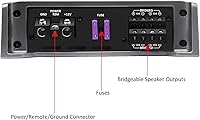
  • Protection Circuitry: 4-way protection covering thermal overload, short-circuit faults, signal overload, and DC offset to safeguard both the amplifier and connected speakers.
  • Onboard Controls: User-adjustable gain, low-pass filter (LPF), high-pass filter (HPF), variable crossover, and bass EQ are all accessible directly on the amp chassis.
  • Cooling System: Passive finned aluminum heatsink dissipates heat generated during operation without requiring a fan or active cooling mechanism.
  • Dimensions: The unit measures 15.7″ x 7.6″ x 2.2″ (400mm x 193mm x 56mm), offering a slim profile suitable for tight mounting locations.
  • Weight: The amplifier weighs 7.98 lbs (approximately 3.6 kg), which requires secure mounting to prevent vibration movement during driving.
  • Operating Voltage: Designed to operate at 14 volts DC, consistent with a standard vehicle electrical system under normal alternator charging conditions.
  • Mounting Type: Surface mount compatible, allowing installation on flat trunk floors, enclosure panels, or firewall surfaces without requiring a specialized bracket.
  • Bridgeable: The four channels can be bridged into two stereo pairs, effectively doubling per-channel output for high-demand applications like subwoofer driving.
  • Model Number: Factory model designation is REA600.4, used for warranty claims, compatibility lookups, and replacement part identification.
  • Manufacturer: Built and distributed by Recoil, a car audio brand focused on value-oriented amplifiers and audio components for the aftermarket vehicle segment.

Related Reviews
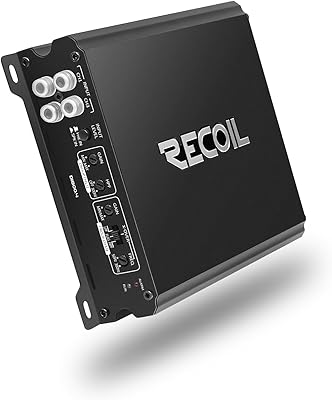
Recoil DI550.4 4-Channel Car Audio Amplifier
74%
91%
Value for Money
78%
Power Output
86%
Ease of Installation
74%
Sound Quality
67%
Build Quality
More
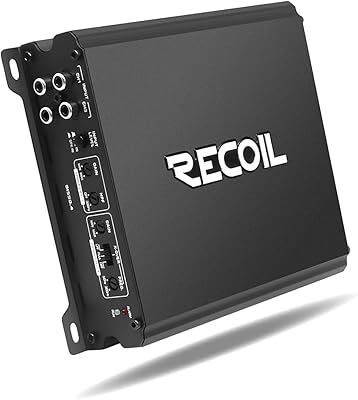
Recoil DI800.4 4-Channel Car Amplifier
75%
88%
Value for Money
51%
Power Accuracy
63%
Build Quality
79%
Thermal Management
86%
Ease of Installation
More
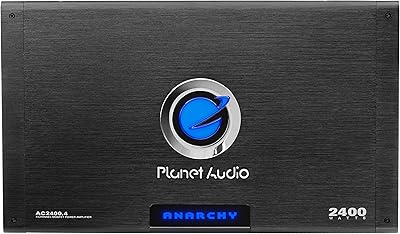
Planet Audio PL1600.4 4-Channel Car Amplifier
72%
88%
Value for Money
84%
Ease of Installation
74%
Sound Quality
58%
Power Output (Real-World)
61%
Build Quality
More
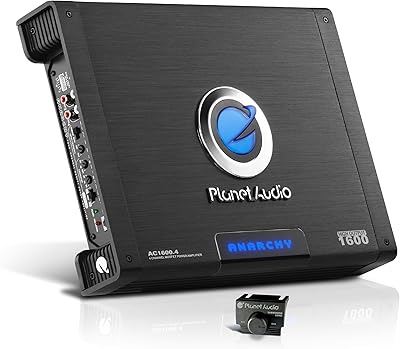
Planet Audio AC2400.4 4-Channel Car Amplifier
84%
95%
Power Output
89%
Sound Clarity
87%
Bass Performance
82%
Ease of Installation
65%
Thermals/Heat Management
More
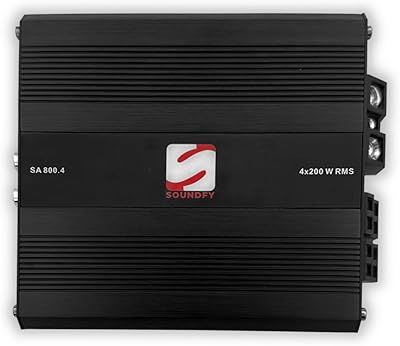
Soundfy SA 400.4 4-Channel Car Amplifier
71%
78%
Value for Money
72%
Sound Quality
63%
Power Output
58%
Build Quality
81%
Thermal Management
More
Planet Audio AC1600.4 Anarchy Series 4-Channel Car Amplifier
82%
94%
Power Output
88%
Sound Quality
70%
Ease of Installation
92%
Value for Money
85%
Build Quality
More
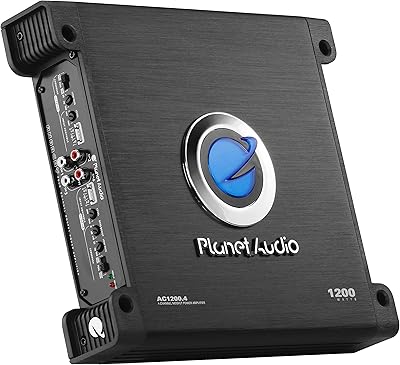
Planet Audio AC1200.4 4-Channel Car Amplifier
73%
88%
Value for Money
67%
Power Output
83%
Installation Ease
74%
Sound Quality
61%
Build Quality
More
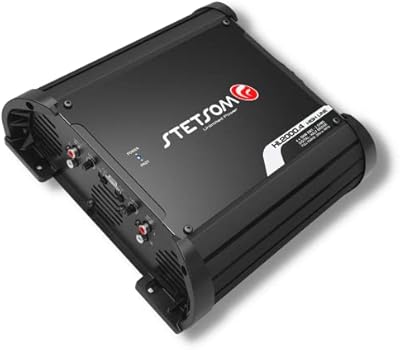
Stetsom HL 2000.4 2-Ohm 4-Channel Car Audio Amplifier
87%
93%
Power Output
85%
Cooling System Efficiency
88%
Sound Quality
91%
Ease of Installation
82%
Durability
More
Hifonics BXX800.4 Brutus 800W RMS 4-Channel Car Audio Amplifier
86%
88%
Sound Quality
92%
Power Output
85%
Build Quality
72%
Heat Management
89%
Ease of Installation
More
Pyle PLAM1600 4-Channel Car Amplifier
69%
74%
Value for Money
67%
Sound Quality
51%
Power Output Accuracy
83%
Ease of Installation
59%
Build Quality
More

FAQ

Max power is a peak figure measured under ideal, momentary conditions — it is not something the amp sustains during normal listening. RMS is the continuous power output your speakers actually receive during real use. For this amp, that is 130 watts per channel at 2 ohms, which is the number you should use when matching speakers.

Yes, but you will need a separate mono amplifier for the subwoofer if you want all four channels dedicated to full-range speakers. Alternatively, you can bridge two of the channels into one pair to power a sub, which leaves only two channels for your front speakers. Most users planning a full 4-speaker plus subwoofer setup opt to pair this 4-channel amp with a dedicated mono amp for cleaner, more flexible results.

Not particularly. The wiring layout is straightforward, and the onboard controls are clearly labeled. You will need a basic amp wiring kit, RCA cables from your head unit, and speaker wire runs to each driver. If you have never done a car audio install before, watching a general amp installation guide before starting will save you time and help you set the gain correctly.

Gain is not a volume knob — it matches the amp input sensitivity to your head unit output level. Setting it too high causes clipping, which sounds distorted and can damage speakers over time. Start with the gain low, play a familiar track at about 75 to 80 percent head unit volume, and slowly raise the gain until you hear the sound tighten up, then back it off slightly. Several buyers have noted the gain control on this amp is sensitive, so small adjustments go a long way.

It can run warm during extended high-volume sessions, and a handful of buyers have flagged this as a real concern. The passive heatsink handles normal listening conditions well, but if you regularly push the amp hard for long periods — especially in a hot car in summer — airflow around the unit matters. Make sure the mounting location is not fully enclosed, and leave at least an inch or two of clearance around the heatsink fins if possible.

The REA600.4 is full-range capable, so it will drive anything from 6.5-inch component sets to 6x9 coaxials without issue. The key is matching speaker RMS ratings to the amp output — speakers rated between 75 and 150 watts RMS are an ideal fit at 4 ohms. Avoid pairing it with high-efficiency speakers that are extremely sensitive, as those can sometimes expose any background noise on the RCA input.

No, a remote bass control knob is not included in the box. If you want to adjust bass levels from the driver seat without reaching into the trunk, you would need to purchase a compatible remote knob separately. Not all aftermarket knobs are plug-and-play with every amp, so check compatibility before buying one.

Yes, any head unit with RCA preamp outputs will work with this amp. If your head unit only has speaker-level outputs and no dedicated RCA outputs, you can use a line output converter to bridge the connection. Most modern aftermarket head units from brands like Pioneer, Kenwood, or Sony include RCA outputs, so this is typically not an issue.

Class D amps are more power-efficient and run cooler, which is why they dominate the subwoofer market. Class A/B amps like this Recoil amplifier tend to produce a slightly warmer, more rounded sound signature that many listeners prefer for full-range music reproduction. The trade-off is that Class A/B runs a bit warmer and draws slightly more current from your vehicle's electrical system. For everyday listening across four speakers, the difference in sound character is the main reason buyers choose one over the other.

For an amp in this power range, a 4-gauge power and ground wire is the standard recommendation. Running undersized wire, like 8-gauge, can cause voltage drop under load, which degrades performance and can stress the amp's power supply over time. Most 4-gauge amp wiring kits will include appropriate fusing near the battery, which is also required for safe installation.