Overview

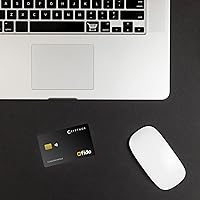
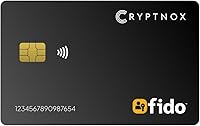
The Cryptnox FIDO2 NFC Security Key takes a genuinely different approach to hardware authentication by arriving in the shape of a standard credit card rather than a USB dongle. Slip it into your wallet and forget it's there until you need it — that's the whole idea. It carries FIDO2 certification, which means it meets an open industry standard for phishing-resistant login supported by most major platforms and browsers. This isn't a niche enthusiast device; it's a practical, mid-range tool for anyone who wants stronger account protection without carrying extra hardware on their keychain.
Features & Benefits

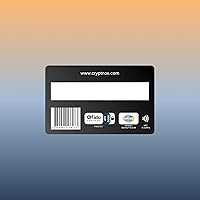
Authentication here is entirely NFC-based — tap the card against your phone or an NFC-enabled desktop reader and you're done, no USB port required. That keeps the card thin and portable, though desktop users without a card reader will need to grab one separately, which is a real consideration before buying. The chip carries EAL6+ and FIPS 140-2 Level 3 ratings, meaning it's built to physically resist tampering — not just software attacks. It also supports passwordless login via resident keys and falls back to classic U2F for older services, covering both modern and legacy authentication without issue.

Best For

This NFC security card fits best with people who find USB keys awkward or are heavily phone-dependent for daily logins. iPhone users in particular benefit from the tap-based Apple ID authentication, and Android users get equally smooth support across Google and other major accounts. It also makes sense in corporate environments where RFID door access matters — the built-in MIFARE DESFire chip means one card can handle both building entry and account login, though that dual-use feature is more relevant to office settings than typical home users. Anyone still relying on SMS-based verification will find this a meaningful upgrade in real security.

User Feedback

People who use this wallet-sized authenticator consistently mention two things: how much they appreciate not having a dongle dangling from their keychain, and how quick tap authentication feels once everything is configured. On the critical side, some users have noted that NFC positioning matters more than expected — holding the card at the wrong angle can cause a failed read, especially on certain Android devices. Setup can also trip up less technical users when registering across multiple accounts. The card's durability has drawn a few comments, with some owners noticing surface wear after extended wallet use, though structural failures appear rare.

Pros

  • Fits in any wallet slot with no added bulk, unlike traditional key-fob authenticators.
  • Tap-to-authenticate on iPhone and Android is quick and requires zero software installation.
  • FIDO2 version 2.1 support covers both modern passwordless login and older U2F services.
  • The chip's EAL6+ and FIPS 140-2 Level 3 ratings signal serious resistance to physical tampering.
  • Works across all major browsers including Chrome, Safari, Firefox, and Brave.
  • Built-in MIFARE DESFire RFID support is a genuine bonus for office and corporate users.
  • No battery, no charging, no app dependency — it simply works when you need it.
  • Compatible with Apple, Google, Microsoft, and most other major account platforms out of the box.

Cons

  • Desktop users without an NFC card reader must buy additional hardware before the card works at all.
  • NFC read sensitivity can be finicky, requiring precise card positioning on some Android devices.
  • Registering the card across many accounts takes meaningful time and is not beginner-friendly.
  • No biometric or PIN protection on the card itself — physical possession alone grants access.
  • Surface coating shows visible wear after extended wallet use, affecting long-term appearance.
  • No USB connectivity means it is entirely useless if NFC is unavailable or blocked on a device.
  • Some niche platforms and enterprise services still do not support FIDO2, limiting coverage.
  • The RFID badge feature adds little practical value for home users and may create confusion about the card's purpose.

Ratings

The scores below for the Cryptnox FIDO2 NFC Security Key were generated by our AI system after analyzing verified buyer reviews from multiple global markets, with spam, bot activity, and incentivized feedback actively filtered out before any scoring was applied. Each category reflects the real distribution of user sentiment — not a polished average — so genuine friction points show up in the numbers alongside the genuine strengths. The result is an honest snapshot of what owners actually experience day to day.
Portability & Form Factor
93%
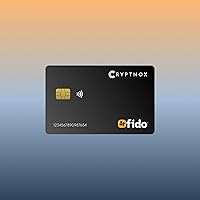
Buyers consistently single out the credit-card shape as the card's most immediately appreciated quality. It slides into an existing wallet slot without stretching it, and unlike a USB dongle or key fob, it adds no noticeable weight or pocket bulk during a full workday.
A small number of users noted that carrying it loose in a tight wallet alongside several cards caused minor corner scuffing within the first few months. It is thinner and therefore slightly more flexible than a bank card, which concerned a handful of buyers who handle their wallets roughly.
NFC Authentication Speed
86%
When the tap registers cleanly, the authentication handshake is fast enough that most users describe it as near-instant. On iPhone in particular, holding the card near the top of the device consistently produces a reliable read, which regular users come to appreciate as a genuinely low-friction habit.
Android results are more variable — phone model, case thickness, and NFC antenna position all affect how precisely the card needs to be positioned. Some users reported needing two or three taps before a successful read, which erodes confidence in time-sensitive situations like logging in at the office door.
Platform & Service Compatibility
81%
19%
The FIDO2 and U2F dual-protocol support means the card covers a wide range of services, from Google and Apple accounts down to older platforms that never updated past the original U2F standard. Users who tested it across a mix of personal and work accounts generally found it accepted without issue on the majority of services they use daily.
A recurring complaint involves niche platforms and some enterprise single-sign-on setups that still do not recognize FIDO2 hardware keys at all. Buyers who assumed universal coverage were sometimes surprised to find one or two services on their list remained incompatible, requiring them to keep a fallback authentication method active anyway.
Security Credentials
94%
The combination of EAL6+ chip certification and FIPS 140-2 Level 3 compliance places this card well above the security floor of most consumer authenticators. Technically informed buyers explicitly cited these ratings as a reason for choosing it over cheaper alternatives, and the FIDO Alliance Level 1 certification confirms real independent verification rather than self-reported claims.
For average consumers who are unfamiliar with what EAL6+ or FIPS 140-2 actually mean in practice, these credentials are hard to evaluate without research. The marketing language around them can feel abstract, and a small segment of reviewers felt the certifications were emphasized over practical guidance on what to do if the card is lost or stolen.
Setup & Registration Experience
67%
33%
Users who are already comfortable with account security settings found the registration process straightforward — visit the security section of a supported service, select hardware key, and tap to enroll. No drivers, no companion app, and no account required with Cryptnox itself, which many privacy-conscious buyers appreciated.
Less experienced users reported real frustration during initial setup, particularly when trying to register across multiple accounts in one sitting. The process varies by platform, there is no unified guide covering all services, and a few buyers gave up partway through and returned the card specifically because of setup confusion rather than any hardware failure.
Desktop Usability
52%
48%
Users who already owned an NFC card reader for other purposes found adding this card to their desktop workflow entirely painless. On Windows machines with built-in NFC or a reader already docked, the experience mirrors the mobile tap flow closely and requires no additional configuration.
For the majority of desktop users, the NFC-only design is a genuine obstacle. There is no USB fallback, meaning a separate NFC reader is a required purchase that is easy to overlook before buying the card. Several one-star reviews traced back entirely to this single discovery after the card arrived.
Build & Durability
71%
29%
Day-to-day handling in a normal wallet presents no functional problems for most users — the NFC chip and antenna continue performing reliably even after months of regular use. Structurally, the card resists casual bending well enough for typical carry conditions.
The printed surface and any coating on the card face show cosmetic wear relatively quickly compared to metal-bodied alternatives. Users who keep it pressed against other cards in a tight slot noticed fading or scratching on the surface graphics within three to six months, though this did not affect authentication performance.
RFID Badge Functionality
63%
37%
For corporate buyers whose building access system supports MIFARE DESFire, the ability to consolidate a physical access badge and a digital authentication key into one card is a genuinely practical convenience. A subset of business users highlighted this as the deciding factor in their purchase.
The majority of individual buyers found the RFID feature effectively unused because configuring it requires coordination with a facilities or IT team rather than self-setup. Several reviewers felt it was marketed more prominently than its real-world accessibility for average consumers warranted.
Mobile Experience
88%
Android and iPhone users who set up the card primarily for mobile account access reported a consistently positive experience once registered. Tapping to authenticate while logging into Google or securing an Apple ID on the go feels more natural and faster than opening an authenticator app and transcribing a time-sensitive code.
Thick phone cases can reduce NFC read reliability, and a handful of users with older Android models reported inconsistent detection even without a case. The experience is strong but not perfectly uniform across every device and operating system version.
Value for Money
74%
26%
Compared to other certified FIDO2 hardware keys with equivalent chip security ratings, the price sits comfortably in mid-range territory. Buyers who understood what they were getting — particularly the dual RFID capability and the high-grade chip certifications — consistently rated value positively.
Buyers who encountered desktop compatibility issues or setup difficulties felt the price was hard to justify for what ended up being a partial solution. Without the separate NFC reader cost factored in from the start, some owners felt the total spend exceeded what they expected for a security key.
Passwordless Login Support
77%
23%
Resident key support means the card can store account credentials directly on the chip, allowing true passwordless login on compatible services without needing to type anything. Users who configured this on supporting platforms found it a noticeably cleaner authentication experience than any code-based approach.
The 4K onboard memory sets a practical ceiling on how many resident keys can be stored simultaneously, and services that support passwordless login via FIDO2 resident keys are still a minority. Most users end up using the card for standard two-factor confirmation rather than full passwordless flows for the foreseeable future.
Physical Loss Risk Management
58%
42%
The card format makes it easy to store in a dedicated wallet slot that you would naturally notice is empty, reducing the chance of casually misplacing it the way a small USB key fob might get lost in a bag. Most users found it easier to track than a conventional dongle.
Unlike some competing keys that support a PIN or biometric before activating, this card relies purely on physical possession — anyone who finds or steals it has a functional second factor. Users who registered it without setting up account-level recovery codes are also left in a difficult position if the card goes missing.
Browser Compatibility
83%
Chrome, Firefox, Safari, and Brave all recognized the card correctly across the platforms tested by reviewers, with no special configuration required beyond the initial account registration. Users who switch between browsers regularly found it worked consistently regardless of which they had open.
A small number of users encountered issues with specific browser versions or enterprise-managed browser configurations that restricted WebAuthn hardware key access by policy. These edge cases are not common but do appear in feedback from users in managed corporate environments.

Suitable for:

The Cryptnox FIDO2 NFC Security Key is a strong fit for people who have grown tired of SMS verification codes and want a physical, phishing-resistant layer of security they can carry without thinking about it. Its credit-card form factor makes it ideal for anyone who already lives out of their wallet — no extra fob on the keychain, no dongle to misplace in a bag. iPhone and Android users will get the most out of it since tap authentication on mobile is where this card genuinely shines, particularly for securing Apple ID, Google accounts, and other major platforms. It also suits professionals in office environments where a single card can handle both digital account login and RFID door access, reducing the number of physical credentials they carry. Security-minded individuals upgrading from app-based authenticators will find the hardware approach more robust and the setup process straightforward enough once they get going.
Not suitable for:

The Cryptnox FIDO2 NFC Security Key is not the right choice for desktop-first users who expect plug-and-play simplicity, because NFC-only connectivity means a separate card reader is mandatory on any computer — and that is an extra purchase many buyers don't anticipate. People who are not comfortable navigating account security settings across multiple platforms may find the initial registration process frustrating, as there is no guided app to walk you through each service. If your primary concern is securing a single account on a traditional laptop or desktop without a card reader already in place, a USB-A or USB-C key would involve far less friction. The card format, while convenient in a wallet, is also more susceptible to surface wear than a hard plastic key fob, which may matter to buyers who expect multi-year daily use without cosmetic degradation. Those looking for biometric confirmation — such as fingerprint verification on the key itself — will need to look elsewhere, as this card relies purely on physical possession.

Specifications

  • Form Factor: The card matches standard credit-card dimensions, making it thin enough to sit in any wallet slot without adding noticeable bulk.
  • Connectivity: Authentication is handled exclusively via NFC using the ISO 14443 standard, with no USB connector of any kind.
  • Contact Interface: An ISO 7816 contact interface is also present, enabling compatibility with contact-based card readers in addition to NFC.
  • FIDO2 Version: The card runs FIDO2 version 2.1 via the CTAP2 protocol, supporting modern passwordless login with resident key storage.
  • U2F Support: Backward compatibility with the older U2F standard (CTAP1) means the card also works as a classic second-factor token on legacy services.
  • Chip Security: The onboard chip holds an EAL6+ certification, indicating it has passed rigorous independent testing for resistance to physical and logical attacks.
  • FIPS Rating: The chip additionally meets FIPS 140-2 Level 3, a US government-recognized standard that requires physical tamper-evidence and tamper-resistance mechanisms.
  • FIDO Certification: Cryptnox SA has obtained FIDO Alliance Level 1 certification for this card, confirming interoperability with compliant platforms and services.
  • RFID Standard: The card includes MIFARE DESFire EV1 and EV2 support, enabling use as an RFID access badge in compatible building-entry systems.
  • Onboard Memory: A 4K memory allocation is available on the card, used for storing resident keys and RFID application data.
  • OS Compatibility: The card works with Android, iOS, and Microsoft Windows operating systems when paired with a compatible NFC-enabled device or reader.
  • Browser Support: Supported browsers include Google Chrome, Safari, Firefox, Brave, and other standards-compliant browsers that implement the WebAuthn API.
  • Weight: The card weighs approximately 0.35 ounces, making it negligibly light for everyday carry in a wallet or cardholder.
  • Material: The card body is constructed from plastic, consistent with standard ISO credit-card construction used across the industry.
  • Software Required: No driver installation or companion software is needed; the card is recognized natively by compatible operating systems and browsers.
  • Manufacturer: The card is designed and manufactured by Cryptnox SA, a Swiss company specializing in hardware security and cryptographic solutions.
  • Passwordless Login: Resident key support allows the card to store account credentials directly on the chip, enabling true passwordless authentication without relying on a server-side lookup.
  • Physical 2FA: The card functions as a physical second factor, meaning account access requires both the card itself and knowledge of the account credentials.

Related Reviews

Yubico Security Key NFC
90%
92%
Value for Money
89%
Build Quality & Durability
94%
Portability & Size
93%
Ease of Use
88%
Security Features
More
Thetis FIDO2 Fingerprint Security Key
86%
88%
Performance
91%
Setup & Installation
94%
Security Features
85%
Compatibility with Operating Systems
93%
Portability
More
OnlyKey FIDO2/U2F Security Key and Hardware Password Manager
84%
94%
Security Features
88%
Ease of Setup
91%
Build Quality and Durability
72%
Compatibility with Devices
85%
Password Management Convenience
More
FeiTian A4B USB Security Key
87%
94%
Ease of Use
92%
Portability
89%
Security Features
87%
Compatibility with Devices
85%
Build Quality
More
FeiTian K40 USB Security Key
85%
93%
Security Performance
88%
Ease of Use
90%
Compatibility with Devices
91%
Build Quality
85%
Setup & Installation
More
Feitian MultiPass K32 USB Security Key
87%
88%
Ease of Use
92%
Portability & Size
90%
Compatibility
65%
Bluetooth Connectivity
93%
Setup & Installation
More
AUTHENTREND ATKey.Pro FIDO2 Fingerprint Security Key
70%
81%
Fingerprint Recognition Speed
46%
Setup & Enrollment Experience
88%
PIN-Free Authentication
73%
Compatibility & Platform Coverage
58%
Windows Device Login (Entra ID)
More
Thales SafeNet eToken FIDO USB-C Security Key
87%
94%
Ease of Use
91%
Security Features
88%
Platform Compatibility
89%
Setup Process
85%
Reliability
More
Apricorn Aegis Secure Key 1TB USB Drive
80%
96%
Data Security
91%
Build Quality
67%
Ease of Setup
54%
Value for Money
78%
Transfer Speed
More
Apricorn Aegis Secure Key 3Z 128GB USB 3.0 Flash Drive
87%
94%
Security Features
89%
Durability & Build Quality
91%
Ease of Use (Pin Authentication)
72%
Data Transfer Speed (Write Speed)
85%
Waterproof & Dustproof Performance
More

FAQ

No, nothing to install. The card is recognized natively by compatible browsers and operating systems the moment you tap it. You just register it once with each account through that service's security settings, and it works from then on.

Only if your computer has a built-in NFC reader or you already own an external NFC card reader. The Cryptnox FIDO2 NFC Security Key has no USB connector, so a desktop without NFC hardware simply won't detect it. This is the most important thing to check before buying if you plan to use it primarily at a desk.
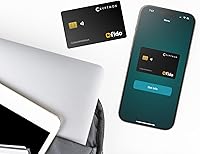
Yes, and this is actually one of the card's stronger use cases. iPhone models with NFC support can tap-authenticate directly, which covers all current iPhone models. You register the card in your Apple ID security settings, and from that point tapping the card near the top of the phone handles the authentication step.

You can register it with as many accounts as you like for standard two-factor authentication — there is no fixed limit for that use case. For passwordless login using resident keys, the 4K onboard memory can store a limited number of credentials, so very heavy passwordless use across dozens of services may require some management.

Losing the card is a real concern, which is why it should always be paired with a backup method during account registration. The card alone does not expose your passwords, but whoever has it could use it as the second factor if they also know your login credentials. Most platforms will let you revoke a lost security key from account settings, so acting quickly matters.

The card is built to standard plastic card tolerances, so brief water exposure is unlikely to cause immediate failure, but it is not rated as waterproof. Running it through a full wash cycle is a risk — the NFC antenna embedded in the card could be damaged by heat or prolonged soaking. Treat it the way you would a bank card.

It works with systems that support MIFARE DESFire EV1 or EV2, which covers a large share of modern corporate and institutional access control hardware. However, configuring the RFID portion for a specific building system typically requires involvement from whoever manages that system — it is not something you set up yourself at home.

Yes, as long as both devices have NFC capability. On a smartphone it works over wireless NFC; on a Windows desktop you would need an external NFC reader plugged in. Once registered, the same card handles authentication on both without any reconfiguration.

For most threats, yes. A hardware key cannot be compromised remotely the way a phone app can through malware, SIM swapping, or phishing links. The physical card has to be present for authentication to succeed, which removes a whole category of remote attack vectors. For everyday users, the practical security improvement is meaningful.

Some surface wear is expected with regular wallet use, especially on the printed or coated areas of the card. This is a cosmetic issue and does not typically affect the NFC chip or antenna performance underneath. If authentication starts failing, try cleaning the card surface gently; actual functional failure from normal wear is uncommon.