Overview

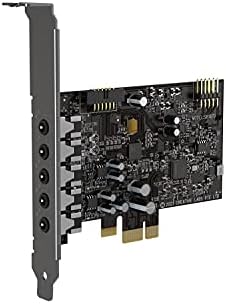
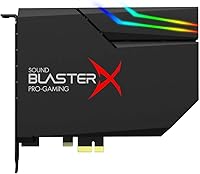
The Creative Sound BlasterX AE-5 Plus sits in a genuinely interesting sweet spot: a serious internal sound card for PC users who've outgrown their motherboard's audio but aren't ready to invest in a full pro audio interface. Released in April 2020 and currently ranked #4 in its category on Amazon, it has held its ground well. What makes it distinctive is the dual identity — legitimate DAC performance paired with RGB lighting that fits right into a gaming rig. It's not pretending to be studio equipment, but it offers a real, audible upgrade over onboard audio for both gaming and critical music listening.
Features & Benefits

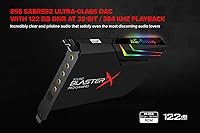
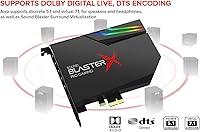
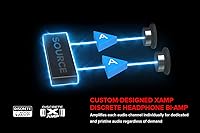
The centerpiece is the ESS SABRE32 Ultra DAC, which delivers 32-bit/384kHz playback and a 122dB signal-to-noise ratio — in practice, that means a noticeably quiet background and cleaner detail across the full frequency range. The Xamp discrete headphone amp is a genuine highlight: it bi-amplifies each earcup independently and handles headphones up to 600Ω, including power-hungry planar-magnetic models, with a low 1-ohm output impedance that keeps sensitive IEMs sounding accurate too. Dolby Digital Live and DTS encoding let you pass audio cleanly to an external receiver. ASIO 2.3 support is a quiet bonus for streamers and home producers who need low-latency monitoring without a separate audio interface.

Best For

This sound card makes the most sense for PC gamers with high-impedance headphones — Sennheiser HD 600-series, Audeze planars, and similar — who want a capable amp without adding another device to their desk. Home theater PC users will find the Dolby Digital Live and DTS encoding particularly useful for clean passthrough to a receiver or soundbar. Streamers and part-time content creators benefit from the ASIO support for low-latency monitoring. One important caveat worth noting upfront: this is a Windows-only PCIe card, and it requires an available x4 slot, which rules it out for compact ITX builds and Mac users entirely.

User Feedback

Across more than 800 ratings, this internal DAC and amp combo holds a 4.3 out of 5, which reflects a broadly satisfied user base. The most consistent praise centers on the headphone amp performance — buyers upgrading from integrated motherboard audio almost universally notice a meaningful improvement in clarity and dynamics. The recurring criticism, however, is the Sound Blaster Command software, which some users find unintuitive or occasionally buggy, with driver updates not always going smoothly. A smaller group of reviewers with high-end headphone setups note the amp is strong for a sound card but not a replacement for a dedicated standalone amplifier. Checking for the latest driver version before installing is genuinely worth doing.

Pros

  • Drives headphones up to 600Ω — planar-magnetic and high-impedance cans finally get the power they need.
  • The near-silent noise floor makes a real difference with sensitive IEMs — no audible hiss even at high volumes.
  • Dolby Digital Live and DTS encoding fills a genuine gap for home theater PC users connecting to a receiver.
  • ASIO 2.3 support gives streamers and light recording users low-latency monitoring without a separate audio interface.
  • The AE-5 Plus combines a DAC, headphone amp, and encoding support in one card — fewer devices, less clutter.
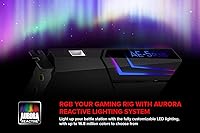
  • Onboard RGB lighting and included LED strip integrate cleanly into a themed build without extra purchases.
  • The 1-ohm output impedance keeps sensitive IEMs tonally accurate — a detail most budget DACs ignore.
  • Consistent 4.3 out of 5 across hundreds of verified reviews signals reliable real-world satisfaction.
  • Audible upgrade over integrated motherboard audio is immediate and obvious, even to non-audiophile users.

Cons

  • Sound Blaster Command software has a recurring history of buggy installs and settings that reset after Windows updates.
  • Windows-only support cuts out macOS users, Linux users, and anyone on a laptop entirely.
  • Requires a free PCIe x4 slot — compact or mini-ITX builds may simply not have one available.
  • Driver stability after major Windows updates has been inconsistent; a clean reinstall is sometimes unavoidable.
  • Virtual 7.1 surround processing sounds artificial to some users, who disable it in favor of plain stereo output.
  • The headphone amp, while strong for a sound card, falls short of what a dedicated standalone amplifier can do.
  • Configuring the software correctly for ASIO or encoding passthrough has a learning curve that frustrates some buyers.
  • Electromagnetic interference from nearby GPU components has been reported in densely packed cases.
  • Users with standard low-impedance headsets will hear little improvement over decent onboard audio — overkill for basic setups.

Ratings

The Creative Sound BlasterX AE-5 Plus has been scored by our AI system after analyzing hundreds of verified global user reviews, with spam, bot-submitted, and incentivized feedback actively filtered out. The scores below reflect what real buyers consistently experienced — the genuine strengths and the friction points that came up repeatedly across different use cases and headphone setups. Nothing has been smoothed over: where users ran into frustrations, the scores show it.
DAC Audio Quality
91%
Users who upgraded from even mid-range motherboard audio reported a clearly audible improvement — wider soundstage, quieter background noise, and better separation of instruments during long gaming or music sessions. The ESS SABRE32 chip consistently delivered on its spec sheet promise in real listening conditions.
A small number of audiophiles with reference-grade setups felt the DAC, while excellent for a sound card, couldn't fully match a standalone external DAC at the same price point. Differences were subtle and required high-end headphones to notice at all.
Headphone Amplifier Performance
88%
The Xamp discrete bi-amp stage was repeatedly highlighted as a standout feature, especially by users running power-hungry headphones like the Sennheiser HD 650 or HiFiMan planars. The independent per-earcup amplification translated to better channel balance and more dynamic punch during demanding passages.
Reviewers with very high-end amplifier setups — think dedicated units costing several hundred dollars — noted the onboard amp is competitive but not quite at that level. It is best understood as a serious integrated amp, not a replacement for a dedicated headphone amplifier stack.
Software & Drivers
58%
42%
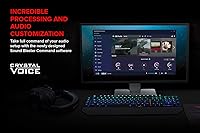
Sound Blaster Command offers a genuinely broad feature set — EQ, surround virtualization, and RGB control all in one place — and users who took time to learn it found it fairly powerful once configured. Regular updates have addressed some of the earlier instability issues.
This is the most polarizing aspect of the product. A consistent portion of reviewers encountered buggy installations, settings that failed to save after rebooting, or features that behaved unpredictably after Windows updates. First-time installations in particular drew complaints, and several users recommended immediately checking for the latest driver before doing anything else.
Build & Installation
79%
21%
The card itself feels solid and well-constructed for its size, and the included RGB LED strip is a nice addition that most users managed to route cleanly inside their cases. The physical installation process — inserting into a PCIe x4 slot — was straightforward for anyone with basic PC-building experience.
The PCIe x4 slot requirement caught some buyers off guard, particularly those with compact micro-ATX or mini-ITX builds where available slots are limited. A handful of users also noted the card sits tightly near other components and heat can be a minor concern in dense builds.
Value for Money
82%
18%
For what it delivers — a capable DAC, a discrete headphone amp, Dolby Digital Live encoding, and ASIO support — most users felt the price was justified compared to buying those features separately. Gamers who would otherwise need both an external DAC and a dedicated amp found the all-in-one value proposition compelling.
Users who only use low-impedance headphones or standard stereo gaming headsets may not tap into enough of the card's capability to justify the cost. At this price tier, a few buyers felt a dedicated external DAC/amp combo could offer slightly better pure audio performance, though without the PCIe integration.
Surround Sound & Encoding
77%
23%
The Dolby Digital Live and DTS encoding support was genuinely appreciated by home theater PC users who needed to pass a proper encoded audio signal to an AV receiver or soundbar. It worked reliably over optical out, which is exactly what that segment of buyers needed.
Virtual 7.1 surround, while functional, received mixed feedback from gamers who use it for positional audio in competitive titles. Some found it impressive; others felt the virtualization added a processed quality to the sound they preferred to disable in favor of clean stereo output.
Compatibility & Platform Support
63%
37%
For Windows users on mainstream desktop builds, compatibility was rarely an issue, and the card worked with Windows 7 through 10 without major problems for most buyers. The ASIO 2.3 support was a genuine bonus for users doing light recording or streaming.
The Windows-only limitation is a hard wall that frustrated a subset of buyers who discovered it too late. There is no macOS or Linux support whatsoever, and the PCIe form factor completely excludes laptop users — factors that are not always prominent in the product listing and led to some disappointed returns.
RGB Lighting
84%
The onboard RGB and included LED strip gave users genuine customization flexibility, with 16.8 million colors and multiple pattern modes available through Sound Blaster Command. Buyers building themed rigs appreciated being able to sync the card's lighting with the rest of their setup.
RGB control is tied entirely to the Sound Blaster Command software, so users who experienced software instability also found their lighting configurations resetting unexpectedly. Those who simply want reliable, static lighting sometimes found the software dependency more trouble than it was worth.
Low-Noise Floor
93%
The 122dB SNR translated to a genuinely black background in real use — sensitive IEMs in particular benefited from the low output impedance and quiet amplifier stage, with virtually no audible hiss even at high gain settings. This was a frequently praised quality among users coming from noisy integrated audio.
A small number of users reported very faint electromagnetic interference picked up from nearby components in certain PC configurations — a potential issue in any internal card. Repositioning the card to a slot further from the GPU resolved it in most reported cases.
Ease of Setup
71%
29%
Hardware installation was consistently described as quick and painless — slot the card in, connect the header if using the LED strip, and the physical side is done. Users with prior PC-building experience had no issues getting the card recognized by Windows.
Software setup is where the experience diverged sharply. Downloading and correctly configuring Sound Blaster Command, ensuring the right audio device was selected in Windows, and getting features like ASIO or Dolby encoding properly routed required patience and, for some, a few trips to support forums.
Headphone Impedance Range
89%
The ability to drive headphones up to 600Ω reliably — confirmed by multiple users with Beyerdynamic T1s, AKG K712s, and similar high-impedance cans — was a meaningful differentiator. Users reported these headphones sounding noticeably more controlled and dynamic compared to running them from weaker sources.
Extremely demanding planar-magnetic headphones at the top of the impedance range will get adequate power but not the same authority a dedicated high-current amp provides. For the vast majority of headphones in the 32–300Ω range, this limitation is completely irrelevant.
Longevity & Reliability
74%
26%
Most users reported the hardware itself holding up well over extended periods of daily use, with no failures or degradation in audio quality over time. The card's physical components appear well-sourced for the price tier.
Long-term software reliability was a more common complaint, with some users finding that major Windows updates occasionally broke driver functionality and required a full reinstall. Hardware longevity seems solid; software longevity is less predictable.
Competitive Positioning
81%
19%
Among dedicated internal PCIe sound cards, the AE-5 Plus occupies a well-defined and defensible position, offering a combination of DAC quality, headphone amplification, and encoding support that is hard to match in a single card at a similar price. Its #4 category rank reflects consistent demand.
The external DAC and amp market has grown considerably, and buyers willing to accept cables and desk space can often find comparable or better pure audio performance externally. The AE-5 Plus wins on integration and space efficiency, not necessarily on raw audio performance per dollar.

Suitable for:

The Creative Sound BlasterX AE-5 Plus is a strong match for PC gamers and audio enthusiasts who own high-impedance or planar-magnetic headphones and want a proper amplifier built into their desktop without adding a separate device to their setup. If you're running something like a Sennheiser HD 600, a Beyerdynamic DT 990 Pro, or an HiFiMan planar, this sound card will drive them with noticeably more authority and clarity than any motherboard audio can manage. Home theater PC users will also find real value here — the Dolby Digital Live and DTS encoding support means you can pass a properly encoded signal to an AV receiver or soundbar over optical, which is a specific need that few cards in this price range address. Streamers and part-time content creators who want ASIO low-latency monitoring without buying a standalone audio interface will get meaningful utility from it too. If you're building a themed RGB rig and want every component to match aesthetically, the onboard lighting and included LED strip are a genuine bonus rather than an afterthought.
Not suitable for:

This sound card has hard compatibility walls that will disappoint some buyers who don't check carefully before purchasing. It requires an available PCIe x4 slot inside a desktop PC, which immediately rules out laptop users, compact mini-ITX builds with limited slot availability, and anyone on macOS or Linux — there is no support outside of Windows 7 through 10. If your headphones are standard low-impedance gaming headsets or earbuds that any phone can drive without effort, you will not hear enough of a difference to justify the price over a much cheaper USB DAC. Buyers who want a completely hands-off audio experience should also be cautious — the Sound Blaster Command software requires some patience to configure properly, and those who dislike tinkering with drivers or audio settings may find the experience frustrating. Finally, if your goal is the absolute best headphone amplifier performance at this budget and you're willing to put a standalone external unit on your desk, dedicated separates may serve you better on pure audio terms.

Specifications

  • Interface: The card connects via a PCIe x4 slot on a desktop motherboard, requiring one full-length slot to be available in your case.
  • DAC Chip: Audio conversion is handled by an ESS SABRE32 Ultra DAC, one of the most respected chips in the consumer audio space for low noise and high resolution.
  • Max Playback: Supports PCM audio playback at up to 32-bit depth and 384 kHz sample rate, covering all current hi-res audio formats comfortably.
  • SNR: The signal-to-noise ratio is rated at 122 dB, which translates to an extremely quiet background even when using sensitive in-ear monitors.
  • THD+N: Total harmonic distortion plus noise measures 0.00032% on the DAC output, indicating a very low level of audible coloration or distortion.
  • Headphone Amp: The Xamp discrete bi-amplifier powers each earcup through its own dedicated amplifier circuit, rather than splitting a single amplified signal.
  • Output Impedance: The headphone output impedance is 1 ohm, which is low enough to preserve the intended tonal character of sensitive and multi-driver in-ear monitors.
  • Max Headphone Load: The amplifier section is rated to drive headphones with impedances up to 600Ω, including high-impedance dynamic and planar-magnetic models.
  • Encoding Support: Supports real-time Dolby Digital Live and DTS encoding for passing a correctly formatted digital audio signal to an external receiver via optical output.
  • ASIO Support: Compatible with ASIO version 2.3 for both playback and recording, enabling low-latency audio monitoring without the overhead of standard Windows audio drivers.
  • RGB Lighting: Features onboard RGB LEDs on the card itself plus an included external LED strip, together offering 16.8 million color options configurable through software.
  • Software: Audio processing, EQ, surround virtualization, and RGB lighting are all managed through Creative's Sound Blaster Command application for Windows.
  • OS Support: Compatible with Windows 7, Windows 8, Windows 8.1, and Windows 10 only; there is no support for macOS, Linux, or any mobile operating system.
  • Dimensions: The card measures 5.71 inches long by 5.04 inches tall by 0.79 inches wide, occupying a standard single-slot PCIe bracket width in the case.
  • Weight: The card weighs approximately 1 pound including its bracket, which is typical for a full-featured PCIe audio card at this specification level.
  • Surround Modes: Supports 5.1 discrete surround output as well as 7.1 virtual surround, alongside Sound Blaster's own surround virtualization processing technology.
  • Manufacturer: Designed and manufactured by Creative Labs, a company with a long history in the PC audio market dating back to the original Sound Blaster line.
  • Release Date: First made available in April 2020 as an updated version of the original AE-5, adding Dolby Digital Live and DTS encoding support.

Related Reviews
Creative Sound Blaster Omni Surround 5.1
81%
89%
Audio Quality Improvement
76%
Ease of Installation
82%
Microphone Performance
91%
Physical Controls & Design
84%
Surround Sound Capability
More
Creative Sound BlasterX G1
84%
88%
Overall Audio Improvement
79%
Virtual Surround Sound
84%
Competitive Gaming Performance (X-Plus Mode)
71%
Software & Customization
92%
Form Factor & Portability
More
Creative Sound Blaster AE-7
80%
93%
Audio Fidelity
91%
Headphone Amplifier Performance
71%
Value for Money
58%
Software Quality
67%
Installation & Compatibility
More
Creative Sound BlasterX G5
83%
92%
Audio Clarity & Detail
88%
Gaming Spatial Awareness
91%
Amplification Power
86%
Console Compatibility
58%
Software User Experience
More
Creative Sound Blaster Katana V2X 5.1 Gaming Soundbar
85%
91%
Sound Quality
89%
Bass Performance
78%
Ease of Setup
88%
RGB Lighting Customization
85%
Build Quality
More
Creative Sound Blaster Audigy FX V2
74%
83%
Audio Quality Improvement
89%
Ease of Installation
57%
Software & Driver Experience
74%
Surround Sound Performance
78%
Build Quality & Hardware
More
Earthquake Sound FF6.5 6.5-Inch Front Firing Subwoofer
84%
88%
Bass Performance
91%
Ease of Setup
84%
Build Quality & Durability
85%
Sound Quality in Small Spaces
90%
Integration with Audio Systems
More
Creative Sound Blaster X4
80%
88%
Audio Quality
91%
Headphone Amplifier Performance
74%
Surround Sound & Virtualization
86%
Build Quality & Physical Controls
92%
Connectivity & I/O Options
More
Creative Sound Blaster Audigy PCIe RX 7.1 Sound Card
84%
88%
Sound Quality
83%
Setup and Installation
76%
Driver Compatibility
85%
Build Quality
92%
Value for Money
More
Creative Sound Blaster X-Fi Titanium
72%
91%
Audio Quality Upgrade vs. Onboard
88%
Gaming Positional Audio
44%
Driver Installation & Setup
39%
Windows 10 / 11 Compatibility
82%
ASIO Recording Performance
More

FAQ

No, it does not. The AE-5 Plus is strictly a Windows-only device — the drivers and Sound Blaster Command software are built exclusively for Windows 7 through 10. If you are on macOS or Linux, this card will not function, and there are no third-party driver workarounds that reliably solve that.

It uses a PCIe x4 connection, but the card will physically fit in any PCIe x4, x8, or x16 slot — the longer slots are electrically compatible. The main thing to check is that you have a free full-length slot available in your case, particularly if you have a large GPU taking up nearby space. Mini-ITX boards with only one PCIe slot will not be a good fit.

Yes, and this is one of the stronger use cases for this internal DAC and amp combo. The Xamp amp stage handles up to 600Ω and delivers enough current for most planar-magnetic headphones. That said, the most demanding planars — like certain Audeze LCD models — will perform better with a high-current dedicated amp, so manage expectations if you own flagship-tier gear.

Sound Blaster Command is Creative's all-in-one control panel for EQ, surround processing, RGB lighting, and encoding settings. The feature set is genuinely broad, but the learning curve is real — some settings are tucked away in non-obvious places, and first-time setup occasionally requires patience. The most important advice is to download the latest version of the software and drivers from Creative's website before doing anything else, rather than relying on what's bundled in the box.

For most users, yes — and the improvement is often immediately noticeable. Background hiss drops significantly, stereo imaging becomes cleaner, and headphones tend to sound more controlled and dynamic. The gap is largest if you are using high-impedance or planar-magnetic headphones that your motherboard struggled to drive properly. If you are using a basic low-impedance gaming headset at moderate volume, the difference will be smaller.

Yes, it includes an optical S/PDIF output, and with Dolby Digital Live and DTS encoding enabled, you can pass a properly encoded surround signal to a compatible AV receiver or soundbar. This makes it genuinely useful for home theater PC setups, not just gaming rigs.

It can be, yes. ASIO 2.3 support means you can use this card with DAW software or streaming tools that support low-latency ASIO drivers, which reduces the monitoring delay you hear in your headphones compared to standard Windows audio. It is not a full professional audio interface, but for basic streaming monitoring it does the job without requiring a separate device.

Unfortunately, yes — this has been a recurring theme in user feedback over the years. Major Windows updates can occasionally conflict with Creative's drivers, sometimes requiring a full uninstall and reinstall of both the driver and Sound Blaster Command. The fix is usually straightforward, but it is frustrating. Keeping an eye on Creative's support page for updated drivers after significant Windows updates is genuinely good practice with this card.

Not really — the lighting configuration is controlled through Sound Blaster Command, so the software needs to run at startup to apply your saved settings. Some users set it to launch minimized in the background, which is a reasonable workaround. There is no standalone lighting controller or firmware-stored profile option on this card.

Yes, comfortably. Headphones in the 150–300Ω range are well within the Xamp amp's wheelhouse, and this is actually where most users report the best results — enough power to drive them properly without running into the limits of the amplifier. The 600Ω rating exists for headphones like certain Beyerdynamic T1 variants, so everyday 250Ω models are not a stretch at all.