Overview

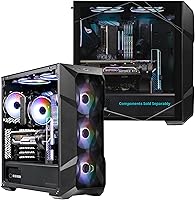
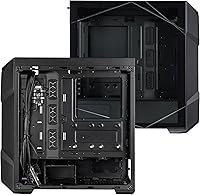
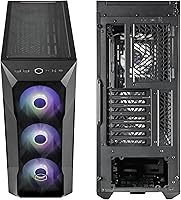
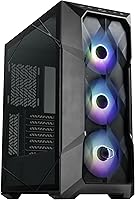
The Cooler Master TD500 Mesh V2 ATX Mid-Tower Case enters a crowded mid-range market with a clear identity: prioritize airflow without making your build look like a server rack. The defining feature is its polygonal FineMesh front panel, a faceted 3D surface that channels air efficiently while keeping dust out — a combination most budget cases still struggle to nail. Pair that with a crystalline tempered glass side panel, and you get a build that looks as good as it breathes. Three included ARGB fans and a USB-C front port round out a package that punches meaningfully above its price bracket.
Features & Benefits

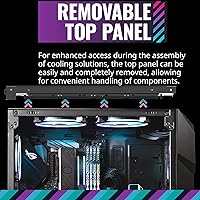
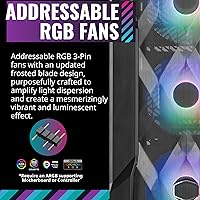
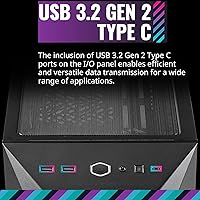
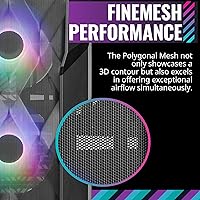
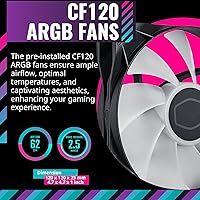
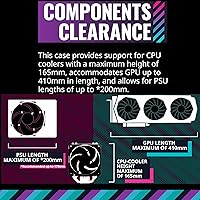
The polygonal mesh front panel isn't just a design choice — it's doing real work, pulling substantial airflow through to your components while the contoured surface acts as a first-line dust filter. Three 120mm ARGB PWM fans come pre-installed, so you're not immediately hunting for extras out of the box. The removable top panel is a genuine quality-of-life improvement; mounting a 360mm radiator becomes far less of a wrestling match when you can simply lift the whole panel off. GPU clearance stretches to 410mm, and the front I/O includes a USB 3.2 Gen 2 Type-C port — a modern touch that matters when transferring large files or connecting newer peripherals.

Best For

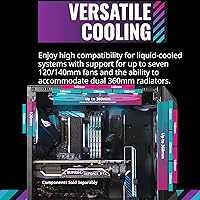
This mid-tower hits a particular sweet spot for builders who want a thermal-first design that doesn't look clinical or boring. If you're running a high-TDP processor or a power-hungry GPU — or both — the generous cooling headroom (up to seven fans plus dual 360mm radiator support) gives you room to configure the system properly rather than compromising from the start. First-time builders will also appreciate how approachable the interior is, particularly with the removable top panel reducing frustration around radiator installation. And if you're planning a showcase build with tempered glass, the ARGB lighting through the mesh front creates a genuinely striking result without needing aftermarket upgrades.

User Feedback

Owners consistently highlight build quality and airflow performance as the standout strengths, with many noting that temperatures run noticeably cooler compared to cases they've used before at this price tier. The ARGB fans draw positive remarks for their lighting output, though some users find the sync options limited depending on their motherboard ecosystem. On the critical side, a recurring note is that the included fans can get loud at full PWM speed — something worth considering if noise levels matter to you. Cable management gets mixed reviews; the routing space is workable but not generous. A few buyers also mention the top panel fit feels slightly loose, though this rarely affects function. Overall, satisfaction rates remain high, especially given what competing cases offer at a similar price.

Pros

  • The polygonal mesh front panel provides genuinely strong airflow while still filtering out most dust at the intake.
  • Three ARGB PWM fans come pre-installed, so the build is lit and cooled right out of the box.
  • A 360mm radiator fits both front and top, giving serious cooling builds real flexibility.
  • The removable top panel is a practical feature that makes radiator installs noticeably less awkward.
  • GPU clearance up to 410mm means even the longest current-gen graphics cards fit without concern.
  • The USB 3.2 Gen 2 Type-C front port is a forward-thinking addition rarely found at this price point.
  • Build quality feels solid for the price tier — no sharp edges, panels align well, and the chassis feels rigid.
  • The tempered glass side panel gives the interior excellent visibility without feeling fragile or flimsy.

Cons

  • Included fans get audibly loud at full PWM speed, which may require manual fan curve tuning or replacements.
  • Cable management space behind the motherboard tray is tighter than what enthusiast-level builders prefer.
  • The top panel can feel slightly loose once reattached, which is a minor but noticeable fit issue.
  • ARGB fan sync compatibility varies by motherboard brand, and not all ecosystems cooperate without extra software.
  • Only one USB 3.0 Type-A port on the front I/O feels limiting for a case in this price range.
  • Dust filter maintenance on the top and front panels requires more frequent attention given the high airflow intake.
  • No E-ATX motherboard support, which rules out certain high-end platform builds from the start.
  • The case is on the heavier side at nearly 17 pounds, making desk repositioning less convenient than lighter competitors.

Ratings

The scores below for the Cooler Master TD500 Mesh V2 ATX Mid-Tower Case were generated by AI after analyzing thousands of verified global buyer reviews, with spam, bot activity, and incentivized feedback actively filtered out. Each category reflects the honest distribution of real builder experiences — strengths are credited where earned, and recurring frustrations are scored accordingly. You will find both the standout advantages and the genuine tradeoffs represented transparently across every dimension.
Airflow Performance
91%
Builders consistently report lower CPU and GPU idle and load temperatures compared to previous cases with solid or restrictive front panels. The polygonal mesh design pulls noticeably more air through the front intake, and users running high-TDP components appreciate the thermal headroom it provides under sustained gaming loads.
A small segment of users note that the mesh, while effective, still collects fine dust relatively quickly in dusty environments, requiring cleaning every few weeks to maintain peak airflow. Those relying solely on the three included fans without adding rear or top exhaust sometimes report uneven airflow distribution.
Build Quality
87%
The chassis feels rigid and well-constructed for its price tier — panels align cleanly, there are no sharp edges along the interior, and the tempered glass side panel has reassuring weight to it. Multiple builders upgrading from budget cases specifically call out how much more premium the TD500 Mesh V2 feels by comparison.
A recurring observation is that the top panel can feel slightly loose when reattached, which undermines the otherwise solid construction impression. Some users also note that the plastic components, particularly around the I/O area, feel slightly less refined than the metal chassis sections.
Cooling Flexibility
93%
Support for 360mm radiators at both the front and top gives builders genuine freedom to configure cooling around their components rather than around the case limitations. The ability to house up to seven 120mm fans means there is room to grow well beyond the included setup as thermal demands increase.
Installing both a front 360mm radiator and a long GPU simultaneously requires careful planning, as the combination can push right up against clearance limits. A minority of users report that fan bracket alignment for non-standard radiator configurations takes more trial and error than expected.
Value for Money
84%
Three ARGB PWM fans included, a USB-C front port, a removable top panel, and 410mm GPU clearance at a mid-range price point represents a genuinely competitive package. Buyers frequently mention that sourcing equivalent fans alone would cost a meaningful fraction of the total case price.
Competing cases from brands like Fractal Design and Lian Li offer more generous cable management space and slightly better fit-and-finish at similar or only modestly higher prices. Buyers focused purely on build quality per dollar may find the TD500 Mesh V2 faces real competition in its tier.
ARGB Lighting
79%
21%
The three front intake fans produce vibrant, even lighting that shows well through the polygonal mesh, creating a striking visual effect when viewed from the front. Users who simply want a colorful build without buying aftermarket fans are generally satisfied with the brightness and color consistency.
Ecosystem compatibility is the main friction point — users on certain motherboard brands report sync issues or limited control options without third-party software. The fans lack individual addressability beyond what the motherboard ARGB header supports, which disappoints builders wanting more granular lighting control.
Cable Management
63%
37%
Standard ATX builds with a modular PSU and tidy cabling can be routed cleanly enough to present a respectable finished interior. Cable routing cutouts are positioned logically, and most builders working with flat cables report a clean result with moderate effort.
The space behind the motherboard tray is tighter than what experienced builders prefer, particularly when managing thick GPU power cables or dense PSU harnesses. Several users note that closing the back panel with a full cable load requires noticeable force, and the result behind the shroud is not always presentable.
Ease of Assembly
88%
The removable top panel is a standout feature for build accessibility — tasks like radiator mounting that are genuinely awkward in fixed-panel cases become straightforward here. The interior layout is logical enough that first-time builders report completing their build without consulting guides for most steps.
The thumbscrew and standoff placement can be slightly imprecise on some units, requiring minor adjustments during motherboard installation. A small number of users also report that the pre-installed fan cables are routed in ways that interfere with component installation if not repositioned early in the build process.
Noise Levels
61%
39%
At low to medium PWM speeds, the case runs quietly enough for everyday use, and builders who invest time in setting a thoughtful fan curve report a comfortable acoustic experience under normal desktop loads. The mesh front does not amplify fan noise the way some hard plastic panels do.
At full PWM speed the included fans are audibly intrusive — a legitimate complaint that surfaces consistently across user reviews. Builders who prioritize near-silence, particularly in bedroom or studio setups, will almost certainly need to replace the included fans with premium low-noise alternatives.
Dust Filtration
72%
28%
The polygonal mesh acts as a reasonable first-stage filter for larger particles, and the bottom PSU dust filter is removable and easy to clean under a tap. Users in moderately dusty environments report that the case stays acceptably clean with a monthly wipe-down of the front mesh.
There is no dedicated filter behind the front mesh beyond the mesh itself, so fine dust does accumulate on fan blades and heatsinks faster than in cases with finer filtration layers. Users in high-dust environments report needing to clean the interior more frequently than they expected.
GPU Compatibility
94%
A 410mm GPU clearance limit is effectively future-proof for current consumer graphics cards, including the largest triple-fan flagship models. Builders purchasing the case specifically to accommodate an oversized GPU consistently confirm it fits with room to spare.
With a front-mounted 360mm radiator installed, available GPU length is reduced and users must verify clearances carefully before purchasing. There is no included vertical GPU mount, which matters to builders who want to display their card through the tempered glass panel.
Front I/O
76%
24%
The USB 3.2 Gen 2 Type-C port is a forward-thinking inclusion that stands out at this price point, genuinely useful for connecting modern external SSDs, controllers, or smartphones for fast data transfer. The combined audio jack handles headset use cleanly without any reported interference issues.
Only a single USB 3.0 Type-A port accompanies the Type-C, which feels limited for a gaming-oriented case where peripheral connections multiply quickly. Builders running multiple USB accessories frequently find themselves reaching for a hub or relying on rear motherboard ports.
Aesthetic Design
86%
The 3D polygonal mesh front panel gives the case a genuinely distinct visual identity in a market flooded with look-alike designs. The combination of the geometric front, black finish, and clear tempered glass results in a build presentation that photographs well and draws positive comments from buyers.
The aesthetic is polarizing for builders who prefer a minimalist or understated look — the angular mesh is a deliberate style statement, not a neutral choice. The black colorway is the only option available, limiting personalization for those building around a lighter or custom-colored theme.
Radiator Compatibility
89%
Front and top support for 360mm radiators covers the vast majority of all-in-one liquid cooler options on the market, including most popular 240mm and 280mm units as well. Builders planning an AIO upgrade from air cooling report a smooth installation experience, especially with the top panel removed.
Simultaneous front and top 360mm radiator installations are technically possible but require careful component selection to avoid RAM and GPU clearance conflicts. The mounting hardware included is functional but some users note the bracket flexibility is lower than in cases with adjustable rail systems.
Long-term Durability
77%
23%
The steel chassis shows minimal flex under normal handling, and the tempered glass panel has held up well for users who have been using the case for over a year without chips or cracks. Hinges and panel clips maintain their tension through multiple open-and-close cycles without loosening noticeably.
The top panel fit issue mentioned by multiple buyers suggests minor tolerance inconsistencies in manufacturing that could become more pronounced over time with repeated removal. Plastic clips on the front panel have been flagged by a handful of users as feeling fragile under forceful removal for cleaning.

Suitable for:

The Cooler Master TD500 Mesh V2 ATX Mid-Tower Case is a strong fit for PC builders who treat thermal performance as a non-negotiable priority but still want a finished build that looks good on a desk. Gamers running power-hungry CPUs and GPUs — particularly those pairing a high-end processor with a card that draws 300W or more — will appreciate the front mesh design and the headroom to push airflow well beyond what the included fans provide. First-time builders stand to benefit considerably from the removable top panel, which turns an often-frustrating radiator installation into something much more manageable. Anyone planning to install a 360mm AIO cooler now or down the road will find the case already supports it without modification. It also suits builders who want an ARGB showcase build without having to buy fans separately or compromise on case quality to stay within a reasonable budget.
Not suitable for:

The Cooler Master TD500 Mesh V2 ATX Mid-Tower Case will frustrate builders with specific expectations it simply was not designed to meet. If you work in a noise-sensitive environment — a shared bedroom, a home recording space, a quiet office — the included fans running at full PWM speed can become a real irritant, and you may end up spending extra on quieter replacements. Compact desk setups where physical footprint matters will find the case dimensions less forgiving than smaller ITX or Micro-ATX dedicated enclosures. Builders who prioritize deep cable management with room to neatly route thick GPU power cables may feel constrained by the available space behind the motherboard tray. Those heavily invested in a specific RGB ecosystem — say, ASUS Aura or MSI Mystic Light — should verify fan controller compatibility before assuming the ARGB fans will sync without friction. Finally, anyone expecting E-ATX motherboard support will need to look elsewhere, as the case caps out at standard ATX.
Specifications

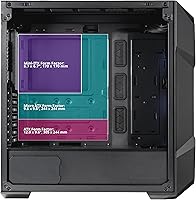
  • Form Factor: ATX Mid-Tower chassis compatible with Mini-ITX, Micro-ATX, and ATX motherboards.
  • Dimensions: The case measures 16.65 x 8.27 x 19.68 inches (L x W x H).
  • Weight: The unit weighs 16.94 pounds without components installed.
  • Front Panel: Polygonal FineMesh front panel features a 3D contoured surface that allows high airflow while providing dust filtration.
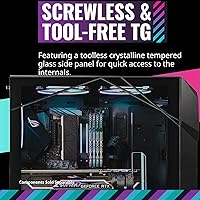
  • Side Panel: Full-length crystalline tempered glass side panel provides a clear, unobstructed view of the interior.
  • Top Panel: The top panel is fully removable to simplify radiator mounting and general assembly access.
  • Pre-installed Fans: Three 120mm ARGB PWM fans (CF120 model) come pre-installed in the front intake position.
  • Fan Support: The case supports up to seven 120mm fans or up to four 140mm fans across all mounting positions.
  • Radiator Support: 360mm radiators are supported at both the front and top mounting locations.
  • GPU Clearance: Maximum graphics card length supported is 410mm, accommodating virtually all current consumer GPU designs.
  • CPU Cooler Height: The case supports CPU air coolers up to approximately 167mm in height.
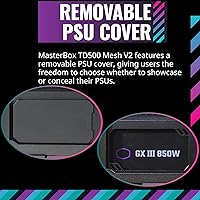
  • PSU Clearance: Standard ATX power supplies are supported in a bottom-mounted configuration.
  • Front I/O: Front panel I/O includes one USB 3.2 Gen 2 Type-C port, one USB 3.0 Type-A port, and a combined 3.5mm audio jack.
  • Lighting: The three pre-installed fans feature addressable RGB lighting controllable via a compatible motherboard ARGB header.
  • Drive Bays: The case accommodates multiple 2.5-inch SSDs and 3.5-inch HDDs through dedicated mounting points in the interior.
  • Model Number: Official model identifier is TD500V2-KGNN-S00.
  • Color: Available in black with a dark-tinted tempered glass side panel.
  • Availability: This model has been available for purchase since December 2022.

Related Reviews

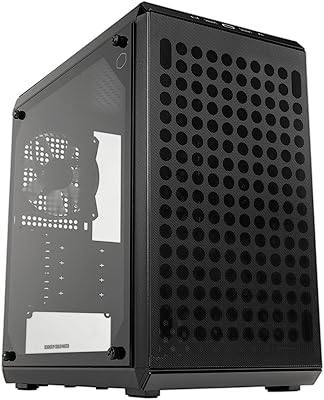
Cooler Master Q300L V2 Micro-ATX Tower Case
77%
91%
Value for Money
83%
Airflow Performance
77%
Build Quality
81%
Tempered Glass Panel
72%
Cable Management
More
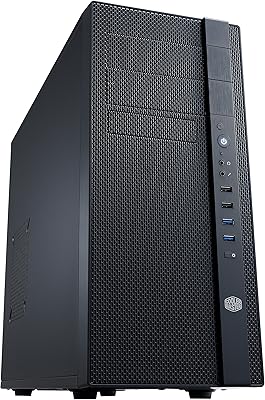
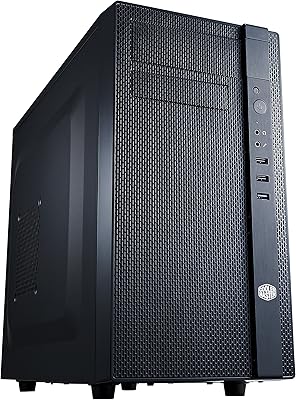
Cooler Master N400 Mid Tower PC Case
76%
88%
Airflow Performance
74%
Build Quality
86%
Value for Money
91%
Ease of Assembly
79%
Cooling Compatibility
More
SilverStone FARA R1 V2 Mid-Tower ATX Case
84%
88%
Build Quality
91%
Airflow and Cooling Efficiency
85%
Ease of Maintenance
65%
Cable Management
87%
Design and Aesthetics
More
Thermaltake Tower 600 Mid-Tower ATX Case
79%
91%
Build Quality
93%
Aesthetic Design
88%
Cable Management
94%
Cooling Capacity
71%
Installation Experience
More
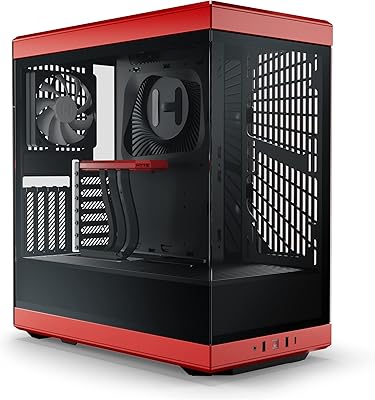
HYTE Y40 Mid-Tower ATX Gaming Case
76%
94%
Aesthetics & Design
88%
Build Quality
62%
Cooling Performance
83%
Value for Money
81%
Cable Management
More
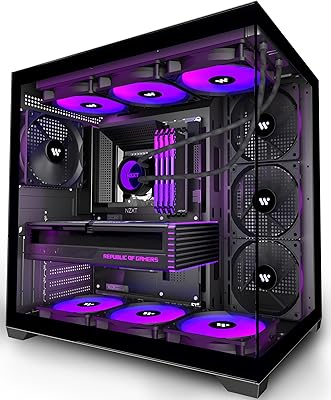
KEDIERS P6 Mid Tower ATX PC Case
75%
88%
Aesthetic Design
71%
Build Quality
84%
Included Fans & Lighting
78%
Airflow & Thermal Performance
81%
Radiator & Cooling Support
More
Cooler Master N200 Mini Tower Computer Case
78%
91%
Value for Money
84%
Airflow Performance
73%
Build Quality
88%
Storage Expandability
86%
Cooling Compatibility
More
SAMA 3509 ATX Mid Tower PC Case
74%
88%
Value for Money
74%
Build Quality
81%
Airflow & Cooling Performance
67%
Pre-installed Fan Quality
86%
Tempered Glass Panel
More
Cooler Master MasterBox NR400 Micro-ATX Tower
86%
91%
Thermal Performance
88%
Build Quality
85%
Design and Aesthetics
89%
Ease of Assembly
75%
Cable Management
More
SAMA S40 Mid Tower ATX PC Case
79%
88%
Airflow Performance
83%
Included Fan Quality
79%
Build Quality & Finish
92%
GPU Compatibility
61%
Cable Management
More

FAQ

Yes, meaningfully so. The polygonal mesh front panel is designed to pass significantly more air than a solid or heavily vented plastic front. Combined with three intake fans pre-installed, you will typically see lower component temperatures compared to cases that restrict front intake airflow. The mesh also acts as a basic dust filter, so you are not simply trading dust control for better airflow.

Yes, the front supports a 360mm radiator. The top also supports a 360mm radiator, which gives you flexibility depending on your build layout. Just keep in mind that a front-mounted 360mm radiator may limit RAM clearance depending on your specific radiator and fan combination, so it is worth checking fitment with your components before committing.

The three pre-installed fans use a standard 5V 3-pin ARGB header, which is compatible with most modern motherboards from ASUS, MSI, Gigabyte, and ASRock that include ARGB headers. If your motherboard does not have an ARGB header, you would need a separate ARGB controller to manage the lighting.

At full PWM speed they are noticeable — not obnoxiously loud, but audible in a quiet room. Most builders set a custom fan curve through their BIOS or fan controller software to keep noise at a comfortable level during normal use, with higher speeds only kicking in under heavy load. If silence is a priority, you may eventually want to replace them with higher-quality low-noise fans.

It is manageable but not spacious. The routing space behind the motherboard tray is adequate for most standard builds, but if you are working with thick GPU power cables or a large modular PSU harness, it can feel tight. Planning your cable routing before installing components helps considerably, and using flat or braided cables makes a visible difference.

No. The Cooler Master TD500 Mesh V2 ATX Mid-Tower Case supports up to standard ATX (12 x 9.6 inches). E-ATX boards are typically wider and will not fit correctly, so if you are building on an E-ATX platform you will need to look at a larger chassis.
It comes off without tools, which is one of the genuinely useful aspects of this case. You simply lift it off before you start working on your build. A small number of users have noted it can feel slightly loose when reattached, but it stays in place during normal use and does not rattle under typical conditions.

The polygonal mesh itself acts as the primary dust barrier at the front intake. There is also a removable dust filter at the bottom for the PSU intake. The top panel area can benefit from a filter if you are drawing air in from the top, which is worth considering depending on your cooling setup and how dusty your environment is.

The case supports graphics cards up to 410mm in length, which covers essentially every consumer GPU currently on the market including high-end models from NVIDIA and AMD. If you are also installing a front radiator, available GPU length may be reduced depending on the radiator thickness, so double-check clearances in that configuration.

It is actually one of the more beginner-friendly cases at this price level. The removable top panel makes radiator installation far less frustrating than in cases where you are working through a fixed opening. The interior layout is logical, cable routing guides are in sensible places, and the included fans mean you are not immediately shopping for extras. The main learning curve is dialing in your fan curves to balance noise and cooling performance.

Where to Buy