Overview
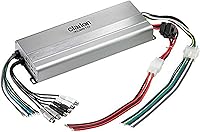
The Clarion XC2510 Class D Marine Amplifier occupies an interesting spot in the marine audio market — compact enough to tuck almost anywhere, yet versatile enough to handle a full speaker-plus-subwoofer setup from a single unit. Clarion has been building marine-grade electronics long enough to earn real credibility in this space, and this marine amp reflects that experience. It runs on Class D efficiency, meaning less heat and lower current draw rather than brute-force wattage. The 5/4/3 channel configuration gives installers genuine flexibility depending on whether they need bridged stereo, a full four-channel spread, or a dedicated sub channel running alongside full-range speakers.
Features & Benefits
The MOS-FET power supply at the heart of the XC2510 keeps operating temperatures reasonable even during long days on the water, which matters more than most buyers initially realize. The 4-layer conformal-coated PCB isn't just a spec — it's real protection against salt air and UV degradation that can destroy standard automotive electronics within a single boating season. A variable crossover lets you tune the subwoofer channel anywhere from 35 to 250Hz and the full-range channels from 15Hz up, so you're shaping the sound rather than guessing. Ground loop isolation onboard is a quiet hero, cutting the electrical interference that plagues boat audio and leaves you with that maddening background whine.
Best For
This marine amp is a natural fit for pontoon or fishing boat owners who want to run four cockpit speakers and a dedicated subwoofer without stacking multiple amplifiers under the console. It's equally useful for automotive builds where space is tight — the 11-inch length and sub-2-inch height opens up mounting locations that a standard amp simply won't fit. DIY installers will appreciate the high-level speaker inputs, which allow direct connection without a separate line output converter when working with a factory head unit. The ASTM certifications for UV and salt-fog resistance make it particularly compelling for anyone spending serious time on saltwater, where lesser hardware quietly corrodes.
User Feedback
Owners consistently highlight how the compact form factor solved installation headaches that larger amps could not — fitting under console lids, beneath seats, and inside storage cubbies with room to spare. On the critical side, some buyers note that the 700W peak figure is a marketing headline rather than a working reality; the continuous RMS output is considerably more modest, which catches people off guard when expecting wall-shaking bass. Thermal performance under sustained high-volume use gets mixed reports — it runs warm but rarely causes shutdown issues during typical recreational outings. Wiring documentation is adequate but thin, and a handful of owners found the bridged-configuration instructions particularly unclear.
Pros
- The ultra-compact body opens up mounting locations that standard-size amplifiers cannot reach.
- ASTM-certified UV and salt-fog resistance provides real, tested protection — not just a marketing claim.
- A single unit handles four full-range speakers and a dedicated subwoofer simultaneously.
- Class D MOS-FET design runs noticeably cooler than older amplifier topologies in confined spaces.
- Ground loop isolation quietly eliminates the electrical whine that plagues most boat audio installs.
- High-level speaker inputs allow connection directly to a factory head unit without extra adapters.
- The variable crossover gives you genuine tuning control over both the sub and full-range channels.
- Soft-mute turn-on and turn-off circuitry protects speakers from power-surge thumps during startup.
- Nickel-plated connectors resist corrosion at the contact points where marine gear most commonly fails.
- Clarion's established history in marine electronics adds meaningful confidence behind the warranty.
Cons
- The 700W peak rating is misleading — continuous RMS output is substantially lower and should set real expectations.
- Bridged-mode configuration instructions in the included documentation are thin and confusing for first-time installers.
- Five channels is the hard ceiling, making this XC2510 a poor fit for larger multi-zone boat audio systems.
- Sustained high-volume use over long sessions can push operating temperatures into the warm range.
- No built-in Bluetooth or wireless control; all adjustments require physical access to the unit.
- The price point is difficult to justify if the amp will live in a sheltered, climate-controlled vehicle environment.
- Bass output from the subwoofer channel may underwhelm buyers expecting performance equal to a dedicated mono amp.
- Only silver color option available, which may clash with custom or blacked-out console aesthetics.
Ratings
The scores below reflect AI-driven analysis of verified global buyer reviews for the Clarion XC2510 Class D Marine Amplifier, with spam, bot-submitted, and incentivized feedback actively filtered out before any scoring was applied. Both the genuine strengths and the recurring frustrations are weighted transparently, so the numbers reflect what real owners experienced after installation — not what the marketing sheet promises.
Build Quality
Corrosion Resistance
Power Output
Compact Design
Thermal Performance
Channel Flexibility
Noise & Interference
Crossover Control
Ease of Installation
Value for Money
Subwoofer Performance
Long-Term Reliability
Input Versatility
Suitable for:
The Clarion XC2510 Class D Marine Amplifier is a strong match for recreational boaters who want a single, tidy amplifier solution rather than a tangle of separate units spread across a cramped console. If you're upgrading a pontoon, fishing boat, or wakeboard boat and need to drive four speakers plus a subwoofer without rewiring half the vessel, this unit's 5/4/3 channel flexibility makes that genuinely achievable in one install. It's also a smart pick for automotive builders dealing with severe space constraints — the slim, compact body fits places most full-size amps simply cannot. DIY installers who prefer a clean, guided setup will appreciate the high-level speaker inputs and the soft-mute turn-on circuit, both of which reduce the risk of damaging components during initial power-up. Anyone spending real time on saltwater — where humidity, UV, and corrosive air are constant — will value the ASTM-certified environmental protection backing up Clarion's claims.
Not suitable for:
Buyers chasing raw, room-filling output will likely walk away disappointed — the Clarion XC2510 Class D Marine Amplifier is engineered around efficiency and environmental durability, not maximum continuous wattage. The 700W peak figure looks impressive on paper, but the actual continuous RMS power delivered to speakers is considerably lower, and audiophiles or serious bass enthusiasts who want sustained high-volume performance should look at higher-output dedicated mono or multi-channel amplifiers instead. It's also not ideal for large boat setups with six or more speaker zones, since five channels is a firm ceiling with no easy expansion path. Buyers who need detailed, step-by-step installation guidance may find the included documentation too sparse, particularly when configuring bridged output modes. Finally, if your budget is stretched thin and you're weighing it against bare-bones alternatives, the price premium here makes more sense only if you're genuinely operating in a harsh outdoor environment where the durability features actually get used.
Specifications
- Peak Output: The amplifier delivers a maximum peak output of 700W across all channels combined under ideal, momentary conditions.
- 4-Channel RMS: Continuous 4-channel power is rated at 50W per channel into 4-ohm loads, rising to 75W per channel when driving 2-ohm speakers.
- Subwoofer RMS: The dedicated fifth channel delivers 200W continuous into a 4-ohm subwoofer, or 300W continuous when wired to a 2-ohm load.
- Bridged Output: When bridged to stereo operation, the unit produces 150W per channel into 4-ohm loads, reducing the active channel count to two.
- Amplifier Class: Class D MOS-FET topology is used throughout, prioritizing power efficiency and reduced heat generation over raw amplification headroom.
- Dimensions: The unit measures 4.37 x 11 x 1.5 inches, making it one of the more compact 5-channel marine amplifiers in its output class.
- Weight: Shipping weight is approximately 5 pounds, which is manageable for single-person mounting in confined spaces.
- Input Voltage: The amplifier operates on a standard 12V DC power supply, compatible with most automotive and marine electrical systems.
- Channel Config: The unit supports 5-channel, 4-channel, or 3-channel operating configurations depending on bridging and subwoofer wiring choices.
- Crossover Type: An onboard 12dB-per-octave electronic crossover provides both high-pass and low-pass filtering with variable frequency selection.
- Crossover Range: The subwoofer channel crossover adjusts from 35Hz to 250Hz, while the full-range channels cover 15Hz to 250Hz for precise tuning.
- PCB Construction: A 4-layer printed circuit board is conformally coated throughout, providing a physical barrier against moisture, salt air, and condensation ingress.
- Certifications: The amplifier meets or exceeds ASTM D4329 for UV exposure resistance and ASTM B117 for salt-fog exposure resistance.
- Connectors: All RCA, power, and speaker connection points use corrosion-resistant nickel plating to extend contact reliability in humid or salty environments.
- Input Types: Both standard RCA line-level inputs and high-level speaker inputs are supported, allowing connection to aftermarket or factory head units alike.
- Special Circuits: Ground loop isolation circuitry and a soft-mute turn-on and turn-off function are built in to reduce noise and protect connected speakers.
- Color: The unit ships in a silver finish, which is the only available color option for this model.
- Compliance: The amplifier is rated for use in both marine and standard automotive environments, meeting the environmental exposure standards required for open-air watercraft use.
Related Reviews
Dayton Audio SPA300-D
Velex VX508 Class-D Marine Amplifier
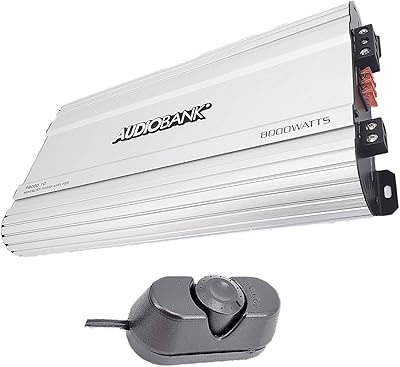
Audiobank P8001 Monoblock Car Amplifier
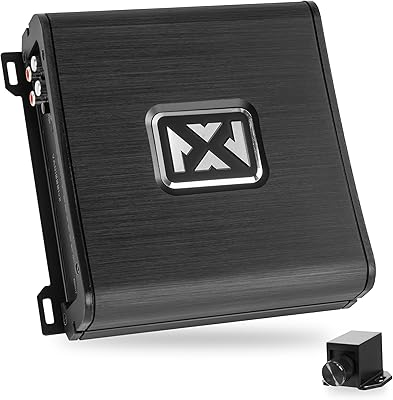
NVX VAD10001 v2 Monoblock Class D Amplifier
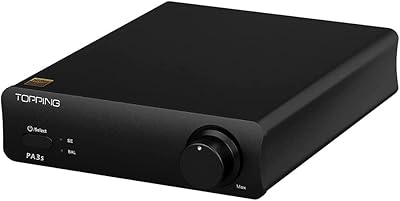
Topping PA3s
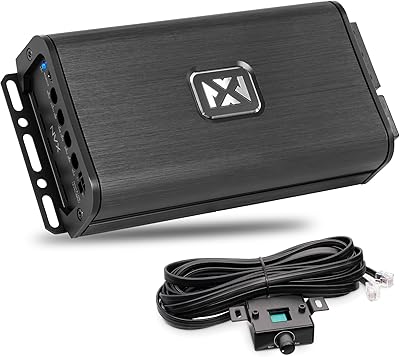
NVX VADM1v2 Monoblock Amplifier

Taramp's TL 500 2-Channel Car Amplifier
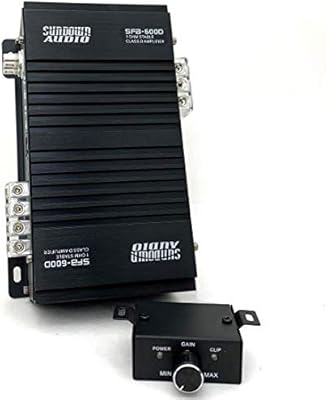
Sundown Audio SFB-600D Monoblock Amplifier
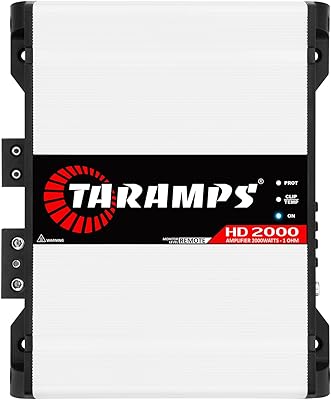
Taramps HD 2000 Monoblock Car Amplifier