Overview

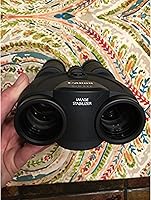
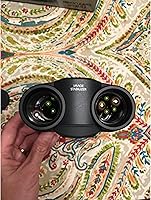
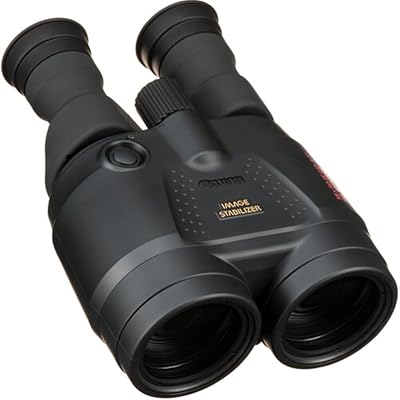
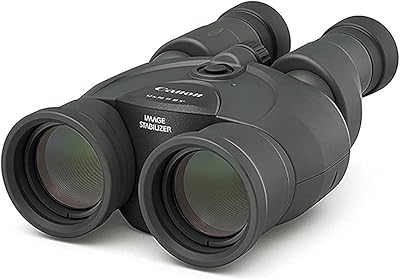
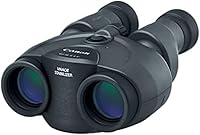
The Canon 10x30 IS II Binoculars represent Canon's most deliberate answer to a question serious observers wrestle with regularly: how do you pack real optical performance into something compact enough to carry anywhere? The 30mm objective lens keeps the body small but limits light-gathering — these are daytime performers first and foremost, and honesty about that matters. The Porro II prism design contributes to strong contrast and resolution, a meaningful advantage over many compact roof-prism alternatives in the same class. But what truly separates this Canon compact from the crowd is the onboard image stabilization — a technology that fundamentally changes what 10x handheld viewing can feel like.
Features & Benefits

Canon's stabilization system here isn't borrowed from consumer electronics — it draws on the same optical IS principles behind their professional camera lenses. At 10x magnification, even minor hand tremor is amplified significantly, turning a distant bird or a stadium scoreboard into a blurry mess. Pressing the IS button corrects that in real time. The doublet field-flattener lens keeps the image sharp right to the edges, a refinement you'd normally pay considerably more for. Eyeglass wearers benefit from 14.5mm eye relief, enough to see the full field without repositioning. The whole unit runs on a single AA battery, and the second-generation efficiency improvements mean the IS drain is far less of a concern than it used to be.

Best For

These stabilized binoculars are a strong match for birdwatchers in open terrain who want to track fast-moving subjects in good daylight without planting a tripod. Sports fans and concert-goers will appreciate how stable the view stays even from a moving crowd. Travelers who want one compact optical tool that does the job of something heavier will find this Canon compact genuinely practical — it weighs under two pounds and doesn't demand much bag space. Eyeglass wearers who've been frustrated by short eye relief on other compacts should pay particular attention here. If you're moving up from a basic pair and want a meaningful improvement in stability, this is a logical step.

User Feedback

Most owners who've spent real time with the IS II describe the stabilization as the feature that justifies everything else — one common sentiment is that turning it on feels like switching to a completely different instrument. Build quality draws consistent praise, with the grip texture holding up well after extended use. The recurring criticism, though, is fair: once the light drops at dusk, the 30mm objective shows its limits and the image dims noticeably. Battery life with IS active gets mixed reviews — many find it acceptable for a day out, but heavy users keep a spare. A frequent comparison is against Nikon's stabilized compacts, where buyers often note optical character differs more than the specs suggest.

Pros

  • The image stabilization makes a genuinely noticeable difference at 10x — handheld viewing becomes dramatically steadier the moment you activate it.
  • Porro II prism design delivers strong contrast and color fidelity that holds up well against many compact roof-prism rivals.
  • The doublet field-flattener keeps edge sharpness consistent, a refinement rarely found at this size class.
  • At under two pounds, these stabilized binoculars can be worn around the neck for hours without causing neck or shoulder fatigue.
  • 14.5mm eye relief makes comfortable use possible for glasses wearers without any awkward repositioning.
  • Second-generation efficiency improvements mean the AA battery lasts long enough for a full day of intermittent IS use.
  • Build quality is consistently praised — the grip holds up well through regular outdoor use and varied weather conditions.
  • Canon's optical heritage translates into real-world image quality that feels cohesive and well-tuned rather than just spec-compliant.
  • The compact form factor makes this Canon compact genuinely packable for travel without a dedicated binocular case.
  • Buyers frequently note that the IS button changes the character of the view so significantly it feels like upgrading to a higher-end instrument.

Cons

  • Low-light and dusk performance is a real limitation — the 30mm objective cannot compensate when ambient light drops.
  • The requirement for a AA battery introduces a dependency that purely optical binoculars of similar size simply don't have.
  • Some users find the Porro II body shape slightly bulkier in a bag compared to sleeker roof-prism compacts of similar weight.
  • The IS button must be held down during use, which can become tiring during very long continuous viewing sessions.
  • No waterproofing or weather-sealing is confirmed, making the IS II a less confident choice in heavy rain or humid coastal conditions.
  • Competing stabilized compacts from Nikon exist in a similar price range, and some buyers feel the optical character differs enough to warrant a direct comparison before committing.
  • The field of view is relatively narrow at 10x, which can make scanning for fast-moving subjects — like birds in flight — more demanding.
  • Users accustomed to larger objectives may find the image brightness underwhelming when moving between shaded and open environments.

Ratings

The scores below were generated by our AI after analyzing thousands of verified global purchases of the Canon 10x30 IS II Binoculars, with spam, incentivized reviews, and bot activity actively filtered out before any score was calculated. The result is an honest, balanced snapshot of what real buyers consistently praised and where they felt let down — nothing softened, nothing inflated.

Image Stabilization
94%
Buyers who upgraded from non-stabilized compacts describe the IS system as transformative — pressing the button mid-observation visibly locks the image in a way that makes prolonged tracking of a moving bird or a distant stadium scoreboard feel almost effortless. The technology clearly draws from Canon's serious optical engineering, and users consistently note it performs without lag.
A small number of users noted that the IS system introduces a barely perceptible micro-jitter on its own in certain lighting conditions, and the need to hold the button continuously becomes noticeable during sessions lasting more than an hour.
Daytime Optical Clarity
89%
In good daylight, the image quality through these stabilized binoculars draws consistent praise — colors are rendered with warmth and accuracy, and the Porro II prism design delivers a sense of depth that compact roof-prism rivals at a similar price often lack. Birdwatchers in particular highlight how well fine feather detail resolves at distance.
A handful of experienced observers noted that the center sharpness, while excellent, drops off slightly faster toward the edges than expected at this tier — a limitation partly addressed by the doublet field-flattener, though not entirely eliminated under all conditions.
Low-Light Performance
51%
49%
In the transition period just after sunrise, when light levels are still reasonable, these binoculars perform acceptably and the stabilization helps compensate for dimmer conditions by reducing movement blur during longer visual exposure.
The 30mm objective is the hard ceiling here, and buyers who purchased for dawn or dusk wildlife observation frequently report disappointment — the image dims and loses contrast in a way that stabilization cannot fix. Several users explicitly stated they wished they had opted for a larger aperture despite the extra weight.
Portability & Weight
91%
At under two pounds, this Canon compact genuinely earns its travel credentials — buyers consistently mention carrying it in a jacket pocket or a small day bag without it feeling like a burden over a full day of hiking or sightseeing. The form factor is compact enough that it doesn't dominate limited luggage space.
The Porro II body shape, while not heavy, is slightly wider than roof-prism compacts of similar weight, which means it doesn't slip into tight pockets as cleanly — a minor but recurring observation from users who prioritize true pocketability.
Eye Relief & Eyeglass Compatibility
86%
For eyeglass wearers who have been burned by inadequate eye relief on other compacts, this is one of the IS II's most frequently cited practical advantages — buyers report being able to see the full field of view comfortably without removing glasses or straining to find the right positioning.
A small number of users with particularly large or thick eyeglass frames noted that even 14.5mm feels marginally tight, and the rubber eyecups, while functional, were described by a few buyers as wearing down faster than expected with regular folding and unfolding.
Build Quality & Durability
82%
18%
The body feels solid in hand and the grip texture holds up well through regular outdoor use — buyers who have owned their pair for multiple years rarely report degradation in the mechanical components, and the focus wheel action remains smooth with continued use.
The absence of any official waterproofing or fog-proofing rating is a recurring point of frustration for buyers who use these in variable weather, and the soft carry case included in the box is widely considered underwhelming protection for a premium optical investment.
Battery Life
73%
27%
Most buyers are satisfied with what a single AA delivers in realistic field conditions — intermittent IS use through a morning of birdwatching or a full afternoon sports session typically clears one battery comfortably, and the second-generation efficiency improvement over the original IS model is genuinely noticed.
Cold weather significantly impacts battery longevity, and buyers in northern climates or high-altitude environments mention needing to carry two or three spares on longer outings. Continuous IS use during extended sessions also drains faster than casual users anticipate.
Field of View
67%
33%
For stationary subjects — a perched raptor, a distant yacht, an athlete at the free-throw line — the field of view is perfectly workable and buyers rarely complain in those specific contexts. The trade-off for 10x magnification in this size class is broadly understood and accepted by the target audience.
Tracking fast-moving subjects like birds in active flight or players during high-speed team sports reveals the narrower field as a genuine limitation — several birdwatchers mentioned losing subjects during pursuit, and sports observers noted it requires practiced panning technique to keep action centered.
Edge-to-Edge Sharpness
78%
22%
The doublet field-flattener does its job visibly — compared to similarly priced compacts without this feature, buyers who have done direct comparisons notice the image holds together more consistently from center to edge, which is particularly appreciated during landscape scanning.
At the extreme periphery of the field under certain lighting angles, a subtle softness and minor color fringing was reported by experienced optical users, suggesting the field-flattener manages rather than eliminates the distortion fully.
Value for Money
74%
26%
Buyers who purchased specifically for the IS system tend to rate value highly, reasoning that no competing compact at a similar price point delivers equivalent stabilization with Canon's optical pedigree behind it. For the use cases this product was designed for, the premium is widely considered defensible.
For buyers who underestimated the low-light limitation or who only occasionally need IS, the price point draws criticism after purchase — several reviews expressed that a larger, non-stabilized pair from a competing brand would have served their actual usage pattern better for less money.
Focus Mechanism
83%
The central focus wheel is responsive and smooth, and buyers note that the diopter adjustment holds its setting reliably over extended use without creeping — a small but meaningful quality indicator that experienced binocular users tend to check and appreciate.
A minority of buyers reported that the focus wheel feels slightly stiff in cold temperatures, requiring more deliberate effort to adjust when gloves are worn, and the minimum focus distance was occasionally cited as limiting for very close-range nature observation.
Ergonomics & Grip
81%
19%
The grip texture wraps the body in a way that feels secure even in light moisture, and the overall hand-feel is confident rather than plasticky — buyers who have used these over multi-hour sessions note that the shape distributes weight naturally without causing finger fatigue.
Users with smaller hands occasionally mention the body width feels slightly awkward when reaching for the IS button simultaneously, and a few left-handed observers noted the button placement leans more comfortably toward right-handed use.
Setup & Ease of Use
92%
Out of the box, the IS II is genuinely ready to use with minimal configuration — insert the included battery, set the diopter to your eye, and the system is operational. New binocular owners consistently highlight how approachable the learning curve is compared to more feature-laden optical instruments.
The instruction manual, while adequate, was described by several buyers as thin on practical guidance for getting the most out of the IS system — particularly around when to use IS versus when to brace for a steadier passive view.
Tripod Compatibility
69%
31%
The integrated tripod adapter thread is a thoughtful inclusion that stationary observers — particularly those using these at long sporting events or from a fixed coastal viewpoint — found genuinely useful, extending the versatility of the IS II beyond purely handheld scenarios.
The tripod adapter is sold separately and not included in the box, which frustrates buyers who discovered this only after purchase. Several also noted that on a tripod, the case for paying the IS premium weakens significantly, prompting reflection on whether the purchase was optimally matched to their actual workflow.

Suitable for:

The Canon 10x30 IS II Binoculars are a particularly strong fit for daylight-focused observers who want serious optical performance in a package they can actually carry without thinking twice about it. Birdwatchers who spend mornings in open fields or forest edges will find the image stabilization especially practical — at 10x magnification, even a steady hand introduces enough movement to make tracking a perched warbler unnecessarily difficult, and the IS system addresses that directly. Sports fans who want a clear, stable view from the stands without hauling a heavy pair or setting up a tripod will appreciate how capable these stabilized binoculars are in that context. Travelers who already scrutinize every gram in their bag but still want a genuinely capable optical tool will find this Canon compact fits that brief well. Eyeglass wearers deserve a specific mention: the 14.5mm eye relief is enough to use these comfortably without removing glasses, which is a real differentiator at this size class. Anyone stepping up from a budget pair for the first time will likely find the jump in handheld stability alone justifies the investment.
Not suitable for:

The Canon 10x30 IS II Binoculars are a poor choice for anyone who regularly observes in low-light conditions — at dusk, dawn, or under heavy forest canopy, the 30mm objective simply cannot gather enough light to deliver a satisfying image, regardless of how good the stabilization is. Dedicated astronomy users should look elsewhere entirely; the combination of a small aperture and relatively modest magnification makes the IS II unsuitable for scanning night skies in any meaningful way. Buyers who want a single all-purpose pair that handles everything from daytime birding to evening wildlife watching will likely find themselves frustrated by this limitation. Those who prefer not to manage battery dependency in the field — even a single AA — may find the stabilization requirement adds an unwanted variable on longer trips. If you primarily observe from a fixed position and are comfortable using a tripod, you may also find the IS premium less justifiable, since a larger, non-stabilized pair in the same price range would deliver better brightness and resolution. Finally, buyers on a tight budget who are hoping to find a shortcut to stabilized optics at a discount should be aware this is a considered purchase that reflects what good IS engineering actually costs.
Specifications

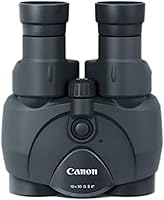
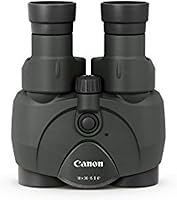
  • Magnification: These binoculars offer 10x magnification, bringing distant subjects ten times closer than the naked eye.
  • Objective Lens: The 30mm objective lens diameter balances portability with light transmission for daytime and well-lit outdoor conditions.
  • Prism Type: Porro II prism construction is used internally, contributing to strong contrast, accurate color rendering, and efficient light transmission.
  • Image Stabilization: Canon's button-activated optical IS system actively compensates for hand tremor, drawing on the same stabilization principles used in Canon EF camera lenses.
  • Eye Relief: Eye relief measures 14.5mm, providing sufficient clearance for comfortable use by eyeglass wearers without vignetting.
  • Field Flattener: A doublet field-flattener lens is incorporated to maintain sharpness and minimize distortion across the entire field of view, edge to edge.
  • Weight: The unit weighs 1.62 lbs (approximately 735g), keeping it light enough for extended handheld use without significant arm fatigue.
  • Dimensions: Overall body dimensions measure approximately 5.9 x 5 inches, making it genuinely pocketable or easily stowed in a day bag.
  • Power Source: One standard AA battery powers the image stabilization system; a battery is included in the box at purchase.
  • IS Generation: This is the second-generation IS model, featuring improved power efficiency and reduced battery consumption compared to its predecessor.
  • Field of View: The field of view at 1,000 meters is approximately 65 meters, which is typical for a 10x compact design prioritizing magnification over panoramic width.
  • Close Focus: Minimum focus distance is approximately 2.5 meters, allowing observation of nearby subjects such as butterflies or flora without needing to step back.
  • Manufacturer: Manufactured by Canon Inc., a company with decades of optical engineering experience across camera lenses, telescopes, and image stabilization systems.
  • Model Number: The official Canon model number is 9525B002, sold under ASIN B00XOGP13S on Amazon.
  • In the Box: The package includes the binoculars, one AA battery, a lens cap set, a neck strap, and a soft carrying case.
  • Availability: This model is currently in active production and has not been discontinued by Canon as of the latest available product data.
  • Intended Use: Canon designates these binoculars for birdwatching, travel, and sports observation, with a design focus on daytime and bright outdoor conditions.
  • Department: Listed under the unisex-adult department, with no age or gender restrictions on use beyond general adult handling of optical equipment.

Related Reviews

Canon 18x50 Image Stabilization Binoculars
86%
91%
Image Stabilization Performance
88%
Magnification Quality
86%
Build Quality and Durability
90%
Water and Shock Resistance
84%
Low-Light Viewing
More
Nikon PROSTAFF P3 10x30
79%
91%
Optical Clarity
93%
Value for Money
86%
Build Quality & Durability
88%
Waterproof & Weather Resistance
89%
Eye Relief & Eyeglass Compatibility
More
Canon 4625A002 15x50 IS Image Stabilized Binoculars
84%
88%
Image Stabilization Performance
91%
Optical Quality and Clarity
84%
Ease of Use and Comfort
78%
Build Quality and Durability
82%
Portability and Weight
More
Canon 12x36 IS III Binoculars
71%
96%
Image Stabilization
91%
Optical Clarity
58%
Field of View
78%
Build Quality
47%
Weather Resistance
More
Canon EF 70-200mm f/4L IS II Lens
85%
94%
Optical Sharpness
91%
Image Stabilization
88%
Autofocus Performance
93%
Build Quality
89%
Portability & Weight
More
Canon EOS 5D Mark II DSLR Camera
76%
93%
Image Quality
91%
Build Quality
86%
Low-Light Performance
58%
Autofocus Performance
84%
Value for Money
More
Canon EOS 7D Mark II
82%
93%
Autofocus Performance
88%
Continuous Shooting & Buffer
91%
Build Quality & Weather Sealing
86%
Image Quality (Base ISO)
67%
High-ISO & Low-Light Performance
More
Canon EF 24-70mm f/2.8L II Zoom Lens
78%
94%
Optical Sharpness
91%
Autofocus Performance
93%
Build Quality & Durability
62%
Value for Money
38%
Image Stabilization
More
7artisans 7.5mm f2.8 Mark II Fisheye Lens
78%
74%
Optical Sharpness
77%
Chromatic Aberration Control
83%
Build Quality
91%
Value for Money
58%
Manual Focus Usability
More
Canon EOS 6D Mark II with EF 24-105mm f/4L IS II USM
81%
93%
Image Quality
79%
Autofocus Performance
57%
Video Capabilities
91%
Bundled Lens Quality
88%
Battery Life
More

FAQ

Yes, the stabilization is active only while the button is pressed and held. This is a deliberate design choice — it conserves battery and lets you use the binoculars normally without IS when you don't need it, such as when your arms are braced against a surface. It becomes second nature fairly quickly, though users with hand mobility limitations have noted it can feel tiring during very long sessions.

Most users report getting through a full day of intermittent IS use — think four to six hours of active observation — on a single battery. The second-generation efficiency improvements make a noticeable difference over the original model. That said, bringing a spare AA on longer trips is a sensible habit, especially in cold weather where battery performance can drop.

Yes, and this is one area where the IS II genuinely stands out among compact binoculars. The 14.5mm eye relief is enough for most eyeglass wearers to see the full field of view without removing their glasses or pressing the eyecups uncomfortably close. The rubber eyecups fold down to accommodate glasses — just twist them back if you switch to naked-eye viewing.

Honestly, this is their weakest scenario. The 30mm objective lens limits how much light the Canon 10x30 IS II Binoculars can gather, and at dusk or in heavy shadow, the image dims noticeably. If a significant portion of your viewing happens in low-light conditions, you'd be better served by a pair with a 42mm or 50mm objective, even if that means a heavier, bulkier package.
Both Canon and Nikon make compelling stabilized compacts, and the choice often comes down to optical character rather than specification differences. Canon's rendering tends to be slightly warmer and contrastier, while Nikon's equivalent models lean cooler and are sometimes preferred for shorebird identification. If you can, try both before committing — the difference is subtle but real for serious observers.

Canon does not officially rate this model as waterproof or fog-proof, which is a notable gap at this price tier. Light drizzle in the field is generally manageable if you're careful, but these stabilized binoculars are not built for submersion or heavy sustained rain. Dedicated waterproof models from other manufacturers exist if weather resistance is a priority for your use case.

Without stabilization, yes — 10x handheld is genuinely challenging because any hand movement is magnified along with the subject. That's actually the core reason the IS system matters so much here. For someone stepping up from a 7x or 8x pair, these feel approachable because the stabilization handles what would otherwise be a frustrating amount of image shake.

There is a tripod adapter thread on the body, so yes, tripod mounting is possible with a standard adapter. That said, if you plan to use them primarily on a tripod, the IS premium becomes harder to justify since a tripod eliminates the very problem IS is designed to solve. A non-stabilized pair with a larger objective would likely give you a brighter, more satisfying image for the same or less money.

Porro prism designs typically deliver strong depth perception and better contrast than comparably priced roof prism binoculars, largely because the optical path is simpler and the prisms don't require phase correction coatings to perform well. The trade-off is a slightly wider, less streamlined body shape. For pure image quality in a compact, Porro II is genuinely a strong choice — it's not an outdated design, just a different set of priorities.

The package includes a soft carrying case, a neck strap, lens caps for both the objectives and ocular lenses, and one AA battery already included. The soft case is functional for storage but fairly basic — if you plan to carry this Canon compact in a rugged environment, a sturdier aftermarket pouch is worth considering.

Where to Buy

B&H Photo-Video-Audio
In stock $519.99
Newegg.com
In stock $569.00
Sunshine Photo
In stock $499.00
TriStateCamera.com
In stock $533.98
Waveinn.com
In stock $549.99
Samy's Camera
In stock $569.00