Overview

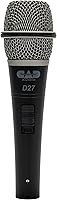
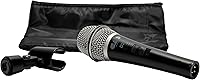
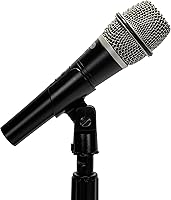
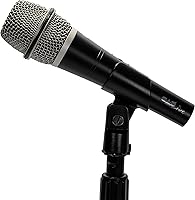
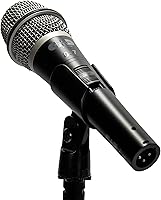
The CAD Audio D90 Handheld Dynamic Microphone is a road-ready workhorse built for live performers who need reliability without spending a fortune. CAD has long flown under the radar compared to bigger brands, but this stage microphone has reportedly shown up on real touring rigs — not just bedroom setups. The all-metal construction immediately sets it apart from plasticky mics in the same price range, and the included hard-sided road case is a genuine convenience, not an afterthought. Just be clear about what you're getting: this is a live vocal tool, not a replacement for a large-diaphragm studio condenser.

Features & Benefits

The D90 uses a true flex diaphragm that responds well to the natural dynamics of a live vocal — capturing articulation without going harsh on loud passages. Behind that is a neodymium magnet, which means the output signal is strong enough that your front-of-house engineer won't be hunting for extra gain. The 80 dB signal-to-noise ratio is a practical win in loud stage environments where cheap mics pick up every stage monitor bleed. At 500 ohms impedance, it plugs straight into any standard mixer without needing special adapters. Frequency response up to 16 kHz keeps the top end of your voice present and clear — something entry-level dynamics often sacrifice.

Best For

This dynamic mic is a natural fit for working vocalists who perform regularly and need something that can take a beating. If you're stepping up from a cheap wired mic but not ready to spend on a flagship option, the D90 hits a comfortable middle ground. Gigging musicians who throw gear in the back of a van will appreciate the metal chassis and the fact that the road case actually fits in a gig bag pocket. It also handles karaoke and semi-pro stage use well. If you want one mic that travels, survives, and sounds decent every night, this stage microphone is worth serious consideration.

User Feedback

With a 4.8-star average across 52 ratings, buyer response to the D90 is positive — though that sample size is small enough that it's worth keeping in perspective. Most praise centers on vocal clarity during live use, the solid build quality, and the road case actually being useful rather than a flimsy box that falls apart. A handful of buyers have drawn comparisons to the SM58, generally noting the D90 holds its own at this price. The less enthusiastic reviews mention handling noise if you're not mic-technique conscious, and a few note that proximity effect is noticeable. Neither is unusual for a dynamic mic in this category.

Pros

  • All-metal body feels genuinely durable and holds up to the wear of regular gigging.
  • The neodymium magnet produces a strong output signal, making life easier for front-of-house engineers.
  • Includes a hard-sided road case that actually protects the mic during transport.
  • 80 dB signal-to-noise ratio keeps the vocal clear even on loud, busy stages.
  • No batteries or phantom power needed — just plug in and perform.
  • 500 ohm impedance works straight into any standard mixer or PA without fuss.
  • The true flex diaphragm handles dynamic vocal performances without sounding harsh at higher volumes.
  • Vocal clarity holds up well in live environments where cheaper mics tend to turn muddy.
  • Ships with a mic clip included, so you have everything needed to perform right out of the box.
  • Reported use on major touring rigs adds some real-world credibility at this price point.

Cons

  • The review pool is small, so the high star rating should be taken with measured expectations.
  • Handling noise is noticeable if you move the mic around frequently or lack solid mic technique.
  • Proximity effect is pronounced, which can make vocals sound boomy if you work too close to the capsule.
  • Less brand recognition than SM58-class mics, which may matter in professional or high-visibility settings.
  • The sensitivity rating means quiet or breathy vocalists may need more gain than expected from a mixer.
  • Not well suited for studio recording, limiting its versatility compared to more multi-purpose options.
  • CAD Audio has lower brand visibility in some markets, making in-person support or warranty service harder to find.
  • At approximately one pound, it is slightly heavier than some competing mics, which can cause fatigue during long sets.

Ratings

The CAD Audio D90 Handheld Dynamic Microphone has been scored by our AI rating system after analyzing verified buyer reviews from multiple global sources, with spam, bot-generated, and incentivized feedback actively filtered out. Scores reflect a balanced picture of where this stage microphone genuinely delivers and where real-world users have run into friction. Both standout strengths and recurring pain points are represented transparently below.

Build Quality
91%
The all-metal chassis is one of the most consistently praised aspects across buyer feedback. Gigging musicians specifically note that the body holds up after being knocked off stands, thrown into gear bags, and transported in cramped vehicle trunks without showing visible damage or affecting performance.
A small number of users noted that the grille, while metal, can show denting after harder impacts. It does not compromise function, but for performers who care about the mic looking pristine on stage over many months, scuffs are inevitable.
Vocal Clarity
84%
Most buyers report that vocals cut through clearly in live mix environments, with enough upper-frequency presence to avoid the muddy, muffled quality that plagues cheaper dynamics. The true flex diaphragm seems to handle both soft and loud passages without compressing the sound unnaturally.
A few users who compared the D90 directly to SM58-class mics noticed a slightly less refined midrange, particularly on male vocals with a lot of chest resonance. It is not a dealbreaker for most live settings, but it is a real difference some ears will catch.
Output Signal Strength
88%
The neodymium magnet produces a notably hot signal for a mic at this price point, which front-of-house engineers tend to appreciate. Buyers running through entry-level mixers report not having to push the gain channel anywhere near its limit, which keeps the noise floor in check.
Vocalists with a naturally quiet or breathy delivery have noted needing more gain than expected on lower-powered mixers, suggesting the sensitivity floor is not as forgiving as some competing mics in similar categories.
Value for Money
89%
The combination of a metal body, road case, and mic clip at this price tier is genuinely difficult to match. Most buyers feel they are getting more tangible hardware per dollar than comparable alternatives, especially when factoring in the cost of a decent carrying case bought separately.
Buyers who are upgrading from significantly cheaper mics may feel satisfied, but those coming from professional-tier gear will notice the performance ceiling. The value proposition is strongest for the mid-tier buyer and less compelling as a workhorse for high-demand professional touring.
Handling Noise
63%
37%
Under controlled conditions where the performer maintains a steady grip and consistent mic distance, handling noise is minimal and unlikely to cause problems through a live PA. Experienced vocalists with solid mic technique generally do not flag this as an issue.
Multiple buyers specifically called out noticeable handling noise when gripping, repositioning, or passing the mic. For performers who move expressively or share a mic during karaoke and group performances, the vibration transfer through the metal body is an audible problem.
Proximity Effect
67%
33%
The pronounced proximity effect works in favor of vocalists who like a fuller, warmer low-end presence when working close to the capsule. Some performers actively exploit this characteristic to add body to thinner voices in a live mix.
Singers who are not accustomed to managing their distance from the capsule can end up with an overly boomy, bass-heavy vocal that is difficult for a sound engineer to correct cleanly in a live setting. This is less forgiving than some competing dynamics with tighter proximity behavior.
Road Case Quality
78%
22%
Unlike many accessories bundled with budget mics, the hard-sided case that ships with the D90 is functional enough that buyers actually use it for regular transport. Several reviewers mention it being a deciding factor in the purchase, and it has held up well in day-to-day gigging scenarios.
It is not a heavy-duty case by any professional standard — the latching mechanism and foam interior are serviceable but not built for years of serious abuse. If you are checking gear on flights or touring in demanding environments, you would likely want to invest in a more robust case separately.
Compatibility
93%
The standard XLR output and 500 ohm impedance mean this mic plugs into virtually anything a live performer might encounter — bar PA systems, church sound rigs, karaoke machines, or basic audio interfaces. There are essentially no compatibility headaches to worry about.
The lack of a bundled XLR cable is a minor inconvenience for first-time buyers who may not realize it is not included. It is a small friction point at purchase but not a meaningful long-term concern.
Stage Presence & Aesthetics
72%
28%
The all-black metal finish looks clean and professional on stage without drawing attention away from the performer. The form factor is familiar and confidence-inspiring, particularly for vocalists who want to look like they belong on a real stage.
CAD Audio does not carry the same instant brand recognition as Shure or Sennheiser, and for performers in high-visibility settings, that lack of a recognizable logo can be a subtle but real psychological barrier — both for the performer and the audience.
Frequency Response Range
74%
26%
Extending up to 16 kHz, the D90 captures enough top-end detail to keep vocals sounding clear and intelligible in a live mix. Consonants and upper harmonics come through in a way that budget mics with a narrower response simply cannot manage.
For any application beyond live vocals, the frequency ceiling shows its limits. Recording acoustic instruments or any source that benefits from air and extended high-frequency detail will quickly expose what the design trades away in favor of live-stage practicality.
Weight & Ergonomics
76%
24%
At roughly one pound, the D90 has a reassuring solidity in hand that many performers associate with quality gear. Short to mid-length sets present no real fatigue concerns, and the grip diameter is standard enough to work with most mic stands and holders.
Compared to lighter plastic-bodied alternatives, the metal construction adds weight that can become noticeable during extended performances lasting several hours. Performers with wrist or joint sensitivities have occasionally flagged this as a consideration.
Ease of Setup
94%
Being a passive dynamic mic with a standard XLR connector, setup is about as straightforward as it gets — connect cable, set gain, perform. There are no drivers, no charging, and no configuration required, which is genuinely appreciated by performers who want zero technical friction before a show.
New users sometimes assume an XLR cable is included given the completeness of the rest of the package. Discovering that omission at showtime is a rare but avoidable frustration that a clearer product listing would eliminate.
Durability Over Time
82%
18%
The all-metal construction appears to hold up well beyond the initial purchase period. Buyers who have owned the D90 for over a year report consistent performance without degradation in output level or clarity, which matters for performers who rely on their gear night after night.
Long-term reviews are limited given the relatively modest review pool size. While early durability signals are positive, it is harder to make definitive claims about multi-year performance compared to mics with far larger and more time-distributed review histories.

Suitable for:

The CAD Audio D90 Handheld Dynamic Microphone is a strong match for working vocalists who perform live regularly and need a mic that can handle the physical reality of gigging — rough transport, loud stages, and nights where gear gets knocked around. If you're a singer playing bar circuits, small venues, or community theater productions, this dynamic mic offers a meaningful step up from the cheap, plasticky options without requiring a significant financial commitment. Performers who travel often will especially appreciate the included hard-sided road case, which protects the mic in a gear bag without needing a separate purchase. It's also a solid option for karaoke setups and semi-professional PA systems where you want decent vocal clarity and a hot enough signal to work with any standard mixer. Anyone upgrading from a first-ever microphone who wants something that actually feels pro-grade in the hand will find the D90 a satisfying and practical choice.

Not suitable for:

The CAD Audio D90 Handheld Dynamic Microphone is not the right tool for home studio recording or any application where capturing fine sonic detail is the priority — dynamic mics of this type are built for the stage, not the recording booth. Podcasters, voiceover artists, and bedroom producers looking for a smooth, controlled sound with minimal handling noise will likely find this mic frustrating, since dynamic handheld designs are inherently more susceptible to physical vibration pickup. Buyers hoping to use it as their primary studio vocal mic alongside audio interfaces and DAWs should look toward purpose-built condenser or broadcast-style dynamic options instead. Those who frequently record acoustic instruments with nuance — fingerpicked guitar, brushed drums, or classical vocals — will also find the frequency ceiling of 16 kHz limiting compared to condenser alternatives. Finally, if brand recognition at high-profile gigs matters to you, the D90 is less immediately recognizable than SM58-class competitors, which may factor into a professional stage presentation.

Specifications

  • Microphone Type: Dynamic handheld microphone designed primarily for live vocal performance.
  • Diaphragm: True flex diaphragm design engineered for articulate response across dynamic vocal ranges.
  • Magnet Type: Neodymium magnet provides a strong, hot output signal without requiring excessive amplification.
  • Impedance: Output impedance is 500 ohms, compatible with standard live sound mixers and PA systems.
  • Sensitivity: Audio sensitivity rated at -51 dB, suitable for close-mic vocal applications in live settings.
  • Signal-to-Noise: Signal-to-noise ratio of 80 dB helps maintain vocal clarity in loud, high-SPL stage environments.
  • Frequency Response: Frequency response extends up to 16 kHz, preserving upper vocal harmonics and consonant detail.
  • Channels: Single-channel mono output, standard for handheld dynamic vocal microphones used in live sound.
  • Body Material: All-metal construction throughout the body and grille for durability under heavy touring conditions.
  • Power Source: Passive design requiring no batteries or phantom power; connects via standard XLR cable (not included).
  • Dimensions: Measures 10 x 3 x 6.5 inches, a standard handheld form factor that fits most mic stands and clips.
  • Weight: Weighs approximately 1 pound (454 grams), slightly heavier than some comparable dynamic vocal mics.
  • Includes: Ships with a hard-sided road case and a microphone clip; XLR cable must be sourced separately.
  • Compatible Platforms: Works with live PA systems, mixing consoles, karaoke machines, and any XLR-equipped audio interface.
  • Model Number: Official model designation is D90, manufactured by CAD Audio.
  • UPC: Universal Product Code is 631922107289 as listed by the manufacturer.
  • Release Date: Product was first made available in January 2015 with a catalog update recorded in September 2019.
  • Manufacturer: Made by CAD Audio, a US-based audio brand with a history in professional and semi-professional mic design.

Related Reviews
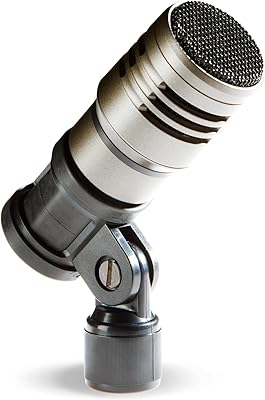
CAD Audio TSM411 Super-Cardioid Dynamic Microphone
80%
83%
Instrument Sound Quality
88%
Polar Pattern Accuracy
86%
Build Quality
79%
Value for Money
84%
Stage Durability
More
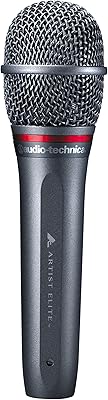
Audio-Technica AE6100 Hypercardioid Dynamic Microphone
78%
88%
Feedback Rejection
93%
Build Quality
84%
Handling Noise Isolation
76%
Vocal Clarity
71%
Value for Money
More
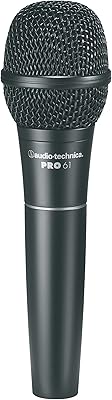
Audio-Technica PRO61 Hypercardioid Dynamic Microphone
81%
88%
Feedback Rejection
84%
Build Quality
71%
Tonal Character
79%
Value for Money
86%
Polar Pattern Precision
More
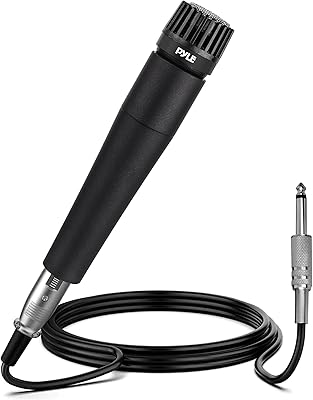
Pyle PDMIC78 Dynamic Handheld Microphone
70%
83%
Build Quality
71%
Sound Clarity
78%
Noise Rejection
84%
Value for Money
62%
Interface Compatibility
More
CAD Audio M179 Large-Diaphragm Condenser Microphone
79%
88%
Sound Quality
91%
Polar Pattern Versatility
86%
Build Quality
83%
Value for Money
61%
Preamp Sensitivity
More
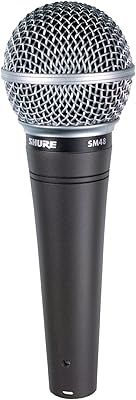
Shure SM48 Handheld Dynamic Microphone
83%
91%
Build Quality
88%
Value for Money
74%
Sound Quality
89%
Feedback Rejection
83%
Handling Noise
More
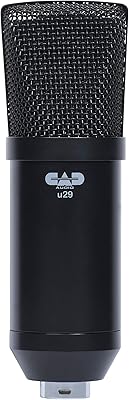
CAD Audio U29 USB Condenser Microphone
75%
83%
Sound Quality
93%
Ease of Setup
81%
Value for Money
68%
Noise Rejection
31%
Onboard Controls
More
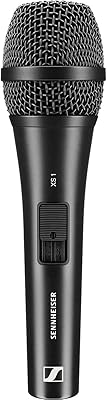
Sennheiser XS 1
Sennheiser XS 1
86%
93%
Build Quality
91%
Value for Money
87%
Feedback Rejection
84%
Speech Intelligibility
89%
Switch Performance
More
Audio-Technica ATM650 Hypercardioid Dynamic Microphone
78%
84%
Stage Isolation Performance
81%
Build Quality
78%
Handling Noise Rejection
61%
Value for Money
79%
Transient Response
More
Sennheiser E825-S
Sennheiser E825-S
87%
94%
Build Quality & Durability
91%
Feedback Rejection
88%
Switch Functionality
86%
Handling Noise Isolation
84%
Vocal Clarity
More

FAQ

No, the D90 is a passive dynamic microphone, which means it needs neither batteries nor phantom power. Just run an XLR cable from the mic to your mixer or PA and you are ready to go.

Unfortunately, no. The CAD Audio D90 Handheld Dynamic Microphone ships with a hard-sided road case and a mic clip, but you will need to supply your own XLR cable. Most performers already have one on hand, but it is worth noting if you are buying this as your very first mic setup.

That comparison comes up a lot, and honestly the D90 holds its ground reasonably well for live vocals at this price tier. The SM58 has a longer track record, wider brand recognition, and a slightly more refined off-axis rejection, but the D90 offers comparable output strength and a more complete out-of-box package with the road case included. If brand prestige on a professional stage matters to you, the SM58 still wins that conversation.

Not really. This stage microphone is built and voiced for live performance, not studio recording. If you need something for tracking vocals in a home setup, a large-diaphragm condenser or a broadcast-style dynamic mic will serve you much better. Using the D90 for studio work is possible in a pinch, but it was never designed for that environment.

It uses a standard XLR output, which connects to virtually any mixer, PA system, audio interface, or karaoke machine with an XLR input. There is no USB version of this mic.

Based on buyer feedback, the hard-sided case is a genuine perk. It is rigid enough to protect the mic inside a gig bag or backpack, and several users specifically called it out as more practical than they expected. It is not a premium pelican-style case, but it does the job for regular transport.

Some buyers have noted that handling noise is noticeable, which is fairly typical for dynamic handheld mics in this class. If you tend to grip and shift the mic a lot during a performance, you may hear some of that through the PA. Good mic technique — keeping a steady hold and staying consistent with your distance — goes a long way toward minimizing it.

Yes, absolutely. The D90 is listed as compatible with karaoke systems, and its strong output signal and 500 ohm impedance work well with the kind of inputs found on most consumer and semi-pro karaoke setups.

The all-metal body is one of the strongest arguments for this mic in a live setting. It is built to take the kind of incidental drops and rough handling that happen on the road, and the included road case adds another layer of protection during transit. Multiple buyers have mentioned the build quality as a highlight, particularly compared to similarly priced plastic-bodied alternatives.

The D90 has a frequency response that extends up to 16 kHz, which covers the full range of a singing voice including the upper harmonics that give vocals their clarity and presence. It will not capture the extreme air frequencies a condenser picks up, but for live vocal use that is rarely a practical concern. Most stage mixers and PA systems are not set up to reproduce those frequencies anyway.

Where to Buy