Overview

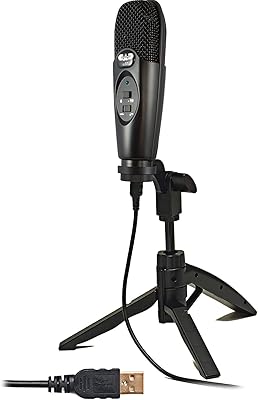
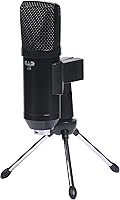
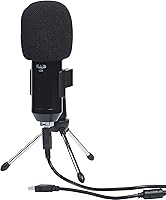
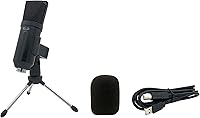
The CAD Audio U29 USB Condenser Microphone is a large-format side-address condenser built for home studio users and desktop recorders who want a real step up from headset-tier audio. CAD Audio has been making professional audio equipment since the 1930s, so the brand brings genuine experience to what is still an approachable price point. The key convenience here is plug-and-play USB — no audio interface, no phantom power supply, just a cable into your computer. Physically, it looks and feels like a serious piece of studio gear. The bundle also covers the basics: a desk tripod, mounting clip, windscreen, and USB cable all included out of the box.
Features & Benefits

The U29's large-format condenser capsule captures sound with noticeably more warmth and detail than the smaller capsules found in many budget USB mics — you can hear it most clearly in vocal recordings, where the low-mids feel full rather than thin. Being side-address means you speak into the side of the mic rather than the top, which keeps it at a comfortable angle on a desk without needing a boom arm. The cardioid polar pattern does a solid job rejecting audio coming from behind and to the sides, which genuinely helps in less-than-perfect rooms. A signal-to-noise ratio of 78 dB means self-noise stays low enough that quiet passages don't get buried in hiss.

Best For

This side-address mic makes the most sense for people who are done dealing with poor laptop audio but aren't ready to invest in a full XLR recording chain. Streamers, podcasters, and remote workers will find it fits naturally into a desk setup — especially those recording in a reasonably quiet room. It's also a practical choice for educators putting together video lectures or tutors recording course content, where intelligible voice audio matters more than studio-perfect fidelity. Voiceover hobbyists and spoken-word creators will appreciate the large-diaphragm character. Compared to similarly priced options like the Blue Snowball or Samson Q2U, the U29 holds its own at this tier.

User Feedback

People who pick up this USB condenser consistently mention one thing first: the vocal tone. Compared to a built-in laptop mic or a budget headset, the improvement is immediately noticeable. Several buyers report being up and running for Zoom calls and podcasting within minutes of unboxing — a genuine plus for anyone who's wrestled with driver installs before. That said, the complaints are worth knowing. There's no onboard mute button, gain knob, or headphone jack for zero-latency monitoring, which matters more for streamers than casual users. The included stand works but feels light for the mic's size. In reverberant spaces, the cardioid pattern can still pick up more ambient noise than some expect.

Pros

  • Large-diaphragm condenser sound at an accessible price — vocals come across warmer and fuller than most USB mics in this range.
  • True plug-and-play USB setup means no drivers, no interface, and no technical hurdles for first-time users.
  • Side-address orientation is ergonomically smart for desktop use, keeping the mic at a natural speaking angle without a boom arm.
  • The cardioid polar pattern provides meaningful off-axis rejection, which helps in moderately untreated rooms.
  • A 78 dB signal-to-noise ratio keeps self-noise low, so quiet recordings don't surface unwanted hiss.
  • Comes bundled with a desk tripod, mounting clip, windscreen, and USB cable — everything needed to start recording immediately.
  • The U29 has a professional physical presence that feels more substantial than similarly priced competitors.
  • USB bus-powered operation eliminates the need for a separate power supply or phantom power source.
  • CAD Audio's background in professional audio lends credibility to the design choices behind this mic.

Cons

  • No onboard mute button, gain knob, or headphone jack — a real drawback for streamers who need live monitoring and quick control.
  • The included desk stand feels noticeably lightweight relative to the mic body and can feel unstable on busy desktops.
  • No zero-latency headphone monitoring means you cannot hear yourself in real time without third-party software.
  • Mono-only recording limits usefulness for anyone hoping to capture stereo sources or multi-instrument demos.
  • In reverberant or noisy rooms, the cardioid pattern still picks up more ambient sound than some buyers anticipate.
  • No mute indicator or LED status light makes it hard to know at a glance whether the mic is live or silent.
  • Windows and Mac compatibility is generally solid, but there are occasional reports of inconsistent gain levels depending on system audio settings.
  • Buyers who outgrow USB limitations will need to replace the mic entirely rather than upgrade components, unlike an XLR setup.

Ratings

The CAD Audio U29 USB Condenser Microphone has been scored using AI analysis of thousands of verified global buyer reviews, with active filtering applied to eliminate incentivized, bot-generated, and spam feedback. Each score below honestly reflects both the recurring strengths and the real pain points buyers have reported across a wide range of recording environments and use cases — nothing has been padded or softened.
Sound Quality
83%
For a USB mic in this price range, the large-format capsule delivers a noticeably warm and detailed vocal tone that stands out from smaller-capsule competitors. Podcasters and streamers consistently note the fuller low-mid body in voice recordings — it sounds richer and less brittle than a headset or budget USB stick mic.
The audio quality ceiling becomes apparent when compared to XLR condensers at a similar price — dynamic range and high-frequency detail fall short of what an audio interface-driven setup can achieve. Buyers expecting studio-monitor-level fidelity will find the sound pleasant but not exceptional.
Ease of Setup
93%
Users across all skill levels consistently describe the setup experience as frictionless — plug the USB cable in, and within seconds the computer recognizes the mic as an audio device with no drivers needed. First-time microphone buyers, educators setting up for remote classes, and non-technical streamers repeatedly call this the single biggest selling point.
A small subset of Windows users report occasional input level inconsistencies depending on system sound settings, requiring manual correction through the OS audio panel. There is no physical indicator light or status confirmation on the mic body, which leaves some users uncertain whether the device is actively capturing audio.
Value for Money
81%
19%
The combination of a large-format condenser capsule, a functional accessory bundle, and a recognized professional audio brand name at this price point makes the U29 a genuinely competitive package for entry-level buyers. Podcasters and content creators upgrading from a headset mic tend to feel the price-to-performance ratio is fair.
Buyers comparing it directly against the Samson Q2U — which adds an XLR output, a headphone jack, and a mute button at a similar price — sometimes feel the U29 offers less hardware for the money. The absence of onboard controls is a feature gap that affects the perceived value for more demanding users.
Noise Rejection
68%
32%
The cardioid polar pattern provides meaningful rejection of off-axis sounds — audio coming from behind the mic, such as a TV in another room or a nearby PC fan, is attenuated noticeably. In a reasonably treated home office or carpeted bedroom studio, most users find background pickup is manageable for spoken-word content.
In reverberant spaces — tiled kitchens, hardwood-floored apartments, or rooms without soft furnishings — buyers consistently report more ambient noise pickup than expected from a cardioid microphone. The high sensitivity that benefits voice detail is a double-edged trait in untreated environments, and room acoustics play a much larger role than many first-time buyers anticipate.
Onboard Controls
31%
69%
For users who record exclusively in controlled, quiet environments and manage all audio settings through their computer or DAW, the lack of hardware controls is essentially a non-issue. Casual users who dial in a fixed gain setting once and leave it are largely unaffected by the stripped-down interface.
The absence of a mute button, gain knob, and headphone monitoring jack is the single most recurring complaint across buyer reviews, particularly from streamers and live content creators who need quick mid-session adjustments. Having to reach for software controls or keyboard shortcuts during a live broadcast or call is a real workflow disruption that frustrates users daily.
Build Quality
76%
24%
The microphone body itself has a reassuringly solid feel for the price — the metal housing and mesh grille give it a professional heft that buyers frequently compare favorably to plastic-bodied USB mics in the same tier. The matte black finish resists fingerprints and holds up well under normal desk conditions.
The included accessories tell a different story — the desk tripod stand in particular feels noticeably lightweight and slightly unstable under the mic's weight, and several buyers mention replacing it fairly quickly. The mounting clip is functional but does not inspire confidence for intensive daily use over extended periods.
Included Accessories
62%
38%
Having a desk stand, mounting clip, windscreen, and USB cable all included in the box means a first-time buyer can be fully set up and recording on day one without a separate accessory run. For beginners, this starter bundle genuinely reduces the friction of getting up and running.
Most experienced users quickly outgrow or replace the included stand, which lacks the stability and adjustability of even a basic third-party tripod or boom arm. The foam windscreen provides minimal plosive protection compared to a purpose-built pop filter, and the USB cable length may feel restrictive in larger desk setups.
Compatibility
88%
Plug-and-play USB operation means this side-address mic works immediately on both Windows and macOS without any driver installation, appealing to users working across multiple machines or platforms. Compatibility with major conferencing and streaming applications — including Zoom, OBS, Teams, and Discord — has been broadly confirmed across buyer feedback.
A handful of Windows users report that system-level gain settings do not always persist after reboots, requiring a quick re-entry into sound settings to confirm input levels. Linux compatibility is not officially confirmed, and mobile device or tablet use is not supported out of the box.
Vocal Warmth
84%
The large-format condenser capsule produces a recognizably warm and full-bodied vocal character that makes voice recordings sound natural and broadcast-ready at this price tier. Buyers upgrading from thin-sounding dynamic USB mics or headset mics are often genuinely surprised by the improvement in low-mid presence and overall vocal richness.
While vocal warmth is a clear strength, the capsule adds a slight coloration that some buyers find a little dark or compressed — particularly on sibilant consonants — when compared to more neutral XLR condensers. Buyers with naturally deep voices may notice a slightly boomy quality in the low end without any EQ adjustment.
Self-Noise Floor
77%
23%
A signal-to-noise ratio of 78 dB means the microphone's internal self-noise is low enough to stay out of the way during normal voice recordings — quiet passages in a podcast or voiceover session will not be spoiled by an audible hiss floor. Most users recording speech in a typical room will not encounter any perceptible noise floor issues.
At high system gain settings — which some users dial in to compensate for a naturally quiet voice or greater mic distance — a subtle noise floor becomes more noticeable in recordings. This is a limitation shared across most USB condensers in this price category and is more a class characteristic than a product-specific flaw.
Desk Ergonomics
79%
21%
The side-address pickup orientation is well-suited for desktop use — positioning the mic slightly off to one side of a monitor while angled toward the speaker feels natural and does not crowd the workspace or obstruct the screen. At 12.8 oz, it sits comfortably on a desk without requiring a heavy counterweight stand.
Users switching from a top-address USB mic sometimes find the side-address orientation less intuitive at first, particularly when locating the correct capture angle for consistent sound. The 9.52-inch height can also feel slightly imposing on compact desks or in tight laptop-centric workstation setups.
Streaming Performance
82%
18%
For live streaming and podcast production, the combination of warm vocal tone and consistent cardioid pickup makes this USB condenser a reliable everyday workhorse. Streamers who have migrated from gaming headsets frequently comment on noticeably positive audience feedback about the improved audio quality after switching.
The lack of a physical mute button is a meaningful inconvenience for live broadcasters — there is no fast, reliable way to cut audio mid-stream without navigating software. Without headphone monitoring, streamers also cannot catch audio problems like clipping or background noise bleed in real time during a live broadcast.
Durability
74%
26%
The metal microphone body and mesh grille suggest a reasonable build life under normal desktop conditions, and most long-term owners report no hardware failures or sound quality degradation with regular use over twelve-plus months. The USB connection in particular has held up reliably according to multiple extended ownership accounts.
The included stand and mounting clip are the components most likely to show wear or fail first, and neither feels built for years of daily heavy use. Because this is a USB-only design, the capsule cannot be replaced independently — any permanent internal damage means replacing the entire unit rather than just a component.

Suitable for:

The CAD Audio U29 USB Condenser Microphone is a strong fit for anyone who wants a noticeable audio upgrade without the complexity of building a full XLR recording chain. Beginner podcasters, streamers, and YouTube creators who are still using a headset mic or laptop microphone will hear an immediate difference in vocal warmth and clarity. Remote workers and educators who spend hours on video calls will appreciate how much more present and professional their voice sounds with a large-diaphragm condenser compared to a webcam or built-in mic. The plug-and-play USB setup also makes it genuinely accessible for non-technical users — there are no drivers to install, no interfaces to configure, and no phantom power to worry about. Students recording voiceovers, tutors filming course content, or hobbyists doing spoken-word projects will find this side-address mic covers their needs well right out of the box.
Not suitable for:

Buyers who need hands-on recording control during live sessions should look elsewhere, because the CAD Audio U29 USB Condenser Microphone offers no onboard gain adjustment, no mute button, and no headphone jack for real-time monitoring — limitations that become genuine friction points for streamers who need quick adjustments mid-broadcast. Musicians hoping to record instruments beyond basic acoustic demos will likely find the mono signal chain and entry-level capsule underwhelming compared to a dedicated XLR condenser paired with even a budget audio interface. If your recording environment is noisy or highly reverberant — a tiled room, a busy apartment, or a space with loud fans or HVAC — the cardioid pattern alone won't save you, and room treatment becomes a must. Users who already own or plan to invest in an audio interface would get better long-term value upgrading to an XLR microphone at a comparable price. This is also not the right choice for anyone expecting professional studio-grade output; it is an entry-to-mid-range tool, and it performs best when expectations are matched accordingly.
Specifications

  • Microphone Type: Large-format side-address USB condenser microphone designed for desktop and home studio use.
  • Polar Pattern: Cardioid (unidirectional), capturing sound primarily from the front while rejecting noise from the sides and rear.
  • Pickup Orientation: Side-address design means audio is captured through the side face of the microphone body, not the top.
  • Audio Sensitivity: Rated at -43 dB, indicating a high-sensitivity capsule capable of picking up quiet sound sources with clarity.
  • Signal-to-Noise Ratio: 78 dB SNR, meaning the microphone produces very low self-noise relative to the captured signal under normal conditions.
  • Connectivity: Standard USB connection (bus-powered), compatible with PC and laptop without requiring an external audio interface.
  • Power Source: Draws power directly from the host computer via USB, eliminating the need for phantom power or a separate power adapter.
  • Dimensions: Measures 5.31 × 2.51 × 9.52 inches, making it a full-sized condenser that fits comfortably on a standard desk.
  • Weight: 12.8 oz (approximately 363 g), giving it a solid physical presence without being overly heavy for desktop placement.
  • Channels: Single-channel (mono) output, standard for voice recording, podcasting, streaming, and video conferencing applications.
  • Compatible Devices: Designed for use with Windows PCs and laptops; also broadly compatible with macOS systems via standard USB audio drivers.
  • Included Accessories: Package contains the microphone, a desk tripod stand, a studio-style mounting clip, a USB cable, and a foam windscreen.
  • Onboard Controls: No onboard gain control, mute button, or headphone monitoring jack is present on the microphone body.
  • Color: Available in matte black finish with a professional studio aesthetic.
  • Model Number: Officially designated as model AMS-U29, manufactured and sold under the CAD Audio brand.

Related Reviews

CAD Audio U37 USB Condenser Microphone
75%
78%
Audio Clarity
96%
Ease of Setup
67%
Noise Rejection
88%
Value for Money
61%
Build Quality
More
CAD Audio M179 Condenser Microphone
85%
88%
Sound Quality
82%
Build Quality
91%
Polar Pattern Versatility
85%
Noise Reduction (Pop Filter)
87%
Ease of Use
More
Audio-Technica ATR4750-USB Omnidirectional Condenser Microphone
73%
93%
Ease of Setup
71%
Audio Clarity
44%
Background Noise Rejection
67%
Build Quality
78%
Omnidirectional Performance
More
Audio-Technica ATR4697-USB
74%
93%
Ease of Setup
76%
Voice Clarity
44%
Noise Rejection
61%
Build Quality
78%
Value for Money
More
Audio-Technica AT2020USB+ Cardioid Condenser USB Microphone
87%
92%
Audio Quality
88%
Ease of Use
85%
Noise Isolation
87%
Build Quality
90%
Value for Money
More
Elgato Pro Audio Transparency Set USB Condenser Microphone
85%
91%
Sound Clarity
85%
Ease of Setup
88%
Build Quality
90%
Noise Reduction
82%
Software Integration
More
CAD Audio E70 Small Diaphragm Cardioid Condenser Microphone
87%
91%
Sound Quality
94%
Clarity & Sensitivity
88%
Versatility of Polar Patterns
85%
Build Quality
87%
Ease of Use
More
Neat Microphones Skyline USB Desktop Condenser Microphone
89%
94%
Audio Quality
91%
Ease of Use
89%
Build Quality
90%
Mute Button Functionality
92%
Value for Money
More
CAD Audio TSM411 Super-Cardioid Dynamic Microphone
80%
83%
Instrument Sound Quality
88%
Polar Pattern Accuracy
86%
Build Quality
79%
Value for Money
84%
Stage Durability
More
Audio-Technica AT875R
83%
93%
Sound Rejection
94%
Form Factor & Compactness
88%
Vocal Clarity
82%
Handling Noise Reduction
86%
Build Quality & Durability
More

FAQ

No — the CAD Audio U29 USB Condenser Microphone is plug-and-play on both Windows and macOS. Your computer should recognize it automatically as a USB audio device within seconds of plugging it in, with no driver installation required.
It works on macOS as well, despite the product listing primarily mentioning PC compatibility. It relies on standard USB audio class drivers built into both operating systems, so Mac users should have no trouble getting it recognized and running.

Not directly through the mic — the U29 has no headphone jack for zero-latency monitoring. You can still hear yourself through your computer speakers or headphones via your OS, but there will be a small software-induced delay, which can be distracting during long recording sessions.

No, this side-address mic has no onboard gain or volume knob. You will need to manage input levels through your computer's sound settings or within your recording and streaming software, such as OBS, Audacity, or Zoom.

The cardioid polar pattern does a reasonable job of reducing noise coming from behind and to the sides of the mic, but it is still a sensitive condenser. In a noisy room, reverberant space, or a home with loud HVAC or traffic, you will hear some ambient pickup. Positioning it correctly and pointing it directly at your mouth helps significantly.

It is functional and gets the job done for light use, but many buyers find it feels a little flimsy relative to the size and weight of the mic. If you plan to use this regularly on a busy desk, upgrading to a third-party boom arm or heavier tripod stand is a worthwhile investment.

Yes. The included mounting clip uses a standard thread fitting, so it should be compatible with most third-party mic boom arms and desk clamp mounts. Just make sure the arm is rated for a mic of this size and weight — around 12.8 oz.

It is best suited for voice-focused applications like podcasting, streaming, voiceover, and video calls. The U29 can handle light acoustic recording — a single acoustic guitar or spoken-word performance — but it is a mono mic with an entry-level condenser capsule. For serious instrument recording, a dedicated XLR condenser with an audio interface will give you considerably more control and fidelity.

The U29 is a full large-format condenser, which generally gives it an edge in vocal warmth over the Snowball's smaller capsule. The Snowball offers a hardware mute button and a choice of polar patterns on some versions, which the U29 lacks. Both sit in the same general price and performance tier, so the choice often comes down to whether you prefer onboard controls or a larger capsule design.

The included foam windscreen helps with minor breath noise and light wind, and it is a useful starting accessory. That said, a dedicated pop filter on a flexible gooseneck — placed a few inches in front of the mic — will give you noticeably better protection against hard plosive sounds like P and B consonants during voice recording.