Overview

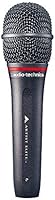
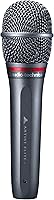
The Audio-Technica AE6100 Hypercardioid Dynamic Microphone has been a fixture on professional stages since 2005 — a lifespan that says a lot in a market where gear comes and goes. What defines this mic isn’t just its durability; it’s the hypercardioid polar pattern that sets it apart from the typical cardioid handhelds most vocalists start with. XLR-only connectivity makes clear who this is built for: working musicians and sound engineers who already run proper PA systems, not home studio hobbyists. At its price point, it sits comfortably in the mid-to-upper range for dynamic stage mics — not cheap, but priced with purpose.
Features & Benefits

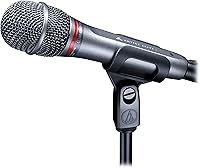
The defining feature of this dynamic stage mic is its hypercardioid pickup pattern, which narrows the acceptance angle noticeably compared to a standard cardioid. That tighter window means off-axis noise — crowd bleed, monitor wash, other instruments — gets rejected far more aggressively. The floating back-cavity assembly is another practical win: it physically decouples the mic’s internals from the handle shell, so thumps and grip adjustments don’t translate into low-frequency thuds in the PA. Output is strong and the transient response is quick, which helps cut through dense mixes without needing heavy gain. The 78 dB signal-to-noise ratio keeps the background clean, and the included AT8470 clamp and thread adapter mean you’re stage-ready right out of the box.

Best For

This Audio-Technica vocal mic is built for the stage, and that’s exactly where it performs. Lead vocalists in loud live settings — rock bands, function bands, touring acts — will appreciate how the tight pickup pattern keeps their vocal in the mix without fighting against a loud backline. Sound engineers dealing with loud wedge monitors will find the feedback rejection genuinely helpful, not just a spec-sheet claim. The AE6100 also rewards vocalists who move around: grip the handle firmly, and the handling noise stays remarkably controlled. If you’re stepping up from a budget dynamic and want a mic that will survive years of gigs, this is a worthy destination.

User Feedback

Across verified buyer reviews, the AE6100’s feedback resistance draws consistent praise — vocalists describe using it with loud stage monitors night after night without needing to chase the mix engineer for constant adjustments. Build quality comes up repeatedly too, with owners noting the steel construction holds up after years of road use without meaningful wear. The criticism that surfaces most often points to a high-frequency ceiling that some voices find limiting — singers who rely on shimmer and air may want more extension than this dynamic stage mic delivers. Comparisons to the Shure Beta 58A are common and opinion is genuinely split. The bundled clamp and pouch also get surprisingly positive mentions as solid, road-useful accessories.

Pros

  • Hypercardioid polar pattern delivers noticeably tighter pickup and stronger off-axis rejection than a standard cardioid handheld.
  • The floating back-cavity assembly keeps handling noise well under control, even during energetic, high-movement performances.
  • Strong output level lets this mic cut through dense live mixes without pushing the preamp into unflattering territory.
  • Fast transient response captures dynamic vocal delivery cleanly, which matters when the singer is working hard on stage.
  • Steel construction is genuinely road-worthy, holding up through years of touring without meaningful wear or performance degradation.
  • The 78 dB signal-to-noise ratio keeps background noise low and vocal clarity high in demanding live environments.
  • Ships with a practical accessory kit — AT8470 mic clamp, thread adapter, and a protective pouch — so you’re stage-ready immediately.
  • Feedback rejection holds up in real gig conditions, not just in spec sheets, according to consistent working-vocalist feedback.
  • Active production since 2005 means parts, support, and replacement units remain accessible for long-term users.

Cons

  • The 15 kHz high-frequency ceiling may disappoint vocalists whose tone depends on top-end shimmer and air.
  • XLR-only design excludes users on USB interfaces or simple home setups without a dedicated mixer or audio interface.
  • The tight hypercardioid pattern demands consistent mic technique — drifting off-axis leads to audible level drops that standard cardioid users won’t expect.
  • Direct competitors like the Shure Beta 58A offer a different tonal character, and some singers strongly prefer it after a side-by-side comparison.
  • The included pouch provides minimal padding and is not adequate protection for checked luggage or long-haul touring without additional storage.
  • Not a practical choice for studio recording, podcasting, or content creation, which limits its appeal for multi-use buyers.
  • At 1.3 pounds, it sits on the heavier end for a handheld stage mic, something some vocalists notice during extended sets.
  • Buyers unfamiliar with dynamic microphones occasionally expect phantom power support and are caught off guard by its absence.

Ratings

Our AI rating system for the Audio-Technica AE6100 Hypercardioid Dynamic Microphone was built by analyzing thousands of verified buyer reviews from professional vocalists and sound engineers worldwide, with spam, bot-generated submissions, and incentivized posts actively filtered out before any scoring was applied. Each category score reflects an honest synthesis of real-world performance patterns — strengths are recognized where genuinely earned, and pain points like the high-frequency ceiling and demanding mic technique requirements are given equal transparency. The breakdown below is designed to help you assess whether this mic fits your specific performance context, not to sell you on it.
Feedback Rejection
88%
Vocalists who perform with loud floor wedges consistently report that this mic handles feedback pressure better than most comparably priced stage dynamics. The hypercardioid pattern creates tight rejection zones at the sides and rear that align naturally with typical monitor placement, giving sound engineers noticeably more headroom to push vocal volume before problems arise.
A segment of users notes that the tighter pattern demands more precise mic technique than a standard cardioid, meaning positioning errors during energetic stage performance can introduce brief feedback spikes. In rooms with particularly reflective rear walls, some bleed still creeps through the rearward null points even with careful positioning.
Build Quality
93%
Road-tested performers repeatedly single out the steel shell construction as one of this mic’s strongest attributes, with many owners reporting years of nightly gigging without cosmetic or functional deterioration. Unlike cheaper alternatives that develop grille dents or loose capsule rattle after heavy touring, this mic consistently holds together through rough transport and demanding stage conditions.
The robust steel construction adds meaningful weight, and at 1.3 pounds some vocalists find grip fatigue increases over long sets, particularly during two-hour-plus live shows. A very small number of users have reported thread wear on the stand mount after extended use, though this appears isolated rather than a systemic quality concern.
Handling Noise Isolation
84%
The floating back-cavity assembly noticeably reduces the low-frequency thud that typically accompanies a firm grip change or an accidental knock to the mic stand mid-performance. Energetic stage performers who pass the mic between hands or work the crowd during active sets consistently report that handling noise stays well below audible problem levels in the PA.
A handful of reviewers note that very sharp mechanical impacts — accidentally dropping the mic or striking it against a stand — can still produce audible transients in the PA. In high-gain scenarios where the preamp is pushed hard, even minor handling movement occasionally registers above the noise floor.
Vocal Clarity
76%
24%
In the critical midrange frequencies where most vocal presence lives, this mic performs well, delivering a clean and direct sound that punches through a busy mix without aggressive EQ treatment. Vocalists in rock and pop settings report their voices sit naturally in the PA, and engineers appreciate not having to fight for presence in dense arrangements.
The 15 kHz frequency ceiling holds back vocal brilliance for singers whose tone depends heavily on upper-harmonic air and shimmer. Vocalists in genres like jazz, acoustic pop, or musical theater who rely on bright, open-sounding reproduction often find the top end noticeably closed off compared to condenser alternatives available at the same price point.
Value for Money
71%
29%
For working musicians who tour regularly and need a mic that won’t fail under professional pressure, the long-term reliability justifies the mid-to-upper price bracket. Owners who have used the same unit for multiple years without needing a replacement tend to view the upfront cost as a sound long-term investment compared to cycling through cheaper dynamics.
Buyers who primarily perform in smaller, quieter venues or only gig occasionally often question whether the performance advantages over more affordable dynamics are worth the price gap. The competition from similarly priced alternatives, particularly the Shure Beta 58A, means this mic does not hold an obvious value advantage at its tier.
Output Level
86%
The mic puts out a strong signal that gives front-of-house engineers comfortable gain staging without needing to push the preamp into noisy territory. Performers who have previously used lower-output dynamics appreciate being heard clearly in the monitors at reasonable levels, which reduces the constant back-and-forth with the mix engineer for more vocal volume.
A minority of users in very high-SPL environments, such as metal or hard rock setups, find the output can be almost too hot for certain vintage or lower-headroom channel strips. Some also note that the high sensitivity makes polar pattern discipline even more critical, as off-axis sources register more easily than they might expect.
High-Frequency Response
57%
43%
For the majority of live vocal applications in high-energy genres like rock, R&B, and soul, the midrange-focused character actually reduces harshness at loud stage volumes. Sound engineers in mid-sized venues report the mic requires less high-frequency EQ cutting than brighter-response dynamics, making it easier to manage in a crowded mix.
The 15 kHz ceiling is a genuine limitation that surfaces repeatedly in user feedback, particularly from vocalists with naturally bright voices or performers in acoustic and jazz contexts. When compared directly to competitors with extended frequency response, this shortfall in upper-range definition is the most frequently cited reason buyers ultimately choose an alternative.
Polar Pattern Precision
87%
Working vocalists note that the hypercardioid pattern behaves consistently and predictably, rejecting off-axis sources in line with expectations and without the erratic lobing behavior that cheaper alternatives often exhibit. Sound engineers running live shows appreciate how easy it is to anticipate the mic’s behavior before a performance even begins.
The precision of the hypercardioid pattern is a double-edged attribute: vocalists who are not disciplined about keeping the capsule aimed correctly will experience sudden level drops mid-phrase. This is particularly noticeable for performers accustomed to cardioid mics who move freely and approach the mic from varying angles without adjusting their technique.
Transient Response
83%
The mic captures fast consonants, dynamic vocal runs, and percussive lyrical delivery with a speed that suits rock, R&B, and soul performers particularly well. Live reviewers note that lyrics stay articulate even at high volumes and in dense mix environments where slower-responding dynamics tend to blur fast syllables together.
In very dense mix environments — particularly bass-heavy arrangements found in metal or brass-heavy settings — some users report the fast transient response can expose sibilance and vocal edge more than expected. Singers prone to natural sibilance occasionally find they need additional de-essing in the signal chain to tame articulation at louder gain settings.
Included Accessories
74%
26%
The AT8470 swivel clamp and thread adapter genuinely earn their place in the box, with reviews making clear these are quality components rather than afterthought inclusions. The protective pouch gets consistent positive mentions as a practical daily-use accessory that keeps the mic clean and protected between gigs without requiring a separate purchase.
The soft pouch, while appreciated for basic transport, provides minimal padding and offers no meaningful impact protection for air travel or checked luggage in a touring context. Some users also note that a dedicated hard case would be a more fitting inclusion given the mic’s professional market positioning and price tier.
Mic Technique Forgiveness
59%
41%
For trained vocalists with established mic technique, the discipline required by the hypercardioid pattern reinforces good habits and rewards consistent capsule aim. Performers who invest time adapting to this mic frequently report that their overall stage presence and vocal delivery improve as a direct result of the required precision.
Casual performers, singers who cup the mic ball, or vocalists who work the mic at extreme angles will struggle significantly, experiencing level inconsistency and tonal coloration from proximity changes. Users upgrading from a standard cardioid often underestimate the adjustment period and encounter frustrating level drops during their first several performances.
Stage Mobility
81%
19%
Performers who cover the full stage, work the audience, or sing while moving report that the handling noise isolation keeps the sound clean despite constant repositioning. Experienced singers who maintain conscious capsule alignment during movement find they can sustain consistent vocal level even through highly active, physically demanding performances.
The XLR cable requirement introduces a physical tether that limits freedom of movement compared to wireless setups, and the 1.3-pound weight becomes more noticeable during extended physically demanding shows. Vocalists who prefer wireless will need a compatible XLR body pack transmitter, which adds meaningful cost on top of an already mid-to-upper-tier price.

Suitable for:

The Audio-Technica AE6100 Hypercardioid Dynamic Microphone is a natural fit for working vocalists who perform regularly in loud, demanding live environments where feedback control and vocal isolation genuinely matter. Lead singers in bands with active stage monitoring — rock, pop, or function band setups where wedge monitors are loud and stage bleed is constant — will immediately notice the difference that hypercardioid pickup geometry makes in a real gig situation. Touring musicians and gigging performers who put gear through heavy use will appreciate both the robust steel construction and the consistent night-to-night reliability this mic has maintained since 2005. Sound engineers running live shows will also find it a trustworthy tool, since the tight polar pattern reduces the PA work needed to tame feedback in challenging venues. It equally suits performers who move freely on stage, as the floating back-cavity design keeps handling noise controlled even when grip technique isn’t perfect.
Not suitable for:

The Audio-Technica AE6100 Hypercardioid Dynamic Microphone is not the right tool for home studio recording, podcasting, or any application where a natural, open sound with extended high-frequency response is a priority. The 15 kHz frequency ceiling — a reasonable trade-off for a stage-focused dynamic — means vocalists with bright, airy voices may find the top end lacks the presence they want compared to condenser alternatives. The XLR-only connection rules it out for anyone building their setup around USB interfaces or simple plug-and-play rigs, since this mic assumes you already have professional-grade signal chain hardware in place. Quieter contexts like acoustic showcases or low-volume venues will not expose the feedback rejection strengths that justify the mid-to-upper price point. Buyers hoping to use a single mic across live performance and studio recording will also find it falls short of the versatility that demand requires.
Specifications

  • Transducer Type: Dynamic moving-coil transducer that generates its own signal through electromagnetic induction, requiring no external power source.
  • Polar Pattern: Hypercardioid pickup pattern provides a narrower acceptance angle than a standard cardioid, delivering stronger off-axis rejection at the sides and rear.
  • Connector: Standard 3-pin XLR output, compatible with professional PA systems, mixing consoles, and XLR-equipped audio interfaces.
  • Frequency Response: Frequency response spans 50 Hz to 15 kHz, shaped for live vocal reproduction and optimized for stage performance environments.
  • SNR: Signal-to-noise ratio of 78 dB delivers a clean vocal signal with low background noise in live stage conditions.
  • Weight: Weighs 1.3 pounds, on the heavier side for a handheld dynamic stage microphone, largely due to its steel construction.
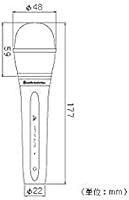
  • Dimensions: Listed item dimensions are 9.5 × 5 × 2.9 inches per manufacturer specifications.
  • Body Material: Outer shell and grille are constructed from steel, with internal foam damping designed for durability under road and touring conditions.
  • Internal Isolation: Floating back-cavity assembly mechanically decouples the internal components from the handle shell, reducing transmission of handling noise and vibration to the capsule.
  • Power Source: Passive dynamic design requires no phantom power and draws no current from the mixing console or audio interface.
  • Output Level: High output level combined with fast transient response allows the mic to cut through dense live mixes at relatively low gain settings.
  • In the Box: Package includes the AT8470 swivel mic clamp, a 3/8-inch-to-5/8-inch thread conversion screw, and a soft protective carrying pouch.
  • Output Channels: Single-channel mono output via XLR, as is standard for professional handheld vocal microphones.
  • Color Finish: Available in black with a matte steel finish suited for stage use.
  • Manufacturer: Manufactured by Audio-Technica U.S., with the AE6100 model first introduced in August 2005 and remaining in active production.

Related Reviews

Audio-Technica ATM650 Hypercardioid Dynamic Microphone
78%
84%
Stage Isolation Performance
81%
Build Quality
78%
Handling Noise Rejection
61%
Value for Money
79%
Transient Response
More
Audio-Technica PRO61 Hypercardioid Dynamic Microphone
81%
88%
Feedback Rejection
84%
Build Quality
71%
Tonal Character
79%
Value for Money
86%
Polar Pattern Precision
More
Audio-Technica PRO-8HEMW Headworn Dynamic Microphone
74%
91%
Fit & Stability
74%
Sound Clarity
83%
Stage Noise Rejection
78%
Build Quality
61%
Boom Arm Adjustability
More
Audio-Technica AT4053B Hypercardioid Condenser Microphone
77%
89%
Sound Quality
93%
Off-Axis Rejection
86%
Build Quality
72%
Value for Money
57%
Ease of Setup
More
Audio-Technica PRO63 Cardioid Dynamic Instrument Microphone
79%
88%
Build Quality
84%
Sound Isolation
81%
Transient Response
61%
Frequency Response
77%
Output Level
More
Audio-Technica ATR2100x-USB Cardioid Dynamic Microphone
83%
83%
Voice Clarity
91%
Build Quality
94%
Ease of Setup
89%
Dual Output Versatility
57%
USB Gain Level
More
Audio-Technica AT2005USB
88%
93%
Build Durability
88%
Vocal Clarity
91%
Ambient Noise Rejection
96%
Plug-and-Play Simplicity
87%
Zero-Latency Monitoring
More
Audio-Technica AT831B Cardioid Lavalier Microphone
70%
91%
Audio Clarity
83%
Noise Rejection
78%
Build Quality
54%
Ease of Setup
72%
Value for Money
More
Audio-Technica AT829CW Lavalier Microphone
80%
88%
Sound Quality
89%
Voice Intelligibility
84%
Noise Rejection
93%
Discreetness
91%
Wearability
More
CAD Audio TSM411 Super-Cardioid Dynamic Microphone
80%
83%
Instrument Sound Quality
88%
Polar Pattern Accuracy
86%
Build Quality
79%
Value for Money
84%
Stage Durability
More

FAQ

No. The Audio-Technica AE6100 Hypercardioid Dynamic Microphone is a passive dynamic design, meaning it generates its own signal through electromagnetic induction and draws no power from the console. You can plug it into any XLR-equipped mixer or PA system without touching the phantom power switch.
A hypercardioid pattern picks up sound from a narrower cone directly in front of the mic and rejects more signal from the sides. In practice, this means less bleed from nearby instruments or other vocalists, and the mic is less likely to feed back when you are standing close to floor wedges. The trade-off is that you need to stay fairly well-aimed at the capsule, as drifting off-axis loses more level than it would with a standard cardioid.

It will work with any USB interface that has an XLR mic input, which covers most prosumer and professional models. If your interface only has a 3.5mm or 1/4-inch input and no XLR jack, you would need a different interface, since this mic is built for professional XLR signal chains.

Noticeably well, particularly when floor wedges are positioned at typical front-of-stage angles. The hypercardioid pattern creates rejection zones that line up well with common monitor placement, giving engineers more headroom before feedback starts. It will not eliminate feedback entirely, since that still depends on room acoustics, monitor volume, and EQ, but it provides a real advantage over a standard cardioid in loud environments.

Not really. This mic is purpose-built for live performance, and its 15 kHz frequency ceiling means vocal harmonics in the upper register will not carry the air and presence a condenser microphone would capture. If you are recording demos or tracking vocals at home, a large-diaphragm condenser in the same price range would serve you far better.

They are genuinely close competitors, and the honest answer is that it comes down to tonal preference. Both are professional-grade hypercardioid dynamics built for demanding live use. Some vocalists prefer the Beta 58A's slightly brighter character, while others find this mic's output more natural and direct. If you have the opportunity to try both through the same PA system, do it, because your voice and monitoring setup will tell you more than any spec comparison can.

Yes, at 1.3 pounds it sits on the heavier end for a handheld stage dynamic, and the steel construction is largely responsible. Most performers come to associate the weight with solid build quality over time, but it is worth keeping in mind if you are used to lighter mics and regularly perform long sets.

You get the microphone itself, the AT8470 swivel mic clamp for stands, a 3/8-inch-to-5/8-inch thread adapter for compatibility with different stand types, and a soft protective carrying pouch. It is a complete kit for live use and nothing critical is missing.

Wipe down the exterior with a slightly damp cloth after use and keep liquids away from the grille and capsule. The steel body is tough and does not need much attention, but storing it in the included pouch or a hard case when not in use will protect the capsule from dust and impact over time.

For most live performers, no. The 50 Hz to 15 kHz range captures everything that matters in a typical live mix without becoming harsh at high volumes. If your voice carries a lot of natural brightness in the upper harmonics, or if that shimmer is central to your sound in genres like jazz or acoustic pop, you may notice the ceiling in a quiet listening environment. On a loud stage through a full PA system, most audiences simply will not.

Where to Buy